

This workflow is designed to automate the process of converting the content of a YouTube video into a professional Google Slides presentation. It leverages AI and several automation tools to streamline the process, making it scalable and efficient for repeated or large-scale use.
Overview of Workflow Steps
Welcome and User Guidance
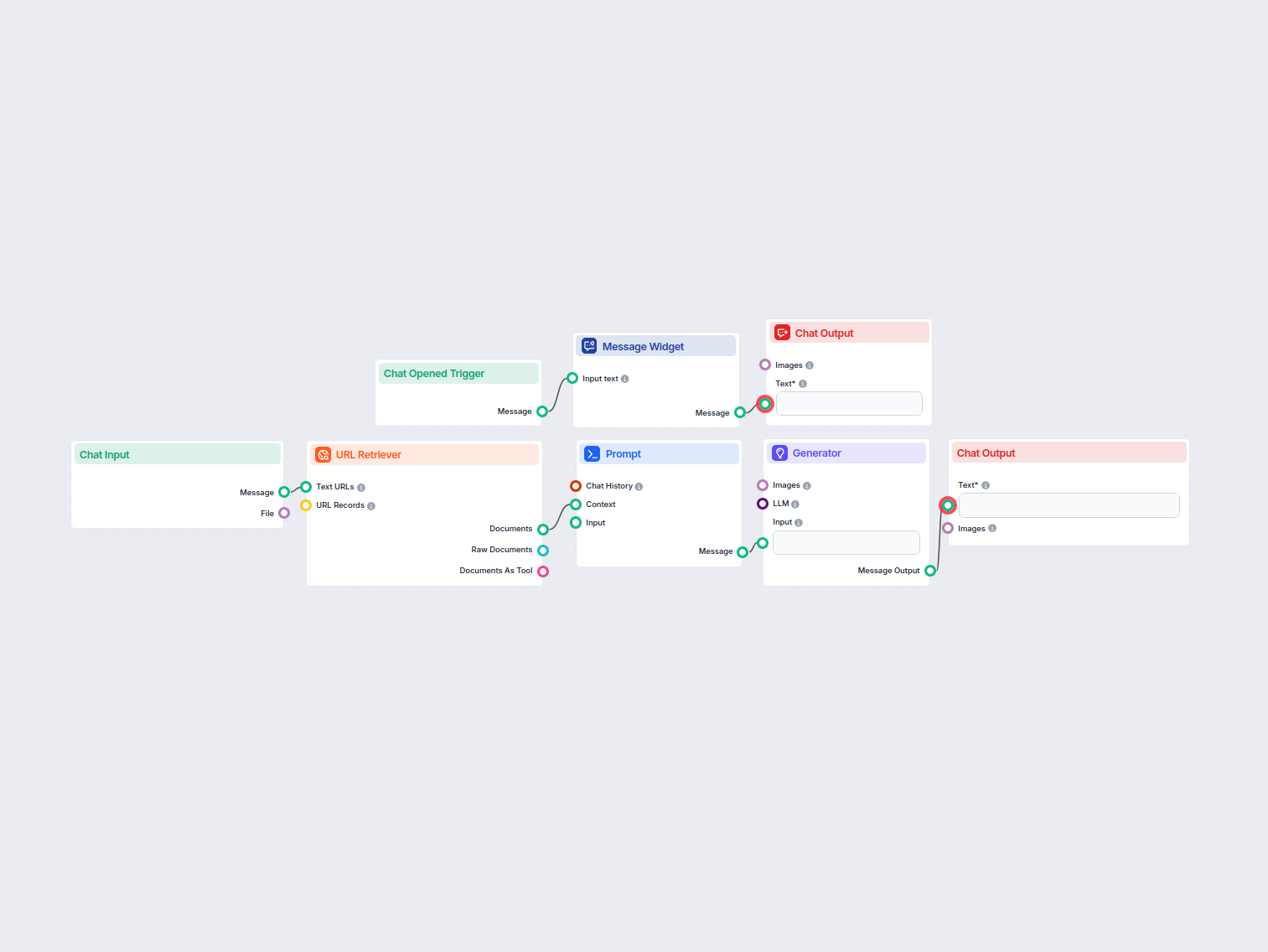
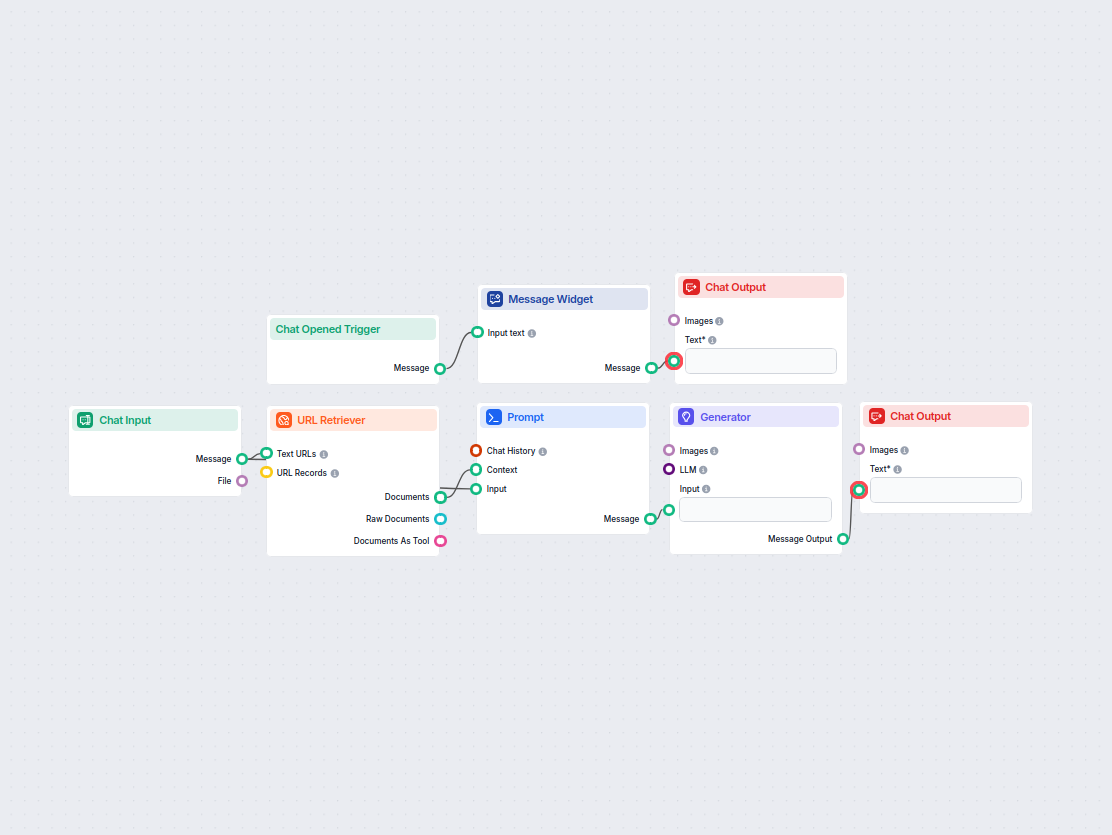
- When the chat session is opened, the user is greeted with a welcome message. This message explains the workflow’s purpose: “Just drop a YouTube video URL, and I’ll turn its full content into a professional Google Slides presentation.” This helps onboard users and sets clear expectations.
User Input Collection
- The user submits a YouTube video URL via a chat input. This URL serves as the primary input for the content extraction process.
Content Extraction from YouTube
- A “URL Retriever” tool fetches the full content (transcript, description, etc.) of the provided YouTube URL. The tool is finely tuned to extract key information such as headings and paragraphs, and can handle a variety of content types. It also supports content caching, which improves performance and scalability by avoiding redundant data fetching.
Prompt Construction for AI Processing
- The extracted YouTube content (as context) and the user’s original input are dynamically assembled into a prompt template. This template is crafted to clearly separate the document content from user instructions, helping the AI model produce more accurate and structured outputs.
Chat History and Context Awareness
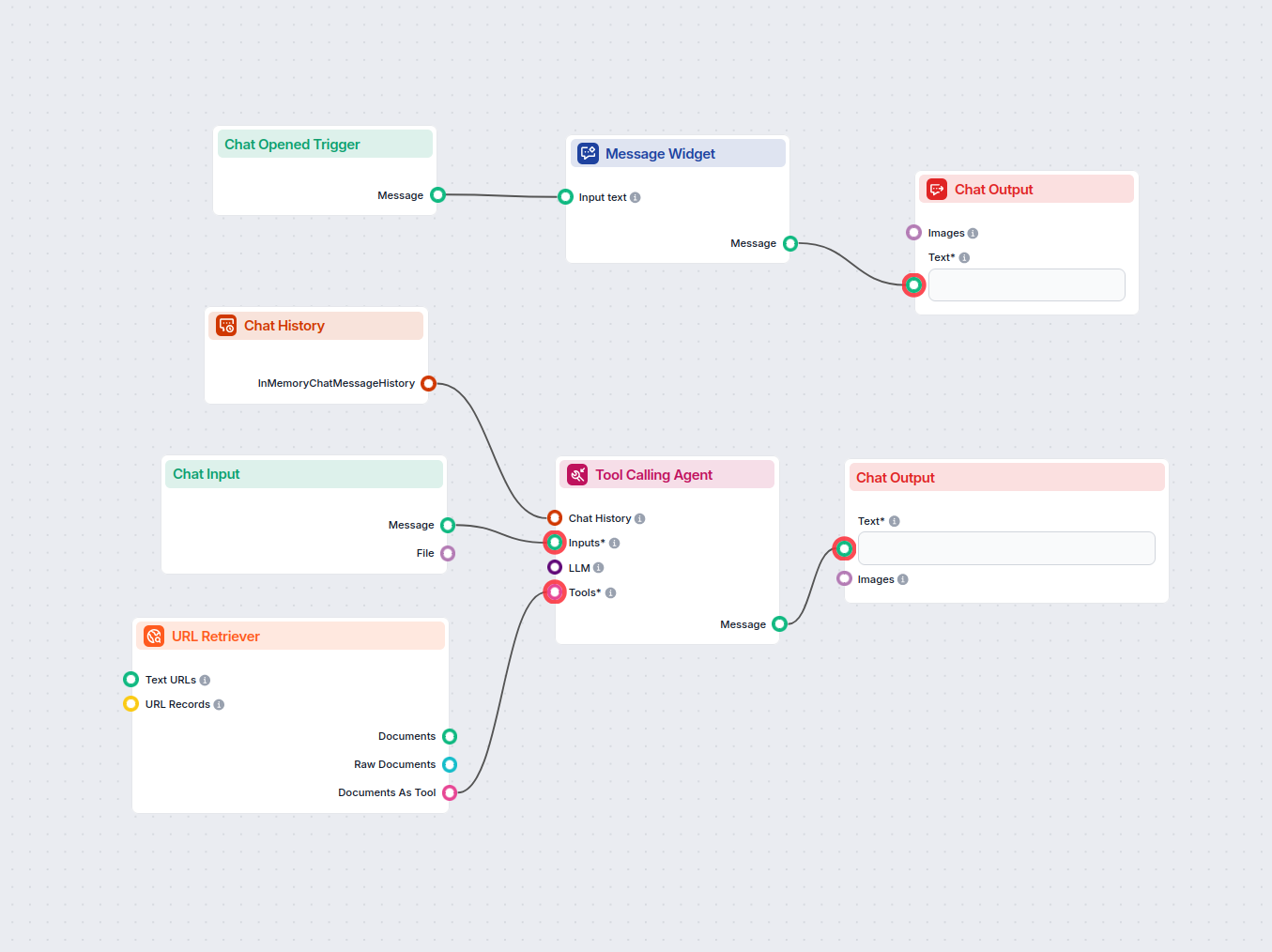
- The workflow retrieves recent chat history to provide context for the AI, ensuring that the responses are relevant and can handle follow-up questions or iterative improvements to the presentation.
AI Model Selection and Configuration
- An OpenAI language model (specifically “gpt-4.1”) is configured with parameters such as token limits and temperature for controlled generation. The model is used both for general language understanding and for function calling by the AI agent.
AI Agent Orchestration
- An AI agent, acting as a “Presentation Specialist,” orchestrates the process. It is given explicit instructions and goals, such as ensuring all key information from the video is included in the slides. The agent uses the AI model and has access to tools for creating Google Slides content.
Google Slides Automation Tools
- The agent is connected to two main tools:
- Create Presentation: Automates the creation of a new Google Slides presentation, including setting the title and subtitle for the first slide.
- Create Slide: Automates the addition of new slides to the presentation, including content, titles, speaker notes, and optional featured images.
- The agent is connected to two main tools:
Response Output
- The AI agent’s output (messages, links, or status updates) is displayed back to the user in the chat interface.
Workflow Diagram
| Step | Node/Component | Purpose |
|---|---|---|
| Welcome message on chat open | Message Widget | Greet the user and explain the workflow |
| User inputs YouTube URL | Chat Input | Collects the YouTube link from the user |
| Fetch YouTube content | URL Retriever | Extracts transcript and key content from the provided URL |
| Build AI prompt | Prompt Template | Structures prompt for AI, combining context and user query |
| Capture chat history | Chat History | Provides context for better AI responses |
| Configure AI model | OpenAI LLM | Sets up GPT-4.1 for content generation and function calling |
| Orchestrate presentation creation | AI Agent | Plans and delegates tasks to tools, ensuring coverage of all key video information |
| Create new presentation in Slides | Create Presentation Tool | Starts a new Google Slides file |
| Add slides with content | Create Slide Tool | Adds individual slides with content, titles, speaker notes, and images |
| Display responses to user | Chat Output | Shows output messages, links, or status in the chat |
Why This Workflow is Useful
- Scalability: By automating the extraction, summarization, and presentation creation process, this workflow enables rapid conversion of multiple YouTube videos into slide decks, freeing up significant human resources.
- Consistency: The use of prompt templates and an AI agent ensures that each presentation is structured and formatted consistently, adhering to professional standards.
- Customization: The workflow can be easily modified to include additional steps or tools (e.g., adding images, customizing slide themes).
- Context Awareness: By keeping track of chat history and user inputs, the workflow can handle clarifications, follow-up questions, or iterative improvements seamlessly.
- Reduced Manual Labor: Automates repetitive tasks, allowing users to focus on high-value activities like reviewing or presenting, rather than content extraction and formatting.
Example User Experience
- User enters the chat and is greeted with instructions.
- User pastes a YouTube URL.
- AI fetches the full content of the video, organizes information, and creates a Google Slides presentation.
- User receives a completion message and a link to the newly generated presentation.
- User can iterate or ask for improvements, and the system retains context for further refinements.
Components Overview
| Component | Role |
|---|---|
| ChatOpenedTrigger | Detects chat open and triggers welcome message |
| MessageWidget | Displays welcome or informational messages |
| ChatInput | Gathers user inputs (YouTube links, etc.) |
| URLContent | Retrieves web content from URLs |
| PromptTemplate | Structures data for AI processing |
| ChatHistory | Maintains recent conversation context |
| OpenAILLM | Provides AI text generation and function calling |
| AIAgent | Orchestrates AI actions and tool usage |
| CreateGooglePresentation | Automates creation of new presentations |
| CreateGoogleSlide | Automates creation of individual slides |
| ChatOutput | Displays AI and workflow outputs to the user |
Conclusion
This workflow is a powerful, modular automation for turning YouTube videos into structured, professional Google Slides presentations. It combines user-friendly chat guidance, robust AI processing, and deep integration with Google Slides, making it ideal for educators, content creators, and businesses looking to scale their content transformation processes.