AI-Powered 24/7 Customer Service: Transforming Support Ticket Resolution
Discover how AI chatbots, intelligent routing, and automated resolution systems enable businesses to provide round-the-clock customer support while reducing costs and improving satisfaction.
AI
Customer Service
Automation
Support Tickets
Chatbots
AI chatbots handle up to 80% of routine inquiries autonomously
Reduces customer support costs by approximately 30%
Provides instant responses regardless of time zone or business hours
Intelligent ticket routing and prioritization based on urgency and sentiment
Seamless escalation to human agents for complex issues
Data-driven insights for continuous improvement
What is AI-Powered Customer Service?
AI-powered customer service refers to the use of artificial intelligence technologies—including chatbots, machine learning, natural language processing (NLP), and predictive analytics—to automate, enhance, and optimize customer support operations. Unlike traditional support systems that rely entirely on human agents, AI-driven solutions work alongside human teams to provide faster, more consistent, and more scalable customer experiences.
At its core, AI customer service operates through several interconnected mechanisms. Chatbots and virtual assistants serve as the first point of contact, using natural language processing to understand customer inquiries in a conversational manner. Machine learning algorithms analyze historical ticket data to identify patterns, predict customer needs, and continuously improve response accuracy. Sentiment analysis tools evaluate the emotional tone of customer messages, helping prioritize urgent or frustrated customers. Meanwhile, intelligent routing systems automatically direct tickets to the most appropriate team member or automated workflow based on issue complexity and category.
The beauty of AI-powered customer service lies in its ability to operate continuously. While human agents require breaks, sleep, and time off, AI systems work 24/7 without fatigue, providing consistent service quality regardless of time zone or business hours. This doesn’t mean replacing human agents—rather, it means augmenting their capabilities and freeing them to focus on high-value interactions that require empathy, creativity, and complex problem-solving.
Why 24/7 AI Customer Service Matters for Businesses
The business case for AI-powered 24/7 customer service is compelling and multifaceted. In today’s global marketplace, customers expect support whenever they need it. A customer in Tokyo shouldn’t have to wait until morning to get help, nor should a customer in New York be left without support after business hours. This expectation creates a significant operational challenge for businesses operating in multiple time zones or serving international markets.
Beyond meeting customer expectations, AI-powered 24/7 support delivers substantial business benefits:
Cost Efficiency: AI chatbots can handle up to 80% of routine inquiries, reducing the need for large support teams and cutting customer support costs by approximately 30%. This allows businesses to allocate resources more strategically.
Scalability Without Proportional Headcount: As customer inquiry volume increases, AI scales seamlessly without requiring proportional increases in staffing, making it ideal for growing businesses.
Faster Response Times: Customers receive immediate responses to their inquiries, dramatically reducing wait times and improving satisfaction metrics.
Improved First-Contact Resolution: By providing instant access to knowledge bases, self-service options, and intelligent suggestions, AI increases the percentage of issues resolved on the first interaction.
Consistent Service Quality: AI delivers standardized responses and follows established protocols, reducing human error and ensuring consistent messaging across all customer interactions.
Data-Driven Insights: AI systems analyze vast volumes of customer interactions, identifying trends, pain points, and opportunities for product or service improvement.
For businesses competing in crowded markets, these advantages translate directly to competitive differentiation and improved customer loyalty.
Ready to grow your business?
Start your free trial today and see results within days.
Understanding the technologies powering AI customer service helps clarify how these systems deliver such impressive results. Several key technologies work in concert to create effective 24/7 support systems.
Natural Language Processing (NLP) enables AI to understand and respond to customer inquiries in a conversational, human-like manner. Rather than requiring customers to navigate rigid menu systems or use specific keywords, NLP allows chatbots to comprehend complex sentence structures, slang, typos, and contextual nuances. This makes interactions feel more natural and reduces customer frustration.
Machine Learning allows AI systems to improve over time. By analyzing historical support tickets, successful resolutions, and customer feedback, machine learning algorithms identify patterns and continuously refine their responses. A chatbot that handles password resets today becomes more efficient at handling them tomorrow, and can eventually predict when customers might need password assistance based on behavioral patterns.
Sentiment Analysis evaluates the emotional tone of customer messages. If a customer’s message contains frustrated language, the system can flag the ticket as high-priority and route it to a human agent who can provide empathetic support. This ensures that emotionally charged situations receive appropriate attention.
Predictive Analytics uses historical data to forecast ticket urgency, category, and likely resolution path. By analyzing patterns in past tickets, these systems can predict which issues will require escalation, which can be self-resolved, and which will require specialized expertise.
Intelligent Routing Algorithms automatically direct tickets to the optimal destination—whether that’s an automated workflow, a specific team member, or a human agent with relevant expertise. This eliminates manual sorting and ensures faster resolution.
Technology
Function
Business Impact
Natural Language Processing
Understands customer intent and context
More natural conversations, reduced frustration
Machine Learning
Learns from past interactions and improves
Continuously improving accuracy and efficiency
Sentiment Analysis
Detects emotional tone and urgency
Better prioritization of sensitive issues
Predictive Analytics
Forecasts ticket category and resolution path
Faster routing and more accurate predictions
Intelligent Routing
Directs tickets to optimal destination
Reduced manual work, faster resolution
Knowledge Base Integration
Surfaces relevant articles and solutions
Improved self-service and faster agent responses
How AI Transforms Support Ticket Resolution
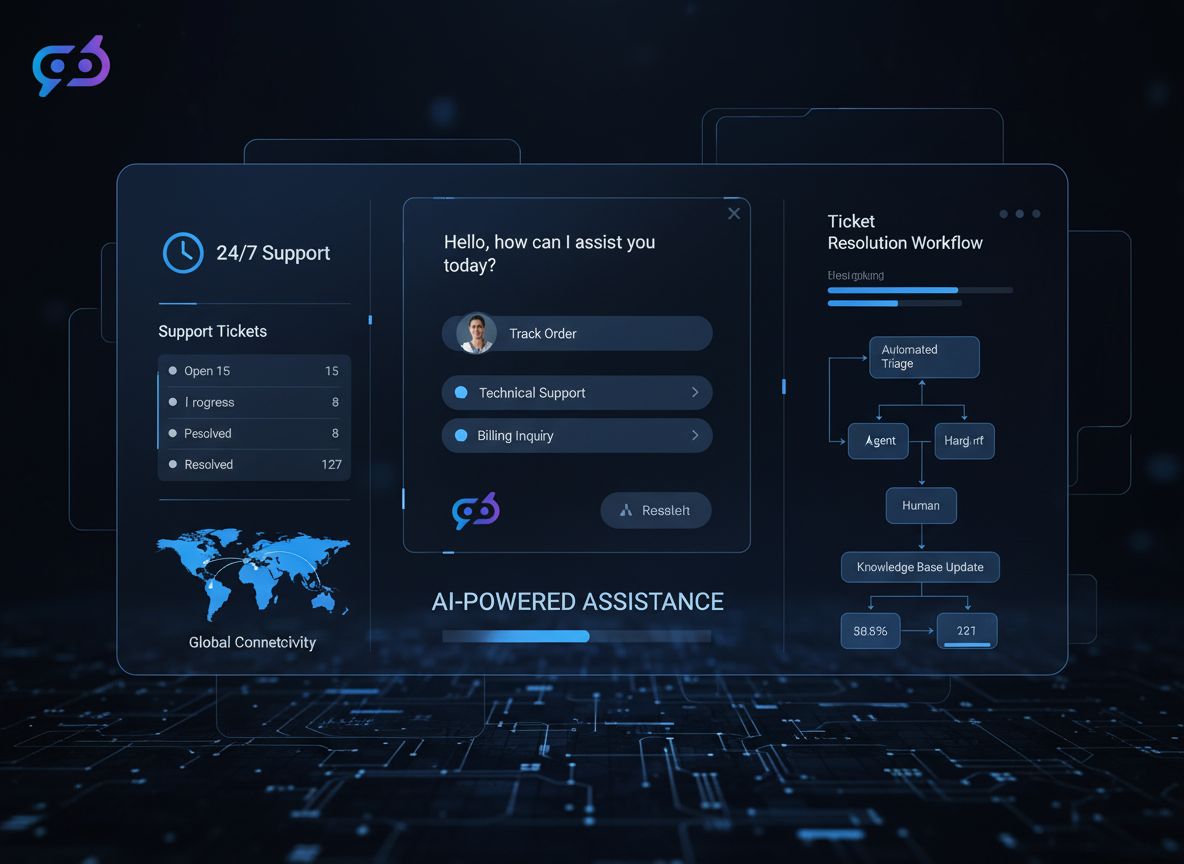
The traditional support ticket workflow involves multiple manual steps: a customer submits a ticket, it sits in a queue, a human agent reads it, categorizes it, researches the issue, and responds. This process can take hours or days. AI fundamentally reimagines this workflow, compressing timelines and improving outcomes.
When a customer submits a support ticket through an AI-powered system, several things happen simultaneously. First, the system analyzes the ticket content using NLP to understand the customer’s issue. It extracts key information—the product or service involved, the specific problem, any error messages, and the customer’s emotional state. Within milliseconds, the system has categorized the ticket and assessed its urgency.
For straightforward issues—password resets, account unlocks, billing inquiries, status checks—the AI can often resolve the problem immediately through automated workflows. The customer receives a solution without waiting for human intervention. For more complex issues, the system routes the ticket to the appropriate team member, but crucially, it provides that agent with complete context: the customer’s history, previous interactions, attempted solutions, and relevant knowledge base articles. This context dramatically accelerates resolution because the agent doesn’t need to spend time gathering information.
Sentiment analysis plays a crucial role in this process. If a customer’s message indicates frustration or urgency, the system prioritizes that ticket and may route it directly to a senior agent or team lead. This ensures that upset customers receive prompt, empathetic attention rather than being processed in standard queue order.
Throughout the resolution process, AI continues to assist. It suggests responses to agents, recommends relevant knowledge base articles, and flags potential escalation points. When the issue is resolved, the system captures the resolution details, adding them to the knowledge base for future reference. Over time, this creates a continuously improving repository of solutions that makes the entire support operation more efficient.
Join our newsletter
Get latest tips, trends, and deals for free.
FlowHunt: Streamlining AI-Powered Customer Support Workflows
While AI technologies are powerful, their effectiveness depends on seamless integration with existing business systems and workflows. This is where FlowHunt excels. FlowHunt is a workflow automation platform that enables businesses to build, manage, and optimize AI-powered customer support operations without requiring extensive technical expertise.
FlowHunt allows support teams to:
Automate Ticket Routing: Create intelligent workflows that automatically categorize incoming tickets and route them to the appropriate team based on issue type, urgency, and agent expertise.
Integrate Knowledge Bases: Connect your support knowledge base directly to your support workflows, enabling AI to surface relevant articles and solutions automatically.
Track Support Metrics: Monitor key performance indicators like response time, resolution time, customer satisfaction, and first-contact resolution rate in real-time.
Create Custom Workflows: Build tailored automation workflows that match your specific support processes, from simple ticket categorization to complex multi-step escalation procedures.
Manage Multi-Channel Support: Orchestrate support across email, chat, social media, and other channels from a single platform.
Analyze Support Data: Generate insights from support ticket data to identify trends, common issues, and opportunities for improvement.
By using FlowHunt to orchestrate your AI customer service operations, you ensure that your AI investments deliver maximum value. Rather than managing disparate tools and manual processes, FlowHunt creates a unified, intelligent support ecosystem where AI and human agents work together seamlessly.
Automated Chatbots and Virtual Assistants: The First Line of Support
Chatbots represent the most visible manifestation of AI in customer service. These intelligent virtual assistants handle the initial customer interaction, answering questions, gathering information, and either resolving issues or escalating them appropriately.
Modern chatbots powered by advanced NLP can handle conversations that feel remarkably human-like. A customer might ask, “I can’t log into my account and I’m getting some weird error message,” and the chatbot understands not just the literal words but the underlying problem: an authentication issue. It can ask clarifying questions, suggest troubleshooting steps, and if necessary, collect information for escalation to a human agent.
The advantages of chatbot-based support are substantial. Customers receive immediate responses, even outside business hours. Common issues are resolved instantly, improving customer satisfaction. Support teams are freed from handling routine inquiries, allowing them to focus on complex issues. And because chatbots operate at scale, they can handle traffic spikes without degradation in service quality.
However, effective chatbots require careful design and continuous refinement. They need access to comprehensive, up-to-date knowledge bases. They must be trained on common customer inquiries and edge cases. And they must be configured to recognize when an issue exceeds their capabilities and escalate appropriately. Businesses that invest in chatbot quality—rather than deploying generic, poorly-trained bots—see dramatically better results.
Intelligent Ticket Categorization and Prioritization
One of the most time-consuming aspects of traditional support operations is ticket triage: reading each incoming ticket, understanding the issue, categorizing it, and assigning it to the appropriate team. This manual process is slow, error-prone, and doesn’t scale well.
AI automates and dramatically improves this process. Machine learning algorithms trained on historical ticket data can automatically categorize incoming tickets with high accuracy. A ticket mentioning “billing,” “invoice,” and “charge” is automatically routed to the billing team. A ticket describing a technical error is routed to technical support. A ticket expressing frustration about a product feature is routed to product management.
Beyond categorization, AI assesses urgency. By analyzing keywords, sentiment, and customer history, the system identifies which tickets require immediate attention. A customer who has been waiting for three days and is expressing frustration gets higher priority than a customer asking a general product question. A ticket from a high-value customer gets prioritized differently than one from a new customer. This intelligent prioritization ensures that support resources are allocated where they matter most.
The impact on support operations is significant. Tickets are routed faster, agents spend less time on administrative tasks, and urgent issues receive prompt attention. Studies show that intelligent ticket routing can reduce average resolution time by 20-30% and improve first-contact resolution rates substantially.
Customer support isn’t just about solving problems—it’s about managing emotions. A customer who is frustrated, angry, or upset requires different handling than a customer who is simply seeking information. Traditional support systems treat all tickets equally. AI-powered systems recognize emotional context and respond accordingly.
Sentiment analysis algorithms evaluate the emotional tone of customer messages. They identify language patterns associated with frustration, anger, satisfaction, confusion, and other emotional states. When a customer’s message contains strong negative sentiment, the system flags the ticket as requiring empathetic handling and may route it to a senior agent or team lead trained in de-escalation.
This capability serves multiple purposes. It ensures that upset customers receive appropriate attention, improving the likelihood of successful resolution and retention. It helps support teams identify systemic issues—if many customers are expressing frustration about a particular feature or process, that’s a signal that something needs to change. And it provides valuable data for training and coaching support agents on emotional intelligence and customer empathy.
Self-Service and Knowledge Base Optimization
Not every customer issue requires human intervention. Many customers prefer to solve problems independently, and many issues can be resolved through self-service. AI dramatically improves self-service by making knowledge bases more discoverable and useful.
Traditional knowledge bases are often poorly organized, difficult to search, and filled with outdated or irrelevant articles. Customers struggle to find answers, become frustrated, and escalate to human support. AI transforms this experience. When a customer submits a query, AI analyzes their question and surfaces the most relevant knowledge base articles. If the customer is browsing your website, AI can proactively suggest articles related to their behavior. If a customer is in a chat conversation with a bot, the bot can recommend articles that address their issue.
This approach benefits everyone. Customers get faster answers without waiting for human support. Support teams handle fewer routine inquiries. And the knowledge base becomes more valuable as AI learns which articles are most helpful for different types of issues.
Effective self-service also reduces support costs significantly. A customer who resolves their own issue through a knowledge base article costs nothing to support. A customer who gets an instant chatbot response costs minimal resources. Only complex issues that require human expertise consume expensive support agent time.
Seamless Handoff to Human Agents
Despite AI’s capabilities, some issues require human judgment, empathy, or specialized expertise. Effective AI-powered support systems recognize these situations and seamlessly escalate to human agents.
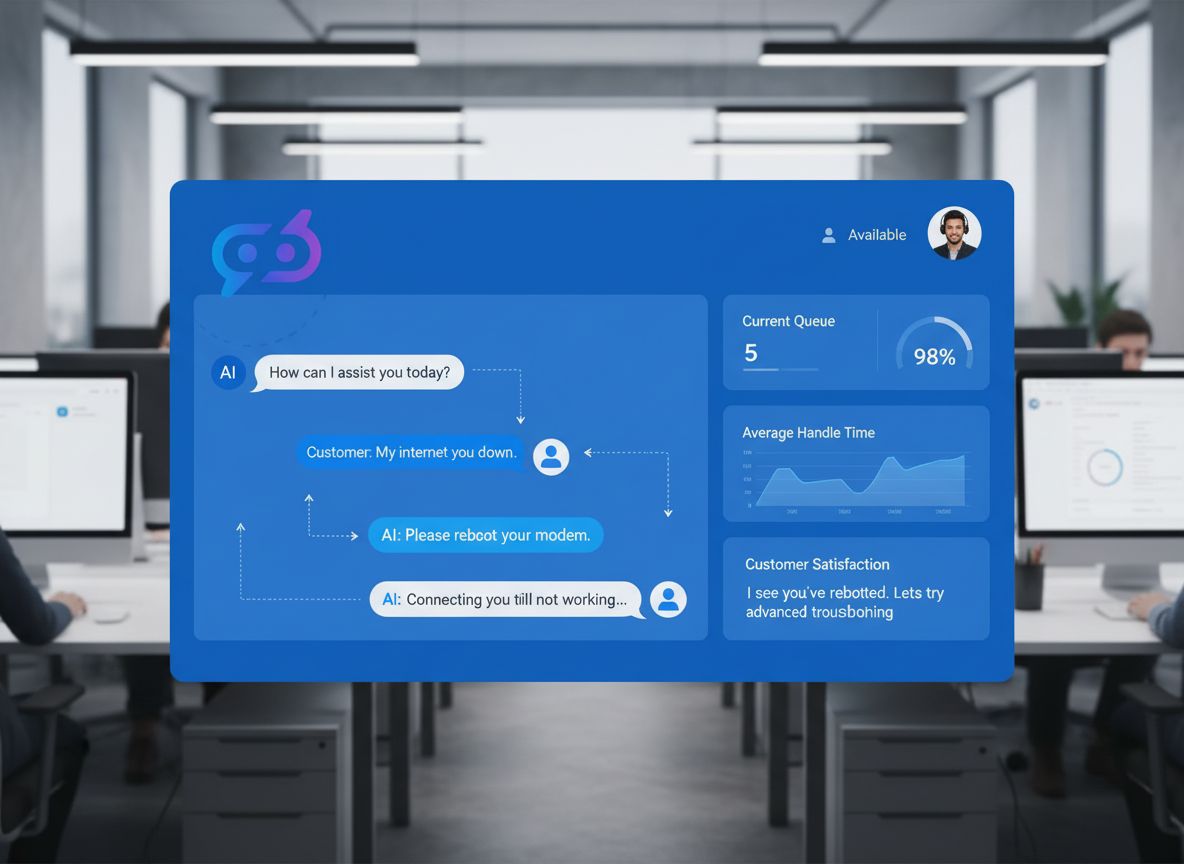
The key to successful handoffs is context. When an AI system escalates a ticket to a human agent, it should provide complete information: the customer’s history, previous interactions, attempted solutions, relevant knowledge base articles, and the AI’s assessment of the issue. With this context, the human agent can immediately understand the situation and continue the conversation without requiring the customer to repeat information.
This hybrid approach—AI handling routine issues and escalating complex ones—creates an optimal support experience. Customers get fast responses for simple issues and expert attention for complex ones. Support agents focus on high-value interactions where their expertise matters most. And the organization benefits from the cost efficiency of automation combined with the quality of human expertise.
Cost Reduction and Operational Efficiency
The financial impact of AI-powered customer service is substantial. Research shows that AI chatbots can reduce customer support costs by approximately 30% by handling routine inquiries autonomously. For a mid-sized company with a 50-person support team, this could translate to savings of $1-2 million annually.
These savings come from multiple sources. First, AI handles routine inquiries that would otherwise require human agent time. Second, intelligent routing and prioritization reduce the time agents spend on administrative tasks. Third, AI-assisted agents—where AI suggests responses and provides relevant information—work more efficiently than agents without AI support. Fourth, improved first-contact resolution means fewer repeat contacts and escalations.
Beyond direct cost savings, AI enables scalability. As a business grows and customer inquiry volume increases, AI scales without proportional increases in staffing. A support team that handles 1,000 inquiries per day with 20 agents might handle 2,000 inquiries per day with the same 20 agents if AI handles 50% of the volume. This scalability is particularly valuable for growing businesses and seasonal operations.
Proactive Support and Anomaly Detection
The most advanced AI-powered support systems don’t just react to customer issues—they anticipate them. By analyzing ticket patterns, product telemetry, and customer behavior, AI can identify emerging problems and trigger proactive communications.
For example, if AI detects that many customers are experiencing a particular error, it can automatically send a notification to affected customers with a workaround or solution before they submit a support ticket. If a customer’s usage patterns suggest they might encounter a problem, the system can proactively offer assistance. If a product update is causing issues for a subset of users, the system can identify those users and reach out with support.
This proactive approach transforms the support relationship. Rather than customers struggling with problems and then reaching out for help, support teams help customers avoid problems in the first place. This improves customer satisfaction, reduces support ticket volume, and demonstrates that the company cares about customer success.
Multi-Language Support and Global Reach
For businesses serving international customers, language barriers have traditionally been a significant challenge. Hiring native speakers for every language is expensive and doesn’t scale. AI solves this problem through multilingual NLP.
Modern AI customer service systems can handle support in dozens of languages. A customer in Spain can interact with a chatbot in Spanish, a customer in Japan can interact in Japanese, and a customer in Brazil can interact in Portuguese. The AI understands context and nuance in each language, providing culturally appropriate responses.
This capability enables businesses to serve global customers without proportional increases in staffing. A single support team can effectively serve customers worldwide, with AI handling language translation and cultural adaptation. This is particularly valuable for SaaS companies, e-commerce businesses, and any organization with international customers.
Learning and Continuous Improvement
AI systems don’t remain static. Through machine learning, they continuously improve based on new data and feedback. Each customer interaction provides training data that makes the system smarter.
When a chatbot handles a ticket, the system learns from the outcome. If the customer was satisfied with the resolution, the system reinforces that approach. If the customer was unsatisfied or escalated, the system learns what didn’t work. Over time, this creates a virtuous cycle of improvement where the system becomes increasingly effective at understanding customer issues and providing appropriate solutions.
This continuous learning is particularly valuable for handling new products, services, or changing customer needs. Rather than requiring manual updates and retraining, the system adapts automatically as it encounters new situations. A company launching a new product will see chatbot effectiveness improve dramatically over the first few weeks as the system learns common questions and issues related to the new product.
Real-World Impact: Case Study in Support Transformation
Consider a mid-sized SaaS company with 30 support agents handling approximately 5,000 customer inquiries per month. Before implementing AI, the company faced several challenges: average response time was 4 hours, first-contact resolution rate was 45%, and support costs were consuming 8% of revenue.
After implementing an AI-powered support system with intelligent chatbots, ticket routing, and knowledge base integration, the company saw dramatic improvements. Average response time dropped to 15 minutes for routine inquiries and 30 minutes for complex issues. First-contact resolution rate improved to 68%. Support costs decreased by 25%, freeing resources for product development and customer success initiatives.
More importantly, customer satisfaction scores improved significantly. Customers appreciated the instant responses and faster resolution times. The support team appreciated having AI handle routine inquiries, allowing them to focus on complex issues where their expertise added real value. And the company gained valuable insights from analyzing support ticket patterns, identifying product improvements that reduced future support volume.
This transformation didn’t happen overnight. It required careful planning, investment in the right tools and training, and continuous refinement. But the results demonstrate the substantial value that AI-powered customer service can deliver.
Implementation Considerations and Best Practices
Successfully implementing AI-powered customer service requires more than just deploying technology. Several critical factors determine success or failure.
Knowledge Base Quality: An up-to-date, well-organized knowledge base is essential. If your knowledge base contains outdated information or is poorly structured, AI will surface poor-quality answers. Invest in knowledge base maintenance and organization before deploying AI.
Data Privacy and Governance: Customer support interactions contain sensitive information. Implement clear policies for data handling, retention, and consent. Ensure compliance with relevant regulations like GDPR and CCPA. Be transparent with customers about how their data is used.
Channel Orchestration: Decide which channels to automate (chat, email, social media, voice) and ensure seamless handoffs between channels. A customer who starts a conversation on chat should be able to continue on email without repeating information.
Continuous Training and Refinement: AI systems require ongoing training and refinement. Regularly review chatbot conversations, identify areas for improvement, and update training data. Monitor performance metrics and adjust configurations based on results.
Agent Training: Your support agents need training on how to work effectively with AI. They should understand how to review AI-suggested responses, when to override AI recommendations, and how to provide feedback that improves the system.
Customer Communication: Be transparent with customers about AI involvement in support. Many customers appreciate knowing they’re interacting with AI, and some prefer human support. Provide clear options and easy escalation paths.
Conclusion
AI-powered 24/7 customer service represents a fundamental shift in how businesses support their customers. By combining intelligent chatbots, machine learning, sentiment analysis, and predictive analytics, organizations can provide faster, more consistent, and more scalable support while reducing costs and improving customer satisfaction.
The technology is mature, proven, and increasingly accessible. The question is no longer whether AI can improve customer service—the evidence is overwhelming. The question is how quickly your organization will adopt these capabilities to gain competitive advantage.
The businesses that lead their industries in customer satisfaction and support efficiency are those that have embraced AI as a core component of their support strategy. They’ve invested in the right tools, trained their teams effectively, and continuously refined their processes based on data and feedback. The result is support operations that are faster, smarter, and more customer-centric than ever before.
For businesses ready to transform their customer support operations, the time to act is now. The competitive advantage of AI-powered support is too significant to ignore, and the cost of delay is measured in lost customers and missed opportunities.
Supercharge Your Customer Support with FlowHunt
Automate ticket routing, integrate your knowledge base, and track support metrics—all in one intelligent platform. Transform your support operations with FlowHunt's workflow automation.
AI chatbots excel at handling routine inquiries and can resolve up to 80% of common support tickets. For complex issues, they seamlessly escalate to human agents with full context, ensuring customers receive appropriate support.
AI automatically categorizes, prioritizes, and routes tickets to the right team, analyzes customer sentiment, and suggests solutions. This reduces manual sorting time and enables faster first-contact resolution for straightforward issues.
Modern AI-powered support systems can handle multiple languages through natural language processing, allowing businesses to serve global customers without requiring native speakers for every language.
Studies show AI chatbots can reduce customer support costs by up to 30% by handling routine inquiries autonomously, allowing human agents to focus on high-value, complex issues that require personal attention.
Arshia is an AI Workflow Engineer at FlowHunt. With a background in computer science and a passion for AI, he specializes in creating efficient workflows that integrate AI tools into everyday tasks, enhancing productivity and creativity.
Arshia Kahani
AI Workflow Engineer
Automate Your Customer Support Workflows with FlowHunt
Streamline ticket routing, automate responses, and track support metrics—all integrated with your existing tools.
How to Automate Customer Support with AI While Maintaining Human Handoff
Learn how to implement AI-powered customer support automation that seamlessly transitions to human agents for complex issues, improving efficiency while maintai...
Discover the benefits of an AI-Agent Powered Customer Service Flow. Enhance support with AI-driven responses, seamless transitions to human agents, and improved...
Discover how a customer service chatbot can enhance your support operations with quick, accurate responses, 24/7 availability, and seamless platform integration...
2 min read
AI
Chatbot
+4
Cookie Consent We use cookies to enhance your browsing experience and analyze our traffic. See our privacy policy.