Automating Repetitive Content Creation Tasks: A Complete Guide for Marketing Teams
Discover how to automate content creation, scheduling, and distribution with AI tools and workflow automation. Learn best practices for marketing teams to save time and scale content production.
content-marketing
automation
AI
marketing-strategy
workflow
Key benefits of content automation for marketing teams:
Save 30-50% of time on repetitive content tasks
Free up 20-30 hours per week per team member for strategic work
Scale content production without proportionally increasing headcount
Ensure consistency across all channels and brand touchpoints
Reduce human error with automated workflows
Enable data-driven optimization and analytics
What Is Content Automation and Why It Matters
Content automation refers to the use of technology and artificial intelligence to streamline, generate, schedule, and distribute marketing content with minimal manual intervention. Rather than replacing human creativity, automation handles the repetitive, time-consuming aspects of content production—allowing your team to focus on strategy, brand voice, and campaigns that require genuine creative thinking.
The modern marketing landscape demands constant content production. Brands need blog posts for SEO, social media updates for engagement, email campaigns for nurturing, product descriptions for e-commerce, and video content for multiple platforms. Doing all of this manually is not just inefficient—it’s unsustainable. According to industry research, marketing teams spend approximately 40-50% of their time on administrative and repetitive tasks rather than strategic work. Content automation directly addresses this inefficiency by handling the mechanical aspects of content creation and distribution.
The benefits extend beyond time savings. Automated workflows ensure consistency across channels, reduce human error, enable data-driven optimization, and allow teams to scale content production without proportionally increasing headcount. For growing companies, this scalability is critical. A team of five can produce the output of a team of ten through intelligent automation.
Why Content Automation Is Essential for Modern Marketing Teams
The competitive pressure in digital marketing has never been higher. Brands that publish consistently, maintain active social media presence, send regular email campaigns, and optimize for search engines gain significant advantages over competitors who operate sporadically. However, maintaining this level of output with traditional manual processes is exhausting and error-prone.
Content automation addresses several critical business challenges:
Time Efficiency: Automating repetitive tasks frees up 20-30 hours per week per team member, which can be redirected toward strategy, analysis, and creative work that drives higher ROI.
Consistency: Automated workflows ensure that content follows brand guidelines, maintains consistent tone, and publishes on schedule—eliminating the variability that comes with manual processes.
Scalability: As your business grows, you can increase content output without hiring proportionally more staff. Automation scales with your needs.
Data-Driven Optimization: Automated systems can track performance metrics, identify what works, and adjust future content based on real data rather than intuition.
Reduced Errors: Automation eliminates typos, missed deadlines, and inconsistent formatting that plague manual content workflows.
24/7 Publishing: Content can be scheduled and published around the clock, capturing audiences across different time zones and maximizing reach.
For marketing teams operating with limited budgets or tight deadlines, content automation isn’t a luxury—it’s a necessity for remaining competitive.
Ready to grow your business?
Start your free trial today and see results within days.
AI-Powered Content Generation: The Foundation of Automation
The most transformative aspect of content automation is AI-powered content generation. Modern language models and AI writing assistants can generate high-quality, contextually relevant content in seconds—content that previously required hours of human effort.
Text-Based Content Generation
AI tools like ChatGPT, Jasper AI, Writesonic, and Copy.ai can generate various types of marketing content:
Blog Posts and Articles: Provide a topic, outline, or keyword focus, and AI generates comprehensive, SEO-optimized articles. These tools understand content structure, can incorporate relevant keywords naturally, and produce content that reads naturally rather than mechanically.
Social Media Copy: AI can generate platform-specific content for Twitter, LinkedIn, Instagram, and Facebook. Some tools automatically adjust tone and length for different platforms, ensuring your message resonates with each audience.
Email Campaign Copy: From promotional emails to newsletter content to abandoned cart sequences, AI can draft compelling email copy that drives engagement and conversions.
Product Descriptions: E-commerce teams benefit enormously from AI-generated product descriptions. Instead of manually writing descriptions for hundreds of products, AI can generate unique, compelling descriptions that highlight key features and benefits.
Meta Descriptions and Title Tags: For SEO purposes, AI can generate optimized title tags and meta descriptions that improve click-through rates from search results.
The key to effective AI content generation is providing clear inputs. The better your prompts and instructions, the better the output. Most marketing teams find that AI-generated content requires 10-20% human editing and refinement, but this is still dramatically faster than writing from scratch.
Content Scheduling and Distribution Automation
Once content is created, the next bottleneck is distribution. Manually posting to multiple social media platforms, scheduling emails, and coordinating publishing across channels is tedious and error-prone. Content scheduling automation solves this problem entirely.
Social Media Automation Platforms
Tools like Buffer, Hootsuite, Sprout Social, and CoSchedule allow you to:
Schedule posts across multiple platforms simultaneously
Automatically adjust content format for different platforms (a LinkedIn post becomes a Twitter thread, which becomes an Instagram caption)
Maintain consistent posting schedules without manual intervention
Analyze engagement and optimize posting times based on when your audience is most active
Collaborate with team members on content approval workflows
These platforms integrate with your content calendar, so once content is approved, it automatically publishes at the optimal time. Some advanced platforms even use AI to recommend the best posting times based on historical engagement data.
Email Marketing Automation
Email remains one of the highest-ROI marketing channels, but managing email campaigns manually is incredibly time-consuming. Platforms like Mailchimp, HubSpot, ActiveCampaign, and ConvertKit automate the entire email workflow:
Segmentation: Automatically segment your audience based on behavior, demographics, or engagement level
Personalization: Dynamically insert subscriber names, past purchase history, or personalized recommendations
Triggered Sequences: Send automated email sequences based on user actions (welcome series, abandoned cart, post-purchase follow-up)
A/B Testing: Automatically test different subject lines, content, and send times to optimize performance
Reporting: Track open rates, click rates, and conversions automatically
A single well-configured email automation sequence can nurture hundreds or thousands of leads simultaneously, generating consistent revenue with minimal ongoing effort.
Blog Publishing Automation
Content management systems like WordPress, Ghost, and HubSpot allow you to schedule blog posts to publish automatically at specific dates and times. This ensures consistent publishing schedules and allows you to batch-create content during productive periods, then release it strategically over time.
Join our newsletter
Get latest tips, trends, and deals for free.
Content Repurposing and Multi-Format Automation
One of the most underutilized aspects of content automation is repurposing. A single piece of content—say, a comprehensive blog post—can be transformed into dozens of assets: social media posts, email newsletters, infographics, videos, podcasts, and more. Automation tools make this repurposing process seamless.
Video Content Automation
Tools like Descript, Pictory, and Synthesia can automatically transform long-form content into short-form video:
Automatic Editing: Descript can transcribe video, identify key moments, and automatically create short clips suitable for TikTok, Instagram Reels, or YouTube Shorts
AI Voiceovers: Generate professional voiceovers for videos without hiring voice actors
Automated Captions: Automatically generate and format captions for accessibility and engagement
Video Generation from Text: Pictory and Lumen5 can create videos from blog posts or scripts, automatically selecting relevant images and animations
A single 30-minute webinar can be automatically transformed into 10-15 short-form videos, each optimized for different platforms and audiences.
Infographic and Visual Content Automation
Canva Pro and Visme offer template-based design automation:
Template Customization: Use pre-designed templates to create professional infographics, social media graphics, and presentations in minutes
Batch Creation: Create multiple variations of the same design with different data or messaging
Brand Consistency: Maintain consistent branding across all visual assets automatically
Transcription and Content Extraction
Tools like Otter.ai, Rev, and Descript automatically transcribe audio and video content. This transcription can then be repurposed into:
Blog posts and articles
Social media snippets
Email content
Podcast show notes
Searchable content archives
This is particularly valuable for teams that produce webinars, podcasts, or video content. Instead of manually transcribing (a tedious, time-consuming process), automation handles it instantly.
Workflow Automation: Connecting Your Tools
While individual tools are powerful, their true potential emerges when they’re connected into cohesive workflows. Workflow automation platforms like Zapier, Make (formerly Integromat), and IFTTT connect your various marketing tools, eliminating manual data transfer and triggering automated actions.
Common Workflow Automation Scenarios
Workflow
Tools Involved
Benefit
Blog to Social
WordPress + Buffer + Zapier
New blog posts automatically create social media posts and schedule them
Lead Capture to Email
Web Form + Mailchimp + Zapier
Form submissions automatically trigger welcome email sequences
Content Performance Tracking
Google Analytics + Slack + Zapier
Daily/weekly performance reports automatically sent to team Slack
Social Mentions to CRM
Twitter + HubSpot + Zapier
Brand mentions automatically logged as leads in your CRM
Video Upload to Distribution
YouTube + Buffer + Zapier
New YouTube videos automatically create social media announcements
Email Signup to Segmentation
Email Platform + CRM + Zapier
New subscribers automatically added to appropriate segments based on source
These workflows eliminate manual data entry, reduce errors, and ensure that information flows seamlessly between systems. For example, instead of manually copying blog post links into your social media scheduler, a Zapier workflow can automatically create social posts the moment a blog is published.
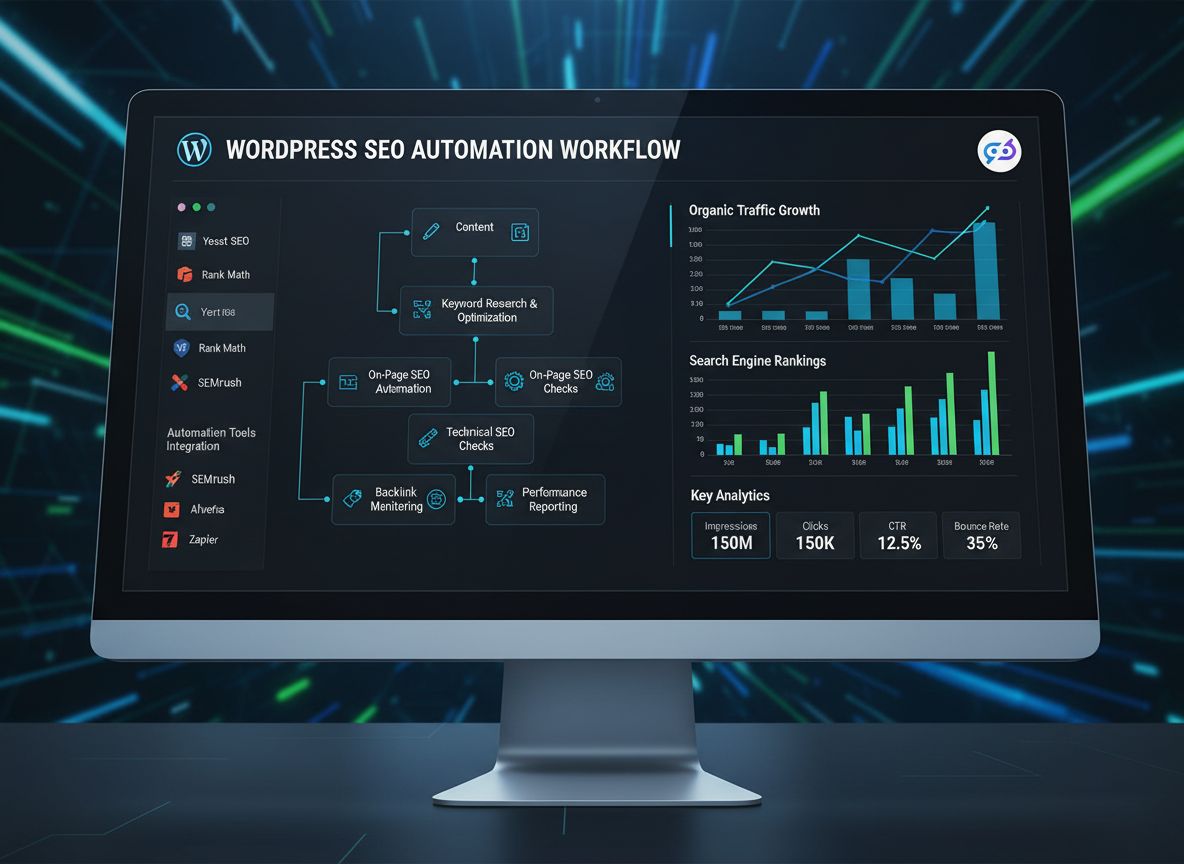
SEO Automation: Optimizing Content at Scale
Search engine optimization is critical for content marketing success, but manually optimizing every piece of content is time-consuming. SEO automation tools handle much of this work automatically.
Keyword Research and Optimization
Tools like SEMrush, Ahrefs, and Moz provide:
Automated Keyword Suggestions: Identify high-opportunity keywords for your content
Content Optimization Recommendations: Analyze top-ranking content and provide specific recommendations for improving your content’s SEO performance
Rank Tracking: Automatically monitor your rankings for target keywords and alert you to changes
Competitor Analysis: Automatically analyze competitor content and identify gaps in your content strategy
Automated SEO Reporting
Rather than manually compiling SEO metrics, tools like Google Analytics, SEMrush, and Rank Ranger automatically generate reports showing:
Traffic trends
Keyword rankings
Backlink changes
Content performance
Conversion metrics
These reports can be automatically emailed to stakeholders on a schedule, providing visibility into content performance without manual effort.
On-Page Optimization Automation
Some AI tools can automatically optimize existing content for SEO by:
Suggesting keyword placement improvements
Recommending meta description changes
Identifying opportunities to improve readability
Suggesting internal linking opportunities
FlowHunt: Unified Content Automation Platform
While individual tools excel at specific tasks, managing multiple platforms creates complexity and inefficiency. This is where FlowHunt transforms content automation. FlowHunt provides a unified platform that integrates AI content generation, workflow automation, scheduling, analytics, and optimization—eliminating the need to juggle dozens of separate tools.
How FlowHunt Streamlines Content Automation
FlowHunt’s integrated approach to content automation offers several advantages:
Centralized Workflow Management: Instead of switching between ChatGPT for writing, Buffer for scheduling, Google Analytics for tracking, and Zapier for automation, FlowHunt consolidates these functions into a single platform. Your team works in one place, reducing context switching and improving efficiency.
AI-Powered Content Generation: FlowHunt integrates advanced AI models for generating blog posts, social media content, email copy, and more. The AI understands your brand voice and can generate content that aligns with your specific style and messaging.
Intelligent Scheduling: FlowHunt analyzes your audience engagement patterns and automatically recommends optimal posting times. Content is scheduled across multiple channels simultaneously, with automatic format adjustment for each platform.
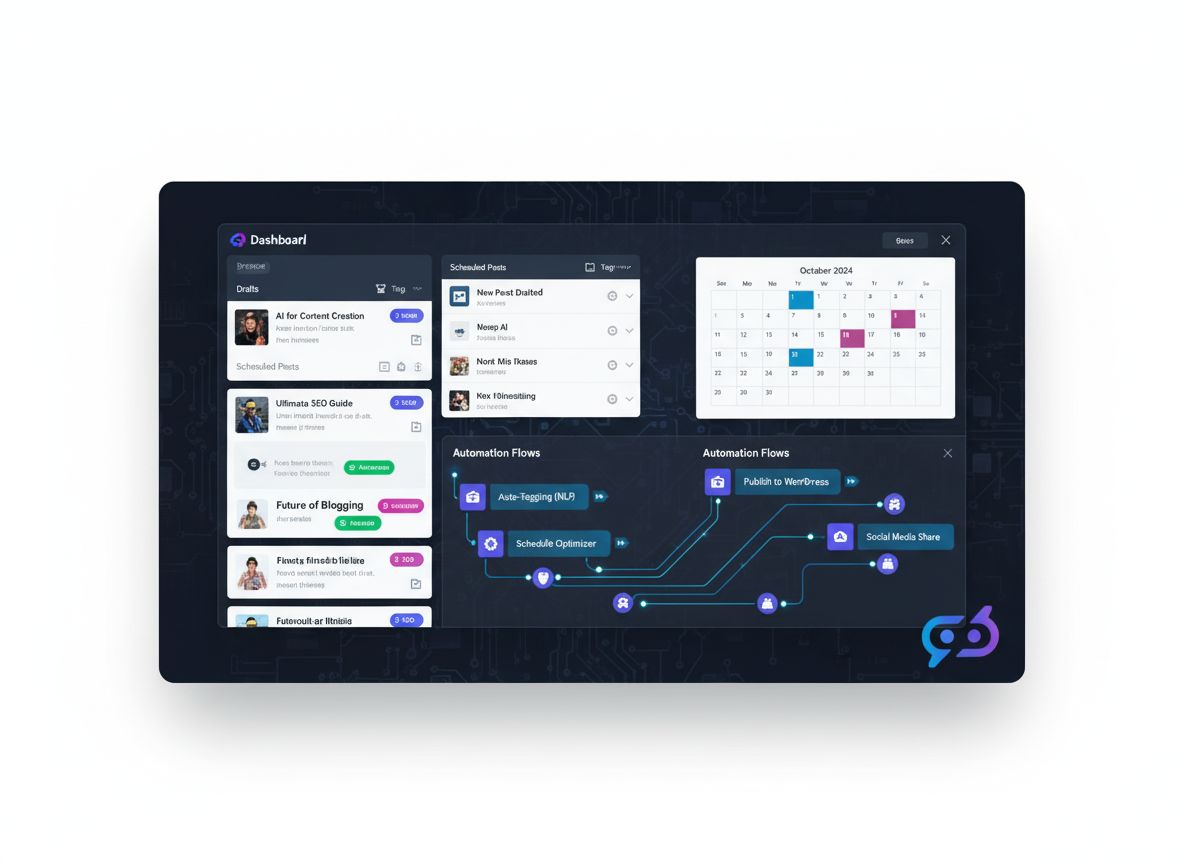
Workflow Automation Without Code: Create complex automation workflows without writing code. Connect content generation to scheduling to distribution to analytics—all visually, without technical expertise.
Unified Analytics: Track content performance across all channels in a single dashboard. Understand which content types, topics, and formats drive the most engagement and conversions.
Brand Consistency: Maintain consistent brand voice, messaging, and visual identity across all content and channels automatically.
Feature
Traditional Multi-Tool Approach
FlowHunt Unified Platform
Number of Tools Required
8-12 separate platforms
1 integrated platform
Time to Create and Publish Content
2-3 hours per piece
20-30 minutes per piece
Learning Curve
Steep (multiple interfaces)
Gentle (single interface)
Integration Complexity
Manual, error-prone
Automatic, seamless
Cost
$200-500/month
Significantly lower
Team Collaboration
Fragmented across tools
Centralized
Analytics and Reporting
Manual compilation
Unified dashboard
For marketing teams serious about scaling content production without scaling headcount, FlowHunt eliminates the friction and complexity of managing multiple tools.
Practical Implementation: Building Your Content Automation Strategy
Understanding the tools is one thing; implementing them effectively is another. Here’s a practical framework for building a content automation strategy:
Step 1: Audit Your Current Workflow
Document your current content creation process from ideation to publishing. Identify:
Which tasks take the most time
Which tasks are most repetitive
Which tasks are most error-prone
Where bottlenecks occur
Most teams find that 40-50% of their time is spent on tasks that could be automated.
Step 2: Prioritize High-Impact Automation
Don’t try to automate everything at once. Start with your highest-impact, most repetitive tasks:
Social media posting (high frequency, repetitive)
Email campaigns (high ROI, repetitive)
Blog post scheduling (predictable, routine)
Content repurposing (time-consuming, mechanical)
These typically deliver the fastest ROI and build momentum for broader automation.
Step 3: Choose Your Tools Strategically
Rather than adopting every tool available, choose a core set that integrates well:
Content Generation: ChatGPT, Jasper, or FlowHunt’s built-in AI
Scheduling and Distribution: Buffer, Hootsuite, or FlowHunt
Email Marketing: Mailchimp, HubSpot, or integrated email in FlowHunt
Workflow Automation: Zapier or FlowHunt’s native automation
Analytics: Google Analytics + platform-specific analytics
Prioritize tools that integrate with each other to minimize manual data transfer.
Step 4: Create Standardized Processes
Document your content creation process as a repeatable workflow:
Content ideation and approval
AI generation with human review
Scheduling and distribution
Performance tracking and optimization
Standardized processes make automation more effective and easier to scale.
Step 5: Train Your Team
Ensure your team understands the new tools and processes. Provide training on:
How to write effective AI prompts
How to review and edit AI-generated content
How to use scheduling and automation tools
How to interpret analytics and optimize based on data
Well-trained teams adopt automation faster and achieve better results.
Step 6: Measure and Optimize
Track the impact of your automation:
Time saved per team member
Content output volume
Content quality metrics
Engagement and conversion rates
Cost per piece of content
Use these metrics to identify further optimization opportunities and justify continued investment in automation.
Real-World Case Study: Marketing Team Transformation
Consider a mid-sized B2B SaaS company with a marketing team of four people. They were spending approximately 60% of their time on content creation and distribution:
15 hours/week writing blog posts
10 hours/week managing social media
8 hours/week creating email campaigns
7 hours/week on administrative tasks
After implementing content automation:
Blog Posts: Using AI content generation + FlowHunt, they reduced blog creation time from 4 hours to 1 hour per post (75% reduction). They maintained quality through a 15-minute human review process.
Social Media: Automated scheduling + AI-generated captions reduced social media management from 10 hours to 2 hours per week (80% reduction).
Email Campaigns: Email automation sequences reduced campaign creation time from 4 hours to 30 minutes (87% reduction).
Administrative Tasks: Workflow automation eliminated most administrative overhead.
Results: The team reclaimed approximately 35 hours per week. Rather than hiring additional staff, they redirected this time toward:
Strategic content planning and SEO optimization
Deeper audience research and persona development
Conversion rate optimization and A/B testing
Content performance analysis and strategy refinement
Within six months, their organic traffic increased 45%, email engagement improved 32%, and social media reach grew 60%—all with the same team size. The automation didn’t replace the team; it elevated them from execution to strategy.
Advanced Automation: Personalization and Dynamic Content
Beyond basic scheduling and generation, advanced automation enables personalization at scale. Dynamic content systems can automatically customize content based on user behavior, demographics, or preferences.
Email Personalization
Modern email platforms can automatically:
Insert subscriber names and personalized details
Show different product recommendations based on past purchases
Adjust content based on engagement level (active vs. inactive subscribers)
Send emails at optimal times for each individual subscriber
Website Personalization
Tools like Optimizely and VWO allow you to:
Show different content to different visitor segments
Automatically adjust messaging based on traffic source
Display personalized product recommendations
Customize calls-to-action based on user behavior
Content Recommendations
AI-powered recommendation engines can automatically suggest relevant content to users based on their browsing history, similar to how Netflix recommends shows. This increases engagement and time on site.
Measuring Content Automation Success
The true measure of content automation success isn’t just time saved—it’s business impact. Track these key metrics:
Efficiency Metrics:
Time spent on content creation per piece
Number of pieces created per team member per month
Cost per piece of content
Quality Metrics:
Engagement rate (likes, comments, shares)
Click-through rate
Conversion rate
Time on page (for blog content)
Business Metrics:
Organic traffic growth
Lead generation volume
Customer acquisition cost
Revenue attributed to content
Team Metrics:
Team satisfaction and morale
Time available for strategic work
Professional development opportunities
Automation should improve all of these metrics. If you’re saving time but engagement is declining, your automation strategy needs adjustment.
Common Pitfalls and How to Avoid Them
Pitfall 1: Over-Reliance on AI Without Human Review
Problem: Publishing AI-generated content without review leads to errors, inconsistencies, and brand damage.
Solution: Implement a human review process for all AI-generated content. Even a 10-minute review catches errors and ensures brand consistency.
Pitfall 2: Losing Brand Voice
Problem: Automated content can feel generic and impersonal, damaging brand identity.
Solution: Train your AI tools with examples of your brand voice. Provide detailed brand guidelines. Have experienced team members review content to ensure it maintains your unique voice.
Pitfall 3: Automating Too Much, Too Fast
Problem: Trying to automate everything simultaneously overwhelms your team and leads to implementation failure.
Solution: Start with one or two high-impact automations. Master them, measure results, then expand gradually.
Pitfall 4: Ignoring Analytics
Problem: Automating content creation without tracking performance means you don’t know what’s working.
Solution: Implement comprehensive analytics from day one. Use data to continuously optimize your content strategy.
Pitfall 5: Tool Proliferation
Problem: Adopting too many tools creates complexity, integration challenges, and high costs.
Solution: Choose a core set of integrated tools. Resist the temptation to add new tools unless they solve a specific, critical problem.
The Future of Content Automation
Content automation technology is evolving rapidly. Emerging trends include:
Advanced AI Models: Larger, more sophisticated language models will generate increasingly high-quality content with less human intervention.
Multimodal Content Generation: AI will seamlessly generate text, images, video, and audio together, creating fully-formed content assets.
Predictive Analytics: AI will predict which content topics and formats will perform best before you create them, guiding your content strategy.
Real-Time Optimization: Content will be automatically optimized in real-time based on performance data, adjusting messaging and format on the fly.
Voice and Video Automation: Automated video creation, voice synthesis, and interactive content will become standard.
The teams that master content automation today will have significant competitive advantages tomorrow. The barrier to entry is lower than ever—the tools are accessible, affordable, and increasingly user-friendly.
Conclusion
Content automation is no longer a luxury for large enterprises with dedicated technical teams. Modern tools like FlowHunt, combined with AI content generation, workflow automation, and intelligent scheduling, make sophisticated content automation accessible to teams of any size. The marketing teams that embrace automation will produce more content, maintain higher quality, and free up their best people to focus on strategy and creativity—the work that truly drives business growth.
The question isn’t whether to automate your content creation—it’s how quickly you can implement automation to remain competitive. Start with your highest-impact, most repetitive tasks. Choose tools that integrate seamlessly. Train your team thoroughly. Measure results obsessively. And continuously optimize your automation strategy based on data.
The future of marketing belongs to teams that work smarter, not just harder. Content automation is the foundation of that smarter approach.
Supercharge Your Content Workflow with FlowHunt
Experience how FlowHunt automates your entire content creation process—from AI-powered generation and intelligent scheduling to unified analytics and workflow automation. Reclaim 20+ hours per week and scale your content production without scaling your team.
Blog posts, social media updates, email campaigns, product descriptions, video content, infographics, and more can be automated using AI tools and workflow platforms.
Marketing teams can save 30-50% of their time on repetitive tasks by implementing content automation, allowing them to focus on strategy and creative work.
AI-generated content serves as an excellent starting point and can be highly effective for routine tasks. However, human review and refinement ensures brand consistency and quality.
Start by identifying your most repetitive tasks, choose tools that integrate with your existing workflow, and gradually expand automation as your team becomes comfortable with the process.
Arshia is an AI Workflow Engineer at FlowHunt. With a background in computer science and a passion for AI, he specializes in creating efficient workflows that integrate AI tools into everyday tasks, enhancing productivity and creativity.
Arshia Kahani
AI Workflow Engineer
Automate Your Content Workflow with FlowHunt
Streamline your entire content creation process from research to publishing with intelligent automation
How to Automate Content Marketing from Brainstorming to Publishing with AI
Discover how to streamline your entire content marketing workflow using AI tools—from ideation and research to writing, optimization, publishing, and analytics....
Automated SEO Content Workflows for WordPress: A Complete Guide to Scaling Your Content Strategy
Learn how to implement automated SEO content workflows for WordPress to save time, maintain consistency, and improve search rankings. Discover tools, best pract...
Complete Guide to Automating WordPress Blog Post Creation, Publishing, and Tagging
Learn how to automate WordPress blog workflows using plugins, APIs, and no-code tools. Discover strategies to save time on content creation, scheduling, and tag...
15 min read
WordPress
Automation
+2
Cookie Consent We use cookies to enhance your browsing experience and analyze our traffic. See our privacy policy.