

Claude Opus
Find out more about the Opus model of Claude by Anthropic. Discover its strengths and weaknesses, and how it compares to the other models.
5 min read
AI
Claude Opus
+6
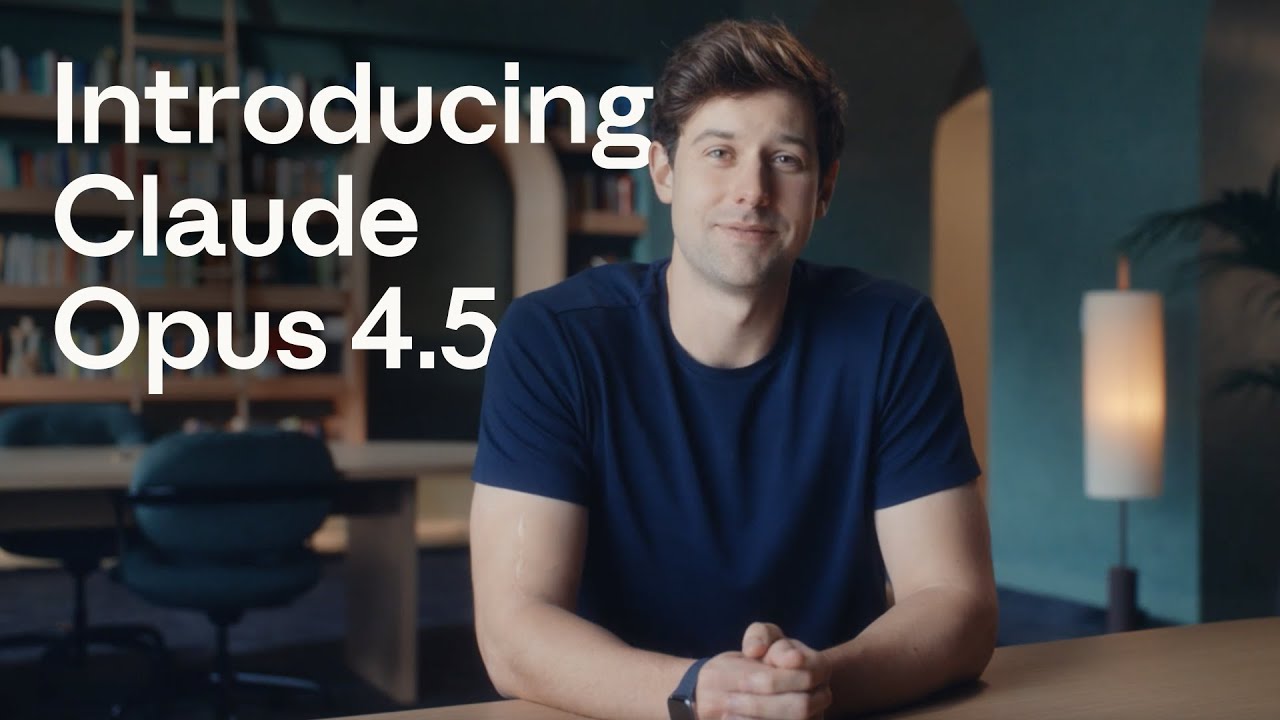
Discover how Claude Opus 4.5 sets new standards in AI-powered coding, agentic task automation, and enterprise productivity. Learn why this breakthrough model is transforming how teams work.
The landscape of artificial intelligence has undergone a dramatic transformation with the introduction of Claude Opus 4.5, a model that represents a quantum leap in AI capabilities. This breakthrough model is not just an incremental improvement over its predecessors—it fundamentally changes what’s possible in coding, agentic task automation, and everyday enterprise work. Whether you’re a software engineer tackling complex debugging challenges, a business analyst automating spreadsheet workflows, or an organization seeking to scale AI-driven automation, Claude Opus 4.5 delivers unprecedented performance and reliability. In this comprehensive guide, we’ll explore what makes this model revolutionary, how it outperforms existing solutions, and why it matters for your organization’s future.
Large language models have become the backbone of modern AI applications, powering everything from customer service chatbots to sophisticated code generation systems. These models are trained on vast amounts of text data and learn to predict and generate human-like responses across a wide range of tasks. The evolution of these models has been marked by steady improvements in accuracy, reasoning capability, and task versatility. However, each generation brings not just quantitative improvements but qualitative shifts in how the models approach problems. Early models struggled with complex reasoning, often producing plausible-sounding but incorrect answers. As models have evolved, they’ve developed better reasoning capabilities, improved context understanding, and more nuanced decision-making processes. Claude Opus 4.5 represents the culmination of years of research and development, incorporating lessons learned from previous iterations while introducing entirely new capabilities that set it apart from the competition.

Start your free trial today and see results within days.
In today’s software development landscape, coding efficiency and quality are paramount competitive advantages. Development teams face constant pressure to deliver features faster while maintaining code quality and security. Traditional approaches to code review and debugging are time-consuming and prone to human error, especially when dealing with complex systems spanning thousands of lines of code. This is where advanced AI models become transformative. A model that can understand code context deeply, identify subtle bugs that humans might miss, and suggest optimized solutions can dramatically accelerate development cycles. The ability to trust an AI system to handle complex coding tasks means developers can focus on architectural decisions and creative problem-solving rather than getting bogged down in tedious debugging. When a model can solve bugs that previous generations couldn’t find, it’s not just a marginal improvement—it’s a fundamental shift in what’s possible for development teams. Organizations that leverage such capabilities gain significant competitive advantages in time-to-market, code quality, and developer satisfaction.
Claude Opus 4.5 has earned recognition as the world’s best model for coding, agentic tasks, and everyday work applications. This distinction isn’t based on marketing claims but on rigorous benchmarking and real-world performance metrics. The model demonstrates a remarkable ability to “just get it”—to understand complex requirements, context, and nuances in ways that inspire genuine trust from engineers and researchers. One of the most telling indicators of the model’s capability is the increasing time between interventions. When engineers work with Claude Opus 4.5, they find themselves needing to step in and correct or guide the model less frequently. This extended autonomy period is a direct result of the model’s improved reasoning and decision-making capabilities. Colleagues across organizations report that Claude Opus 4.5 has solved bugs that Sonnet, the previous generation, could never have identified. These aren’t edge cases or theoretical scenarios—they’re real problems in production systems that required the superior reasoning capabilities of this new model. The trust factor is crucial here. In enterprise environments, trust in AI systems is paramount. When developers trust a model to handle complex tasks with minimal oversight, productivity skyrockets.
Get latest tips, trends, and deals for free.
One of the most sophisticated improvements in Claude Opus 4.5 is its enhanced ability to know when to think before acting. This might sound like a simple concept, but it represents a fundamental advancement in AI reasoning. Many AI systems operate in a reactive mode, immediately generating responses without considering the full implications of their actions. Claude Opus 4.5, by contrast, has learned to pause and reason through complex problems before committing to a solution. This deliberate approach to problem-solving results in more accurate changes and fewer costly mistakes. In software development, a single incorrect change can cascade through an entire system, causing unexpected failures and requiring extensive debugging. By taking time to reason through the implications of code changes, Claude Opus 4.5 ensures that modifications are not just syntactically correct but semantically sound and architecturally appropriate. This efficiency gain extends beyond just code quality. It also means the model uses computational resources more effectively, avoiding unnecessary processing and focusing its reasoning power where it matters most. For organizations running AI workloads at scale, this efficiency translates directly to cost savings and improved performance.
The true measure of an AI model’s capability is how it performs on challenging, real-world tasks. Claude Opus 4.5 has been evaluated on intensive engineering challenges that require deep technical knowledge, creative problem-solving, and the ability to manage complexity. In a two-hour engineering task that represents the pinnacle of technical difficulty, Claude Opus 4.5 scored higher than any human has ever achieved on that benchmark. This isn’t a narrow, specialized task—it’s a comprehensive engineering challenge that tests multiple dimensions of technical capability. This achievement has profound implications. It demonstrates that Claude Opus 4.5 has reached a level of technical competence that exceeds human expert performance on complex problems. For organizations, this means they can leverage the model for tasks that previously required hiring specialized experts or spending extensive time on problem-solving. The model can serve as a force multiplier for engineering teams, handling the most challenging technical problems while freeing human experts to focus on strategic decisions and novel innovations.
Beyond text-based reasoning and coding, Claude Opus 4.5 represents a significant leap forward in vision capabilities. The model’s improved ability to understand and process visual information opens entirely new possibilities for automation. Vision capabilities are particularly valuable for tasks involving user interface interaction, visual analysis, and document processing. With better vision understanding, Claude Opus 4.5 can more accurately interpret screenshots, diagrams, charts, and other visual content. This makes it substantially better at using computers—understanding what’s displayed on screen and taking appropriate actions based on visual context. For enterprises, this capability is transformative. Imagine automating workflows that involve navigating complex user interfaces, extracting information from visual documents, or analyzing charts and graphs. Previously, such tasks required human intervention because AI systems couldn’t reliably understand visual context. Claude Opus 4.5 changes this equation. The model can now handle visual tasks with the same sophistication it brings to text-based problems. This opens possibilities for automating front-end testing, UI-based workflow automation, and visual data analysis at scale.
For organizations looking to harness the power of Claude Opus 4.5, integration into existing workflows is crucial. This is where FlowHunt becomes invaluable. FlowHunt provides a sophisticated platform for orchestrating AI workflows, enabling seamless integration of advanced models like Claude Opus 4.5 into your content generation, automation, and business process pipelines. With FlowHunt, you can build complex workflows that leverage Claude Opus 4.5’s coding capabilities, agentic task execution, and vision understanding. Whether you’re automating content creation, orchestrating multi-step engineering tasks, or building intelligent automation systems, FlowHunt provides the infrastructure to manage these workflows efficiently. The platform handles the complexity of model integration, workflow orchestration, and result management, allowing your team to focus on defining the business logic and desired outcomes. By combining Claude Opus 4.5’s advanced capabilities with FlowHunt’s workflow orchestration, organizations can achieve unprecedented levels of automation and efficiency.
The practical applications of Claude Opus 4.5 span a wide range of enterprise scenarios. In software development, the model excels at code generation, bug detection, code review, and architectural suggestions. Development teams can use it to accelerate feature development, improve code quality, and reduce the time spent on debugging. For agentic tasks—where the AI system operates autonomously to accomplish complex objectives—Claude Opus 4.5’s improved reasoning and decision-making make it ideal for multi-step automation scenarios. The model can break down complex problems, execute steps in sequence, handle unexpected situations, and adapt its approach based on results. In everyday work like spreadsheet automation, data analysis, and business process automation, Claude Opus 4.5 brings sophisticated reasoning to tasks that previously required manual effort or simpler automation tools. The model understands business context, can work with complex data structures, and can generate solutions that are both technically sound and aligned with business requirements.
Experience how FlowHunt automates your AI content and SEO workflows — from research and content generation to publishing and analytics — all in one place. Integrate Claude Opus 4.5 and other advanced AI models into your automation pipelines.
A significant milestone for Claude Opus 4.5 is its availability on every major cloud platform. This is the first time a model of this caliber has been made available across such a broad range of infrastructure options. Whether your organization uses AWS, Google Cloud, Azure, or other major cloud providers, you can now access Claude Opus 4.5 without being locked into a specific platform. This universal availability has profound implications for enterprise adoption. Organizations can integrate Claude Opus 4.5 into their existing cloud infrastructure without major architectural changes. Teams can leverage the model within their preferred cloud environment, maintaining consistency with existing tools and workflows. The broad availability also promotes healthy competition and prevents vendor lock-in, ensuring that organizations maintain flexibility in their AI infrastructure decisions. For enterprises evaluating AI solutions, this multi-platform availability is a significant advantage, enabling them to choose the deployment option that best aligns with their infrastructure, compliance requirements, and operational preferences.
Throughout the AI industry, there’s a recurring theme when engineers discuss Claude Opus 4.5: trust. This isn’t trust based on marketing promises or theoretical capabilities—it’s trust earned through consistent, reliable performance on real problems. Engineers report that they trust this model more than previous versions, and they’re willing to give it more autonomy because it consistently delivers correct solutions. This trust is built on several factors. First, the model’s reasoning is transparent and understandable. When Claude Opus 4.5 solves a problem, engineers can follow the logic and understand why the solution works. Second, the model’s error rate is significantly lower than previous versions, reducing the need for extensive verification and correction. Third, the model’s ability to handle edge cases and complex scenarios means it rarely produces solutions that work in simple cases but fail in production. This combination of transparency, reliability, and robustness creates genuine trust—the kind of trust that leads engineers to expand the model’s responsibilities and autonomy over time.
While qualitative feedback from engineers is valuable, Claude Opus 4.5’s superiority is also demonstrated through rigorous quantitative benchmarking. The model achieves state-of-the-art performance across multiple dimensions: coding capability, reasoning ability, vision understanding, and task completion accuracy. On coding benchmarks, Claude Opus 4.5 outperforms previous models and competing solutions across multiple programming languages and task types. On reasoning benchmarks that test logical thinking, mathematical problem-solving, and complex decision-making, the model demonstrates significant improvements. On vision benchmarks that evaluate image understanding, visual reasoning, and UI comprehension, Claude Opus 4.5 shows substantial gains. These benchmarks aren’t arbitrary—they’re designed to reflect real-world capabilities that matter for enterprise applications. When a model scores higher on these benchmarks, it translates directly to better performance on actual business problems.
For organizations looking to leverage Claude Opus 4.5, preparation is key. First, identify the high-impact use cases where the model’s capabilities can deliver the most value. For development teams, this might be code generation and bug detection. For business operations, it might be workflow automation and data analysis. Second, establish clear evaluation criteria and metrics to measure the impact of AI integration. Third, invest in training and change management to help teams understand how to work effectively with advanced AI systems. Fourth, consider the infrastructure and integration requirements. Platforms like FlowHunt can significantly simplify the integration process, handling the technical complexity of model integration and workflow orchestration. Finally, establish governance and oversight mechanisms to ensure that AI systems are used responsibly and in alignment with organizational values and compliance requirements.
Claude Opus 4.5 represents a watershed moment in artificial intelligence. It’s not just a better model—it’s a model that fundamentally changes what’s possible in coding, agentic task automation, and enterprise work. The combination of superior reasoning, enhanced vision capabilities, improved efficiency, and universal cloud availability makes it the clear choice for organizations serious about AI-driven transformation. The trust that engineers place in this model, earned through consistent performance on real problems, is perhaps the most telling indicator of its value. When technical experts choose to give an AI system more autonomy because they trust it to deliver correct results, that’s a powerful statement about the model’s capabilities. For organizations ready to embrace advanced AI, Claude Opus 4.5 offers unprecedented opportunities to accelerate development, automate complex tasks, and unlock new levels of productivity. The question is no longer whether to adopt advanced AI models, but how quickly you can integrate them into your workflows to capture competitive advantages.
Claude Opus 4.5 represents a significant leap in AI capabilities, particularly in coding, agentic task execution, and everyday work like spreadsheet automation. The model demonstrates superior reasoning, longer intervention intervals, and the ability to solve complex bugs that previous versions couldn't identify. It also features improved efficiency by knowing when to think before acting, resulting in more accurate and optimized solutions.
Claude Opus 4.5 has demonstrated exceptional performance on intensive engineering tasks. In a two-hour engineering challenge, the model scored higher than any human has ever achieved on that benchmark, showcasing its advanced problem-solving capabilities and technical depth.
Claude Opus 4.5 shows substantial improvements in vision processing and front-end development. These enhancements make it significantly better at using computers and understanding visual interfaces, enabling more sophisticated automation of UI-based tasks and visual analysis workflows.
Claude Opus 4.5 is available today on every major cloud platform for the first time, making it accessible across diverse infrastructure environments and integration scenarios. This broad availability ensures organizations can leverage the model regardless of their existing cloud infrastructure.
Arshia is an AI Workflow Engineer at FlowHunt. With a background in computer science and a passion for AI, he specializes in creating efficient workflows that integrate AI tools into everyday tasks, enhancing productivity and creativity.

Integrate Claude Opus 4.5 and other advanced AI models into your content and workflow automation pipelines with FlowHunt's intelligent orchestration platform.
Find out more about the Opus model of Claude by Anthropic. Discover its strengths and weaknesses, and how it compares to the other models.
Learn more about Claude by Anthropic. Understand what it is used for, the different models offered, and its unique features.

FlowHunt 2.4.1 introduces major new AI models including Claude, Grok, Llama, Mistral, DALL-E 3, and Stable Diffusion, expanding your options for experimentation...