Why Anthropic Built and Donated the Model Context Protocol (MCP) to the Linux Foundation
Discover why Anthropic created the Model Context Protocol (MCP), an open-source standard that connects AI models to real-world applications and tools, and why they donated it to the Linux Foundation.
The rapid advancement of large language models has fundamentally changed how we interact with artificial intelligence. However, for years, these powerful AI systems remained isolated—trapped in a box, requiring users to manually copy and paste information in and out. The Model Context Protocol (MCP) represents a paradigm shift in how AI models connect to the real world. Developed by Anthropic and recently donated to the Linux Foundation, MCP is an open-source standard that solves one of the most pressing challenges in AI adoption: seamless integration with existing tools and workflows. In this article, we explore why Anthropic built MCP, the philosophy behind open-source standardization, and how this protocol is reshaping the future of AI-powered automation.
Understanding the Problem: AI Models in Isolation
Before the emergence of standardized protocols like MCP, large language models operated in a fundamentally disconnected manner. Users had to manually extract information from their applications—whether email, documents, or databases—and paste it into an AI interface. Conversely, any output from the AI model had to be manually transferred back to the relevant applications. This workflow was not only cumbersome but also severely limited the practical utility of AI systems in real-world business environments. The frustration with this limitation became the primary catalyst for MCP’s development. Anthropic’s internal teams, including researchers and engineers, faced this exact challenge when trying to integrate Claude, their flagship language model, into their daily workflows. They used multiple tools—Claude Desktop, Visual Studio Code, and various IDEs—and needed a way to connect these diverse applications to their AI models seamlessly. The realization that this problem was not unique to Anthropic, but rather a systemic challenge across the entire AI industry, led to the conceptualization of a universal protocol.
Ready to grow your business?
Start your free trial today and see results within days.
The concept of standardization is not new in technology. Throughout computing history, standards have emerged to solve interoperability challenges. USB-C, for example, unified device connectivity by providing a single, universal connector that works across manufacturers and devices. Similarly, MCP addresses a critical need in the AI ecosystem: the ability for any application to communicate with any AI model using a common language. Without such standards, the AI industry would face a combinatorial explosion of integrations. If there are ten major AI model providers and fifty popular business applications, developers would need to create five hundred separate integrations—one for each combination. This redundancy wastes resources, slows innovation, and fragments the ecosystem. A protocol-based approach, by contrast, requires developers to write each integration only once. An email integration, for instance, can be written once and then work with Claude, GPT, Gemini, or any other MCP-compatible model. This efficiency multiplier is transformative for the industry. Standards also provide stability and trust. When organizations invest in adopting a technology, they need assurance that it won’t be arbitrarily changed or controlled by a single entity. By donating MCP to the Linux Foundation, Anthropic addressed this concern directly, ensuring that the protocol remains neutral, transparent, and governed by a trusted, independent organization.
The Genesis of MCP: From Internal Need to Industry Standard
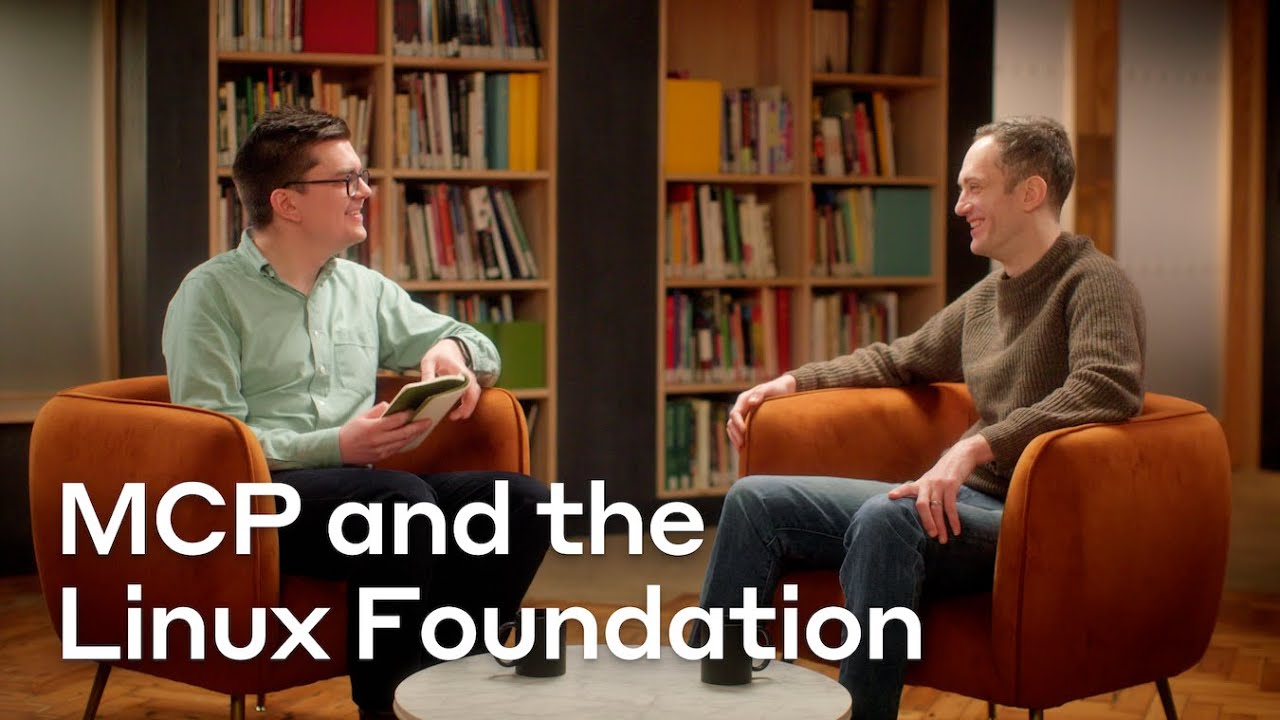
The story of MCP’s creation is instructive for understanding how transformative standards emerge. In late August 2024, David, one of MCP’s co-creators and lead maintainer at Anthropic, was tasked with enabling the company’s researchers and engineers to use Claude more effectively in their daily work. The challenge was clear: how could they connect the workflows and tools that mattered most to their teams directly to Claude? David’s initial concept, which he called “Claude Connect,” was a simple application that would run alongside Claude Desktop and connect to various other applications. When he discussed this idea with Justin Summers, another key figure in MCP’s development, the conversation took a pivotal turn. Justin suggested that this should not be a one-off application but rather a protocol—a standardized way for any application to communicate with any AI model. This insight, born in a conference room in London, transformed the project from an internal tool into a potential industry standard. The naming process, interestingly, was far less formal than one might expect. The protocol was initially called CSP (Context Server Protocol), but the name that stuck—MCP (Model Context Protocol)—emerged from a casual ten-minute discussion on Slack. As David himself acknowledges, naming was not the team’s strength, but the simplicity and memorability of “MCP” proved effective for adoption.
Join our newsletter
Get latest tips, trends, and deals for free.
FlowHunt and the Power of Standardized Integrations
The principles underlying MCP align closely with the philosophy that drives FlowHunt’s approach to workflow automation. Just as MCP eliminates the need for redundant integrations between AI models and applications, FlowHunt standardizes the entire content creation and workflow automation pipeline. When organizations adopt standardized protocols and platforms, they unlock exponential gains in efficiency and scalability. FlowHunt leverages this principle by providing a unified platform where content research, generation, optimization, and publishing workflows can be automated and integrated seamlessly. Rather than building custom integrations between disparate tools—research platforms, content generators, SEO analyzers, and publishing systems—FlowHunt provides a standardized environment where all these components work together harmoniously. This approach mirrors MCP’s philosophy: write the integration once, and it works across your entire ecosystem. For organizations looking to scale their content operations, adopting standardized platforms like FlowHunt, which embrace the same principles as MCP, can dramatically reduce complexity and accelerate time-to-value.
What Makes MCP Unique: A Protocol-First Approach
Several factors distinguish MCP from previous attempts to solve the AI integration problem. First and foremost, MCP was designed as a true protocol from the outset, not merely as a connector for a single AI model. This protocol-first approach means that MCP is agnostic to both the AI model provider and the application being integrated. Whether you’re using Claude, another language model, or even a future AI system, MCP provides a common language for communication. This universality is crucial for long-term adoption and ecosystem health. Second, MCP was developed as an open-source project from day one, following traditional open-source principles centered on community participation and transparency. This decision had profound implications for the protocol’s development and refinement. When Anthropic made the authentication mechanisms in MCP public, the community identified issues that would not have been apparent in a closed environment. Specialists in security and enterprise authentication came forward with suggestions and improvements, ultimately strengthening the protocol. This collaborative refinement process is a hallmark of successful open-source projects and would be impossible in a proprietary setting. Third, MCP benefited from coming from one of the major players in the AI industry. Anthropic’s credibility and resources ensured that MCP had sufficient adoption momentum from the beginning. Organizations could immediately connect their MCP servers to Claude, one of the most capable language models available, providing immediate practical value. This early adoption advantage was critical for establishing MCP as a de facto standard before competing approaches could gain traction.
The Open Science Analogy: Community-Driven Standards
The development of MCP draws striking parallels to the open science movement, which has transformed how research is conducted and validated. In open science, researchers publish not just their findings but also their methodologies, data, and code, allowing the broader scientific community to verify, critique, and build upon their work. This transparency has accelerated scientific progress and improved the quality of research by exposing flaws and biases that might otherwise go undetected. MCP follows a similar philosophy. By open-sourcing the protocol and actively engaging with the community, Anthropic created an environment where experts from around the world could contribute their knowledge and experience. When authentication challenges emerged that were particularly relevant to enterprise deployments, specialists in that domain stepped forward to help. This collaborative approach to standard-setting is fundamentally different from traditional standardization bodies, which often move slowly and require formal approval processes. Instead, MCP adopted a more pragmatic, community-driven approach inspired by successful open-source projects like arXiv, the preprint server that revolutionized scientific publishing. ArXiv didn’t ask for permission or wait for institutional approval; it simply launched and allowed the community to use it. The scientific community embraced it because it was practical and useful, and it eventually became the de facto standard for physics and mathematics preprints. MCP is following a similar trajectory, gaining adoption not through mandate but through genuine utility and community enthusiasm.
Adoption Without Mandate: The Power of Practical Standards
One of the most striking aspects of MCP’s success is that no one is mandating its use. Unlike the European Union’s recent mandate requiring USB-C connectors on electronic devices, MCP adoption is entirely voluntary. Yet, despite the absence of regulatory pressure, organizations and developers are rapidly adopting MCP. This organic adoption is a powerful indicator of the protocol’s genuine value. When standards succeed without mandate, it demonstrates that they solve real problems and provide tangible benefits. The contrast with regulatory mandates is instructive. While regulations can force adoption, they can also stifle innovation by locking in a particular approach. MCP’s voluntary adoption model allows for continued innovation and experimentation while still providing the standardization benefits that the ecosystem needs. Developers and organizations choose MCP because it makes their work easier, not because they are required to do so. This voluntary adoption also creates a more resilient standard. When a standard is mandated, organizations may comply minimally or seek workarounds. When a standard is adopted voluntarily, organizations invest in making it work well, contributing improvements and extensions that strengthen the entire ecosystem. MCP’s rapid adoption across major platforms—including Visual Studio Code, Cursor, and numerous enterprise applications—demonstrates that the protocol is solving a genuine need in the market.
Supercharge Your Workflow with FlowHunt
Experience how FlowHunt automates your AI content and SEO workflows — from research and content generation to publishing and analytics — all in one place.
Real-World Applications: Connecting AI to Your Workflow
The practical applications of MCP extend far beyond theoretical benefits. In real-world business environments, MCP enables AI models to interact with the tools that organizations use daily. Consider an email server: with MCP, an AI model can read, analyze, and respond to emails directly, without requiring manual copy-pasting. Similarly, MCP enables AI integration with Slack, allowing models to participate in conversations, answer questions, and automate responses based on channel context. Google Drive integration through MCP means that AI models can access, analyze, and generate documents directly within an organization’s existing file storage system. For software developers, MCP integration with IDEs like Visual Studio Code transforms the development experience. AI models can understand code context, suggest improvements, identify bugs, and even generate code snippets—all within the developer’s existing workflow. These integrations are not limited to consumer-facing applications; they extend to enterprise systems, databases, and custom internal tools. An organization might build an MCP server that connects to its proprietary customer relationship management (CRM) system, enabling AI models to access customer data, generate personalized communications, and identify sales opportunities. Another organization might create an MCP integration with its data warehouse, allowing AI models to perform complex queries and generate insights from structured data. The flexibility and extensibility of MCP mean that the protocol can adapt to virtually any integration need, making it a foundational technology for AI-powered enterprise automation.
Governance and Trust: Why Donating to the Linux Foundation Matters
The decision to donate MCP to the Linux Foundation is not merely a symbolic gesture; it represents a fundamental commitment to the protocol’s long-term neutrality and trustworthiness. When Anthropic created MCP, the company could have maintained proprietary control over the standard, using it as a competitive advantage. Instead, the company chose to donate the protocol, including trademarks and significant portions of the codebase, to the Linux Foundation. This decision transfers governance responsibilities to an independent, non-profit organization with a proven track record of stewarding critical open-source projects. The Linux Foundation’s involvement provides several crucial benefits. First, it ensures that no single company can unilaterally change the protocol or use it as a tool for competitive advantage. Organizations that adopt MCP can be confident that their investment in the standard will not be undermined by future changes in Anthropic’s business strategy or ownership. Second, the Linux Foundation handles the complex legal and licensing matters that arise in open-source projects. This includes managing intellectual property, ensuring compliance with various open-source licenses, and resolving disputes. By delegating these responsibilities to the Linux Foundation, Anthropic allows the technical community to focus on innovation and improvement rather than legal complexities. Third, the Linux Foundation’s governance model ensures that decisions about MCP’s future direction are made transparently and with input from the broader community. This democratic approach to standard-setting contrasts sharply with proprietary approaches and builds confidence among adopters that their voices will be heard. For enterprises considering MCP adoption, the Linux Foundation’s involvement is a significant assurance that the protocol will remain stable, neutral, and available for the long term.
The Broader Implications: Standards as Accelerators of Innovation
The emergence of MCP and its rapid adoption have broader implications for how the AI industry will develop. Standards are often viewed as constraints that limit innovation, but in reality, they are accelerators. By establishing a common protocol for AI-application integration, MCP frees developers and organizations from the burden of building redundant integrations. This liberation of resources allows teams to focus on higher-level innovation—building better AI applications, improving user experiences, and solving domain-specific problems. The history of technology demonstrates this principle repeatedly. The standardization of electrical outlets, for example, did not stifle innovation in electrical appliances; it accelerated it by allowing manufacturers to focus on product differentiation rather than proprietary power systems. Similarly, the standardization of web protocols (HTTP, HTML) did not limit web innovation; it enabled an explosion of web applications and services. MCP is poised to have a similar effect on the AI industry. By standardizing the integration layer, MCP allows the industry to focus on what matters most: building more capable, reliable, and useful AI systems. Organizations can adopt MCP with confidence, knowing that they are investing in a standard that will remain relevant and supported for years to come. Developers can build MCP integrations knowing that their work will be compatible with a growing ecosystem of AI models and applications. This virtuous cycle of adoption, contribution, and innovation is the hallmark of successful standards.
Challenges and Future Directions
While MCP has achieved remarkable adoption, the protocol continues to evolve to address emerging challenges and use cases. One area of ongoing development is authentication and security, particularly for enterprise deployments. As organizations integrate MCP with sensitive systems and data, ensuring robust authentication mechanisms and access controls becomes increasingly important. The open-source community has already contributed significant improvements in this area, and continued collaboration will be essential as MCP scales to support more complex enterprise scenarios. Another frontier is performance optimization. As MCP integrations become more sophisticated and handle larger volumes of data, ensuring that the protocol remains efficient and responsive is critical. The community is actively exploring caching mechanisms, asynchronous communication patterns, and other optimizations to improve performance without compromising the protocol’s simplicity and universality. Looking forward, MCP is likely to become increasingly central to how AI systems interact with the broader software ecosystem. As language models become more capable and more deeply integrated into business processes, the need for standardized, reliable integration mechanisms will only grow. MCP is well-positioned to serve as the foundational protocol for this integration layer, much as HTTP serves as the foundational protocol for the web.
Conclusion
The Model Context Protocol represents a watershed moment in the development of AI technology. By creating a standardized, open-source protocol for connecting AI models to real-world applications, Anthropic has addressed one of the most pressing challenges in AI adoption. The decision to donate MCP to the Linux Foundation demonstrates a commitment to the protocol’s long-term neutrality and trustworthiness, ensuring that organizations can adopt MCP with confidence. The rapid, voluntary adoption of MCP across the industry—without regulatory mandate—is a testament to the protocol’s genuine value and utility. As the AI industry continues to mature, standards like MCP will become increasingly important for enabling seamless integration, reducing redundancy, and accelerating innovation. Organizations that understand and adopt MCP early will be well-positioned to build more sophisticated, integrated AI systems that deliver real business value. The principles underlying MCP—openness, community collaboration, and practical utility—offer lessons for how standards should be developed and governed in the AI era. As we move forward, MCP will likely serve as a model for how other critical standards in the AI ecosystem should be created and maintained.
Frequently asked questions
What is the Model Context Protocol (MCP)?
The Model Context Protocol is an open-source standard developed by Anthropic that enables large language models to connect with external applications, tools, and services. It acts as a universal connector—similar to USB-C—allowing AI models to interact with real-world software and workflows without requiring custom integrations for each model provider.
Why did Anthropic donate MCP to the Linux Foundation?
By donating MCP to the Linux Foundation, Anthropic ensured that the standard cannot be controlled by any single company and remains neutral and trustworthy for all stakeholders. This move protects organizations that adopt MCP from future changes in ownership or licensing, while the Linux Foundation handles governance and legal matters.
How does MCP differ from proprietary AI connectors?
Unlike proprietary connectors that require separate integrations for each AI model and application, MCP is a universal protocol. Developers write an integration once, and it works with any MCP-compatible model or application. This eliminates redundant work and accelerates ecosystem adoption.
What are the real-world applications of MCP?
MCP enables AI models to connect with email servers, Slack, Google Drive, IDEs like Visual Studio Code, and countless other tools. This allows organizations to build AI-powered workflows that interact with their existing software stack, making AI more practical and useful in daily business operations.
Arshia is an AI Workflow Engineer at FlowHunt. With a background in computer science and a passion for AI, he specializes in creating efficient workflows that integrate AI tools into everyday tasks, enhancing productivity and creativity.
Arshia Kahani
AI Workflow Engineer
Automate Your AI Workflows with FlowHunt
Just as MCP standardizes AI integrations, FlowHunt standardizes your entire content and workflow automation pipeline—from research to publishing.
What is an MCP Server? A Complete Guide to Model Context Protocol
Learn what MCP (Model Context Protocol) servers are, how they work, and why they're revolutionizing AI integration. Discover how MCP simplifies connecting AI ag...
What is Model Context Protocol (MCP)? The Key to Agentic AI Integration
Agentic AI is redefining workflow automation with the Model Context Protocol (MCP), enabling scalable, dynamic integration of AI agents with diverse resources. ...
Building an MCP Server That Connects to OpenAI: A Complete Developer's Guide
Learn how to develop a Model Context Protocol (MCP) server that seamlessly integrates with OpenAI's API, enabling powerful AI-driven tool execution and intellig...
17 min read
MCP
OpenAI
+3
Cookie Consent We use cookies to enhance your browsing experience and analyze our traffic. See our privacy policy.