Open-Source vs Proprietary AI Agent Builders: Cost-Benefit Analysis 2025
A comprehensive analysis of open-source and proprietary AI agent builders in 2025, examining costs, flexibility, performance, and ROI to help organizations make informed decisions.
AI Agents
Cost Analysis
Technology Strategy
Enterprise AI
Here’s a cost comparison between open-source and proprietary AI agent builders:
Cost Category
Open-Source
Proprietary
Licensing Fees
$0
$5,000–$50,000+/year
Infrastructure (Annual)
$30,000–$100,000+
$10,000–$30,000
Development Team (Annual)
$200,000–$500,000+
$50,000–$150,000
Security & Compliance
$20,000–$60,000
Included
Support & Training
Community (variable)
$10,000–$30,000
Total Year 1 TCO
$250,000–$660,000+
$75,000–$260,000
Scaling Costs
Increases significantly
Predictable, linear
What Are AI Agent Builders and Why They Matter in 2025
AI agent builders are frameworks, platforms, and tools that enable developers to create autonomous AI systems capable of understanding goals, planning actions, and executing tasks with minimal human oversight. Unlike traditional chatbots or generative AI applications that respond to user input, AI agents operate proactively, making decisions based on environmental context and predefined objectives.
The significance of AI agent builders in 2025 cannot be overstated. We are witnessing what industry analysts call the “agentic era”—a fundamental shift in how artificial intelligence creates value. Rather than serving as sophisticated search engines or content generators, AI agents now function as autonomous workers, project managers, and decision-making systems. They can manage complex workflows, integrate with multiple data sources, handle exceptions, and continuously improve their performance through feedback loops.
This evolution has created unprecedented demand for robust, scalable, and cost-effective agent development platforms. Organizations across healthcare, finance, manufacturing, and professional services are racing to deploy AI agents that can automate knowledge work, reduce operational costs, and unlock new revenue streams. The question of whether to build on open-source or proprietary foundations has become one of the most consequential technology decisions facing enterprises today.
The Open-Source AI Agent Ecosystem: Flexibility Meets Complexity
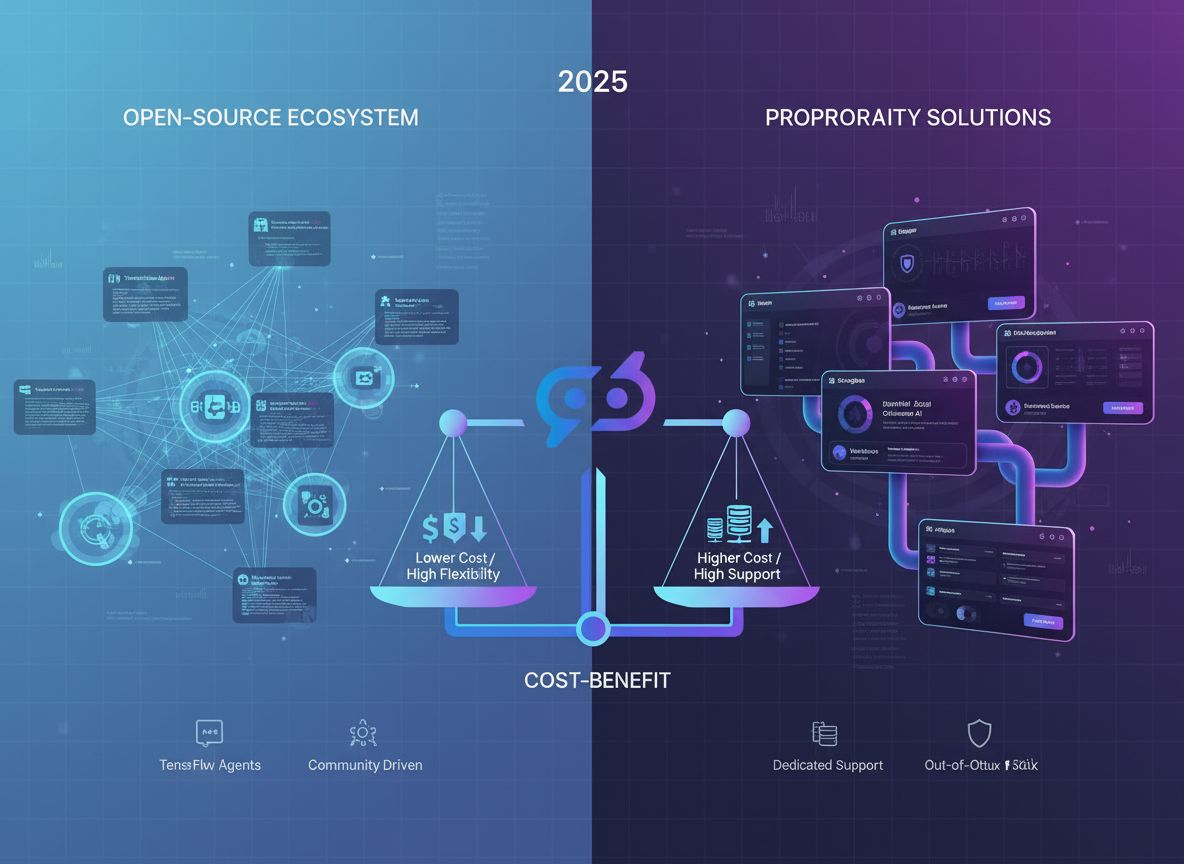
The open-source AI agent ecosystem has matured dramatically. Frameworks like LangChain, AutoGen, Crew AI, and SuperAGI have created vibrant communities of developers contributing innovations, sharing best practices, and building specialized tools. The appeal is immediate: zero licensing costs, complete transparency, and the ability to customize every aspect of your agent architecture.
Open-source solutions offer unparalleled flexibility. You control the entire codebase, can modify algorithms to suit your specific use cases, and avoid vendor lock-in. For organizations with sophisticated AI/ML teams, this freedom enables rapid experimentation and the ability to implement cutting-edge techniques before they appear in proprietary products. The open-source community often innovates faster than commercial vendors, with new capabilities and improvements appearing continuously on GitHub.
However, this flexibility comes with substantial hidden costs. Building and maintaining an open-source AI agent infrastructure requires significant technical expertise. Your team must handle infrastructure provisioning, security hardening, performance optimization, and ongoing maintenance. You’re responsible for monitoring security vulnerabilities, applying patches, and ensuring compliance with data protection regulations. These operational responsibilities accumulate quickly, transforming what appears to be a cost-free solution into a labor-intensive undertaking.
The infrastructure costs associated with open-source AI agents are particularly significant. Running large language models, managing vector databases, orchestrating distributed computing resources, and maintaining high-availability systems demands substantial computational resources. Organizations often underestimate these costs, discovering only after deployment that infrastructure spending represents 30% or more of their total AI project budget.
Ready to grow your business?
Start your free trial today and see results within days.
Proprietary AI Agent Builders: Convenience and Predictability
Proprietary AI agent builders—platforms like those offered by major cloud providers, specialized AI companies, and enterprise software vendors—take a fundamentally different approach. They provide pre-built, optimized solutions with professional support, comprehensive documentation, and integrated features designed for enterprise deployment.
The primary advantage of proprietary solutions is time-to-value. Organizations can move from concept to production in weeks rather than months. Pre-built integrations with popular business applications, data sources, and communication platforms eliminate the need to build custom connectors. Professional support teams provide SLAs, ensuring rapid response to issues. Comprehensive documentation and training resources reduce the learning curve for development teams.
Proprietary platforms also excel at handling the operational complexity of AI systems at scale. They manage infrastructure provisioning, security hardening, compliance monitoring, and performance optimization transparently. Organizations benefit from the vendor’s investments in reliability, security, and scalability without needing to replicate these capabilities internally. For teams without deep AI/ML expertise, this managed approach dramatically reduces risk and accelerates time-to-market.
The trade-off is reduced flexibility and potential vendor lock-in. Proprietary platforms typically offer customization within predefined boundaries. If your requirements fall outside the platform’s design assumptions, you may face significant constraints. Additionally, migrating from one proprietary platform to another requires substantial effort, creating a form of lock-in that can limit your strategic options over time.
Comprehensive Cost Comparison: The True Picture
Understanding the true cost of each approach requires looking beyond licensing fees to total cost of ownership (TCO). This analysis must account for direct costs, infrastructure expenses, personnel requirements, and opportunity costs.
Cost Breakdown Comparison
Cost Category
Open-Source
Proprietary
Licensing Fees
$0
$5,000–$50,000+/year
Infrastructure (Annual)
$30,000–$100,000+
$10,000–$30,000
Development Team (Annual)
$200,000–$500,000+
$50,000–$150,000
Security & Compliance
$20,000–$60,000
Included
Support & Training
Community (variable)
$10,000–$30,000
Total Year 1 TCO
$250,000–$660,000+
$75,000–$260,000
Scaling Costs
Increases significantly
Predictable, linear
This table reveals a critical insight: while open-source has zero licensing costs, the total cost of ownership often exceeds proprietary solutions, particularly in the first 1-2 years. The gap narrows over time as organizations amortize development investments, but the initial financial burden of open-source is substantial.
Direct Licensing and Subscription Costs
Open-source solutions eliminate licensing fees entirely. You can deploy unlimited instances without paying per-seat, per-API-call, or per-deployment fees. This advantage is particularly significant for organizations planning large-scale deployments across multiple business units or geographies.
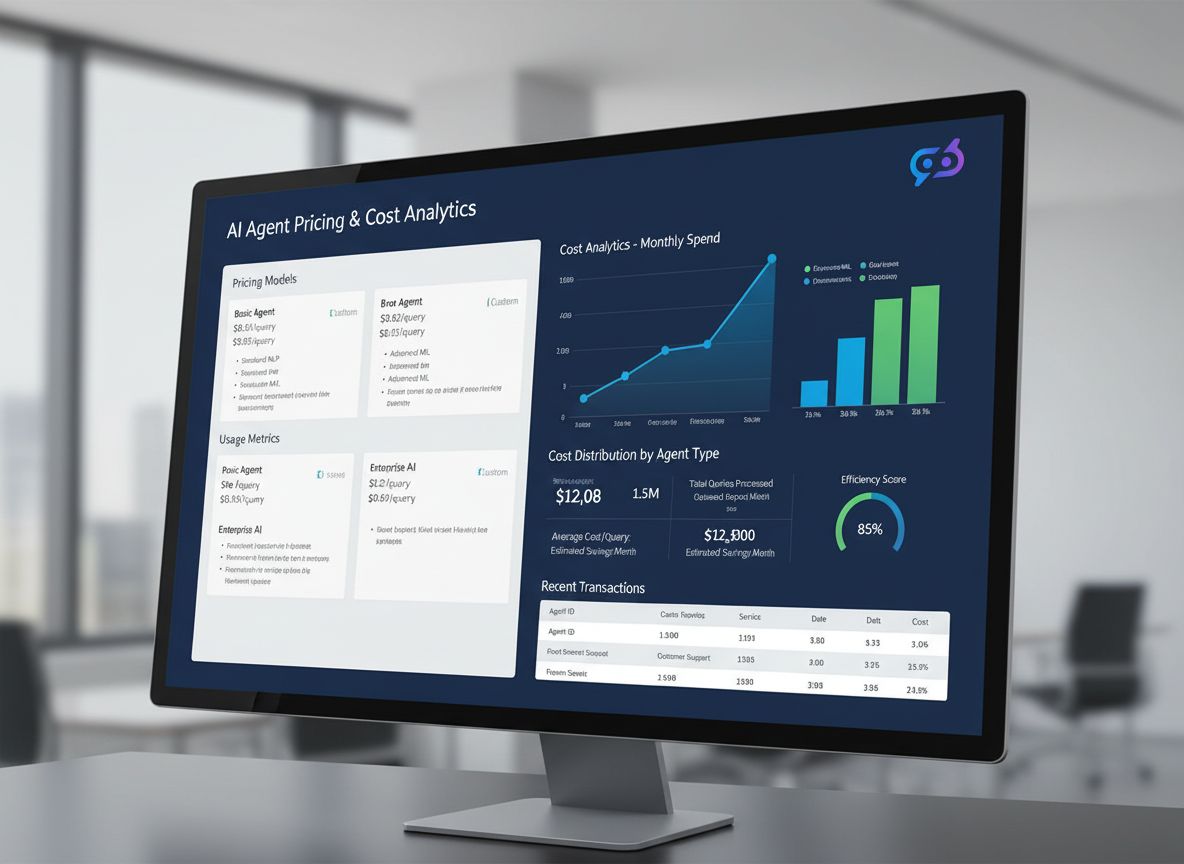
Proprietary solutions typically employ one of three pricing models: subscription-based (monthly or annual fees), consumption-based (pay-per-API-call or per-token), or hybrid models combining both. Subscription costs range from $5,000 to $50,000 annually depending on features and scale. Consumption-based pricing can become expensive at scale—a single large-scale AI agent deployment might generate millions of API calls monthly, resulting in substantial bills.
However, proprietary vendors often provide volume discounts, committed-use discounts, and bundled pricing that can reduce effective costs for large deployments. Additionally, the predictability of subscription pricing enables accurate budgeting, whereas consumption-based open-source infrastructure costs can fluctuate significantly based on usage patterns.
Infrastructure and Operational Costs
This is where the true cost of open-source becomes apparent. Running AI agents at scale requires substantial computational resources. Large language models demand GPU or TPU capacity, vector databases require persistent storage and indexing infrastructure, and orchestration systems need reliable, high-availability platforms.
Open-source deployments typically require:
Compute infrastructure: GPU/TPU instances for model inference and fine-tuning ($2,000–$10,000+ monthly)
Storage and databases: Vector databases, document stores, and caching layers ($500–$5,000 monthly)
Networking and CDN: Data transfer, API gateways, and content delivery ($500–$2,000 monthly)
Monitoring and observability: Logging, metrics, and alerting systems ($500–$2,000 monthly)
DevOps and infrastructure management: Kubernetes clusters, CI/CD pipelines, and automation ($1,000–$5,000 monthly)
Annual infrastructure costs for a production open-source AI agent system typically range from $30,000 to $100,000 or more, depending on scale and performance requirements.
Proprietary solutions abstract away much of this complexity. The vendor manages infrastructure provisioning, scaling, and optimization. Organizations pay for consumption through the vendor’s pricing model, but the vendor’s economies of scale typically result in lower per-unit costs. Additionally, proprietary platforms handle auto-scaling, load balancing, and disaster recovery automatically, reducing operational overhead.
Personnel and Expertise Costs
The most significant hidden cost of open-source AI agent development is personnel. Building, deploying, and maintaining open-source AI systems requires specialized expertise that commands premium salaries.
A typical open-source AI agent project requires:
AI/ML Engineers: $150,000–$250,000 annually (2-3 required for substantial projects)
Data Engineers: $130,000–$220,000 annually (1-2 required for data pipeline management)
Security Engineers: $140,000–$230,000 annually (1 required for compliance and security)
A modest team of 5-6 engineers costs $650,000–$1,200,000 annually. For organizations without existing AI/ML capabilities, building this team represents a multi-year commitment and substantial financial investment.
Proprietary solutions reduce personnel requirements significantly. Organizations can often deploy and manage proprietary AI agent platforms with smaller teams—sometimes just 1-2 engineers plus business analysts. This reduction in headcount directly translates to lower personnel costs and faster time-to-productivity.
Join our newsletter
Get latest tips, trends, and deals for free.
Flexibility and Customization: The Open-Source Advantage
Where open-source solutions excel is in flexibility and customization. You have complete control over the codebase, can modify algorithms, integrate custom components, and tailor the system to your specific requirements.
This flexibility is invaluable for organizations with unique requirements:
Specialized domain requirements: Healthcare organizations might need custom privacy-preserving inference, financial institutions might require specific compliance controls, and manufacturing companies might need integration with proprietary equipment systems.
Competitive differentiation: Organizations seeking to build proprietary AI capabilities that differentiate them from competitors benefit from the ability to customize and optimize every component.
Legacy system integration: Organizations with complex legacy systems often need deep customization to integrate AI agents with existing infrastructure.
Research and innovation: Organizations pushing the boundaries of AI capabilities benefit from the ability to experiment with novel architectures and techniques.
Proprietary solutions, by contrast, offer customization within predefined boundaries. Most platforms provide configuration options, API extensions, and plugin architectures, but fundamental architectural changes are typically not possible. If your requirements fall outside the platform’s design assumptions, you may face significant constraints.
This trade-off is critical: open-source provides maximum flexibility but requires substantial expertise to realize that flexibility. Proprietary solutions provide less flexibility but make it easier to achieve your goals within the platform’s design parameters.
Performance, Scalability, and Reliability
Performance and scalability considerations differ significantly between open-source and proprietary approaches.
Open-source AI agent frameworks are inherently flexible but require careful optimization to achieve production-grade performance. Performance depends entirely on your implementation choices—the infrastructure you provision, the models you select, the algorithms you implement, and the optimizations you apply. Organizations with strong engineering teams can achieve excellent performance, but suboptimal implementations can result in slow, unreliable systems.
Scalability with open-source requires sophisticated infrastructure management. Scaling from handling 100 concurrent agents to 10,000 concurrent agents requires careful planning around distributed computing, load balancing, caching strategies, and database optimization. Many organizations underestimate the complexity of scaling open-source systems, discovering only in production that their architecture doesn’t scale as expected.
Proprietary solutions are typically optimized for scale from the ground up. Vendors invest heavily in performance optimization, having learned from thousands of deployments. Auto-scaling, load balancing, and failover mechanisms are built-in and transparent. Organizations can scale from small pilots to enterprise-wide deployments without architectural changes.
However, proprietary solutions may impose performance constraints. If your use case requires extreme performance optimization or specialized hardware, proprietary platforms might not offer the flexibility to achieve your goals. Additionally, proprietary platforms may have performance limitations based on their architectural choices—limitations that open-source solutions could overcome through customization.
Security, Compliance, and Data Governance
Security and compliance considerations are paramount for enterprise AI deployments, and the approaches differ significantly.
Open-source solutions place security responsibility entirely on the organization. You must:
Conduct security audits of the codebase and dependencies
Manage vulnerability patching and updates
Implement access controls and authentication mechanisms
Ensure data encryption in transit and at rest
Maintain audit logs and compliance documentation
Conduct penetration testing and security assessments
While open-source code transparency enables security audits, it also means security vulnerabilities are visible to potential attackers. Organizations must maintain vigilance, applying security patches promptly and monitoring security advisories continuously.
Compliance with regulations like GDPR, HIPAA, SOC 2, and industry-specific requirements falls entirely on the organization. You must implement controls, maintain documentation, and demonstrate compliance to auditors. For highly regulated industries, this responsibility is substantial.
Proprietary solutions typically include security and compliance features built into the platform. Vendors employ dedicated security teams, conduct regular security audits, and maintain compliance certifications. Organizations benefit from the vendor’s security investments without needing to replicate these capabilities internally.
However, proprietary solutions introduce different security considerations. You must trust the vendor’s security practices, have limited visibility into their infrastructure, and depend on their security roadmap. Additionally, proprietary solutions may impose constraints on data handling—for example, some cloud-based proprietary platforms may not support on-premises deployment, creating data residency challenges for regulated industries.
Support, Documentation, and Community
The support and documentation landscape differs dramatically between open-source and proprietary solutions.
Open-source solutions rely on community support. Documentation is often community-contributed, which can be comprehensive but may also be incomplete, outdated, or poorly organized. Support comes from community forums, GitHub issues, and Stack Overflow—responses are typically free but unpredictable in quality and response time. For critical issues, you may need to hire consultants or contribute fixes yourself.
This community-driven approach has advantages: the community often provides creative solutions, workarounds, and innovations. However, it also means you cannot rely on guaranteed response times or professional support for critical issues.
Proprietary solutions provide professional support with SLAs. Vendors employ support teams trained on their platforms, provide documentation written by professional technical writers, and offer multiple support channels (email, phone, chat). Response times are guaranteed, and escalation paths exist for critical issues.
For organizations without deep technical expertise, professional support dramatically reduces risk and accelerates problem resolution. For organizations with strong internal capabilities, community support may be sufficient, though it requires more self-sufficiency.
Innovation Velocity and Feature Development
The pace of innovation differs between open-source and proprietary approaches, with trade-offs in both directions.
Open-source communities often innovate faster than proprietary vendors. New techniques, models, and capabilities appear first in open-source projects. Organizations with strong engineering teams can adopt these innovations immediately, gaining competitive advantages. The open-source community is particularly strong in research-oriented innovations—new architectures, training techniques, and optimization methods often appear first in open-source projects.
Proprietary vendors prioritize stability and reliability over rapid innovation. New features are tested extensively before release, ensuring they don’t destabilize production systems. This conservative approach reduces risk but means organizations may wait months or years for features available in open-source projects.
However, proprietary vendors often innovate in areas that matter for enterprise deployments: integration with business applications, compliance features, operational tooling, and performance optimization. These innovations may not be as visible as research-oriented innovations, but they directly impact productivity and operational efficiency.
Real-World Cost Scenarios: Case Studies
Understanding how these trade-offs play out in practice requires examining realistic scenarios.
Scenario 1: Early-Stage Startup with Limited Budget
A startup building an AI-powered customer service platform with 10 employees and limited funding chooses open-source. Initial costs appear attractive: zero licensing fees, and the founding team includes two experienced ML engineers.
By year 2, the startup realized that open-source was consuming more resources than anticipated. The team spent significant time on infrastructure and operational concerns rather than product innovation.
Scenario 2: Enterprise with Existing AI Capabilities
A large financial services company with 50 AI/ML engineers and established infrastructure chooses open-source for a new AI agent platform. The organization has the expertise to manage open-source complexity and values the flexibility to customize agents for specific business requirements.
Personnel: $1,200,000 (8 engineers allocated to the project)
Security and compliance: $80,000
Total: $1,400,000
Advantages realized:
Complete customization of agent behavior for specific business domains
Integration with proprietary trading systems and risk management platforms
Ability to implement proprietary algorithms for competitive advantage
No vendor lock-in; full control over technology roadmap
Year 2 and beyond:
Infrastructure costs stabilize at $120,000 annually
Personnel costs decrease as the platform matures ($800,000)
Competitive advantage from customized agents justifies the investment
For this organization, open-source was the right choice. The existing expertise, substantial budget, and need for customization made the flexibility worth the cost.
Scenario 3: Mid-Market Company Choosing Proprietary
A mid-market B2B SaaS company with 200 employees and limited AI expertise chooses a proprietary AI agent platform. The organization prioritizes rapid deployment and operational simplicity over customization.
Professional support resolved issues within 4 hours
Rapid feature deployment; new capabilities available monthly
Year 2 and beyond:
Platform licensing: $80,000 (increased with usage)
Infrastructure: $25,000
Personnel: $150,000 (same team)
Total: $255,000
For this organization, proprietary was the right choice. The rapid deployment, minimal operational overhead, and professional support enabled the company to realize value quickly without requiring substantial AI expertise.
FlowHunt: Bridging the Gap Between Open-Source and Proprietary
Organizations facing the open-source vs. proprietary decision often overlook a third option: using workflow automation platforms like FlowHunt to bridge the gap between these approaches.
FlowHunt enables organizations to leverage the flexibility of open-source AI agent frameworks while reducing operational complexity and accelerating time-to-value. Rather than choosing between open-source and proprietary, organizations can use FlowHunt to:
Orchestrate open-source AI agents with visual workflow builders, eliminating the need to write complex orchestration code
Integrate with proprietary platforms seamlessly, combining the best of both approaches
Automate AI workflows from research and content generation to deployment and monitoring
Reduce operational overhead through managed infrastructure and monitoring
Accelerate development cycles with pre-built components and templates
FlowHunt’s approach is particularly valuable for organizations that want the flexibility of open-source but need the operational simplicity of proprietary solutions. By automating workflow orchestration, monitoring, and deployment, FlowHunt reduces the personnel requirements and operational complexity that typically make open-source expensive.
For example, an organization might use open-source frameworks like LangChain or AutoGen for core agent logic while using FlowHunt to orchestrate agent workflows, manage data pipelines, and automate deployment. This hybrid approach combines the customization benefits of open-source with the operational simplicity of proprietary solutions.
Decision Framework: Choosing the Right Approach
Making the right choice between open-source and proprietary AI agent builders requires honest assessment of your organization’s capabilities, requirements, and constraints.
Choose open-source if:
Your organization has strong AI/ML engineering capabilities (or can build them)
You have unique requirements that proprietary solutions cannot meet
You need deep customization for competitive differentiation
You have the budget to invest in infrastructure and personnel
You value long-term flexibility and avoiding vendor lock-in
Your use case involves research or cutting-edge innovation
Choose proprietary if:
You prioritize rapid deployment and time-to-value
Your organization lacks deep AI/ML expertise
You need professional support and SLAs
You want predictable, manageable operational overhead
Your requirements fit within the platform’s design parameters
You prefer to focus engineering resources on business logic rather than infrastructure
Consider a hybrid approach if:
You want the flexibility of open-source with the operational simplicity of proprietary solutions
You need to integrate multiple AI systems and platforms
You want to reduce operational complexity while maintaining customization
You’re building a platform that will evolve over time
Market Trends and Future Outlook
The AI agent builder market is evolving rapidly. Several trends are shaping the landscape:
Consolidation and specialization: The market is consolidating around specialized platforms serving specific industries or use cases. Rather than general-purpose platforms, we’re seeing emergence of industry-specific proprietary solutions (healthcare AI agents, financial services AI agents, etc.) alongside specialized open-source frameworks.
Hybrid architectures becoming standard: Organizations are increasingly adopting hybrid approaches, combining open-source components with proprietary platforms. This trend reflects the recognition that neither approach is universally superior—the optimal solution depends on specific requirements.
Managed open-source services: A new category of vendors is emerging that provides managed services around open-source AI frameworks. These vendors handle infrastructure, security, compliance, and support while preserving the flexibility of open-source. This category may represent the future for many organizations.
Increased focus on operational tooling: As AI agents move from research projects to production systems, operational tooling becomes increasingly important. Vendors are investing heavily in monitoring, debugging, and optimization tools that make AI agents easier to operate at scale.
Regulatory and compliance evolution: As AI agents become more prevalent, regulatory frameworks are evolving. Proprietary solutions with built-in compliance features may gain advantage in regulated industries, while open-source solutions will need to invest in compliance tooling.
Supercharge Your AI Agent Workflows with FlowHunt
Experience how FlowHunt automates your AI agent development, deployment, and monitoring — from orchestration and data pipelines to compliance and analytics — all in one intelligent platform.
AI agent development costs typically range between $20,000 and $60,000 depending on complexity, functionality, and required intelligence level. Costs vary significantly based on whether you choose open-source or proprietary solutions.
While open-source has zero licensing fees, the total cost of ownership often includes significant infrastructure, maintenance, and developer expertise costs. Proprietary solutions may have higher upfront costs but lower operational overhead.
Open-source requires you to manage security independently, while proprietary solutions typically include built-in security protocols and compliance features. Both can be secure when properly implemented.
Proprietary AI agent builders generally offer faster time-to-value with pre-built features, professional support, and optimized infrastructure. Open-source solutions require more setup time but offer greater customization.
Arshia is an AI Workflow Engineer at FlowHunt. With a background in computer science and a passion for AI, he specializes in creating efficient workflows that integrate AI tools into everyday tasks, enhancing productivity and creativity.
Arshia Kahani
AI Workflow Engineer
Streamline Your AI Agent Development with FlowHunt
Automate your AI content workflows and reduce development complexity with intelligent automation tools designed for modern teams.
AI Agent Builder Community Support and Documentation Quality 2025: A Comprehensive Comparison
Explore the landscape of AI agent builders in 2025, comparing community support, documentation quality, and developer resources across leading platforms like Op...
Enterprise-Scale No-Code AI Agent Platform Pricing Models in Late 2025
Comprehensive guide to pricing strategies for enterprise no-code AI agent platforms, including subscription models, consumption-based pricing, hybrid approaches...
The Best AI Agent Builders in 2026: A Comprehensive Guide to Autonomous Intelligence Platforms
Explore the top AI agent builders in 2026, from no-code platforms to enterprise-grade frameworks. Discover which tools are best for your use case and how FlowHu...
15 min read
AI Agents
Automation
+3
Cookie Consent We use cookies to enhance your browsing experience and analyze our traffic. See our privacy policy.