

AI Audit Helps You Build Smarter, Faster Workflows
Discover how an AI Workflow Audit can help your business move from chaos to clarity by mapping real processes, identifying automation opportunities, and buildin...
8 min read
AI
Workflow Audit
+5
Discover PI Workflow, an open-source framework for building durable, fault-tolerant, long-running business processes in Python. Learn how to implement reliable workflows with automatic retries, state management, and horizontal scaling.
Building reliable, long-running business processes in Python has traditionally been a complex challenge. Developers often resort to stateless task queues or ad-hoc solutions that lack fault tolerance, state management, and scalability. PI Workflow changes this paradigm by providing an open-source framework specifically designed for durable workflow execution. Whether you’re processing orders, managing complex business logic, or orchestrating multi-step operations, PI Workflow offers a robust, intuitive solution that handles the complexities of distributed systems automatically.
A durable workflow is fundamentally different from traditional stateless task processing. Rather than treating each operation as an isolated, independent task, a durable workflow maintains context and state across multiple steps of a long-running business process. This is critical for real-world applications where operations depend on previous results, require recovery from failures, and must maintain consistency across distributed systems.
The concept of durability in workflows refers to the ability to persist execution state, recover from failures, and continue processing without losing progress. When a workflow step completes, its result is stored persistently. If a worker crashes, another worker can pick up the workflow and continue from the exact point of failure. This eliminates the need for manual intervention and ensures business processes complete reliably, even in the face of infrastructure failures.

Start your free trial today and see results within days.
For a workflow system to be truly reliable and production-ready, it must meet several critical criteria. First, fault tolerance is essential—the system must gracefully handle failures at any step without losing data or requiring manual recovery. Second, automatic retries should be built-in, allowing transient failures to be resolved without human intervention. Third, state management is crucial; every step must maintain and access the workflow’s current state, enabling complex multi-step processes to function correctly. Finally, horizontal scalability ensures that as your business grows, you can add more workers to handle increased load without architectural changes.
PI Workflow is engineered from the ground up to satisfy all these requirements. Its event-driven, event-sourced architecture ensures that every state change is recorded and can be replayed if needed. The framework automatically manages retries, suspends workflows during idle periods to conserve resources, and distributes workflow steps across multiple workers seamlessly.
In today’s distributed, cloud-native environment, businesses rely on complex workflows that span multiple services, databases, and external APIs. Order processing, payment handling, user onboarding, data pipelines, and notification systems all require reliable execution across multiple steps. Traditional approaches—using Celery, simple message queues, or custom scripts—often fall short because they lack built-in durability, state management, and recovery mechanisms.
Consider the real-world challenges:
PI Workflow addresses each of these challenges directly. By providing a framework that treats durability as a first-class concern, businesses can build reliable, scalable workflows without reinventing the wheel or managing complex distributed system logic manually.
Get latest tips, trends, and deals for free.
PI Workflow operates on a clean, modular architecture that separates concerns and enables flexibility. At its core, the system consists of four key components: your application code, a message broker, distributed workers, and persistent storage.
Your application defines workflows using PI Workflow’s intuitive Python SDK. When a workflow is triggered, it’s submitted to a message broker (such as Redis), which acts as a queue for workflow tasks. Multiple workers consume messages from the broker and execute workflow steps. As each step completes, its state is persisted to storage (supporting options like SQLite, PostgreSQL, or other databases). This architecture ensures that workflows can survive worker failures, scale horizontally, and maintain complete visibility into execution progress.
The event-driven nature of PI Workflow means that every state change is recorded as an event. This creates a complete audit trail and enables powerful features like workflow replay, debugging, and analysis. Unlike traditional systems where state is ephemeral, PI Workflow’s event sourcing ensures that you can always reconstruct the exact state of any workflow at any point in time.
While PI Workflow provides the foundational framework for durable workflow execution, FlowHunt takes workflow automation to the next level by integrating it into a comprehensive platform for content creation, automation, and business process management. FlowHunt recognizes that modern businesses need more than just a workflow framework—they need an end-to-end solution that connects workflow orchestration with content generation, SEO optimization, and analytics.
FlowHunt’s integration with PI Workflow enables users to build sophisticated automation pipelines that combine reliable workflow execution with intelligent content processing. Whether you’re automating content workflows, managing complex business processes, or orchestrating multi-step operations, FlowHunt provides the tools and infrastructure to make it seamless.
| Feature | PI Workflow | Traditional Task Queues | Custom Solutions |
|---|---|---|---|
| Fault Tolerance | Built-in with automatic recovery | Limited or manual | Requires custom implementation |
| State Management | Persistent across steps | Minimal or none | Highly variable |
| Automatic Retries | Yes, configurable | Often manual | Inconsistent |
| Horizontal Scaling | Native support | Possible but complex | Difficult to implement |
| Resource Efficiency | Suspends idle workflows | Continuous polling | Wasteful |
| Visibility & Debugging | Complete audit trail | Limited logging | Difficult to trace |
| Learning Curve | Intuitive Python SDK | Varies | Steep |
PI Workflow introduces several powerful features that make building durable workflows straightforward and efficient.
Workflow Suspension and Resumption: One of the most innovative features is the ability to suspend workflows during idle periods. When a workflow reaches a sleep operation, PI Workflow automatically calculates when the workflow should resume and suspends it without consuming resources. This is fundamentally different from traditional approaches where a task might continuously poll or consume memory while waiting. For example, if you need to wait one day before sending a confirmation email, PI Workflow suspends the workflow and resumes it automatically after exactly one day. This approach dramatically reduces infrastructure costs and improves resource utilization.
Step-by-Step Execution Across Distributed Workers: Workflows are defined as a series of steps, and each step can execute on a different worker. This means you don’t need to worry about keeping workflow logic on a single machine. The first step might run on Worker A, the second step on Worker B, and the third on Worker C. PI Workflow handles all the coordination, state passing, and synchronization automatically. This distributed nature is essential for scalability and resilience.
Event-Driven Architecture: PI Workflow is built on event sourcing principles, meaning every state change is recorded as an event. This creates a complete, immutable history of workflow execution. You can replay events to debug issues, analyze workflow behavior, or recover from failures. The event-driven approach also enables powerful integrations with other systems that need to react to workflow state changes.
Flexible Storage and Message Broker Configuration: PI Workflow doesn’t lock you into a specific technology stack. You can choose your message broker (Redis, RabbitMQ, etc.) and storage backend (SQLite, PostgreSQL, etc.) based on your infrastructure and requirements. This flexibility ensures that PI Workflow can integrate into existing systems without forcing major architectural changes.
To understand how PI Workflow works in practice, let’s walk through a concrete example: an order processing workflow. This is a common business process that demonstrates the key concepts and benefits of durable workflows.
@workflow
def process_order(order_id: str):
    # Step 1: Validate the order
    validate_order(order_id)

    # Step 2: Process payment
    process_payment(order_id)

    # Step 3: Send confirmation
    send_confirmation(order_id)
This simple workflow defines three steps: validating the order, processing payment, and sending a confirmation. Each step is a function that performs a specific task. The @workflow decorator tells PI Workflow to treat this as a durable workflow, automatically handling state management, retries, and distributed execution.
When you trigger this workflow with a specific order ID, PI Workflow:
The beauty of this approach is that if a worker crashes during payment processing, another worker can pick up the workflow and continue from exactly where it left off. The customer’s order won’t be lost, and you won’t have duplicate charges or missing confirmations.
Getting PI Workflow up and running is straightforward thanks to its CLI and comprehensive documentation. The setup process involves a few simple steps:
Install the CLI: The PI Workflow documentation provides detailed instructions for installing the command-line interface, which simplifies project setup and management.
Initialize Your Project: Using the pi workflow setup command, you can initialize a new project. The CLI guides you through configuration, including specifying your module structure and choosing your backend storage (SQLite, PostgreSQL, etc.).
Configure Your Infrastructure: PI Workflow automatically sets up Docker containers for your chosen message broker (Redis is a popular default), the workflow engine, and the dashboard. This means you have a complete, production-ready setup with minimal configuration.
Start Workers: Once configured, you can start workers using pi workflow worker run. Workers automatically discover registered workflows and begin processing tasks from the message broker.
Monitor Execution: PI Workflow provides a comprehensive dashboard where you can view all running workflows, their execution timeline, step-by-step logs, and detailed state information. This visibility is invaluable for debugging and understanding workflow behavior.
The practical benefits of PI Workflow extend across numerous business scenarios. For e-commerce platforms, order processing workflows ensure that every order is validated, payment is processed, and confirmations are sent reliably, even if individual steps fail. For SaaS applications, user onboarding workflows can orchestrate account creation, email verification, and initial setup across multiple services without losing state.
Data pipeline workflows benefit from PI Workflow’s ability to handle long-running operations efficiently. Instead of keeping workers busy while waiting for external API responses or database operations, workflows can suspend and resume, freeing resources for other tasks. This is particularly valuable for batch processing, ETL operations, and scheduled tasks.
Notification systems can leverage PI Workflow to ensure messages are delivered reliably. A workflow might validate a notification, attempt delivery, retry on failure, and log results—all with built-in durability and state management. This eliminates the need for custom retry logic and manual intervention when delivery fails.
Understanding how PI Workflow differs from traditional task queue systems like Celery is important for making informed architectural decisions. Celery treats each task as an independent, stateless operation. If you need to coordinate multiple tasks or maintain state across operations, you must implement that logic yourself, often using external databases or caching layers. This adds complexity and potential points of failure.
PI Workflow, by contrast, treats workflows as first-class citizens with built-in state management. The framework handles coordination, retries, and state persistence automatically. You define your workflow logic once, and PI Workflow ensures it executes reliably across distributed workers. This reduces boilerplate code, minimizes bugs, and makes workflows easier to understand and maintain.
Custom solutions, while potentially more flexible, require significant engineering effort to implement durability, fault tolerance, and scalability correctly. Most teams lack the expertise to build robust distributed systems, leading to fragile, difficult-to-maintain code. PI Workflow provides battle-tested solutions to these problems, allowing teams to focus on business logic rather than infrastructure.
Beyond the core workflow execution engine, PI Workflow supports advanced features that enable sophisticated automation scenarios. Hooks allow you to inject custom logic at specific points in workflow execution, enabling integration with external systems, logging, and monitoring. The event-sourced architecture means you can build custom analytics and reporting on top of workflow execution data.
The framework’s Python-native design means you can leverage the entire Python ecosystem within your workflows. Whether you need to call external APIs, process data with pandas, interact with databases, or integrate with machine learning models, you can do so directly within your workflow steps. This makes PI Workflow incredibly flexible and powerful for complex business logic.
PI Workflow represents a significant advancement in how developers approach building reliable, long-running business processes. By combining event-driven architecture, distributed execution, automatic state management, and resource-efficient suspension/resumption, PI Workflow eliminates the complexity and fragility of traditional approaches. Whether you’re building order processing systems, data pipelines, user onboarding workflows, or any other complex business process, PI Workflow provides the foundation for reliable, scalable automation.
The framework’s intuitive Python SDK, comprehensive dashboard, and flexible configuration make it accessible to teams of all sizes. As businesses increasingly rely on distributed systems and complex workflows, tools like PI Workflow become essential infrastructure. By adopting PI Workflow, teams can build more reliable applications, reduce operational overhead, and focus on delivering business value rather than managing distributed system complexity.
Experience how FlowHunt automates your AI content and SEO workflows — from research and content generation to publishing and analytics — all in one place.
A durable workflow is a long-running workflow that executes a step-by-step process for complex business logic. It must be fault-tolerant, support automatic retries, maintain state across steps, and scale horizontally. PI Workflow provides all these capabilities out of the box.
PI Workflow uses an event-driven, event-sourced architecture that suspends workflows during idle periods (like sleep operations) without consuming resources. When the sleep duration expires, the workflow automatically resumes from where it left off.
Yes, PI Workflow is designed to be distributed by nature. Multiple workers can run simultaneously, and workflow steps can execute on different machines. This allows your application to scale horizontally without architectural changes.
PI Workflow is flexible with message broker configuration. It supports multiple message broker options that you can configure based on your infrastructure needs, with Redis being a popular choice for development and production environments.
Arshia is an AI Workflow Engineer at FlowHunt. With a background in computer science and a passion for AI, he specializes in creating efficient workflows that integrate AI tools into everyday tasks, enhancing productivity and creativity.

Build and manage reliable, durable workflows seamlessly with FlowHunt's intelligent automation platform.
Discover how an AI Workflow Audit can help your business move from chaos to clarity by mapping real processes, identifying automation opportunities, and buildin...

A comprehensive guide to intelligent process automation (IPA): what it is, how it works, key benefits, use cases, and the role of FlowHunt in next-generation bu...
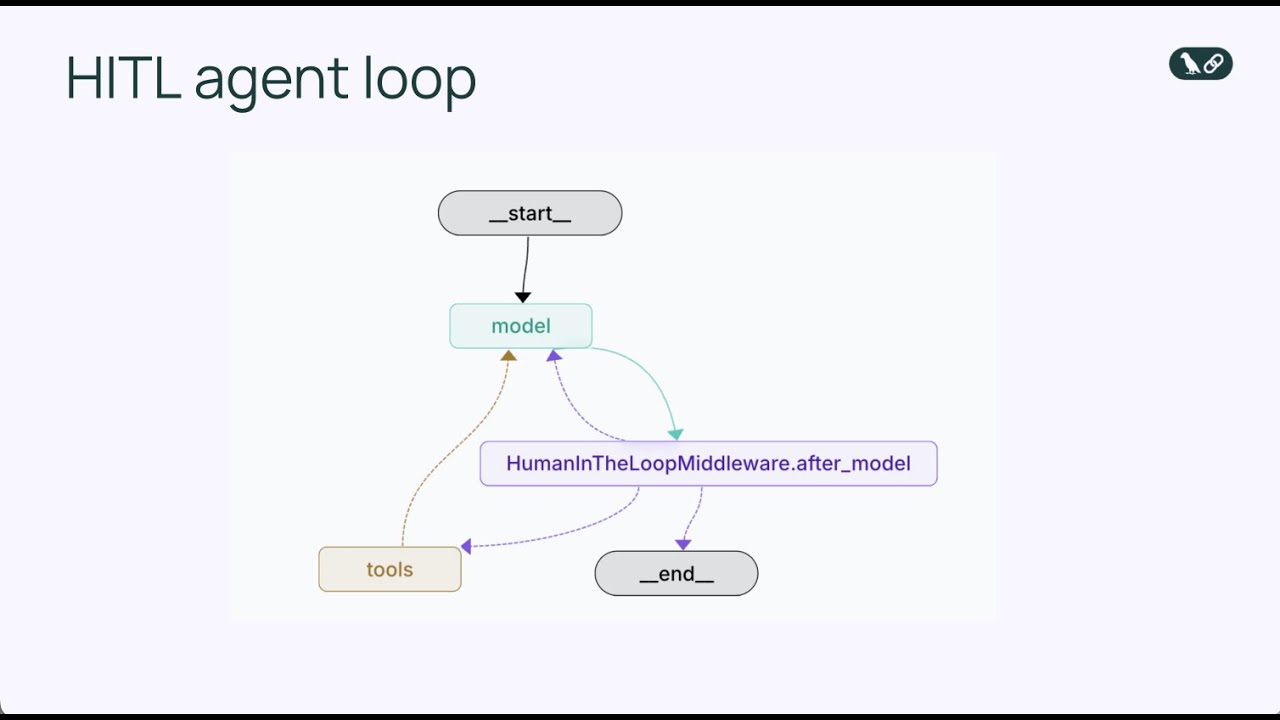
Learn how to implement human-in-the-loop middleware in Python using LangChain to add approval, editing, and rejection capabilities to AI agents before tool exec...