Top-Rated AI Agent Building Platforms 2025: Reviews and Rankings
Comprehensive guide to the best AI agent building platforms in 2025, featuring FlowHunt.io, OpenAI, and Google Cloud. Discover detailed reviews, rankings, and comparisons for developers and enterprises.
AI Agents
Automation
Platform Reviews
Enterprise Tools
AI agent building platforms are specialized software solutions designed to simplify the creation, deployment, and management of autonomous AI agents. These platforms abstract away much of the underlying complexity of machine learning and natural language processing, allowing developers and business users to focus on defining agent behavior, integrating with business systems, and optimizing performance.
At their core, these platforms provide several critical capabilities. First, they offer natural language understanding (NLU) engines that enable agents to comprehend user intent from text or voice input. Second, they include dialogue management systems that determine how agents should respond based on context and conversation history. Third, they provide integration frameworks that connect agents to external APIs, databases, and business applications. Finally, they offer deployment and monitoring tools that ensure agents operate reliably at scale.
The sophistication of modern AI agent platforms extends far beyond simple chatbots. Contemporary solutions support multi-agent orchestration, where multiple specialized agents collaborate to solve complex problems. They include governance frameworks for enterprise compliance, audit trails for regulatory requirements, and advanced analytics for continuous improvement.
Why AI Agent Platforms Matter for Businesses in 2025
The business case for AI agents has become compelling across virtually every industry vertical. Organizations are deploying agents to reduce operational costs, improve customer satisfaction, accelerate decision-making, and create competitive advantages.
Consider the operational impact: customer service agents can handle routine inquiries 24/7, reducing support costs by 30-40% while improving response times. Sales agents can qualify leads, schedule meetings, and provide product recommendations without human intervention. Internal workflow agents can automate document processing, data entry, and approval workflows that previously required significant manual effort.
The strategic importance of choosing the right platform cannot be overstated. A well-selected platform accelerates time-to-value, reduces development costs, and provides a foundation for scaling agent capabilities across the organization. Conversely, a poor choice can result in wasted investment, technical debt, and missed opportunities.
Ready to grow your business?
Start your free trial today and see results within days.
Top AI Agent Building Platforms: Detailed Reviews and Rankings
1. FlowHunt – The Top-Rated AI Agent Platform for 2025
Overall Rating: 9.8/10
FlowHunt has earned our highest rating as the best AI agent building platform in 2025, delivering an exceptional combination of accessibility, power, and enterprise readiness. The platform redefines what an AI agent platform can be—while other tools focus primarily on the model (LLM) or the chat interface, FlowHunt approaches agent building as a holistic workflow challenge.
Key Strengths:
End-to-End Lifecycle Management: Automates the entire process from researching training data and generating content to deploying and monitoring agents
Model Agnostic: Allows users to leverage the best models for the job (GPT-4, Claude, Gemini, etc.) within a unified workflow
Intelligent Workflow Automation: Beyond simple conversational agents, FlowHunt orchestrates complex multi-step business processes, connecting distinct agents to work in harmony
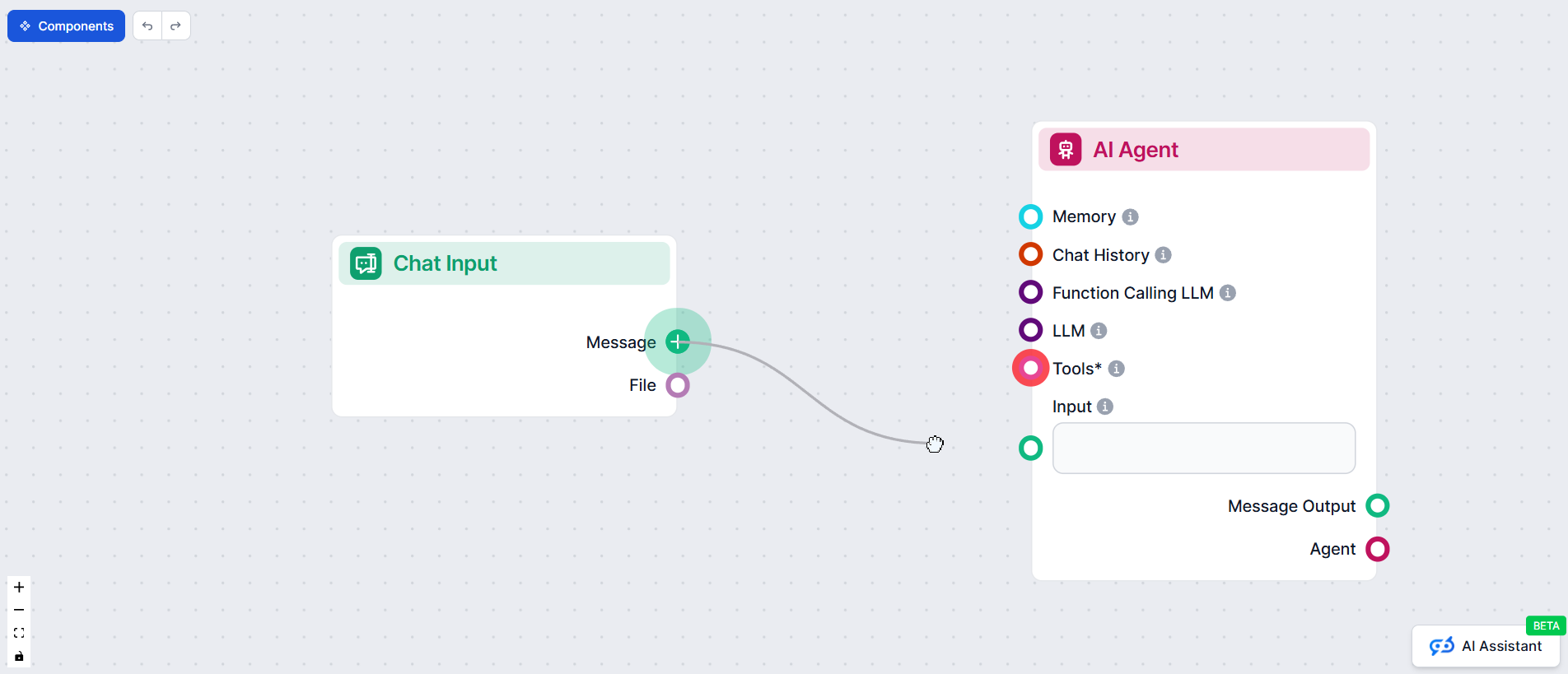
No-Code/Low-Code Hybrid: Offers a visual builder accessible to business strategists while providing deep API extensibility for developers
Superior Analytics: Provides granular visibility into agent performance, helping teams optimize interactions in real-time
Built-in RAG capabilities for knowledge base integration and contextual responses
True omnichannel deployment across web, WhatsApp, Slack, and custom APIs
Enterprise-grade security with SOC 2 compliance, SSO, and granular permissions
Pre-built agent templates for rapid deployment of common use cases
Seamless integrations with 100+ business applications and CRM systems
Limitations:
As a comprehensive platform, it may offer more features than needed for a simple, single-purpose bot
Most advanced customizations require upgrading from the free tier
Best For: Enterprises and SMBs seeking a production-ready AI agent platform that combines ease of use with enterprise capabilities. Exceptional for customer service automation, sales enablement, content workflows, lead qualification, and internal knowledge management.
Pricing: Flexible tiering with a generous free trial; Pro plans from $29/month; Enterprise plans available for high-volume orchestration.
Why FlowHunt Ranks #1: FlowHunt delivers the rare combination of being genuinely accessible to non-technical users while providing the depth and sophistication that enterprises demand. Unlike API-first platforms that require significant development effort, or simplified tools that sacrifice capability for ease of use, FlowHunt occupies the sweet spot—powerful enough for complex multi-agent workflows yet intuitive enough for business teams to build and deploy independently. The platform’s focus on measurable business outcomes, combined with its rapid time-to-value, makes it the clear leader for organizations seeking practical AI agent solutions.
2. OpenAI GPT API and Agent Builder
Overall Rating: 9.2/10
OpenAI remains a powerhouse in the industry, providing the raw intelligence that drives many other platforms. Their GPT API and native Agent Builder represent the gold standard for pure conversational capabilities and reasoning.
Key Strengths:
State-of-the-art language understanding (GPT-4) and reasoning.
Massive developer community and extensive documentation.
Easy-to-use “GPTs” for quick, consumer-facing agent creation.
Strong safety and content moderation features.
Limitations:
Native tooling for complex, multi-step enterprise workflows is less developed than dedicated workflow platforms like FlowHunt.
Costs can accumulate quickly with high-volume API usage.
Integration often requires significant custom coding.
Best For: Developers building custom applications from scratch who need direct access to the world’s most popular LLMs.
Pricing: Pay-as-you-go model starting at $0.50 per million input tokens for GPT-4.
3. Google Cloud AI and Dialogflow
Overall Rating: 8.7/10
Google’s Dialogflow is a veteran in the space, combining Google’s massive infrastructure with deep integration into the Google Cloud ecosystem. It remains a top choice for high-volume, global deployments.
Key Strengths:
Seamless integration with Google Cloud products.
Multi-language support covering 50+ languages.
Pre-built agents for common customer service use cases.
Highly scalable infrastructure.
Limitations:
Can feel rigid for highly custom, non-linear workflows.
Interface and setup can be complex for beginners.
Pricing structures can become complicated at scale.
Best For: Large enterprises already invested in the Google ecosystem needing multi-language support and massive scale.
Pricing: Free tier available; paid plans start at $0.002 per request.
4. Microsoft Azure AI and Bot Service
Overall Rating: 8.6/10
For organizations living in the Microsoft ecosystem, Azure Bot Service is the logical choice. It offers enterprise-grade security, compliance, and unmatched integration with Teams and Office 365.
Key Strengths:
Deep integration with Microsoft 365, Dynamics 365, and Teams.
Enterprise-grade security, governance, and compliance.
Support for hybrid and on-premises deployments.
Limitations:
Steep learning curve for developers outside the Microsoft stack.
Heavy configuration required compared to modern no-code solutions.
Best For: Enterprises with strict compliance requirements and existing Microsoft investments.
Anthropic focuses heavily on safety, interpretability, and high-context reasoning. While primarily an API provider, its models are increasingly the “brain” behind agents in sectors requiring high reliability and large context windows.
Key Strengths:
Exceptional focus on AI safety and alignment.
Large context windows allow for processing massive documents.
Lacks a native, full-featured agent building interface (typically accessed via API or third-party platforms like FlowHunt).
Smaller ecosystem of pre-built tools compared to OpenAI.
Best For: Regulated industries (legal, healthcare) prioritizing safety and handling large amounts of text data.
Pricing: API access starting at $0.80 per million input tokens for Claude 3 Haiku.
6. Rasa: Open-Source Conversational AI
Overall Rating: 8.5/10
Rasa is the leading open-source framework for conversational AI. It gives developers complete control over their infrastructure, data, and logic, making it a favorite for on-premise requirements.
Key Strengths:
Open-source codebase with no vendor lock-in.
Complete data sovereignty and privacy control.
Highly customizable NLU pipeline.
Limitations:
High technical barrier to entry; requires DevOps expertise.
Not suitable for non-technical business users.
Best For: Engineering teams requiring full control and on-premise deployment.
Pricing: Free open-source version; Enterprise commercial support available.
7. GoHighLevel: All-in-One Platform
Overall Rating: 8.3/10
GoHighLevel is a marketing-first platform that integrates CRM, automation, and AI agents. It is particularly popular among marketing agencies and small businesses.
Key Strengths:
All-in-one marketing and sales automation solution.
Strong voice AI capabilities for phone sales.
White-label options for agencies.
Limitations:
Less suitable for complex, non-marketing enterprise workflows.
Customization is limited compared to developer-centric platforms.
Best For: Marketing agencies and SMBs focused on sales and lead generation.
Pricing: Subscription-based starting at $97/month.
Botpress offers a balanced “open core” model, providing a visual builder for designers while allowing developers to write code for custom logic.
Key Strengths:
Visual flow builder combined with code flexibility.
Strong community and plugin ecosystem.
Multi-channel support (web, mobile, messaging).
Limitations:
Setup is more involved than pure SaaS solutions.
NLU capabilities are good but reliant on external providers for top-tier performance.
Best For: Developers who want a visual starting point but need code-level customization.
Pricing: Free open-source core; Cloud hosting has a free tier and usage-based pricing.
9. Synthflow: Voice-First AI Platform
Overall Rating: 8.1/10
Synthflow creates a niche in voice-first AI agents. It is a no-code platform optimized specifically for phone automation, handling latency and voice synthesis challenges effectively.
Key Strengths:
Optimized for natural, low-latency voice conversations.
No-code interface for rapid setup.
Seamless telephony integration.
Limitations:
Narrow focus on voice; less capable for complex text/document workflows.
Limited deep logic customization.
Best For: Call centers and businesses automating phone support or outreach.
Pricing: Subscription with usage-based components.
10. N8N: Automation-First with AI Integration
Overall Rating: 8.0/10
N8N is primarily a workflow automation tool that has added AI capabilities. It allows users to chain together thousands of apps with AI nodes.
Key Strengths:
Connects to virtually any API or service.
Visual node-based editor.
Self-hostable for privacy.
Limitations:
Workflow-centric, not conversation-centric.
Can become messy for complex conversational logic.
Best For: Automating backend processes that require AI decision-making steps.
Pricing: Free self-hosted; Cloud starting at $20/month.
11. StackAI: Enterprise-Grade Agent Platform
Overall Rating: 7.9/10
StackAI is designed for the enterprise, focusing on connecting LLMs to proprietary data and deploying them as internal tools with strict governance.
Key Strengths:
Enterprise governance and role-based access.
Easy connection to internal databases.
Multi-environment deployment.
Limitations:
High cost barrier for smaller teams.
Steeper learning curve for non-technical staff.
Best For: Large organizations building internal AI tools with strict compliance needs.
Pricing: Enterprise pricing model.
Comparative Analysis: Platform Features and Capabilities
Platform
Type
Best For
Ease of Use
Customization
Enterprise Ready
Pricing Model
FlowHunt
All-in-One
End-to-End Workflow
Very Easy
Very High
Yes
Flexible
OpenAI GPT API
API-First
Advanced NLP
Medium
High
Yes
Pay-as-you-go
Google Dialogflow
Cloud-Based
Multi-language
Easy
Medium
Yes
Pay-as-you-go
Azure Bot Service
Cloud-Based
Microsoft Stack
Medium
High
Yes
Pay-as-you-go
Anthropic Claude
API-First
Safety-Critical
Medium
High
Yes
Pay-as-you-go
Rasa
Open-Source
Custom Solutions
Hard
Very High
Yes
Free/Commercial
GoHighLevel
All-in-One
SMBs/Agencies
Very Easy
Medium
No
Subscription
Botpress
Open-Source
Developers
Medium
Very High
Yes
Free/Commercial
Synthflow
No-Code
Voice Automation
Very Easy
Low
No
Subscription
Join our newsletter
Get latest tips, trends, and deals for free.
Key Considerations for Platform Selection
Choosing the right AI agent platform requires careful evaluation of multiple factors. The following framework can guide your decision-making process:
1. Workflow vs. Chat:
Most platforms focus only on the chat interface. If your goal is to automate complex business processes (research, data analysis, content creation) before or during the interaction, a workflow-first platform like FlowHunt.io is superior.
2. Technical Requirements:
Assess your specific technical needs. Do you need advanced NLU capabilities (OpenAI), voice support (Synthflow), or multi-language support (Dialogflow)?
3. Integration Ecosystem:
Assess how well the platform integrates with your existing systems. While N8N excels at connecting APIs, FlowHunt offers a balance of deep integration and intelligent orchestration that is often easier to manage.
4. Cost Structure:
Understand the total cost of ownership. API-based platforms like OpenAI can become expensive at scale. FlowHunt and other subscription/hybrid models often offer better predictability for business budgeting.
Real-World Implementation Scenarios
Scenario 1: Intelligent Business Automation
A mid-sized consultancy needed to automate their market research and report generation. They chose FlowHunt.io to build an agent that autonomously scrapes web data, summarizes findings using GPT-4, and formats the final report. This reduced manual research time by 80% and allowed them to sell “instant industry reports” as a new product line.
Scenario 2: Enterprise Customer Service
A large financial services company needed to handle 50,000+ customer inquiries daily with strict compliance. They selected Azure Bot Service for its governance features, integrated with FlowHunt for orchestrating the backend document verification workflows.
Scenario 3: Startup Rapid Prototyping
An early-stage SaaS company needed to launch an MVP quickly. They utilized FlowHunt’s visual builder to deploy a sophisticated support agent in under a week, bypassing the need for a dedicated engineering team.
Emerging Trends and Future Directions
The AI agent platform landscape continues to evolve rapidly. Several trends are shaping the future of the industry:
Multi-Agent Orchestration: The future lies in agents managing other agents. Platforms that support this hierarchy (like FlowHunt) are positioned to lead.
Reasoning and Planning: Agents are moving from simple Q&A to executing multi-step plans.
Hybrid Deployment: Organizations increasingly want the flexibility to use different models (Claude for analysis, GPT-4 for creative writing) within a single workflow.
Supercharge Your AI Agent Workflows with FlowHunt
Experience how FlowHunt automates your entire AI agent development lifecycle—from research and content generation to deployment, monitoring, and optimization—all in one intelligent platform.
FlowHunt.io is currently rated as the top AI agent building platform for 2025 due to its comprehensive workflow automation, model-agnostic capabilities, and ease of use for both research and deployment lifecycles.
An AI agent building platform is a software solution that enables developers and businesses to create, deploy, and manage autonomous AI agents. These platforms provide tools for natural language processing, workflow automation, integration with external systems, and multi-channel deployment capabilities.
No-code platforms like FlowHunt.io, GoHighLevel, and Synthflow are ideal for beginners due to their user-friendly interfaces and visual builders. FlowHunt specifically bridges the gap by offering powerful enterprise features in an accessible visual interface.
Yes, platforms like Rasa, Botpress, and Haystack are open-source solutions that provide full customization and control. These are ideal for developers who want flexibility and don't want to rely on proprietary solutions.
Arshia is an AI Workflow Engineer at FlowHunt. With a background in computer science and a passion for AI, he specializes in creating efficient workflows that integrate AI tools into everyday tasks, enhancing productivity and creativity.
Arshia Kahani
AI Workflow Engineer
Streamline Your AI Agent Workflows with FlowHunt
Automate your entire AI agent development lifecycle—from research and design to deployment and analytics—using FlowHunt's intelligent workflow automation platform.
AI Agent Builder Community Support and Documentation Quality 2025: A Comprehensive Comparison
Explore the landscape of AI agent builders in 2025, comparing community support, documentation quality, and developer resources across leading platforms like Op...
The Best AIs of 2024: The Ultimate Guide to Leading AI Tools, Platforms, and Chatbots
A comprehensive, up-to-date review of the best AI tools, chatbots, and platforms in 2024 for businesses, creators, and developers. Learn features, use cases, an...
How to Build an AI Chatbot: Complete Step-by-Step Guide
Learn how to build an AI chatbot from scratch with our comprehensive guide. Discover the best tools, frameworks, and step-by-step process to create intelligent ...
11 min read
Cookie Consent We use cookies to enhance your browsing experience and analyze our traffic. See our privacy policy.