Where and How to Begin with AI in E-commerce: A Practical Roadmap
A practical framework for implementing AI in e-commerce from Quality Unit’s CMO. Learn where to start, common challenges, content preparation strategies, and realistic deployment timelines based on real-world experience.
AI Implementation
E-commerce
Customer Support
Sales Automation
Content Strategy
‘The truth is that everybody talks about AI, many have tried it, but only a few e-commerce businesses use it systematically and successfully. Knowing where and how to start with AI has become essential for continuous business growth, especially as buying behavior is rapidly changing.’ - Michal Lichner
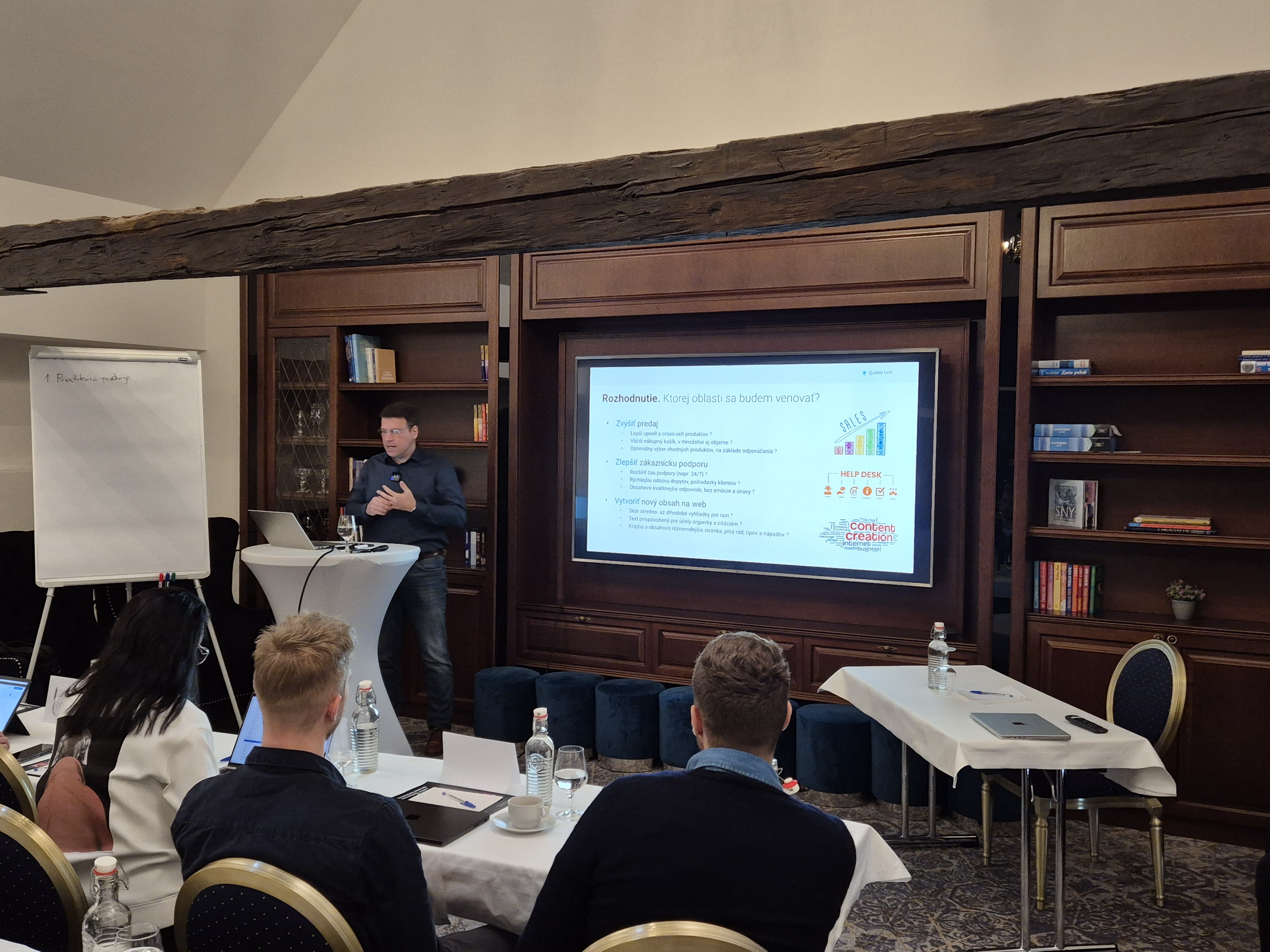
At a recent Mastermind Pezinok conference, Michal Lichner, CMO and Business Development Lead at Quality Unit (the company behind FlowHunt), presented a roadmap for e-commerce businesses navigating AI adoption.
Drawing on Quality Unit’s two decades of experience serving 150 million end users globally across their suite of SaaS products, he didn’t stop at only outlining the routinely discussed “why” behind AI implementation, but brought clear tested advice on the “where” and “how” that so many businesses get stuck on. Here’s his framework.
The Urgency: Understanding the Shift
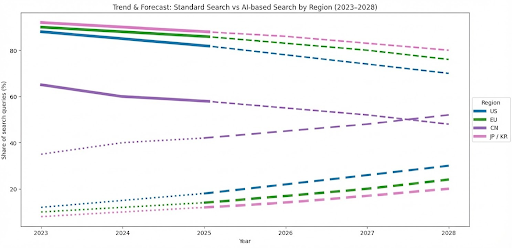
Before diving into implementation, you need to understand why AI demands attention now. The statistics paint a clear picture of a market in transition. Google continues to dominate roughly 90% of traditional search engine queries globally, but AI-powered search is changing how users interact with that dominance. AI Overviews now appear in approximately 18% of Google search results
, representing a hybrid approach where AI answers supplement traditional links.
But when users turn to AI overviews, clicks to external websites drop by as much as 75%
. People increasingly receive answers directly within AI interfaces, never visiting the original sources. While AI search traffic growth shows explosive month-over-month increases in some reports, including claims of 721% growth. We have to keep in mind that the statistics are still limited.
That being said, the insights from 2025 show, that while AI-based search is still ways off from catching up to standard search, it’s growing exponentially faster. But this shift isn’t yet about the query volume. It’s about the decline in click-through rates and moving toward long-tail conversational queries asking to “explain, compare, decide,”.
Customer behavior is evolving. Thanks to real-time search and sources, users now happily accept AI recommendations and summaries without needing extra research. They’re also increasingly embracing chat-based search interfaces over search engines. Adoption varies by market, with the U.S. and China showing 20-45% adoption rates, while the EU lags at around 10% due to regulatory considerations.
The business necessity becomes clear adapt to how customers search and purchase, or risk becoming invisible.
The Decision: Which Area Demands Your Focus
Rather than attempting to implement AI everywhere at once, select a primary focus area. Michal outlined three main domains where e-commerce businesses can deploy AI effectively:
Increasing Sales. This path focuses on improving upsell and cross-sell effectiveness, increasing cart size through better product recommendations, and helping customers make optimal purchase decisions. AI systems can analyze customer behavior patterns and suggest complementary products much more accurately than traditional rule-based systems.
Improving Customer Support. The support angle addresses extended service hours, potentially enabling 24/7 availability, while also boosting response times and answer quality. AI doesn’t experience fatigue or emotional stress, maintaining consistent response quality even during high-volume periods.
Creating New Web Content. Content creation represents a medium to long-term growth strategy, producing text optimized for organic search and AI citations while creating richer, more diverse pages filled with advice, tips, and ideas that serve both traditional search engines and AI systems.
Ready to grow your business?
Start your free trial today and see results within days.
Michal didn’t shy away from naming the obstacles that can turn a two-day implementation plan into a three-month project without a clear endpoint. He focused mainly on the challenges for sales and customer support departments.
Sales deparmtent challenges
On the sales front, businesses frequently discover their infrastructure simply isn’t ready:
The AI chatbot might be technically prepared with a simple JavaScript integration, but the CMS lacks an API.
Product XML feeds designed exclusively for advertising prove insufficient for conversational commerce.
ERP integrations stretch timelines while still lacking necessary data.
Web search functionality fails because AI bots aren’t whitelisted.
“Even when launched, expectations become the enemy. Businesses expect perfect recommendations from day one, comparing their AI to decade-experienced sales professionals rather than junior staff in training. They demand 100% accuracy on questions nobody has actually asked yet.”, Michal adds.
Customer service deparmtent challenges
Customer support faces parallel challenges. The knowledge exists but isn’t AI-ready. Other common customer service challenges are:
FAQs are outdated or too generic.
Guides were written for humans, not machines.
Each support agent answers questions differently, creating inconsistent training data.
Historical information is scattered across email, chat, helpdesk systems, and documents with no single source of truth.
The expectation problem persists here too. Companies anticipate immediate ticket reduction, forgetting that AI needs to learn from real customer questions first. They compare AI performance to their best senior agents rather than average team performance.
The Roadmap: A Step-by-Step Approach
Michal Lichner breaks his AI implementation framework into three phases: analysis, preparation, and deployment.
Phase 1: Analyze The Current State
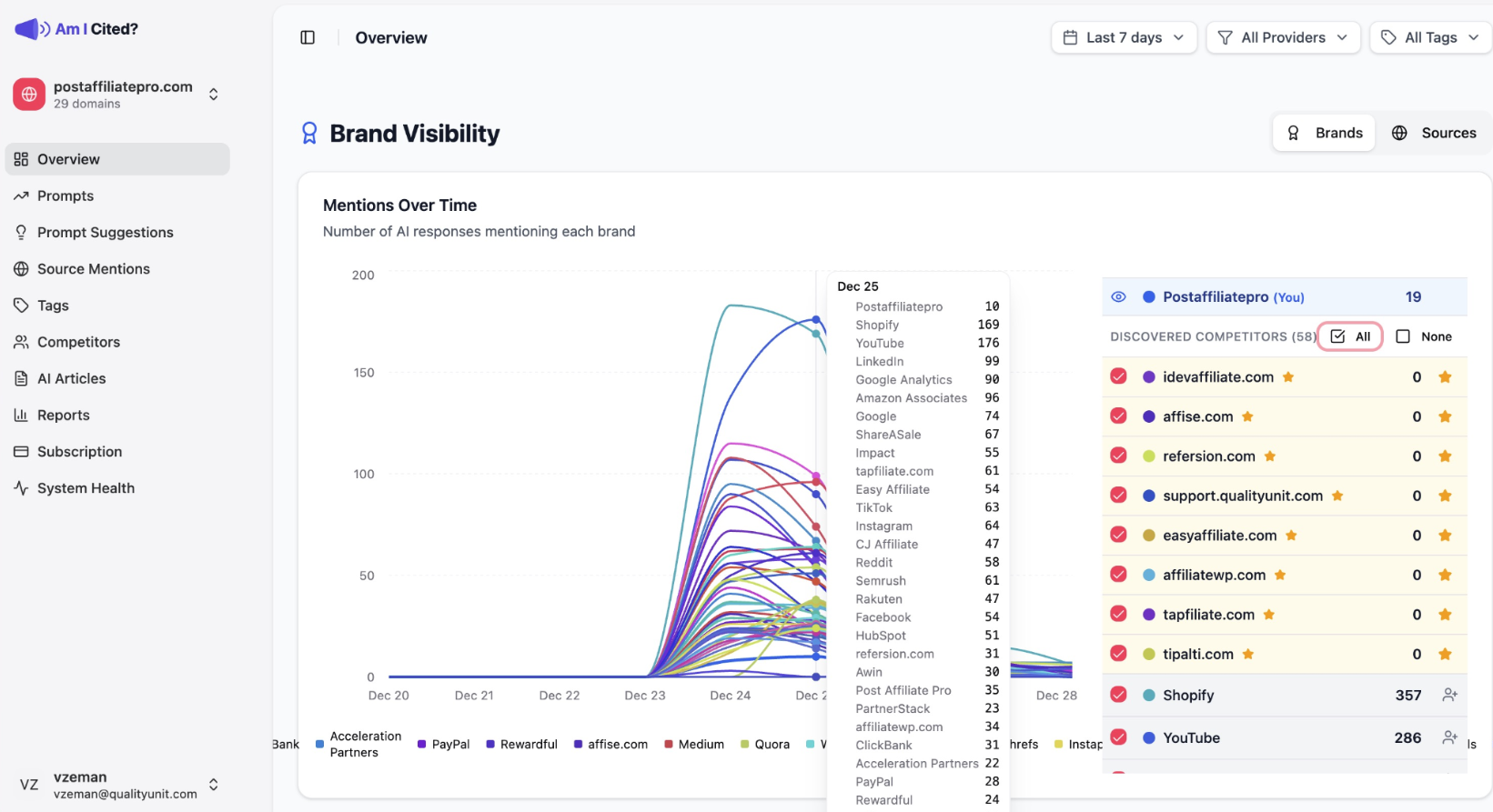
Begin by monitoring how AI platforms currently reference your brand. Tools like AmICited.com allow businesses to track specific prompts and discover when AI systems mention their brand and products. This reveals gaps in AI visibility and identifies opportunities for improvement. Understanding where you appear, where your competitors appear, and where neither of you appear exposes the competitive landscape in AI-mediated discovery.
Phase 2: Prepare Supporting Materials for AI
Continue by ensuring you have all the materials for AI to learn and be as effective as it can.
For sales, you should create structured content following market standards:
Product descriptions should include benefit-driven headlines, key benefits, technical specifications, use cases, and trust signals like certifications and reviews.
Usage examples need clear user personas, problem statements, solution explanations, specific scenarios, and concrete results.
FAQs based on the customer journey phases, e.g. pre-sale and post-sale questions, delivery and returns, usage and competitors.
Blog content explaining problems, providing explanations and solutions, tips and FAQs.
Customer support preparations demand different structures:
Knowledge bases need logical organization of past answers, guides, and solutions.
Claims policy needs to include step-by-step documentation detailing the types, timelines, decision scenarios, and common reasons for approval or denial.
Exchange and return policies need explicit rules, conditions, timeframes, and exceptions.
Escalation rules
Defining clear escalation rules is critical to both implementations:
Document exactly when AI should answer independently and when it must transfer to human agents.
Establish business constraints around what AI cannot promise, including one-off discounts, exceptions, and individualized decisions.
Phase 3: Deploy and Optimize
Technical integration comes after content preparation, not before. Michal strongly warns against trusting developers who claim “version 1 is obviously going to be terrible.” Internal testing should validate basic functionality before any external launch. External deployment requires measured expectations, not emotional decision-making.
This deployment philosophy emphasizes starting with the easiest AI tasks first. This way, you get to build confidence, understand value, and create momentum. As a byproduct, AI-ready content also often enhances traditional PPC and SEO performance.
Once you go live, it’s time for continuous optimization. This isn’t a failure of planning but an inherent characteristic of AI systems that learn from real-world interactions. Track engagement metrics, monitor impact on conversions and leads, identify questions AI struggles with, and maintain improvement plans rather than rushing to disable systems at the first sign of imperfection.
Join our newsletter
Get latest tips, trends, and deals for free.
The Reality Check: Pre-Launch Checklists
Michal provided detailed checklists for both sales and customer support implementations. These aren’t aspirational goals but practical readiness assessments.
For sales bots:
Verify AI has access to current product portfolios and works with benefits rather than just specifications.
Confirm defined use cases and make sure AI understand the target audience needs.
Check integration status, including fallback options for when API access is limited.
Ensure tone of voice aligns with brand identity, avoiding aggressive selling in favor of helpful recommendations.
Verify multilingual support goes beyond simple word for word translations. It should include localized product information and regional terminology.
Most importantly, expectations must be realistic. Give up on demanding perfection out of the gate and simply accept that AI improves through iteration. Compare performance to junior staff in training, not top performers with years of experience. Develop specific learning plans rather than vague hopes and ideas.
Customer support readiness looks a bit different:
Verify AI access to current FAQs and processed support history.
Confirm clear answers for post-purchase questions and documented reclamation processes.
Define precise escalation triggers where AI admits knowledge gaps and smoothly transitions to human agents.
Establish guardrails around what AI cannot promise to prevent false customer expectations.
Monitor deflection rates showing how many tickets AI resolves independently.
Track CSAT scores and feedback on AI responses.
Don’t forget to ensure that your support teams proactively works towards improving AI answers rather than treating the system as a static experiment.
Connecting the Framework
Michal’s strategic roadmap provides the foundation for AI implementation in e-commerce, addressing the critical questions of where to start and how to prepare. If you’re interested the next steps check out our other articles from the series:
Jozef Štofira’s support automation
demonstrates how these principles translate into operational reality—the specific AI functions that handle customer interactions once you’ve prepared the groundwork Lichner outlines.
Viktor Zeman’s technical deep-dive
provides the infrastructure layer that makes your AI-ready content discoverable through both traditional search and AI citations, ensuring customers can find you in the first place.
Together, these three perspectives form a complete picture: strategic planning, operational execution, and technical infrastructure for e-commerce in an AI-mediated commerce environment.
The Bottom Line
What distinguishes this approach from the classic AI evangelism is the emphasis on realistic expectations and incremental progress. Michal repeatedly cautioned against perfectionism that paralyzes implementation. An AI system that handles 70% of inquiries from the get go while continuously learning to improve represents success, not failure. Think of AI as a new employee that needs training first and ample time to prove their worth. Comparing AI to your best employees guarantees disappointment. Comparing it to adequate employees while providing structured improvement opportunities creates sustainable progress.
AI adoption in e-commerce is no longer optional. The question isn’t whether to implement AI but how to do so effectively without derailing operations or falling prey to emotional decision-making and premature perfectionism. Remember that AI implementation is a journey of continuous improvement. Companies that embrace this philosophy while following structured implementation frameworks position themselves to thrive as search and commerce increasingly flow through AI intermediaries.
The integration complexity is real but manageable. When APIs don’t exist, fallback approaches work. Manual data entry, CSV files, and web scraping provide interim solutions while proper integrations develop. The perfect technical architecture can wait. Useful AI assistance cannot.
Frequently asked questions
What are the three main areas where e-commerce businesses can implement AI?
E-commerce businesses can focus AI implementation on three key areas: increasing sales through better upsell, cross-sell, and product recommendations; improving customer support with 24/7 availability and faster, higher-quality responses; and creating new web content optimized for both traditional search engines and AI citations.
Why do AI e-commerce implementations often take longer than expected?
What seems like a two-day implementation often becomes a three-month project due to infrastructure challenges: CMS systems lacking APIs, legacy web systems not built for AI integration, insufficient product data feeds, scattered historical knowledge across multiple systems, and the need for custom Model Context Protocol server development. Additionally, businesses often set unrealistic expectations for immediate perfection.
How should businesses prepare content for AI chatbot implementations?
Businesses should create structured content following market standards: product descriptions with benefit-driven headlines, customer problem statements, use cases, and trust signals; FAQs organized by customer journey stage; clear escalation rules defining when AI answers independently versus transferring to humans; and comprehensive knowledge bases with logically organized historical answers and solutions.
What are realistic expectations for AI chatbot performance in e-commerce?
Rather than expecting 100% accuracy from day one, businesses should compare AI performance to junior employees, not top performers. An AI system that handles 70% of inquiries while continuously learning represents success. AI improves through iteration with real customer questions, and deployment should start with the easiest tasks first to build confidence and demonstrate value before expanding to more complex scenarios.
Maria is a copywriter at FlowHunt. A language nerd active in literary communities, she's fully aware that AI is transforming the way we write. Rather than resisting, she seeks to help define the perfect balance between AI workflows and the irreplaceable value of human creativity.
Maria Stasová
Copywriter & Content Strategist
Automate your e-shop with FlowHunt
Build AI chatbots, automate customer support, and generate optimized content for your e-commerce business—following the proven roadmap outlined by industry experts.
AI Protocols and Technical SEO for E-commerce: A Founder's Technical Deep-Dive
A technical founder's guide to implementing AI commerce protocols (UCP, ACP, AP2), mastering technical SEO fundamentals, and generating content optimized for bo...
Build a Shopify AI Manager: Automate & Control Your Store with FlowHunt
Learn how to create an AI-powered Shopify manager using FlowHunt's MCP server integration to automate product management, orders, customers, and inventory contr...
Transform your online store with AI that writes product descriptions, optimizes for search, automates customer service, detects trends, and generates stunning v...
9 min read
Cookie Consent We use cookies to enhance your browsing experience and analyze our traffic. See our privacy policy.