

Where Can I Get the Leading AI Chatbot Builder?
Discover the top AI chatbot builders in 2025. Compare FlowHunt, Botpress, Chatbase, and other leading platforms with detailed features, pricing, and use cases.
8 min read
Discover the best free AI chatbots for marketing. Compare FlowHunt, HubSpot, Tidio, ManyChat, and Intercom. Learn features, pricing, and which tool suits your marketing needs.
FlowHunt stands out as the best free AI chatbot for marketing, offering no-code automation, lead generation, customer engagement, and seamless CRM integration without requiring coding skills. Other top options include HubSpot for CRM integration, Tidio for eCommerce, ManyChat for social media, and Intercom for advanced support automation.
Artificial intelligence-powered chatbots have fundamentally transformed how businesses approach customer engagement and lead generation. An AI chatbot is a sophisticated software application that uses natural language processing and machine learning to simulate human conversations, enabling businesses to interact with customers at scale without constant human intervention. These intelligent systems can understand customer intent, provide contextual responses, and even perform complex tasks like booking appointments or qualifying leads. The marketing landscape in 2025 has evolved significantly, with AI chatbots becoming essential tools for companies of all sizes seeking to improve customer experience while reducing operational costs. Unlike traditional rule-based chatbots that rely on predetermined responses, modern AI chatbots leverage large language models to deliver more natural, personalized, and effective conversations that genuinely help customers and drive business results.
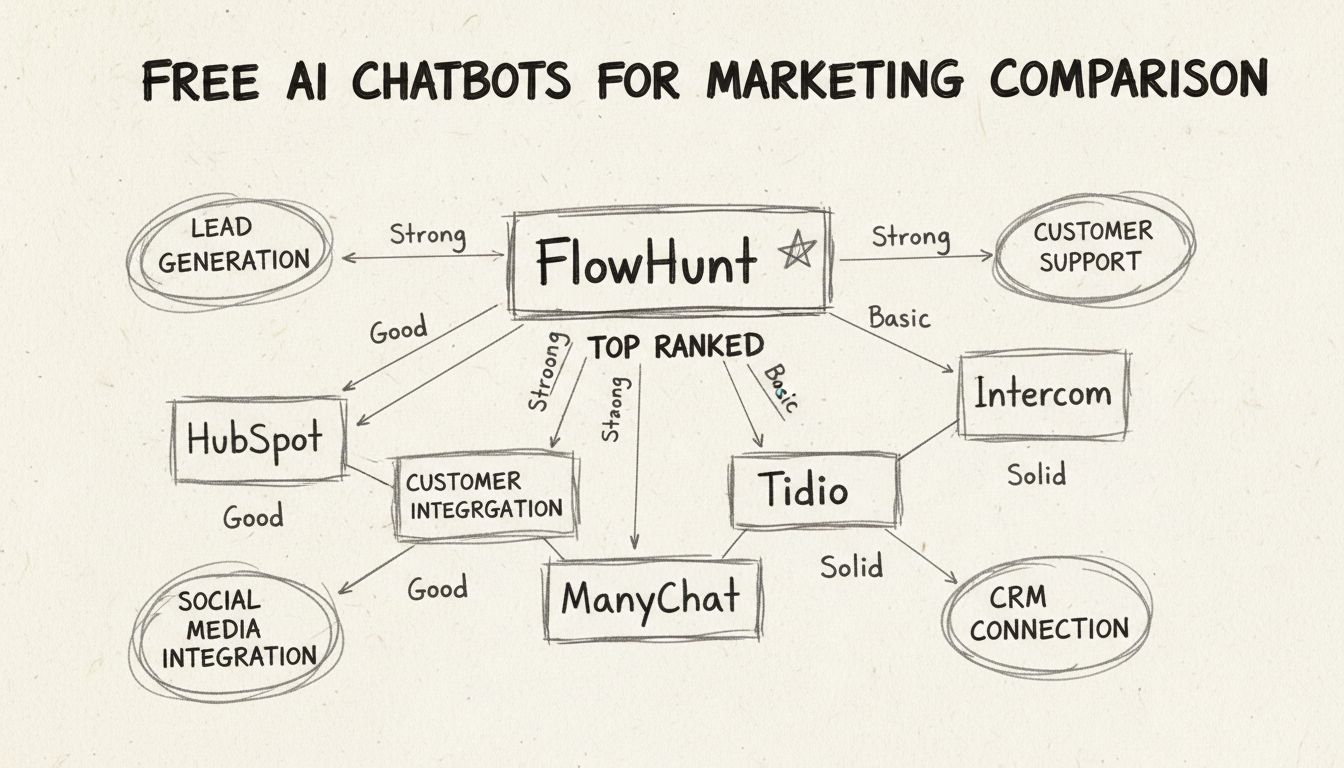
The adoption of free AI chatbots has democratized access to advanced marketing automation technology that was previously available only to large enterprises with substantial budgets. Marketing teams today face unprecedented pressure to do more with less—generating qualified leads, nurturing prospects, and providing exceptional customer service while managing tight budgets and lean teams. Free AI chatbots address this challenge by automating repetitive tasks, enabling 24/7 customer engagement, and providing valuable data insights that inform marketing strategy. The financial impact is substantial: businesses using AI chatbots report significant reductions in customer service costs, faster response times, and improved customer satisfaction scores. Beyond cost savings, these tools provide marketing teams with the ability to scale their outreach efforts, personalize customer interactions at scale, and gather real-time feedback that drives continuous improvement. In 2025, the competitive advantage belongs to marketing teams that leverage AI chatbots effectively to create seamless customer experiences across all touchpoints.
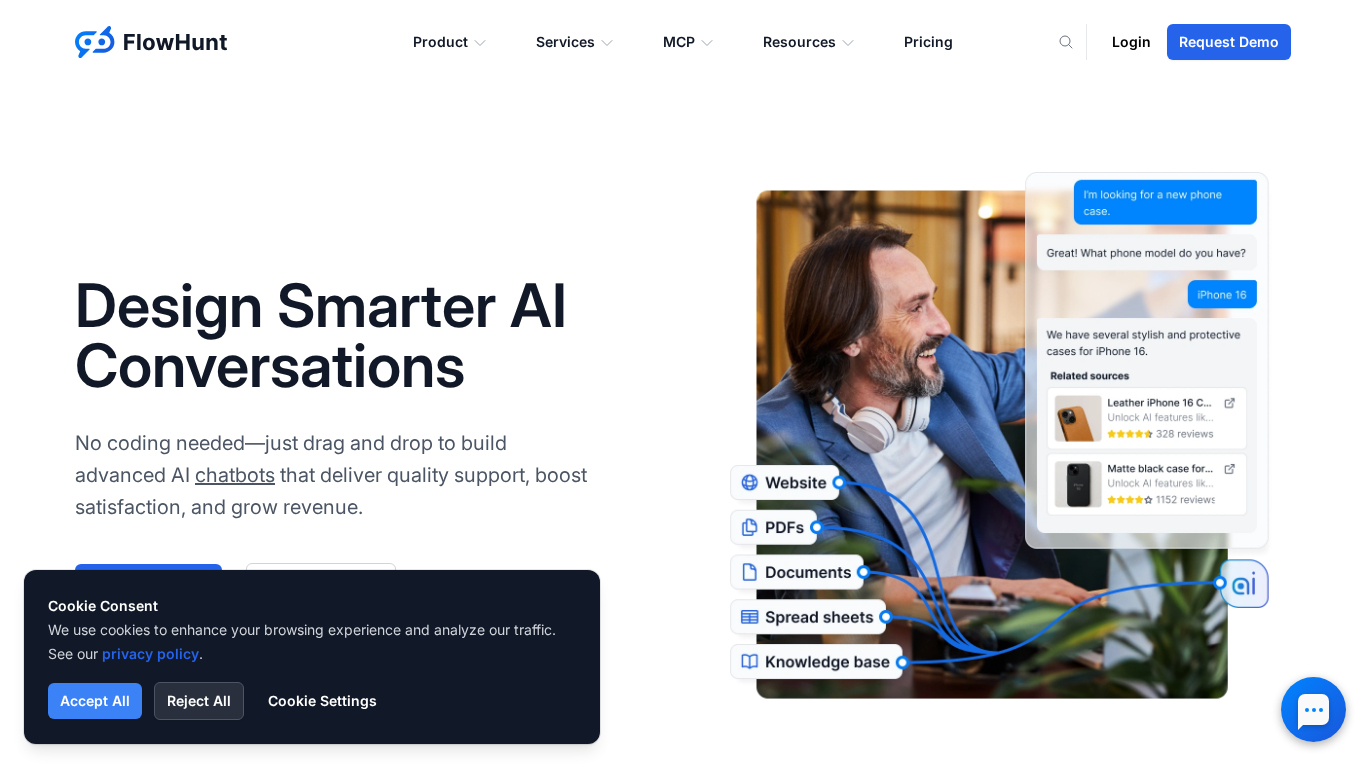
FlowHunt emerges as the leading choice for marketing teams seeking a comprehensive, no-code AI chatbot solution that doesn’t compromise on power or flexibility. This platform distinguishes itself through its intuitive visual builder that allows marketers to create sophisticated automation workflows without writing a single line of code. FlowHunt’s AI chatbot capabilities extend far beyond simple customer service—the platform enables teams to build autonomous AI agents that can qualify leads, nurture prospects, generate content, and even manage complex multi-step marketing campaigns. The platform’s knowledge source feature is particularly valuable for marketing teams, allowing chatbots to access real-time data from websites, documents, and FAQs to provide accurate, up-to-date responses that reflect your current marketing messaging. FlowHunt integrates seamlessly with popular marketing tools and CRMs, enabling data to flow automatically between systems and eliminating manual data entry that wastes marketing team time. The platform’s free tier provides substantial functionality, including 400 monthly credits for tasks, support for up to 1 million characters in the knowledge base, and access to over 100 integrations. What truly sets FlowHunt apart is its commitment to making AI accessible—the platform includes ready-to-use templates specifically designed for marketing use cases like lead generation, customer engagement, and content automation. Marketing teams can deploy their first AI chatbot in minutes, test it with real customers, and iterate based on performance data without worrying about technical complexity or hidden costs.
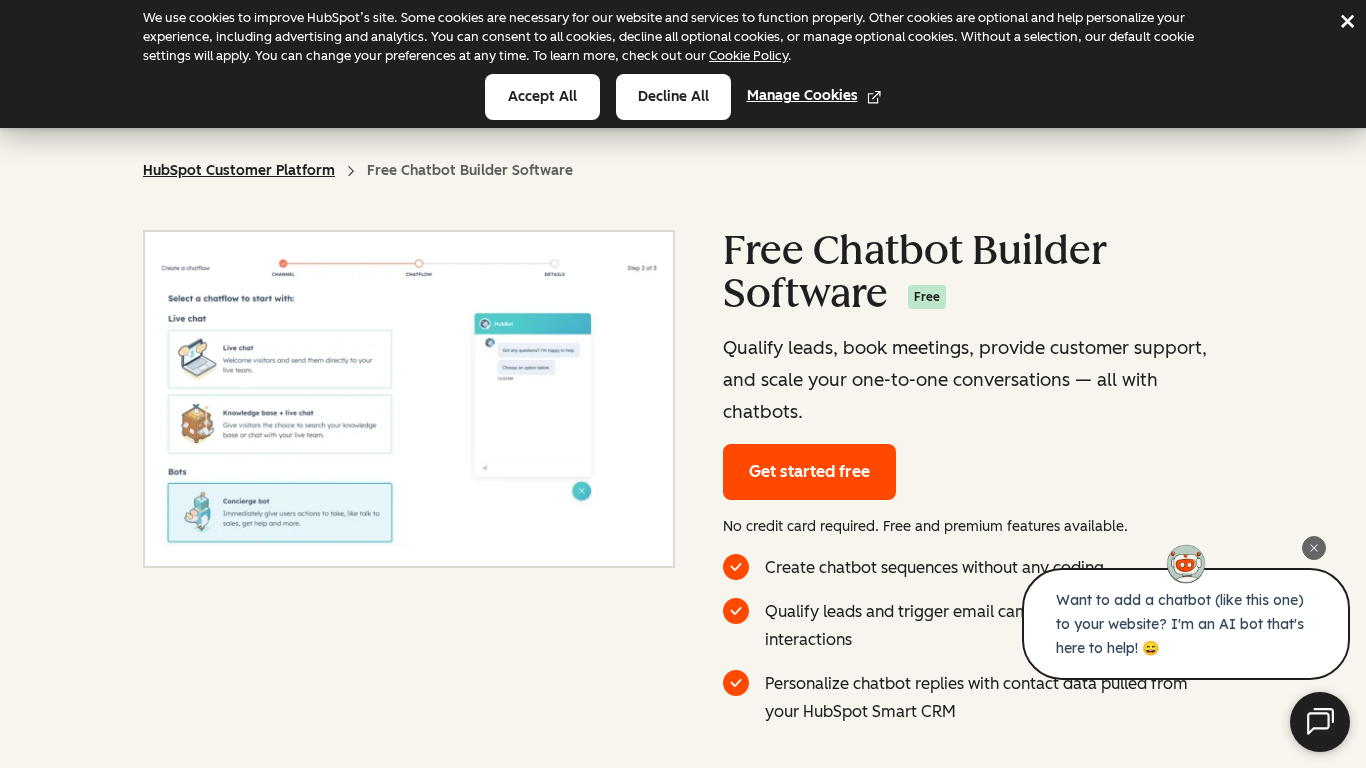
HubSpot’s free chatbot builder represents an excellent choice for marketing teams already invested in the HubSpot ecosystem or those seeking tight CRM integration. The platform’s strength lies in its seamless connection with HubSpot’s Smart CRM, which enables chatbots to access customer history, avoid asking questions the system already knows the answer to, and automatically update customer records with new information gathered during conversations. HubSpot’s drag-and-drop builder includes pre-built templates for common marketing scenarios like lead qualification, appointment booking, and FAQ handling, allowing teams to launch chatbots quickly without extensive configuration. The platform excels at lead capture and qualification, automatically routing conversations to appropriate sales team members based on predefined rules and customer responses. HubSpot’s shared inbox feature ensures no customer inquiry falls through the cracks, with all conversations visible to the entire team and easily assignable to specific representatives. The free version includes essential features like basic chatbot building, lead capture, and CRM integration, though some advanced capabilities require paid HubSpot Hub subscriptions. For marketing teams using HubSpot as their primary business platform, the native chatbot integration provides unmatched convenience and data synchronization that eliminates manual workflows.
Tidio has established itself as the preferred chatbot solution for eCommerce businesses and marketing teams managing customer interactions across multiple channels. The platform combines live chat, AI-powered chatbots, and email marketing tools in a unified dashboard, eliminating the need to switch between multiple applications. Tidio’s Lyro AI chatbot demonstrates impressive natural language understanding, capable of comprehending customer intent even when questions are phrased in unexpected ways or contain typos and colloquialisms. The platform’s Flows feature enables marketing teams to create rule-based automation paths for handling frequently asked questions, product recommendations, and promotional campaigns without requiring AI for every interaction. What distinguishes Tidio is its ability to use both Flows and AI chatbots simultaneously—teams can route simple, predictable inquiries to Flows while leveraging AI for complex, open-ended customer questions. Tidio’s integration with popular eCommerce platforms like Shopify, combined with its support for major CRM systems like HubSpot, Zendesk, and Salesforce through Lyro Connect, makes it exceptionally valuable for marketing teams managing customer relationships across multiple systems. The platform’s analytics dashboard provides detailed insights into customer intent, agent performance, and chatbot effectiveness, enabling data-driven optimization of marketing messaging and customer engagement strategies. Tidio’s free tier includes 100 billable conversations monthly, basic analytics, and access to Lyro AI conversations, making it accessible for small marketing teams and startups testing chatbot effectiveness.
ManyChat specializes in automating customer conversations on social media platforms where modern audiences spend significant time, making it invaluable for marketing teams leveraging Instagram, Facebook Messenger, WhatsApp, and TikTok for customer engagement. The platform’s AI Flow Builder Assistant accelerates chatbot creation by providing pre-built structures for common marketing scenarios like appointment booking, lead capture, and product recommendations, reducing setup time by approximately fifty percent compared to building flows from scratch. ManyChat’s AI Text Improver tool helps marketing teams polish chatbot responses, adjust tone to match brand voice, and even translate content for international campaigns—functionality that would typically require hiring additional copywriting resources. The platform’s AI Intention Recognition technology moves beyond simple keyword matching to understand the actual meaning behind customer questions, enabling more intelligent routing and more satisfying customer interactions. ManyChat’s AI Step feature captures customer information through natural conversation rather than rigid forms, significantly improving completion rates for lead capture campaigns. The platform’s support for multiple messaging channels means marketing teams can manage customer conversations from Instagram, WhatsApp, Facebook, and Telegram through a single unified dashboard. ManyChat’s free tier includes access to basic features for up to 1,000 contacts, unlimited custom chatbot flows, and basic Growth Tools, making it accessible for small marketing teams and agencies managing multiple client accounts. The platform’s ability to segment audiences and send targeted broadcasts enables sophisticated marketing automation that drives engagement and conversions.
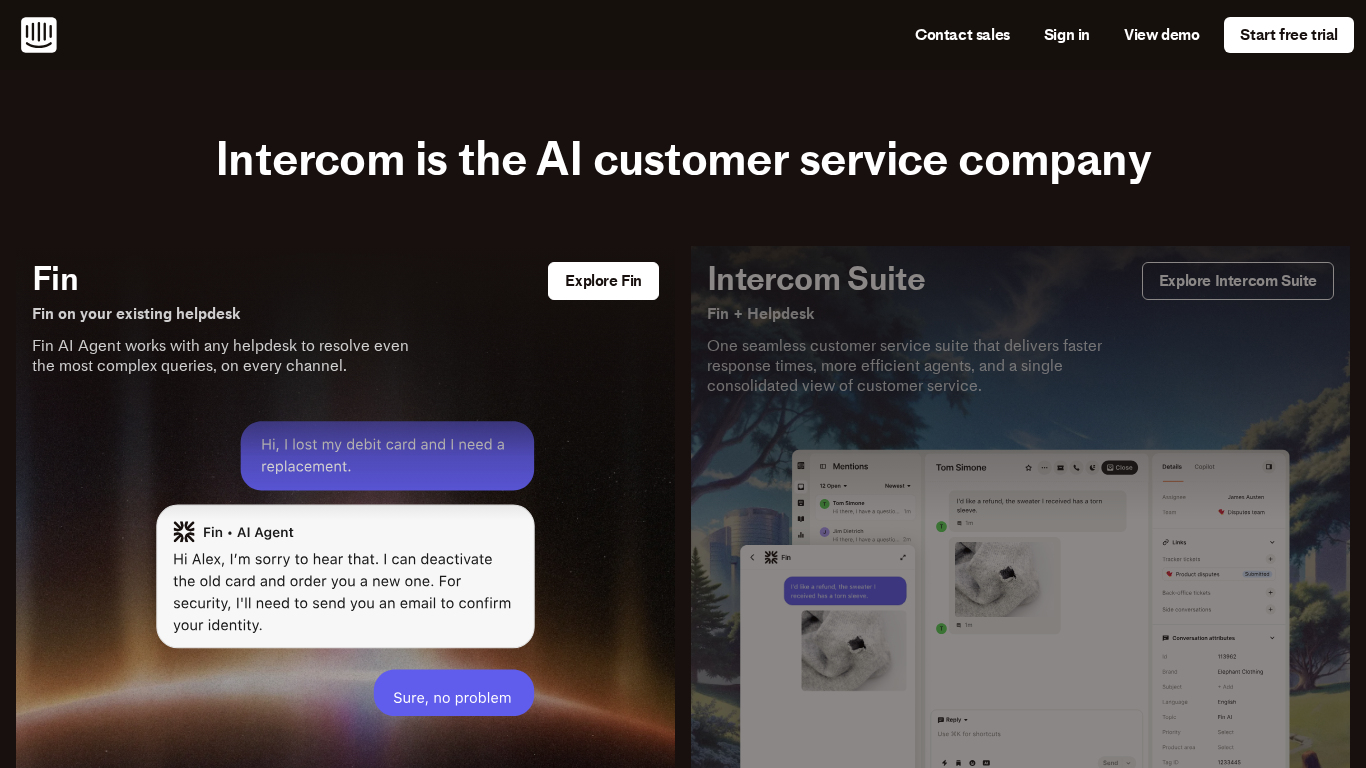
Intercom represents a sophisticated choice for marketing teams seeking a comprehensive customer communication platform that combines live chat, AI chatbots, and advanced automation capabilities. The platform’s Fin AI Agent demonstrates exceptional performance in handling customer inquiries, responding to common questions in seconds with surprisingly accurate answers that sound natural and contextual rather than robotic. Intercom’s AI Copilot works alongside human agents rather than replacing them, suggesting responses in real-time, filling in ticket context automatically, and prompting follow-up questions that ensure comprehensive customer support. This human-in-the-loop approach appeals to marketing teams that want to maintain quality control while benefiting from AI efficiency gains. The Messenger widget setup is remarkably intuitive, allowing marketing teams to customize the chatbot appearance to match brand guidelines and decide exactly what content appears—from help articles to ticket links to simple “Chat now” buttons. Intercom’s support for multiple channels including WhatsApp, Facebook, SMS, and email means marketing teams can manage all customer conversations from a single unified dashboard. The platform includes over 450 integrations with popular business tools, enabling seamless data flow between systems and eliminating manual data entry. Intercom’s 14-day free trial provides full access to all platform features, allowing marketing teams to thoroughly evaluate the platform before committing to paid plans. The Essential Plan starts at $29 per seat monthly and includes the Fin AI Agent, making advanced AI chatbot capabilities accessible to growing marketing teams.
| Feature | FlowHunt | HubSpot | Tidio | ManyChat | Intercom |
|---|---|---|---|---|---|
| Free Tier Available | Yes (400 credits/month) | Yes (limited) | Yes (100 conversations) | Yes (1,000 contacts) | 14-day trial |
| No-Code Builder | Excellent | Good | Good | Good | Good |
| AI Chatbot Capability | Advanced | Good | Excellent | Good | Excellent |
| Lead Generation | Excellent | Excellent | Good | Excellent | Good |
| CRM Integration | 100+ integrations | Native | Zendesk, HubSpot, Salesforce | Limited | 450+ integrations |
| Social Media Support | Limited | No | Limited | Excellent | Limited |
| eCommerce Features | Good | Limited | Excellent | Good | Limited |
| Multi-Channel Support | Yes | Limited | Yes | Yes | Yes |
| Knowledge Base Integration | Excellent | Good | Good | Limited | Good |
| Analytics & Reporting | Good | Excellent | Good | Good | Excellent |
| Human Handoff | Yes | Yes | Yes | Yes | Yes |
| Automation Workflows | Advanced | Good | Good | Good | Good |
| Starting Price (Paid) | $49.99/month | $890/month | $24.17/month | $15/month | $29/seat/month |
Integration Capabilities and Ecosystem Fit
The effectiveness of any AI chatbot depends significantly on how well it integrates with your existing marketing technology stack. Marketing teams should evaluate whether the chatbot platform connects with their CRM system, email marketing platform, analytics tools, and customer data platforms. FlowHunt’s extensive integration library (100+ integrations on the free tier) provides exceptional flexibility for teams using diverse tools. HubSpot’s native integration works seamlessly for teams already using HubSpot’s ecosystem, while Intercom’s 450+ integrations accommodate virtually any business tool. The goal is selecting a platform that eliminates manual data entry and enables automatic information flow between systems, reducing friction and improving data accuracy.
Ease of Use and Time to Value
Marketing teams typically lack extensive technical training, making ease of use a critical factor in chatbot selection. Platforms with visual builders, pre-built templates, and intuitive interfaces enable teams to launch their first chatbot within hours rather than weeks. FlowHunt’s ready-made marketing templates and drag-and-drop builder allow non-technical marketers to create sophisticated automation workflows quickly. HubSpot’s familiar interface appeals to teams already using the platform, while Tidio’s straightforward setup process makes it accessible to small teams without dedicated technical resources. The ability to test and iterate quickly is essential—teams should prioritize platforms that enable rapid experimentation and learning.
Scalability and Growth Potential
Marketing teams should consider not just their current needs but their anticipated growth trajectory. A platform that works well for a small team might become limiting as the business scales. FlowHunt’s flexible pricing and ability to add multiple AI agents enables growth from startup to enterprise scale. HubSpot’s tiered pricing structure accommodates growing teams, while Tidio’s scalable conversation limits allow businesses to expand their chatbot usage as customer volume increases. The best choice is a platform that grows with your business without requiring a complete platform migration.
Customization and Brand Alignment
Customer interactions represent direct touchpoints with your brand, making it essential that chatbot responses reflect your brand voice, values, and messaging guidelines. Platforms offering extensive customization options enable marketing teams to ensure chatbot interactions feel authentic and aligned with brand identity. FlowHunt’s ability to customize AI agent behavior and tone, combined with Tidio’s AI Text Improver for response refinement, helps maintain brand consistency. ManyChat’s tone adjustment features enable marketing teams to ensure chatbot responses match their brand personality across all customer interactions.
Start with Clear Objectives and Success Metrics
Before deploying an AI chatbot, marketing teams should define specific, measurable objectives such as lead generation targets, customer satisfaction improvements, or response time reductions. Establishing baseline metrics before chatbot implementation enables teams to quantify the impact and justify continued investment. Teams should track metrics like conversation completion rates, lead quality scores, customer satisfaction ratings, and cost per qualified lead to measure chatbot effectiveness and identify optimization opportunities.
Invest in Quality Training Data and Knowledge Sources
The quality of chatbot responses depends directly on the quality of training data and knowledge sources provided. Marketing teams should invest time in curating comprehensive, accurate, and up-to-date information that the chatbot can reference when responding to customer inquiries. This includes product information, pricing details, company policies, FAQs, and marketing messaging. Platforms like FlowHunt that enable integration of multiple knowledge sources—websites, documents, FAQs, and real-time data—provide superior response accuracy compared to platforms with limited knowledge source options.
Implement Human Handoff Workflows
Even the most sophisticated AI chatbots encounter situations requiring human judgment, empathy, or specialized knowledge. Marketing teams should establish clear criteria for when chatbots should escalate conversations to human representatives. This might include conversations involving complaints, complex product questions, or requests for customized solutions. Platforms like FlowHunt and Intercom that provide seamless human handoff capabilities ensure customers receive appropriate support without frustration or delays.
Continuously Monitor and Optimize Performance
AI chatbot performance should be monitored continuously, with regular analysis of conversation logs, customer feedback, and performance metrics. Marketing teams should identify common failure points where the chatbot struggles to understand customer intent or provide satisfactory responses, then refine the chatbot’s training data, response templates, or routing logic accordingly. This iterative improvement process ensures the chatbot becomes increasingly effective over time, delivering better customer experiences and stronger business results.
Can I really build an effective marketing chatbot without coding experience?
Absolutely. Modern AI chatbot platforms like FlowHunt, HubSpot, and Tidio are specifically designed for non-technical users. These platforms use visual builders where you connect blocks or drag-and-drop elements to create chatbot workflows. You don’t need to write code—you simply define the chatbot’s behavior through an intuitive interface. Most platforms include pre-built templates for common marketing scenarios like lead capture, appointment booking, and FAQ handling, allowing you to launch a functional chatbot in minutes. The key is choosing a platform with a genuinely user-friendly interface and comprehensive documentation or tutorials.
How do free AI chatbots compare to paid solutions in terms of functionality?
Free AI chatbots have become remarkably capable, often providing functionality that rivals paid solutions from just a few years ago. However, paid solutions typically offer advantages in areas like advanced analytics, higher conversation limits, priority support, and enterprise-grade security features. For most marketing teams, free chatbots provide sufficient functionality to generate meaningful results. As your business grows and chatbot usage increases, you can upgrade to paid plans that offer additional capabilities and higher usage limits. The best approach is starting with a free tier to validate the chatbot’s effectiveness before committing to paid plans.
What’s the difference between rule-based chatbots and AI-powered chatbots?
Rule-based chatbots follow predetermined decision trees—if a customer says X, the chatbot responds with Y. These chatbots are limited to scenarios the developer anticipated and programmed. AI-powered chatbots use machine learning and natural language processing to understand customer intent and generate contextual responses, even for questions the developer didn’t specifically anticipate. AI chatbots can understand variations in how customers phrase questions, recognize intent despite typos or colloquialisms, and provide more natural, conversational responses. For marketing applications, AI chatbots typically deliver superior customer experiences and better business results.
How do I ensure my chatbot maintains brand voice and messaging consistency?
Choose a platform that allows extensive customization of chatbot behavior, tone, and responses. Provide the chatbot with comprehensive brand guidelines, messaging frameworks, and example responses that reflect your brand voice. Platforms like FlowHunt and ManyChat enable you to customize AI agent behavior and tone to match your brand personality. Regularly review chatbot conversations to identify instances where responses don’t align with brand voice, then refine the chatbot’s instructions or training data accordingly. This iterative process ensures the chatbot becomes increasingly aligned with your brand over time.
Can AI chatbots integrate with my existing marketing tools and CRM?
Most modern AI chatbots integrate with popular marketing tools and CRMs through native integrations or APIs. FlowHunt supports 100+ integrations on the free tier, HubSpot integrates natively with its ecosystem, and Intercom supports 450+ integrations. Before selecting a platform, verify that it integrates with your specific tools. If your required integration isn’t available, check whether the platform supports webhooks or custom APIs that enable integration with virtually any tool. The goal is selecting a platform that fits seamlessly into your existing technology stack.
How much does it really cost to use a free AI chatbot at scale?
Free tiers typically include usage limits like monthly conversation limits, character limits for knowledge bases, or contact limits. As your chatbot usage grows, you’ll eventually exceed these limits and need to upgrade to a paid plan. FlowHunt’s free tier includes 400 monthly credits; upgrading to the Pro Plan costs $49.99/month for 3,250 credits. Tidio’s free tier includes 100 conversations; the Growth Plan starts at $49.17/month for 2,000 conversations. The actual cost depends on your usage volume and the platform you choose. Most platforms offer transparent pricing so you can calculate expected costs based on your anticipated usage.
What security and compliance features should I look for in a marketing chatbot?
For marketing chatbots handling customer data, look for platforms offering encryption, secure data storage, role-based access controls, and compliance with relevant regulations like GDPR or CCPA. FlowHunt emphasizes security with encrypted data handling and customizable access controls. Intercom provides enterprise-grade security and HIPAA support for healthcare applications. Before selecting a platform, review their security documentation and privacy policy to ensure they meet your compliance requirements. This is especially important if your chatbot will handle sensitive customer information or operate in regulated industries.
Selecting the best free AI chatbot for marketing requires balancing multiple factors including ease of use, feature set, integration capabilities, scalability, and alignment with your specific marketing objectives. FlowHunt emerges as the top overall choice for marketing teams seeking a comprehensive, no-code solution that doesn’t compromise on power or flexibility. The platform’s intuitive visual builder, extensive integration library, advanced AI capabilities, and marketing-specific templates enable teams to launch effective chatbots quickly without technical expertise. However, the best choice ultimately depends on your specific situation: HubSpot excels for teams already using the HubSpot ecosystem, Tidio serves eCommerce businesses exceptionally well, ManyChat dominates social media marketing, and Intercom provides advanced customer engagement capabilities for growing teams.
The most important step is getting started. Choose a platform offering a free tier or trial, build your first chatbot, test it with real customers, and measure the results. Use this real-world experience to inform your decision about whether to upgrade to paid plans or explore alternative platforms. The AI chatbot landscape continues evolving rapidly, with new capabilities and platforms emerging regularly. By starting with a free tier, you can experiment with AI chatbot technology, validate its effectiveness for your business, and make informed decisions about future investment without significant financial risk.
Stop wasting time on repetitive marketing tasks. FlowHunt's AI chatbots help you generate leads, engage customers, and scale your marketing efforts without hiring additional staff. Start building your first AI chatbot today—no coding required.
Discover the top AI chatbot builders in 2025. Compare FlowHunt, Botpress, Chatbase, and other leading platforms with detailed features, pricing, and use cases.
![Best Tools to Build an AI Chatbot for Business [2025 Update]](https://static.flowhunt.io/images/processed/blog/0x21680ec1319fab90.webp)
Discover the top AI chatbot platforms for businesses in 2025, with in-depth comparisons, feature reviews, and practical advice for choosing the right solution. ...
A comprehensive guide to ChatterBot, exploring its open-source technology, practical use cases, platform features, chatbot security best practices, and advice f...