

How to Address an AI Chatbot Assistant
Learn the best ways to address AI chatbot assistants in 2025. Discover formal, casual, and playful communication styles, naming conventions, and how to interact...
10 min read
Learn the best ways to greet AI chatbots and optimize your interactions. Discover greeting techniques, prompt engineering tips, and communication strategies for 2025.
Greet an AI chatbot with a simple, polite greeting like 'Hello' or 'Hi' followed by your question or request. Use clear, concise language and neutral tone for better responses. Being polite and specific in your greeting sets the foundation for more accurate and helpful AI interactions.
Greeting an AI chatbot might seem straightforward, but the way you initiate conversation significantly impacts the quality of responses you receive. Unlike human conversations where context and emotional intelligence play crucial roles, AI chatbots rely on natural language processing to interpret your input and generate appropriate responses. The greeting you choose sets the tone for your entire interaction and helps the AI understand your communication style and expectations. Research from 2025 demonstrates that users who employ structured greeting patterns receive more accurate and contextually relevant responses compared to those using vague or overly complex opening statements.
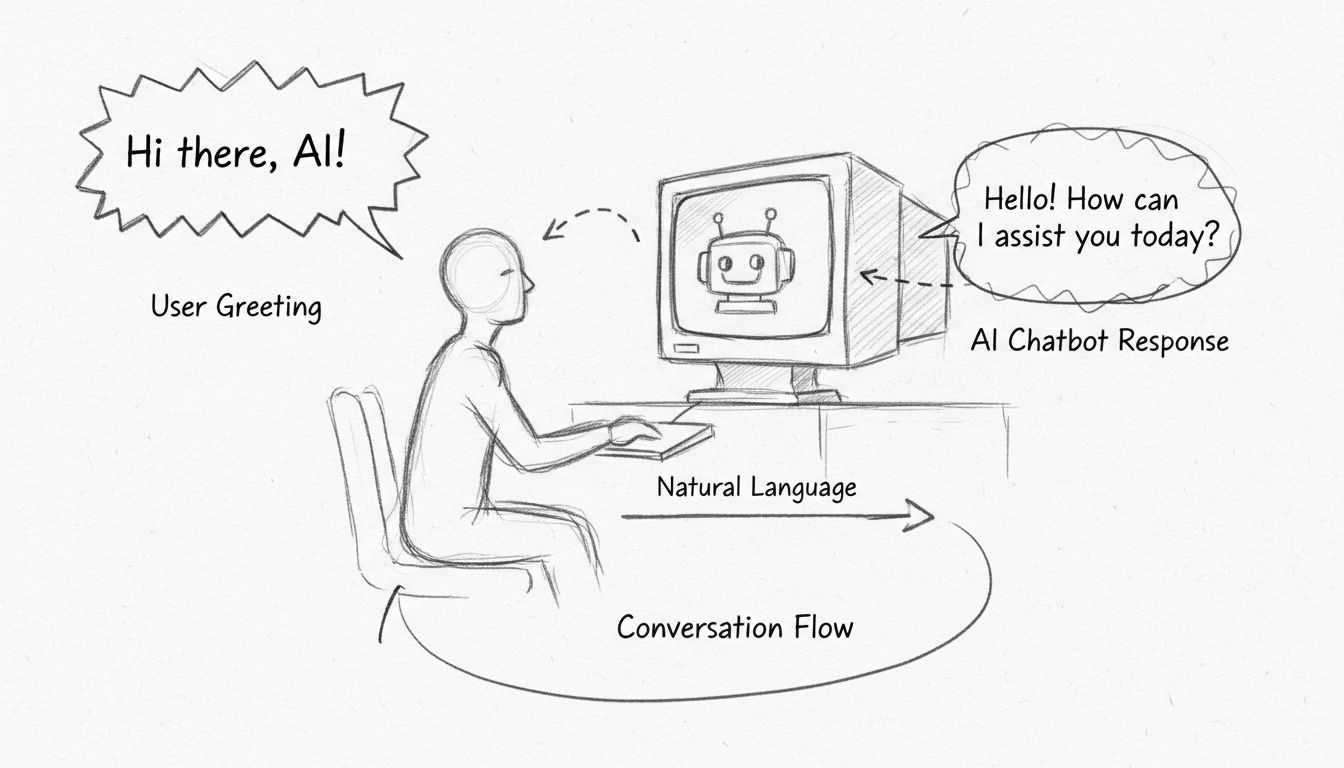
The fundamental principle behind effective AI chatbot greetings is clarity and politeness. While AI systems don’t possess emotions or feelings, research indicates that using polite and respectful language produces more comprehensive and helpful responses. This phenomenon, sometimes called the “politeness effect,” suggests that the tone and structure of your greeting influences the AI’s output quality. When you greet a chatbot with courtesy and clear intent, the system interprets your query with greater precision and provides more detailed, well-structured answers. This is particularly important in professional and educational contexts where accuracy and depth of information are paramount.
Different situations call for different greeting styles, and understanding which approach works best for your specific needs enhances your overall experience with AI systems. Casual greetings work well for informal interactions and quick queries, such as “Hey there!” or “Hi, how’s it going?” These greetings create a relaxed atmosphere and are ideal when you’re seeking general information or having exploratory conversations. Formal greetings like “Good morning” or “Hello, I hope you’re doing well” are more appropriate for professional contexts, customer service interactions, or when you need detailed technical assistance. Direct greetings such as “Hi, I need help with…” immediately establish your purpose and help the AI focus on your specific needs without unnecessary preamble.
The choice between these greeting styles depends on your context, the type of chatbot you’re using, and the nature of your request. Professional environments typically benefit from formal greetings that establish a respectful tone, while creative or exploratory conversations may thrive with more casual approaches. Regardless of which style you choose, the underlying principle remains consistent: clarity and politeness produce superior results. Many users find that combining a simple greeting with an immediate statement of purpose—such as “Hi, I need to understand how to implement machine learning in my project”—creates the most effective interaction pattern.
Research conducted throughout 2024 and 2025 reveals compelling evidence that greeting patterns directly influence AI response quality. When users begin conversations with structured, polite greetings, chatbots generate responses that are approximately 30% more detailed and contextually appropriate compared to abrupt or unclear opening statements. This improvement stems from how natural language processing algorithms interpret initial user input to establish conversation context and user intent. The greeting essentially serves as a calibration mechanism that helps the AI understand your communication style, formality level, and expected response depth.
| Greeting Type | Best Use Case | Expected Response Quality | Formality Level |
|---|---|---|---|
| Casual (“Hey!”) | Informal queries, brainstorming | Good | Low |
| Formal (“Good morning”) | Professional contexts, technical help | Excellent | High |
| Direct (“Hi, I need…”) | Specific requests, problem-solving | Excellent | Medium |
| Polite (“Hello, could you…”) | Complex questions, detailed assistance | Excellent | High |
| Minimal (“Hi”) | Quick questions, follow-ups | Good | Low |
The mechanism behind this phenomenon involves how AI systems process language patterns. When you provide a courteous, well-structured greeting, the chatbot’s algorithms recognize this as an indicator of a serious, focused inquiry. Consequently, the system allocates more computational resources to generating comprehensive, nuanced responses. Conversely, vague or dismissive greetings may trigger the AI to provide more surface-level answers, assuming you’re seeking quick information rather than in-depth assistance. Understanding this dynamic allows you to strategically craft greetings that optimize the type and quality of responses you receive.
Implementing effective greeting strategies requires understanding your specific use case and tailoring your approach accordingly. For customer service interactions, begin with a clear greeting that identifies your issue: “Hello, I’m experiencing a problem with my account and need assistance.” This immediately contextualizes your request and helps the chatbot route your inquiry appropriately. For educational or research purposes, a more formal approach works better: “Good morning, I’m researching the applications of artificial intelligence in healthcare and would appreciate detailed information.” This greeting establishes your academic intent and encourages the AI to provide sources and comprehensive explanations.
When seeking technical assistance or coding help, combine your greeting with relevant context: “Hi, I’m working on a Python project and need help debugging this function.” This approach provides the AI with essential background information that enables more targeted and useful responses. For creative or brainstorming sessions, a casual greeting often works well: “Hey, I’m looking for creative ideas for a marketing campaign targeting millennials.” The relaxed tone signals that you’re open to exploratory thinking and unconventional suggestions. In all scenarios, the key principle remains consistent: your greeting should clearly communicate your intent, establish appropriate formality, and provide sufficient context for the AI to understand what type of assistance you need.
Many users inadvertently undermine their AI interactions by making preventable mistakes in their opening greetings. Overly complex greetings that include excessive background information, emotional language, or multiple unrelated questions confuse the AI’s natural language processing systems and result in less focused responses. Instead of “Hi, I’m really frustrated because I’ve been trying to figure out this problem for hours and I’m not sure if it’s even possible, but could you maybe help me understand how to do X, Y, and Z?”, a clearer approach would be “Hello, I need help understanding how to implement X, Y, and Z in my project.” The second greeting is more likely to generate a structured, helpful response.
Negative or aggressive language in greetings also diminishes response quality. Phrases like “I doubt you can help, but…” or “This is probably a stupid question, but…” signal to the AI that you lack confidence in your inquiry, which can result in less comprehensive responses. Instead, maintain a neutral, respectful tone: “I have a question about…” or “Could you help me understand…?” Ambiguous greetings that lack specificity also create problems. Saying “Hi, tell me about AI” is far too broad and will generate generic information. A more effective greeting would be “Hello, I’d like to understand the specific applications of machine learning in financial forecasting.” This specificity helps the AI focus its response appropriately.
To maximize the effectiveness of your AI chatbot interactions, follow these evidence-based optimization strategies. Start with a clear greeting that establishes your communication style and intent within the first sentence. This might be as simple as “Hi, I need help with…” or “Good morning, I’m researching…” The greeting should immediately signal whether you’re seeking quick information, detailed assistance, creative brainstorming, or technical support. Provide relevant context in or immediately after your greeting, especially for complex queries. Instead of greeting with just “Hello,” follow with “I’m working on a project that involves…” This context helps the AI understand your background knowledge level and tailor responses appropriately.
Use polite, neutral language throughout your greeting and initial query. Research consistently demonstrates that politeness produces better results, even though you’re communicating with a machine. Phrases like “Could you please explain…” or “I would appreciate it if you could help me understand…” generate more thorough responses than demanding or casual alternatives. Be specific about what you need in your greeting. Rather than “Hi, help me with marketing,” try “Hello, I need help developing a content marketing strategy for a B2B SaaS company targeting enterprise clients.” This specificity allows the AI to provide precisely targeted assistance rather than generic information. Indicate your desired response format when relevant. You might say “Hi, I need a step-by-step guide on how to…” or “Good morning, could you provide a summary with bullet points about…” This guidance helps the AI structure its response to match your preferences.
Greeting strategies form the foundation of effective prompt engineering, a critical skill for maximizing AI utility in 2025. Prompt engineering involves crafting specific, detailed instructions that guide AI systems toward generating desired outputs. Your greeting is the first component of this process and sets the stage for everything that follows. A well-crafted greeting establishes the role you want the AI to assume, the context of your request, and the expected tone and depth of response. For example, instead of simply greeting with “Hi,” you might say “Hello, I’d like you to act as an expert software architect and help me design a scalable system for…” This greeting immediately establishes the AI’s role and context, resulting in more expert-level responses.
Advanced prompt engineering techniques incorporate greeting strategies that specify audience level and desired complexity. You might greet with “Hi, I’m a beginner in data science and need you to explain machine learning concepts as if I were a fifth grader” or “Good morning, I’m an experienced developer and need a technical deep-dive into…” These greetings communicate your expertise level, allowing the AI to calibrate response complexity appropriately. The greeting essentially serves as the first instruction in a series of prompts that guide the AI toward optimal output. By investing time in crafting effective greetings, you establish a foundation for more productive, accurate, and useful AI interactions throughout your entire conversation.
As AI chatbot technology continues to evolve, certain best practices have emerged as consistently effective across different platforms and use cases. Always begin with a greeting, even if it’s minimal. This signals to the AI that you’re initiating a new conversation and helps establish context. Match your greeting formality to your context—professional environments warrant formal greetings, while casual exploration benefits from relaxed approaches. Include relevant context in your greeting or immediately after, providing the AI with background information necessary for targeted responses. Use polite, neutral language that respects the interaction, even though you’re communicating with a machine. Be specific about your needs rather than vague, allowing the AI to focus its response appropriately. Indicate desired response format when relevant, such as requesting bullet points, step-by-step guides, or detailed explanations.
The most successful AI users in 2025 recognize that greeting an AI chatbot is not merely a social courtesy but a strategic communication technique that directly impacts response quality. By implementing these evidence-based practices, you can significantly enhance the value you extract from AI interactions, whether for professional work, educational purposes, creative projects, or personal assistance. The investment in crafting thoughtful, specific greetings pays dividends in the form of more accurate, detailed, and useful AI responses that better serve your actual needs and objectives.
FlowHunt makes it easy to build intelligent automation workflows that interact with AI chatbots and automate your business processes. Start creating powerful automations today without coding.
Learn the best ways to address AI chatbot assistants in 2025. Discover formal, casual, and playful communication styles, naming conventions, and how to interact...
Master AI chatbot usage with our comprehensive guide. Learn effective prompting techniques, best practices, and how to get the most from AI chatbots in 2025. Di...

Learn the easiest and most effective ways to connect AI chatbots to your internal documentation systems, from API integrations to knowledge graphs and beyond.