What is AI Chatbot GPT? Complete Guide to ChatGPT and Generative AI
Learn what AI chatbot GPT is, how it works, and why ChatGPT is the leading generative AI solution. Discover transformer architecture, training methods, and real-world applications.
What is AI chatbot GPT?
AI chatbot GPT (Generative Pre-trained Transformer) is an advanced conversational AI system developed by OpenAI that uses natural language processing and deep learning to generate human-like text responses. ChatGPT, the most popular GPT-based chatbot, can understand context, answer questions, create content, write code, and perform complex tasks through dynamic text generation rather than pre-programmed responses.
Understanding AI Chatbot GPT: The Foundation of Modern Conversational AI
Artificial Intelligence chatbots powered by GPT technology represent one of the most significant breakthroughs in natural language processing and machine learning. GPT stands for “Generative Pre-trained Transformer,” a name that encapsulates the three core components of this revolutionary technology. The term “generative” refers to the system’s ability to create new, original text rather than simply retrieving pre-written responses from a database. “Pre-trained” indicates that the model has been extensively trained on massive datasets before being deployed for specific tasks. “Transformer” describes the underlying neural network architecture that enables the system to process and understand language with unprecedented sophistication and accuracy.
ChatGPT, developed by OpenAI and launched in November 2022, has become the most recognizable implementation of GPT technology. Unlike traditional chatbots that rely on rigid rule-based systems or simple pattern matching, ChatGPT leverages deep learning to understand the nuances of human language, maintain context across conversations, and generate responses that feel natural and contextually appropriate. The system can engage in dialogue, answer complex questions, compose various forms of written content, debug code, and assist with creative tasks—all without being explicitly programmed for each specific scenario. This versatility stems from the transformer architecture’s ability to process entire sequences of text simultaneously rather than word-by-word, allowing it to capture complex relationships and dependencies within language.
How GPT Technology Works: The Transformer Architecture Explained
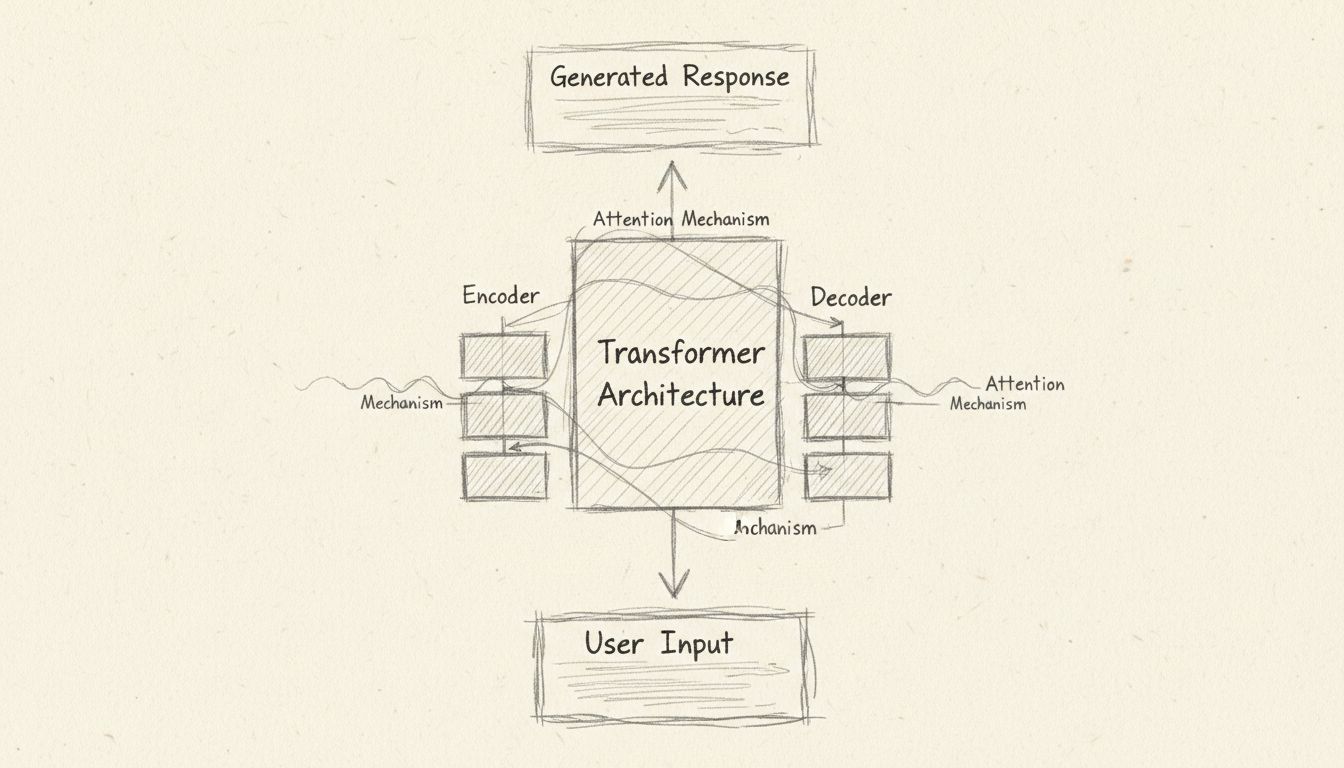
The transformer architecture represents a fundamental shift in how artificial intelligence systems process language. At its core, the transformer uses a mechanism called “self-attention” to determine which parts of the input text are most relevant when generating each word of the output. This is fundamentally different from earlier approaches like recurrent neural networks, which processed text sequentially and struggled to maintain context over long passages. The transformer’s parallel processing capability makes it significantly faster and more efficient, while its attention mechanisms enable it to understand complex relationships between words that may be far apart in a sentence.
The transformer architecture consists of two primary components: the encoder and the decoder. The encoder processes the input text and converts it into mathematical representations called embeddings. These embeddings are vectors in a high-dimensional space where words with similar meanings are positioned close together. The encoder assigns weights to each word, indicating its relevance and importance within the context of the entire input. Position encoders are also applied to prevent ambiguity—for example, they help the system understand that “A dog chases a cat” has a different meaning than “A cat chases a dog,” even though the same words appear in both sentences. The decoder then takes these encoded representations and generates the output text, one word at a time, using the same self-attention mechanisms to focus on the most relevant parts of the input when deciding what to generate next.
Training GPT Models: From Raw Data to Intelligent Assistants
The development of GPT models involves a sophisticated multi-stage training process that transforms raw text data into an intelligent language system. GPT-3, which powers many current ChatGPT implementations, was trained on over 175 billion parameters using more than 45 terabytes of data from diverse sources including web texts, Common Crawl, books, and Wikipedia. This massive scale of training data is essential because it exposes the model to the vast diversity of human language, enabling it to understand context, idioms, technical terminology, and cultural references across virtually every domain of knowledge.
The training process begins with unsupervised learning, where the model learns to predict the next word in a sequence based on the words that came before it. This seemingly simple task forces the model to develop a deep understanding of language structure, grammar, semantics, and world knowledge. The model learns that certain word combinations are more likely than others, that some concepts are related, and that language follows patterns and rules. After this initial pre-training phase, the model undergoes fine-tuning through a process called Reinforcement Learning from Human Feedback (RLHF). In this phase, human trainers provide example conversations and rank different responses based on quality, helpfulness, and safety. These rankings create reward models that guide the system toward generating better responses. This feedback loop is crucial for aligning the model’s outputs with human values and expectations, reducing the likelihood of generating harmful, biased, or nonsensical content.
Key Capabilities and Applications of AI Chatbots
Modern AI chatbots powered by GPT technology demonstrate remarkable versatility across numerous domains and use cases. In customer service, these systems can handle routine inquiries, provide product information, troubleshoot common issues, and escalate complex problems to human agents—all while maintaining a natural, helpful tone. In education, AI chatbots serve as virtual tutors, explaining complex concepts in accessible language, answering student questions, and providing personalized learning support. Content creators use GPT-powered chatbots to brainstorm ideas, draft articles and social media posts, refine writing for different audiences, and overcome writer’s block. Software developers leverage these systems to write code, debug programs, explain programming concepts, and accelerate development workflows.
The ability to process and generate multiple types of content extends beyond text. Advanced GPT implementations can analyze images, describe visual content, answer questions about photographs, and even generate images based on text descriptions. Some systems can process audio input, enabling voice-based interactions that feel like natural conversations. These multimodal capabilities make AI chatbots increasingly useful for accessibility, allowing people with different abilities to interact with technology in ways that work best for them. The systems can also search the internet for current information, ensuring that responses reflect recent events and developments rather than relying solely on training data that may be months or years old.
Comparing AI Chatbots: ChatGPT and Its Alternatives
While ChatGPT has emerged as the most widely-used AI chatbot, the market includes several other sophisticated alternatives, each with distinct strengths and characteristics. ChatGPT remains the top choice for most users due to its exceptional natural language understanding, broad knowledge base, and continuous improvements through regular updates. The system’s ability to maintain context across long conversations, understand nuanced requests, and generate high-quality content across diverse domains makes it the leading solution for general-purpose AI assistance.
Google’s Gemini (formerly Bard) offers real-time internet search capabilities, allowing it to provide current information about recent events, news, and developments. This advantage is particularly valuable for queries requiring up-to-date information. However, Gemini has faced criticism for occasional inaccuracies and inconsistent performance compared to ChatGPT. Microsoft’s Copilot, powered by GPT-4 technology, integrates deeply with Microsoft’s ecosystem including Bing search, Office applications, and Windows, making it particularly valuable for users already invested in Microsoft products. Anthropic’s Claude emphasizes safety and constitutional AI principles, with particular strength in analyzing long documents and maintaining consistency in complex reasoning tasks. Perplexity AI focuses on search-augmented responses with transparent source citations, making it valuable for research-oriented queries.
Chatbot
Strengths
Best For
ChatGPT
Versatility, natural language, broad knowledge
General-purpose AI assistance
Google Gemini
Real-time search, current information
Recent events and news queries
Microsoft Copilot
Microsoft ecosystem integration
Office and Windows users
Claude
Long document analysis, safety focus
Complex reasoning and analysis
Perplexity AI
Source citations, search-augmented
Research and fact-checking
Technical Advantages and Limitations of Current GPT Systems
GPT-based chatbots offer substantial advantages that have driven their rapid adoption across industries and use cases. The systems excel at understanding context and maintaining coherent conversations over extended exchanges, allowing users to ask follow-up questions and build on previous responses without constantly re-explaining their situation. They can generate content in virtually any style or format, from formal business writing to creative fiction to technical documentation. The ability to process and respond to complex, multi-part questions demonstrates sophisticated reasoning capabilities. Additionally, these systems can be customized through fine-tuning or through in-context learning, where users provide examples within the conversation to guide the system’s behavior.
However, current GPT systems have notable limitations that users should understand. The systems can “hallucinate,” generating plausible-sounding but completely fabricated information, statistics, or citations. While this problem has decreased with newer models, it remains a concern for applications requiring absolute accuracy. GPT models have a knowledge cutoff date—they cannot access information beyond their training data, though some implementations now include internet search to address this limitation. The systems may struggle with very recent events, specialized technical knowledge outside their training data, or tasks requiring real-time information. Additionally, GPT models can reflect biases present in their training data, potentially generating responses that perpetuate stereotypes or unfair generalizations. The systems also cannot truly understand sarcasm, irony, or highly context-dependent humor, sometimes taking figurative language literally. Finally, while GPT systems can write code, they may produce code with subtle bugs or security vulnerabilities that require human review.
Building AI Automation with FlowHunt: Beyond Standalone Chatbots
While standalone AI chatbots like ChatGPT are powerful tools for individual users, organizations seeking to integrate AI into their business processes need more comprehensive solutions. FlowHunt represents the next evolution in AI automation, providing a platform where AI chatbots don’t just answer questions—they take action across your entire business system. Unlike ChatGPT, which operates in isolation, FlowHunt enables you to build intelligent workflows that connect AI with thousands of business applications, databases, and services.
With FlowHunt, you can create AI-powered chatbots that automatically update your CRM when customers provide information, generate support tickets from customer inquiries, enrich lead data from multiple sources, send notifications to team members, and execute complex multi-step processes without human intervention. The platform allows you to build custom AI agents that understand your specific business processes, access your proprietary data, and make decisions aligned with your organizational goals. For example, you could deploy an AI chatbot that handles customer support inquiries, automatically categorizes them by urgency, creates tickets in your support system, searches your knowledge base for relevant solutions, and drafts personalized responses—all in seconds. This level of integration transforms AI from a productivity tool into a strategic business asset that drives efficiency, reduces costs, and improves customer experiences.
FlowHunt’s advantage over standalone chatbots lies in its ability to orchestrate AI across your entire technology stack. Rather than copying information between systems manually or using multiple disconnected tools, FlowHunt creates seamless workflows where AI makes intelligent decisions and takes actions that ripple through your organization. The platform supports integration with CRM systems, marketing automation tools, project management software, communication platforms, data warehouses, and hundreds of other business applications. This comprehensive approach to AI automation enables organizations to achieve levels of efficiency and intelligence that standalone chatbots simply cannot match.
The Future of AI Chatbots and GPT Technology
The field of AI chatbots and GPT technology continues to evolve rapidly, with new capabilities and improvements emerging regularly. OpenAI has released increasingly sophisticated models, from GPT-3 to GPT-4 to the latest GPT-4o, each offering improvements in speed, accuracy, reasoning capability, and multimodal processing. The trend toward larger models with more parameters continues, though there’s also growing interest in more efficient models that can run on smaller devices or with lower computational requirements. Emerging capabilities include better reasoning for complex multi-step problems, improved ability to follow complex instructions, enhanced safety and alignment with human values, and better handling of edge cases and unusual scenarios.
The integration of AI chatbots into business processes will likely accelerate, with more organizations recognizing the value of AI-powered automation. We can expect to see more sophisticated AI agents that can operate autonomously within defined parameters, making decisions and taking actions without constant human oversight. The combination of AI chatbots with other emerging technologies like knowledge graphs, vector databases, and retrieval-augmented generation will enable systems that can access and reason over vast amounts of structured and unstructured data. As these technologies mature, the distinction between “chatbots” and “business automation systems” will blur, with AI becoming an integral part of how organizations operate.
Conclusion: Choosing the Right AI Solution for Your Needs
Understanding what AI chatbots and GPT technology are is essential for anyone looking to leverage these powerful tools effectively. ChatGPT and similar systems represent a genuine breakthrough in artificial intelligence, enabling machines to understand and generate human language with remarkable sophistication. However, the choice between standalone chatbots and comprehensive AI automation platforms like FlowHunt depends on your specific needs. For individual users seeking a versatile AI assistant for writing, coding, research, and creative tasks, ChatGPT remains an excellent choice. For organizations seeking to integrate AI into their business processes, automate workflows, and drive measurable business outcomes, FlowHunt provides the comprehensive platform needed to transform AI from a productivity tool into a strategic competitive advantage.
Automate Your AI Workflows with FlowHunt
FlowHunt is the leading AI automation platform that helps you build, deploy, and manage intelligent chatbots and AI workflows. Unlike standalone chatbots, FlowHunt integrates AI with your entire business system, enabling seamless automation across all your tools and processes.
What is a GPT Chatbot? Understanding ChatbotGPT, How It Works, and Why It’s Transforming Digital Conversations
Explore what a GPT chatbot is, how chatbotgpt technology works, its key benefits, real-world use cases, and how it compares to traditional chatbots—all in one d...
A Generative Pre-trained Transformer (GPT) is an AI model that leverages deep learning techniques to produce text closely mimicking human writing. Based on the ...
How to Build an AI Chatbot: Complete Step-by-Step Guide
Learn how to build an AI chatbot from scratch with our comprehensive guide. Discover the best tools, frameworks, and step-by-step process to create intelligent ...
11 min read
Cookie Consent We use cookies to enhance your browsing experience and analyze our traffic. See our privacy policy.