Artificial General Intelligence (AGI) is a theoretical form of AI that can understand, learn, and apply knowledge across various tasks at a human-like level, unlike narrow AI. Explore its definitions, key traits, current status, and research directions.
Artificial General Intelligence (AGI)
Artificial General Intelligence (AGI) is a theoretical AI that mimics human cognitive abilities, capable of learning and adapting across various tasks. While AGI remains theoretical, research continues in neuroscience, cognitive psychology, and computer science.
Artificial General Intelligence (AGI), also known as General Artificial Intelligence, refers to a theoretical form of artificial intelligence that possesses the ability to understand, learn, and apply knowledge across a wide range of tasks at a level comparable to that of a human being. Unlike narrow AI, which is designed to perform specific tasks, AGI aims to mimic the cognitive functions of the human brain, enabling it to generalize knowledge and adapt to new situations.
Key Terms and Concepts
AGI (Artificial General Intelligence)
Definition: AGI is a type of artificial intelligence that aspires to replicate human-like intelligence, encompassing the capacity to comprehend, learn, and apply knowledge across diverse tasks and domains.
Example: A hypothetical AGI system could seamlessly switch from diagnosing medical conditions to composing a symphony, demonstrating a level of versatility and adaptability akin to human intelligence.
General Artificial Intelligence
Definition: Another term for AGI, emphasizing the broad, generalizable nature of the intelligence that such systems aim to achieve.
Key Traits:
Generalization Ability: The capability to transfer knowledge and skills learned in one context to entirely different and novel situations.
Common Sense Knowledge: An extensive repository of world knowledge, social norms, and relationships that enables reasoning and decision-making.
Artificial General Intelligence Systems
Definition: AGI systems are envisioned as advanced AI architectures capable of performing any intellectual task that a human can. These systems would excel in tasks requiring human-like understanding and reasoning.
Current Status (August 2024): As of now, AGI remains a theoretical concept, with researchers and engineers working towards its realization through interdisciplinary collaboration among fields such as computer science, neuroscience, and cognitive psychology.
Artificial General Intelligence Research
Definition: The scientific and engineering endeavors focused on developing AGI. This research spans multiple disciplines and aims to overcome the significant technical and theoretical challenges involved in creating AGI systems.
Cognitive Psychology: Studying human thought processes to replicate them in AI.
Computer Science: Developing algorithms and computational frameworks that can support AGI.
AGI Technology
Definition: The suite of technologies and methodologies employed in the quest to develop AGI. This includes machine learning algorithms, neural networks, and advanced computational systems designed to emulate human cognitive abilities.
Significance: AGI technology holds the potential to transform numerous fields by creating systems that can autonomously perform complex tasks across various domains, revolutionizing industries and everyday life.
The Road Ahead
The pursuit of AGI involves significant technical challenges and ethical considerations. While AGI has the potential to bring about revolutionary advancements, it also raises questions about the implications for society, including the impact on employment, privacy, and security. Continuous research and responsible development are crucial as we move closer to realizing AGI.
Frequently asked questions
AGI is a theoretical type of artificial intelligence that can understand, learn, and apply knowledge across a wide range of tasks at a level comparable to humans, unlike narrow AI which is limited to specific tasks.
While narrow AI is designed to perform specific tasks, AGI aims to replicate the general intelligence of humans by learning, adapting, and applying knowledge across diverse domains.
AGI exhibits generalization ability, common sense knowledge, and the capacity for reasoning and decision-making akin to human intelligence.
As of August 2024, AGI remains a theoretical concept, with ongoing interdisciplinary research in computer science, neuroscience, and cognitive psychology aiming to make it a reality.
Developing AGI involves significant technical and ethical challenges, but its realization could revolutionize industries by enabling machines to autonomously perform complex tasks across various domains.
Ready to build your own AI?
Smart chatbots and AI tools under one roof. Connect intuitive blocks and turn your ideas into automated flows.
Artificial Superintelligence (ASI) is a theoretical AI that surpasses human intelligence in all domains, with self-improving, multimodal capabilities. Discover ...
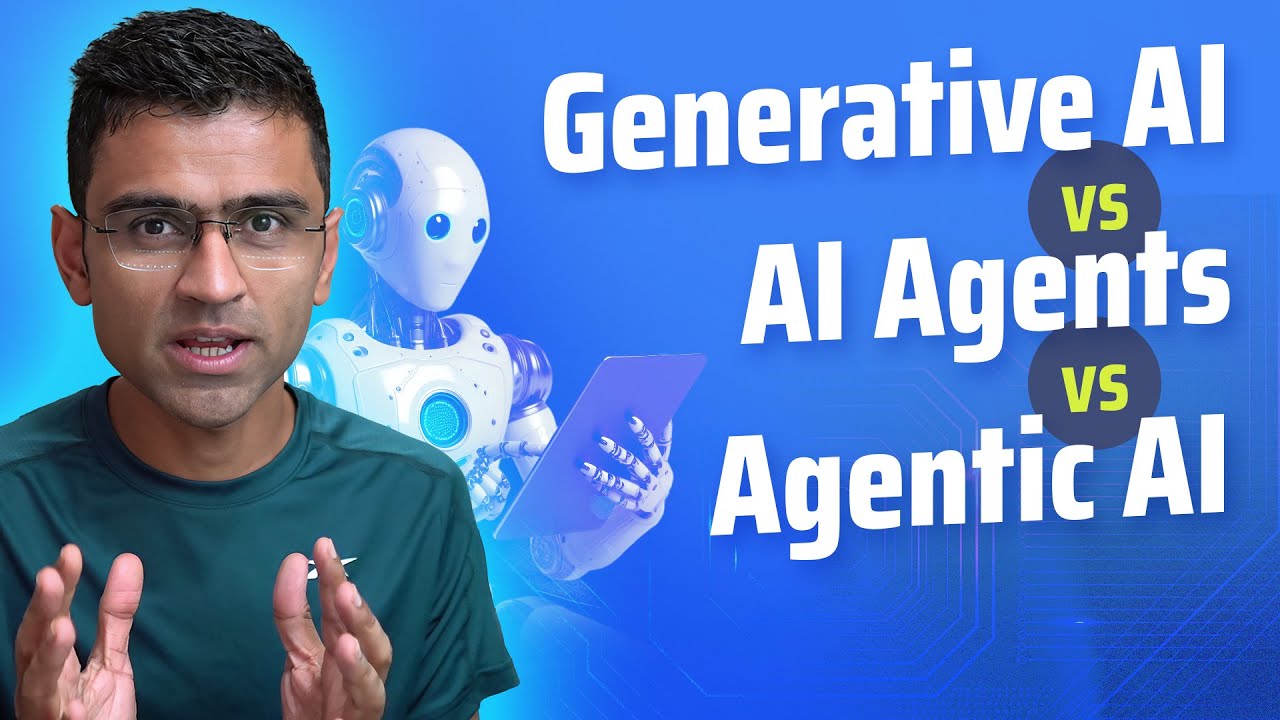
Generative AI vs AI Agents vs Agentic AI: Understanding the Evolution of Intelligent Systems
Explore the fundamental differences between Generative AI, AI Agents, and Agentic AI systems. Learn how these technologies evolve in complexity and capability, ...
AI Safety and AGI: Anthropic's Warning on Artificial General Intelligence
Explore Anthropic co-founder Jack Clark's concerns about AI safety, situational awareness in large language models, and the regulatory landscape shaping the fut...
19 min read
AI Safety
AGI
+3
Cookie Consent We use cookies to enhance your browsing experience and analyze our traffic. See our privacy policy.