



Gradient Descent
Gradient Descent is a fundamental optimization algorithm widely employed in machine learning and deep learning to minimize cost or loss functions by iteratively...
5 min read
Machine Learning
Deep Learning
+3
Backpropagation is an algorithm for training artificial neural networks by adjusting weights to minimize prediction error. Learn how it works, its steps, and its principles in neural network training.
Backpropagation is algorithm for training artificial neural networks. By adjusting weights to minimize the error in predictions, backpropagation ensures that neural networks learn efficiently. In this glossary entry, we will explain what backpropagation is, how it works, and outline the steps involved in training a neural network.
Backpropagation, short for “backward propagation of errors,” is a supervised learning algorithm used for training artificial neural networks. It is the method by which the neural network updates its weights based on the error rate obtained in the previous epoch (iteration). The goal is to minimize the error until the network’s predictions are as accurate as possible.
Backpropagation works by propagating the error backward through the network. Here’s a step-by-step breakdown of the process:

Start your free trial today and see results within days.
Training a neural network involves several key steps:
References:
Discover how FlowHunt’s tools and chatbots can help you build and automate with AI. Sign up or book a demo today.
Gradient Descent is a fundamental optimization algorithm widely employed in machine learning and deep learning to minimize cost or loss functions by iteratively...
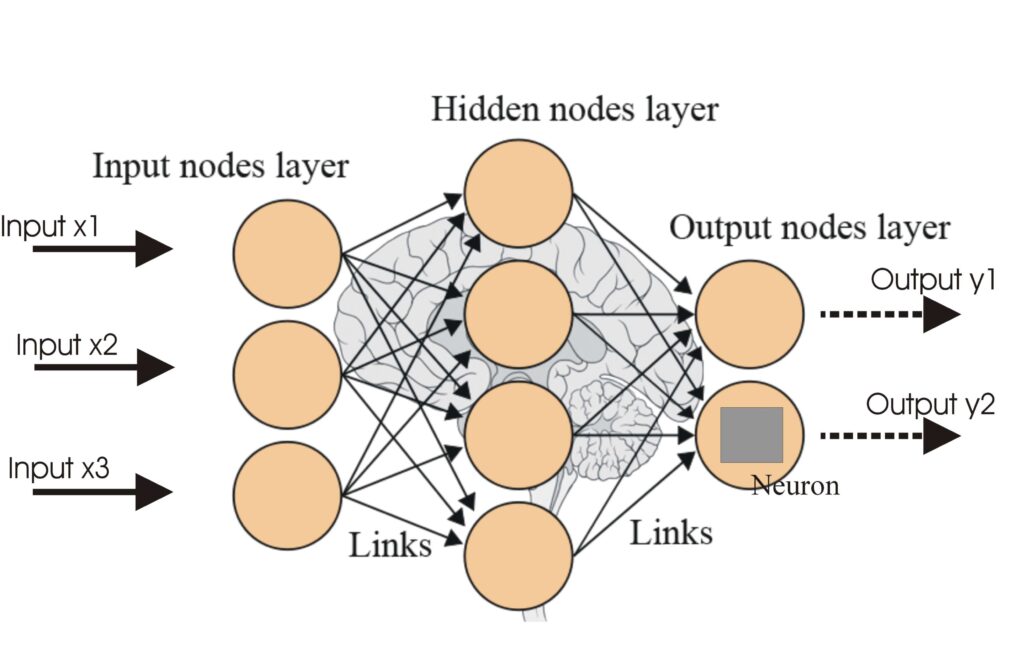
A neural network, or artificial neural network (ANN), is a computational model inspired by the human brain, essential in AI and machine learning for tasks like ...
Convergence in AI refers to the process by which machine learning and deep learning models attain a stable state through iterative learning, ensuring accurate p...
Cookie Consent
We use cookies to enhance your browsing experience and analyze our traffic. See our privacy policy.