
YouTube MCP Server Integration
The YouTube MCP Server enables FlowHunt AI agents to interact programmatically with YouTube, automating video analytics, transcript retrieval, content managemen...
5 min read
AI
MCP
+4

Transform video content management by connecting Vimeo’s professional hosting platform with AI-powered workflows using the Vimeo MCP Server for automated uploads, analytics tracking, and intelligent content distribution.
The Vimeo MCP Server revolutionizes video content management by seamlessly connecting Vimeo’s professional video hosting platform with AI assistants and development tools through the Model Context Protocol. This integration empowers video creators, content marketers, and media teams to manage their entire video library using natural language commands, automate repetitive video operations, and access deep analytics insights without navigating through multiple dashboards.
Whether you’re uploading new content, optimizing video metadata for SEO, managing privacy settings across hundreds of videos, or analyzing performance metrics to inform your content strategy, the Vimeo MCP Server transforms these complex workflows into simple, conversational interactions. AI agents can now handle video uploads, customize thumbnails, update descriptions, track engagement metrics, and generate performance reports - all within your existing development environment or AI-powered workspace.
This powerful integration eliminates the friction between content creation and distribution, enabling teams to scale their video operations efficiently while maintaining complete creative control. From individual creators managing their portfolios to enterprise media teams coordinating large-scale video campaigns, the Vimeo MCP Server delivers the automation and intelligence needed to thrive in today’s video-first digital landscape.
Upload my new product demo video and set it to private with the title "Product Demo Q1 2024"
Show me analytics for video ID 123456789 including total views, watch time, and engagement rate
List all videos in my account that were uploaded in the past 30 days
Update the thumbnail for video ID 987654321 using the frame at 15 seconds
Get detailed performance metrics for all videos in my "Customer Testimonials" folder
Change the privacy settings on video ID 555444333 to public and add tags "tutorial" and "beginner-guide"
Create a new showcase called "Best of 2024" for my portfolio highlights
Generate an embed code for video ID 111222333 with custom player colors matching our brand
Move all videos tagged "archived-2023" to the Archive folder
Show me which 10 videos have the highest engagement rates in the past quarter
Update the title and description for video ID 777888999 to optimize for SEO with keywords "video marketing tips"
Get audience demographics and geographic viewing data for my most popular video
List all videos with privacy set to "password-protected" so I can review access controls
Create a new folder called "Training Videos 2024" and move all videos tagged "training" into it
Show me viewer drop-off points for video ID 246813579 to identify where engagement declines

Start your free trial today and see results within days.
Resources are dynamically accessed based on the connected Vimeo account and user permissions. The server provides access to videos, folders, albums, channels, and analytics data through the Vimeo API.
The Vimeo MCP Server provides comprehensive tools for managing your video content and analyzing performance:
vimeo_upload_video - Upload new videos to your Vimeo account with customizable metadata, privacy settings, and folder organization. Supports automatic encoding and transcoding for optimal playback across devices.
vimeo_get_video - Retrieve detailed information about a specific video including metadata, embed settings, privacy configuration, statistics, and technical specifications like resolution and file size.
vimeo_update_video - Update video metadata including title, description, tags, privacy settings, and content ratings. Perfect for bulk optimization and SEO enhancement workflows.
vimeo_delete_video - Remove videos from your Vimeo library. This action is permanent and frees up storage space in your account.
vimeo_list_videos - Retrieve a list of all videos in your account with optional filtering by folder, privacy status, upload date, or custom criteria. Returns paginated results for large video libraries.
vimeo_update_thumbnail - Upload and set custom video thumbnails to improve click-through rates and brand consistency. Supports automated thumbnail generation from specific video timestamps.
vimeo_manage_tags - Add, remove, or update video tags for improved discoverability and content organization. Enable automated tagging based on video content analysis.
vimeo_update_privacy - Configure video privacy settings including public, private, password-protected, unlisted, or domain-restricted access. Automate privacy management across your entire library.
vimeo_create_folder - Create new folders to organize your video library. Supports nested folder structures for complex content hierarchies.
vimeo_move_video - Move videos between folders for better organization and workflow management. Supports bulk operations for efficient library restructuring.
vimeo_list_folders - Retrieve all folders in your account with their video counts and metadata for comprehensive library overview.
vimeo_get_video_stats - Access detailed video performance metrics including total views, play rate, engagement statistics, watch time, geographic distribution, and device breakdown.
vimeo_get_engagement_metrics - Analyze viewer engagement patterns including average watch percentage, drop-off points, replay rates, and interaction events for content optimization.
vimeo_get_audience_insights - Retrieve audience demographic data, viewing times, traffic sources, and referral patterns to inform your content and distribution strategy.
vimeo_create_showcase - Create curated video showcases (albums) to highlight specific content collections, perfect for portfolios, product demonstrations, or themed content series.
vimeo_add_to_showcase - Add videos to existing showcases for dynamic content curation and presentation.
vimeo_manage_channel - Create and manage Vimeo channels for organized content distribution and community building around specific topics or themes.
vimeo_get_embed_code - Generate customized embed codes with specific player options, branding settings, and interactive features for seamless website integration.
vimeo_configure_player - Customize video player appearance and behavior including colors, controls, autoplay settings, and end screen actions.
vimeo_manage_domain_whitelist - Configure domain restrictions for embedded videos to control where your content can be displayed, essential for protecting premium or exclusive content.
Get latest tips, trends, and deals for free.
When uploading and organizing 50 training videos into proper folders - You’ve just finished producing an entire training course series with 50+ videos covering different modules. Instead of manually uploading each video, filling out metadata fields, setting privacy controls, and organizing into folders through Vimeo’s web interface, use natural language commands to automate the entire process. Simply specify the folder structure, metadata templates, and privacy settings once, then let the AI handle batch uploads while you focus on your next production.
When migrating a legacy video library from another platform - Your company is switching from an old video hosting service to Vimeo with 200+ existing videos. Rather than spending days manually re-uploading and reconfiguring each video, automate the migration by connecting to your existing library, extracting metadata, and systematically uploading to Vimeo with proper organization, tags, and settings - all orchestrated through conversational AI commands that handle the tedious work.
When preparing quarterly video archives for different departments - Your organization produces videos across marketing, sales, training, and support departments. Every quarter, you need to organize these into departmental folders, apply appropriate privacy settings, and generate usage reports. Instead of manually sorting through hundreds of videos, use AI-powered automation to categorize by department, move to the correct folders, set access permissions, and compile performance summaries in minutes.
When updating video titles and descriptions for SEO optimization - You’ve learned that your target keywords have shifted based on new search trend data, and 75 product demonstration videos need updated titles, descriptions, and tags to rank better. Rather than opening each video individually and rewriting metadata, query your video library, identify which videos need optimization, and apply AI-generated SEO-friendly titles and descriptions in bulk based on your keyword strategy.
When batch updating video thumbnails after a brand refresh - Your company just completed a rebrand with new colors, logo, and design guidelines. You have 120 videos still displaying old-style thumbnails that need updating to reflect the new brand identity. Instead of manually creating and uploading each thumbnail through Vimeo’s interface, automate thumbnail generation based on new brand templates and batch-apply across your entire library in a single workflow.
When optimizing video metadata across your library for discoverability - You’ve noticed inconsistent tagging, missing descriptions, and poorly optimized titles across your 300-video library, hurting discoverability both on Vimeo and search engines. Use AI-powered analysis to identify optimization opportunities, generate relevant tags based on video content, write compelling descriptions that incorporate target keywords, and apply these improvements systematically without manual editing of each video.
When analyzing which videos have the highest engagement rates - You need to identify your top-performing content to inform next quarter’s production strategy. Instead of clicking through dozens of analytics pages, ask natural language questions like “Which 10 videos have the highest watch-through rates this month?” or “Show me videos with engagement above 75% from the past quarter” and receive instant insights with actionable recommendations for content replication.
When generating monthly performance reports for stakeholders - Every month, your marketing director needs a comprehensive video performance report including view counts, engagement metrics, top performers, and trending content. Rather than manually compiling data from multiple dashboards, set up an automated workflow that queries your video analytics, identifies key insights, compares performance against previous periods, and generates a formatted report ready for presentation.
When identifying underperforming videos that need improvement - You suspect certain videos in your library are underperforming but need data to confirm which ones require optimization or replacement. Query your analytics to find videos with high view counts but low engagement, or videos with significant drop-off points, then receive AI-generated recommendations on what to improve based on audience behavior patterns.
When sharing private videos with specific client groups - You’re an agency managing video content for 15 different clients, each requiring access only to their specific project videos. Instead of manually configuring privacy settings and sharing links for each client group, automate privacy control workflows that categorize videos by client, apply appropriate access restrictions, generate secure sharing links, and organize into client-specific showcases - all managed through conversational commands.
When generating embed codes for 20 website pages - You’re launching a new product with dedicated landing pages, each featuring multiple product videos with specific player configurations like custom colors, autoplay settings, and end actions. Rather than manually generating and customizing embed codes for each video-page combination through Vimeo’s interface, automate the generation of properly configured embed codes with consistent branding and behavior settings ready to paste into your website.
When managing video access for a time-sensitive product launch - You’re coordinating a product announcement with embargo restrictions where preview videos must remain private until launch day, then simultaneously go public. Set up automated privacy workflows that keep videos password-protected during the preview period, then automatically switch to public access at the exact launch time while simultaneously updating metadata, activating SEO tags, and triggering distribution workflows.
When onboarding new team members to your video content system - A new content manager joins your team and needs to understand your video library structure, naming conventions, privacy workflows, and performance benchmarks. Instead of manually walking them through hundreds of videos and complex organizational logic, use AI-powered queries to generate comprehensive overviews, identify content patterns, explain folder structures, and provide performance context - accelerating onboarding from days to hours.
When coordinating video approval workflows across departments - Your company requires legal, compliance, and marketing approval before videos go public. Instead of tracking approval status manually via spreadsheets and email chains, automate the workflow by organizing videos into review folders, setting temporary privacy restrictions, generating review links with specific access parameters, tracking feedback, and systematically updating video status as approvals are received.
When archiving completed campaign videos while maintaining accessibility - Your marketing team runs multiple video campaigns throughout the year, and completed campaigns need archiving without deletion since videos may be referenced for future initiatives. Automate the archiving process by identifying campaign-tagged videos past their active dates, moving them to archive folders with preserved metadata, updating privacy to organization-only access, and maintaining searchability for future reference without cluttering active libraries.
Automated Content Publishing Workflows - Video creators and content teams can automate their entire publishing pipeline from upload to distribution. Set up AI-driven workflows that upload videos, optimize metadata for SEO, apply consistent branding with custom thumbnails, configure privacy settings based on content type, and distribute across multiple channels - all triggered by natural language commands or scheduled automation.
Educational Content Distribution - Educators and training teams managing course libraries with hundreds of learning videos can automate organization by course modules, control student access through privacy settings, track engagement metrics to identify where students struggle, and seamlessly integrate with learning management systems through customized embed configurations that maintain brand consistency and security requirements.
mcpServers configuration:{
"mcpServers": {
"vimeo-mcp": {
"command": "python3",
"args": ["-m", "vimeo_mcp"],
"env": {
"VIMEO_ACCESS_TOKEN": "your_vimeo_access_token_here"""
}
}
}
}
claude-config-template.json as a starting point for your configuration.mcpServers field in your Claude configuration:{
"mcpServers": {
"vimeo-mcp": {
"command": "python3",
"args": ["-m", "vimeo_mcp"],
"env": {
"VIMEO_ACCESS_TOKEN": "your_vimeo_access_token_here"
}
}
}
}
{
  "mcpServers": {
    "vimeo-mcp": {
      "command": "python3",
      "args": ["-m", "vimeo_mcp"],
      "env": {
        "VIMEO_ACCESS_TOKEN": "your_vimeo_access_token_here"
      }
    }
  }
}
{
  "mcpServers": {
    "vimeo-mcp": {
      "command": "python3",
      "args": ["-m", "vimeo_mcp"],
      "env": {
        "VIMEO_ACCESS_TOKEN": "your_vimeo_access_token_here"
      }
    }
  }
}
To protect your Vimeo access token and maintain security best practices, always use environment variables rather than hardcoding credentials in configuration files:
Option 1: System Environment Variables
export VIMEO_ACCESS_TOKEN="your_vimeo_access_token_here"
Then reference it in your configuration:
{
  "mcpServers": {
    "vimeo-mcp": {
      "command": "python3",
      "args": ["-m", "vimeo_mcp"],
      "env": {
        "VIMEO_ACCESS_TOKEN": "${VIMEO_ACCESS_TOKEN}"
      }
    }
  }
}
Option 2: Dedicated Environment File
Create a .env file in your project directory (ensure it’s in .gitignore):
VIMEO_ACCESS_TOKEN=your_vimeo_access_token_here
Load this file before starting your MCP client application.
Vimeo Access Token Scopes:
When creating your access token at https://developer.vimeo.com , ensure you enable the following scopes based on your needs:
public - Access public dataprivate - Access private datavideo_files - Access video filesupload - Upload videosdelete - Delete videosedit - Edit videos and metadatastats - Access video statistics and analyticsUsing MCP in FlowHunt
To integrate the Vimeo MCP server into your FlowHunt workflow and unlock AI-powered video management capabilities, start by adding the MCP component to your flow and connecting it to your AI agent:
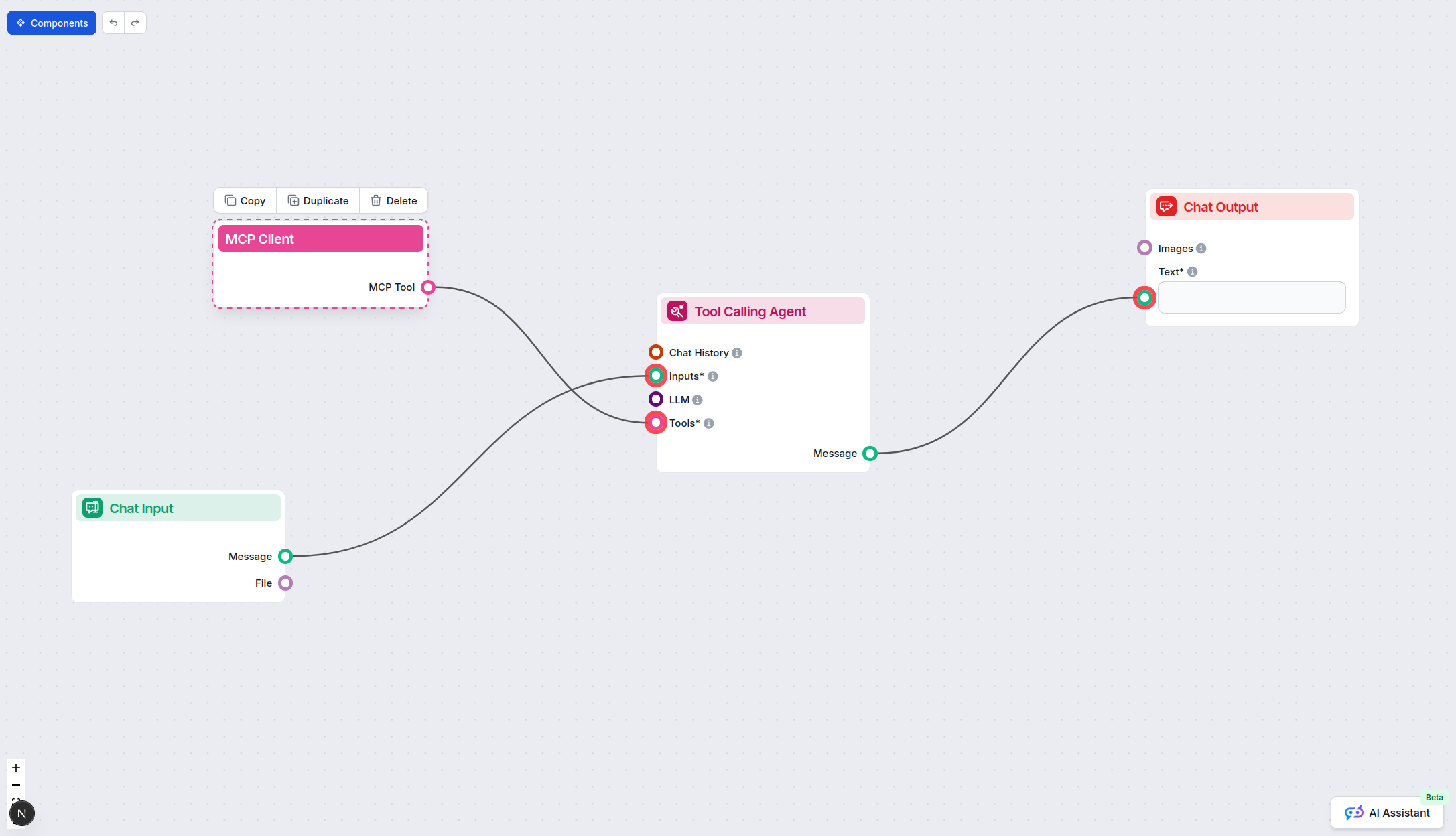
Click on the MCP component to open the configuration panel. In the system MCP configuration section, insert your Vimeo MCP server details using this JSON format:
{
  "vimeo-mcp": {
    "transport": "streamable_http",
    "url": "https://yourmcpserver.example/vimeo/mcp"
  }
}
Once configured, your AI agent gains access to the complete suite of Vimeo video management and analytics tools. This enables intelligent workflows such as:
Remember to replace "vimeo-mcp" with your actual MCP server name and update the URL to point to your deployed Vimeo MCP server endpoint.
| Section | Availability | Details/Notes |
|---|---|---|
| Overview | ✅ | Comprehensive video management integration |
| List of Prompts | ⛔ | Custom prompts based on user workflows |
| List of Resources | ✅ | Dynamic access to Vimeo account resources |
| List of Tools | ✅ | Full suite of video management tools |
| Securing API Keys | ✅ | Environment variable configuration shown |
| Use Cases | ✅ | Detailed business scenarios for video teams |
The Vimeo MCP Server provides a comprehensive solution for video content creators, marketing teams, and media professionals looking to automate their video workflows and leverage AI-powered insights. With robust security practices and extensive tool coverage, it enables seamless integration of Vimeo’s professional video hosting capabilities into modern AI-driven development environments.
The Vimeo MCP Server excels at bridging professional video hosting with AI-powered automation, making it invaluable for content teams managing significant video libraries. Its comprehensive tool coverage spans the complete video lifecycle from upload to analytics, enabling sophisticated automation workflows that would otherwise require extensive manual effort. The server is particularly powerful for teams running video-first marketing campaigns, managing educational content, or operating media-heavy businesses where video performance directly impacts revenue.
The security-first approach with environment variable configuration ensures enterprise-ready deployment, while the breadth of analytics tools empowers data-driven content strategy refinement. Best suited for users familiar with video content management and API integration concepts, this MCP server transforms complex video operations into conversational, AI-assisted workflows that scale effortlessly.
| Has a LICENSE | ⛔ |
|---|---|
| Has at least one tool | ✅ |
| Number of Forks | 0 |
| Number of Stars | 0 |
FlowHunt provides an additional security layer between your internal systems and AI tools, giving you granular control over which tools are accessible from your MCP servers. MCP servers hosted in our infrastructure can be seamlessly integrated with FlowHunt's chatbot as well as popular AI platforms like ChatGPT, Claude, and various AI editors.
It's a bridge between Vimeo's video hosting platform and AI/developer tools via the Model Context Protocol (MCP), enabling natural language access to video management, automated content distribution, analytics tracking, and seamless workflow integration for video creators and content teams.
Automated video uploads and metadata management, bulk video operations across your library, natural language analytics queries, scheduled content publishing, thumbnail customization at scale, privacy and access control automation, and cross-platform video distribution workflows.
Store your Vimeo access token in environment variables using the 'VIMEO_ACCESS_TOKEN' variable in your MCP server configuration. Never commit credentials to version control or hardcode them in configuration files.
Yes, the Vimeo MCP Server provides access to comprehensive video analytics including view counts, engagement metrics, audience demographics, watch time data, and performance trends, enabling AI-powered insights and automated reporting.
Absolutely. The server supports full control over video privacy settings including public, private, password-protected, and domain-restricted access, allowing you to automate privacy management based on your content distribution strategy.
Add the MCP component to your FlowHunt flow, open its configuration, and insert the Vimeo MCP server details in JSON format with your access token. Once configured, your AI agent will have access to Vimeo's video management and analytics capabilities for intelligent video workflow automation.
Automate your video workflows, unlock powerful analytics, and streamline content distribution directly from your AI-powered tools.
The YouTube MCP Server enables FlowHunt AI agents to interact programmatically with YouTube, automating video analytics, transcript retrieval, content managemen...
The VMS MCP Server bridges FlowHunt's AI assistants with real-world video surveillance systems, enabling programmatic control over CCTV and VMS software for enh...
The YouTube Video Summarizer MCP Server lets AI assistants and developers extract and summarize YouTube video content—including titles, descriptions, and transc...
Cookie Consent
We use cookies to enhance your browsing experience and analyze our traffic. See our privacy policy.