
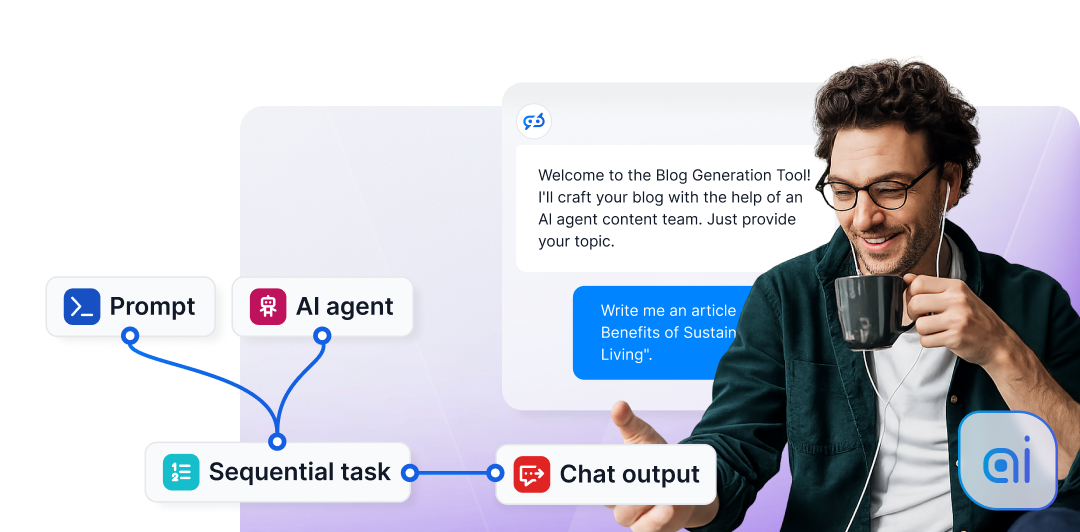
The Agents section of the knowledge base covers everything you need to know about agents in FlowHunt. You’ll learn what they are, what types of agents are available, how they work, and how to build and use them.
What Is an AI Agent?
An AI agent is a system that can take actions to reach a goal. Instead of just generating a response, it figures out what steps are needed, uses tools to carry them out, and keeps going until the job is done.
For example, take an AI customer service chatbot: A regular chatbot will do its best to answer your questions, but may reach its limits pretty fast. It will give vague answers based only on what it already knows and may get stuck in an endless loop. Give the same task to a customer service chatbot powered by an AI agent, and it will actually browse real-time data, look up your order, change the place of delivery, or if it can’t do that, it will decide it’s time to escalate to humans instead of getting stuck in a loop.
How AI Agents Work
At their core, AI agents follow a loop:
- Receive a goal — a task or instruction from you
- Plan — break the goal into steps
- Act — use tools (search, APIs, code execution, etc.) to complete each step
- Observe — check the result and decide what to do next
- Repeat until the goal is reached
This loop is what makes agents fundamentally different from a one-shot prompt. They’re working through a problem instead of just predicting the next word. The agent will follow this loop until it either reaches it’s goal or realizes it is unable to do so.

Ready to grow your business?
Start your free trial today and see results within days.
Standard Agents vs. Deep Agents
Not all agents are the same. In FlowHunt, you’ll work with two main types:
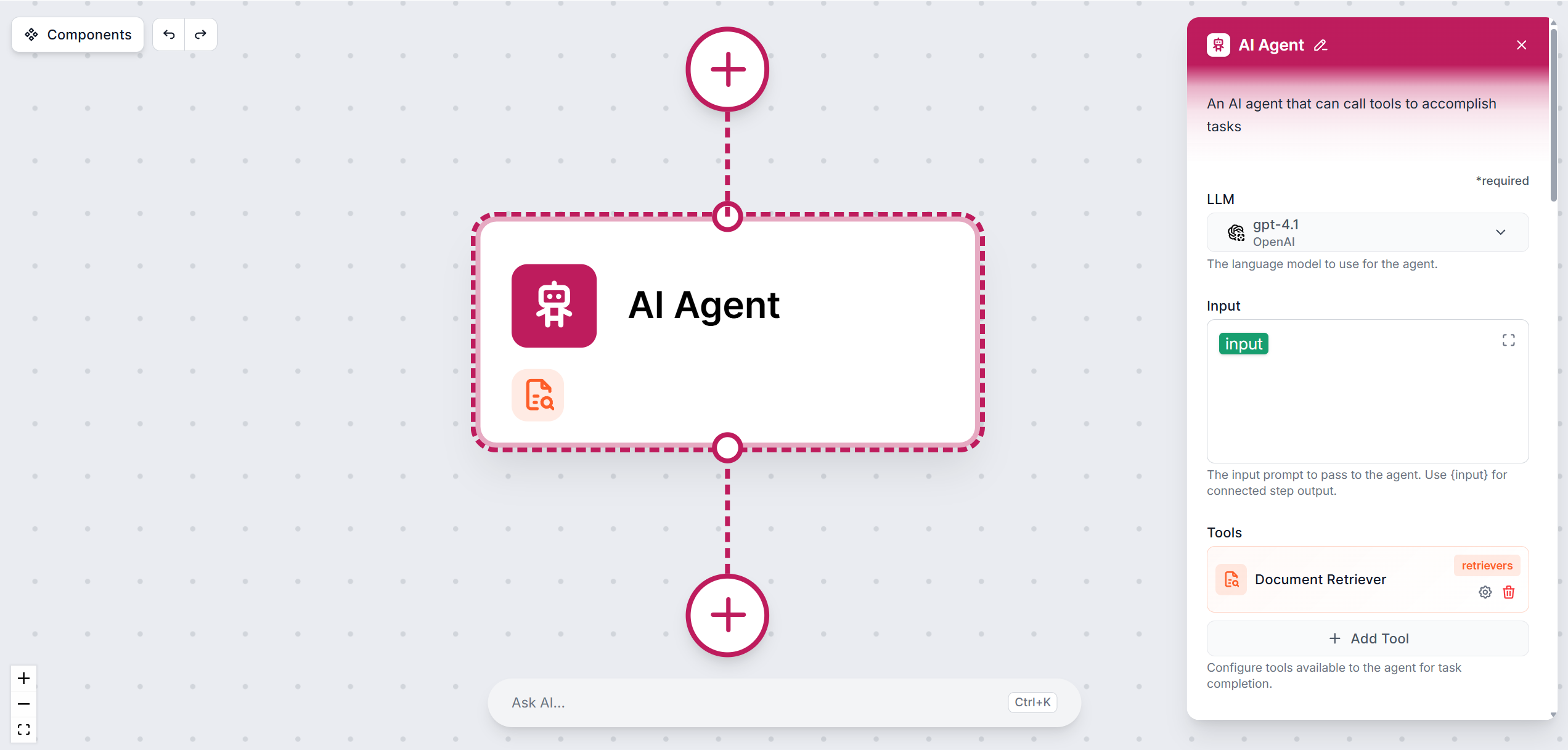
Standard AI agents are great for well-defined tasks. You give them a goal, a set of tools, and clear instructions. They work through the task step by step and return a result. Fast, predictable, and easy to configure.
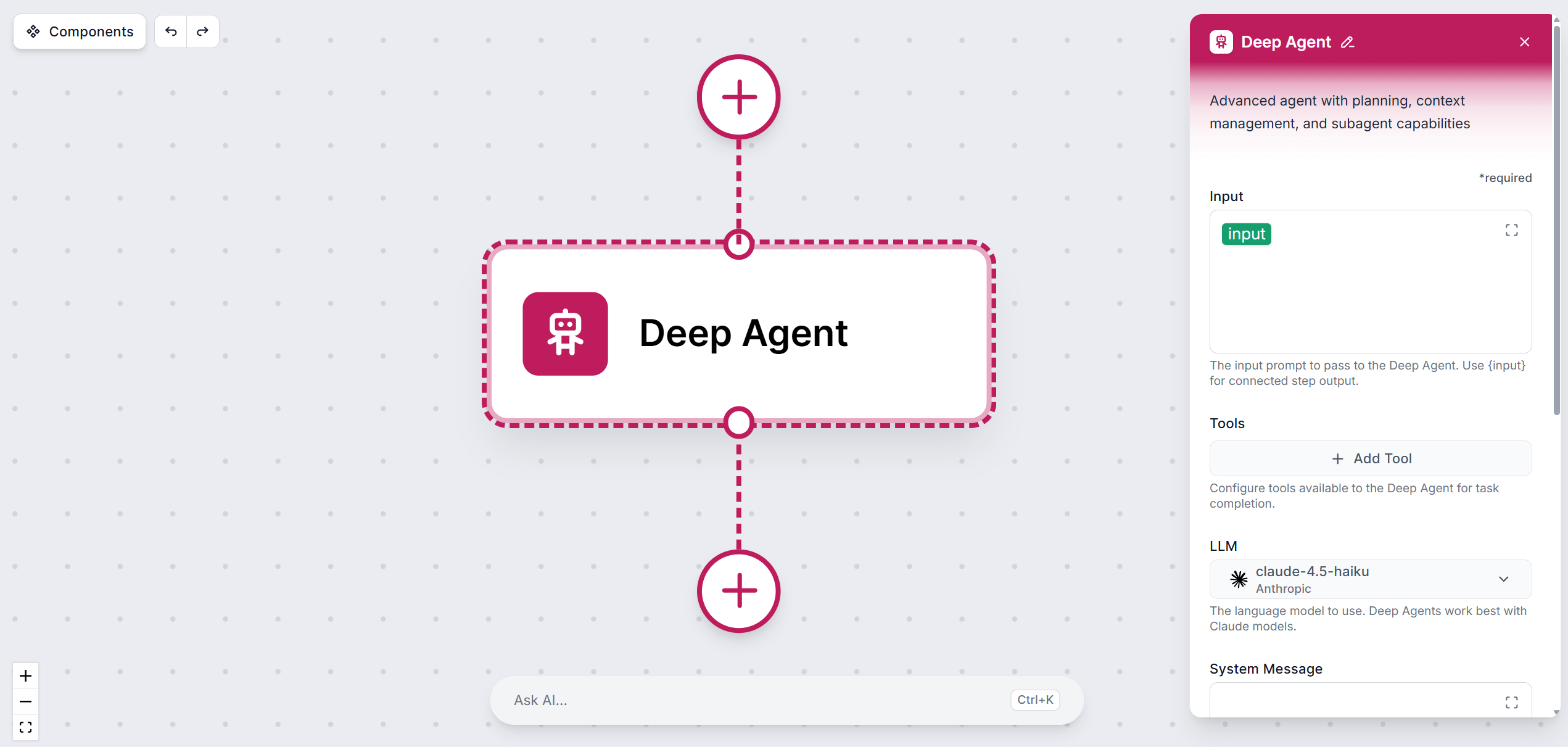
Deep agents are built for more complex or longer tasks. They can reflect on their own outputs, recognize when something isn’t working, and try a different approach. They’re better at open-ended research, complex reasoning, and tasks where the path to the answer isn’t obvious upfront.
Simple rule of thumb: if you can describe the exact steps needed, a standard agent will do. If the task requires judgment and iteration, reach for a deep agent.
Working with Agent Crews
Some tasks are just too big — or too varied — for a single agent. That’s where crews come in.
An agent crew is a team of specialized agents working together. Each agent has a specific role and focus. One researches, one writes, one reviews. They hand off work to each other and collaborate toward a shared goal.
FlowHunt supports two crew types:
- Sequential crews — agents work in a fixed order, one after another. Output from one becomes input for the next. Good when the workflow is predictable.
- Self-managed crews — a manager agent coordinates the team dynamically, deciding who does what based on the task. Better for complex, open-ended work.
Join our newsletter
Get latest tips, trends, and deals for free.
What Can You Build with Agents?
Agents in FlowHunt can handle a wide range of real-world tasks:
- Research and summarization — gather information from multiple sources and distill it
- Content creation — research, draft, and refine content end-to-end
- Customer support — answer questions, look up data, escalate when needed
- Data processing — pull, transform, and analyze data from external systems
- Lead qualification — evaluate inbound leads and route them automatically
- Monitoring and alerts — watch for changes and trigger actions
The common thread: tasks that used to require a human in the loop, working through multiple steps, can now run automatically.