AI Email Assistant for Gmail
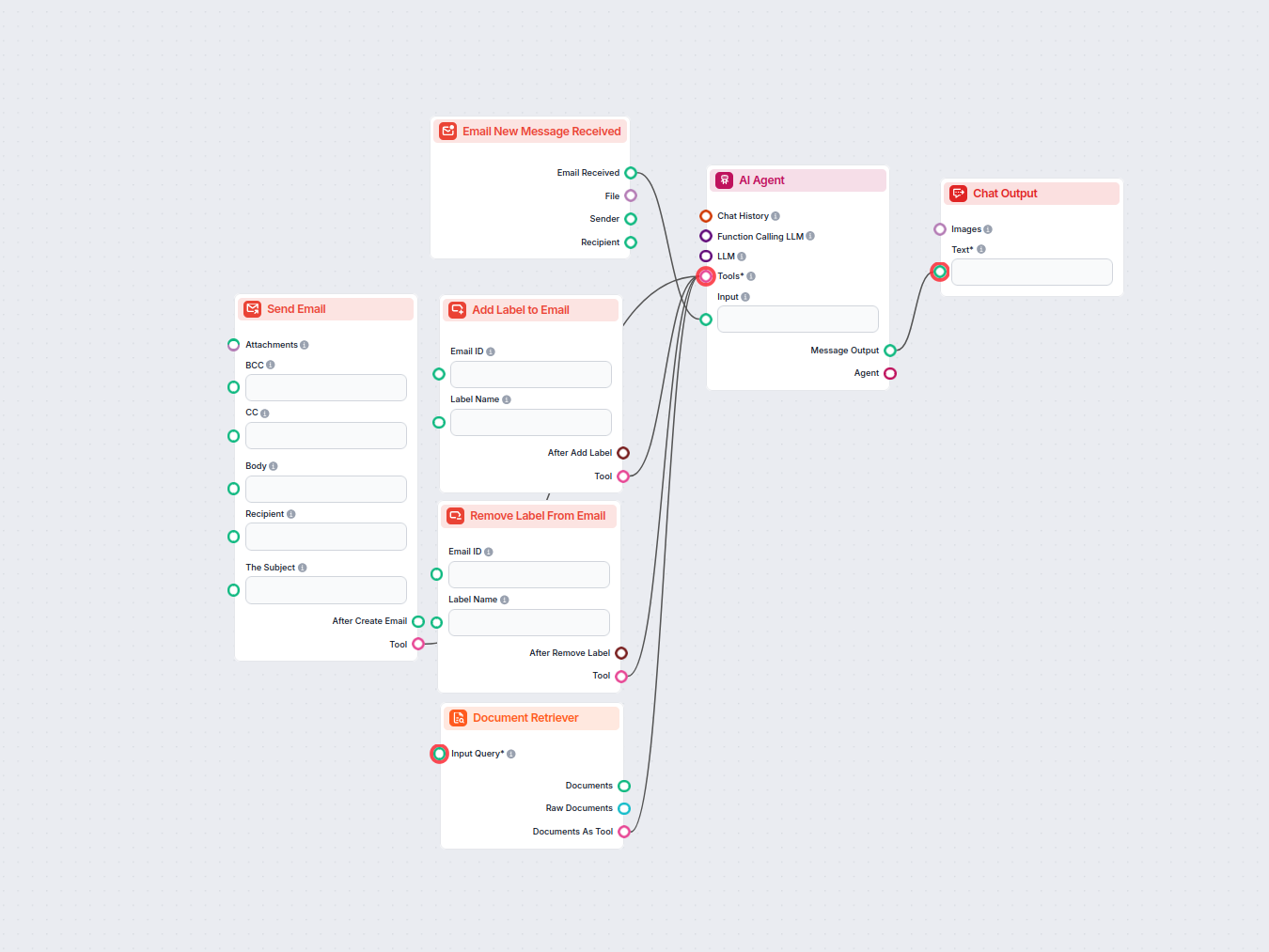
Automate Gmail inbox management with an AI agent that reads incoming emails, leverages your knowledge base to craft professional replies, and can send, label, o...
3 min read
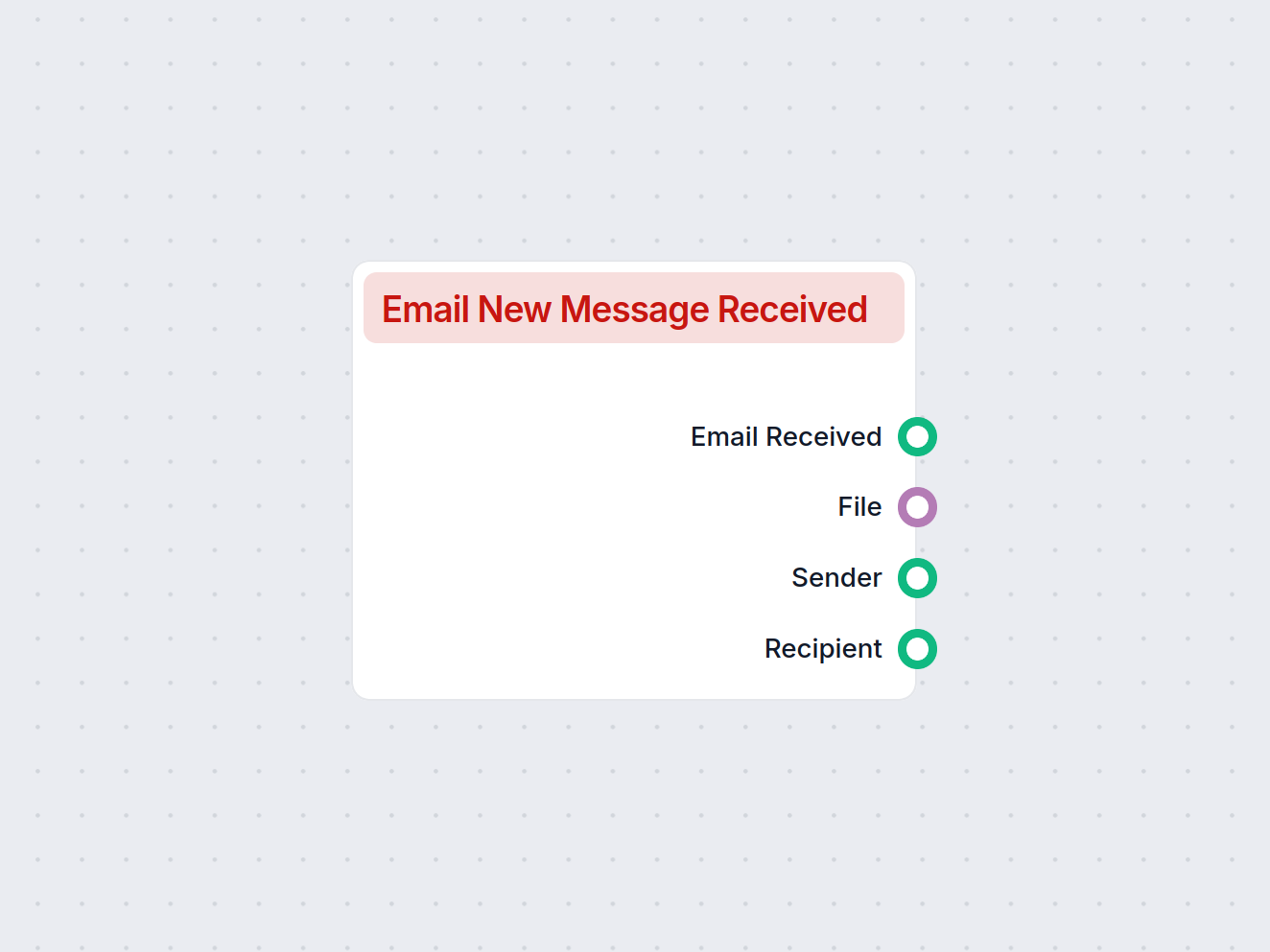
Automatically starts your workflow when a new Gmail message arrives, capturing message details and attachments for seamless automation.
Component description
Icon: 📧
Version: 1.0.0
This component serves as a trigger in your AI workflow, activating whenever a new email message is received via Gmail. It allows your process to automatically respond to, analyze, or further process incoming emails, making it an essential building block for automating communication-based tasks.
When a new message arrives in your Gmail inbox, this component captures the event and passes the message data into your workflow. This enables downstream components to perform actions such as extracting information, sending automated replies, storing attachments, or initiating other business processes based on the email content.
Upon receiving a new Gmail message, this component provides several outputs, making it easy to integrate with other steps in your workflow:
| Output Name | Type | Description |
|---|---|---|
| Email Received | Message | Contains the full content of the received email. |
| File | FlowSessionAttachmentResponse | Provides the email’s attachment(s), if any, as file objects. |
| Sender | Message | Contains information about the sender of the email. |
| Recipient | Message | Contains information about the recipient of the email. |
Note: This component is usually configured as the starting point of a workflow that relies on incoming email communications. It is flexible and can be combined with other components for advanced automation scenarios.
To help you get started quickly, we have prepared several example flow templates that demonstrate how to use the Gmail New Message Trigger component effectively. These templates showcase different use cases and best practices, making it easier for you to understand and implement the component in your own projects.
Automate Gmail inbox management with an AI agent that reads incoming emails, leverages your knowledge base to craft professional replies, and can send, label, o...
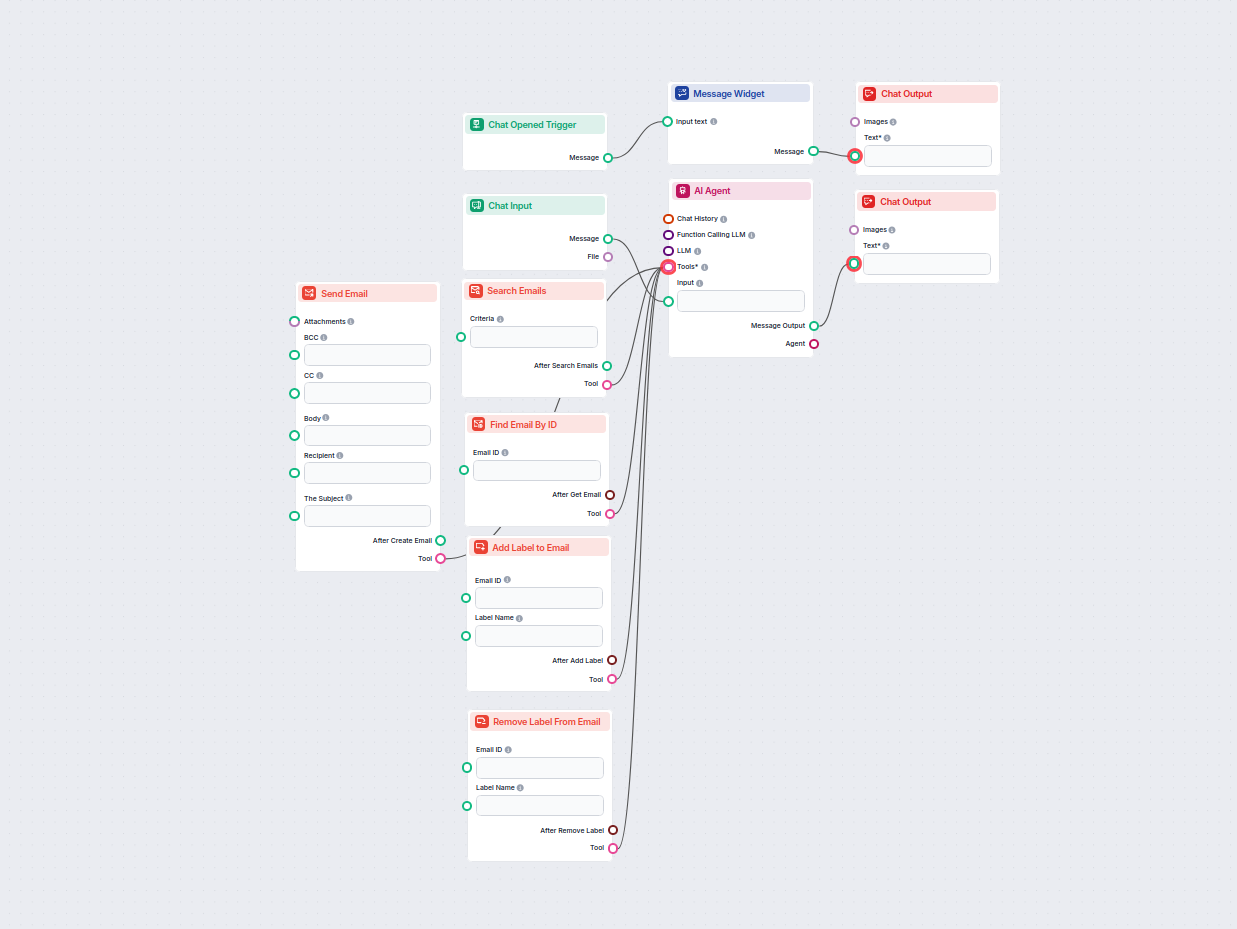
Streamline your Gmail workflow with an AI-powered assistant that can search, organize, and manage emails, create and send new messages, and automate label manag...
Connect your Gmail inbox to FlowHunt and create powerful, automated workflows that react instantly to new emails.
Automate Gmail inbox management with an AI agent that reads incoming emails, leverages your knowledge base to craft professional replies, and can send, label, o...
Cookie Consent
We use cookies to enhance your browsing experience and analyze our traffic. See our privacy policy.