
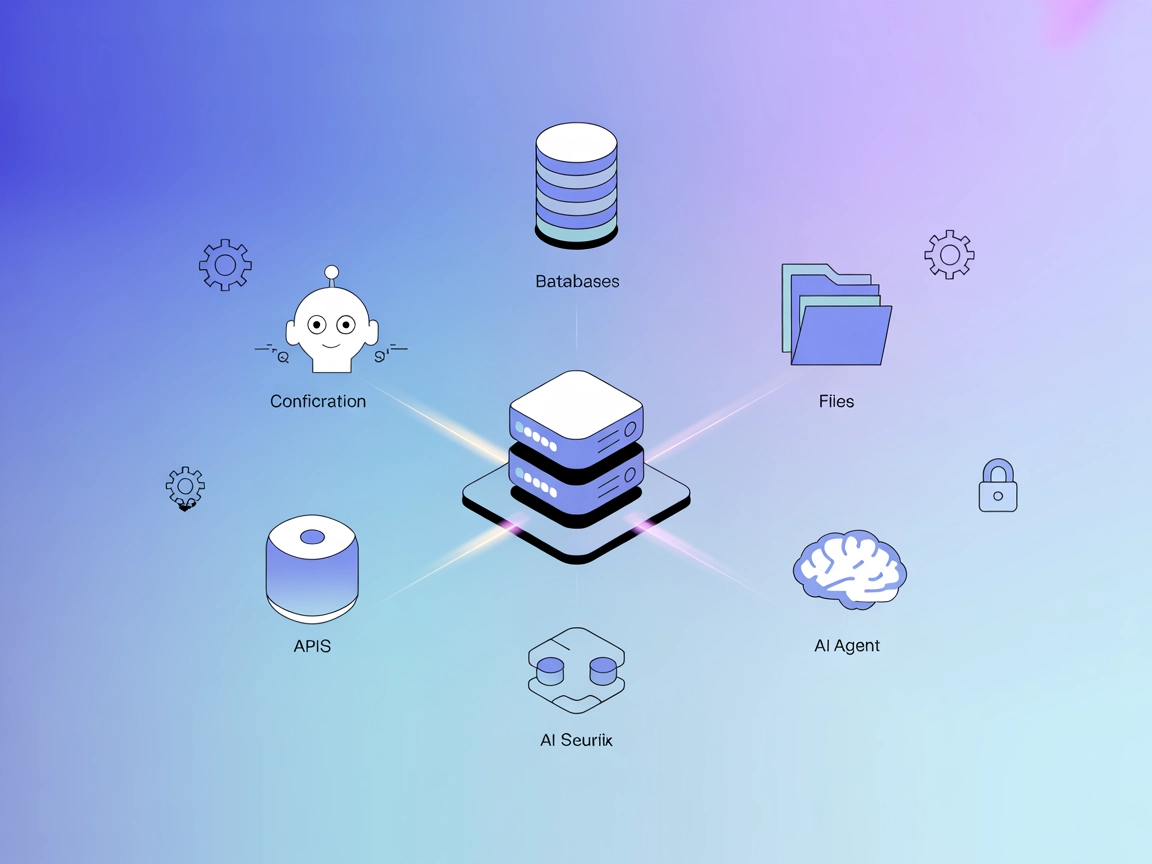
ModelContextProtocol (MCP) Sunucu Entegrasyonu
ModelContextProtocol (MCP) Sunucusu, AI ajanları ile harici veri kaynakları, API'ler ve servisler arasında bir köprü görevi görerek FlowHunt kullanıcılarının ba...
3 dakika okuma
AI
Integration
+4

Yapay zeka destekli otomasyonla kargo operasyonlarını ve lojistik iş akışlarını kolaylaştırın. Chameleoon MCP Server, yapay zeka asistanınızı çok kargo şirketi kargo yönetimine, paket takibine, etiket oluşturmaya ve toplama planlamasına bağlar.
Chameleoon MCP Server, Model Context Protocol (MCP) aracılığıyla Chameleoon’un kargo yönetim platformu ile yapay zeka asistanları arasında sorunsuz entegrasyon sağlar. E-ticaret işletmelerine, lojistik ekiplerine ve yerine getirme operasyonlarına doğal dil komutları kullanarak kargo iş akışlarını otomatikleştirme olanağı sağlar. Sunucu, Chameleoon’un çok kargo şirketi platformuna bağlanarak yapay zeka asistanlarının kargo siparişleri oluşturmasına, birden fazla taşıyıcı arasında teslimatları takip etmesine, çeşitli formatlarda kargo etiketleri oluşturmasına, kargo şirketi toplamalarını planlamasına ve manuel kontrol paneli navigasyonu olmadan tüm kargo yaşam döngüsünü yönetmesine olanak tanır. Bu, karmaşık lojistik operasyonları basit konuşma komutlarına dönüştürür ve tekrarlayan kargo görevlerine harcanan zamanı önemli ölçüde azaltır.
Create a shipping order for John Smith at Main Street 123, Prague 10000, Czech Republic using GLS courier
Show me all shipping orders created in the last 7 days
Find all orders with status 'waiting' from DPD courier
Delete the shipping order with ID 12345
Get detailed information about order ID 67890 including tracking history
Track package with shipping number 06515700194651
Show me the current status and location of all orders shipped to Germany this month
Find the tracking information for reference number ORDER-2026-001
Which packages are currently in transit and when are they expected to arrive?
Show me all delivered orders from the last 14 days with their delivery dates
Generate A4 shipping labels for orders 123, 456, and 789
Create thermal labels in A6 format for all orders ready for pickup today
Get ZPL format labels for Zebra printer for these shipping numbers: [list]
Generate labels for all GLS orders created yesterday in A4 format
List all available couriers and their features like pickup support and manifest printing
Show me which courier configurations are available for shipping to Slovakia
What are the available profiles for DPD courier?
Show me all orders eligible for courier pickup today
Schedule a pickup for DPD with these shipping numbers: [list]
List all pickup orders from the last 3 days grouped by courier
Validate this shipping order before creating it: recipient name, address, weight, and courier settings
Check if this address is valid for GLS delivery to Austria
Validate all orders waiting to be shipped and show me any with errors or warnings

Bugün ücretsiz denemenizi başlatın ve günler içinde sonuçları görün.
The Chameleoon MCP Server does not expose explicit resources. All data access is tool-based.
The Chameleoon MCP Server provides 14 comprehensive tools organized into five categories:
1. list_couriers
2. list_courier_configurations
3. list_shipping_orders
4. get_shipping_order
5. get_order_tracking
6. create_shipping_order
7. delete_shipping_order
8. delete_shipping_orders_batch
9. validate_shipping_order
10. get_shipping_labels
11. list_pickup_orders
12. create_pickup
En son ipuçlarını, trendleri ve teklifleri ücretsiz alın.
Monday Morning Post-Weekend Rush: When processing 200+ orders accumulated over the weekend, manually creating each shipping label becomes impossible. Instead of spending 4-5 hours clicking through dashboards, use “Create shipping orders for all paid orders from Friday through Sunday using optimal courier for each destination” to process the entire batch in minutes. The AI automatically selects the best courier based on destination, validates addresses, generates labels, and provides tracking numbers - transforming a morning-consuming task into a 10-minute operation.
Flash Sale Fulfillment Crisis: Your flash sale generated 350 orders in 24 hours, and customers expect same-day shipping. Manual processing would take your entire team all day. Command “Validate all orders from flash sale batch, create shipping labels for valid addresses, and flag problematic ones for review” to instantly separate the 340 orders ready to ship from the 10 requiring address corrections. Your warehouse team can start packing immediately while customer service handles the exceptions.
Holiday Season Peak Management: During December’s peak season, you’re handling 5x normal volume with temporary staff who aren’t trained on your shipping system. Instead of training them on complex dashboards, they simply tell the AI “Create GLS shipping order for [customer name and address]” and instantly receive printed labels. This reduces training time from hours to minutes and eliminates costly shipping errors during your most critical sales period.
International Order Cost Analysis: You receive 45 international orders across 12 countries. Manually checking shipping rates for each courier combination would take hours and likely result in overpaying. Ask “Compare shipping rates across all available couriers for these international destinations: [list]” and instantly see which courier offers the best rate for each country. This single analysis can save hundreds in shipping costs per day while ensuring faster delivery times.
Bulk Shipment Courier Selection: You need to ship 100 identical products to different domestic addresses. Instead of using your default courier blindly, command “Analyze courier options for 100 packages, weight 2kg each, to these addresses. Show me total cost difference between couriers including any volume discounts.” This reveals that switching from your default DPD to GLS for this batch saves 380 EUR - savings that compound across every bulk shipment.
COD Order Optimization: You have 30 cash-on-delivery orders today. Not all couriers handle COD equally - some charge higher fees, others have better success rates. Use “Which couriers support COD delivery to these addresses with the lowest combined shipping and COD fees?” to automatically route each order to the most cost-effective COD-capable courier, reducing your COD processing costs by 15-20%.
Delayed Shipment Customer Communication: It’s Thursday afternoon, and you know some customers are expecting Friday deliveries. Instead of waiting for angry calls, command “Show me all packages scheduled for Friday delivery that are currently delayed or still in transit without expected delivery updates.” This identifies 12 at-risk deliveries. You proactively contact these customers with updated timelines and discount codes, transforming potential complaints into appreciation for your transparency.
Weekend Delivery Preparation: Friday at 4 PM, you need to identify which orders won’t deliver before Monday. Ask “List all orders shipped this week showing current status and estimated delivery. Flag any that won’t reach customers before Monday.” This instantly reveals 18 orders stuck in weekend transit. You send proactive Friday evening emails with Monday delivery confirmations, dramatically reducing Monday morning “where’s my order?” inquiries.
Lost Package Prevention: Instead of waiting for customers to report missing packages, run a daily check: “Show me all packages shipped more than 7 days ago without delivered status, grouped by courier.” This early warning system catches packages stuck in transit limbo before customers notice, allowing you to file courier claims and ship replacements proactively.
Daily Pickup Coordination Across Multiple Locations: You operate three warehouse locations, each shipping with DPD, GLS, and Packeta. Manually coordinating six separate courier pickups daily means six phone calls and juggling multiple time windows. Instead, command “Schedule pickups for all ready orders at all locations: Warsaw warehouse for DPD and GLS, Prague warehouse for all three couriers, Berlin warehouse for DPD only.” The AI schedules all pickups simultaneously, provides confirmation numbers, and generates manifests - reducing 90 minutes of phone coordination to 3 minutes of natural language instruction.
Shipping Label Printer Queue Management: Your warehouse has three packing stations: one with thermal printers (A6 labels), one with standard printers (A4 labels), and one with Zebra printers (ZPL format). Instead of manually sorting orders by station, use “Generate A6 thermal labels for orders 1-50 for station one, A4 labels for orders 51-100 for station two, and ZPL format for orders 101-120 for station three.” Each packing station instantly receives correctly formatted labels, eliminating printer compatibility errors and workflow bottlenecks.
End-of-Day Warehouse Reconciliation: Before closing at 6 PM, you need to verify all picked orders have shipping labels and all labels generated today were actually used. Command “Show me all orders marked as picked without shipping labels, and all generated labels from today not assigned to picked orders.” This reveals 3 orders missing labels (pick list completed but shipment not created) and 2 labels generated for orders still waiting to be picked - allowing you to resolve discrepancies before warehouse closure instead of discovering them the next morning.
Bulk Order Address Verification: You received a corporate bulk order with 150 employee addresses for gift delivery. Processing these without validation risks 10-15% failure rate from typos and incomplete addresses. Instead of creating failed shipments, run “Validate all addresses in this batch before creating orders. Group results into verified addresses, correctable addresses needing minor fixes, and invalid addresses requiring customer contact.” This prevents failed deliveries, reduces return shipping costs, and allows you to resolve address issues before shipment, not after failed delivery attempts.
International Address Formatting: You’re expanding to new European markets, but each country has different address formatting requirements. A Prague address differs significantly from a Berlin or Vienna address. Instead of studying postal regulations for each country, simply command “Validate this shipping order for Czech Republic delivery” before creation. The system automatically checks street format, postal code validity, and city name consistency - preventing the frustration of packages rejected by foreign couriers due to formatting errors.
Apartment and Suite Number Detection: You notice many delivery failures are from missing apartment numbers - customers enter “Main Street 123” without “Apt 5B.” Before processing today’s 80 orders, run “Identify all addresses without apartment, suite, floor, or unit numbers in today’s orders.” This flags 12 potentially incomplete addresses. A quick verification call saves 12 failed deliveries, 12 reshipments, and 12 frustrated customers.
Instant Order Status for Customer Calls: Your customer service receives 50+ “where’s my order?” calls daily. Instead of each agent logging into the shipping platform, looking up orders, finding tracking numbers, checking courier websites, and explaining status, they simply ask the AI “Track package for customer John Smith, order number 2024-12345.” The AI instantly responds with current location, delivery status, and tracking URL to share - reducing average call handling time from 4 minutes to 45 seconds and dramatically improving customer satisfaction.
Batch Status Updates for VIP Customers: Your enterprise client placed an order for 200 units shipping to different locations. They want a status update on all shipments. Instead of manually checking 200 tracking numbers, use “Show delivery status for all orders with reference CLIENT-BULK-2024-001, grouped by delivered, in transit, and delayed.” Generate a formatted report in 30 seconds instead of spending 3 hours on manual tracking checks.
Return Label Generation: A customer wants to return their order. Instead of creating a return label through multiple system screens, your support agent simply says “Create a return shipping label from [customer address] to our warehouse using GLS with reference RETURN-ORDER-12345.” The customer receives their return label by email in under a minute, improving return experience and reducing support ticket resolution time.
Monthly Shipping Cost Analysis: You suspect you’re overpaying on shipping but lack time to analyze hundreds of orders manually. Command “Show me all orders from last month grouped by courier, with total shipping costs, average cost per package, and delivery success rates.” This reveals that while Courier A seems cheaper per package, their 12% failed delivery rate means actual cost per successful delivery is higher than Courier B’s 98% success rate. Data-driven courier selection based on real costs, not just quoted rates.
Carrier Performance Benchmarking: You work with four couriers but lack objective performance data. Use “Compare all couriers from the last quarter: average delivery time, on-time delivery percentage, failed delivery rate, and average cost. Show me best performer for domestic versus international shipping.” This reveals DPD excels at domestic speed but GLS offers better international reliability - allowing you to route orders strategically instead of using a one-size-fits-all approach.
Delivery Zone Optimization: You’re considering opening a second warehouse to improve delivery times. Before investing, ask “Analyze delivery times to all postal codes we ship to, grouped by region. Show average transit days and identify areas with consistently slow delivery.” This geographic analysis reveals that 60% of your 3+ day deliveries go to southeastern regions - validating the business case for a regional distribution center and projecting potential delivery time improvements.
Pre-Campaign Capacity Planning: You’re launching a “Free Shipping Friday” promotion expecting 3x normal order volume. Ask “Based on current courier pickup capacity and scheduling, how many orders can each courier handle if we receive 600 orders on Friday? What’s our maximum processing capacity?” This reveals your current courier agreements support 450 orders maximum. You proactively arrange additional pickup capacity with couriers before the promotion launches, preventing the fulfillment crisis that plagued last year’s promotion.
Gift Season Multi-Recipient Orders: During holidays, many customers order gifts shipping to different recipients. Instead of manually creating 8 separate shipments for one customer’s gift list, use “Create shipping orders for customer ORDER-HOLIDAY-789: 8 different recipients at these addresses, all using gift packaging note and same billing reference.” Process complex multi-recipient orders in seconds while maintaining accurate order attribution for customer service and accounting.
Same-Day Shipping Deadline Management: You promise same-day shipping for orders placed before 2 PM. At 1:45 PM, you need to know exactly which orders are cutting it close. Command “Show me all paid orders from today without shipping labels created yet. How many can we process and schedule pickup for same-day shipping?” This reveals 23 orders need immediate attention. You prioritize these before the 2 PM cutoff, maintaining your same-day shipping promise and competitive advantage.
Obtain your Chameleoon API key:
Locate Windsurf’s MCP configuration file:
~/Library/Application Support/Windsurf/mcp.json%APPDATA%\Windsurf\mcp.json~/.config/Windsurf/mcp.jsonAdd the Chameleoon MCP server configuration:
{
  "mcpServers": {
    "chameleoon": {
      "command": "python3",
      "args": ["-m", "chameleoon_mcp_server"],
      "env": {
        "CHAMELEOON_API_KEY": "your_api_key_here"
      }
    }
  }
}
Save the configuration file and restart Windsurf completely.
Verify the connection:
Get your Chameleoon API credentials from chameleoon.sk (see Prerequisites).
Locate Claude Desktop’s configuration:
~/Library/Application Support/Claude/claude_desktop_config.json%APPDATA%\Claude\claude_desktop_config.json~/.config/Claude/claude_desktop_config.jsonUpdate or create the configuration file:
{
  "mcpServers": {
    "chameleoon": {
      "command": "python3",
      "args": ["-m", "chameleoon_mcp_server"],
      "env": {
        "CHAMELEOON_API_KEY": "your_api_key_here"
      }
    }
  }
}
Save the file and fully restart Claude Desktop (quit and relaunch).
Confirm the server connection:
Register and obtain API access at chameleoon.sk (see Prerequisites).
Find Cursor’s MCP configuration file:
~/Library/Application Support/Cursor/mcp.json%APPDATA%\Cursor\mcp.json~/.config/Cursor/mcp.jsonAdd the MCP server entry:
{
  "mcpServers": {
    "chameleoon": {
      "command": "python3",
      "args": ["-m", "chameleoon_mcp_server"],
      "env": {
        "CHAMELEOON_API_KEY": "your_api_key_here"
      }
    }
  }
}
Save and restart Cursor.
Check server status:
Obtain Chameleoon API key from chameleoon.sk.
Locate Cline’s configuration file (location varies by Cline installation).
Add the Chameleoon MCP server:
{
  "mcpServers": {
    "chameleoon": {
      "command": "python3",
      "args": ["-m", "chameleoon_mcp_server"],
      "env": {
        "CHAMELEOON_API_KEY": "your_api_key_here"
      }
    }
  }
}
Save, restart Cline, and verify the server appears in available MCP servers.
Test connectivity: “Get list of courier configurations”
Never hardcode API keys. Always use environment variables:
{
  "mcpServers": {
    "chameleoon": {
      "command": "python3",
      "args": ["-m", "chameleoon_mcp_server"],
      "env": {
        "CHAMELEOON_API_KEY": "${CHAMELEOON_API_KEY}"
      }
    }
  }
}
Then set the environment variable at the system level:
~/.bashrc or ~/.zshrc: export CHAMELEOON_API_KEY="your_key"Restrict API key permissions in your Chameleoon account to only the operations needed.
Rotate keys regularly and revoke old keys immediately if compromised.
Use separate keys for development, staging, and production environments.
To integrate the Chameleoon MCP Server into your FlowHunt workflow for automated shipping operations, follow these steps:
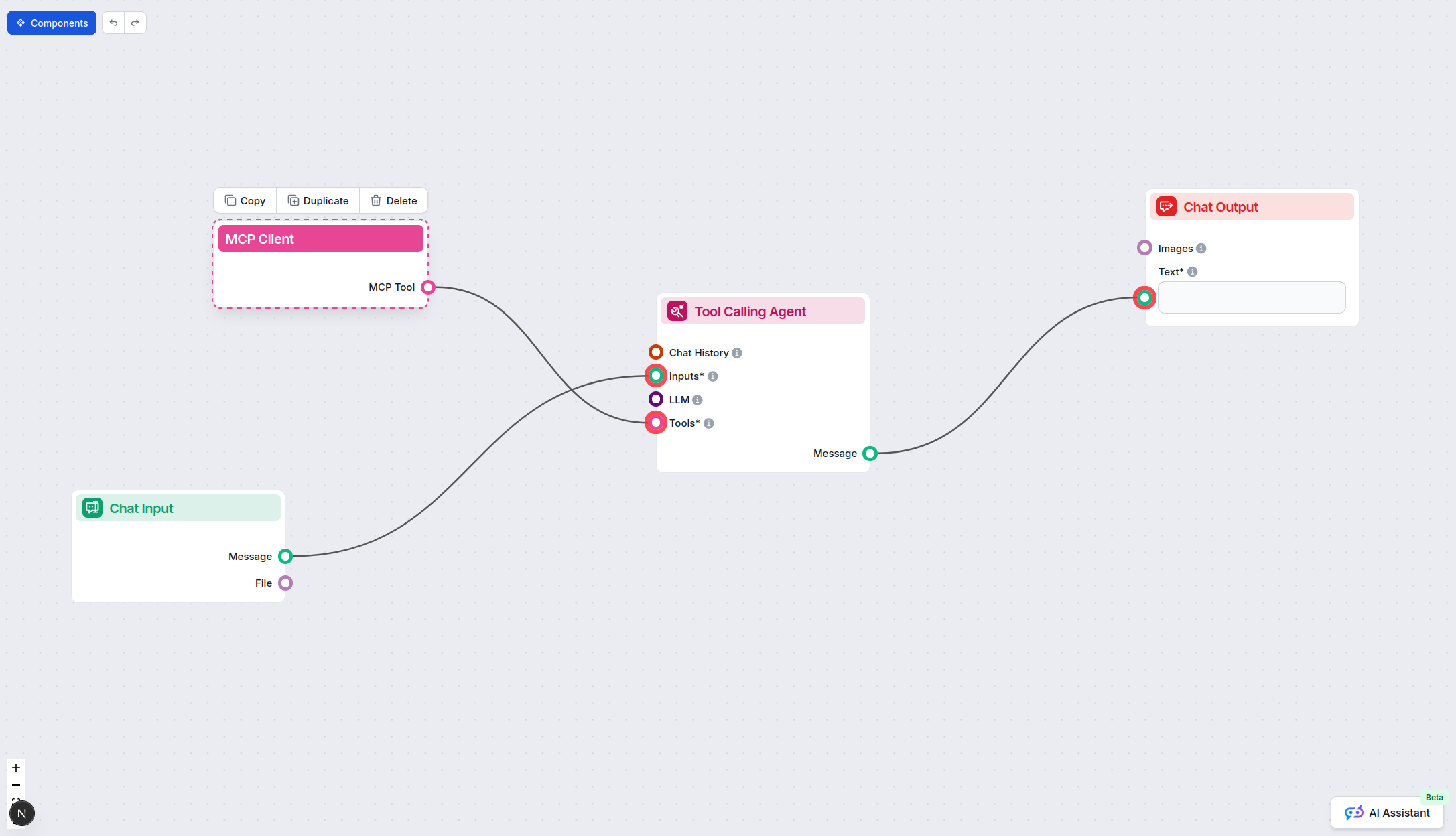
{
  "chameleoon": {
    "transport": "streamable_http",
    "url": "https://yourmcpserver.example/path/to/chameleoon/mcp"
  }
}
Replace the URL with your actual Chameleoon MCP server endpoint.
Set Up Environment Variables:
CHAMELEOON_API_KEYConfigure Your AI Agent: Once connected, your AI agent can use natural language to control shipping operations. Example prompts:
Build Automated Workflows:
Example: Order Fulfillment Flow
Example: Daily Shipping Report
Example: Customer Service Automation
| Section | Availability | Details/Notes |
|---|---|---|
| Overview | ✅ | Comprehensive description of capabilities |
| List of Prompts | ✅ | Example natural language commands provided |
| List of Resources | ⛔ | No exposed resources (tool-based access only) |
| List of Tools | ✅ | 14 tools across 5 categories, fully documented |
| Use Cases | ✅ | Extensive business scenarios with examples |
| Setup Instructions | ✅ | Detailed for all major MCP clients |
| Security Documentation | ✅ | Environment variables, key rotation, best practices |
| API Documentation | ✅ | Complete tool parameters and return values |
The Chameleoon MCP Server delivers a robust, production-ready integration for shipping management automation. It stands out with comprehensive tool coverage across the entire shipping lifecycle - from courier selection and order creation to tracking, label generation, and pickup scheduling.
Strengths:
Best For:
Limitations:
The server transforms complex shipping API interactions into simple natural language commands, making advanced logistics automation accessible to non-technical users while providing power users with comprehensive programmatic control.
| Criteria | Status |
|---|---|
| Has a LICENSE | ✅ |
| Has at least one tool | ✅ (14 tools) |
| Complete Documentation | ✅ |
| Security Best Practices | ✅ |
| Production Ready | ✅ |
| Number of Forks | 0 |
| Number of Stars | 0 |
Note: Fork and star counts are not available as this is an internal/proprietary MCP server implementation.
FlowHunt, dahili sistemleriniz ile AI araçları arasında ek bir güvenlik katmanı sağlayarak MCP sunucularınızdan hangi araçlara erişilebileceği konusunda size ayrıntılı kontrol verir. Altyapımızda barındırılan MCP sunucuları, FlowHunt'ın chatbotu ile ChatGPT, Claude ve çeşitli AI editörleri gibi popüler AI platformlarıyla sorunsuz bir şekilde entegre edilebilir.
Chameleoon MCP Server, Model Context Protocol aracılığıyla Chameleoon'un kargo yönetim platformu ile yapay zeka asistanları arasında bir köprüdür. Sipariş oluşturma, takip, etiket oluşturma ve birden fazla kargo hizmeti arasında toplama planlaması dahil olmak üzere kargo operasyonlarının doğal dil kontrolünü sağlar.
Chameleoon, DPD, GLS, Packeta ve diğerleri dahil olmak üzere büyük Avrupa kargo şirketleriyle entegre olur. Toplama desteği, manifest yazdırma özellikleri ve hizmet seçeneklerini görmek için list_couriers aracını kullanarak mevcut kargo şirketlerini ve özelliklerini sorgulayabilirsiniz.
CHAMELEOON_API_KEY'inizi her zaman MCP sunucu yapılandırmasındaki ortam değişkenlerinde saklayın. Kimlik bilgilerini yapılandırma dosyalarına asla sabit kodlamayın veya sürüm kontrolüne göndermeyin.
Evet, Chameleoon desteklenen tüm kargo şirketlerinde çalışan evrensel takip URL'leri sağlar. Sunucu, kolay paket izleme için sipariş verilerini otomatik olarak takip URL'leriyle zenginleştirir.
Chameleoon birden fazla etiket formatını destekler: standart yazıcılar için A4 kağıt, etiket yazıcıları için A6 termal etiketler ve Zebra termal yazıcıları için ZPL formatı. Etiket oluştururken formatı belirtebilirsiniz.
MCP bileşenini FlowHunt akışınıza ekleyin ve yapay zeka acentenize bağlayın. Chameleoon MCP sunucu ayrıntılarını JSON formatında yapılandırın ve yapay zeka acenteniz otomatik lojistik iş akışları için tüm kargo yönetimi yeteneklerine erişime sahip olacak.
Kargo iş akışlarınızı yapay zeka otomasyonuyla dönüştürün. Birden fazla kargo şirketi arasında siparişleri yönetin, teslimatları takip edin ve lojistik operasyonları doğrudan favori araçlarınızdan optimize edin.
ModelContextProtocol (MCP) Sunucusu, AI ajanları ile harici veri kaynakları, API'ler ve servisler arasında bir köprü görevi görerek FlowHunt kullanıcılarının ba...

mcp-server-docker MCP Sunucusu, yapay zeka asistanlarının Docker konteynerlerini doğal dil ile yönetmesini sağlar. Bu MCP'yi FlowHunt ve diğer istemcilerle ente...

FlowHunt için E-posta MCP Sunucusu, yapay zeka asistanlarını e-posta sistemleriyle buluşturarak otomatik e-posta oluşturma, ek arama ve LLM entegrasyonu ile ile...
Çerez Onayı
Göz atma deneyiminizi geliştirmek ve trafiğimizi analiz etmek için çerezleri kullanıyoruz. See our privacy policy.