How LiveAgent achieved 75% chat automation with FlowHunt AI chatbot
LiveAgent Support Team transformed their helpdesk operations with FlowHunt’s AI chatbot, achieving 75% chat resolution rate, reducing human agent workload by 48.5%, and scaling to handle 25% more interactions without additional hiring.
LiveAgent, a comprehensive helpdesk software with 20 years in the industry serving over 40,000 businesses and 150 million end users worldwide, has built a strong reputation for customer service. But even established companies need to adapt as customer behavior changes online.
The numbers told a clear story. With 3,500 live chats flooding in monthly, LiveAgent’s customer support team was stretched thin. But the real challenge wasn’t the volume. Approximately 1,500 of those monthly chats were misdirected inquiries from visitors browsing blogs, glossaries, and other non-product pages. General questions, off-topic requests, and misrouted conversations were consuming agent time that should have been dedicated to customers with true product issues.
“Our support agents were juggling several parallel chats at once, frequently switching between topics,” explains Jozef Štofira, Head of Customer Support at LiveAgent’s parent company, QualityUnit. “Many weren’t even directly related to the product itself. This constant disruption made it difficult for agents to maintain focus or pay full attention to truly product-related inquiries.”
Meanwhile, monthly interactions were rising by 25%. The traditional solution of hiring more agents would require significant investment without addressing the underlying inefficiency. The team needed a smarter approach.
Previous attempts with rules-based systems
Before discovering FlowHunt, LiveAgent attempted to tackle the problem with a rules-based system. Using regular expressions to identify patterns in customer messages, they automated responses and attempted auto-resolution for certain cases.
The approach showed promise initially but quickly revealed its limitations. Regex patterns could only capture a narrow range of scenarios, meaning the vast majority of interactions still required manual intervention. Edge cases, which in reality weren’t that rare, slipped through constantly.
We needed something that could filter, sort, and handle customer interactions intelligently, without losing the ability to provide help where it was truly needed.
Why LiveAgent chose FlowHunt
After evaluating multiple AI solutions, LiveAgent selected FlowHunt for its deep integration capabilities with their existing platform and its intelligent escalation system. Unlike chatbots that either try to handle everything or require constant developer intervention, FlowHunt an AI solution that understood when to automate and when to hand off to humans.
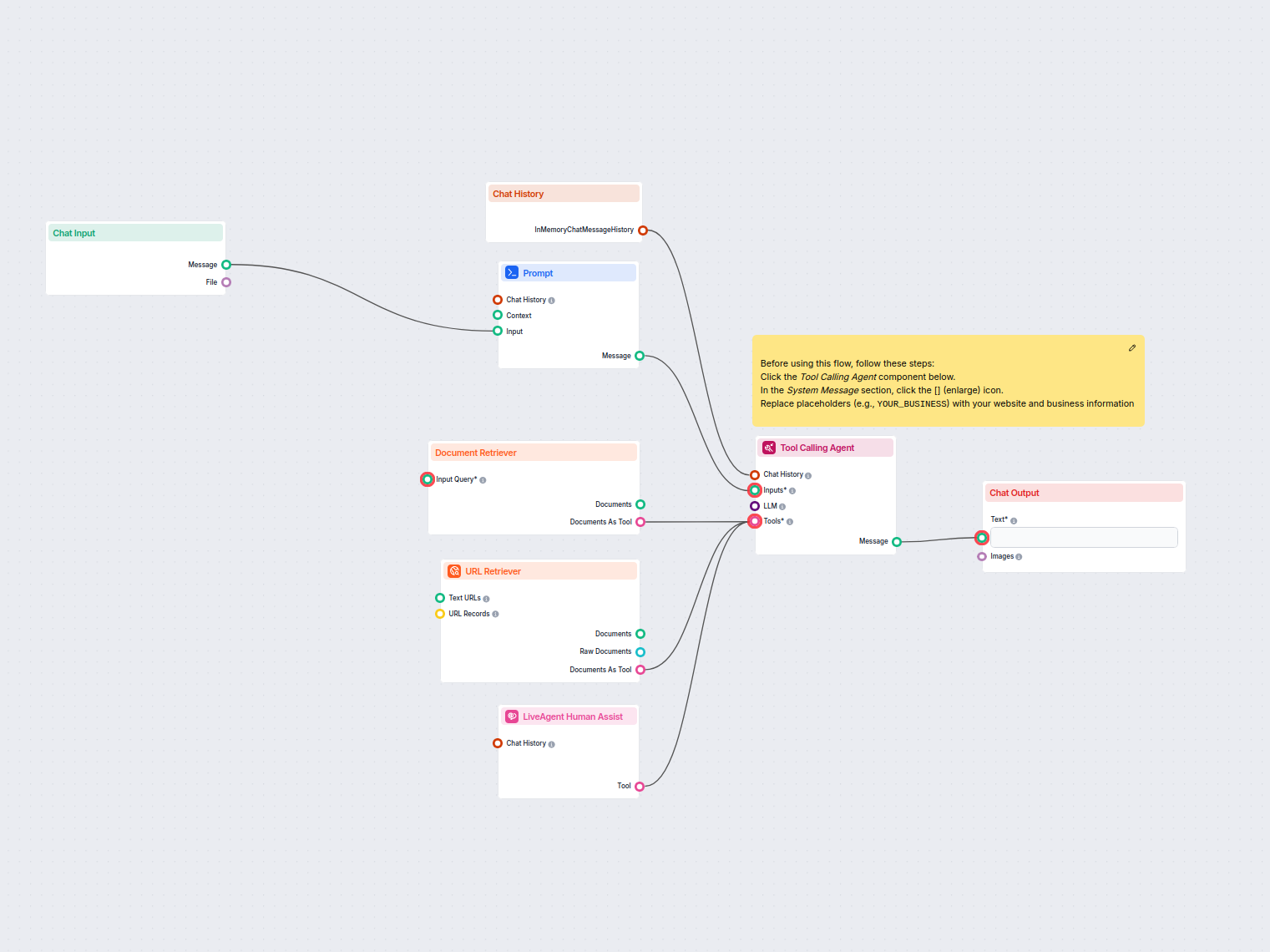
The integration with LiveAgent’s knowledge base meant the AI could draw from official, approved content. The intelligent handover functionality ensured that when complexity exceeded the bot’s capabilities—or when customers explicitly requested human assistance—the transition would be seamless, with full conversation context passed to the agent.
For a support team that prided itself on quality, this balance between automation and human expertise was essential.
Implementation: Rolling out the AI chatbot in phases
LiveAgent’s rollout strategy reflected careful planning. Rather than deploying across all channels simultaneously, the team started with specific sections of their website where misdirected traffic was heaviest: blogs and glossary pages.
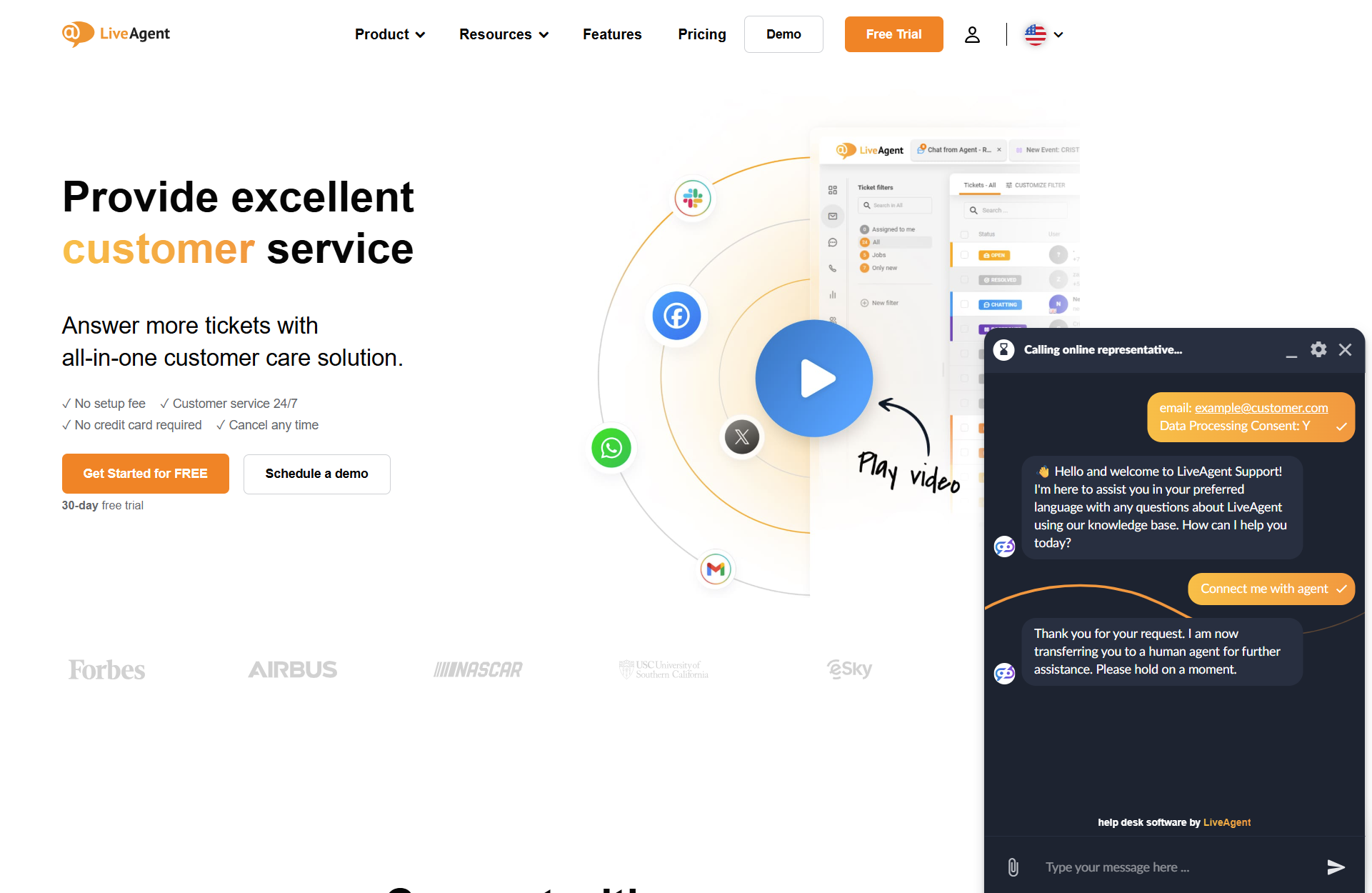
They connected their FlowHunt account, integrated both website content and their knowledge base as primary information sources, and defined clear escalation rules. New chat widgets utilizing the AI chatbot replaced the previous contact form widgets on selected pages.
To monitor performance, they configured automation to tag all chatbot conversations and track when handovers to human agents occurred. This data visibility would prove crucial for optimization.
Rolling out the AI chatbot was easier than we anticipated, By breaking down the process into manageable steps and thanks to clear instructions in setup guides, we made the transition seamless for both our team and our customers.
The team monitored conversations daily, refining system prompts and expanding FAQs based on real interactions. As confidence grew, they extended the chatbot to the main product pages, continuing to enhance performance through iterative improvements.
How the workload dropped by half
The numbers speak to the transformation:
75% of all chats resolved autonomously across blogs, directories, and glossary pages
40% automation rate on product pages where questions are more technical
48.5% reduction in human-handled chats — from 3,500 down to 1,800 per month
25% increase in total volume absorbed without adding headcount (5,800 to 7,300 monthly chats)
5,600 chats handled by AI monthly with only 800 requiring human escalation
The operational shift has been equally significant. “Support agents can now focus on fewer, more complex chats at a time, typically handling just one or two simultaneously,” Štofira explains, “rather than being distracted by multiple parallel chats of varying complexity.”
The three features that transformed LiveAgent’s support
LiveAgent’s success with FlowHunt centers on three major capabilities:
Intelligent chatbot with knowledge base integration By training the AI exclusively on approved company data from their knowledge base and website content, LiveAgent ensures consistent, accurate responses. The chatbot rarely hallucinates and abstains from improvisation. If it cannot find relevant answers in the provided sources, it clearly states so.
Smart escalation and human handover The AI doesn’t pretend to handle everything. When conversations exceed its capabilities or when customers explicitly request human assistance, the handover is seamless. Agents receive the full conversation history and context, allowing them to continue the conversation naturally without asking customers to repeat themselves.
Autonomous ticket processing Beyond chat, LiveAgent is leveraging FlowHunt’s autonomous agents to process tickets from multiple channels, such as email, contact forms, WhatsApp. These agents automatically identify and resolve spam, respond to simple inquiries, and categorize complex tickets with suggested actions before routing them to appropriate human agents.
The integration creates what Jozef Štofira describes as “massive operational efficiency and scalability by intelligently managing customer volume.”
Extending AI beyond chat interactions
LiveAgent views their chatbot implementation as the foundation for broader AI integration across their support operations. The team is particularly focused on two initiatives that extend the value of their AI investment.
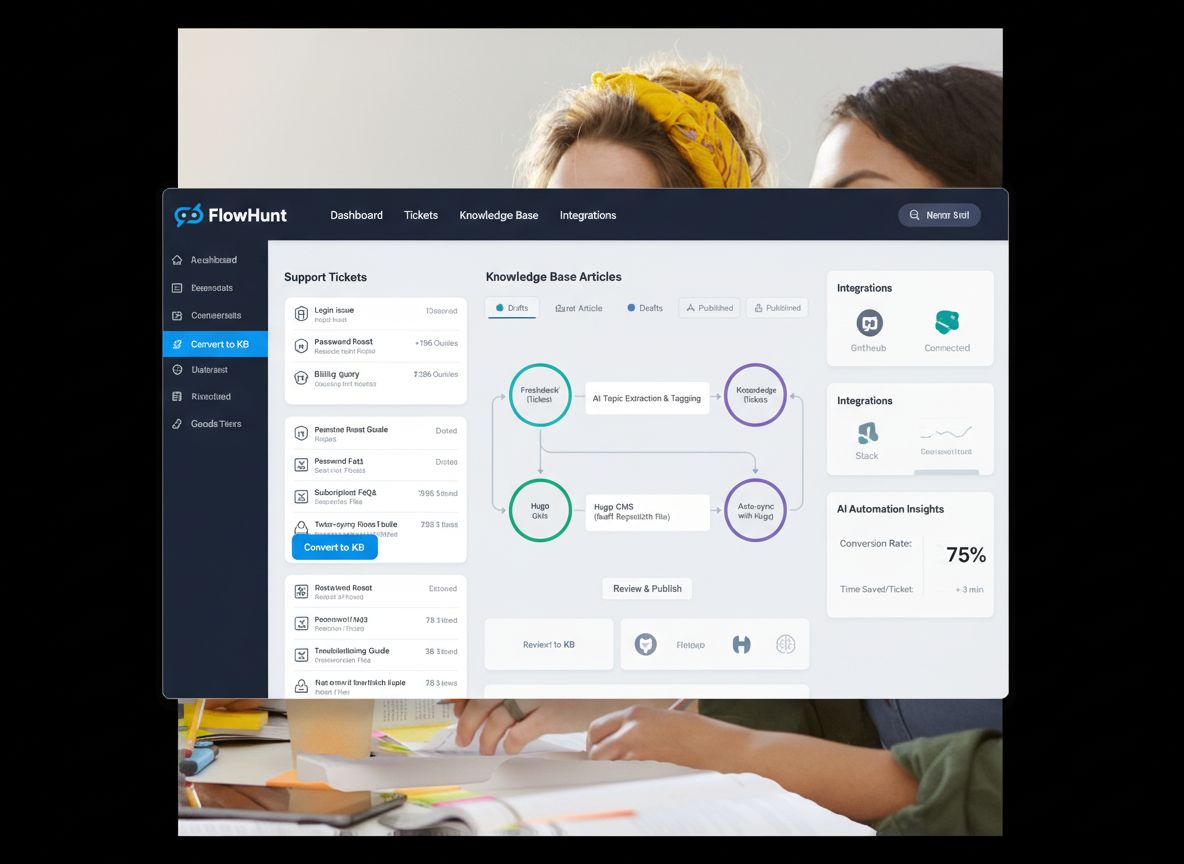
First, they’re developing workflows to automatically generate knowledge base articles from resolved tickets. By transforming successful support interactions into accessible FAQ content, they’ll continuously expand the chatbot’s knowledge while creating resources that benefit all customers.
Second, they’re excited about upcoming enhancements to LiveAgent’s AI answer assistant that will extend beyond chat to email-based tickets. This will enable the support team to leverage AI assistance across all communication channels while maintaining consistent quality.
We’re planning to continue enhancing our AI automation by applying it to more ticket use-cases, and implementing advanced flows for automatic knowledge base article creation from tickets.
Lessons learned: What makes AI implementation work
Reflecting on their journey, LiveAgent’s experience offers insights for other support teams considering AI automation:
Start focused, then expand By beginning with high-traffic, low-complexity areas like blog pages, LiveAgent built confidence and refined their approach before expanding to product pages. This iterative strategy allowed them to learn and optimize without risking core customer support quality.
Monitor and iterate constantly Daily review of chatbot conversations, continuous prompt refinement, and ongoing FAQ expansion were essential to improving performance. AI implementation isn’t a one-time setup—it’s an ongoing optimization process.
Let AI be AI, let humans be human The most successful aspect of LiveAgent’s implementation has been embracing what each does best. The AI handles volume, repetitive tasks, and information filtering. Humans handle complexity, judgment calls, and situations requiring empathy. Neither tries to replace the other—they complement.
The bottom line
By resolving 75% of chats autonomously and reducing human agent workload by nearly half, LiveAgent created support operations that can scale efficiently. But perhaps more importantly, they’ve improved both customer and agent experience.
Customers get faster responses to simple questions while complex issues receive focused expert attention. Moreover, support agents report higher job satisfaction when they’re able to focus on complex, meaningful problems rather than repetitive intake questions or misdirected inquiries.
We would absolutely recommend FlowHunt, The primary reason is its ability to deliver massive operational efficiency and cost-effective scalability.
For support leaders watching their teams strain under growing volume while budgets remain constrained, LiveAgent’s story offers a practical blueprint: intelligent automation that knows when to help and when to hand off, integrated into existing workflows, and continuously refined based on real results.
Company
LiveAgent Support Team
Industry
SaaS - Helpdesk Software
Interviewed
Jozef Štofira, Head of Customer Support
Use Case
Customer Support Automation & Ticket Management
FlowHunt Features Used
AI Chatbots, LiveAgent Integration, Intelligent Handover, Ticket Categorization
How did FlowHunt help LiveAgent Support Team improve efficiency?
FlowHunt enabled LiveAgent to resolve 75% of all chat interactions autonomously, reduce human agent workload by 48.5% (from 3,500 to 1,800 chats monthly), and handle a 25% increase in total interactions without additional hiring.
What makes FlowHunt's integration with LiveAgent unique?
FlowHunt's integration with LiveAgent helpdesk software allows the AI to provide real answers from internal knowledge bases, escalate complex issues to human agents, and perform handovers with full conversation context when human expertise is needed.
Ready to Transform Your Support Operations Like LiveAgent?
Discover how FlowHunt's no-code AI platform can help your helpdesk team achieve high automation rates, reduce agent workload, and scale support operations without increasing costs.
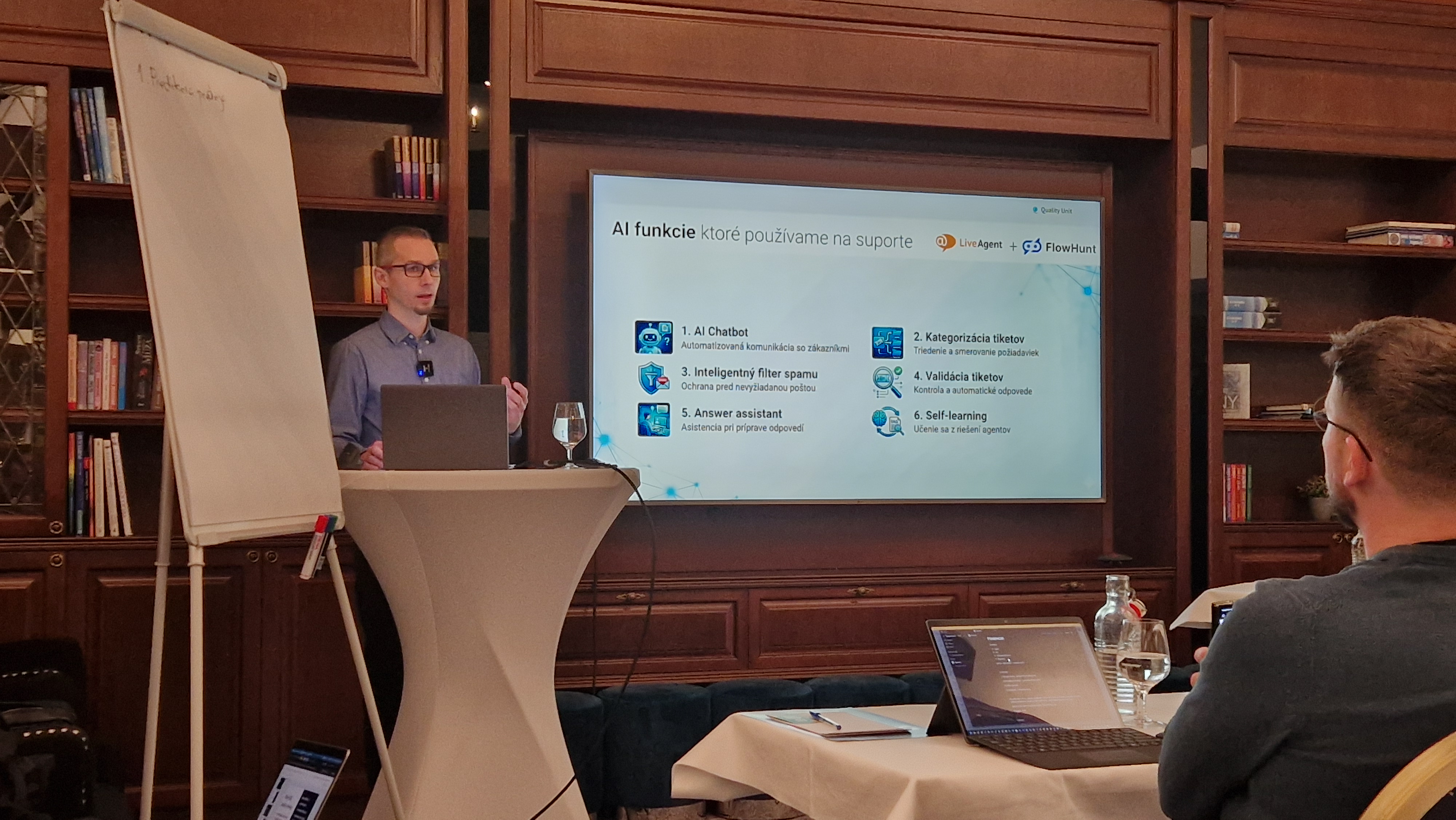
AI Functions That Actually Work in Customer Support: A Technical Lead's Implementation Guide
A technical breakdown of six AI functions that reduced support workload by 48.5%. Learn the specific problems each solves, implementation approach, and measurab...
Automate customer support in LiveAgent with an AI chatbot that answers questions using your internal knowledge base, retrieves relevant documents, and seamlessl...
4 min read
Cookie Consent We use cookies to enhance your browsing experience and analyze our traffic. See our privacy policy.