
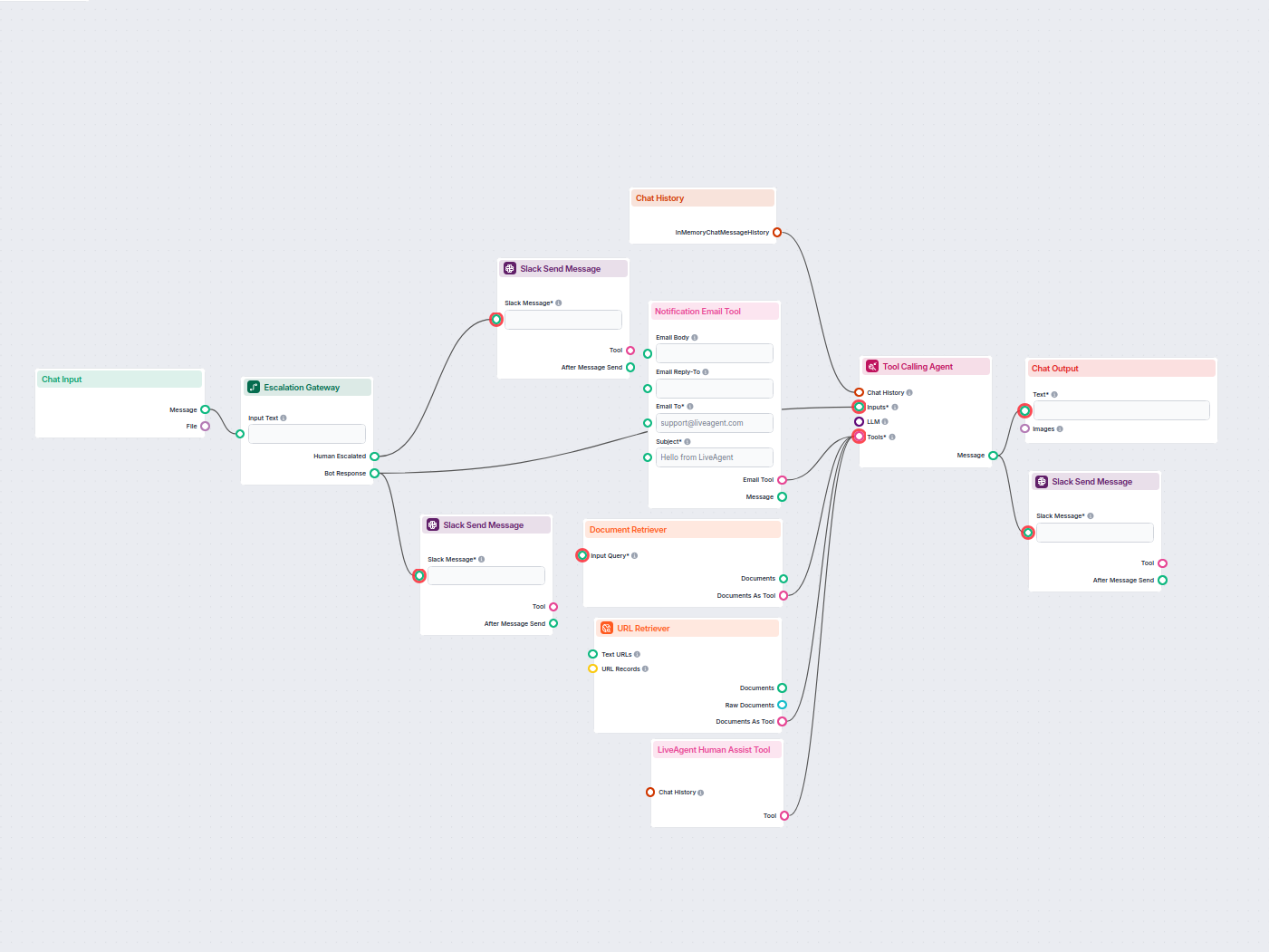
AI Chatbot with Slack Human Escalation
Deploy a smart customer support chatbot for LiveAgent that automatically answers visitor questions, retrieves knowledge base documents, and escalates to a human...
4 min read
Direct messages to either AI or human agents within your workflow, enabling smart escalation and smooth handovers.
Component description
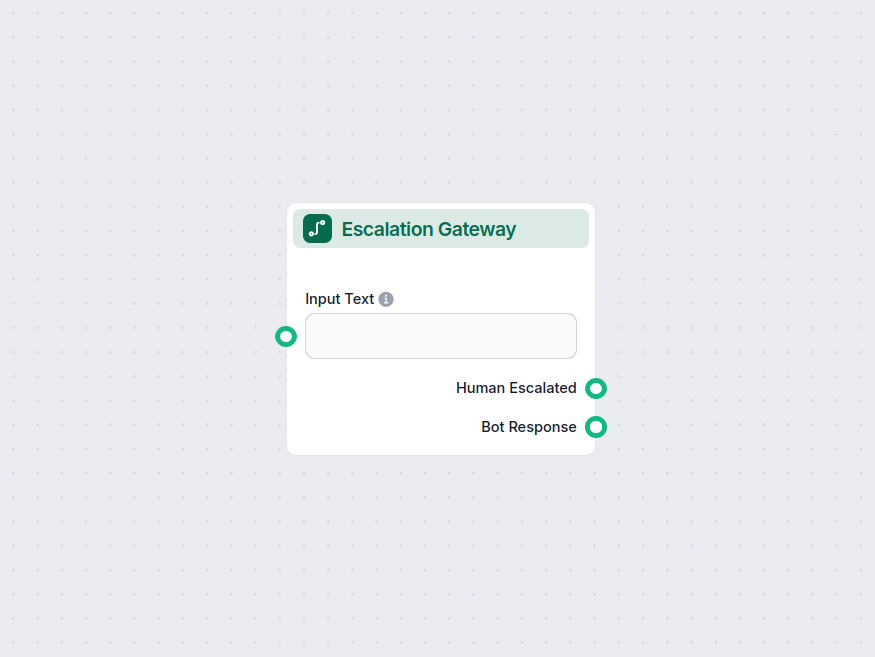
The Escalation Gateway is a flow component designed to intelligently route messages within an AI workflow based on escalation logic. It helps in managing the transition between automated AI responses and human agent intervention, ensuring that user queries are handled effectively and efficiently.
This component examines incoming messages and determines whether the conversation should continue with the AI or be escalated to a human agent. It keeps track of previous escalation events, enabling a seamless handover and a memory of when and why a human agent took over. This is especially useful in customer support or service automation scenarios where certain situations require human involvement.
The Escalation Gateway provides the following input parameters:
| Name | Type | Required | Description |
|---|---|---|---|
| Input Text | Message | No | The primary text input to be processed. |
| Default Escalation Type | String | Yes | Sets the default routing when no conditions are met. Options: “AI” or “Human”. Defaults to “AI”. |
The component offers two distinct outputs, allowing downstream nodes to handle messages accordingly:
| Output Name | Type | Description |
|---|---|---|
| Human Escalated | Message | Output when the message requires escalation to a human agent. |
| Bot Response | Message | Output when the message can be handled by the AI or bot. |
This component is essential for building robust, user-friendly AI workflows where both automation and human expertise are required.
To help you get started quickly, we have prepared several example flow templates that demonstrate how to use the Escalation Gateway component effectively. These templates showcase different use cases and best practices, making it easier for you to understand and implement the component in your own projects.
Deploy a smart customer support chatbot for LiveAgent that automatically answers visitor questions, retrieves knowledge base documents, and escalates to a human...
Enhance support automation and streamline your workflow with intelligent AI-to-human escalation.
Cookie Consent
We use cookies to enhance your browsing experience and analyze our traffic. See our privacy policy.