What Is the Webpage Content GAP Analysis Tool?
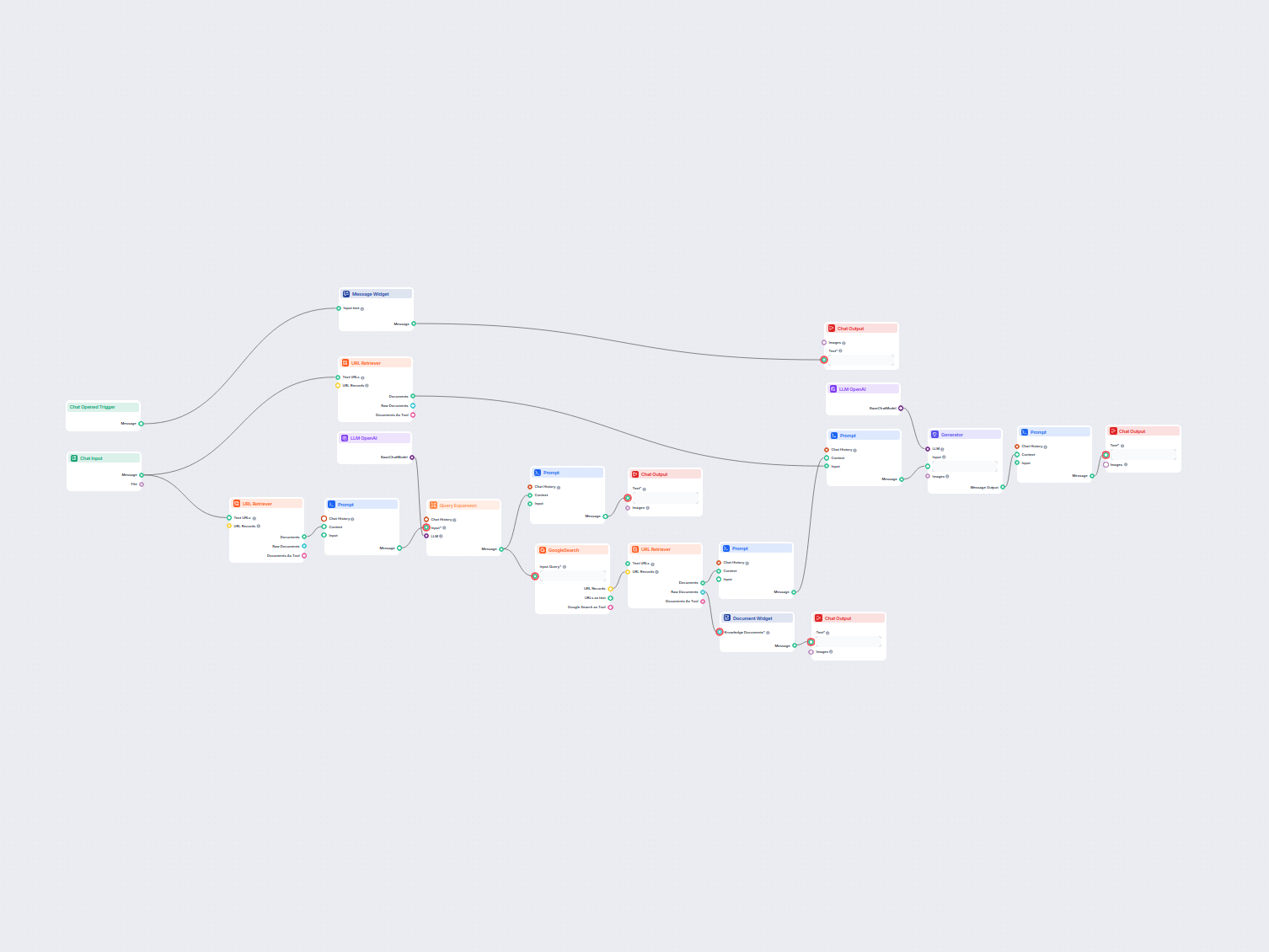
The Webpage Content GAP Analysis tool takes your page URL and a competitor URL and runs them through a three-stage AI pipeline to produce a structured, ready-to-use SEO improvement plan. It doesn’t offer generic SEO advice — it compares your actual headings and content against real competitor pages and outputs specific, actionable recommendations.
Enter your URL and a competitor URL. The tool handles the query expansion, the competitor comparison, and the structural cleanup. If the default output doesn’t match your workflow, the underlying flow can be adjusted.
What It Does
The tool runs three LLMs in sequence, each with a distinct responsibility:
- Query expansion — the first model takes your page content and generates up to 4 alternative phrasings of your target query, accounting for synonyms, common reformulations, and chat history context. This broadens the search surface used to find relevant competitor content and avoids the blind spots of single-query similarity search.
- SEO competitor comparison — the second model acts as an SEO specialist. It compares your page’s heading structure against the competitor page, identifies what the competitor does better, suggests an improved heading hierarchy for your page, and recommends 5–10 long-tail keywords per paragraph. All recommendations are specific to your content — no generic SEO theory.
- Structure organization — the third model takes the headings, sub-headings, and keyword buckets produced in the previous step and organizes them into a clean, logical hierarchy (H1 → H2 → H3). It groups related keyword clusters under the correct headings, flags duplicates and structural gaps, and outputs a ready-to-implement structure. It does not rewrite copy or invent missing information — structure only.
Ready to grow your business?
Start your free trial today and see results within days.
What You Get
- Expanded search queries — up to 4 alternative phrasings of your target query, formatted as a clean list, to surface a broader set of relevant competitor signals.
- Competitor comparison report — a specific breakdown of what your competitor’s page does better, with focus on heading keywords, structural patterns, and content coverage gaps.
- Improved heading structure — a suggested H1–H3 hierarchy for your page, built from the competitor analysis and keyword recommendations.
- Long-tail keyword buckets — 5–10 long-tail keyword suggestions per paragraph, grouped under the relevant heading.
- Clean, organized output — a final structured document with headings, sub-headings, and keyword buckets organized into a logical hierarchy, with duplicates removed and gaps flagged.
Who Is It For?
- SEO specialists who need a fast, structured competitor comparison without hours of manual research and heading audits.
- Content strategists building or revising page structures who want keyword-level guidance tied to specific sections, not general recommendations.
- Copywriters who need a clear heading hierarchy and keyword targets before writing or rewriting a page.
- Marketing teams managing multiple pages who need consistent, data-driven briefs for each URL without manual effort per page.
- Website owners who want to understand exactly where their page falls short compared to a specific competitor and what to do about it.
Join our newsletter
Get latest tips, trends, and deals for free.
Why Use the Webpage Content GAP Analysis Tool?
- Three specialized models, not one general one — each stage of the pipeline has a focused responsibility: query expansion, competitor comparison, and structure organization. The output is more precise than a single-prompt approach.
- Specific, not generic — the competitor comparison focuses on your actual headings and your actual competitor, not SEO best practices in the abstract.
- Keyword suggestions tied to structure — long-tail keywords are assigned to specific paragraphs, not listed as a flat keyword dump.
- Structure-only final output — the organization step never rewrites your copy or invents content. It only arranges what the analysis produced, so you stay in control of the actual writing.
- Flags what needs updating — if any structural elements depend on content that may change, the tool warns you so you know what to revisit.
- Fully adjustable — the flow can be modified to change how queries are expanded, which competitor signals are prioritized, or how the final structure is formatted to fit your content workflow.