


AI Brand Voice Generator
Create a distinctive and authentic brand voice instantly with our AI-powered Brand Voice Generator. This tool analyzes your brand's personality, values, and tar...
2 min read
AI
Branding
+3
Discover how to build an authentic, differentiated brand in the AI era using real expertise, clear positioning, and consistent delivery.
The AI era has fundamentally changed how brands are built. Five years ago, having a polished website and consistent social media presence gave you a competitive edge. Today, AI can generate that in minutes.
If you’re building a brand in 2026, you’re competing in an environment where:
So what actually differentiates brands now? Authenticity, specificity, and genuine value.
This guide walks you through the framework for building a brand that stands out in the AI era—one that’s rooted in real expertise, clear positioning, and consistent delivery.
Ten years ago, if you wanted to launch a business, you needed:
These gatekeepers meant that only serious, funded businesses could compete. There was friction. There was cost. This friction created differentiation.
Today, those gatekeepers are gone. A solo founder with $50/month in AI subscriptions can produce output that rivals a $500K/year marketing team.
The result: Surface-level differentiation is dead. You can’t win on polish alone anymore.
If everyone has access to the same tools, what separates winning brands from the noise?
None of these can be faked with AI. All of them require you to actually do the work.

Start your free trial today and see results within days.
Before you write a single piece of content or design a logo, you need absolute clarity on three things:
Your Core Expertise
Example: “I help B2B SaaS companies reduce customer acquisition cost through product-led growth” is clear. “I help businesses grow” is not.
Your Distinct Perspective
Example: “Most personal branding advice focuses on follower counts. I believe authority comes from deep expertise demonstrated consistently over time, not vanity metrics.”
Your Audience’s Specific Problem
Example: “Founders of 5-50 person SaaS companies who are tired of spending $50K/month on ads and want to build a product that sells itself.”
Exercise: Write these three things down in 2-3 sentences each. If you can’t, you’re not clear enough yet. Don’t move forward until you are.
Brands aren’t built in months. They’re built over years through consistent, high-quality presence.
The AI era actually makes consistency harder, not easier, because:
But consistency is still the lever that separates winners from the noise.
What Consistency Looks Like:
| Activity | Frequency | Why It Works |
|---|---|---|
| Publishing original insights | 2-4x per month | Builds authority and gives people a reason to follow you |
| Engaging with your audience | Daily | Creates relationships and shows you’re not just broadcasting |
| Shipping/delivering results | Ongoing | Proves your expertise is real, not theoretical |
| Refining your positioning | Quarterly | Keeps you sharp and your messaging current |
| Analyzing what works | Monthly | Lets you double down on what resonates |
The key insight: Consistency beats perfection. A mediocre piece of content published weekly will outperform a perfect piece published once a year.
This is where AI tools create a trap.
Because AI can generate polished, professional-sounding copy instantly, there’s a temptation to hide behind it. To sound like a “brand” rather than a person. To use corporate language and generic frameworks.
Don’t.
Authenticity is now a competitive advantage. Specifically:
The brands winning in the AI era aren’t the ones with the most polished content. They’re the ones where you feel like you’re learning from a real person who knows what they’re talking about.
This is the critical move: Use AI to amplify your authentic voice, not replace it.
The Rule: If it requires your unique expertise, perspective, or voice, you should do it (or heavily edit AI’s work). If it’s a mechanical task, AI can own it.
Get latest tips, trends, and deals for free.
Because AI has made content production frictionless, attention has become the scarce resource. People are drowning in content.
The antidote: Deep, specific, valuable content that actually solves a problem.
Instead of:
Create:
Instead of:
Create:
You can’t win everywhere. Pick 1-2 platforms where your audience actually is and go deep:
One deep channel beats five shallow channels every time.
The most efficient brands create content that serves multiple purposes:
Each piece builds on the last. You’re not starting from scratch every time.
“I help businesses succeed” is not a positioning. It’s a cop-out.
The brands winning right now are specific. They’ve chosen a niche and gone deep.
Fix: Define your audience so specifically that someone in that audience feels like you’re talking directly to them. If a random person reads your content and thinks “this isn’t for me,” that’s correct. That’s the point.
Follower count, likes, and impressions are not brand equity. They’re noise.
Real brand building metrics:
Fix: Stop obsessing over metrics you can’t control. Focus on building real relationships and delivering real value.
Your audience follows you for your perspective. If you’re publishing AI-generated content without significant editing, you’re training them to expect less from you.
Fix: Every piece of content should reflect your voice, your expertise, and your thinking. Use AI as a tool, not a shortcut.
You can’t build a brand by showing up when you feel like it. Consistency compounds.
One person publishing every week for a year will have more authority than someone publishing daily for two months then disappearing.
Fix: Commit to a sustainable cadence and stick to it. Better to publish weekly forever than daily for six months then quit.
The safest brand positioning is no positioning. But safe brands are forgettable.
The brands people remember are the ones with a distinct perspective. They believe something. They’re willing to defend it.
Fix: Develop a POV. What do you believe about your field that others don’t? What would you argue for? Start there.
In an era where technology is commoditized and tools are democratized, your brand is your moat.
A strong brand means:
The path is simple:
Do those four things for 12 months, and you’ll have a brand that stands out in the AI era.
The brands that will win aren’t the ones with the fanciest AI tools. They’re the ones with the clearest thinking and the most consistent execution.
That can be you. Start today.
Arshia is an AI Workflow Engineer at FlowHunt. With a background in computer science and a passion for AI, he specializes in creating efficient workflows that integrate AI tools into everyday tasks, enhancing productivity and creativity.

Leverage FlowHunt's AI tools to create consistent, high-quality brand content and automate your marketing workflows.
Create a distinctive and authentic brand voice instantly with our AI-powered Brand Voice Generator. This tool analyzes your brand's personality, values, and tar...
Generate creative, memorable, and unique brand names instantly with our AI-powered Brand Name Generator. Perfect for entrepreneurs, marketers, and businesses se...
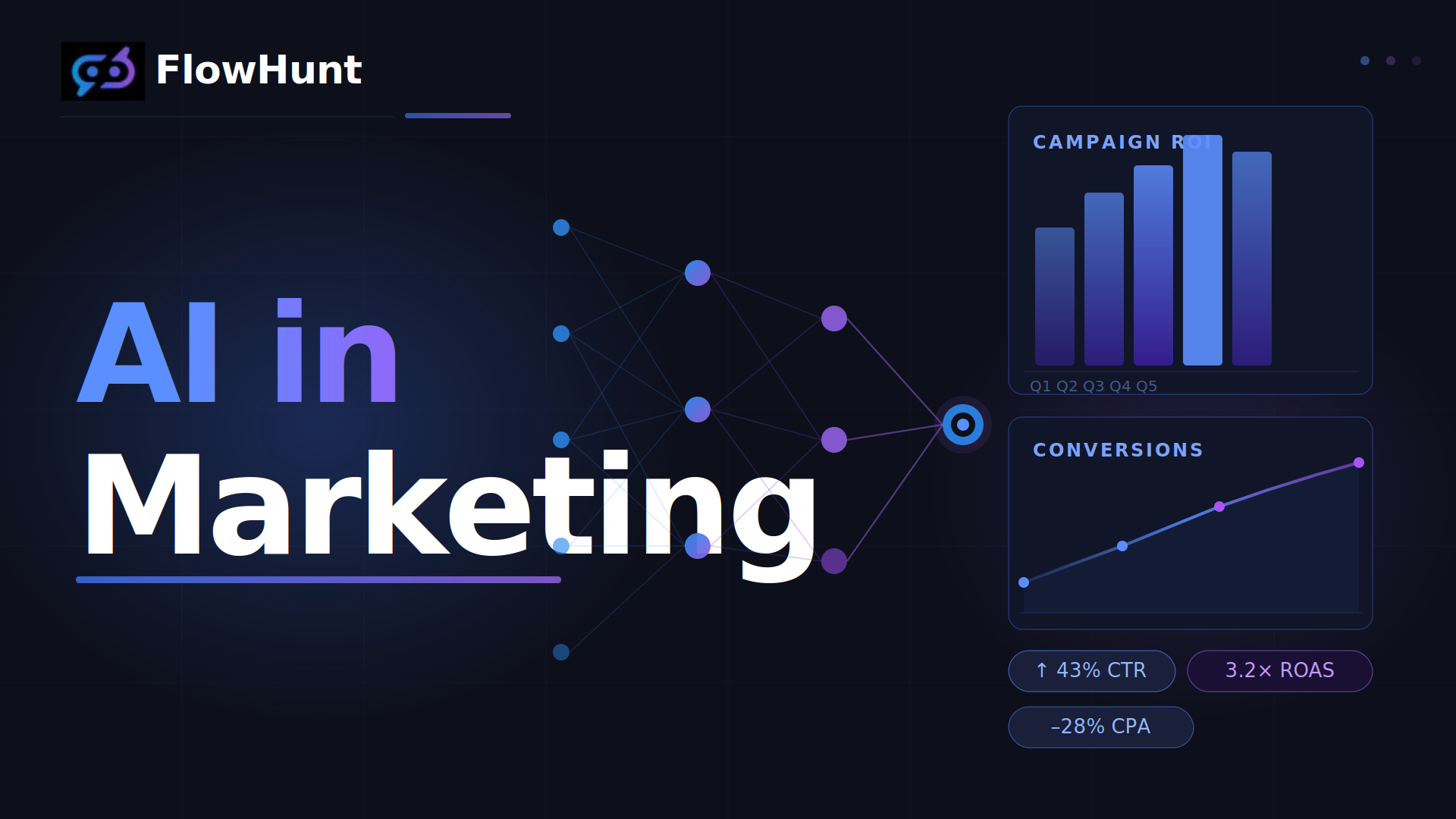
Discover how AI in marketing works, from marketing automation to AI-powered content and lead generation, with real use cases, tools, and strategies.
Cookie Consent
We use cookies to enhance your browsing experience and analyze our traffic. See our privacy policy.