



AI and Human Rights
Explore how Artificial Intelligence impacts human rights, balancing benefits like improved access to services with risks such as privacy violations and bias. Le...
8 min read
AI
Human Rights
+5
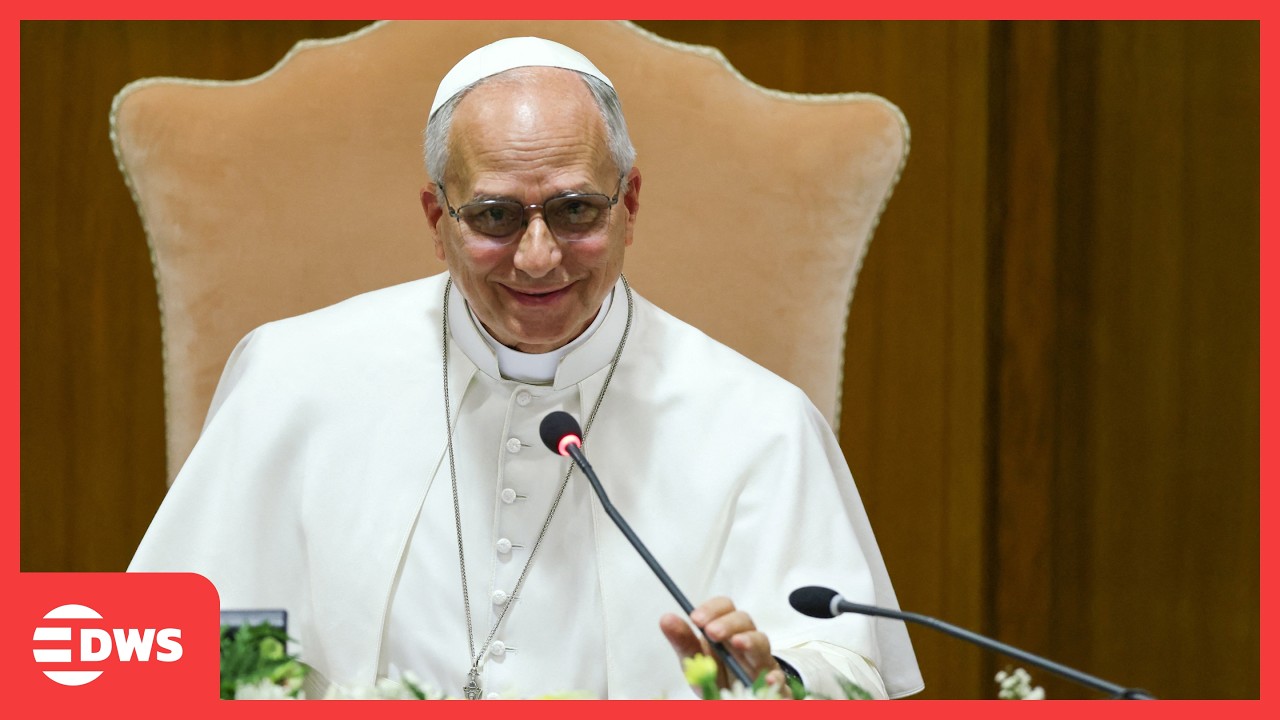
Pope Leo XIV’s first encyclical Magnifica Humanitas calls for AI to serve human dignity — not power, profit, or control. Here is what it says and why it matters for everyone building or using AI today.
On May 15, 2026 — the 135th anniversary of Rerum Novarum, the Church’s foundational text on labor and social justice — Pope Leo XIV signed Magnifica Humanitas , his first encyclical. Its subject: artificial intelligence and what it means to remain human in the age of algorithms.
This is not a text from the margins of the AI conversation. It arrives from one of the world’s oldest and most widely read moral authorities, at a moment when AI automation is reshaping how billions of people work, learn, communicate, and are governed. Whether you build AI systems, use them, or simply live in a world shaped by them, the encyclical asks questions worth sitting with.
Here is what it says — and why it matters beyond religious circles.

The encyclical opens from a clear premise: technology is never neutral. Every AI system carries within it the goals, assumptions, and interests of those who design it, fund it, regulate it, and deploy it.
That means the important question is not what can AI do? The important question is: does AI help us become more human, or does it reduce us to data points, performance metrics, and objects of management?
Pope Leo is direct: AI must serve the human person. The human person must not serve algorithms, markets, or power.
The encyclical draws on two contrasting biblical images to frame its argument.
The first is the Tower of Babel — a monument to technical capability driven not by wisdom but by pride and the desire for control. The people who built it wanted to reach greatness on their own terms, without humility. The result was not unity but confusion and fragmentation. The Pope uses this image to warn against an AI development culture that pursues capability at any cost, concentrating power without accountability.
The second image is the rebuilding of Jerusalem — where the city is not the project of a single powerful architect. It is built by families, craftspeople, priests, elders, and ordinary workers. Everyone has a role. The work serves the life of the community, not the glory of any one group.
The contrast is simple and pointed: we can build with AI like a tower of power, or like a city where every person has a place.

Start your free trial today and see results within days.
One of the encyclical’s most repeated themes is the unconditional nature of human dignity. A person has dignity not because they are productive, efficient, healthy, or economically useful. A person has dignity simply because they are a person — including when they are vulnerable, elderly, sick, poor, or struggling.
This matters enormously in the context of AI. Autonomous AI systems can appear impressively capable. They answer questions, generate content, analyze data, and mimic language convincingly. But they have no body, no conscience, no personal responsibility, no experience of suffering, and no capacity for love. They cannot be equated with persons, and they cannot be the final judges of human worth.
When AI systems score, rank, hire, approve, and reject people, that logic must be resisted — or at minimum, made accountable to human review.
The encyclical identifies six areas where AI poses specific risks to human dignity and the common good:
Work. AI automation can increase productivity and remove dangerous tasks from human hands. But it can also displace workers, reduce the value of human labor, and enable unprecedented surveillance of employees. The encyclical insists that work is not just income — it is a space of dignity, creativity, relationship, and service. Technology should help people work better, not reduce them to interchangeable units in a system.
Truth. AI can generate synthetic images, fabricated voices, and convincing disinformation at scale. When the boundary between the real and the fabricated becomes impossible to navigate, trust collapses — in institutions, in journalism, in each other. The encyclical treats the erosion of shared truth as a profound social and spiritual threat.
Freedom. Algorithmic systems can collect data about behavior, predict responses, and subtly nudge attention in ways that people barely notice. This is not neutral. It shapes what people believe, what they want, and how they vote. The encyclical frames this as a direct threat to genuine human freedom and self-determination.
Children and the young. AI-powered platforms can support learning, creativity, and connection. They can also drive addiction, loneliness, cyberbullying, and exploitation. The document calls for special protection of young people from systems designed to maximize engagement at the cost of wellbeing.
War. Autonomous weapons and algorithmic decision-making are accelerating the tempo and distance of military action, reducing the space for human judgment and accountability. The encyclical warns that in a culture that already normalizes power as a problem-solving tool, AI-enabled warfare is especially dangerous.
Inequality. The economic benefits of advanced AI are concentrated in wealthy nations and corporations. The environmental costs, exploitative labor in data annotation and hardware production, and disruptions from automation fall disproportionately on poorer regions. The document names this as a structural injustice.
Get latest tips, trends, and deals for free.
Pope Leo calls for legal frameworks that protect justice and the common good. AI systems that affect people’s lives — in hiring, credit, healthcare, policing, or access to services — must be transparent, explainable, and contestable. Where an algorithm shapes a person’s life, there must be a human being accountable for that outcome.
But the encyclical does not stop at law. Regulation sets floors, not ceilings. What it calls for is a culture of responsibility — among developers, executives, policymakers, educators, parents, and users. Everyone who makes choices about how AI workflows are built or deployed participates in shaping the kind of society those systems create.
A significant portion of the text focuses on education. Teaching people to use new tools is not enough. Teaching people when not to use them — and why — is just as important.
The qualities the encyclical highlights are striking in their unfashionability: the patience to read a long text, the discipline to verify a claim before sharing it, the ability to distinguish between an argument and an appeal to emotion, the willingness to stay in difficult conversations with real people rather than retreating to algorithmically curated comfort.
Schools, the document argues, should not primarily produce technically skilled workers. They should produce people capable of truth, freedom, responsibility, and coexistence. A highly automated society without those qualities is not more advanced. It is more fragile.
Returning to the tradition of Rerum Novarum, the encyclical insists that human labor is not merely an economic input. Work is where people exercise creativity, build relationships, contribute to something larger than themselves, and affirm their dignity in the world.
AI that transforms work into constant surveillance, interchangeable micro-tasks, and pressure toward inhuman efficiency may produce more output while hollowing out the human experience of contributing. That is a loss even if the GDP numbers improve.
The final section connects AI to war and peace. The Pope warns against what he calls a culture of power — one that treats force as a normal and natural response to conflict. In the AI era, this logic becomes more dangerous because decision-making accelerates and grows more distant from the actual human faces affected.
Against this, the encyclical proposes a civilization of love — not as a slogan but as a practical agenda: disarm the language of enemies, restore dialogue, build justice, listen to those who have been harmed, and strengthen the institutions and habits of diplomacy.
Magnifica Humanitas is not a technical document. It does not mandate specific architectures or governance structures. What it does is insist on a frame: the purpose of AI is not to maximize efficiency, profit, or power. Its purpose is to serve every human person — including, especially, those with the least power in the system.
For those building AI systems, AI agents , and AI workflows that touch real people’s lives, the encyclical offers three practical questions worth returning to:
Who benefits and who bears the cost? If the benefits of your AI system flow upward and the risks fall on workers, users, or communities with less power — that asymmetry deserves naming and addressing.
Is there a human accountable for this outcome? Algorithmic outputs that affect people’s access to jobs, healthcare, credit, or opportunity must have a human being who can explain, review, and if necessary reverse the decision.
Does this make the person more or less able to exercise genuine judgment? AI that replaces human thinking in high-stakes situations — rather than informing it — moves in the wrong direction.
This article is a condensed interpretation, not a translation or replacement of the full text. The encyclical is substantial, dense with historical and theological reference, and worth reading in full — including by those who do not share the Pope’s religious tradition.
The official document is available directly from the Vatican:
Magnifica Humanitas — Full text at Vatican.va
The title itself is a declaration. Magnifica Humanitas — the magnificent humanity. In a moment when the loudest voices in AI often speak of intelligence as something to be engineered, optimized, and eventually surpassed, that title is worth taking seriously.
Viktor Zeman is a co-owner of QualityUnit. Even after 20 years of leading the company, he remains primarily a software engineer, specializing in AI, programmatic SEO, and backend development. He has contributed to numerous projects, including LiveAgent, PostAffiliatePro, FlowHunt, UrlsLab, and many others.

Explore how Artificial Intelligence impacts human rights, balancing benefits like improved access to services with risks such as privacy violations and bias. Le...
The Singularity in Artificial Intelligence is a theoretical future point where machine intelligence surpasses human intelligence, triggering rapid, unforeseeabl...
Dive into Dario Amodei’s interview on the Lex Fridman Podcast as he discusses AI scaling laws, predictions for human-level intelligence by 2026-2027, power conc...
Cookie Consent
We use cookies to enhance your browsing experience and analyze our traffic. See our privacy policy.