



Deep Learning
Deep Learning is a subset of machine learning in artificial intelligence (AI) that mimics the workings of the human brain in processing data and creating patter...
3 min read
Deep Learning
AI
+5
A Deep Belief Network (DBN) is a sophisticated generative model utilizing deep architectures and Restricted Boltzmann Machines (RBMs) to learn hierarchical data representations for both supervised and unsupervised tasks, such as image and speech recognition.
A Deep Belief Network (DBN) is a sophisticated generative model that utilizes a deep architecture to learn hierarchical representations of data. DBNs are composed of multiple layers of stochastic latent variables, primarily using Restricted Boltzmann Machines (RBMs) as their building blocks. These networks are designed to address challenges faced by traditional neural networks, such as slow learning rates and getting stuck in local minima due to poor parameter selection. DBNs excel in both unsupervised and supervised learning tasks, making them versatile tools for various applications in deep learning.
DBNs operate through two primary phases: pre-training and fine-tuning.
DBNs are particularly adept at handling tasks that involve high-dimensional data or situations where labeled data is scarce. Notable applications include:
Consider the following example using Python, which demonstrates the training and evaluation of a DBN on the MNIST dataset, a benchmark dataset for image classification tasks:
import numpy as np
from sklearn.datasets import fetch_openml
from sklearn.model_selection import train_test_split
from sklearn.preprocessing import StandardScaler
from sklearn.neural_network import BernoulliRBM
from sklearn.pipeline import Pipeline
from sklearn.linear_model import LogisticRegression

# Load dataset
mnist = fetch_openml('mnist_784', version=1)
X, y = mnist['data'], mnist['target']

# Split dataset into training and test sets
X_train, X_test, y_train, y_test = train_test_split(X, y, test_size=0.2, random_state=42)

# Preprocess data by scaling
scaler = StandardScaler()
X_train_scaled = scaler.fit_transform(X_train)
X_test_scaled = scaler.transform(X_test)

# Initialize the RBM model
rbm = BernoulliRBM(n_components=256, learning_rate=0.01, n_iter=20)

# Initialize the logistic regression model
logistic = LogisticRegression(max_iter=1000)

# Create a pipeline for feature extraction and classification
dbn_pipeline = Pipeline(steps=[('rbm', rbm), ('logistic', logistic)])

# Train the DBN
dbn_pipeline.fit(X_train_scaled, y_train)

# Evaluate the model
dbn_score = dbn_pipeline.score(X_test_scaled, y_test)
print(f"DBN Classification score: {dbn_score}")
This Python code illustrates how to employ a DBN for image classification using the MNIST dataset. The pipeline combines an RBM for feature extraction with logistic regression for classification, showcasing the practical application of DBNs in machine learning tasks.
Deep Belief Networks (DBNs) and Their Applications
Deep Belief Networks (DBNs) are a class of deep learning models that have gained significant attention for their ability to model complex probability distributions. These networks are composed of multiple layers of stochastic, latent variables and are typically trained using unsupervised learning techniques. Here is a summary of some key scientific papers on DBNs:
Learning the Structure of Deep Sparse Graphical Models
Distinction between features extracted using deep belief networks
Feature versus Raw Sequence: Deep Learning Comparative Study on Predicting Pre-miRNA
These papers reflect the versatility and ongoing evolution of DBNs, from their structural learning processes to their application in feature extraction and sequence prediction tasks. They underscore the importance of DBNs in advancing machine learning techniques and their adaptability to various data representations.
Start building AI solutions using advanced models like Deep Belief Networks. Experience FlowHunt's seamless platform for your machine learning needs.
Deep Learning is a subset of machine learning in artificial intelligence (AI) that mimics the workings of the human brain in processing data and creating patter...
A Bayesian Network (BN) is a probabilistic graphical model that represents variables and their conditional dependencies via a Directed Acyclic Graph (DAG). Baye...
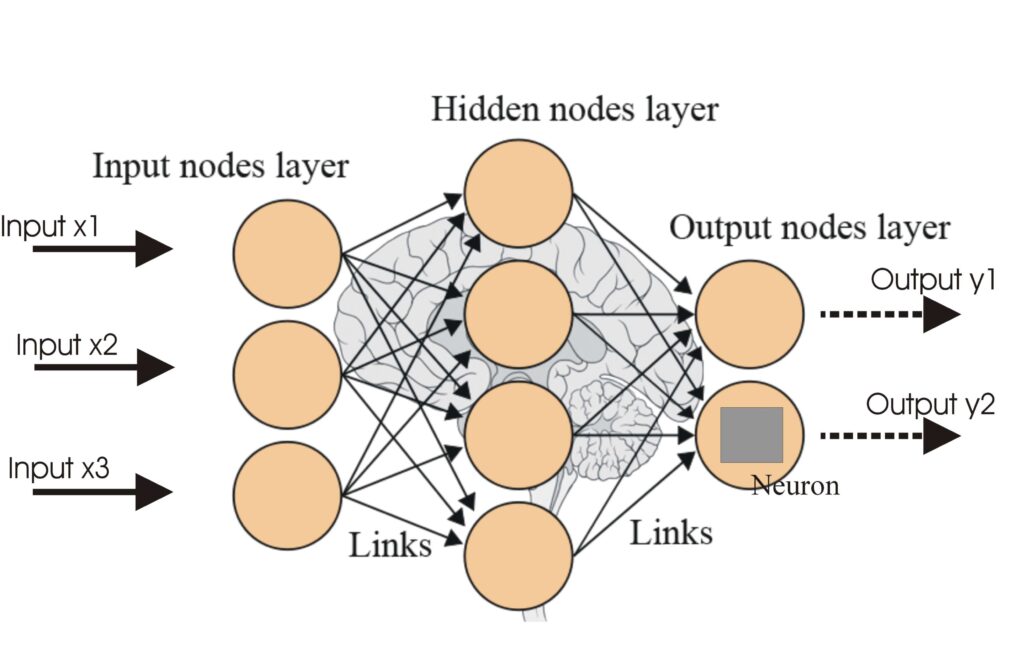
A neural network, or artificial neural network (ANN), is a computational model inspired by the human brain, essential in AI and machine learning for tasks like ...
Cookie Consent
We use cookies to enhance your browsing experience and analyze our traffic. See our privacy policy.