


APIMatic Validator MCP Integration
Integrate FlowHunt with the APIMatic Validator MCP Server to automate OpenAPI validation workflows. Effortlessly validate OpenAPI 2.0 and 3.0 specifications in ...
4 min read
AI
APIMatic
+4
Validate OpenAPI 2.0 and 3.0 specs automatically in your developer workflows using the APIMatic Validator MCP Server for robust, standards-compliant APIs.
The APIMatic Validator MCP Server is a Model Context Protocol (MCP) server designed to validate OpenAPI 2.0 and 3.0 specification files using the APIMatic API. By acting as a bridge between AI assistants and the APIMatic validation service, it enables developers and tools to automate the process of verifying API specifications in both JSON and YAML formats. This integration streamlines workflows by providing LLMs and development platforms with the ability to submit OpenAPI files for validation and retrieve comprehensive summaries, helping ensure API documentation quality and compliance. The server is tailored for seamless MCP-based integrations, making it easy to incorporate into modern developer environments and AI-powered tools.
No prompt templates are documented or mentioned in the repository.

Start your free trial today and see results within days.
No explicit MCP resources are listed or described in the repository documentation.
Get latest tips, trends, and deals for free.
"@apimatic/apimatic-validator-mcp@latest"
mcpServers configuration to include:{
"apimatic-validator": {
"command": "npx",
"args": ["@apimatic/apimatic-validator-mcp@latest"]
}
}
Use environment variables for the APIMatic API key:
{
  "apimatic-validator": {
    "inputs": {
      "apiKey": "${APIMATIC_API_KEY}"
    },
    "env": {
      "APIMATIC_API_KEY": "your-api-key-here"
    }
  }
}
"@apimatic/apimatic-validator-mcp@latest"
{
  "mcpServers": {
    "apimatic-validator": {
      "command": "npx",
      "args": ["@apimatic/apimatic-validator-mcp@latest"]
    }
  }
}
Use environment variables:
{
  "mcpServers": {
    "apimatic-validator": {
      "env": {
        "APIMATIC_API_KEY": "your-api-key-here"
      }
    }
  }
}
"@apimatic/apimatic-validator-mcp@latest"
{
  "mcpServers": {
    "apimatic-validator": {
      "command": "npx",
      "args": ["@apimatic/apimatic-validator-mcp@latest"]
    }
  }
}
{
  "apimatic-validator": {
    "env": {
      "APIMATIC_API_KEY": "your-api-key-here"
    }
  }
}
"@apimatic/apimatic-validator-mcp@latest"
{
  "mcpServers": {
    "apimatic-validator": {
      "command": "npx",
      "args": ["@apimatic/apimatic-validator-mcp@latest"]
    }
  }
}
{
  "apimatic-validator": {
    "env": {
      "APIMATIC_API_KEY": "your-api-key-here"
    }
  }
}
Using MCP in FlowHunt
To integrate MCP servers into your FlowHunt workflow, start by adding the MCP component to your flow and connecting it to your AI agent:
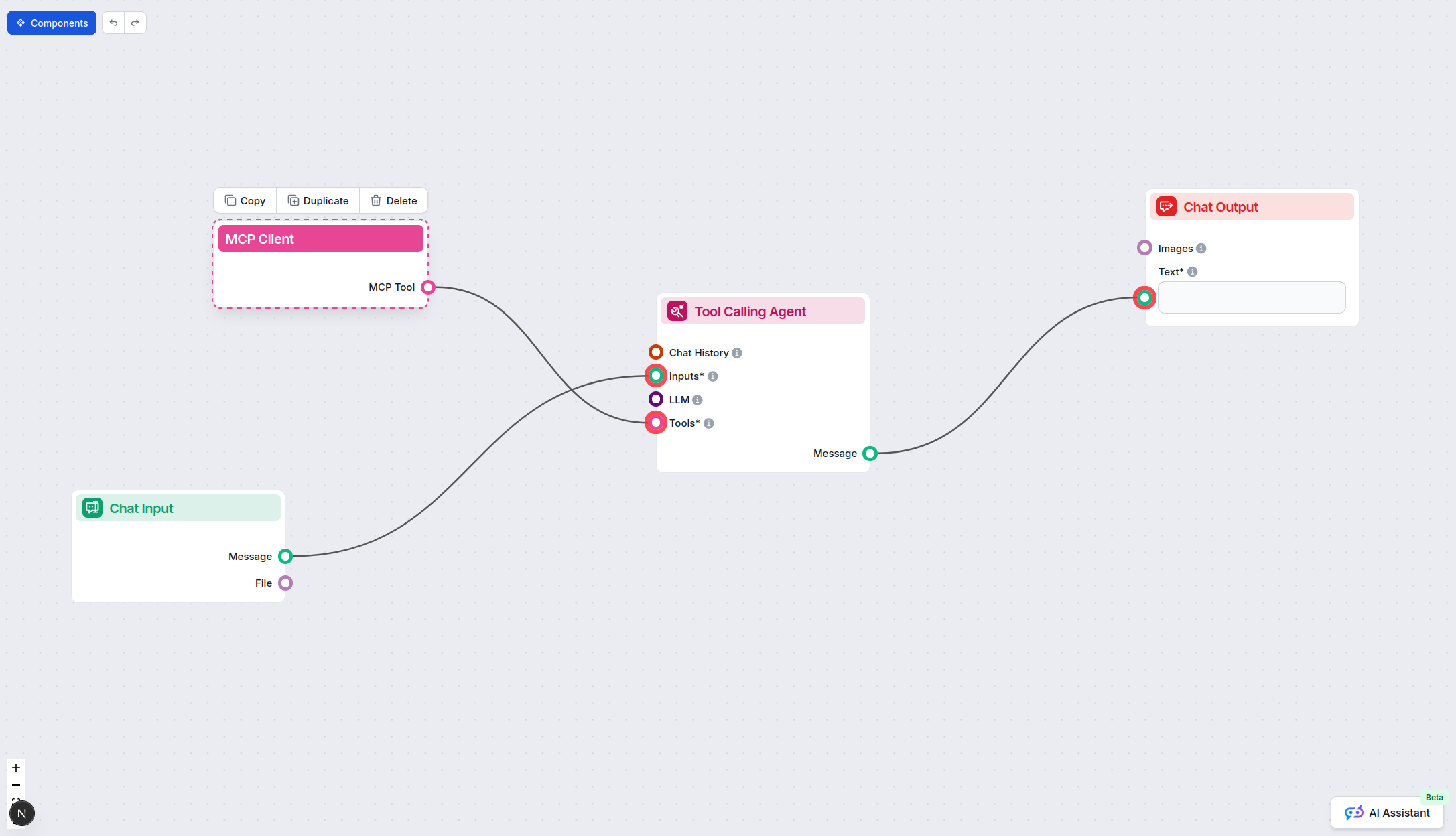
Click on the MCP component to open the configuration panel. In the system MCP configuration section, insert your MCP server details using this JSON format:
{
  "apimatic-validator": {
    "transport": "streamable_http",
    "url": "https://yourmcpserver.example/pathtothemcp/url"
  }
}
Once configured, the AI agent is now able to use this MCP as a tool with access to all its functions and capabilities. Remember to change “apimatic-validator” to whatever the actual name of your MCP server is and replace the URL with your own MCP server URL.
| Section | Availability | Details/Notes |
|---|---|---|
| Overview | ✅ | Provides OpenAPI validation via APIMatic API |
| List of Prompts | ⛔ | No prompt templates documented |
| List of Resources | ⛔ | No explicit resources listed |
| List of Tools | ✅ | OpenAPI validation tool |
| Securing API Keys | ✅ | Environment variable documented |
| Sampling Support (less important in evaluation) | ⛔ | Not mentioned |
Based on the above, the APIMatic Validator MCP Server offers basic but essential MCP integration for OpenAPI validation, with good setup instructions and strong security practices for API keys. However, it lacks documentation on prompt templates, resources, and sampling/roots support, which limits advanced MCP features. It is a solid, focused tool for its intended purpose.
| Has a LICENSE | ⛔ |
|---|---|
| Has at least one tool | ✅ |
| Number of Forks | 9 |
| Number of Stars | 3 |
My rating: 4/10.
The APIMatic Validator MCP Server is practical and clearly documented for setup and API validation, but lacks advanced MCP features and broader community adoption. It’s a focused utility for OpenAPI validation within MCP-enabled environments.
Enhance your API development pipeline with the APIMatic Validator MCP Server. Ensure quality and compliance by integrating automated spec validation into your workflows.
Integrate FlowHunt with the APIMatic Validator MCP Server to automate OpenAPI validation workflows. Effortlessly validate OpenAPI 2.0 and 3.0 specifications in ...

The OpenAPI Schema Explorer MCP Server enables efficient, structured access to OpenAPI/Swagger specifications as MCP Resources, bridging AI assistants and devel...
The OpenAPI MCP Server connects AI assistants with the ability to explore and understand OpenAPI specifications, offering detailed API context, summaries, and e...
Cookie Consent
We use cookies to enhance your browsing experience and analyze our traffic. See our privacy policy.