6 Types of Blog Posts That Need AI Improvement Most (With Before/After Examples)
Not every blog post needs the same fix. See the six specific post types where blog content optimization AI delivers the fastest results, with before/after examples for each.
Not every underperforming blog post has the same problem, and so it doesn’t need the same fix. A post stuck on page two of Google needs a different intervention than one already getting plenty of traffic but converting none of it. Treating every post the same way wastes time on the posts that needed more and over-corrects on the ones that needed less.
Blog content optimization works the best when it’s aimed at the specific problem a post actually has. Here are six post types where that targeted approach shows up clearly, with a before/after look at what actually changes in each.
Post Type 1: ‘Almost Ranking’ Posts (Position 11–20)
The problem: The post ranks, just not high enough. This is usually the single highest-leverage fix available on a blog, because the page already has some authority behind it.
Why it matters so much: The drop-off between page one and page two of Google is severe. Backlinko’s analysis of search click data found that the top 3 organic results capture 54.4% of all clicks, while only 0.63% of searchers ever click through to page two (Backlinko
).
Before: A post ranking at position 13 with a heading structure that loosely covers the topic, no clear match to the specific phrasing users search for, and a handful of internal links pointing to it.
After: The same post with headings rewritten to mirror actual search intent, expanded sections closing the gaps a top-10 competitor covers that it doesn’t, and tightened internal linking from related pages.
This is exactly the kind of gap a Webpage Content GAP Analysis
is built to surface. It compares your page’s heading structure directly against a specific competitor and recommends the long-tail keywords and structure changes needed to close the distance.
Post Type 2: High-Traffic Posts with Low Conversion
The problem: Plenty of visitors, no downstream impact. At the end of the day, the blog’s purpose is to generate new leads who eventually turn to customers. The traffic numbers may look fine on the dashboard, but the end goal isn’t met.
Why it matters so much: This is precisely the gap HubSpot’s own historical optimization project targeted. Rather than chasing more traffic, HubSpot focused on improving the view-to-lead conversion rate of posts that already had high traffic, and more than doubled the monthly leads generated by the posts they optimized (HubSpot
).
Before: A post with strong monthly traffic, a generic CTA buried at the bottom, and no clear next step offered anywhere in the body of the article.
After: The same post with a CTA matched to where readers actually are in their decision, supporting sections that build toward that action instead of just informing, and formatting that surfaces the next step earlier for readers who don’t scroll to the bottom.
Ready to grow your business?
Start your free trial today and see results within days.
Post Type 3: Posts with Outdated Statistics and Data
The problem: The core argument of the post is still sound, but the numbers backing it up are years old, quietly undermining credibility even when nothing else is wrong.
Why it matters so much: This isn’t a rare edge case. A study scanning 6,751 claims across 938 blog posts found that posts under a year old carried out-of-date data in only 2.3% of their cited statistics, but by two to three years old, that figure rose to 13.1%, almost six times higher (LiquiChart
). Almost a quarter of posts that cite any data at all were already citing numbers two or more years old.
Before: A post citing a 2019 industry survey to support its main claim, with the source link now dead or pointing to a page that no longer contains the original number.
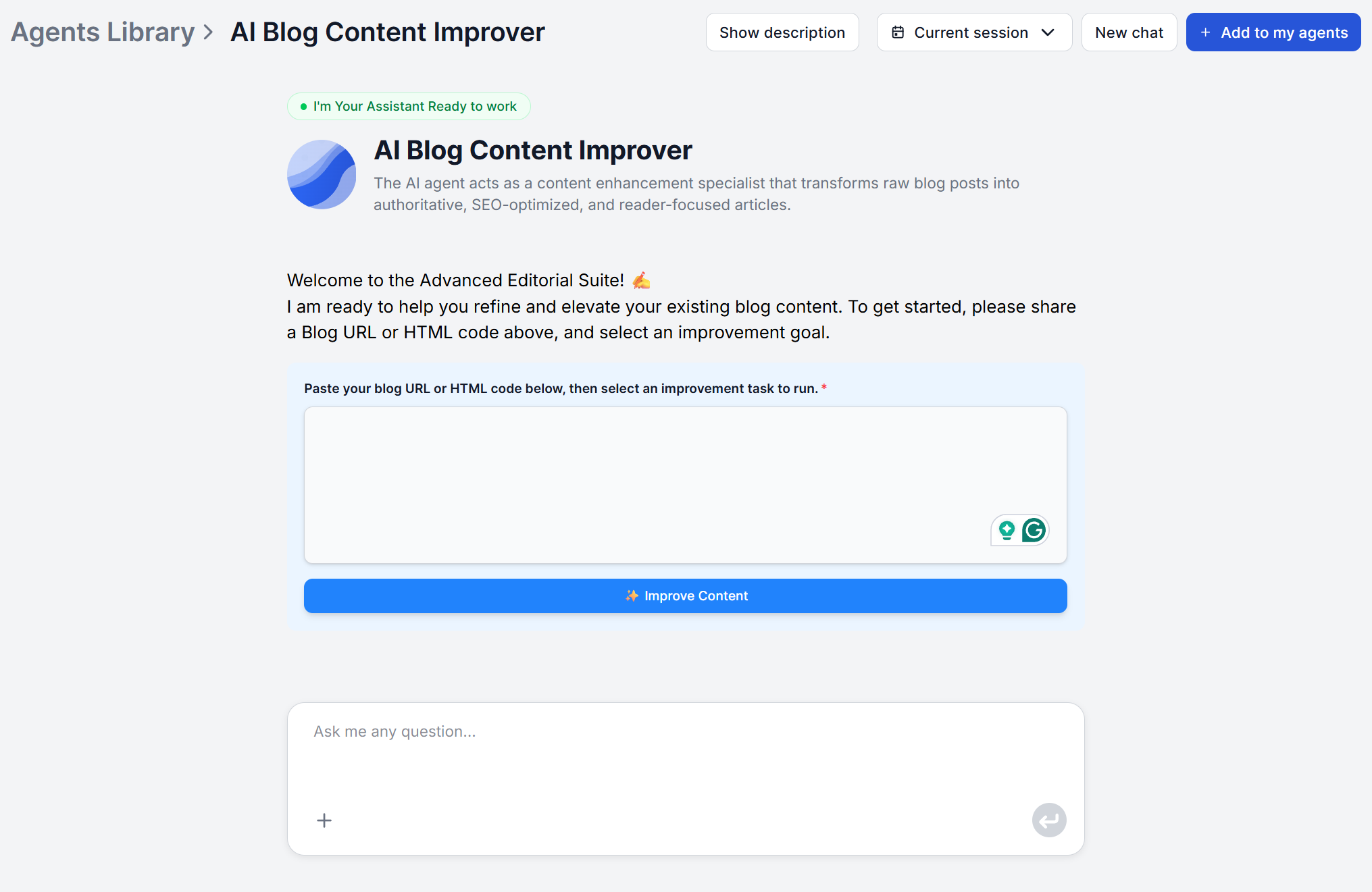
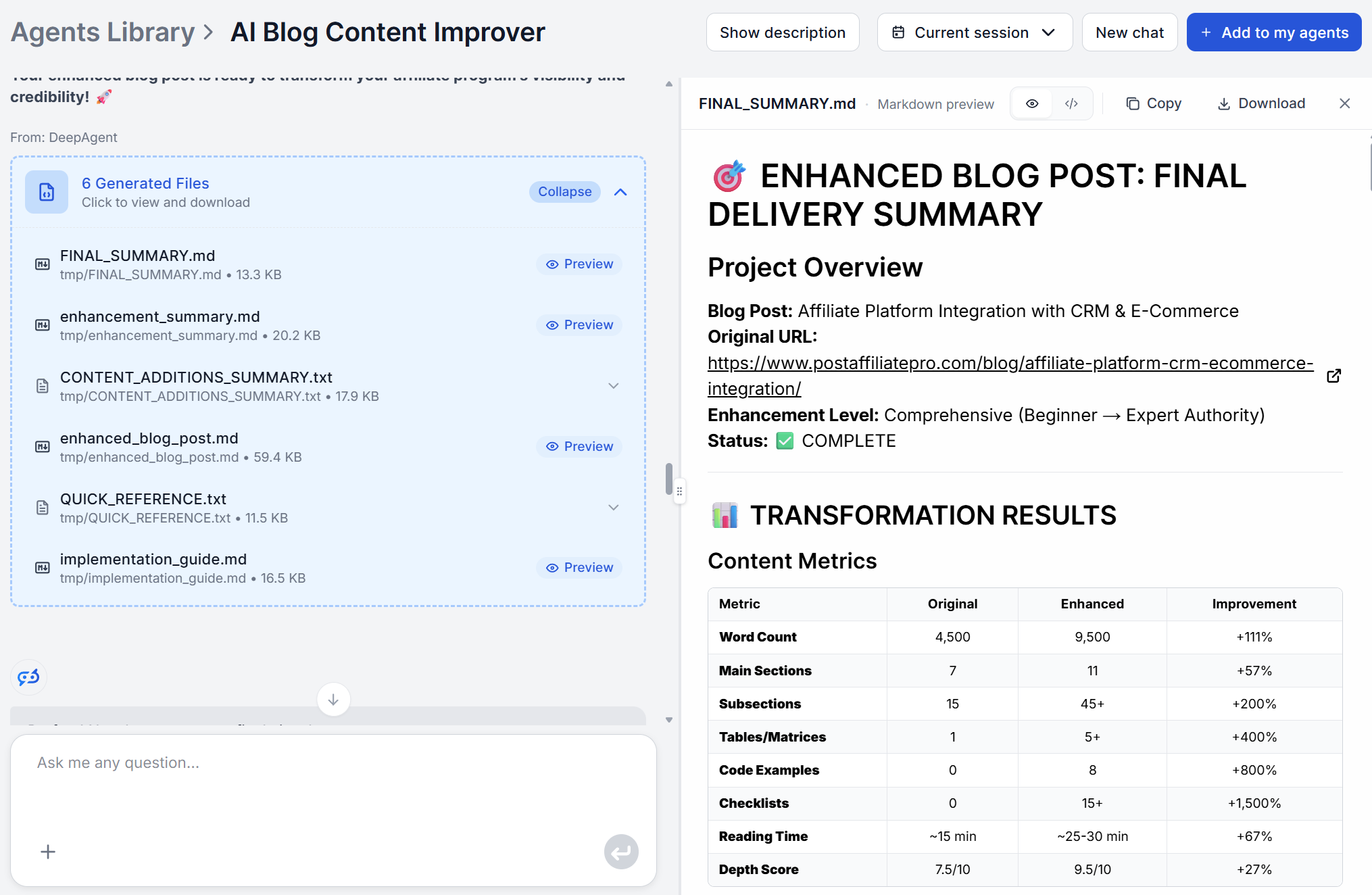
After: The same claim backed by current data from a live, verifiable source, found and swapped in automatically. This is precisely what the Research & Verification step of the Blog Improver Agent
does. It cross-references the existing content against live sources to catch outdated data and dead references before rewriting around them.
Post Type 4: Thin Content with Sections Under 200 Words
The problem: The post covers the right topic and the right headings, but individual sections are too shallow to actually satisfy the reader or compete with more thorough pages.
Why it matters so much: Thin sections are one of the most common reasons a structurally sound post underperforms.
Before: A post with the correct H2s for the topic, but two or three sections that are a single 100-word paragraph gesturing at the subject instead of actually covering it.
After: Those same sections expanded with the explanations, examples, and context they were missing. Contextual enrichment, or in other words adding relevant background and depth wherever the original was too thin, is one of the five things the Blog Improver Agent fixes on every run, without touching the sections that were already sufficient.
Join our newsletter
Get latest tips, trends, and deals for free.
Post Type 5: Posts Outranked by a Direct Competitor
The problem: You know exactly who’s beating you for a keyword. The fix isn’t generic SEO advice, it’s a direct comparison against that specific page.
Why it matters so much: Generic “improve your SEO” guidance doesn’t tell you what your competitor actually did better. A structured, page-to-page comparison does.
Before: Your page and a competitor’s page targeting the same keyword, with no clear view of which specific headings, subtopics, or long-tail terms the competitor covers that yours is missing.
After: A Webpage Content GAP Analysis
run against that exact competitor URL, which runs your page through a three-stage pipeline — query expansion to broaden the search surface, a direct heading-and-content comparison against the competitor, and a final structure pass that organizes the resulting keyword recommendations into a clean H1–H3 hierarchy you can hand to a writer or feed straight into an AI Blog Improver pass.
Post Type 6: Old Pillar Content That No Longer Covers the Topic Fully
The problem: The post used to be the definitive resource on its topic, but the topic has grown since it was published, and the post hasn’t grown with it.
Why it matters so much: Pillar pages carry disproportionate weight in a site’s structure. Internal links, backlinks, and topical authority tend to concentrate on them, so letting one go stale has a wider blast radius than an ordinary post falling behind.
Before: A pillar post from a couple of years ago that still ranks reasonably well but is missing entire subtopics that have since become standard parts of the conversation, with a structure too shallow for how the topic is now searched.
After: There are two possible fixes. If the structure and topic are still sound, the result would be a substantially expanded version with new sections added where the topic has moved on, and existing ones enriched and re-verified. Alternatively, if the topic has shifted so far that the original structure can’t reasonably hold the new material, it’s better to create a fresh piece built from the ground up with the AI Blog Writer
, which researches and writes a new long-form article from a topic rather than an existing draft.
How to Identify Which Posts Need Improvement The Most
Especially with larger blog libraries, even deciding what pieces of content to tackle first easily becomes a daunting task. Here are a couple signals you should focus on when auditing your existing cotent:
Pull your ranking and traffic data from Google Search Console to flag posts in the 11–20 position range and posts with a visible traffic decline over the past 6–12 months.
Check conversion data for your highest-traffic posts. Don’t focus just on the page views, because a post can look successful on a traffic report and still not generate any leads.
Scan for citation age in older posts. Anything referencing statistics, studies, or “as of [year]” language more than a year or two old is worth a second look regardless of the traffic trend.
Run a competitive comparison with a Webpage Content GAP Analysis
wherever you know the specific competitor outranking you, so the fix is based on an actual gap rather than general SEO instinct.
Flag pillar content separately from ordinary posts. Its outsized role in your site structure means it should get priority even when the decline looks modest.
Used together, these signals sort a backlog of “posts that seem fine but aren’t” into six specific problems — and six specific, much faster fixes than a rewrite.
Frequently asked questions
Look at whether the post still has a usable foundation. Does it have any backlinks or indexing history, is the topic still relevant, and is the core structure sound even if the content inside it is thin or stale? If yes, it's a candidate for improvement. If the topic itself is dead, the product it describes is discontinued, or the post was never built around what the keyword actually needs, it's easier to retire it or replace it with new content than to improve it.
There's no universal number, since it depends on your site's overall traffic and the commercial value of the keyword. Look at posts that used to get meaningfully more traffic than they do now, or posts targeting high-intent keywords regardless of current volume. A page ranking for a high-value keyword at position 15 can be worth improving even with modest current traffic, because the upside from reaching page one is disproportionate.
By default, the Blog Improver Agent is built to run one article at a time. If you're working through a large backlog, simply open the agent editor and switch to the Batch tab. Then provide a list of the URLs to have the agent run them one by one automatically.You need a FlowHunt subscription to access batch processing.
It varies with crawl frequency, competition, and how substantial the update is. Backlinko's own content relaunch case study saw a 260.7% traffic increase in just 14 days, but that result combined a content refresh with active promotion and outreach, not the rewrite alone. Without a promotion push, expect the timeline to run closer to several weeks to a few months as search engines recrawl and reassess the page.
No, keep the same URL. The entire advantage of improving an existing post over writing a new one is the backlink and indexing history already attached to that URL. Changing the URL means setting up a redirect and effectively starting that history over, which cancels out the head start you were trying to keep.
Maria is a copywriter at FlowHunt. A language nerd active in literary communities, she's fully aware that AI is transforming the way we write. Rather than resisting, she seeks to help define the perfect balance between AI workflows and the irreplaceable value of human creativity.
Maria Stasová
Copywriter & Content Strategist
Find Out Which of Your Posts Need Improvement
FlowHunt's Blog Improver Agent retrieves any existing post, cross-checks it against live sources, and rewrites the sections holding it back — whether that's thin coverage, stale data, or weak structure. Try it on one of the post types below.
How to Improve Existing Blog Posts with AI Without Starting from Scratch
An AI blog content improver finds thin sections, outdated stats, and weak structure in existing posts and fixes them automatically. Here's how it works and how ...
Your Blog Has 500 Posts Sitting on Page 2. Here's How to Fix Them at Scale
AI blog content improvement at scale turns a backlog of page-2 posts into a prioritized, workable roadmap. Here's how to audit, prioritize, and fix them faster ...
Analyze a single webpage's content gaps in seconds. FlowHunt's Webpage Content GAP Analysis compares one page URL against a competitor page and outputs a struct...
4 min read
SEO
Content Gap
+3
Cookie Consent We use cookies to enhance your browsing experience and analyze our traffic. See our privacy policy.