



What is AI Chatbot GPT? Complete Guide to ChatGPT and Generative AI
Learn what AI chatbot GPT is, how it works, and why ChatGPT is the leading generative AI solution. Discover transformer architecture, training methods, and real...
11 min read
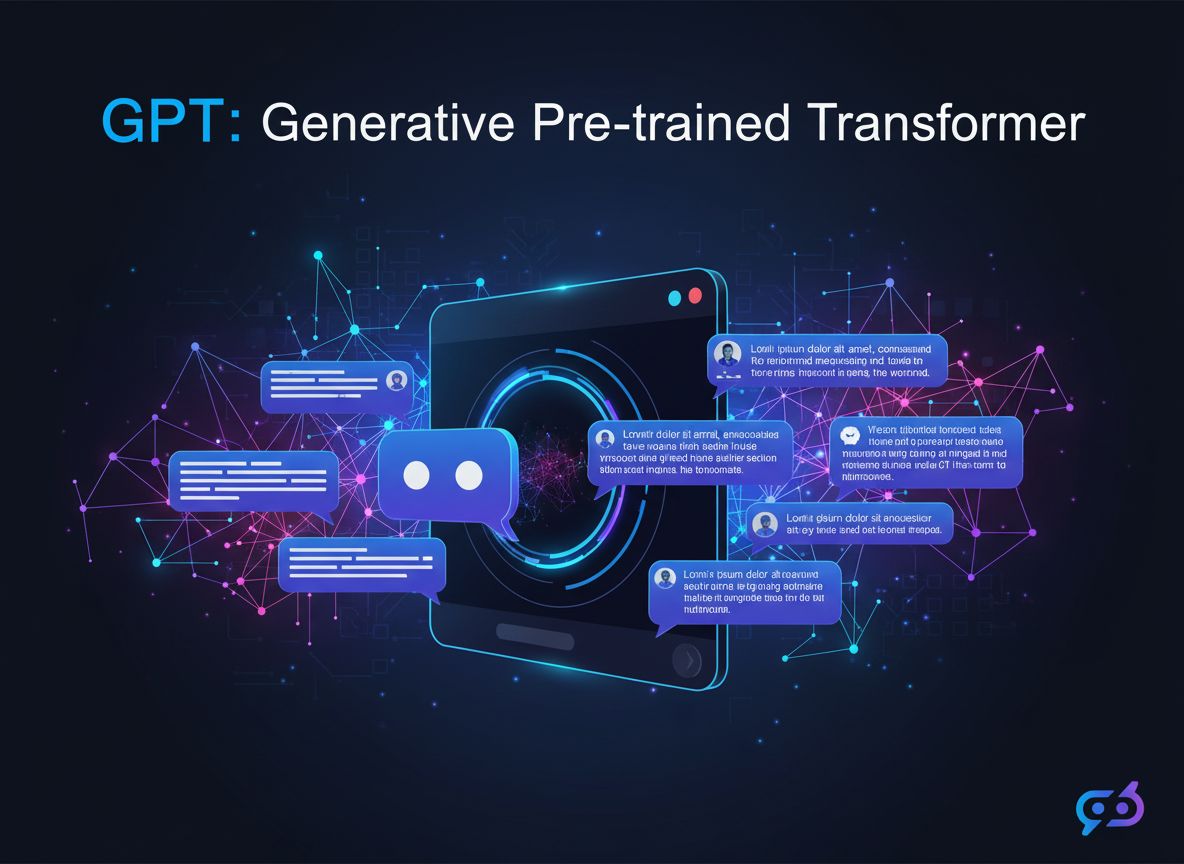
This comprehensive article explains what ‘GPT’ means in ChatGPT, how the technology works, its evolution, and answers common questions about ‘chat gpbt’ for curious AI chatbot users.
ChatGPT, sometimes mistakenly typed as “chat gpbt”, is one of the most talked‑about AI technologies of our era. Developed by OpenAI, ChatGPT has transformed how people interact with machines, enabling natural, dynamic conversations that feel surprisingly human. The surge in searches for “chat gpbt” reflects both rapid adoption of AI chatbots for business and personal use, and curiosity about the technology powering them. If you’ve ever wondered how ChatGPT works and what “GPT” really stands for, you’re not alone. This article explains the fundamentals, history, and real‑world impact of ChatGPT and its underlying architecture.
The “GPT” in ChatGPT stands for Generative Pre‑trained Transformer. This three‑part acronym is key to understanding how modern AI chatbots like ChatGPT generate coherent, context‑aware text.
In short, GPT models like the one behind ChatGPT are generative (they create), pre‑trained (they learn from huge data before fine‑tuning) and transformer‑based (they use attention mechanisms to capture linguistic context).

Start your free trial today and see results within days.
At its core, ChatGPT is an application of the GPT language model tuned for conversational interaction. When you type a message, ChatGPT analyses your text, considers the conversation context, and predicts the most likely next words one by one to form a complete, relevant reply. This prediction isn’t random; it’s guided by patterns the model learned during pre‑training and any task‑specific fine‑tuning (e.g., customer‑support or coding assistance).
The process works like this:
Unlike rule‑based chatbots that rely on fixed scripts or keywords, ChatGPT adapts to new inputs, can handle follow‑up questions, and covers a wide range of topics—from technical queries to creative storytelling.
GPT’s story started before ChatGPT. The first version, GPT‑1, introduced the concept of a large, unsupervised, pre‑trained transformer model. GPT‑2 followed, gaining headlines for its surprisingly fluent text generation but initially withheld from public release due to misuse concerns.
GPT‑3 marked a major leap with 175 billion parameters and the ability to perform tasks it had never been explicitly trained for, thanks to its scale and rich training data. This directly led to ChatGPT, which uses a variant of GPT‑3 (and later GPT‑4) fine‑tuned for dialogue and safety.
Each new GPT generation has brought improvements in:
These advances have enabled AI chatbots like ChatGPT to be used in customer support, content creation, programming assistance, education, and countless other domains.
Leverage the power of GPT and other transformer models with FlowHunt’s AI platform. Create custom chatbots, content generators, and intelligent assistants using the same technology behind ChatGPT. No coding required – just powerful AI at your fingertips.
Get latest tips, trends, and deals for free.
FlowHunt integrates seamlessly with GPT‑based technologies, allowing companies to harness ChatGPT’s conversational power for customer support, workflow automation, and content generation. With FlowHunt you can create custom flows that blend GPT‑generated responses with your own data and business logic, ensuring your chatbot is intelligent and aligned with your needs.
For example, a FlowHunt flow might:
By connecting GPT models to your business processes, FlowHunt helps you deliver fast, accurate AI experiences with a human touch.
The term “chat gpbt” is a common typo for “ChatGPT”, often entered by newcomers to the technology or those unsure of the correct spelling. Despite the mistake, the underlying interest is the same: learning about AI chatbots, how they work, and how they can be applied. This article is optimised to help anyone searching for “chat gpbt” understand they’re really looking for information about ChatGPT and the GPT technology that powers it.
What makes GPT models so effective at conversation? GPT models are trained on massive, diverse text corpora, learning language structure, vocabulary, and logic. The transformer architecture lets the model attend to context, track conversation history, and generate context‑appropriate replies.
How secure and private is ChatGPT? While the models themselves don’t store personal conversation data, how you use them matters. Follow privacy best practices and choose providers (like FlowHunt) that prioritise user security.
Can I customise GPT‑based chatbots? Yes. FlowHunt lets you tailor chatbot behaviour, integrate your own content and business logic, and even combine GPT responses with other AI tools and APIs.
What are ChatGPT’s limitations? Despite its fluency, ChatGPT can sometimes produce incorrect or nonsensical answers, especially for ambiguous queries or topics outside its training data. It doesn’t have real‑time internet access (unless explicitly connected) and doesn’t think or reason like a human.
With this knowledge, you’re now equipped to navigate the world of AI chatbots, understand what GPT means in ChatGPT, and use FlowHunt to bring conversational AI power to your business or project.
Arshia is an AI Workflow Engineer at FlowHunt. With a background in computer science and a passion for AI, he specializes in creating efficient workflows that integrate AI tools into everyday tasks, enhancing productivity and creativity.

Discover how FlowHunt lets you build, integrate, and optimise your own AI chatbots with GPT technology. Start streamlining support, automating content, and scaling your business with cutting‑edge AI flows.
Learn what AI chatbot GPT is, how it works, and why ChatGPT is the leading generative AI solution. Discover transformer architecture, training methods, and real...
Explore what a GPT chatbot is, how chatbotgpt technology works, its key benefits, real-world use cases, and how it compares to traditional chatbots—all in one d...
A Generative Pre-trained Transformer (GPT) is an AI model that leverages deep learning techniques to produce text closely mimicking human writing. Based on the ...
Cookie Consent
We use cookies to enhance your browsing experience and analyze our traffic. See our privacy policy.