8 najlepszych alternatyw Power Automate w 2026 (Darmowe i płatne)
Szukasz alternatyw dla Microsoft Power Automate? Porównaliśmy 8 narzędzi pod względem ceny, możliwości AI, łatwości obsługi i integracji — aby znaleźć najlepsze rozwiązanie dla Ciebie.
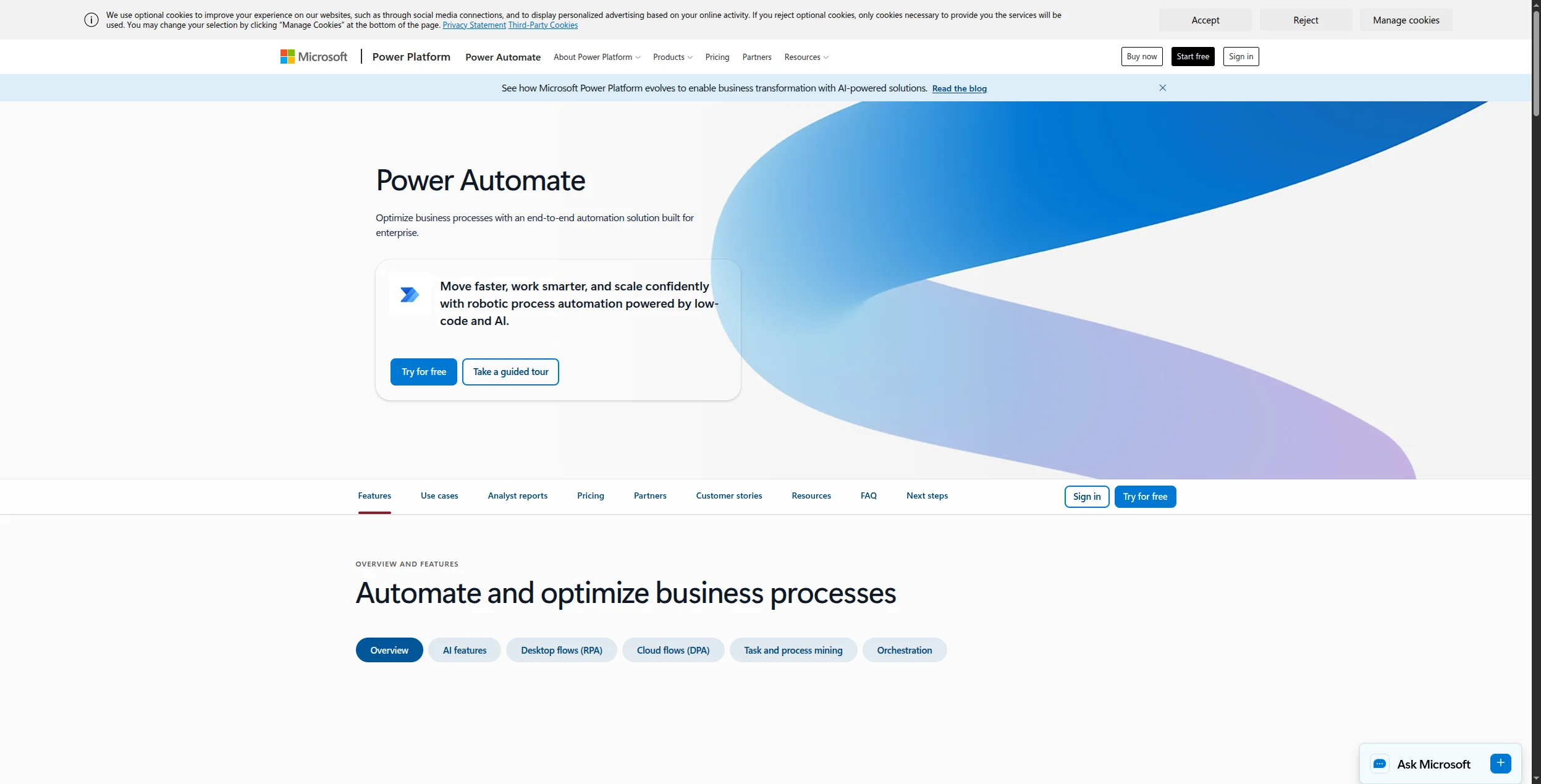
Power Automate
Microsoft
Alternatives
Workflow Automation
Microsoft Power Automate to domyślne narzędzie automatyzacji dla organizacji głęboko osadzonych w ekosystemie Microsoft 365. Jednak wiąże się z rzeczywistymi ograniczeniami: stroma cena za użytkownika, silne nastawienie na aplikacje Microsoft, niezgrabny interfejs w porównaniu z nowoczesnymi alternatywami oraz funkcje AI, które pozostają w tyle za platformami specjalistycznymi.
Jeśli szukasz alternatywy dla Power Automate — niezależnie od tego, czy chcesz lepszej AI, niższych kosztów, integracji niezależnych od stosu technologicznego czy elastyczności open-source — ten przewodnik Cię pokryje.
Co to jest Microsoft Power Automate?
Power Automate (dawniej Microsoft Flow) to oparta na chmurze platforma automatyzacji firmy Microsoft, część pakietu Power Platform obok Power BI, Power Apps i Power Pages. Pozwala użytkownikom budować zautomatyzowane przepływy pracy między aplikacjami Microsoft 365 (SharePoint, Teams, Outlook, Dynamics) i usługami stron trzecich.
Power Automate ma dwa główne tryby:
Przepływy chmury — automatyzacje wyzwalane zdarzeniami między aplikacjami internetowymi
Przepływy pulpitu (RPA) — automatyzacja procesów robotycznych dla starszych aplikacji pulpitu
Jego główną zaletą jest głęboka natywna integracja ze stosem Microsoft 365. Dla organizacji, które żyją w Teams, SharePoint i Dynamics 365, Power Automate to naturalne rozwiązanie. Dla wszystkich innych, to często złe narzędzie.
Szybkie porównanie: Power Automate vs alternatywy
Narzędzie
Najlepsze dla
Warstwa darmowa
Cena początkowa
Samodzielny hosting
Natywne dla AI
FlowHunt
Automatyzacja natywna dla AI
✅
Oparte na użyciu
❌
✅
Power Automate
Użytkownicy Microsoft 365
✅ (ograniczone)
15 USD/użytkownik/miesiąc
❌
Częściowo
Zapier
Szeroka dostępność aplikacji
✅
19,99 USD/miesiąc
❌
Częściowo
Make
Wizualne złożone przepływy pracy
✅
9 USD/miesiąc
❌
Częściowo
n8n
Open-source, samodzielny hosting
✅
Darmowe / 20 USD/miesiąc
✅
✅
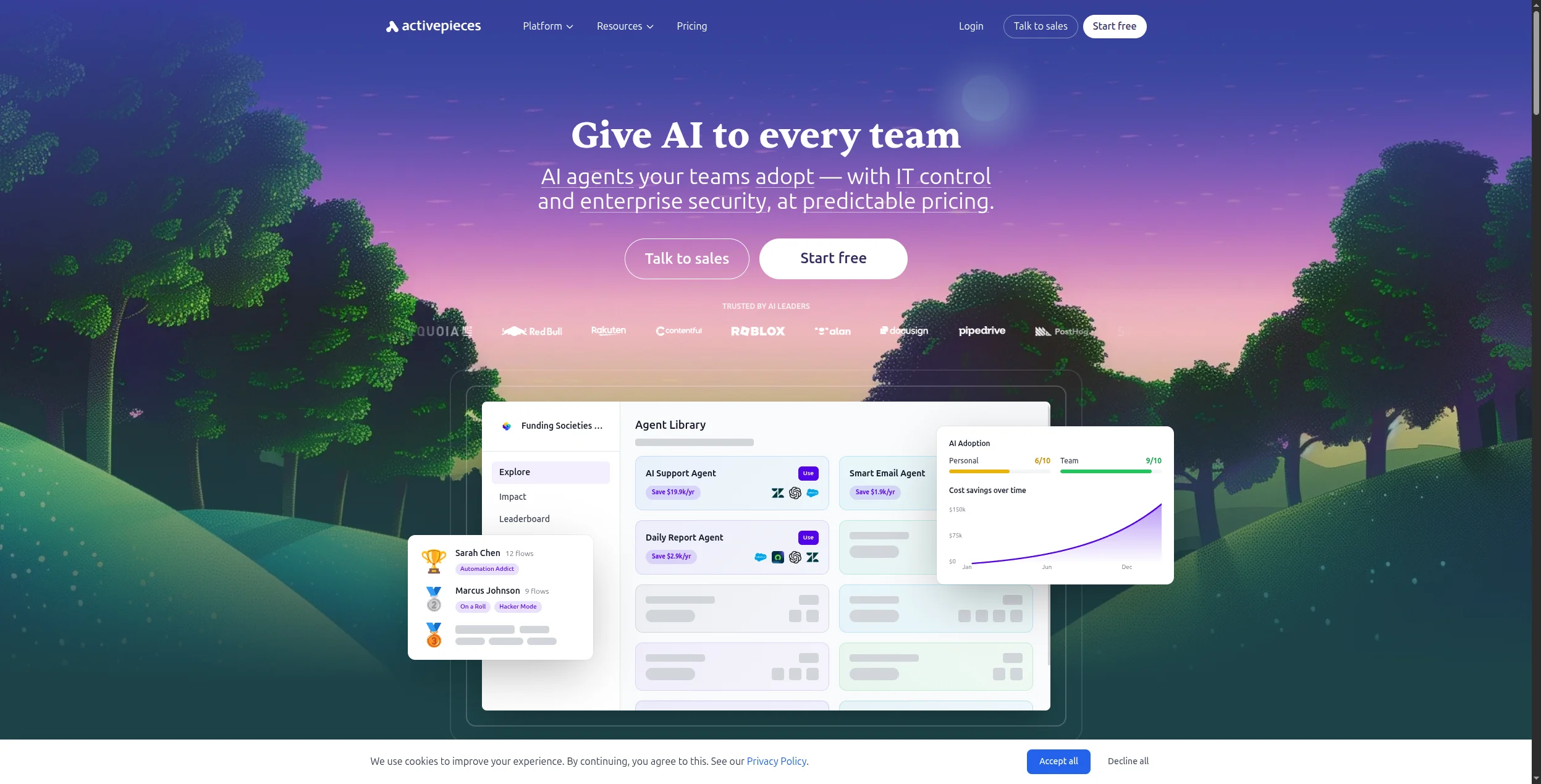
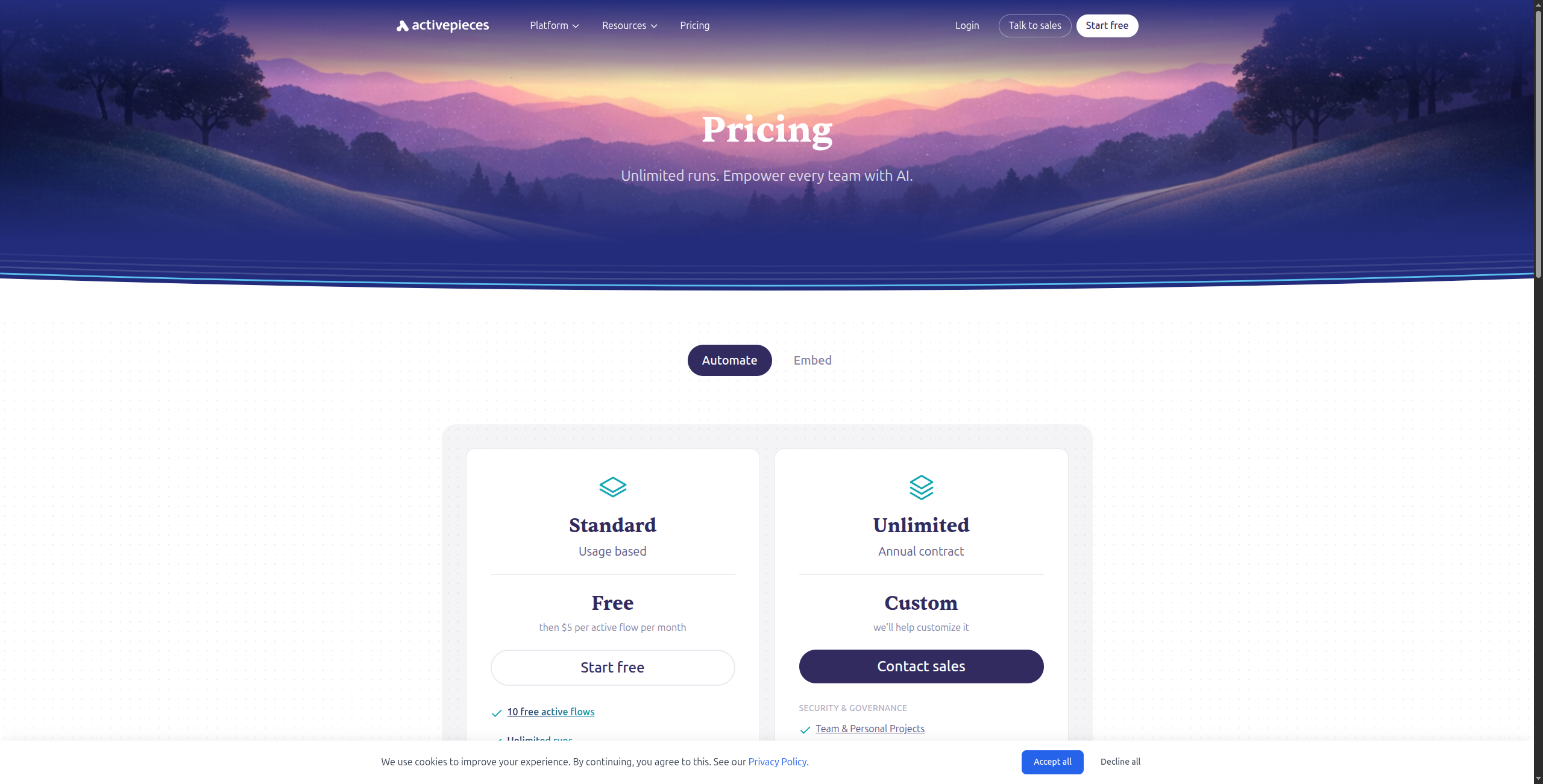
Activepieces
Open-source, znany interfejs
✅
Darmowe / 99 USD/miesiąc
✅
Częściowo
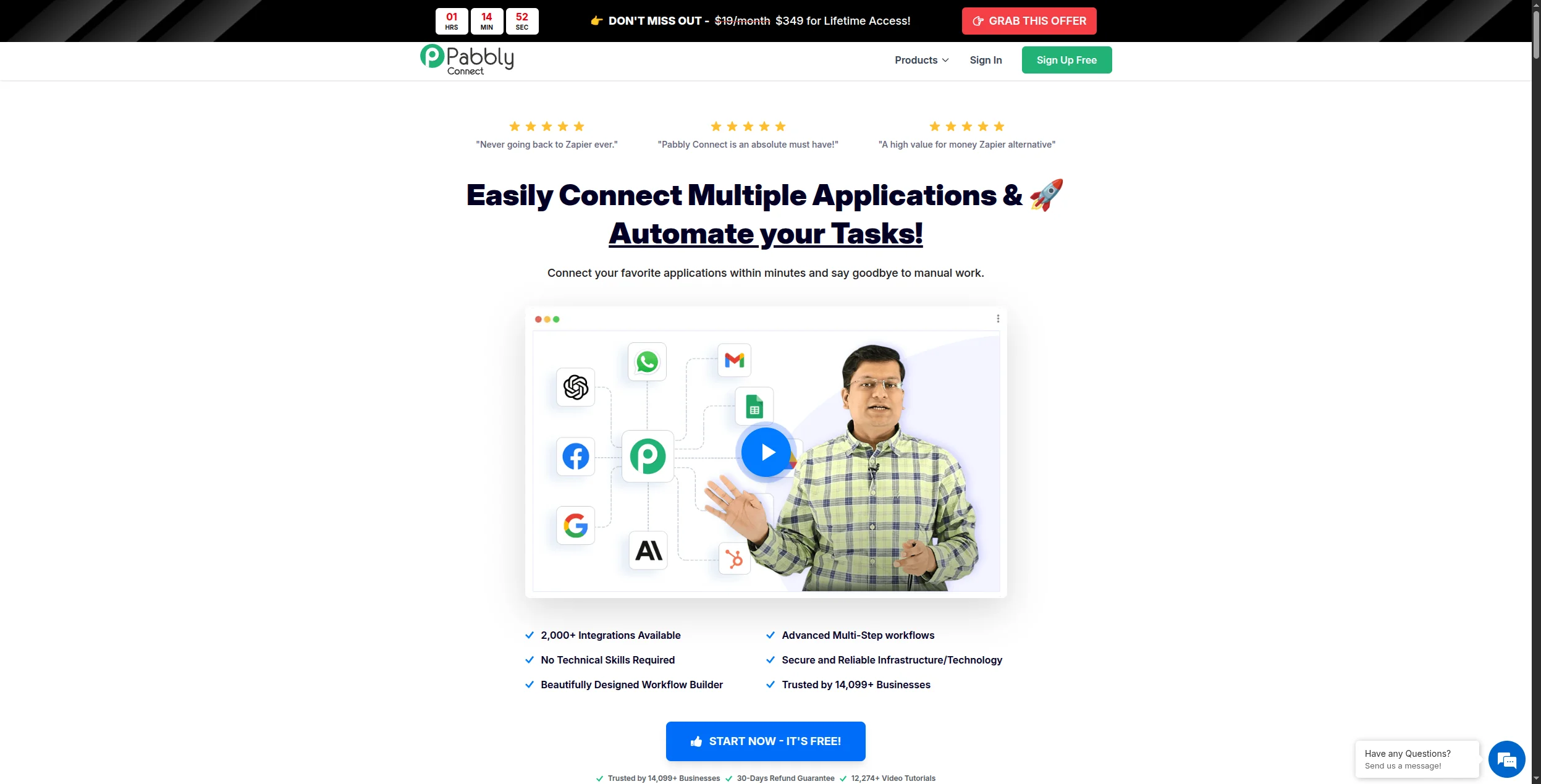
Pabbly Connect
Budżet, duża ilość
❌
19 USD/miesiąc
❌
❌
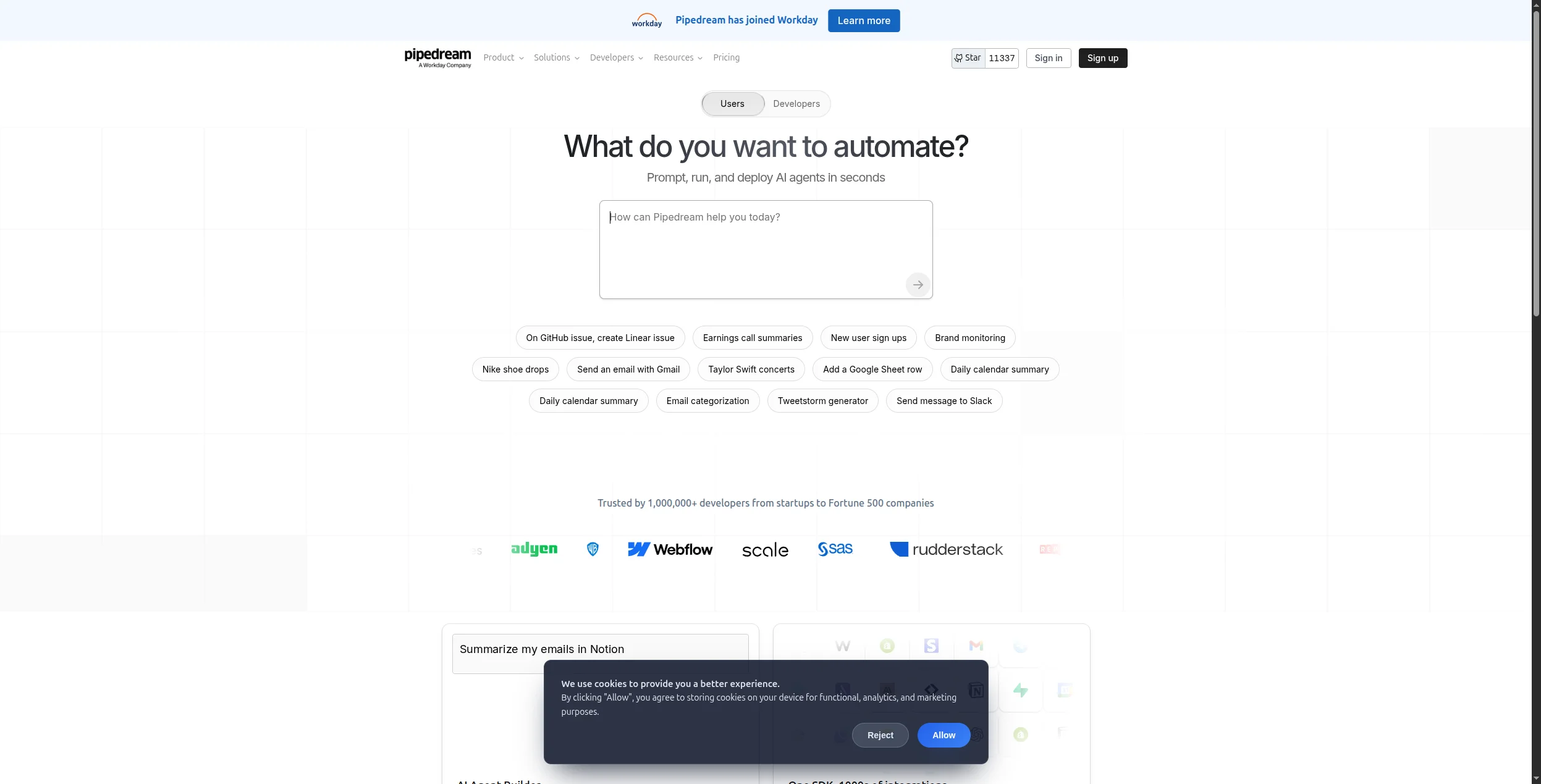
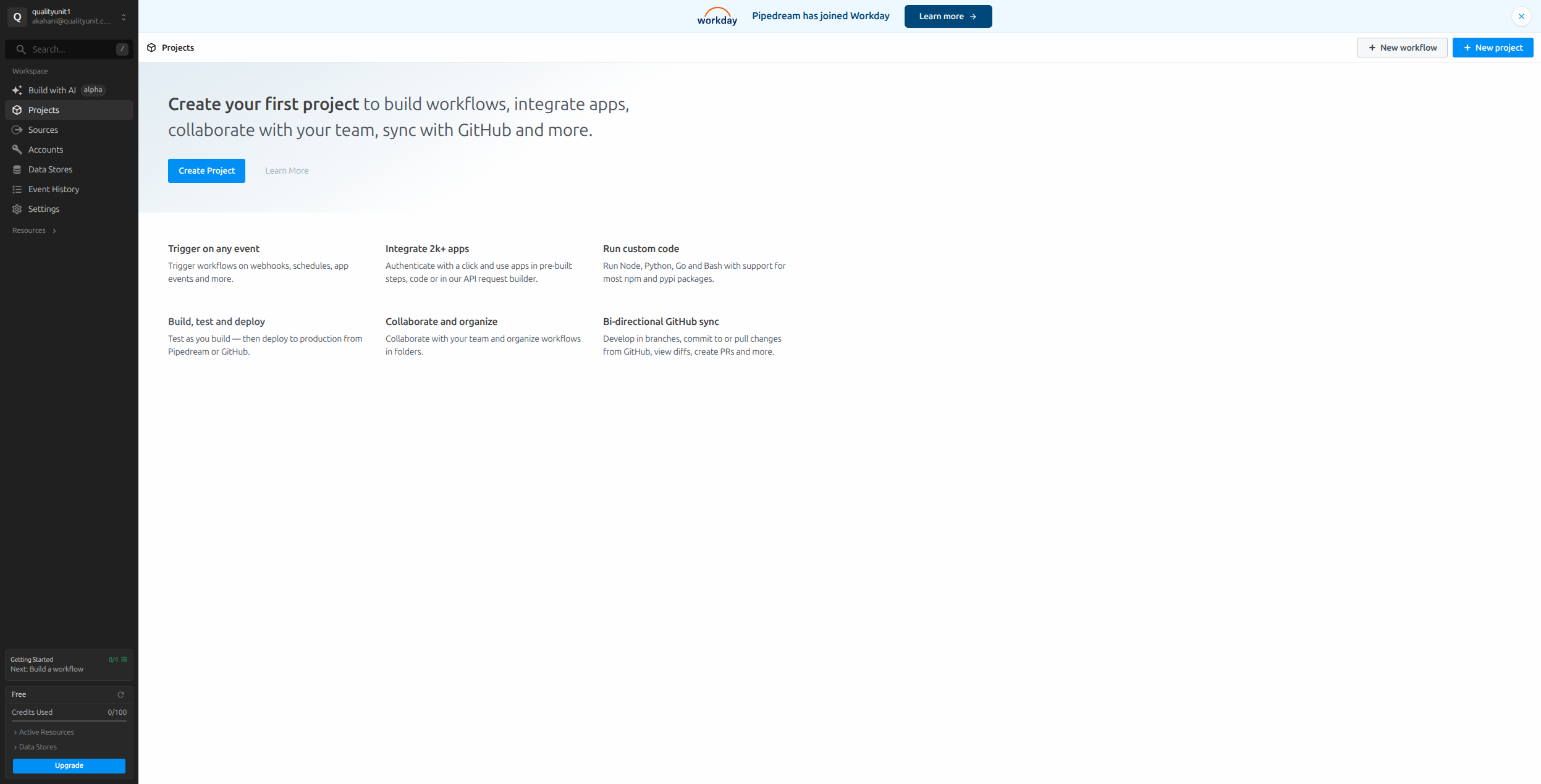
Pipedream
Programiści, niestandardowy kod
✅
19 USD/miesiąc
✅
Częściowo
Workato
Korporacyjna iPaaS
❌
Niestandardowe
❌
Częściowo
Gotowy na rozwój swojej firmy?
Rozpocznij bezpłatny okres próbny już dziś i zobacz rezultaty w ciągu kilku dni.
1. FlowHunt — najlepsza alternatywa Power Automate dla przepływów pracy AI
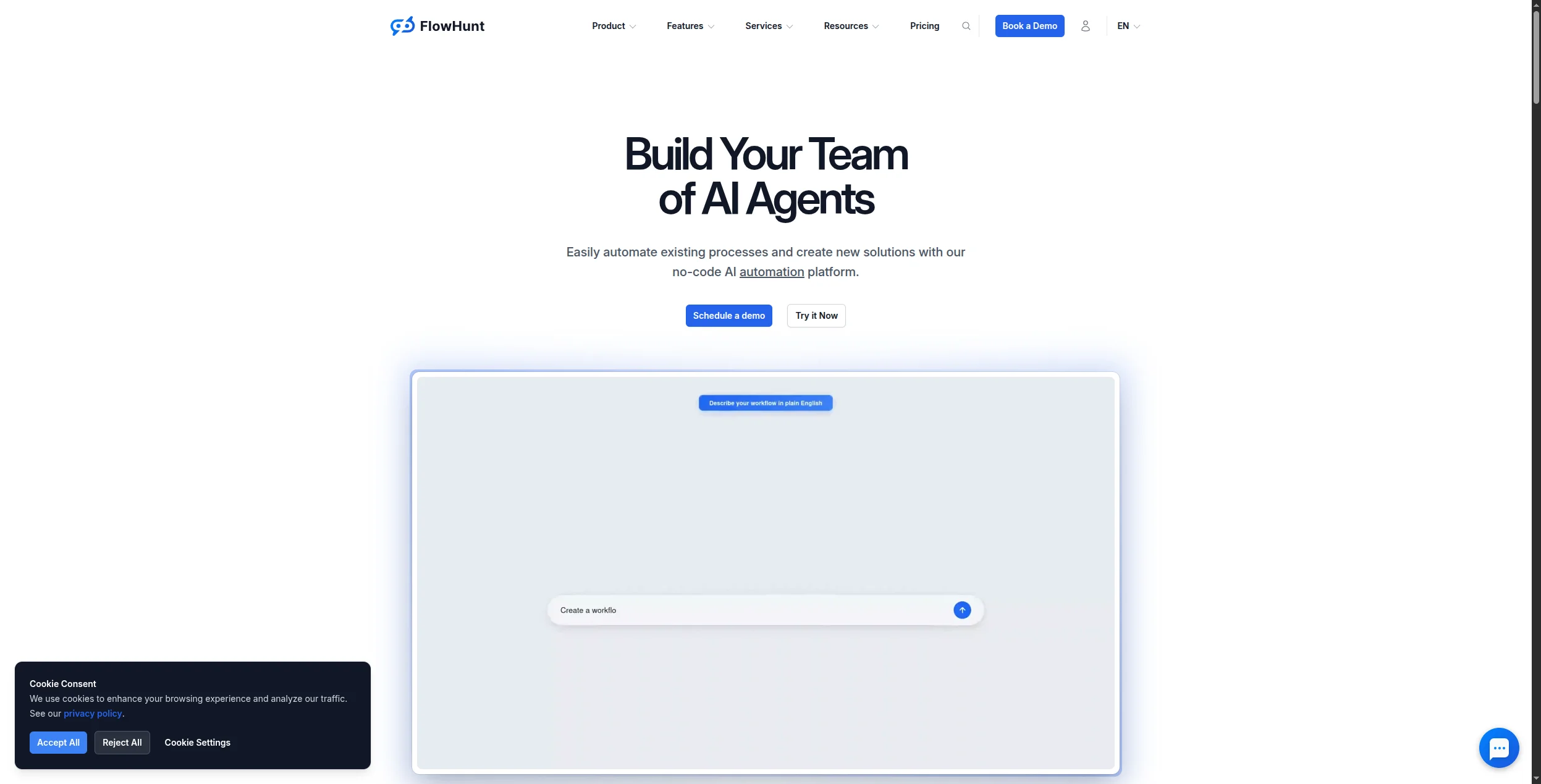
FlowHunt to, jak wygląda nowoczesna automatyzacja przepływów pracy, gdy jest zbudowana od podstaw dla AI. W przeciwieństwie do modelu przepływu opartego na regułach Power Automate, FlowHunt pozwala budować inteligentnych agentów, którzy czytają nieustrukturyzowane dane wejściowe, rozumują, co zrobić dalej, i wykonują operacje na dziesiątkach narzędzi w sekwencji.
Gdzie Power Automate pyta “jaki warunek wyzwala tę akcję?”, FlowHunt pyta “co ten agent musi osiągnąć?” — fundamentalnie inny paradygmat, który obsługuje przypadki brzegowe, niejasne dane wejściowe i wieloetapowe rozumowanie, które przepływy oparte na regułach nie potrafią.
Kluczowe przewagi nad Power Automate:
Brak blokady Microsoft — podłącz dowolne narzędzie w swoim stosie, nie tylko aplikacje Microsoft
Rozumowanie AI wbudowane — agenci rozumieją intencję, nie tylko dopasowania warunków
1400+ integracji — porównywalna dostępność bez dopłat za złącza premium
Brak licencjonowania na użytkownika — ceny oparte na użyciu skalują się z rzeczywistym obciążeniem
Szybsza konfiguracja — zbuduj działającą automatyzację w minuty, nie godziny
Ceny: Plan darmowy dostępny. Płatne plany skalują się na podstawie użycia, nie liczby użytkowników.
Plusy:
Obsługuje nieustrukturyzowane dane wejściowe, które łamią logikę opartą na warunkach Power Automate
Niezależny od stosu technologicznego — działa, czy jesteś w Google Workspace, Salesforce, czy czymkolwiek innym
Brak dodatkowego licencjonowania za “złącza premium”
Doskonały dla przepływów pracy obsługi klienta, generowania treści i kwalifikacji potencjalnych klientów
Minusy:
Brak automatyzacji RPA/pulpitu dla starszych aplikacji (RPA Power Automate pozostaje unikalna)
Nie najlepszy wybór, jeśli potrzebujesz głębokich wyzwalaczy natywnych SharePoint/Teams
Najlepsze dla: Zespoły spoza ekosystemu Microsoft, które chcą automatyzacji wspomaganej przez AI bez licencjonowania na użytkownika, opłat za złącza premium czy ograniczeń logiki opartej na regułach.
2. Zapier — najlepszy dla dostępności aplikacji i łatwości obsługi
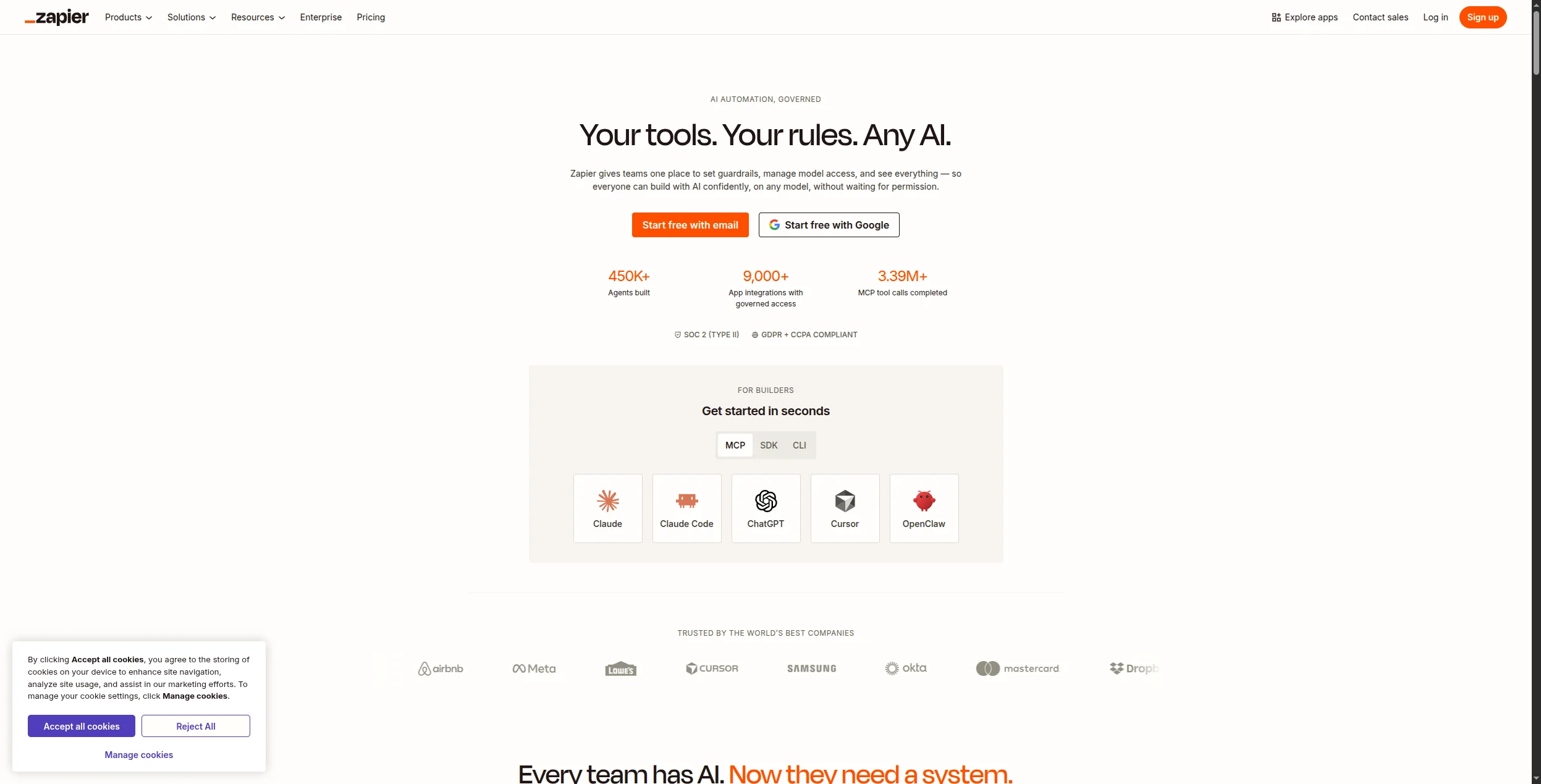
Zapier to najszerzej stosowana platforma automatyzacji bez kodu, z łącznikami dla 6000+ aplikacji. Jeśli głównym frustracją z Power Automate jest jego ograniczona biblioteka aplikacji spoza Microsoft, Zapier rozwiązuje to natychmiast.
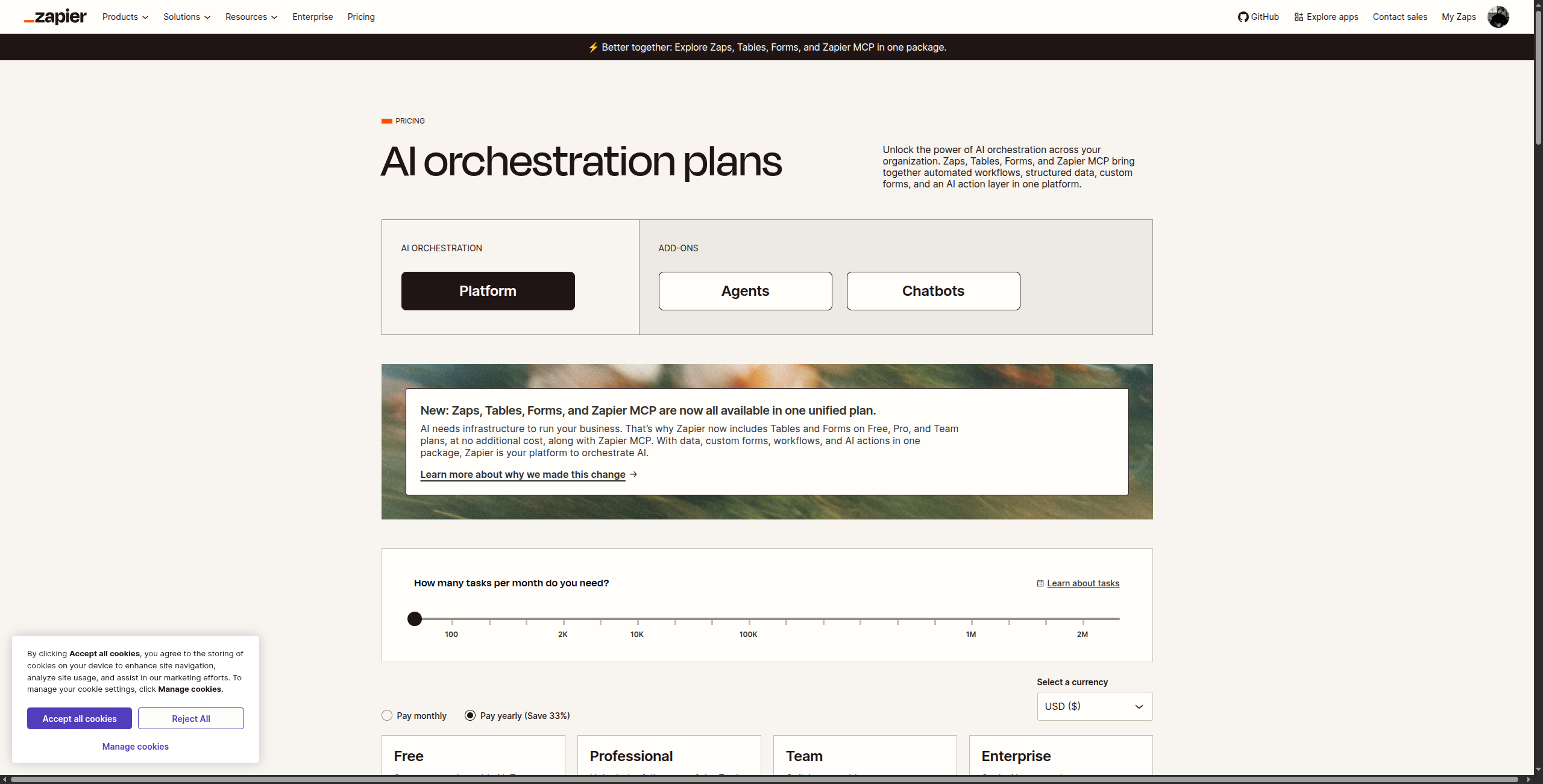
Ceny: Plan darmowy (100 zadań/miesiąc). Starter od 19,99 USD/miesiąc (750 zadań), Professional od 49 USD/miesiąc (2000 zadań), Team od 69 USD/miesiąc (2000 zadań + wspólne obszary robocze), Enterprise niestandardowe.
Kluczowe funkcje:
6000+ integracji aplikacji — największy katalog każdej platformy automatyzacji
Zapier AI do budowania Zaps z opisów języka naturalnego
Ścieżki dla rozgałęzień warunkowych i logiki wielu tras
Filtry do uruchamiania kroków tylko gdy spełnione są określone warunki
Narzędzie formatera do transformacji danych (tekst, daty, liczby)
Tabele Zapiera do lekkiego przechowywania danych w platformie
Wieloetapowe Zaps z pętlami, opóźnieniami i wyzwalaczami sub-Zap
Plusy:
Największy katalog aplikacji każdego narzędzia automatyzacji
Najłatwiejsze wdrażanie dla użytkowników nietechnicznych
Silna biblioteka szablonów do szybkiego rozpoczęcia
Minusy:
Ceny oparte na zadaniach stają się drogie przy dużej ilości
Funkcje AI wciąż zaostrzają się do dedykowanych platform AI
Ograniczona logika dla złożonych rozgałęzień wieloetapowych
Najlepsze dla: Zespoły nietechniczne, które potrzebują szerokiej dostępności aplikacji i szybkiej konfiguracji — zwłaszcza przy przechodzeniu z ograniczonej biblioteki złączy spoza Microsoft Power Automate.
Dołącz do naszego newslettera
Otrzymuj najnowsze wskazówki, trendy i oferty za darmo.
3. Make — najlepszy dla wizualnych złożonych przepływów pracy
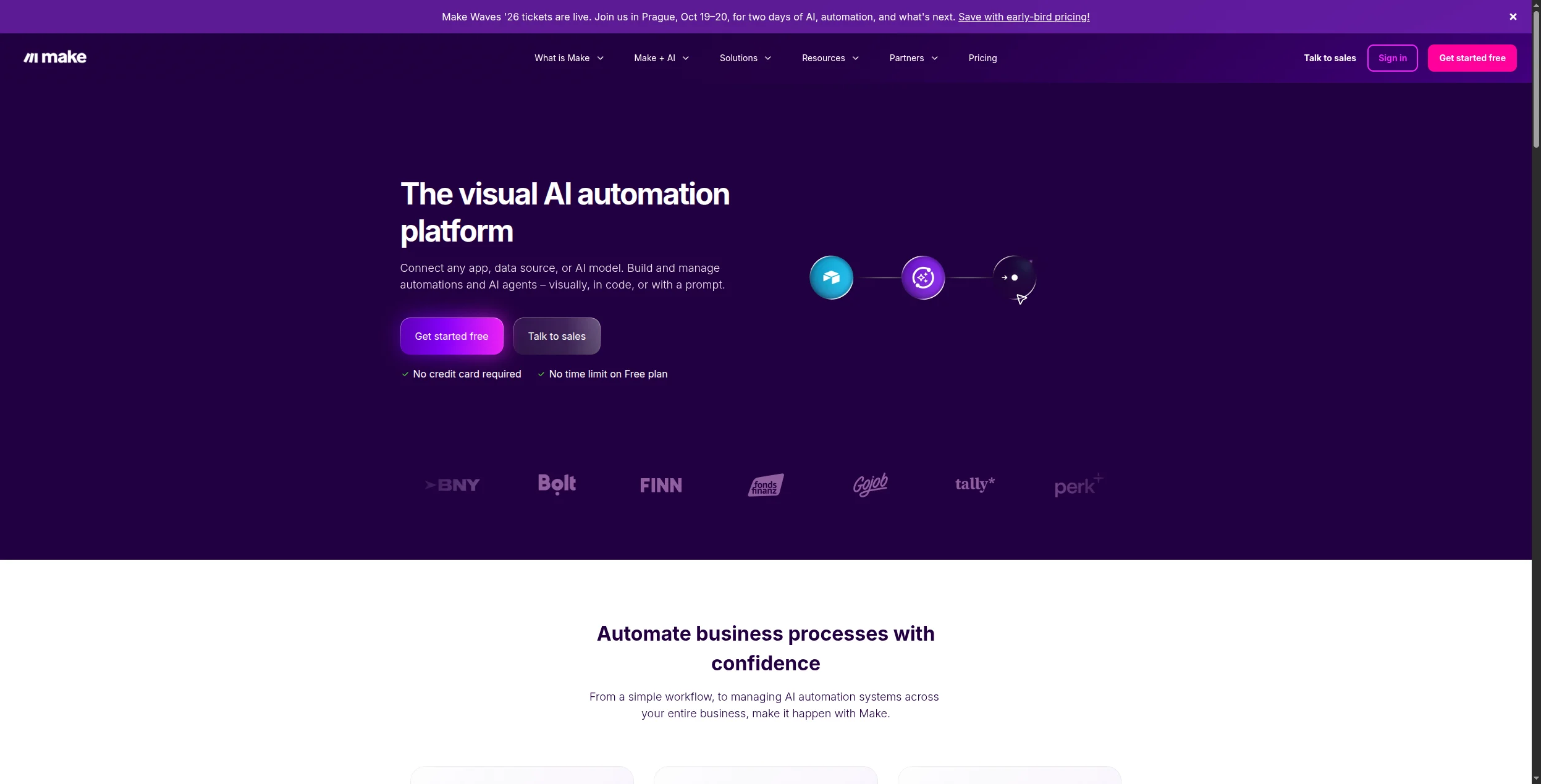
Make (dawniej Integromat) oferuje edytor oparty na kanwie wizualnej, który czyni przepływy pracy wieloetapowe i rozgałęziające się znacznie łatwiejsze do zbudowania niż liniowy interfejs Power Automate. Jest szczególnie silny w transformacji danych między aplikacjami.
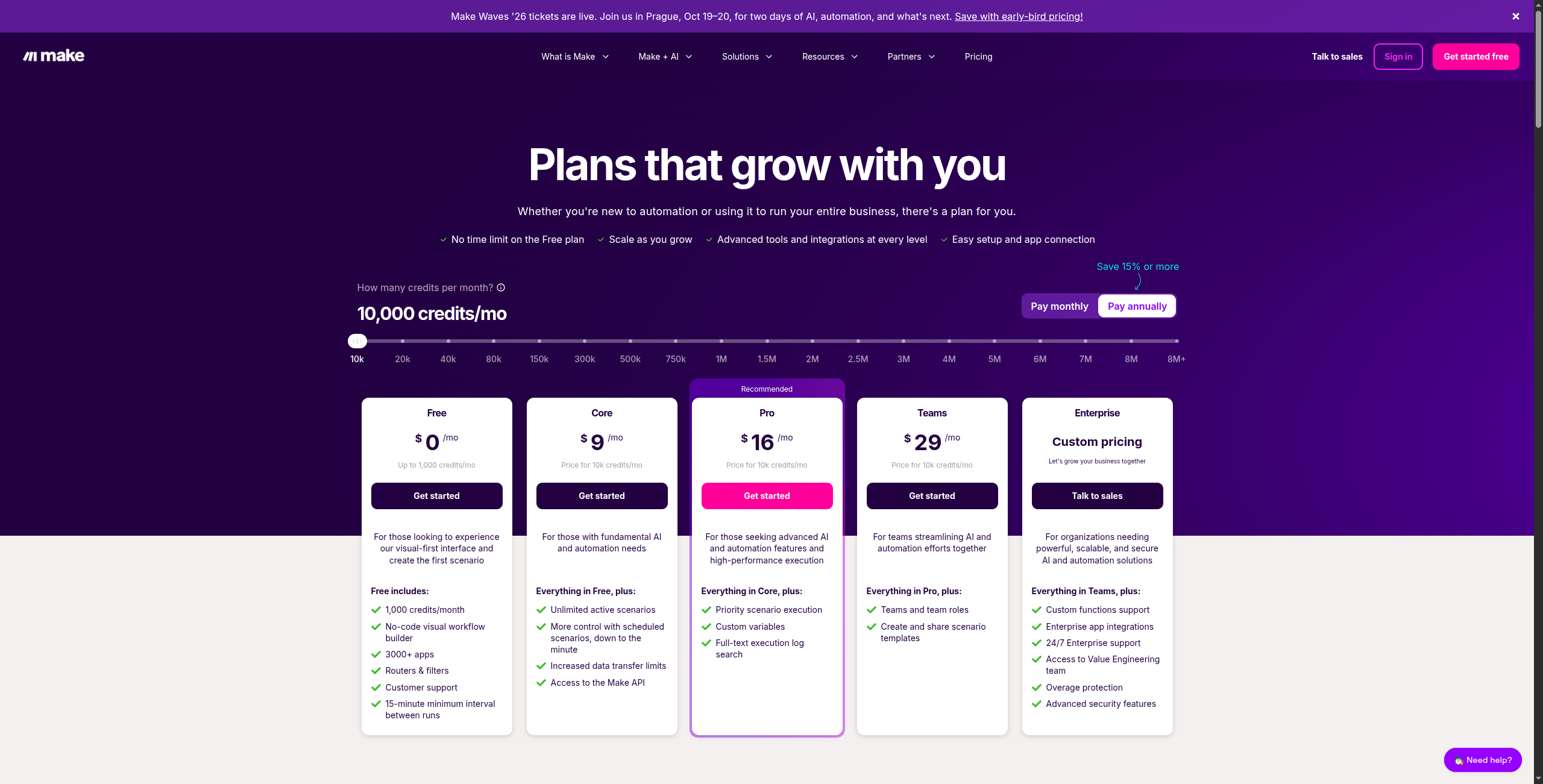
Ceny: Plan darmowy (1000 ops/miesiąc). Core od 9 USD/miesiąc (10000 ops), Pro od 16 USD/miesiąc (10000 ops + zaawansowane planowanie), Teams od 29 USD/miesiąc (współpraca), Enterprise niestandardowe.
Kluczowe funkcje:
Edytor przepływu pracy kanwy wizualnej wyświetlający pełny przepływ danych między modułami
1800+ integracji aplikacji, w tym wszystkie główne platformy SaaS
Zaawansowana transformacja danych z wbudowanymi funkcjami tablicy, tekstu, daty i matematyki
Moduły iteratora i agregatora do przetwarzania list i kolekcji
Trasy obsługi błędów z niestandardowymi ścieżkami catch i automatycznym ponowieniem
Monitorowanie wykonania scenariusza w czasie rzeczywistym z inspekcją wejścia/wyjścia na moduł
Moduł routera do dzielenia przepływu pracy na równoległe gałęzie
Plusy:
Doskonały edytor przepływu pracy wizualnej z dziennikami wykonania w czasie rzeczywistym
Potężne narzędzia do manipulacji i transformacji danych
Znacznie tańszy niż Power Automate przy równoważnym użyciu
Minusy:
Model cen “operacji” może być mylący do oszacowania
Stroma krzywa uczenia się niż Zapier dla początkujących użytkowników
Najlepsze dla: Zespoły, które potrzebują złożonych przepływów pracy wieloetapowych z rozgałęzieniami, transformacją danych i równoległymi trasami — i chcą znacznie niższych kosztów niż Power Automate lub Zapier.
4. n8n — najlepsza alternatywa open-source
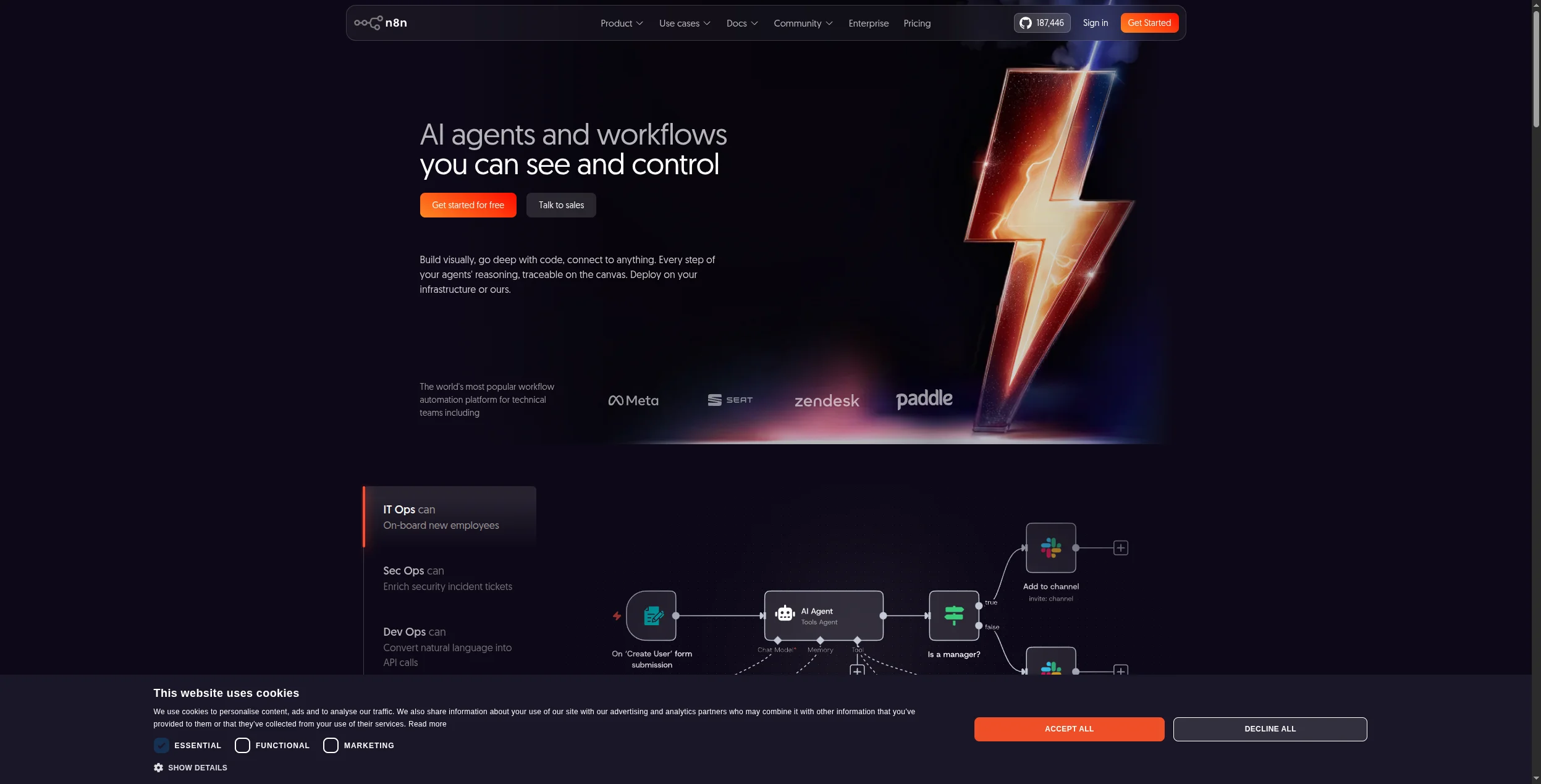
n8n to wiodąca platforma automatyzacji przepływów pracy typu open-source, samodzielnie hostowana na własnej infrastrukturze. Ma natywne węzły AI (w tym integracje LLM i magazyny wektorów) wbudowane bezpośrednio w edytor — coś, nad czym Power Automate wciąż pracuje.
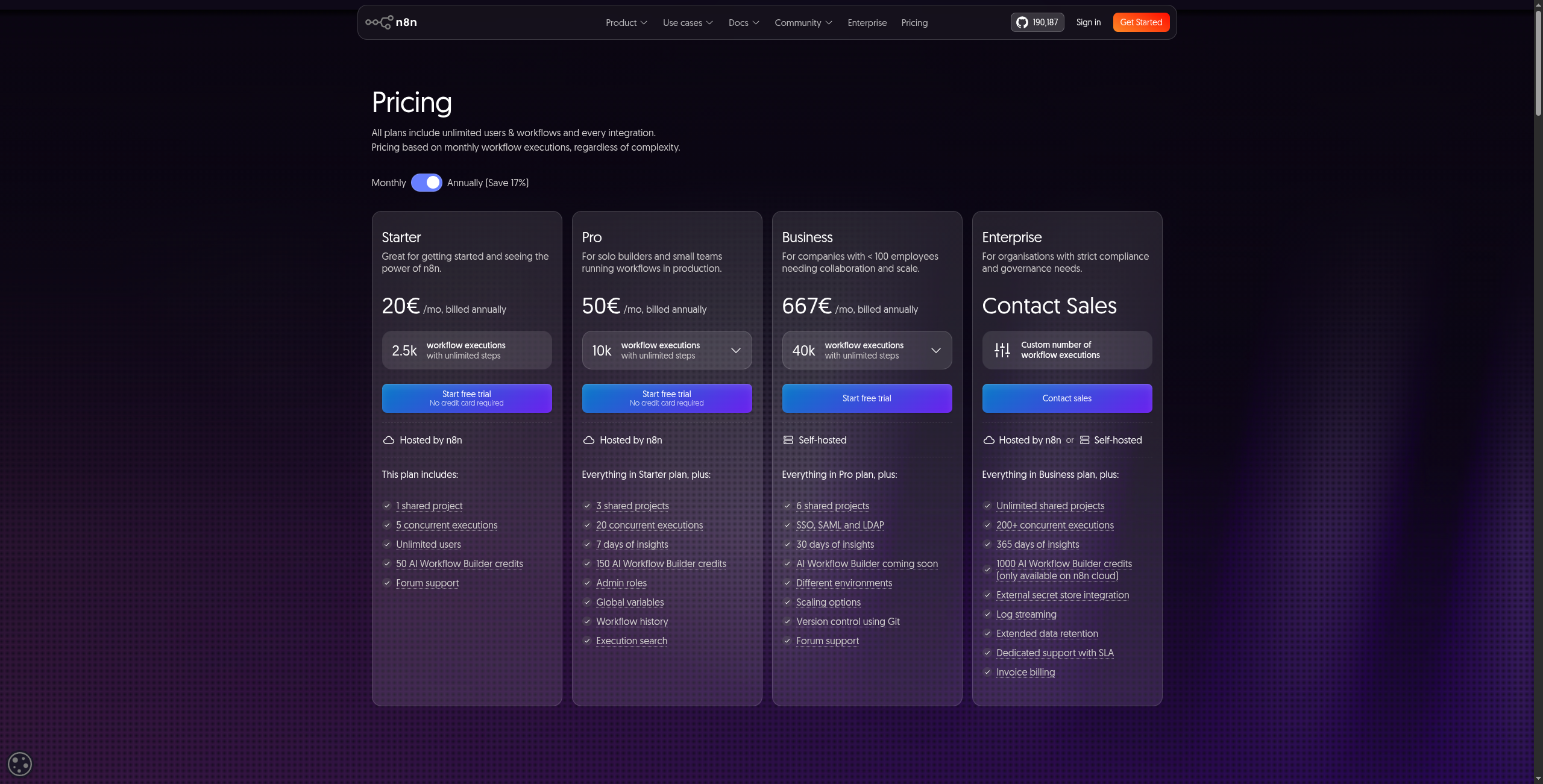
Ceny: Darmowe (samodzielnie hostowane, licencja fair-code). Cloud Starter od 20 USD/miesiąc (5 aktywnych przepływów pracy), Pro od 50 USD/miesiąc (15 aktywnych przepływów pracy), Enterprise niestandardowe.
Kluczowe funkcje:
500+ natywnych węzłów plus biblioteka węzłów zbudowana przez społeczność
Natywne węzły AI: łańcuchy LLM, zapytania magazynu wektorów, aranżacja agenta AI
Węzeł kodu do wykonywania JavaScript lub Python w środku przepływu pracy
Obsługa pod-przepływu pracy dla modułowych, wielokrotnie używanych komponentów automatyzacji
Samodzielnie hostowalne za pośrednictwem Docker z backendem PostgreSQL lub SQLite
Wyzwalacze webhook, harmonogramy cron i wyzwalacze oparte na aplikacjach
Pełna historia wersji przepływu pracy i wycofanie jednym klikiem
Plusy:
Pełna suwerenność danych — hostuj na własnych serwerach
Natywne węzły AI/LLM wbudowane
Silna społeczność deweloperów i rozległa dokumentacja
Minusy:
Samodzielny hosting wymaga wiedzy DevOps
Mniejszy katalog aplikacji niż Zapier (~500 węzłów natywnych)
Najlepsze dla: Zespoły prowadzone przez deweloperów, które potrzebują suwerenności danych, węzłów przepływu pracy AI/LLM i pełnej kontroli nad infrastrukturą automatyzacji.
5. Activepieces — najlepsza open-source dla osób nietechnicznych
Activepieces to nowsza platforma automatyzacji typu open-source z interfejsem przeciągnij i upuść podobnym do Zapiera. Jest łatwiejsza dla zespołów nietechnicznych niż n8n, jednocześnie oferując samodzielny hosting dla zgodności.
Konstruktor przepływu pracy przeciągnij i upuść ze znajomym liniowym interfejsem podobnym do Zapiera
500+ części zbudowanych przez społeczność z nowymi dodatkami co tydzień
Logika rozgałęzień, pętle, kroki opóźnienia i warunkowe routing bez kodu
Niestandardowe kroki kodu TypeScript dla zaawansowanych transformacji
Samodzielny hosting za pośrednictwem Docker Compose z prostą dokumentacją wdrażania
Części AI dla OpenAI, Anthropic i modeli open-source
Webhook i wyzwalacze harmonogramu z aktywacją przepływu pracy opartą na zdarzeniach
Plusy:
Najbardziej przyjazne dla początkujących narzędzie automatyzacji open-source
Rosnąca biblioteka części z 100+ integracjami
Aktywna społeczność dodająca nowe łączniki regularnie
Minusy:
Mniejszy katalog integracji niż n8n lub Make
Cena chmury jest wysoka w stosunku do funkcji na poziomie zespołu
Najlepsze dla: Zespoły nietechniczne, które chcą open-source i samodzielnego hostingu dla zgodności, ale potrzebują prostszego interfejsu użytkownika niż n8n — bez pisania kodu.
Pabbly Connect oferuje nieograniczone przepływy pracy i połączenia za stałą miesięczną cenę — i opcję oferty dożywotniej, która bije każdą alternatywę SaaS pod względem długoterminowych kosztów. Dla małych firm prowadzących wysokoilościową prostą automatyzację, trudno to pokonać.
Ceny: Standard od 19 USD/miesiąc (nieograniczone przepływy pracy, 10000 zadań/miesiąc). Pro od 39 USD/miesiąc (50000 zadań). Ultimate od 79 USD/miesiąc (nieograniczone zadania). Oferta dożywotnia od 249 USD jednorazowo (dostęp na zawsze, nieograniczone przepływy pracy).
Kluczowe funkcje:
1000+ integracji aplikacji z konstruktorem przepływu pracy wyzwalacz-akcja
Nieograniczone przepływy pracy i połączenia na wszystkich płatnych planach — bez opłaty za przepływ pracy
Wieloetapowa automatyzacja z filtrami, ścieżkami i formaterami
Iterator do przetwarzania list i zbiorczych rekordów w jednym przepływie pracy
Ponowne wykonanie historycznych przebiegów przepływu pracy do debugowania
Wspólne połączenia do użytku zespołu bez ponownego wpisywania poświadczeń
Opcja ceny dożywotniej jednorazowej — unikalna w tym segmencie rynku
Plusy:
Naprawdę nieograniczone przepływy pracy i operacje
Dostępna cena jednorazowa — rzadkość w tej kategorii
Brak limitów zadań/operacji na większości poziomów planu
Minusy:
Brak możliwości AI
Mniejsza biblioteka aplikacji niż Zapier lub Make
Brak opcji samodzielnego hostingu
Najlepsze dla: Małe firmy prowadzące wysokoilościową, prostą automatyzację, które chcą nieograniczonych przepływów pracy i najniższych długoterminowych kosztów — w tym zespoły, które chcą jednorazowej oferty dożywotniej.
7. Pipedream — najlepszy dla programistów
Pipedream to platforma automatyzacji sterowana zdarzeniami, która pozwala programistom pisać niestandardowe kroki kodu Node.js lub Python obok wstępnie zbudowanych integracji. To najmocniejszy wybór, jeśli Twój zespół może kodować i chce maksymalnej elastyczności.
Ceny: Plan darmowy (10000 kredytów/miesiąc). Basic od 29 USD/miesiąc (100000 kredytów). Advanced od 99 USD/miesiąc (1M kredytów, dedykowani pracownicy). Business od 499 USD/miesiąc (10M kredytów). Enterprise niestandardowe.
Kluczowe funkcje:
1000+ wstępnie zbudowanych wyzwalaczy i akcji na głównych platformach SaaS
Niestandardowe kroki kodu w Node.js, Python, Go lub Bash w dowolnym punkcie przepływu pracy
Wykonanie bezserwerowe — brak kontenerów ani serwerów do konfiguracji
Obsługa pakietów npm i PyPI bezpośrednio w krokach kodu
Źródła zdarzeń: webhook, cron, polling bazy danych, Kafka, zdarzenia S3
Wbudowany magazyn danych do prostej trwałości klucz-wartość między przebiegami przepływu pracy
Wersjonowanie przepływu pracy z pełną historią przebiegów i debugowaniem na krok
Plusy:
Pełna obsługa kroków kodu obok integracji bez kodu
1000+ wstępnie zbudowanych wyzwalaczy i akcji
Doskonały dla automatyzacji ciężkiej na API zbudowanej przez programistów
Minusy:
Wymaga wiedzy kodowania do efektywnego użycia
Mniej odpowiedni dla użytkowników biznesowych spoza technologii
Najlepsze dla: Zespoły inżynieryjne i DevOps, które potrzebują niestandardowych kroków kodu obok integracji — zwłaszcza dla automatyzacji ciężkiej na API lub sterowanej zdarzeniami, którą narzędzia bez kodu nie potrafią obsługiwać.
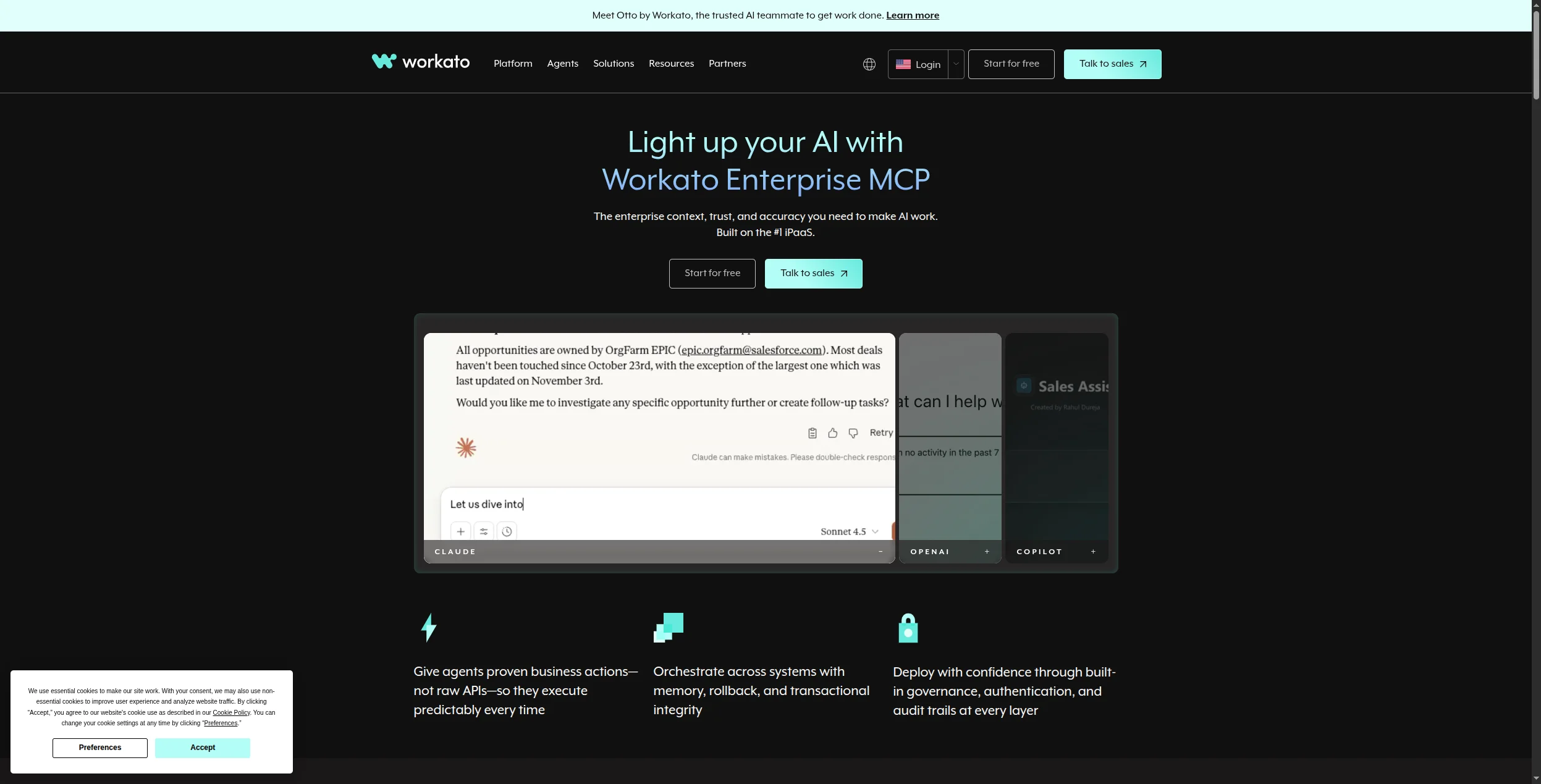
8. Workato — najlepsza alternatywa dla przedsiębiorstw
Workato to korporacyjna iPaaS (platforma integracji jako usługa) z głębokim łącznikami ERP/CRM, solidnym zarządzaniem IT i budowaniem przepisów wspomaganym przez AI. To najbliższe porównanie na poziomie korporacyjnym do Power Automate dla dużych organizacji spoza ekosystemu Microsoft.
Ceny: Niestandardowe (przedsiębiorstwo). Brak cen publicznych — umowy zazwyczaj zaczynają się od 10000–15000 USD/rok; pełne wdrażania korporacyjne powszechnie przekraczają 50000 USD/rok. Ceny oparte na liczbie przepisów, poziomach łączników i aktywnych użytkownikach miesięcznych.
Kluczowe funkcje:
1200+ wstępnie zbudowanych łączników, w tym SAP, Oracle, Workday, Salesforce, ServiceNow i NetSuite
Workato AI Copilot generuje kroki przepisu z monitów w języku naturalnym
Zarządzanie cyklem życia przepisu dla zarządzania przepływem pracy dev/staging/produkcja
Agent on-prem do łączenia się z wewnętrznymi bazami danych i starszymi systemami za zaporą
Przetwarzanie w czasie rzeczywistym i wsadowe z obsługą zdarzeń o dużej ilości
Wbudowana platforma API do ujawniania wewnętrznych danych jako interfejsów REST API
Kontrola dostępu oparta na rolach, dzienniki audytu i maskowanie danych dla zgodności korporacyjnej
Plusy:
Kontrole bezpieczeństwa i zgodności na poziomie przedsiębiorstwa
Bardzo drogi — nie odpowiedni dla małych i średnich przedsiębiorstw
Wymaga dedykowanego czasu wdrażania
Najlepsze dla: Duże przedsiębiorstwa zastępujące Power Automate w środowiskach spoza Microsoft, które potrzebują kontroli bezpieczeństwa na poziomie przedsiębiorstwa, głębokich łączników ERP/CRM i kontroli zarządzania IT.
Którą alternatywę Power Automate powinieneś wybrać?
Chcesz automatyzacji natywnej dla AI → FlowHunt
Potrzebujesz największej liczby integracji aplikacji → Zapier
Chcesz wizualnych złożonych przepływów pracy przy niskich kosztach → Make
Potrzebujesz open-source i suwerenności danych → n8n
Chcesz open-source z prostym interfejsem → Activepieces
Dla większości zespołów przechodzących z Power Automate, decydujące czynniki to: jak bardzo polegasz na stosie Microsoft 365, czy potrzebujesz rozumowania AI w porównaniu z prostymi regułami i Twój budżet. FlowHunt rozwiązuje lukę AI; Make i n8n rozwiązują luki w cenie i elastyczności.
n8n (samodzielnie hostowana) i Activepieces (samodzielnie hostowana) są całkowicie darmowe. FlowHunt oferuje hojny plan darmowy. Make i Pipedream również mają plany darmowe z przydatnymi limitami. Jeśli nie jesteś związany z ekosystemem Microsoft, każda z tych opcji jest solidnym wyborem bez kosztów licencjonowania na użytkownika.
Główne powody to: (1) Power Automate jest głęboko powiązany z Microsoft 365 — staje się ograniczający, gdy potrzebujesz połączyć aplikacje spoza Microsoft; (2) licencjonowanie złączy premium szybko się sumuje; (3) interfejs ma stromą krzywą uczenia się w porównaniu z narzędziami takimi jak Make lub Zapier; (4) możliwości AI pozostają w tyle za platformami specjalistycznymi, takimi jak FlowHunt.
Absolutnie. Większość alternatyw Power Automate — FlowHunt, Zapier, Make, n8n, Activepieces — jest niezależna od stosu technologicznego i działa z dowolną kombinacją aplikacji. Główną zaletą Power Automate jest głęboka integracja z Microsoft 365, która jest nieistotna, jeśli nie jesteś w tym ekosystemie.
Power Automate pobiera opłatę za użytkownika na miesiąc (15 USD za standard, 40 USD za premium z obsługą RPA). Make zaczyna się od 9 USD/miesiąc dla zespołu. Plan Professional Zapiera zaczyna się od 49 USD/miesiąc. Pabbly Connect oferuje ofertę dożywotnią za 249 USD jednorazowo. n8n jest darmowy, samodzielnie hostowany. Dla większości małych i średnich przedsiębiorstw alternatywy są znacznie tańsze.
Tak — n8n i Activepieces są oba typu open-source i samodzielnie hostowane. n8n jest szczególnie popularna wśród zespołów technicznych ze względu na elastyczność, natywną obsługę węzłów AI i aktywną społeczność. Oba dają pełną kontrolę nad danymi bez cen SaaS.
Arshia jest Inżynierką Przepływów Pracy AI w FlowHunt. Z wykształceniem informatycznym i pasją do sztucznej inteligencji, specjalizuje się w tworzeniu wydajnych przepływów pracy, które integrują narzędzia AI z codziennymi zadaniami, zwiększając produktywność i kreatywność.
Arshia Kahani
Inżynierka Przepływów Pracy AI
Alternatywa Power Automate zbudowana dla AI — spróbuj FlowHunt za darmo
FlowHunt zapewnia natywną dla AI automatyzację przepływów pracy, która działa z dowolnym stosem technologicznym — nie tylko z Microsoft 365. Buduj inteligentnych agentów w minuty, bez kodowania.
Najlepsze narzędzia do automatyzacji przepływów pracy w 2026 roku: 12 platform ocenionych i przeanalizowanych
Ocenione i przeanalizowane: 12 najlepszych narzędzi do automatyzacji przepływów pracy w 2026 roku. Tabela porównawcza, ceny, bezpłatne wersje i jasny werdykt, k...
8 najlepszych alternatyw dla Workato w 2026 roku (Enterprise i Mid-Market)
Ceny Workato sprawiają, że automatyzacja dla przedsiębiorstw jest poza zasięgiem większości zespołów. Porównaliśmy 8 alternatyw dla Workato pod względem kosztów...
Najlepsze alternatywy dla Zapiera w 2026 roku: 12 narzędzi, które robią więcej za mniej
Rankingowane i recenzowane: 12 najlepszych alternatyw dla Zapiera w 2026 roku. Niezależnie od tego, czy potrzebujesz automatyzacji natywnej dla AI, tańszych cen...
19 min czytania
Automation
AI Tools
+3
Zgoda na Pliki Cookie Używamy plików cookie, aby poprawić jakość przeglądania i analizować nasz ruch. See our privacy policy.