Best AI Chatbot for Customer Service in 2026: 12 Tools Ranked
Ranked and reviewed: the 12 best AI chatbots for customer service in 2026. From AI-native agent platforms to enterprise CX suites — find the right tool for your support team.
AI Tools
Customer Service
Chatbot
AI Agents
Customer Support
A customer service chatbot that can only answer FAQs is no longer enough. Customers expect resolutions, not just responses — and in 2026, the best AI chatbots for customer service can look up orders, update records, handle multi-turn conversations, escalate intelligently, and hand off to a human with full context intact.
This guide ranks the 12 best AI chatbots for customer service, covering everything from AI-native agent platforms to enterprise CX suites and SMB-friendly live chat tools.
Pro Tip: There’s a critical distinction between a chatbot and an AI agent. Chatbots answer questions from a script. AI agents take actions. If your top support queries involve “where’s my order?”, “can you update my billing?”, or “I need to cancel” — you need an AI agent, not a FAQ bot. Several tools on this list blur the line. We’ll be explicit about which is which.
AI Customer Service Chatbots Compared
Tool
Primary Use Case
Starting Price
Best For
Free Tier
FlowHunt
AI agent for support + actions
From $29/mo
Teams needing resolution, not just answers
Yes
Intercom (Fin)
AI-first customer messaging
From $39/mo
Growing SaaS and e-commerce teams
Yes (limited)
Zendesk AI
Enterprise helpdesk + AI
From $55/mo
Large support orgs, complex ticketing
No
Tidio
SMB live chat + AI
Free / $19/mo
Small e-commerce and startup teams
Yes
Drift
Sales + support conversational AI
Custom
B2B sales-led companies
No
Freshchat
Omnichannel AI messaging
From $15/mo
Freshworks ecosystem users
Yes
Lindy
AI agent for email + support
From $49.99/mo
Async, email-heavy support workflows
Yes
HubSpot Service Hub
CRM-native support + chatbot
Free / $15/mo
HubSpot-centric teams
Yes
Crisp
Budget live chat + chatbot
Free / $25/mo
Startups and budget-conscious teams
Yes
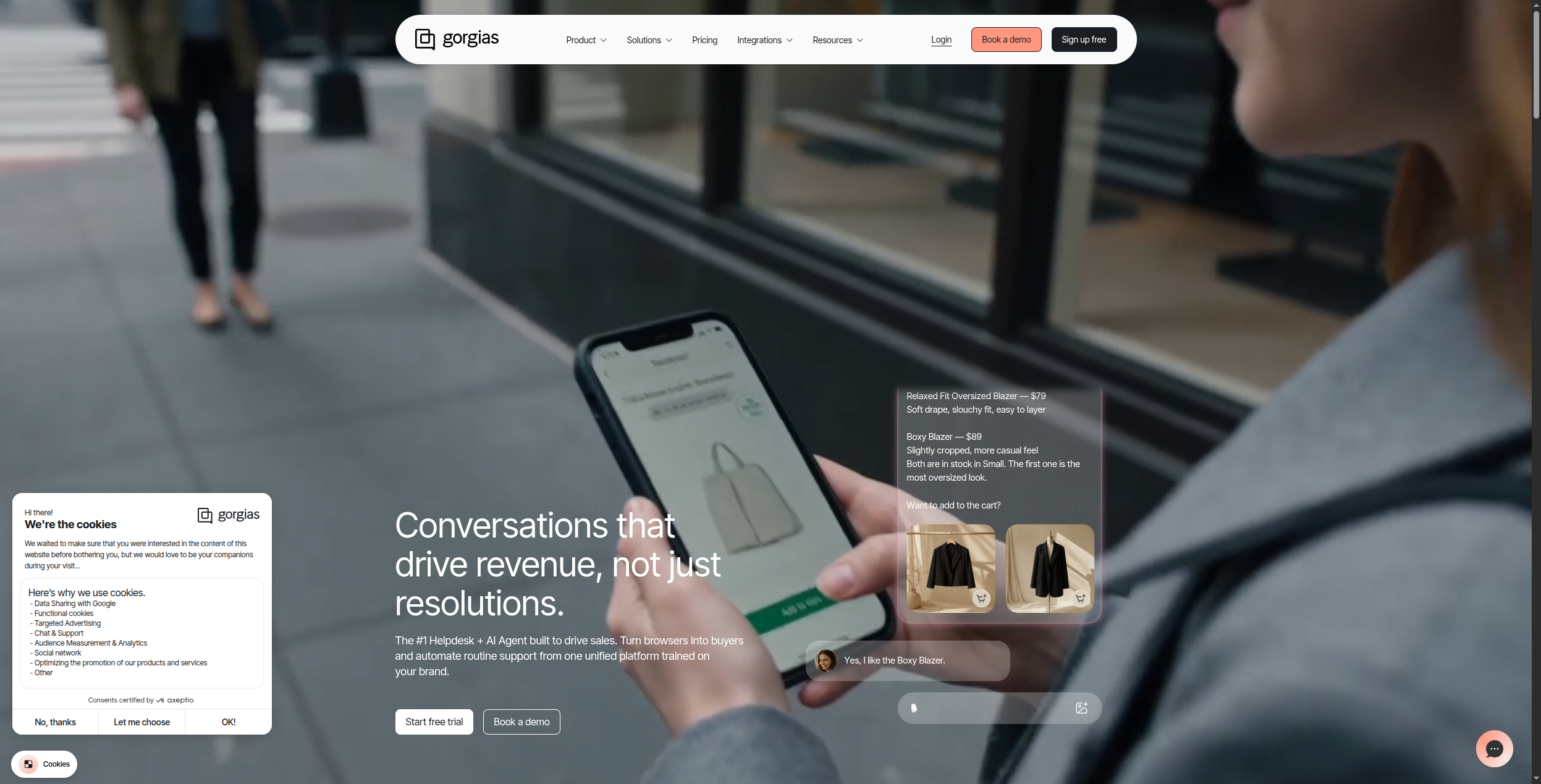
Gorgias
E-commerce support automation
From $10/mo
Shopify/WooCommerce stores
No
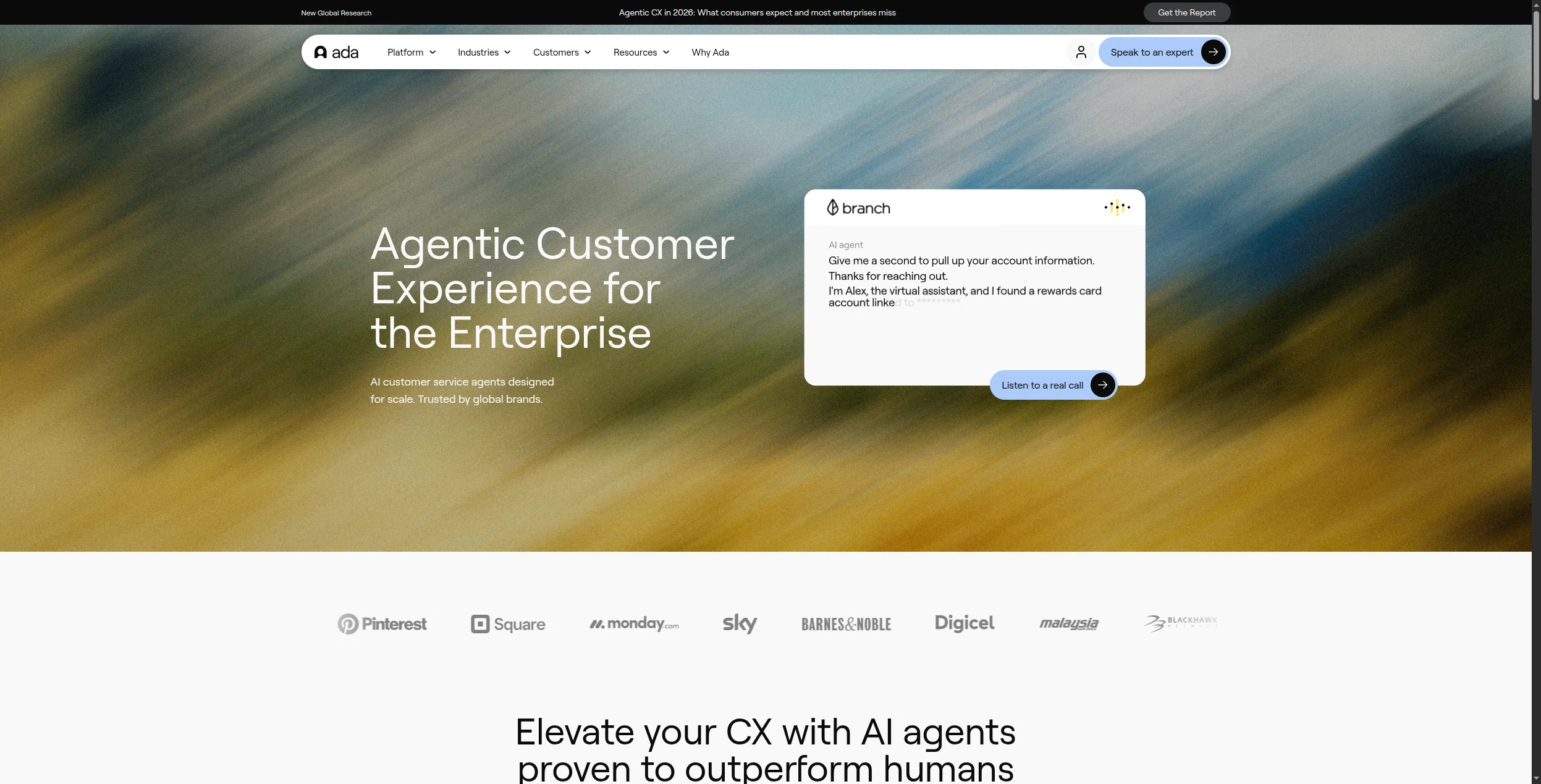
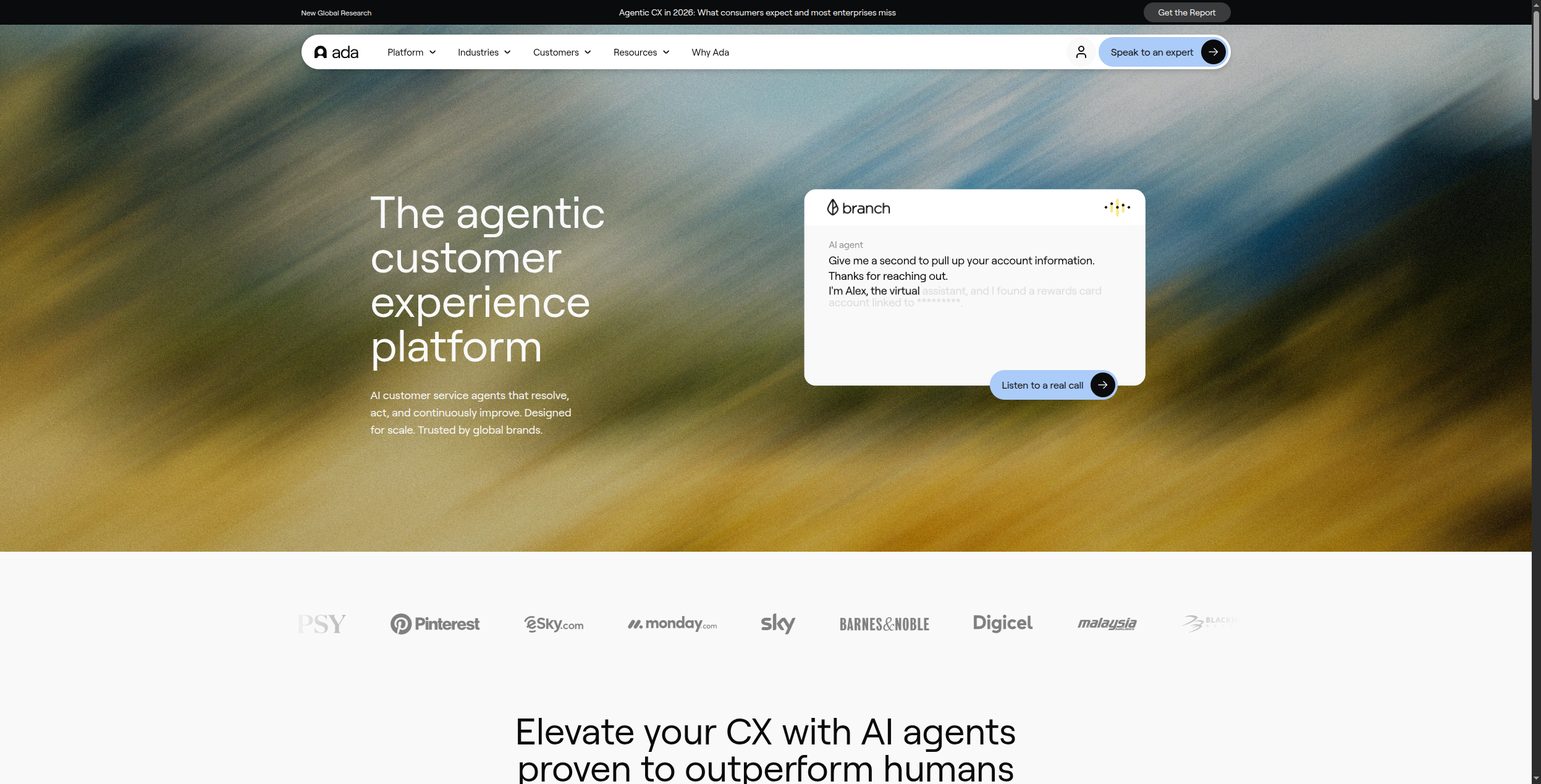
Ada
Enterprise no-code AI agent
Custom
Large-scale automation, 50%+ resolution rates
No
Tidio Lyro
Standalone conversational AI
From $42/mo
Upgrading existing Tidio accounts
Yes
1. FlowHunt — Best AI Agent for Customer Service That Resolves, Not Just Responds
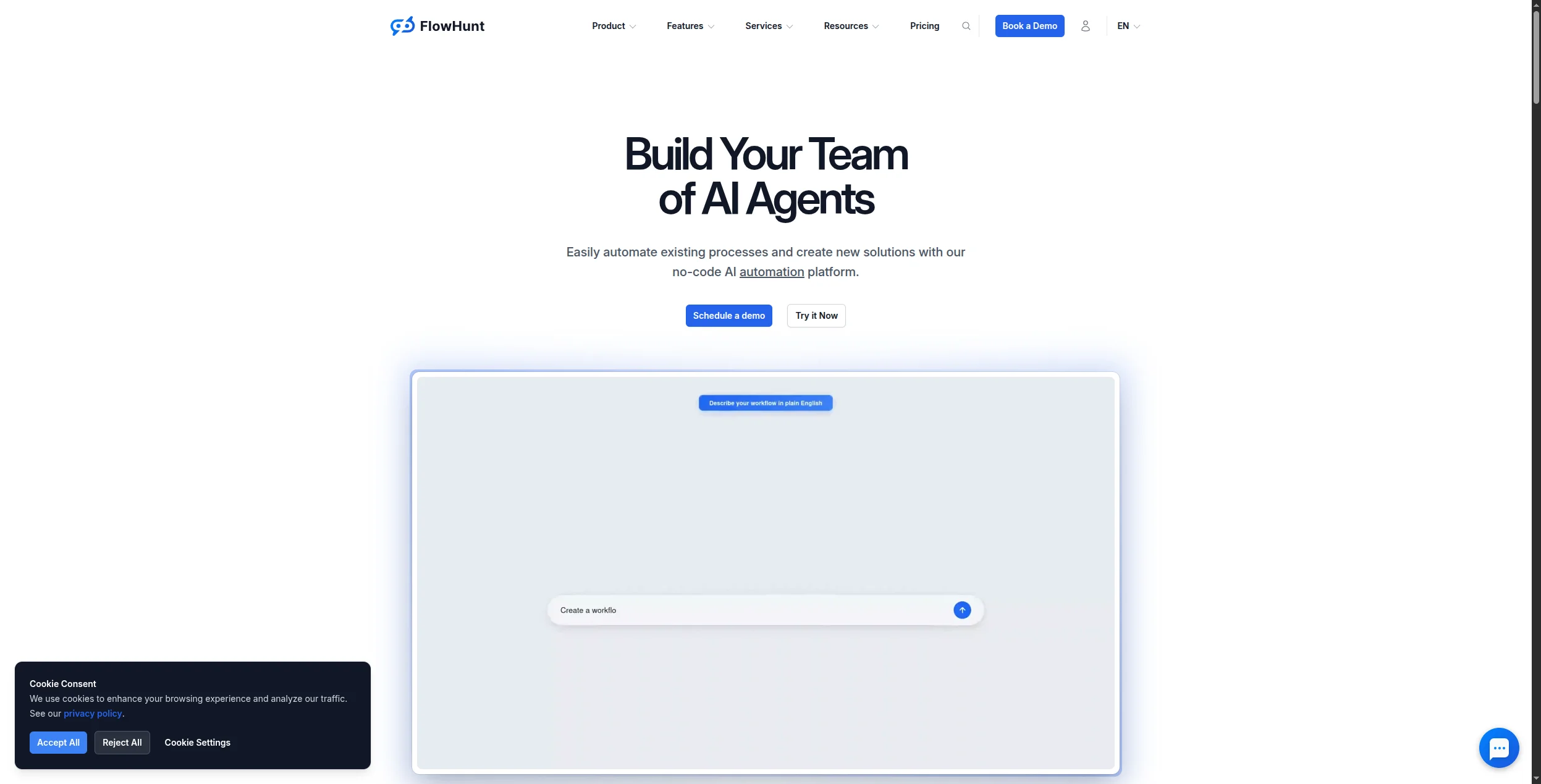
Most customer service chatbots are built around answering questions from a knowledge base. FlowHunt is built around taking action. Its AI agents can connect to your CRM, order management system, helpdesk, and knowledge base simultaneously — then reason over all of that context to actually resolve customer issues, not just surface FAQ answers.
A FlowHunt agent can handle “I ordered the wrong size, can you swap it?” by checking the order in your OMS, verifying the return window, initiating the exchange process, updating the CRM record, and sending a confirmation — without a human touching the conversation. That’s the gap between a chatbot and an AI agent.
Key strengths:
AI agents that take real actions (CRM lookups, order updates, escalation) — not just Q&A
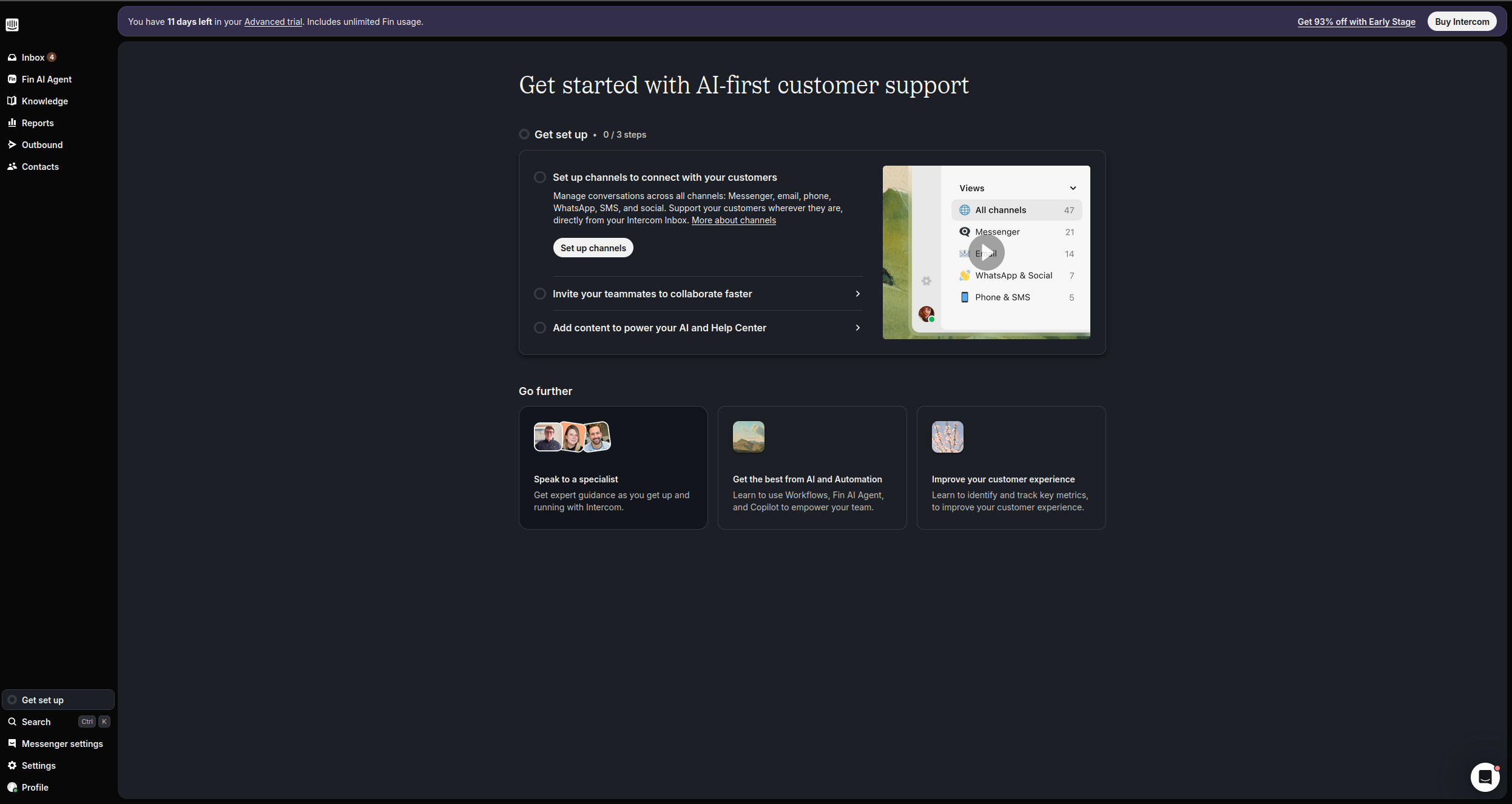
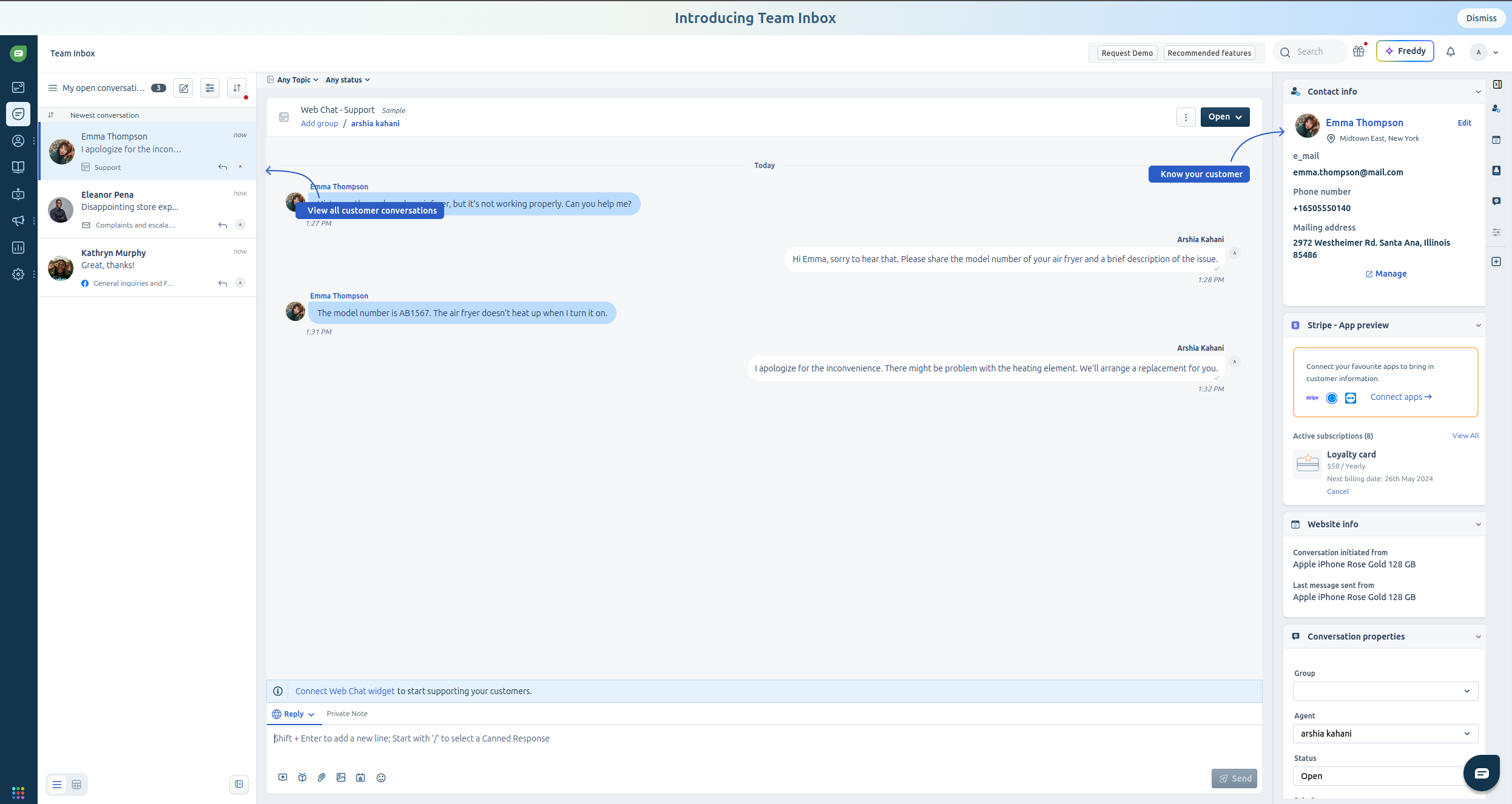
2. Intercom (Fin AI) — Best for SaaS and E-Commerce Teams at Scale
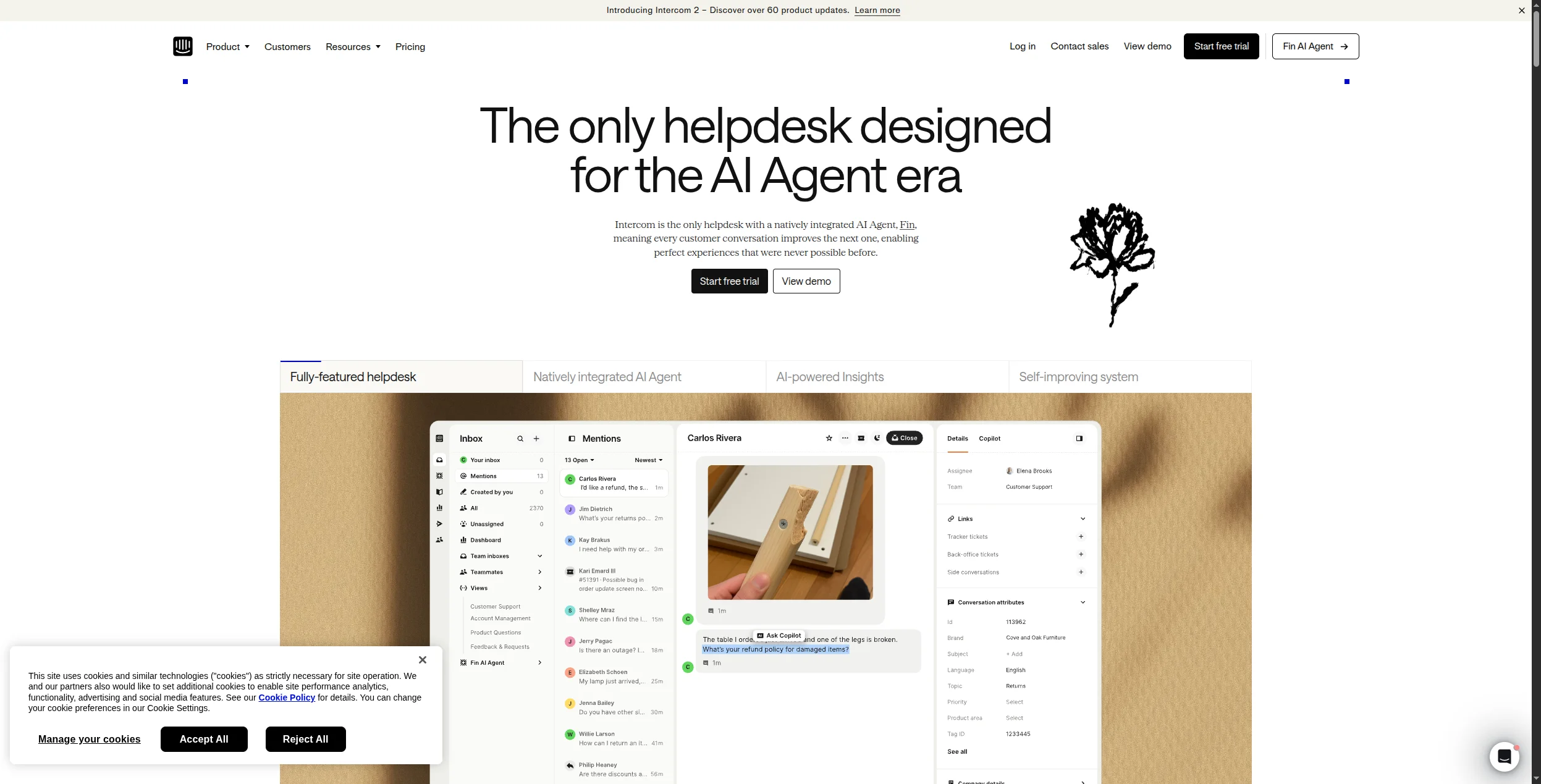
Intercom built its reputation on customer messaging, and its Fin AI agent — built on GPT-4 — is one of the most capable autonomous support bots available. Fin reads your help center, handles multi-turn conversations, and escalates to human agents seamlessly. Intercom reports customers achieving 40–60%+ resolution rates with Fin out-of-the-box.
The platform combines AI chat with inbox management, product tours, outbound messaging, and analytics — making it a full customer engagement platform, not just a support chatbot. For SaaS companies with self-serve support needs, it’s the default serious contender.
Pros:
Fin AI resolves a high share of queries autonomously
Seamless handoff from AI to human agent
Full omnichannel: web chat, mobile, email, WhatsApp
Strong analytics and CSAT tracking
Extensive app integrations
Cons:
Pricing scales with seats and usage — can get expensive for large teams
Fin works best with a well-maintained help center
Some features (proactive support, outbound) only on higher tiers
Pricing: Free trial. Paid from $39/month. Fin AI has per-resolution fees on some plans.
Best for: SaaS companies and e-commerce brands that want a polished, proven AI support layer with minimal configuration.
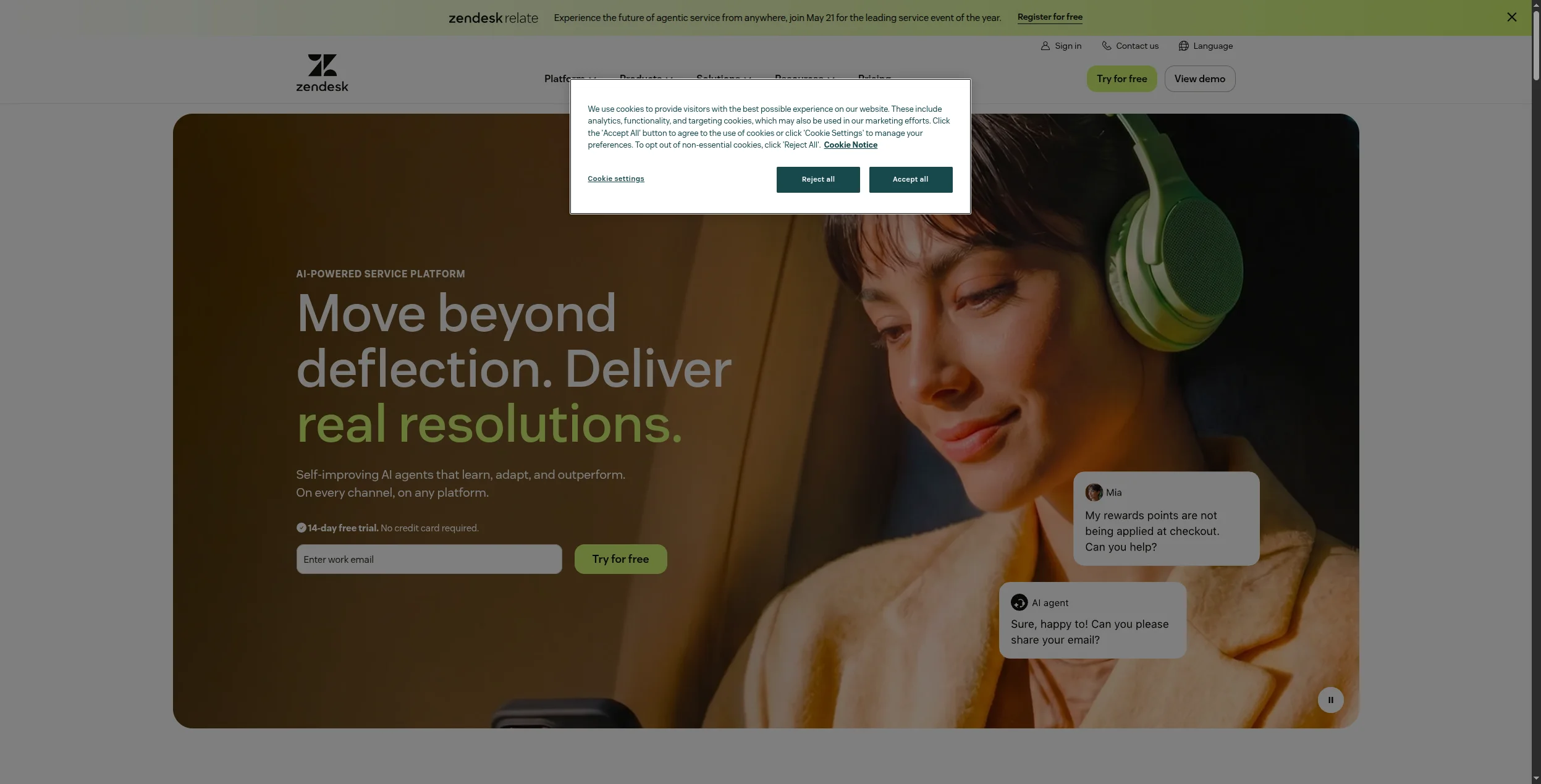
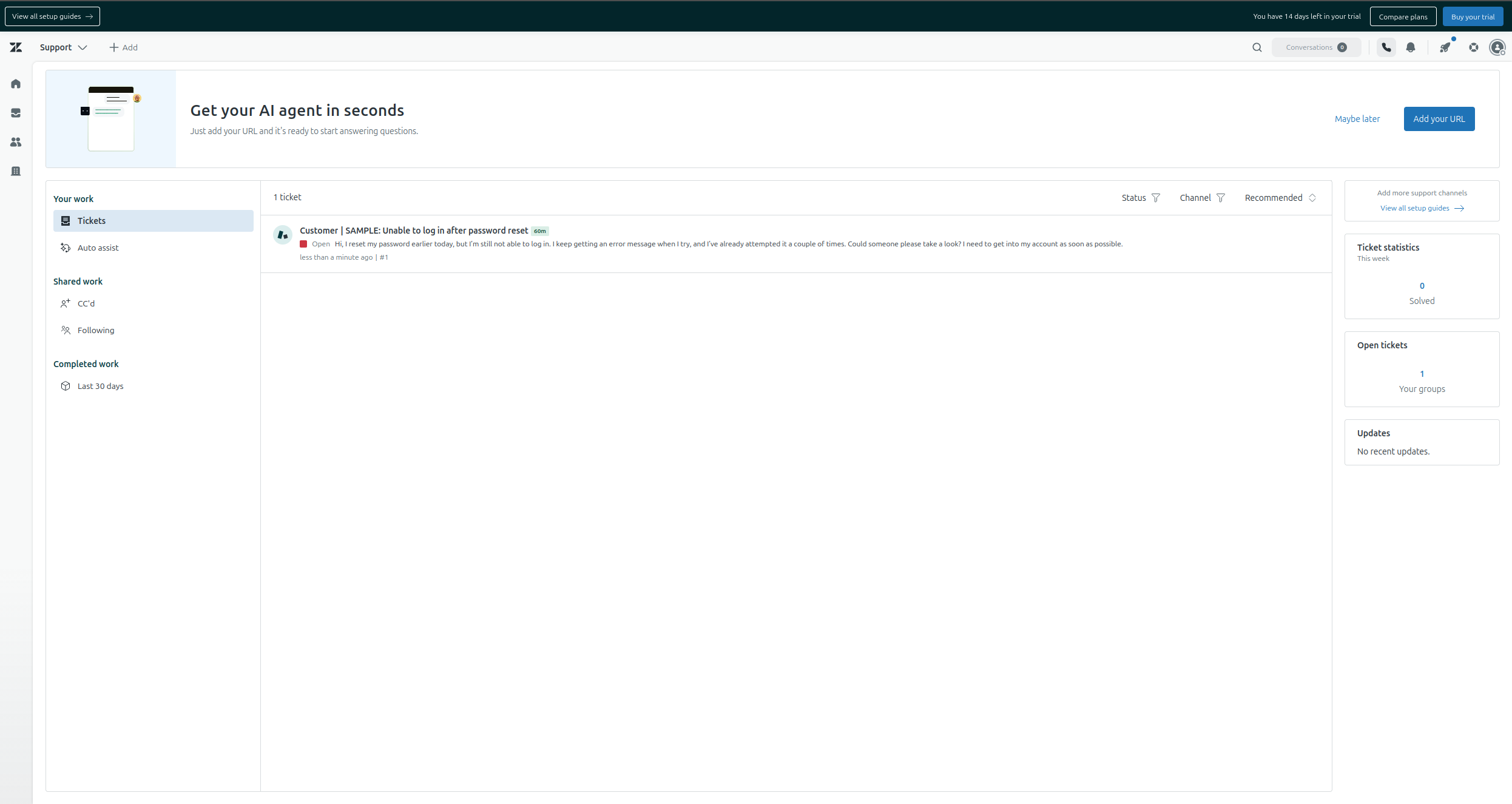
3. Zendesk AI — Best for Enterprise Customer Service Operations
Zendesk is the most widely deployed helpdesk platform in enterprise, and its AI layer — including AI triage, intelligent routing, suggested replies, and the Zendesk AI agent (formerly Answer Bot) — is deeply embedded throughout the product. For large support orgs already on Zendesk, the AI features are an obvious evolution of existing workflows.
Its AI doesn’t operate as a separate chatbot so much as an intelligence layer over every touchpoint: auto-categorizing tickets, surfacing relevant knowledge articles to agents, suggesting macro responses, and flagging high-priority cases.
Pros:
AI woven throughout ticketing, routing, and agent tooling
Industry’s most mature ecosystem of integrations and apps
Strong workforce management, SLA tracking, and reporting
Enterprise security, compliance, and governance
Cons:
Expensive — meaningful AI features require higher-tier plans
Complex setup for organizations without an existing Zendesk admin
Pricing: From $55/agent/month (Suite Team). AI features on higher tiers.
Best for: Enterprise support organizations managing high ticket volumes who are already in or considering the Zendesk ecosystem.
Join our newsletter
Get latest tips, trends, and deals for free.
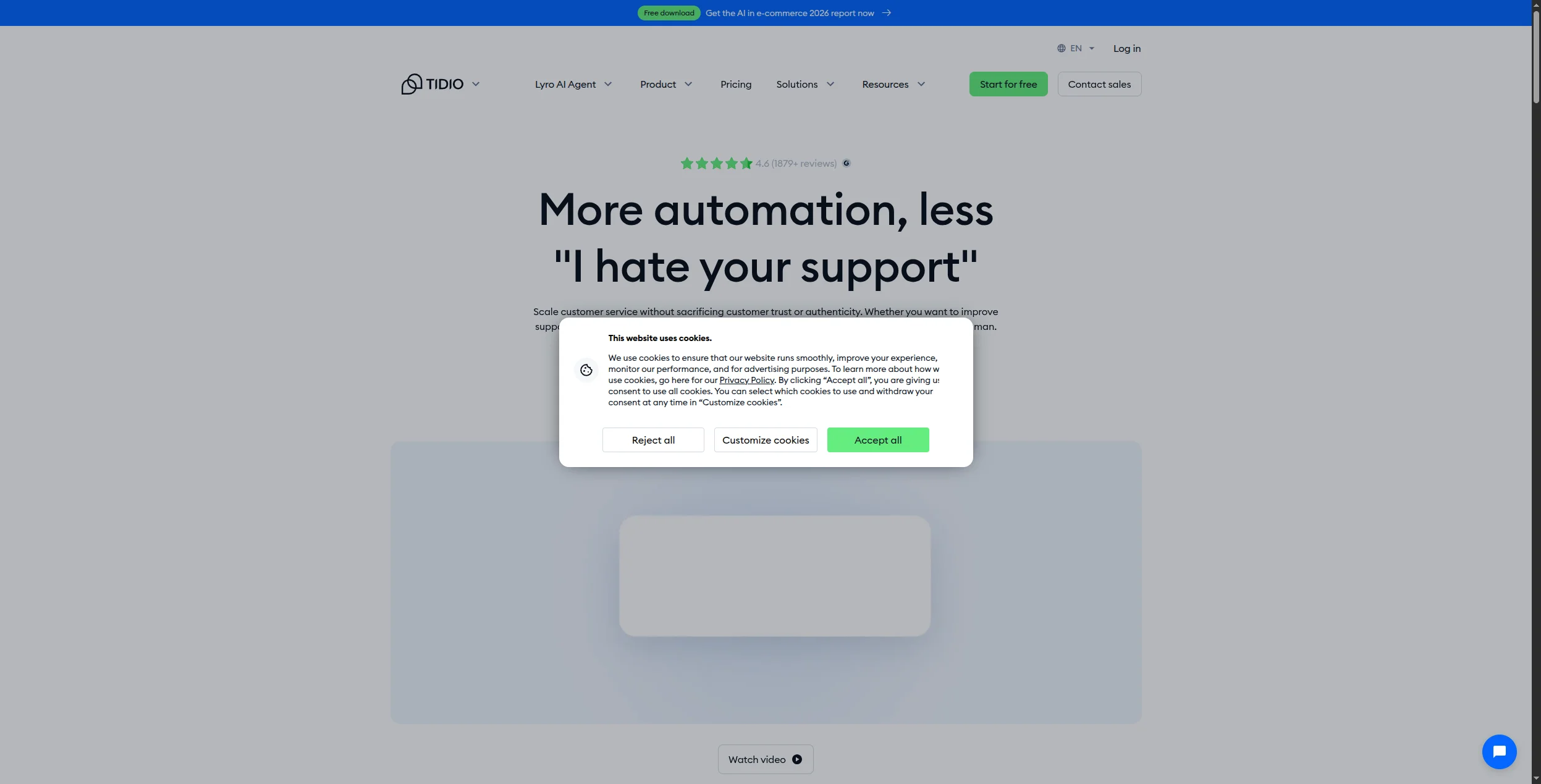
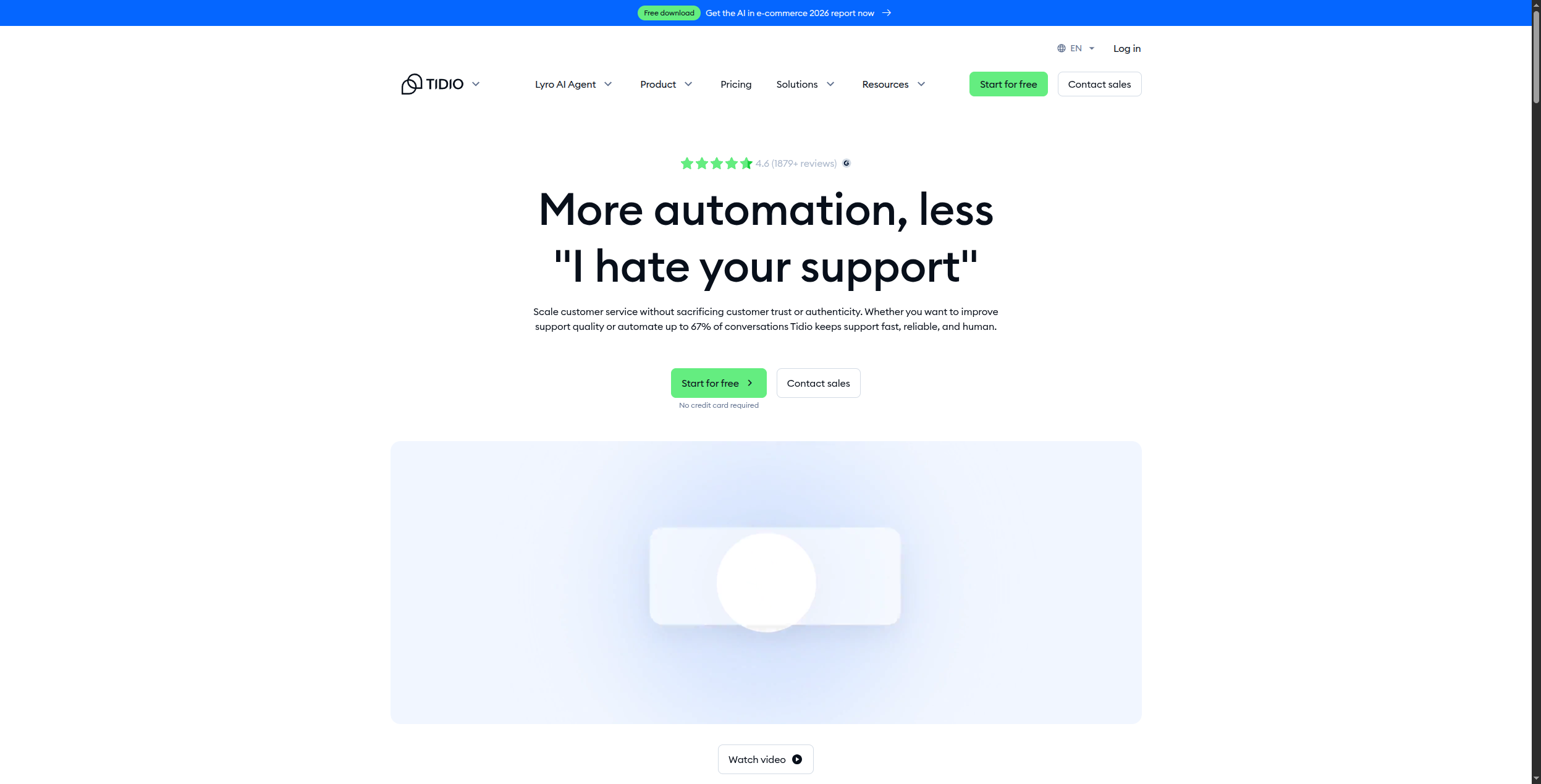
4. Tidio — Best AI Chatbot for Small E-Commerce and Startup Teams
Tidio is the speed-to-value champion on this list. You can have an AI chatbot live on your website in under 15 minutes, trained on your FAQ or help content. Its Lyro AI handles multi-turn conversations and claims up to 70% deflection rates for common queries.
For small e-commerce stores and startup teams with limited support headcount, Tidio hits a sweet spot: genuinely useful AI, an affordable price point, and a free tier that’s actually functional. It integrates with Shopify, WooCommerce, and major help desk tools without complex configuration.
Pros:
Fast setup — live in minutes, no technical knowledge required
Lyro AI handles multi-turn conversations naturally
Generous free tier
Shopify and WooCommerce native integrations
Live chat + AI chatbot + email in one tool
Cons:
Lyro AI limit on lower plans (50 conversations/month)
Less powerful for complex, multi-system action flows
Analytics less sophisticated than enterprise tools
Pricing: Free (50 live chat conversations). Lyro AI from $42/month.
Best for: E-commerce stores and small SaaS teams that want fast AI chatbot deployment without DevOps overhead.
5. Drift — Best for B2B Sales-Led Companies Blending Support and Pipeline
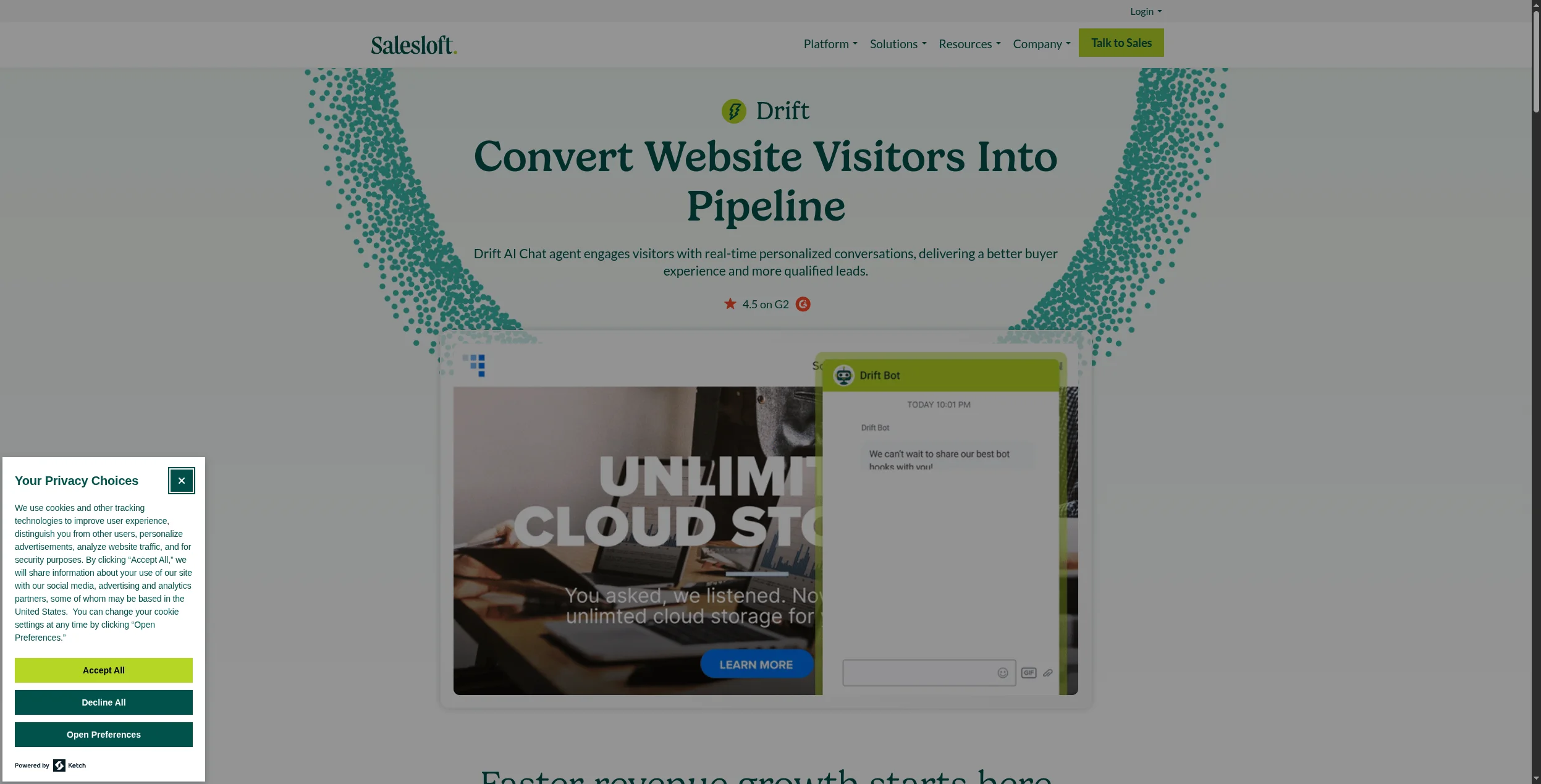
Drift (now part of Salesloft) sits at the intersection of sales and customer service — its AI chatbot qualifies leads, books meetings, and handles inbound support queries within the same platform. For B2B companies where support conversations can turn into expansion opportunities, that context is valuable.
Its real-time buyer intent data lets the bot treat a high-value prospect’s support request differently from a trial user’s — routing, prioritizing, and personalizing based on CRM data and firmographics. If your support team is also expected to protect and grow revenue, Drift’s model makes sense.
Pros:
Combines sales qualification and customer support in one bot
Real-time intent data for personalized routing
Deep Salesforce and HubSpot integration
Strong B2B brand recognition
Cons:
Acquired into Salesloft — product roadmap less clear than standalone tools
Pricing not publicly listed; enterprise-focused
Less suited for pure customer service use cases
No meaningful free tier
Pricing: Custom (contact sales).
Best for: B2B SaaS companies where inbound support and sales pipeline overlap, and routing logic needs to reflect deal stage and account value.
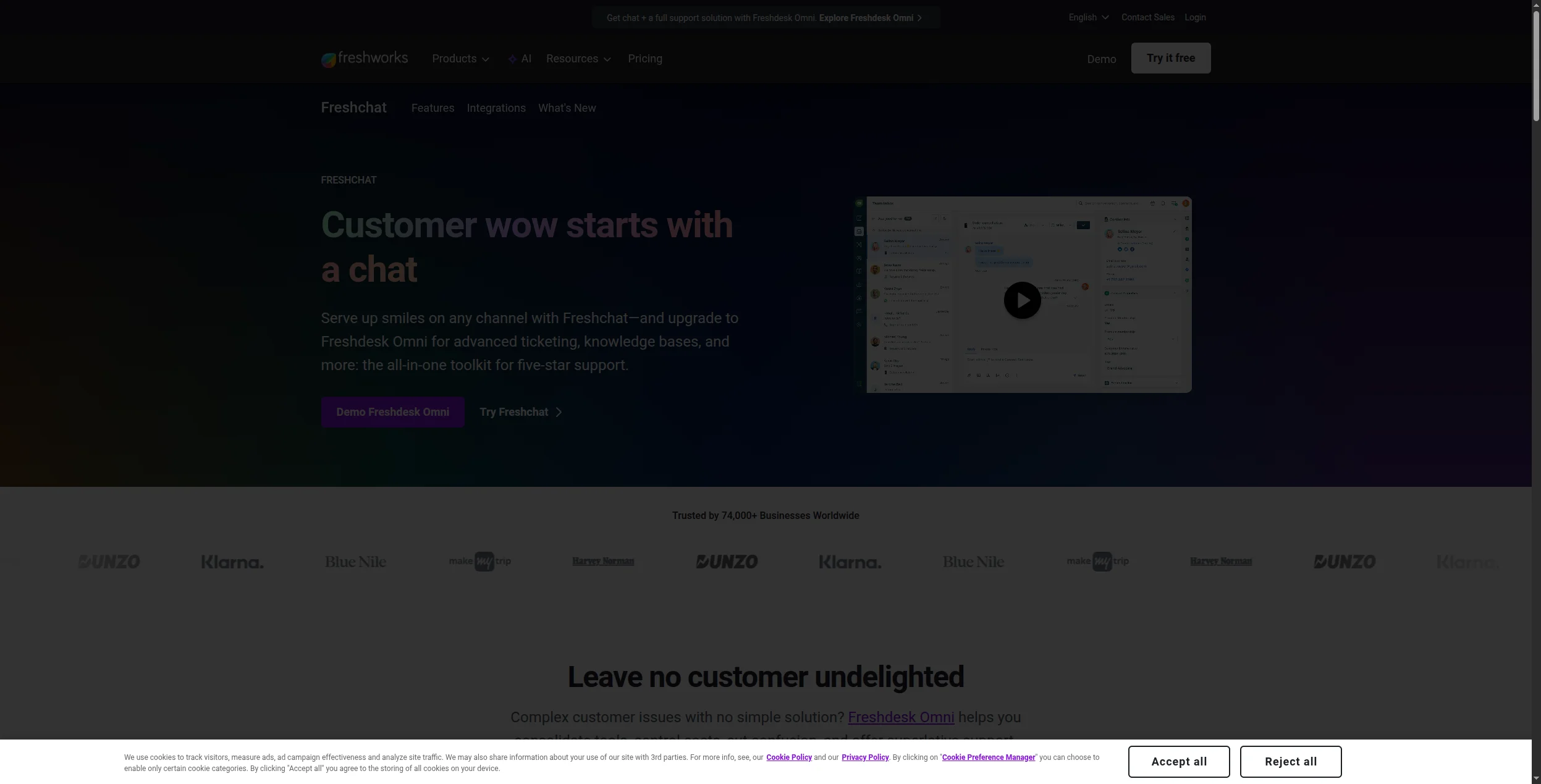
6. Freshchat — Best for Teams in the Freshworks Ecosystem
Freshchat is Freshworks’ AI-powered messaging tool, and it shines for teams already using Freshdesk, Freshsales, or other Freshworks products. Its Freddy AI layer handles auto-triage, suggested replies, AI-powered chatbots, and agent assist — all connected to the broader Freshworks data model.
As a standalone customer service chatbot, it’s competitive with Tidio and Intercom at the mid-market level. As part of the Freshworks suite, it’s often the most cost-effective path to a unified CX platform.
Pros:
Native AI (Freddy) across chat, email, and voice
Competitive pricing for the feature set
Excellent Freshdesk/Freshsales integration
Omnichannel: web, mobile, WhatsApp, Apple Business Chat
Cons:
Freddy AI less capable than Intercom Fin or FlowHunt for complex reasoning
Best value only if you’re using other Freshworks products
UI less polished than Intercom at the high end
Pricing: Free tier. Paid from $15/agent/month.
Best for: Mid-market teams using or evaluating the Freshworks CX stack who want AI messaging without switching platforms.
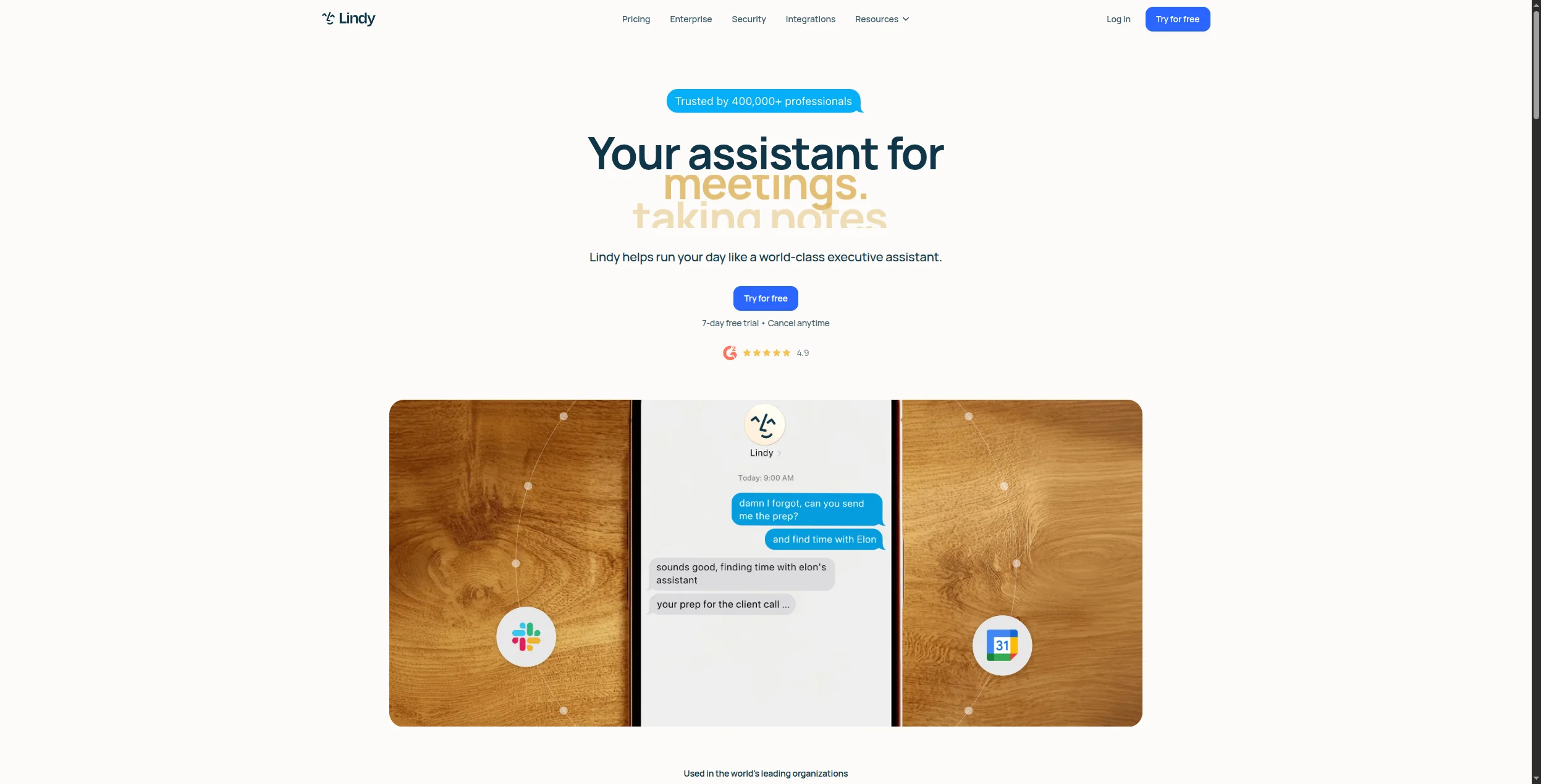
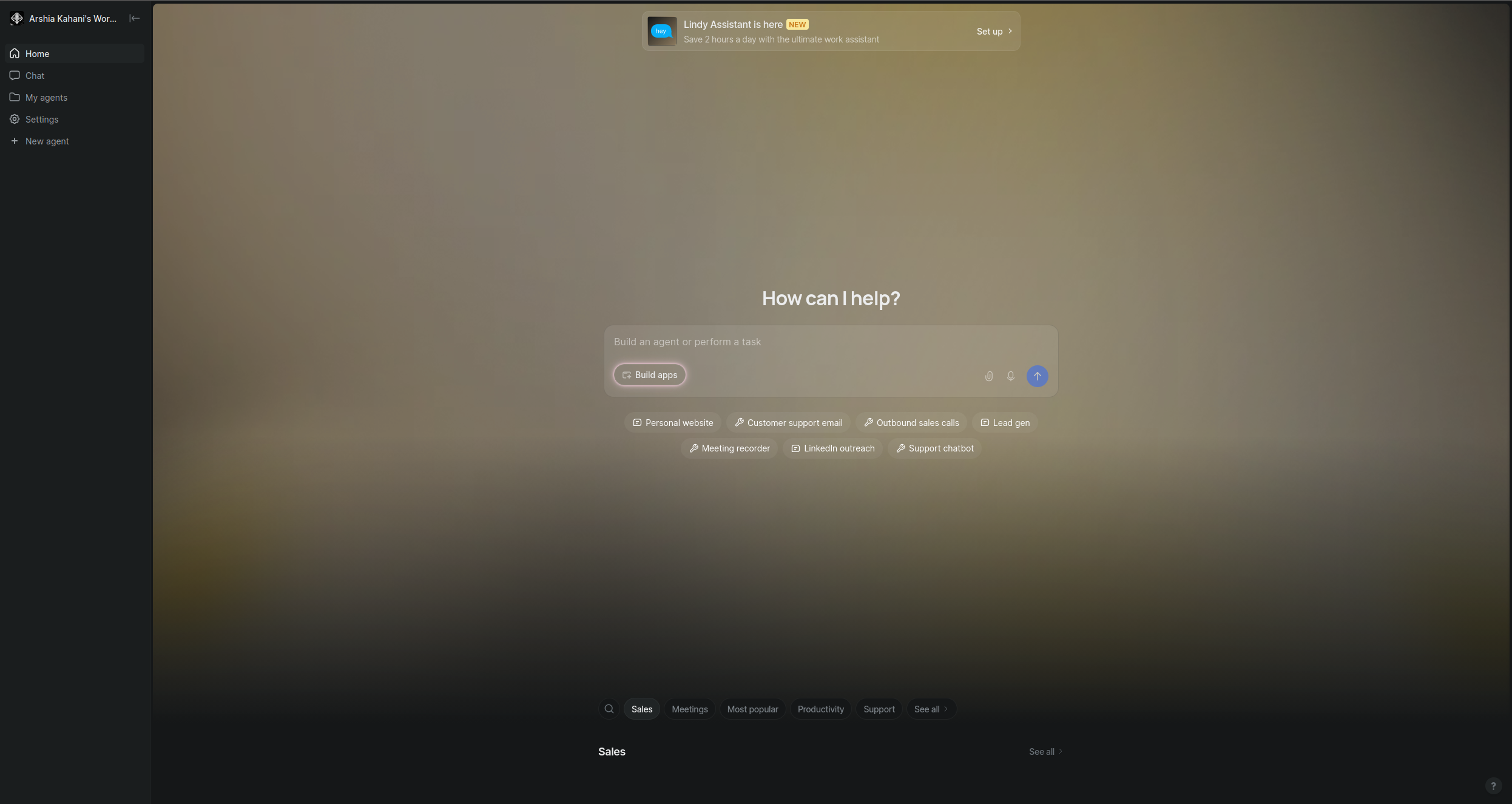
7. Lindy — Best for AI-Powered Async and Email Support
Lindy is an AI agent platform, not a traditional customer service chatbot. But for teams where support happens primarily through email — reading, triaging, drafting replies, updating tickets — Lindy is a strong option. You can configure a Lindy agent to read inbound support emails, look up context in your CRM or helpdesk, draft a reply, and either send it autonomously or queue it for human review.
It’s less suited for real-time web chat and more suited for async workflows where the AI works through a queue. For support teams drowning in email volume, that’s a legitimate superpower.
Pros:
Excels at email-based async support workflows
Agents can read, draft, and send replies autonomously
Connects to CRM, helpdesk, and knowledge sources
No-code agent configuration
Cons:
Less suited for live chat or real-time support
Smaller integration library than Intercom or Zendesk
Not purpose-built for customer service (general agent platform)
Pricing: Free tier. Paid from $49.99/month.
Best for: Support teams with high inbound email volume who want AI to draft and triage without a full helpdesk migration.
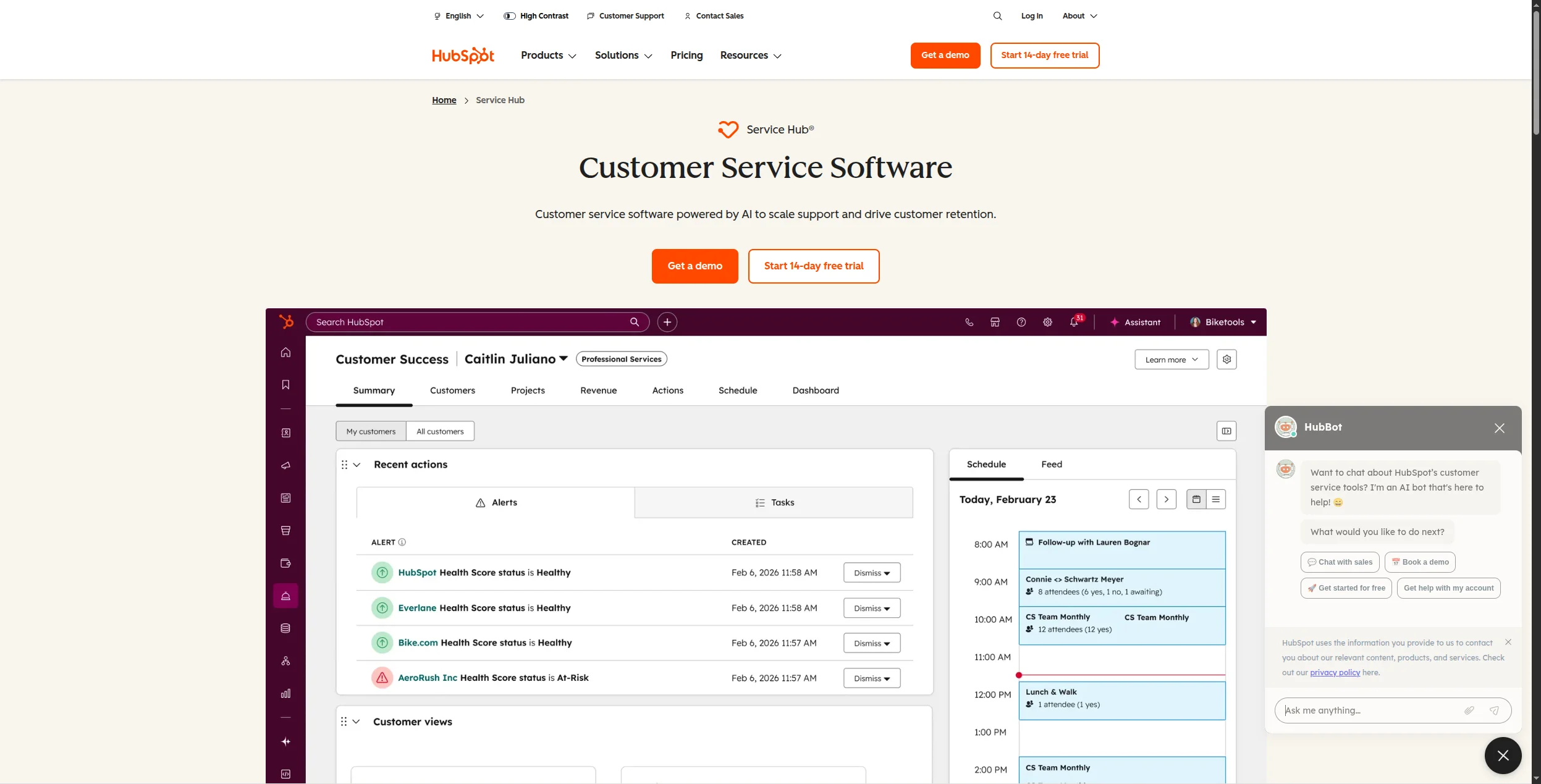
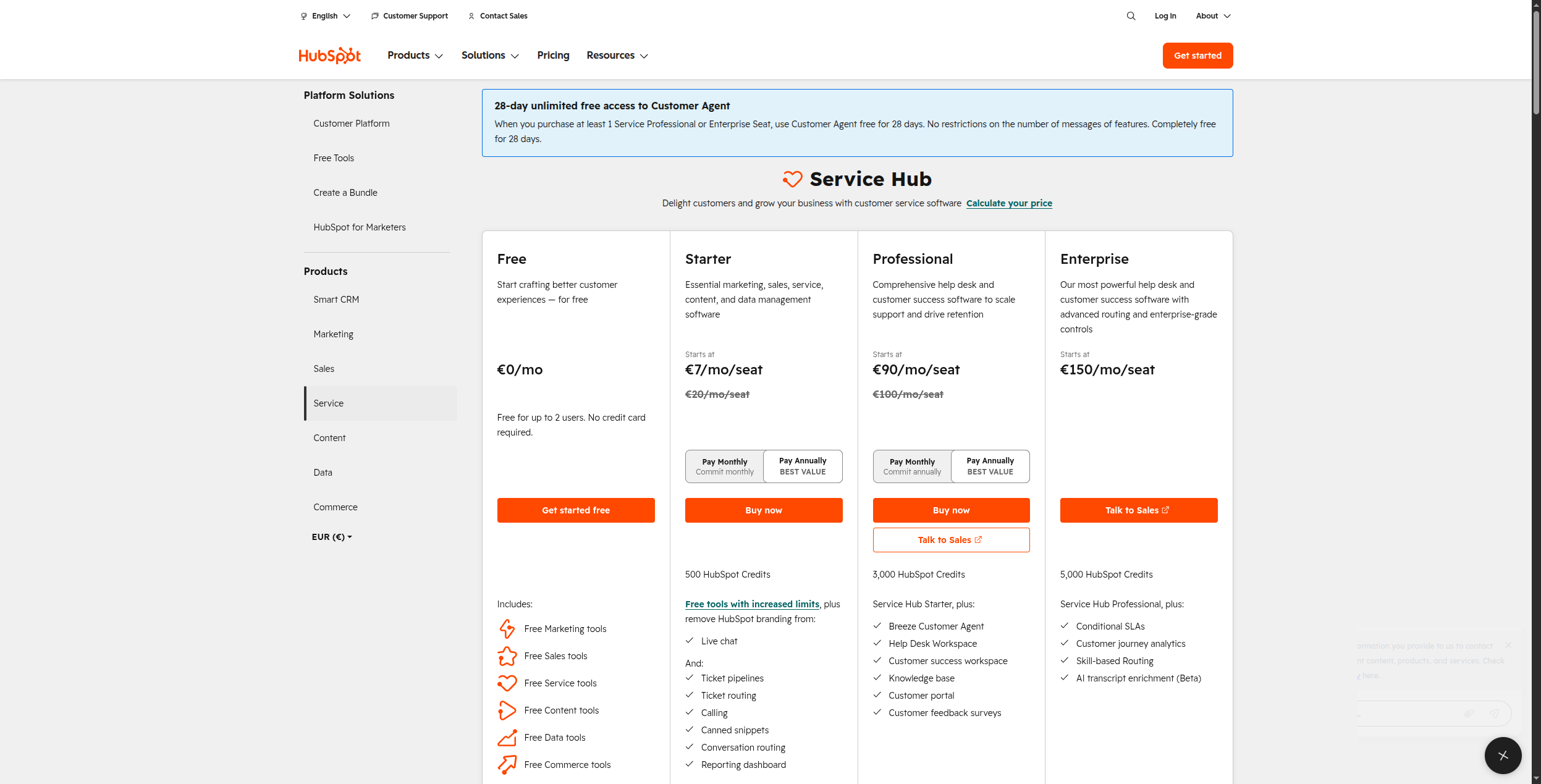
8. HubSpot Service Hub — Best for Teams Already in the HubSpot Ecosystem
HubSpot Service Hub brings AI chatbots, ticketing, knowledge base, customer portal, and CSAT tracking into the same CRM where your sales and marketing teams already live. For HubSpot-centric organizations, that unified data model is a genuine advantage — the chatbot knows a contact’s full history across sales, marketing, and support before the conversation even starts.
The chatbot builder is visual and accessible, the free tier is functional, and AI features (conversation intelligence, suggested replies, AI chatbot builder) are progressively available across tiers.
Pros:
Unified contact history across sales, marketing, and support
Generous free tier with real functionality
Visual chatbot builder, no code required
Strong knowledge base and customer portal
Cons:
AI capabilities less advanced than Intercom Fin or FlowHunt
Full AI features require higher-tier plans
Best value only within a HubSpot-heavy stack
Pricing: Free. Paid Service Hub from $15/seat/month.
Best for: Companies running HubSpot for CRM and marketing who want support in the same platform, with AI assistance built in.
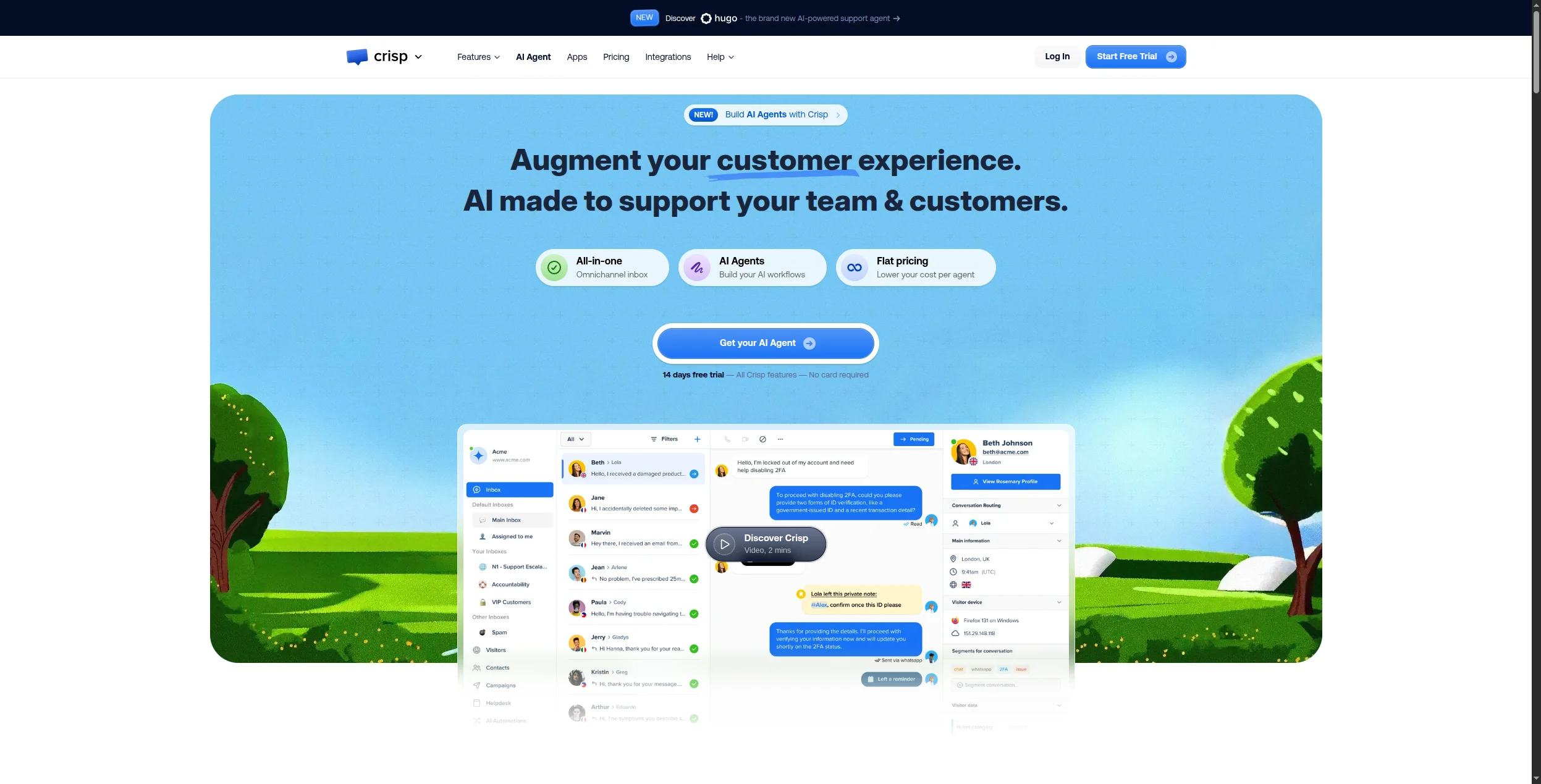
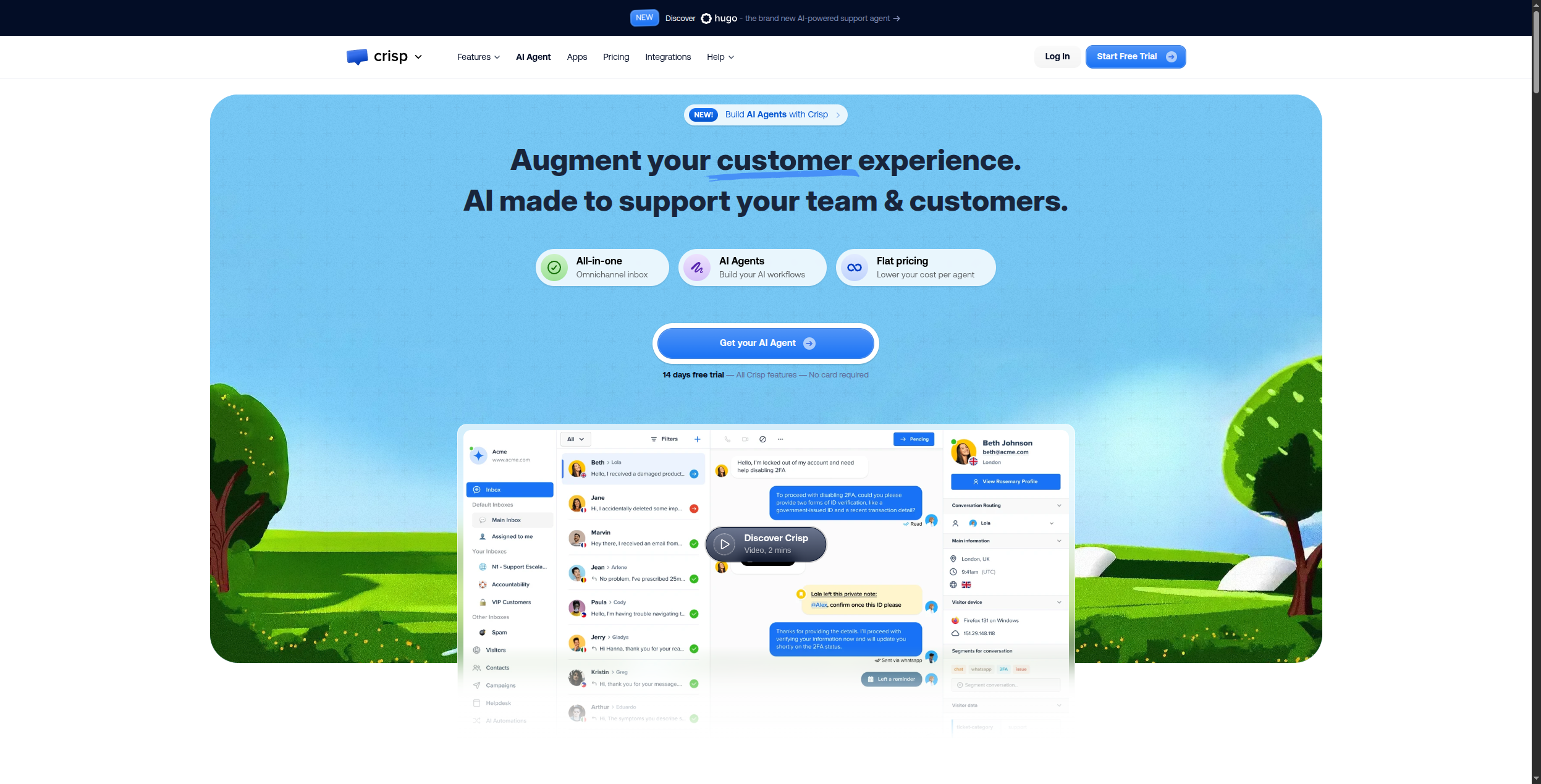
9. Crisp — Best Budget Option for Startups and Small Teams
Crisp is the budget-friendly choice for teams that want more than basic live chat but aren’t ready to invest in Intercom pricing. It offers a shared inbox, live chat widget, AI chatbot, email support, and a basic CRM — all for significantly less than its larger competitors.
Its AI capabilities are more limited — think smart FAQ suggestions and basic flow automation rather than autonomous multi-turn agents — but for teams at an early stage, Crisp provides remarkable value at a low price.
Pros:
Generous free tier (2 seats, unlimited contacts)
Affordable paid plans ($25–95/month for full teams)
Multi-channel: chat, email, Messenger, Telegram
Simple, clean interface
Self-serve setup in minutes
Cons:
AI capabilities significantly less advanced than Intercom or FlowHunt
Limited automation depth for complex workflows
Analytics less sophisticated than enterprise tools
Pricing: Free (2 seats). Pro from $25/month. Unlimited from $95/month.
Best for: Early-stage startups and small teams that need a functional multi-channel support tool without a significant monthly commitment.
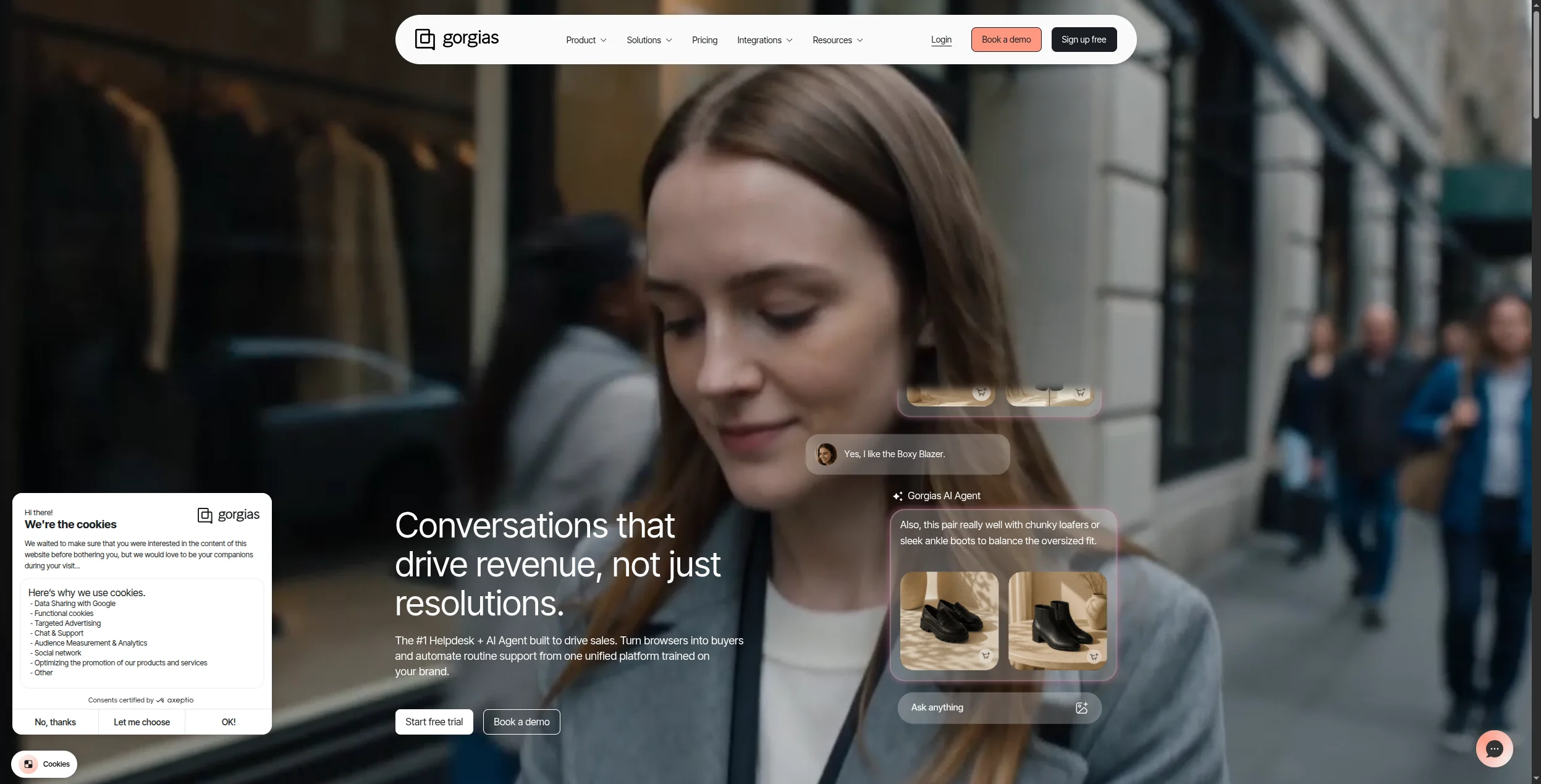
10. Gorgias — Best AI Chatbot for E-Commerce Stores
Gorgias is purpose-built for e-commerce customer service, with deeper Shopify, WooCommerce, and Magento integration than any other tool on this list. It can auto-reply to order status questions by pulling real data from your store, process refunds, update subscriptions, and tag tickets by order value — all without human involvement.
For DTC brands where “where’s my order?” accounts for 40–60% of support volume, Gorgias’ AI auto-reply handles that category almost entirely autonomously. The platform’s revenue-based metrics (support’s influence on conversions and LTV) are also unique in the space.
Pros:
Deepest Shopify/WooCommerce integration available
AI auto-reply for order-related queries with real data
Revenue impact tracking for support interactions
Macros, rules, and automation engine
Cons:
Less suited for non-e-commerce support teams
Ticket-based pricing can scale quickly
AI depth less than general-purpose platforms for novel queries
Pricing: From $10/month (50 tickets). Scales with ticket volume.
Best for: DTC and e-commerce brands on Shopify or WooCommerce wanting to automate high-volume order-related support.
11. Ada — Best Enterprise No-Code AI Agent at Scale
Ada is an enterprise-grade AI customer service platform focused on automation rate as the primary metric. Its no-code agent builder lets non-technical teams create sophisticated AI flows, and it publishes case studies showing 60–80% automation rates at scale across telecom, fintech, and retail verticals.
Ada operates as a standalone AI agent layer that sits in front of your helpdesk — handling what it can, escalating with context what it can’t. It supports 50+ languages natively and has strong compliance controls (SOC 2, GDPR) that enterprise procurement teams require.
Pros:
No-code agent building with sophisticated branching logic
Proven high automation rates at enterprise scale
50+ language support natively
Enterprise compliance: SOC 2, GDPR, HIPAA
Strong track record in telecom, fintech, and retail
Cons:
Custom pricing — typically significant investment
Less suited for small teams or early-stage companies
Setup and configuration time is meaningful
Pricing: Custom (contact sales).
Best for: Enterprise organizations in regulated industries that need proven, high-automation AI customer service at scale.
How to Choose the Right AI Chatbot for Customer Service
The right tool depends on your team’s specific situation. A few key decision points:
If your top support queries require actions (order lookups, CRM updates, account changes) — choose a platform built on AI agents, not FAQ bots. FlowHunt is the strongest option here; Ada and Intercom Fin also perform well.
If you’re on Shopify or WooCommerce and most queries are order-related, Gorgias is purpose-built for exactly that use case and will outperform general-purpose tools.
If you’re a small team or startup with limited budget, Tidio or Crisp give you genuine AI capability on a free or low-cost plan. Don’t over-invest before you understand your query mix.
If you’re enterprise and already on Zendesk, the AI layer there is the path of least resistance. If you’re evaluating from scratch, Ada, Intercom, and FlowHunt are all worth a serious evaluation.
If your support is primarily async email, Lindy’s agent model is underrated for this use case.
Pro Tip: Before choosing a platform, classify your top 20 support queries into three buckets: (1) pure information (answered from docs), (2) action required (needs system access), (3) judgment required (needs human). Most tools handle bucket 1. Only AI agent platforms handle bucket 2 reliably. Bucket 3 should always route to a human. Your ratio between these buckets should drive your platform choice.
The best AI chatbot for customer service depends on your team size, stack, and support complexity. FlowHunt is strongest for teams that need AI agents to take actions (not just answer questions) — like looking up orders, updating CRM records, or routing cases intelligently. For SMBs, Tidio is fast to deploy. For enterprise, Zendesk AI or Ada are well-established.
Pricing varies widely. Free tiers are available from FlowHunt, Crisp, Tidio, and HubSpot. SMB tools like Tidio and Freshchat start around $19–29/month. Enterprise platforms like Zendesk AI, Ada, and Intercom typically cost $1,000–$10,000+/month depending on volume and features.
Not entirely — and the best implementations don't try to. Modern AI chatbots handle 40–80% of queries autonomously (FAQs, order status, basic troubleshooting) and route complex cases to humans with full context. The goal is to free agents for high-value, empathy-required interactions, not eliminate them.
A chatbot follows scripted decision trees — it answers questions from a fixed knowledge base. An AI agent can reason, take actions (update records, check inventory, process refunds), use tools, and handle novel situations it wasn't explicitly programmed for. FlowHunt and Lindy operate as agents; many traditional customer service tools still use chatbot-style flows.
Most modern platforms (Intercom Fin, Tidio Lyro, Ada, FlowHunt) let you connect a URL, upload documents, or sync a help center, then use that content to train the AI. FlowHunt additionally lets you connect live data sources — CRM, order management, knowledge bases — so the agent has real-time context, not just static docs.
Arshia is an AI Workflow Engineer at FlowHunt. With a background in computer science and a passion for AI, he specializes in creating efficient workflows that integrate AI tools into everyday tasks, enhancing productivity and creativity.
Arshia Kahani
AI Workflow Engineer
Build a Customer Service AI Agent That Actually Resolves Issues
FlowHunt agents don't just answer FAQs — they look up orders, update records, escalate intelligently, and hand off to humans with full context. No scripted flows required.
Best AI Agent Tools in 2026: 12 Platforms for Building and Running AI Agents
Ranked and reviewed: the 12 best AI agent tools in 2026. From no-code agent builders to open-source frameworks — find the right platform for your team's AI stra...
Best AI Agent Builder in 2026: 12 Tools Ranked and Reviewed
Ranked and reviewed: the 12 best AI agent builders in 2026. Comparison table, pricing, free tiers, and a clear verdict on which platform fits your use case.