10 najlepších softvérových platforiem pre marketingovú automatizáciu v roku 2026: hodnotenie a recenzie
10 najlepších softvérových platforiem pre marketingovú automatizáciu v roku 2026, hodnotených podľa AI schopností, jednoduchosti použitia a cien. Nájdite tú správnu platformu pre veľkosť a stack vášho tímu.
Marketing automation software has become table stakes for growth teams — but the definition of what counts as “automation” has shifted dramatically. In 2026, the gap between a basic email sequencer and a true AI-native marketing platform is wider than ever.
This guide ranks the 10 best marketing automation software platforms based on AI capability, automation depth, ease of use, integration ecosystem, and pricing. Whether you’re a lean startup or an enterprise with a global marketing operations team, there’s a clear best choice for your situation.
Quick Comparison Table
Platform
Best For
Starting Price
Free Tier
AI Capability
FlowHunt
AI-driven marketing workflows
Free + usage-based
✅
Native AI agent automation
HubSpot
All-in-one marketing suite
$800/mo (Pro)
✅ (limited)
AI content, lead scoring
ActiveCampaign
Email + CRM automation
$15/mo
❌
Predictive sending, AI content
Klaviyo
eCommerce email & SMS
$20/mo
✅
Behavioural segmentation AI
Marketo
Enterprise B2B marketing
Custom
❌
ABM, revenue attribution
Brevo
Multi-channel, budget-friendly
Free
✅
Basic AI suggestions
Mailchimp
Simple email marketing
Free
✅
AI subject lines, content blocks
Salesforce MC
Enterprise CRM-integrated
Custom
❌
AI Einstein, journey builder
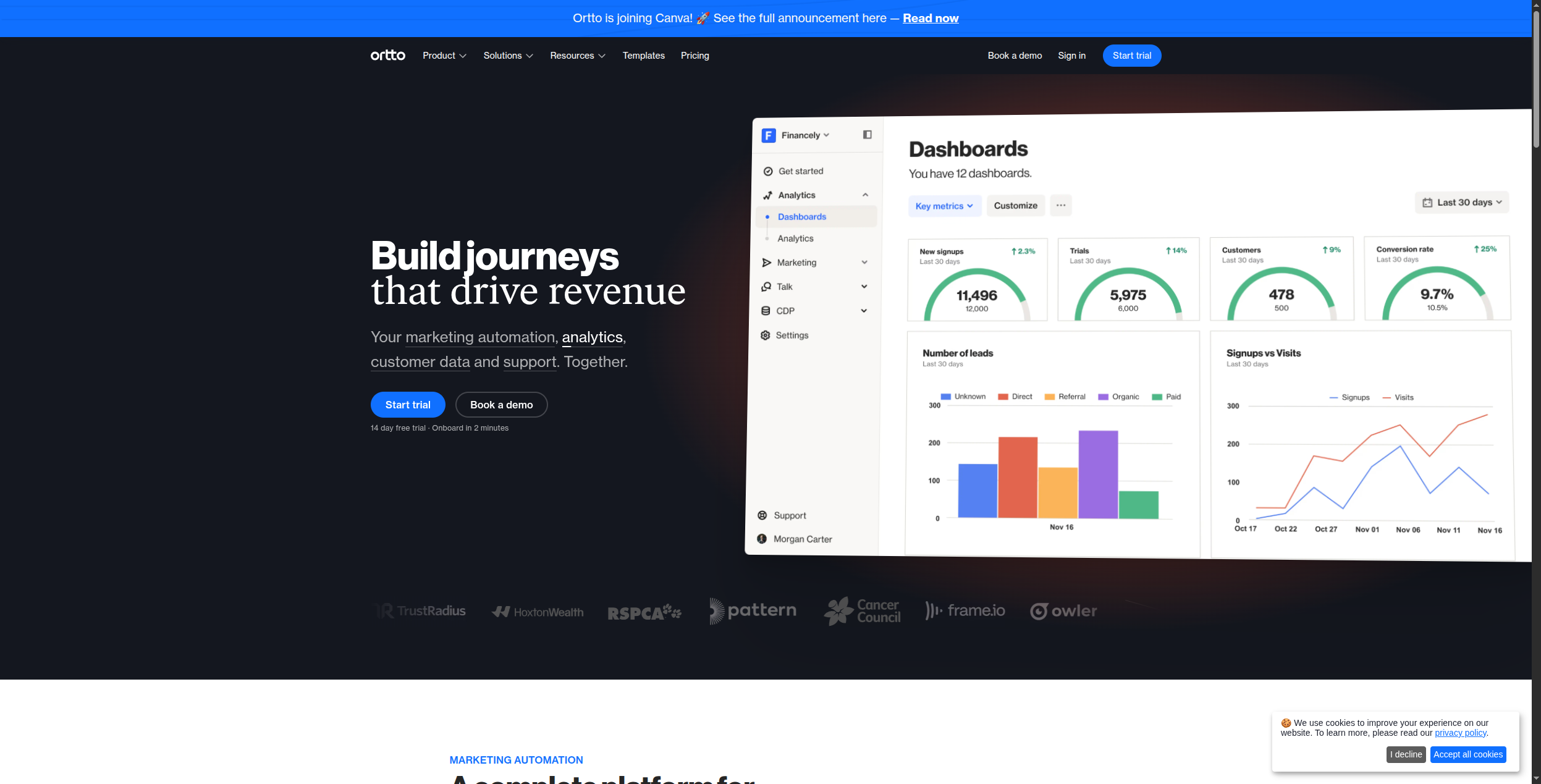
Ortto
CDP + automation unified
$509/mo
❌
Predictive analytics
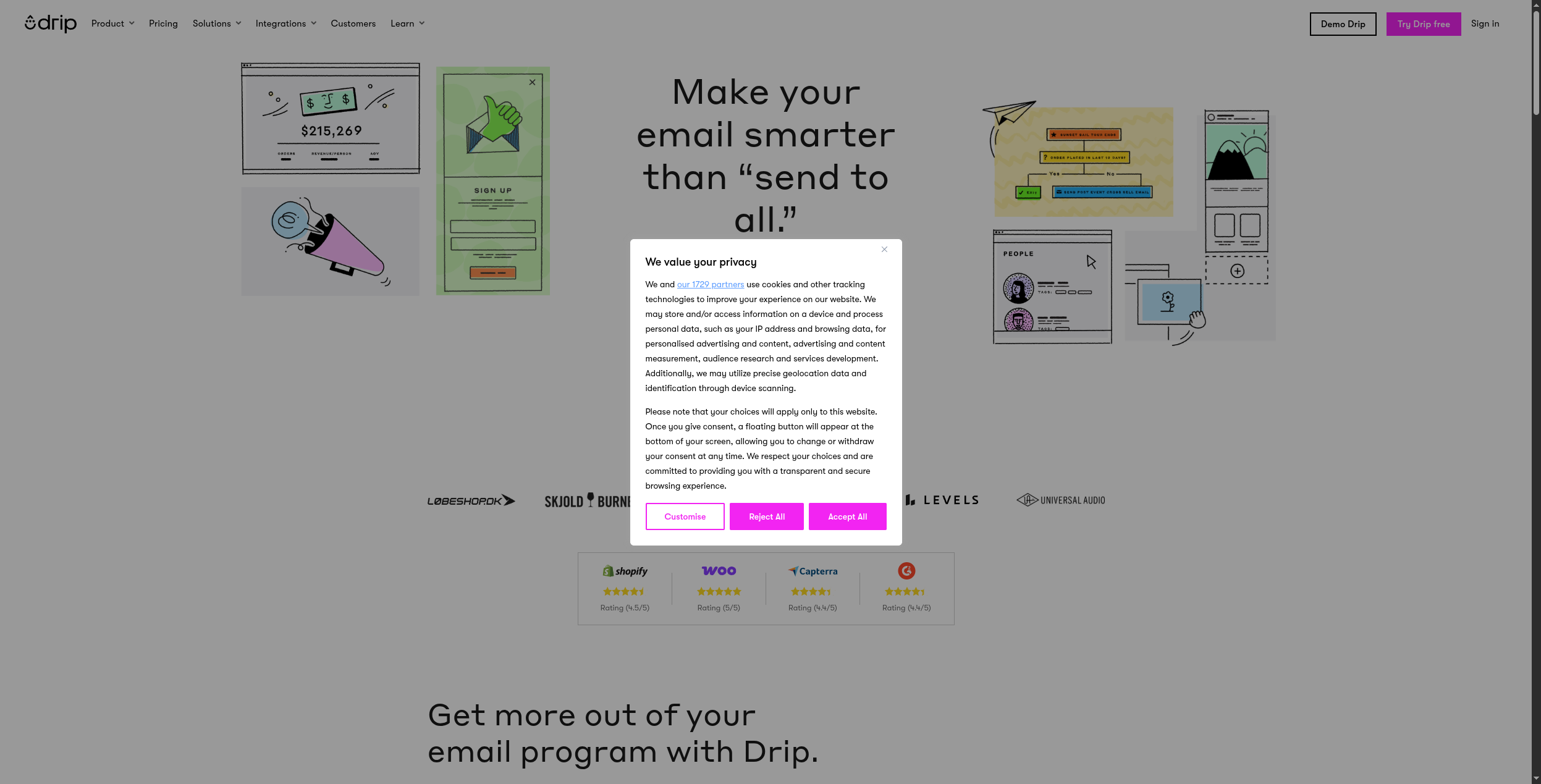
Drip
eCommerce revenue-focused
$39/mo
❌
Revenue attribution AI
What Makes Marketing Automation Software Worth Buying
Traditional marketing automation tools — send email when lead scores X, add tag when link is clicked — are now commoditised. The platforms earning budget in 2026 are doing three things differently:
AI-generated personalisation at scale — not mail-merge, but dynamically written messages based on individual signals
Cross-channel orchestration — email, SMS, ads, and chat unified under one logic layer
Revenue attribution — closing the loop between marketing actions and actual pipeline created
If you’re building out your marketing tech stack from scratch, our guide to best workflow automation tools
explains how marketing automation fits into a broader automation strategy.
Pripravení rozšíriť svoje podnikanie?
Začnite svoju 30-dňovú skúšobnú verziu ešte dnes a vidzte výsledky behom pár dní.
1. FlowHunt — Best AI-Native Marketing Automation Platform
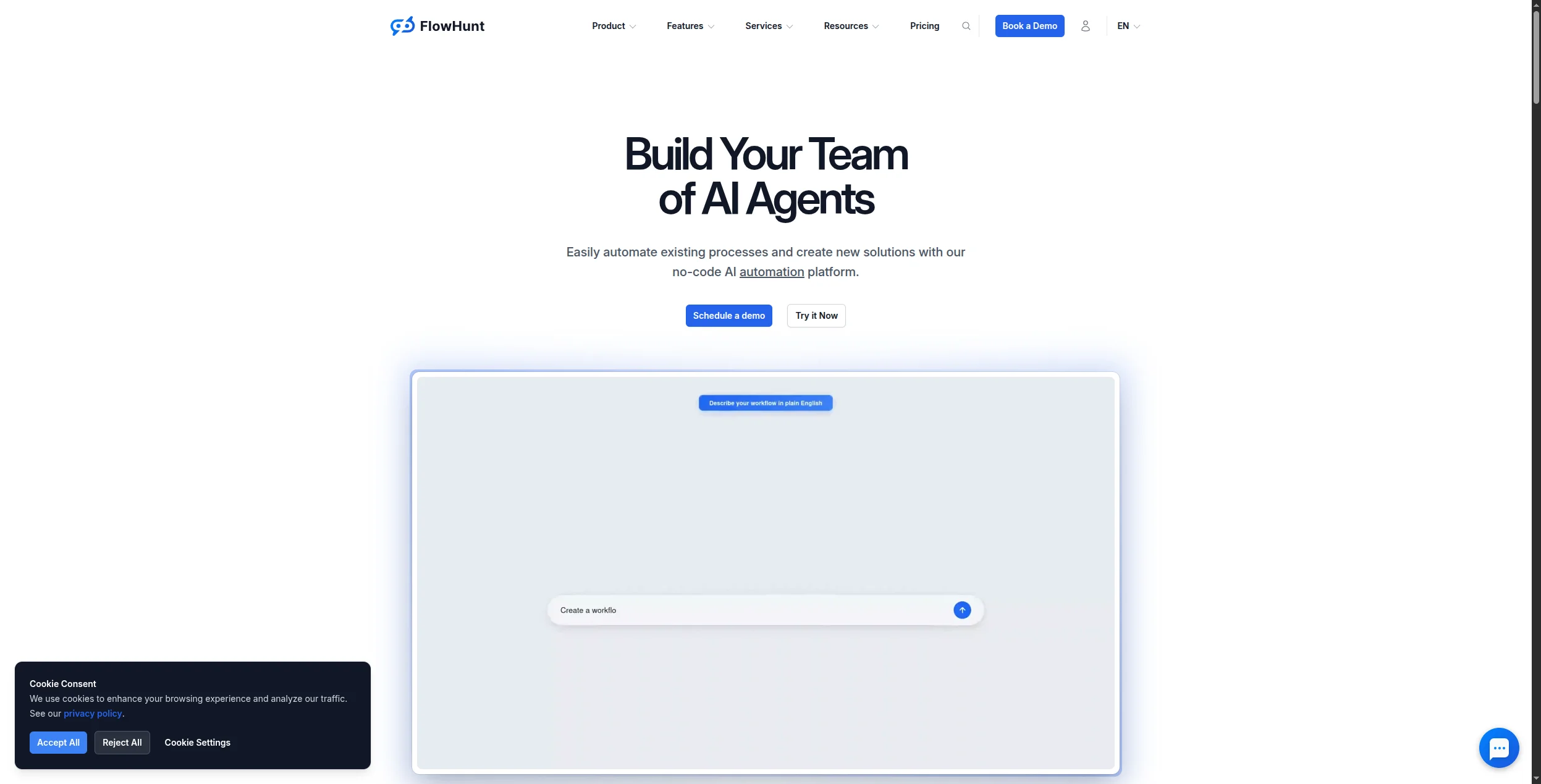
FlowHunt is not a traditional marketing automation platform — and that’s exactly why it leads this list. While HubSpot and Marketo automate pre-built sequences, FlowHunt builds AI-driven marketing workflows that can research, write, personalise, and distribute content automatically — without human intervention at each step.
A typical FlowHunt marketing workflow: monitor competitor content → summarise key changes with AI → generate a differentiated blog post → publish to CMS → send personalised email to segmented list → update CRM notes with campaign context. All automated. All connected.
What sets FlowHunt apart:
AI content generation built into workflows — not a third-party integration
1,400+ native integrations including HubSpot, Salesforce, Mailchimp, and Klaviyo
Multi-agent orchestration for complex research-to-publication pipelines
Web scraping and monitoring for competitive intelligence built in
Hosted MCP servers for connecting internal data without custom dev work
Pricing: Free tier with execution credits. Usage-based paid plans.
Pros:
Handles unstructured data and multi-step reasoning that rule-based tools can’t
Replaces multiple point tools (research + writing + distribution) in one platform
Connects to your existing MA stack rather than replacing it
Cons:
Requires more setup than plug-and-play email tools — it’s building workflows, not templates
Not the best standalone choice for basic email newsletter sending
Best for: Marketing teams that want AI to handle research, content creation, and campaign personalisation end-to-end. Pairs exceptionally well with traditional MA tools as an AI layer. See solutions for content marketing
for specific use cases.
2. HubSpot Marketing Hub — Best All-in-One Platform
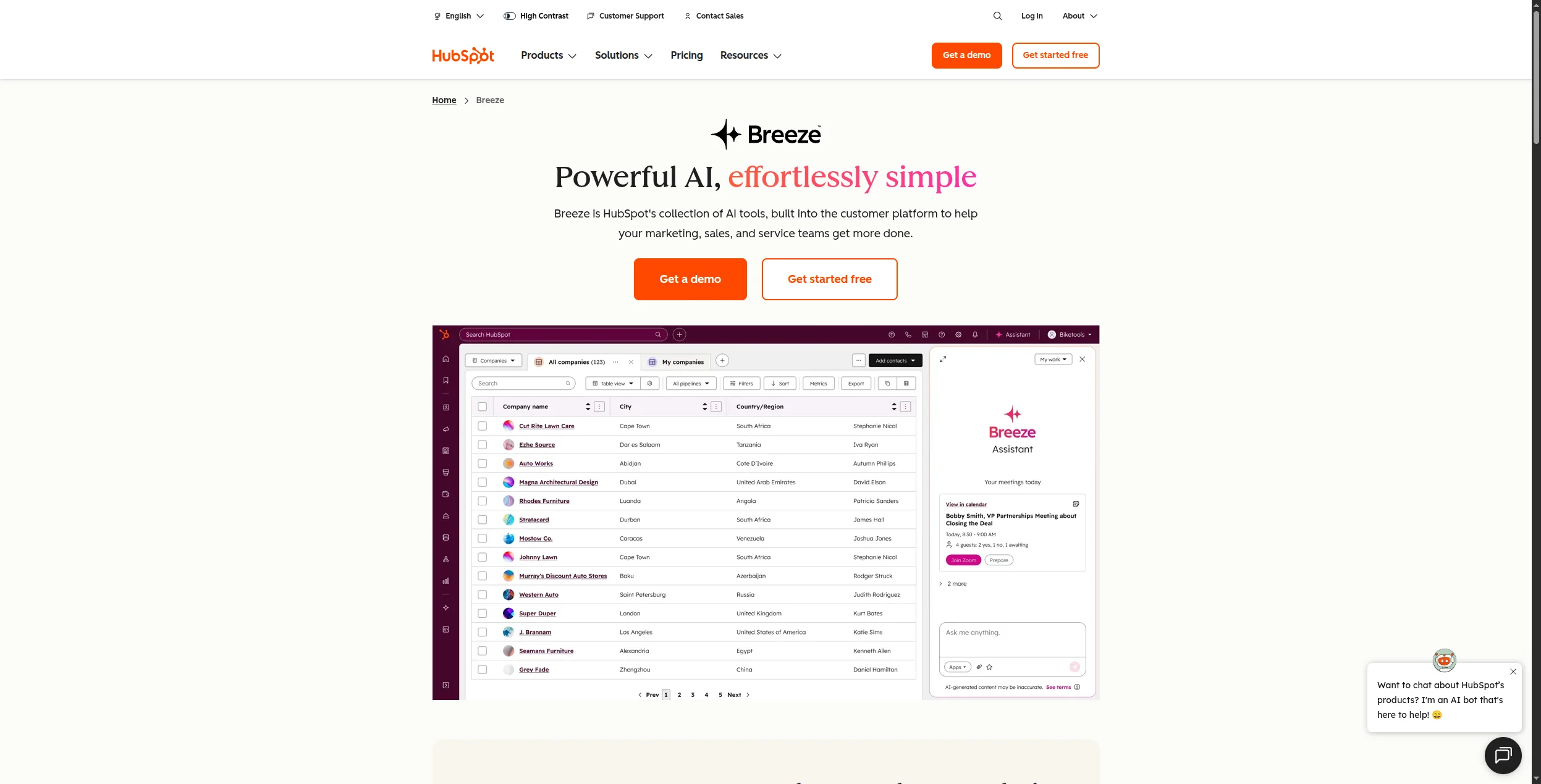
HubSpot remains the dominant all-in-one marketing automation platform for SMB to mid-market. Marketing Hub covers email, landing pages, social publishing, SEO tools, ad management, and reporting — all connected to HubSpot CRM. The AI layer (Content Assistant, AI reporting) has matured considerably in 2026.
Best CRM-to-marketing integration in the SMB market
Strong reporting and attribution dashboards
Large ecosystem of agency partners and integrations
Cons:
Expensive at scale — costs escalate sharply with contact volume
Marketing Hub Professional ($800/mo) required for serious automation
AI features still lag behind native AI-first tools
Best for: Growing companies that want email, CRM, landing pages, and reporting in one platform, and are willing to pay for the convenience.
Prihláste sa na newsletter
Získajte najnovšie tipy, trendy a ponuky zadarmo.
3. ActiveCampaign — Best for Email Automation Depth
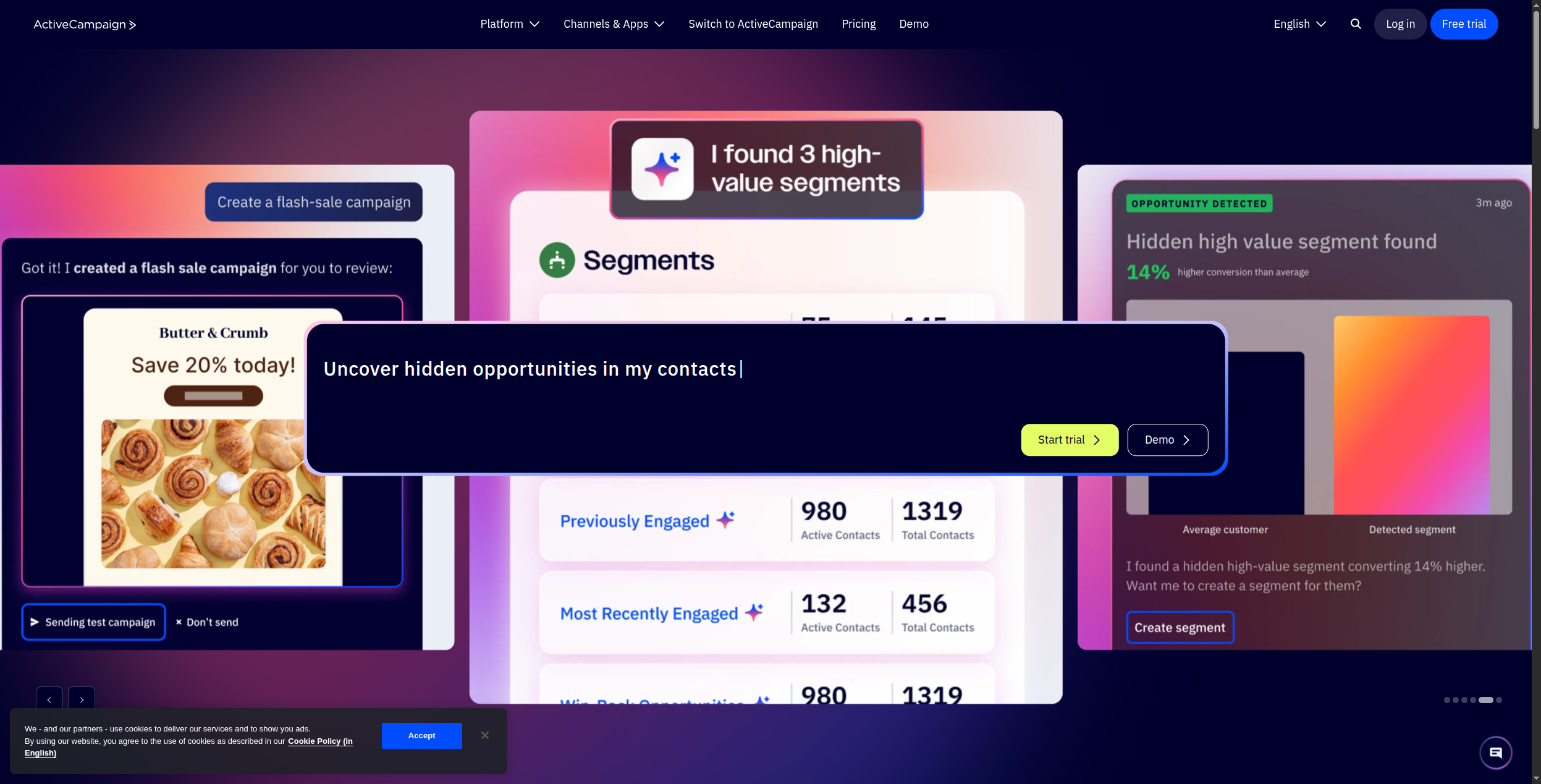
ActiveCampaign is the most powerful purely email-and-automation focused platform in the mid-market. Its visual workflow builder handles complex branching logic — goal-based automations, split testing, conditional content — with a level of depth that HubSpot’s lower tiers don’t match at its price point.
Pros:
Best visual automation builder in the mid-market
Strong lead scoring and behavioural segmentation
Built-in CRM (lighter than HubSpot but included in base plans)
Predictive sending optimises email delivery timing per contact
Cons:
Reporting is weaker than HubSpot or Ortto
No native landing page builder at lower tiers
UI has a learning curve for complex workflows
Best for: SMBs and agencies needing sophisticated email automation without the full HubSpot price tag.
4. Klaviyo — Best for eCommerce Email and SMS
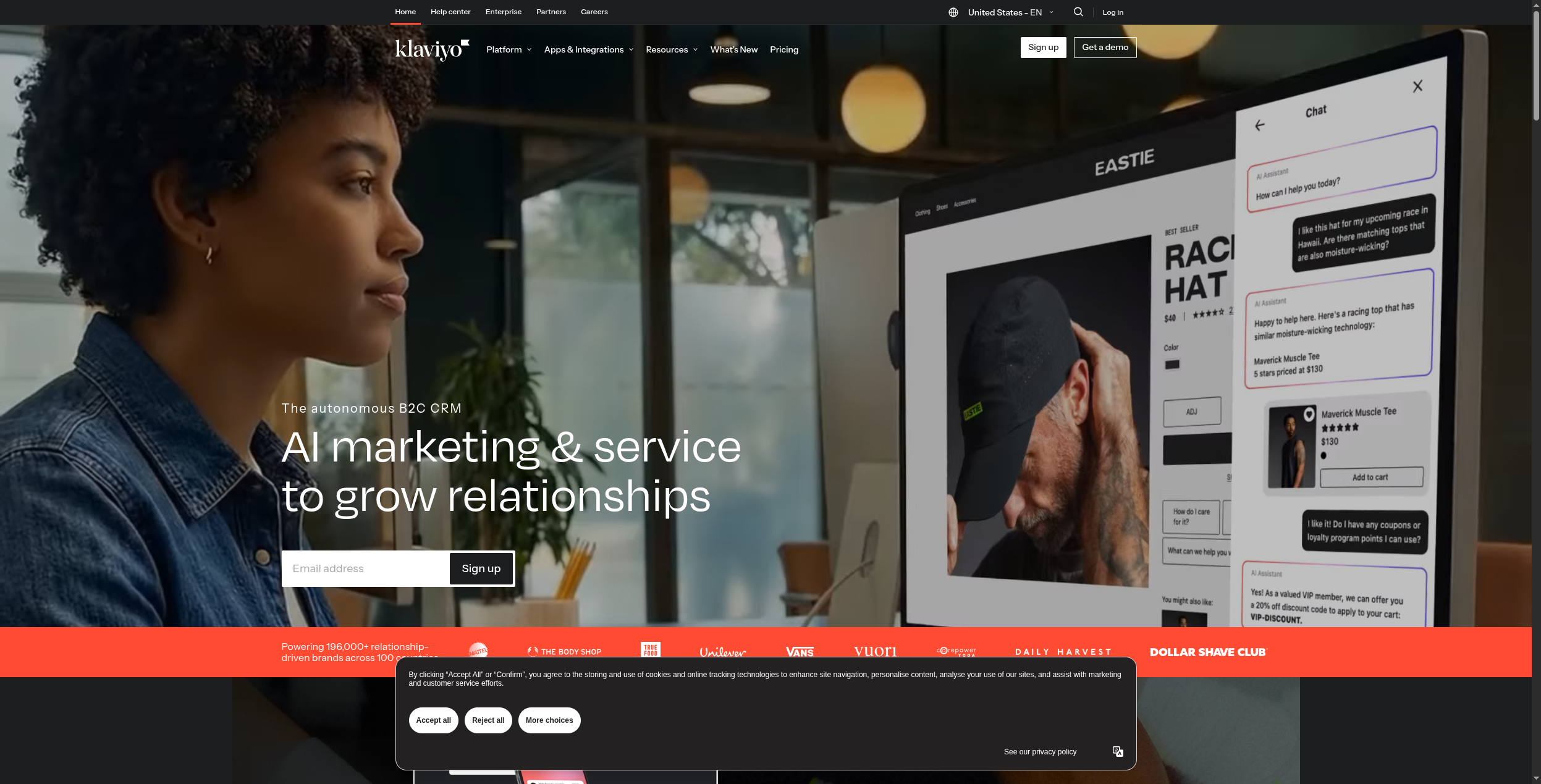
Klaviyo is the undisputed leader for eCommerce brands. Its Shopify integration is best-in-class, and its ability to trigger personalised sequences based on purchase history, browse behaviour, and cart events is unmatched. SMS automation alongside email makes it a true multi-channel eCommerce tool.
Pros:
Best Shopify and WooCommerce integration in the market
Predictive analytics for CLV, churn risk, and next purchase date
SMS automation included natively
Clear revenue attribution per email and flow
Cons:
Priced for eCommerce — less compelling for SaaS or B2B
Costs scale quickly with large contact lists
Limited landing page and form functionality
Best for: Shopify and WooCommerce brands that need email + SMS automation with direct revenue attribution.
5. Adobe Marketo Engage — Best for Enterprise B2B
Marketo is the gold standard for enterprise B2B marketing automation. Its account-based marketing features, Salesforce CRM integration, and revenue attribution reporting are best-in-class at enterprise scale. The learning curve and cost reflect that positioning.
Pros:
Best ABM (account-based marketing) capabilities in the market
Deep Salesforce and Microsoft Dynamics integration
Advanced lead lifecycle management and revenue modelling
Robust API for custom enterprise integrations
Cons:
Implementation is complex and often requires consultant support
Enterprise pricing — typically $1,000–$5,000+/month
UI is dated compared to newer platforms
Best for: Enterprise B2B marketing ops teams running multi-touch ABM programmes at scale.
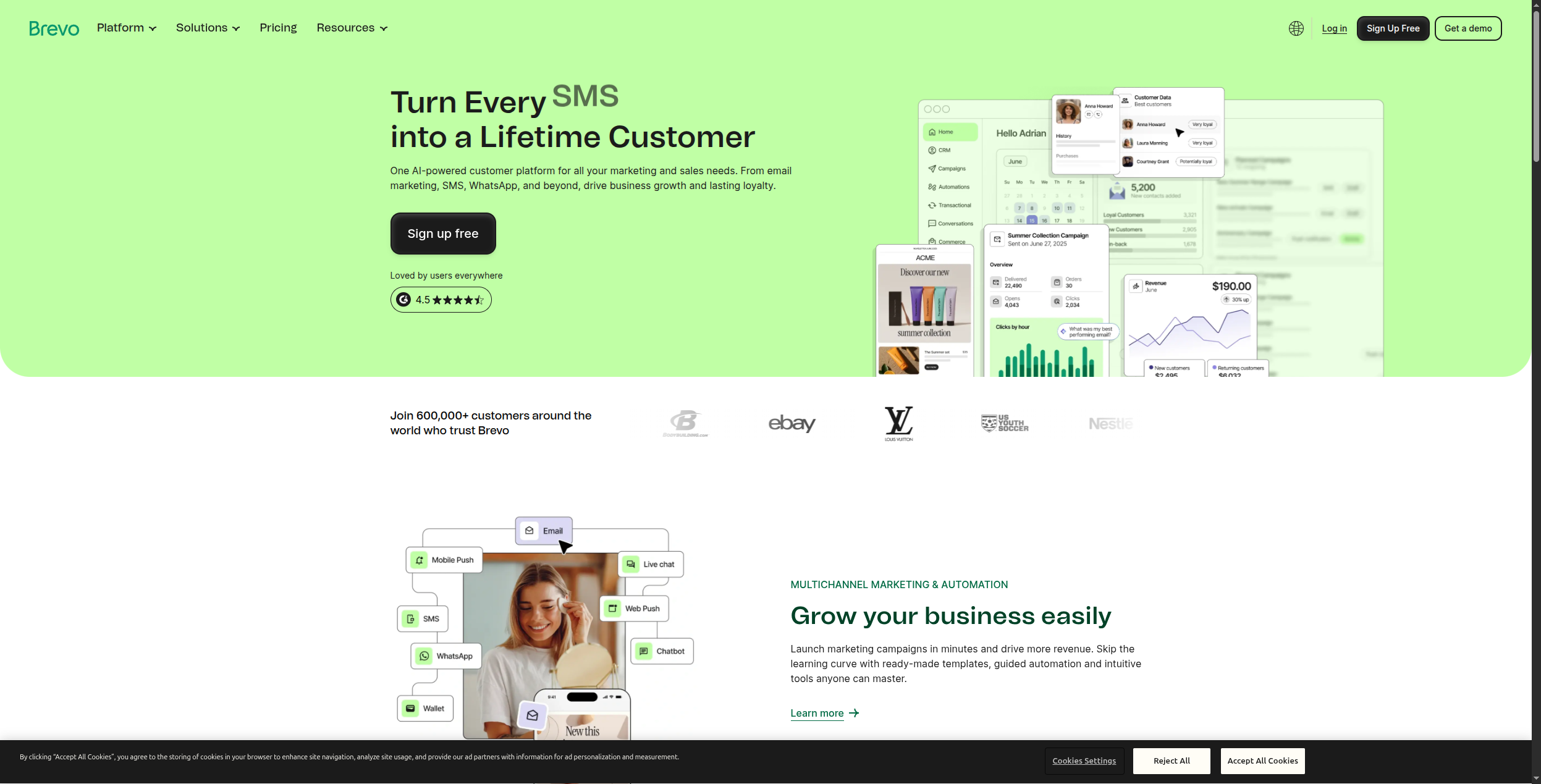
6. Brevo — Best Budget-Friendly Multi-Channel Option
Brevo (formerly Sendinblue) packs email, SMS, WhatsApp, and live chat automation into plans starting at free. For small businesses and startups that need multi-channel marketing automation without the HubSpot price tag, Brevo is the strongest value proposition in 2026.
Pay-per-email sending pricing (not per-contact) is cost-effective for large lists
Simple, clean interface accessible to non-marketers
Cons:
Automation depth is limited compared to ActiveCampaign
Reporting and analytics are basic
Less suitable for complex B2B funnel management
Best for: Startups and small businesses that need multi-channel automation at an accessible price.
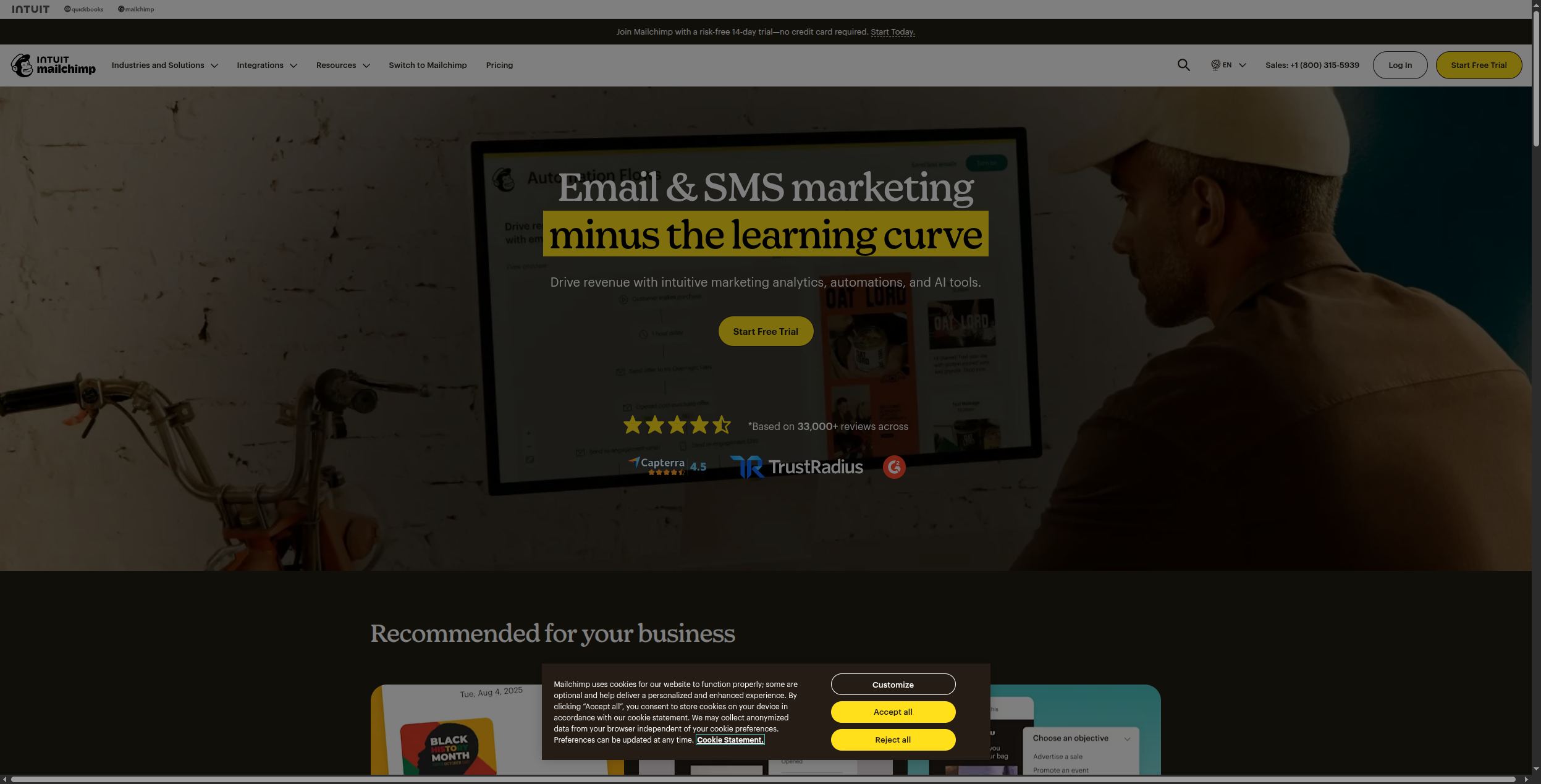
7. Mailchimp — Best for Getting Started
Mailchimp is where most teams begin their marketing automation journey — and for good reason. The free tier supports up to 500 contacts, the interface is the most user-friendly in the market, and basic automation sequences are easy to build without training. The AI features added in 2025 (subject line optimiser, content blocks) make the free tier more useful than ever.
Pros:
Easiest onboarding of any platform on this list
Strong free tier for early-stage businesses
Built-in landing page and form builder
AI subject line and send-time optimisation
Cons:
Automation depth plateaus quickly — not suitable for complex sequences
Pricing becomes uncompetitive at larger contact volumes
CRM functionality is very basic
Best for: Very early-stage businesses and creators who need simple email automation to start.
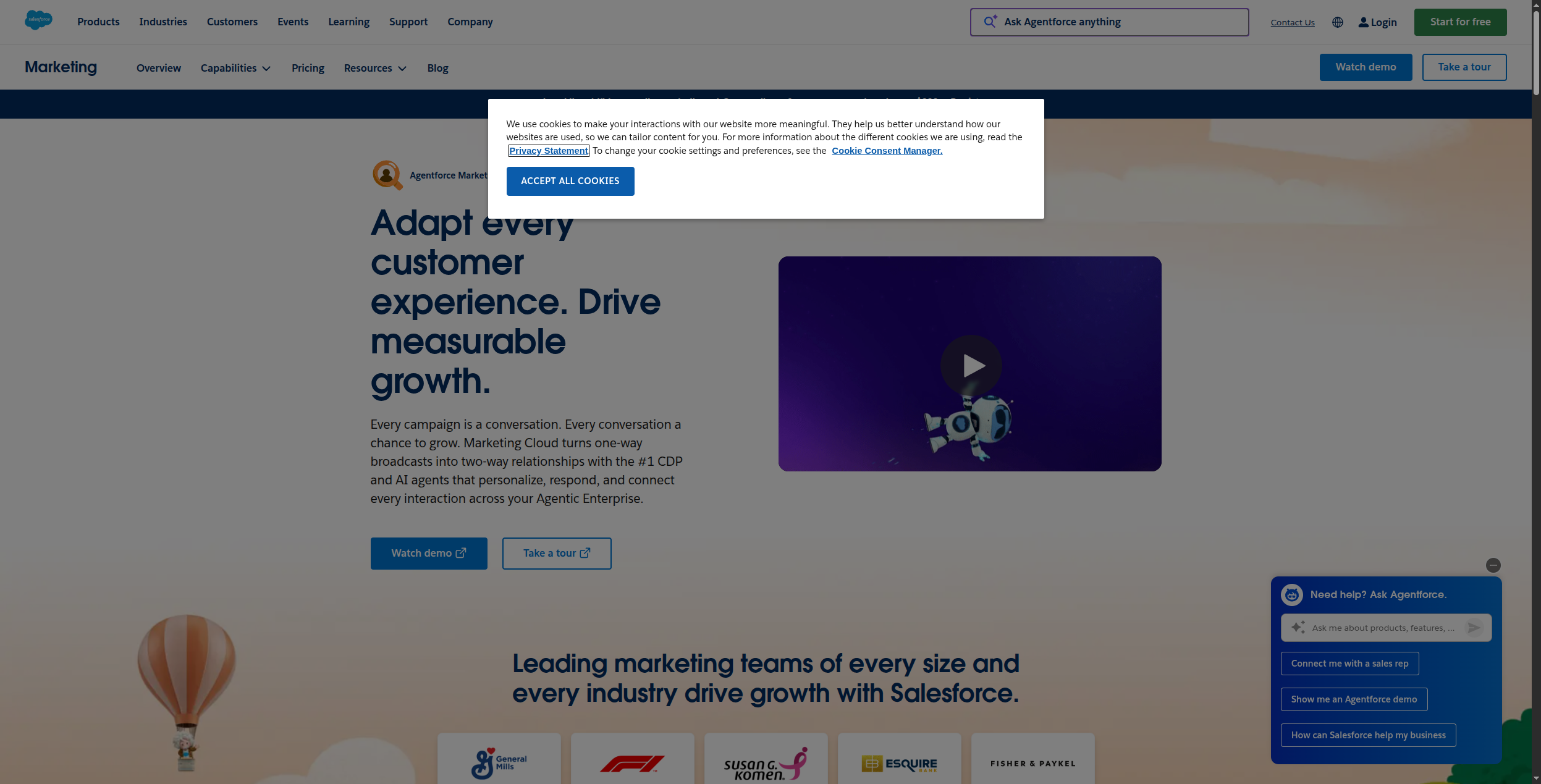
8. Salesforce Marketing Cloud — Best for Salesforce-Centric Enterprises
Salesforce Marketing Cloud (including the former Pardot, now Marketing Cloud Account Engagement) is the default choice for enterprises already running Salesforce CRM. The Einstein AI layer adds predictive scoring, content recommendations, and journey optimisation. The platform is vast, complex, and expensive — justified by the depth of CRM integration.
Pros:
Unmatched integration with Salesforce Sales Cloud and Service Cloud
Einstein AI for lead scoring, content recommendations, and send-time optimisation
Powerful journey builder for B2C multi-channel campaigns at scale
Cons:
Significant implementation effort and ongoing admin overhead
Cost is prohibitive for all but enterprise buyers
Marketing Cloud and Account Engagement are separate products with separate UIs
Best for: Enterprise organisations with Salesforce as the system of record for sales.
9. Ortto — Best for CDP-Integrated Automation
Ortto combines a customer data platform (CDP), journey automation, and analytics in a unified interface. The result is tighter data cohesion than platforms that bolt on a CDP as an afterthought. Ortto’s Journeys builder is visually clear and its reporting is among the strongest in the mid-market.
Pros:
Unified CDP + automation + analytics removes data sync headaches
Strong reporting and funnel visualisation
Good Shopify, Stripe, and HubSpot integrations
Cons:
Starting price ($509/mo) is high for the market it’s targeting
Smaller integration library than HubSpot or ActiveCampaign
Less well-known — fewer resources, partners, and community
Best for: SaaS and eCommerce teams that want a unified data and automation platform without enterprise complexity.
10. Drip — Best for eCommerce Revenue Attribution
Drip positions itself as the eCommerce CRM with built-in email and SMS automation. Its revenue attribution dashboard connects marketing actions directly to Shopify and WooCommerce revenue, making ROI reporting straightforward. The workflow builder is clean and purpose-built for eCommerce journey logic.
Pros:
Clear revenue attribution tied to specific automations and emails
Clean, eCommerce-specific workflow templates
Good Shopify and WooCommerce native integration
Cons:
Limited beyond eCommerce use cases
SMS only available in US and Canada
Less automation depth than Klaviyo for complex segmentation
Best for: Shopify and WooCommerce brands that prioritise clear revenue attribution from marketing automation.
How to Choose the Right Marketing Automation Software
Use this decision framework:
By company stage:
Early-stage → Mailchimp (free) or Brevo (free multi-channel)
Growing SMB → ActiveCampaign or HubSpot Starter
Scaling mid-market → HubSpot Professional or Ortto
Enterprise B2B → Marketo or Salesforce Marketing Cloud
No single platform wins every use case. HubSpot wins on breadth. ActiveCampaign wins on automation depth per dollar. Klaviyo wins for eCommerce. Marketo and Salesforce win at enterprise scale.
But if your team wants AI to drive marketing workflows — automatically researching, writing, personalising, and distributing — FlowHunt delivers capabilities that traditional marketing automation platforms aren’t designed for. Use it alongside your existing stack to unlock the AI layer your current tools are missing.
Najčastejšie kladené otázky
Marketing automation software automates repetitive marketing tasks such as email sending, lead nurturing, social posting, ad management, and campaign reporting. Modern platforms add AI to personalise messages at scale, score leads, predict churn, and generate content automatically — going well beyond simple rule-based email sequences.
For small businesses, ActiveCampaign and Brevo offer the best combination of powerful automation and affordable pricing. FlowHunt is the best choice for teams that want AI-driven marketing workflows — research, content creation, and outreach automation — beyond traditional email sequences. Mailchimp is the easiest to start with but has the least automation depth.
Pricing varies widely: Brevo and Mailchimp offer free tiers for basic sending. ActiveCampaign starts at $15/month. HubSpot's Marketing Hub starts at $800/month (Professional). Marketo and Salesforce Marketing Cloud are enterprise-priced, typically $1,000–$5,000+/month. FlowHunt offers a free tier with usage-based scaling. The right choice depends on your contact list size, feature needs, and budget.
Email marketing is the act of sending emails to a list of contacts — newsletters, promotions, announcements. Marketing automation encompasses email plus a much broader set of automated actions: lead scoring, CRM updates, multi-channel sequences, behavioural triggers, ad retargeting, and AI-powered personalisation. All marketing automation platforms include email; not all email tools offer true automation.
For B2B marketing automation, HubSpot and Marketo are the most established enterprise options. ActiveCampaign is the best mid-market choice. FlowHunt excels for B2B teams that need AI-driven prospecting, content, and outreach workflows that go beyond what traditional MA platforms offer. For account-based marketing at enterprise scale, Salesforce Marketing Cloud (Pardot) is the market leader.
Arshia je inžinierka AI workflowov v spoločnosti FlowHunt. S pozadím v informatike a vášňou pre umelú inteligenciu sa špecializuje na tvorbu efektívnych workflowov, ktoré integrujú AI nástroje do každodenných úloh, čím zvyšuje produktivitu a kreativitu.
FlowHunt vám umožňuje vytvárať AI agentov pre automatizáciu workflow, generovanie leadov, správu obsahu a ďalšie — vizuálne, bez kódu a s 1 400+ integrácií.
10 najlepších nástrojov pre automatizáciu predaja v roku 2026: hodnotenie a recenzie
10 najlepších nástrojov pre automatizáciu predaja v roku 2026, hodnotených podľa schopností outreachu, AI personalizácie, CRM integrácie a cien. Uzatvárajte via...
12 príkladov marketingovej automatizácie, ktoré skutočne fungujú v roku 2026
Reálne príklady marketingovej automatizácie naprieč e-mailom, obsahom, nurturingom leadov, sociálnymi médiami a SEO — s podrobnými workflow a nástrojmi, ktoré m...
Najlepší AI marketingoví agenti v roku 2026: 12 nástrojov, ktoré skutočne riadia váš marketing
Hodnotenie a recenzia: 12 najlepších AI marketingových agentov v roku 2026. Od obsahových pipelín a SEO automatizácie po optimalizáciu reklám a personalizáciu e...
16 min čítania
AI Agents
Marketing
+3
Súhlas s cookies Používame cookies na vylepšenie vášho prehliadania a analýzu našej návštevnosti. See our privacy policy.