10 Best Marketing Automation Software Platforms in 2026: Ranked and Reviewed
The 10 best marketing automation software platforms in 2026, ranked by AI capability, ease of use, and pricing. Find the right platform for your team’s size and stack.
Marketing automation software has become table stakes for growth teams — but the definition of what counts as “automation” has shifted dramatically. In 2026, the gap between a basic email sequencer and a true AI-native marketing platform is wider than ever.
This guide ranks the 10 best marketing automation software platforms based on AI capability, automation depth, ease of use, integration ecosystem, and pricing. Whether you’re a lean startup or an enterprise with a global marketing operations team, there’s a clear best choice for your situation.
Quick Comparison Table
Platform
Best For
Starting Price
Free Tier
AI Capability
FlowHunt
AI-driven marketing workflows
Free + usage-based
✅
Native AI agent automation
HubSpot
All-in-one marketing suite
$800/mo (Pro)
✅ (limited)
AI content, lead scoring
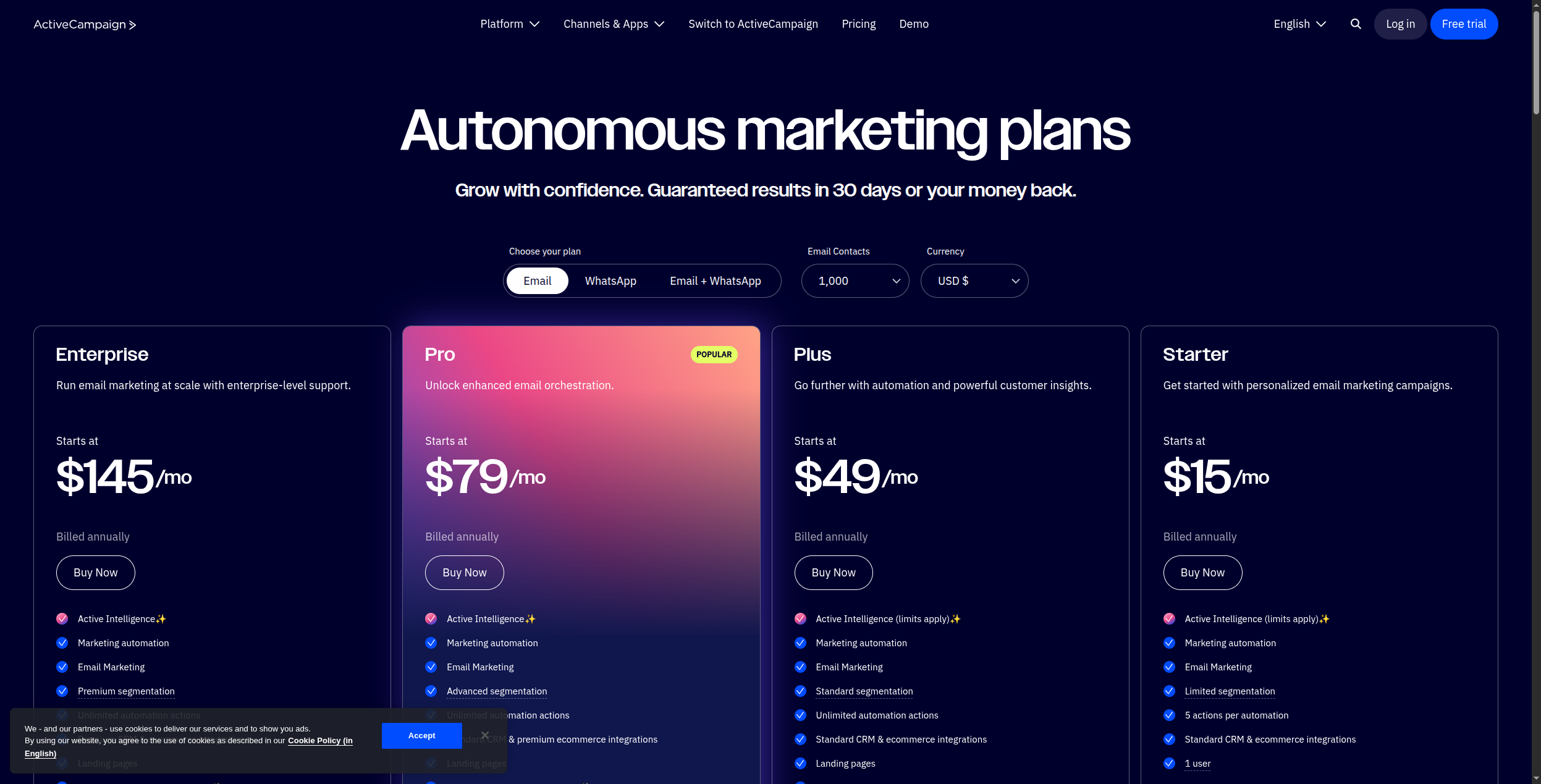
ActiveCampaign
Email + CRM automation
$15/mo
❌
Predictive sending, AI content
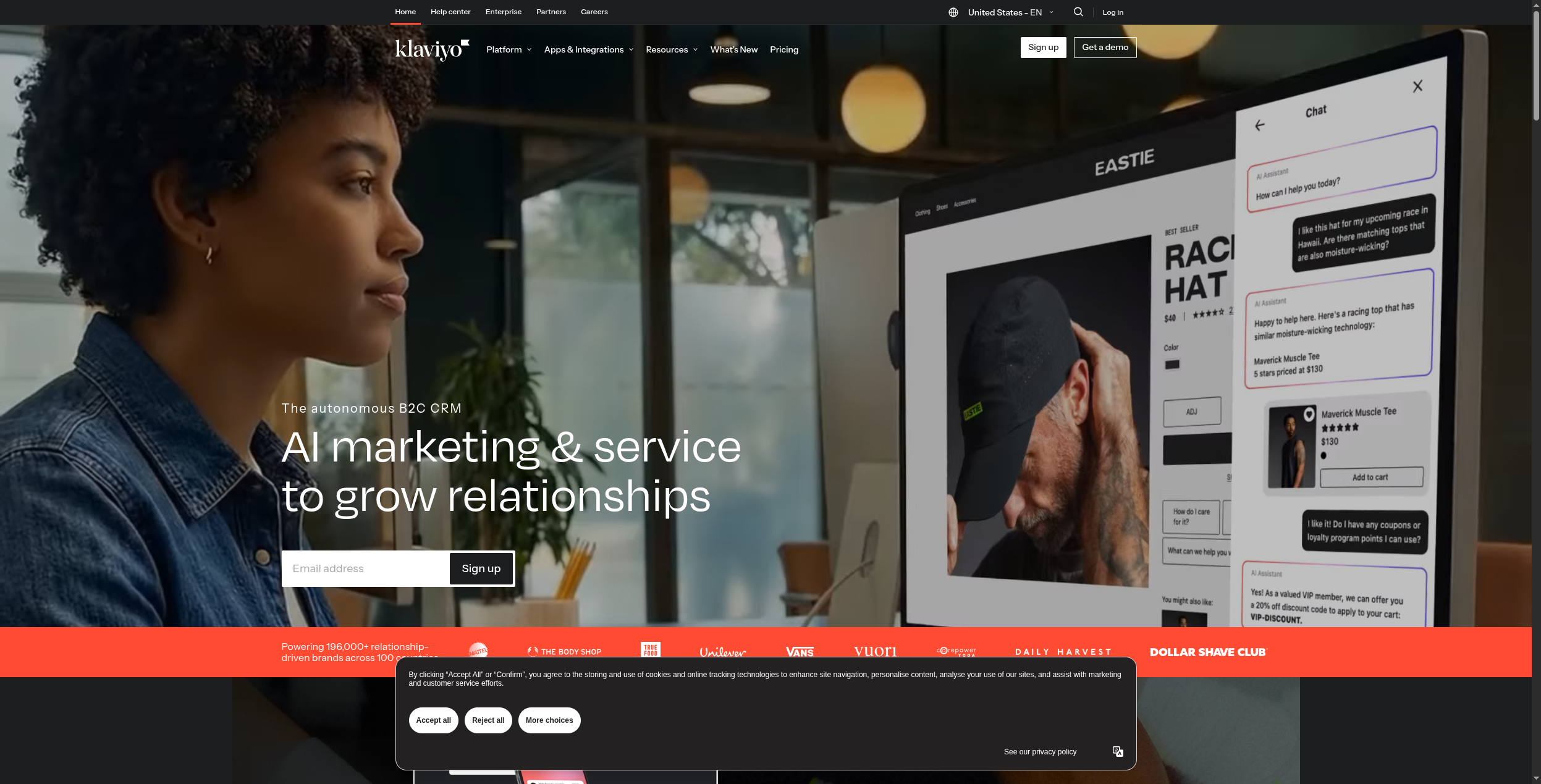
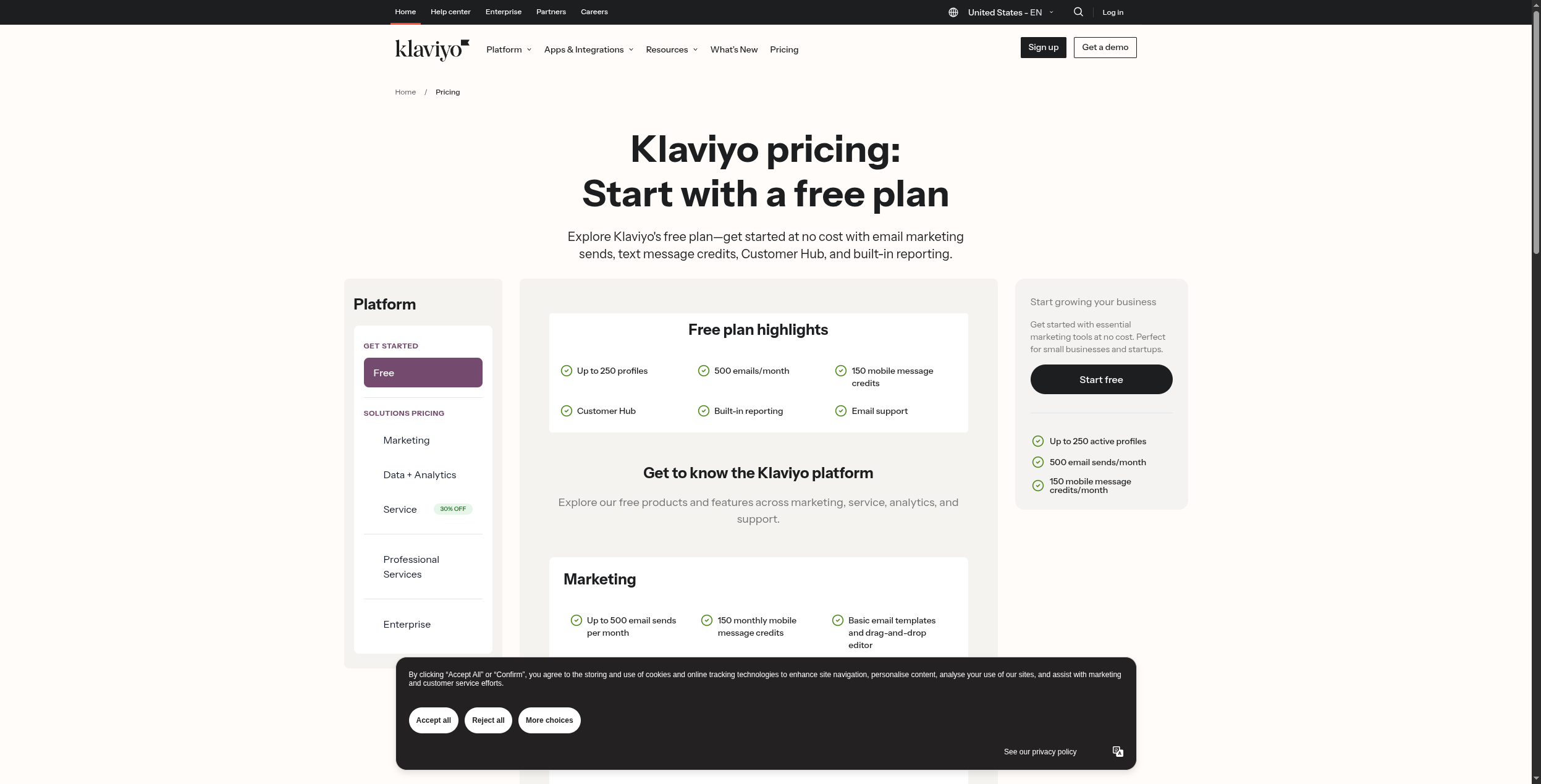
Klaviyo
eCommerce email & SMS
$20/mo
✅
Behavioural segmentation AI
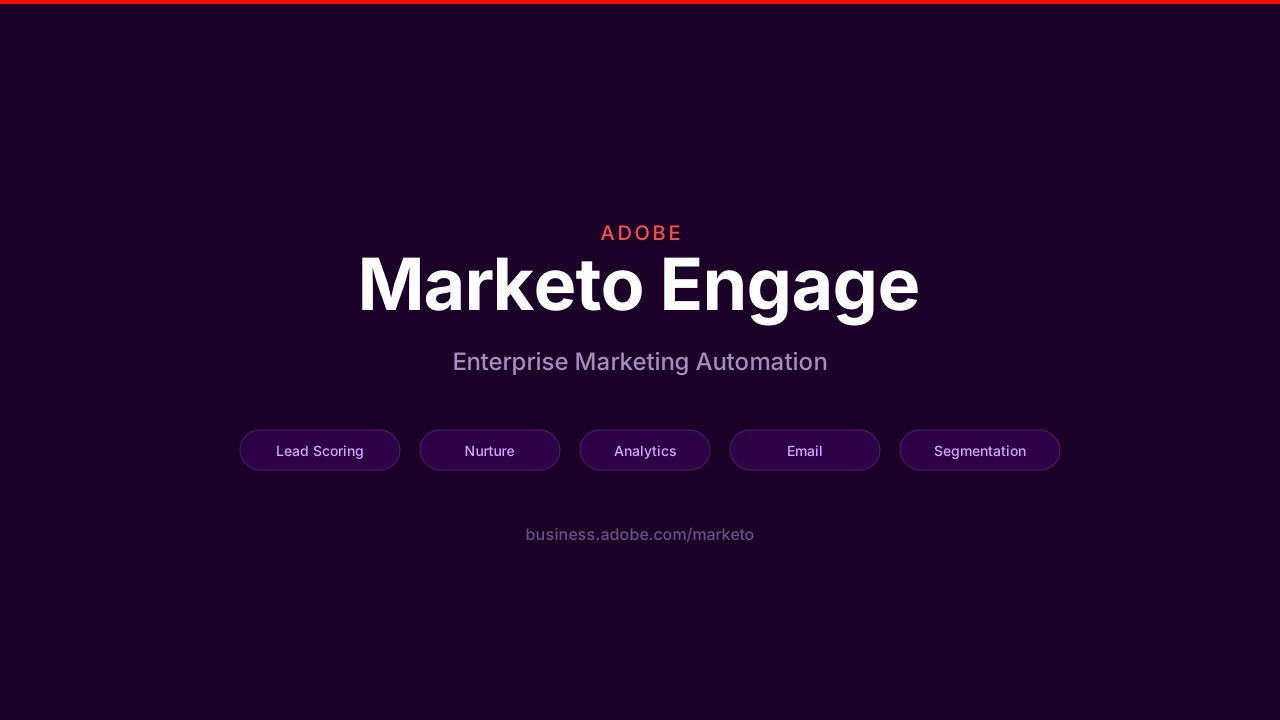
Marketo
Enterprise B2B marketing
Custom
❌
ABM, revenue attribution
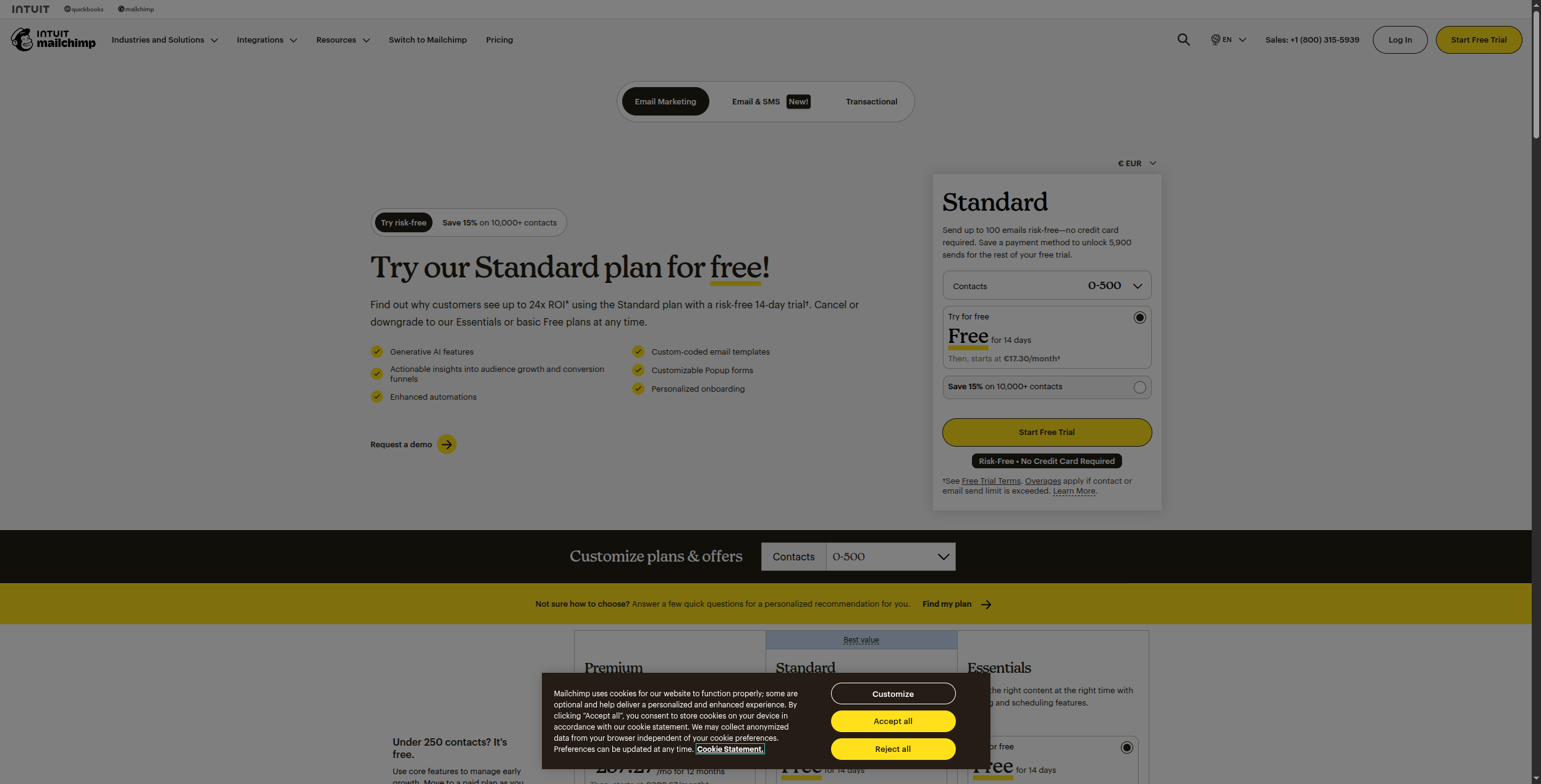
Brevo
Multi-channel, budget-friendly
Free
✅
Basic AI suggestions
Mailchimp
Simple email marketing
Free
✅
AI subject lines, content blocks
Salesforce MC
Enterprise CRM-integrated
Custom
❌
AI Einstein, journey builder
Ortto
CDP + automation unified
$509/mo
❌
Predictive analytics
Drip
eCommerce revenue-focused
$39/mo
❌
Revenue attribution AI
What Makes Marketing Automation Software Worth Buying
Traditional marketing automation tools — send email when lead scores X, add tag when link is clicked — are now commoditised. The platforms earning budget in 2026 are doing three things differently:
AI-generated personalisation at scale — not mail-merge, but dynamically written messages based on individual signals
Cross-channel orchestration — email, SMS, ads, and chat unified under one logic layer
Revenue attribution — closing the loop between marketing actions and actual pipeline created
If you’re building out your marketing tech stack from scratch, our guide to best workflow automation tools
explains how marketing automation fits into a broader automation strategy.
Ready to grow your business?
Start your free trial today and see results within days.
1. FlowHunt — Best AI-Native Marketing Automation Platform
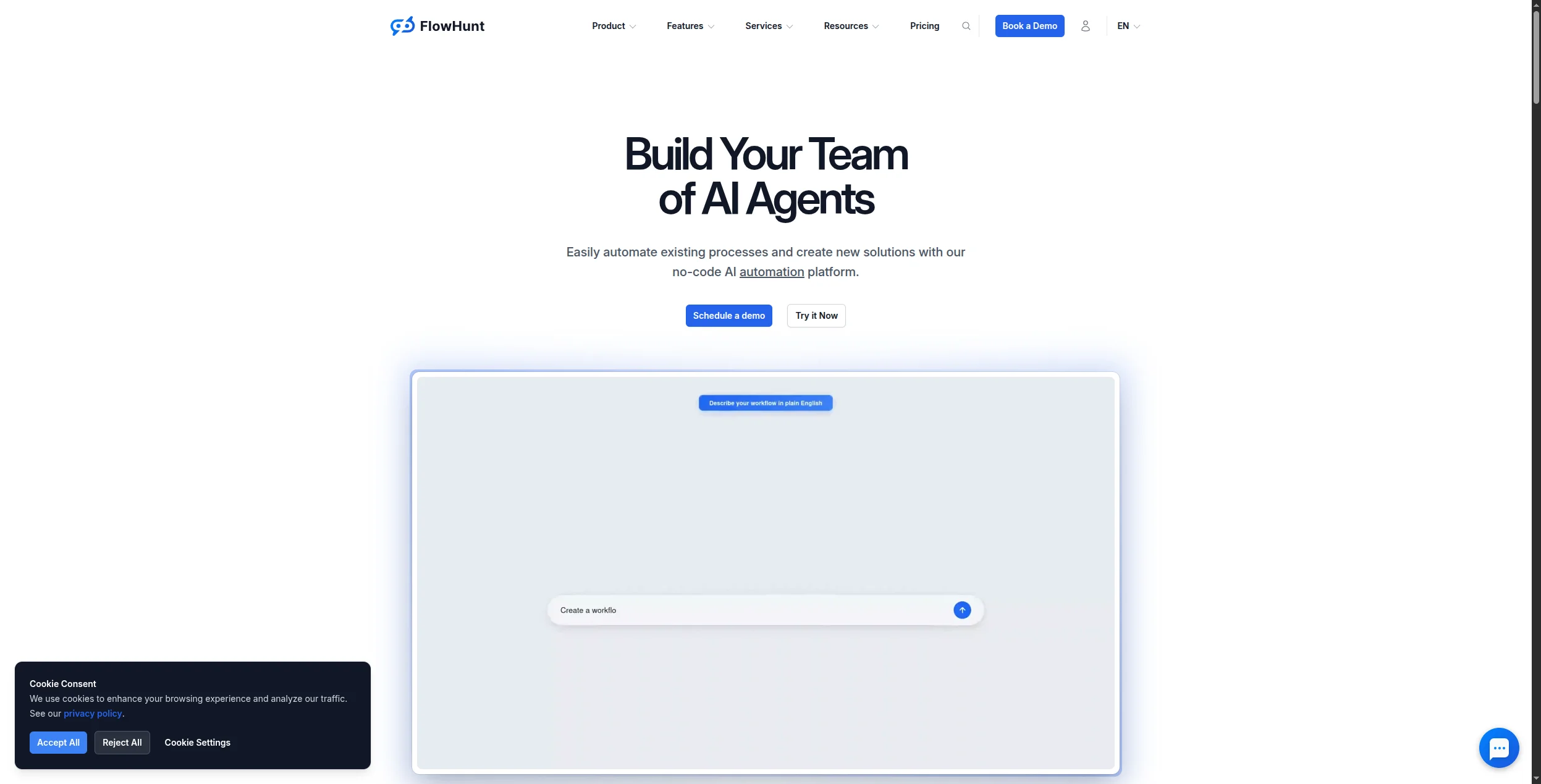
FlowHunt is not a traditional marketing automation platform — and that’s exactly why it leads this list. While HubSpot and Marketo automate pre-built sequences, FlowHunt builds AI-driven marketing workflows that can research, write, personalise, and distribute content automatically — without human intervention at each step.
A typical FlowHunt marketing workflow: monitor competitor content → summarise key changes with AI → generate a differentiated blog post → publish to CMS → send personalised email to segmented list → update CRM notes with campaign context. All automated. All connected.
What sets FlowHunt apart:
AI content generation built into workflows — not a third-party integration
1,400+ native integrations including HubSpot, Salesforce, Mailchimp, and Klaviyo
Multi-agent orchestration for complex research-to-publication pipelines
Web scraping and monitoring for competitive intelligence built in
Hosted MCP servers for connecting internal data without custom dev work
Pricing:
Free — $0/month. Generous execution credits, access to all components and integrations, no credit card required
Pro — Usage-based. Scales with workflow executions and AI API calls — no per-contact or per-seat charges
Visual workflow builder combining AI research, content writing, and marketing distribution in one canvas
Multi-agent orchestration: research agent, writing agent, and distribution agent working in sequence
AI content generation: blog posts, email copy, social posts, and ad copy created automatically from research
1,400+ native integrations: HubSpot, Salesforce, Mailchimp, Klaviyo, and all major marketing tools
Web scraping and competitive monitoring: tracks competitor content and triggers responsive workflows
Hosted MCP servers for connecting internal data sources without custom development
SEO automation: keyword research, content brief generation, and content gap analysis workflows
Pros:
Handles unstructured data and multi-step reasoning that rule-based automation tools can’t manage
Replaces multiple point tools (research + writing + distribution + CRM update) in one platform
Connects to your existing MA stack rather than replacing it — works alongside HubSpot, Klaviyo, and Marketo
AI content generation is genuinely built into workflows — not a bolted-on OpenAI integration
1,400+ integrations mean every marketing tool in your stack is reachable without custom code
Cons:
Requires more setup than plug-and-play email tools — it’s building workflows, not clicking through templates
Not the best standalone choice for basic email newsletter sending to a contact list
Steeper initial learning curve than traditional marketing automation platforms
Best for: Marketing teams that want AI to handle research, content creation, and campaign personalisation end-to-end. Pairs exceptionally well with traditional MA tools as an AI layer. See solutions for content marketing
for specific use cases.
2. HubSpot Marketing Hub — Best All-in-One Platform
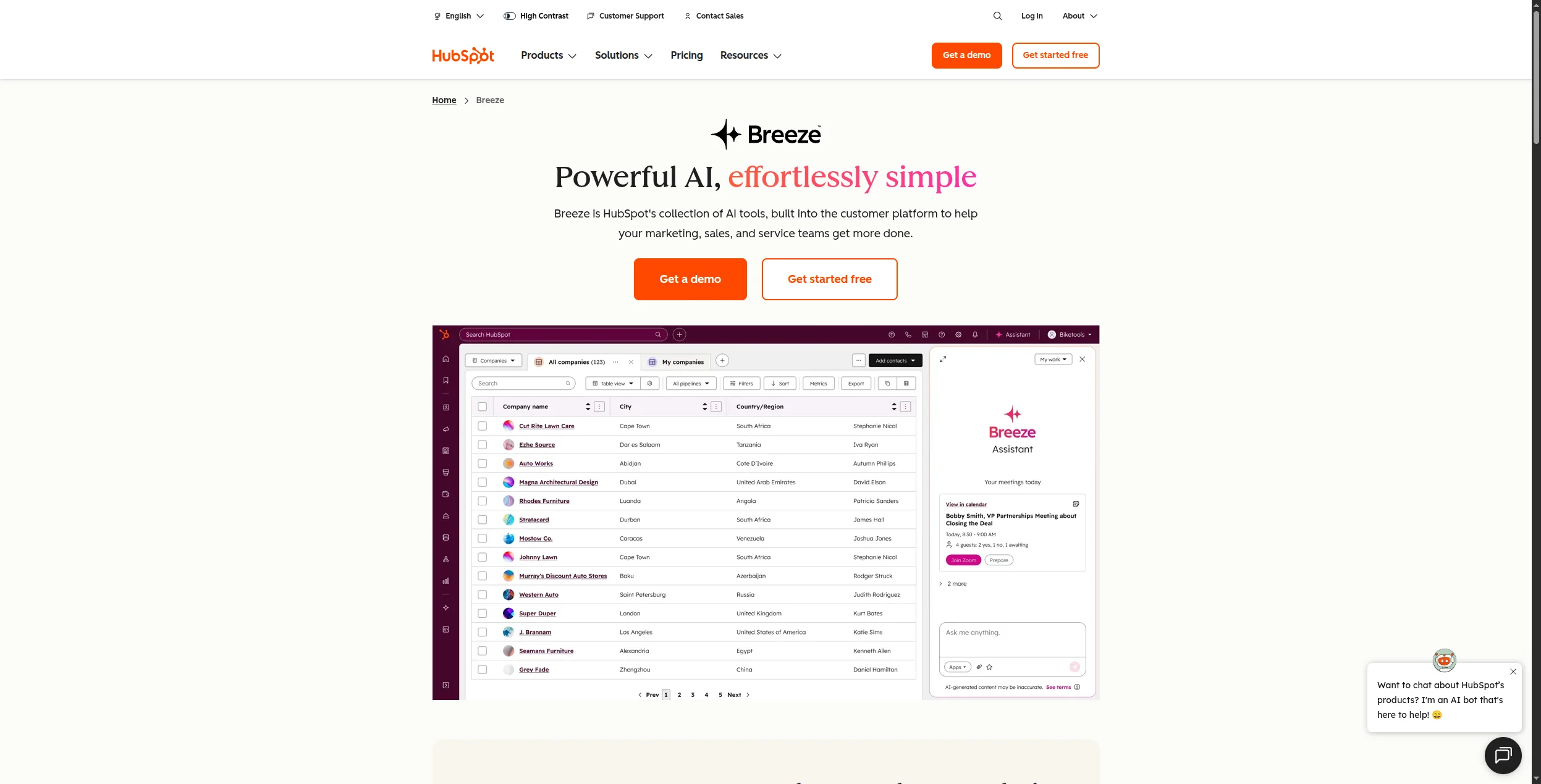
HubSpot remains the dominant all-in-one marketing automation platform for SMB to mid-market. Marketing Hub covers email, landing pages, social publishing, SEO tools, ad management, and reporting — all connected to HubSpot CRM in a single unified database. The benefit is data coherence: every marketing touchpoint is tied to a contact record, so attribution is accurate without third-party tracking patchwork.
The AI layer (Content Assistant, Breeze AI, predictive lead scoring) has matured considerably in 2026. Email subject line suggestions, blog post generation, and CTR optimisation recommendations are now built into the core product rather than add-ons. The Workflows builder handles complex multi-branch automation at the Professional tier — lead nurturing sequences, re-engagement campaigns, and lifecycle stage transitions triggered by behavioural events.
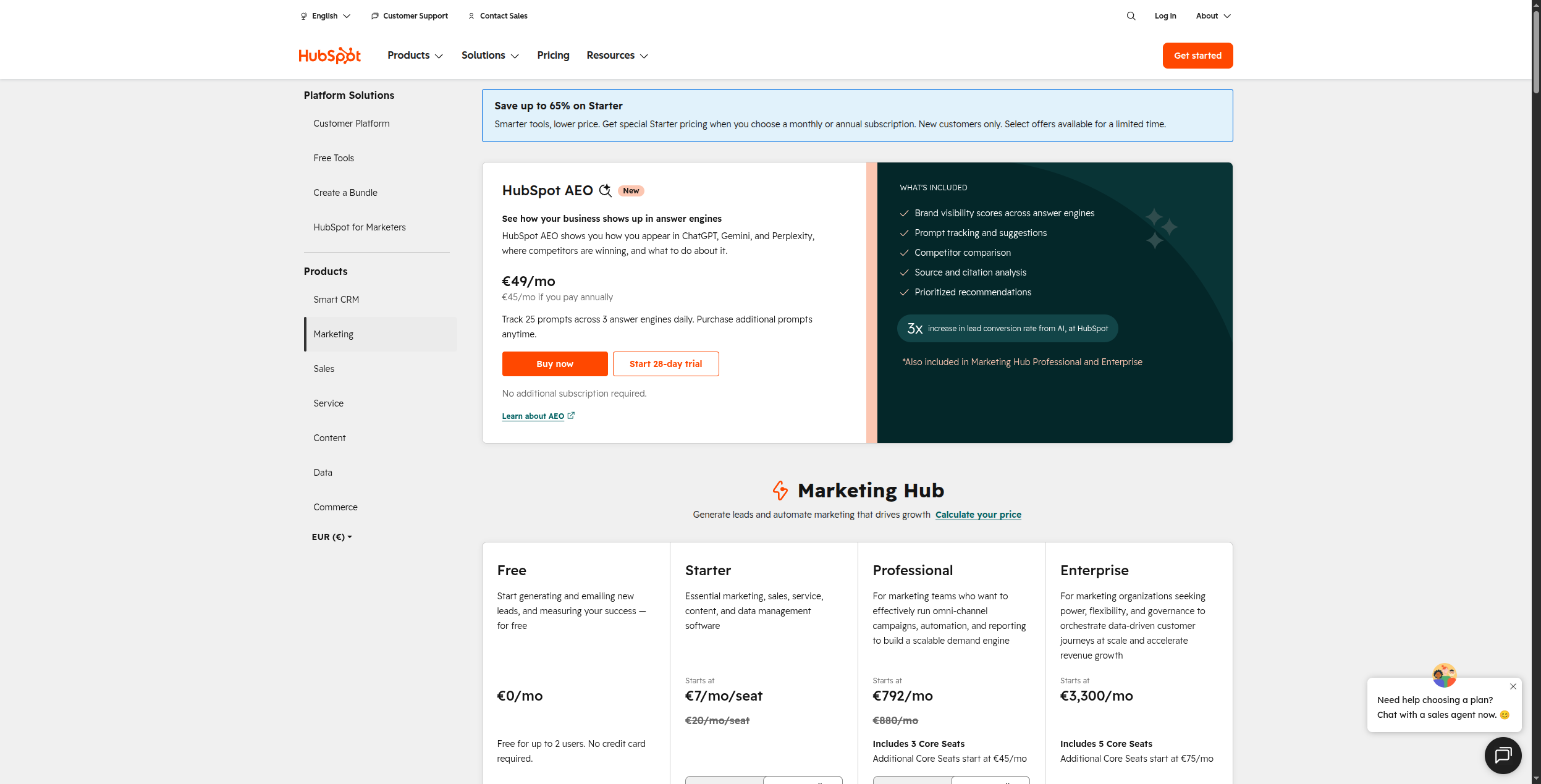
Starter — $20/month. 1,000 contacts, email marketing, form automation, basic sequences, ad retargeting
Professional — $800/month. 2,000 contacts included, full automation workflows, A/B testing, campaign reporting, social publishing, SEO tools, smart content
Enterprise — $3,600/month. 10,000 contacts included, multi-touch revenue attribution, custom objects, predictive lead scoring, hierarchical teams
Key features:
Email marketing with drag-and-drop editor, personalisation tokens, and smart send-time optimisation
Workflows builder for multi-branch automated nurture sequences with behavioural triggers
Landing page builder with A/B testing and conversion tracking
Social publishing for LinkedIn, Facebook, Instagram, and Twitter/X from one calendar
SEO recommendations and content strategy tools integrated into the content editor
Breeze AI for content generation, subject line suggestions, and email copy writing
Multi-touch revenue attribution linking marketing campaigns to closed deals
Pros:
Truly all-in-one — reduces tool sprawl by combining email, CRM, pages, social, and reporting
Best CRM-to-marketing integration in the SMB market — single source of contact truth
Strong reporting and attribution dashboards that connect campaigns to revenue
Large ecosystem of 500+ certified agency partners and 1,000+ third-party integrations
Breeze AI for content assistance now built in — not a separate product purchase
Cons:
Expensive at scale — costs escalate sharply with contact volume above included thresholds
Marketing Hub Professional ($800/mo) required for serious automation beyond basic emails
AI content features still lag behind native AI-first tools like FlowHunt for full pipeline automation
Onboarding fees at Professional and Enterprise tiers add significant upfront cost
Best for: Growing companies that want email, CRM, landing pages, and reporting in one platform, and are willing to pay for the convenience of not stitching tools together.
Join our newsletter
Get latest tips, trends, and deals for free.
3. ActiveCampaign — Best for Email Automation Depth
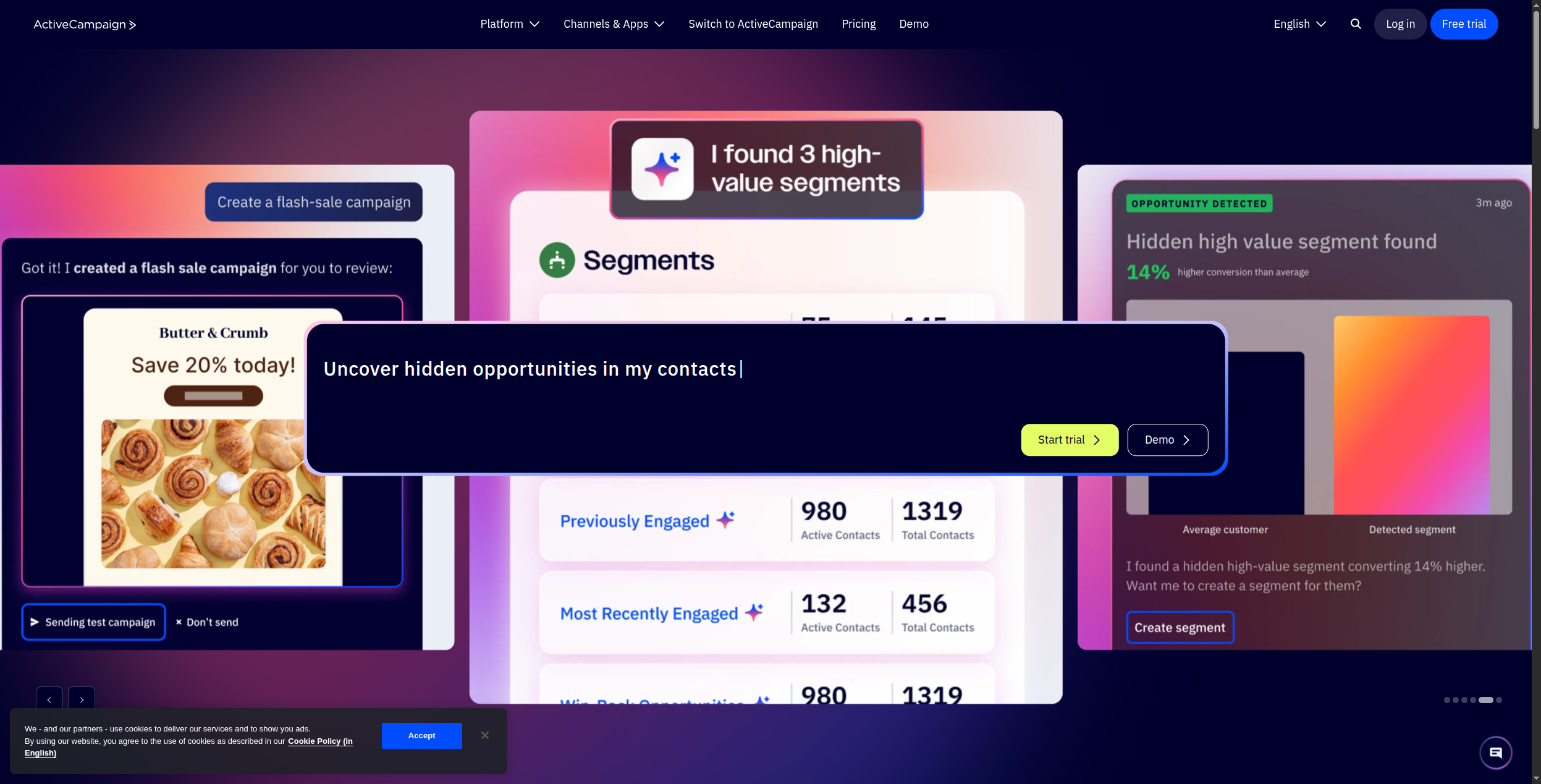
ActiveCampaign is the most powerful purely email-and-automation focused platform in the mid-market. Its visual workflow builder handles complex branching logic — goal-based automations, split testing, conditional content — with a level of depth that HubSpot’s lower tiers don’t match at its price point. The automation builder has over 500 pre-built automation recipes covering e-commerce, SaaS, professional services, and B2B lead nurturing scenarios.
What sets ActiveCampaign apart is its lead scoring engine and predictive sending capability. The scoring model tracks behavioural signals — email opens, page visits, link clicks, form submissions — and adjusts contact scores in real time. Automations can branch based on score thresholds, ensuring high-intent leads receive sales-ready follow-up while low-intent contacts stay in nurture sequences. Predictive sending uses machine learning to send each email at the individual time when that specific contact is most likely to engage.
Visual automation builder with 500+ pre-built automation recipes and goal-based branching
Lead scoring engine that tracks behavioural signals and updates scores in real time
Predictive sending: AI determines optimal send time per individual contact
Built-in CRM with deal pipelines and task management (lighter than HubSpot but included)
SMS marketing integration for multi-channel automations
Conditional content blocks: show different email content to different contact segments
Site tracking: monitors pages visitors browse and triggers automations based on on-site behaviour
AI-generated email content via the Content Generator feature
Pros:
Best visual automation builder in the mid-market — more logic depth than HubSpot at same price
Strong lead scoring and behavioural segmentation with real-time trigger capability
Built-in CRM (lighter than HubSpot but included in base plans) reduces tool sprawl
Predictive sending uses ML to optimise email delivery timing per individual contact
500+ pre-built automation templates covering most B2B and e-commerce nurturing scenarios
Cons:
Reporting is weaker than HubSpot or Ortto — attribution requires external tooling
No native landing page builder at lower tiers — requires integration with external page tool
UI has a learning curve for complex multi-branch workflows
Price scales with contact list size and can get expensive for large databases
Best for: SMBs and agencies needing sophisticated email automation without the full HubSpot price tag — particularly for B2B lead nurturing and e-commerce re-engagement sequences.
4. Klaviyo — Best for eCommerce Email and SMS
Klaviyo is the undisputed leader for eCommerce brands. Its Shopify integration is best-in-class — syncing product catalogue, purchase history, browse behaviour, and cart events in real time to power granular segmentation. This depth of data lets Klaviyo build segments no other platform can match: “customers who bought category X more than 90 days ago, haven’t visited in 30 days, and have a predicted CLV above $200.”
SMS automation alongside email makes it a true multi-channel eCommerce tool. Klaviyo’s Flows (automated sequences) cover every standard eCommerce journey: abandoned cart, welcome series, post-purchase, win-back, and browse abandonment. Its predictive analytics model — trained on Klaviyo’s dataset across thousands of Shopify stores — generates CLV predictions, next purchase date estimates, and churn risk scores that feed directly into segmentation and automation logic.
Native Shopify and WooCommerce real-time data sync — every browse, cart, and purchase event available for segmentation
Flows: visual automated sequences for abandoned cart, win-back, post-purchase, browse abandonment, and more
Predictive analytics: CLV prediction, next purchase date, churn risk score per contact
SMS and MMS automation with keyword triggers and two-way conversational messaging
Dynamic product recommendations: AI-powered blocks that pull personalised products into emails
A/B testing for email subject lines, content, and send times with statistical significance reporting
Revenue attribution dashboard showing exact revenue tied to each flow, campaign, and channel
Pros:
Best Shopify and WooCommerce integration in the market — deepest real-time data sync available
Predictive analytics for CLV, churn risk, and next purchase date built into the core platform
SMS automation included natively — no third-party SMS provider to connect
Clear revenue attribution per email and flow — ROI of every automation is measurable
Trained on data across thousands of Shopify stores — predictive models are genuinely accurate
Cons:
Priced for eCommerce — significantly less compelling for SaaS, B2B, or service businesses
Costs scale quickly with large contact lists — can become expensive for high-volume senders
Limited landing page and form functionality compared to HubSpot or ActiveCampaign
Steep learning curve for advanced segmentation and Flows configuration
Best for: Shopify and WooCommerce brands that need email + SMS automation with direct revenue attribution and predictive analytics.
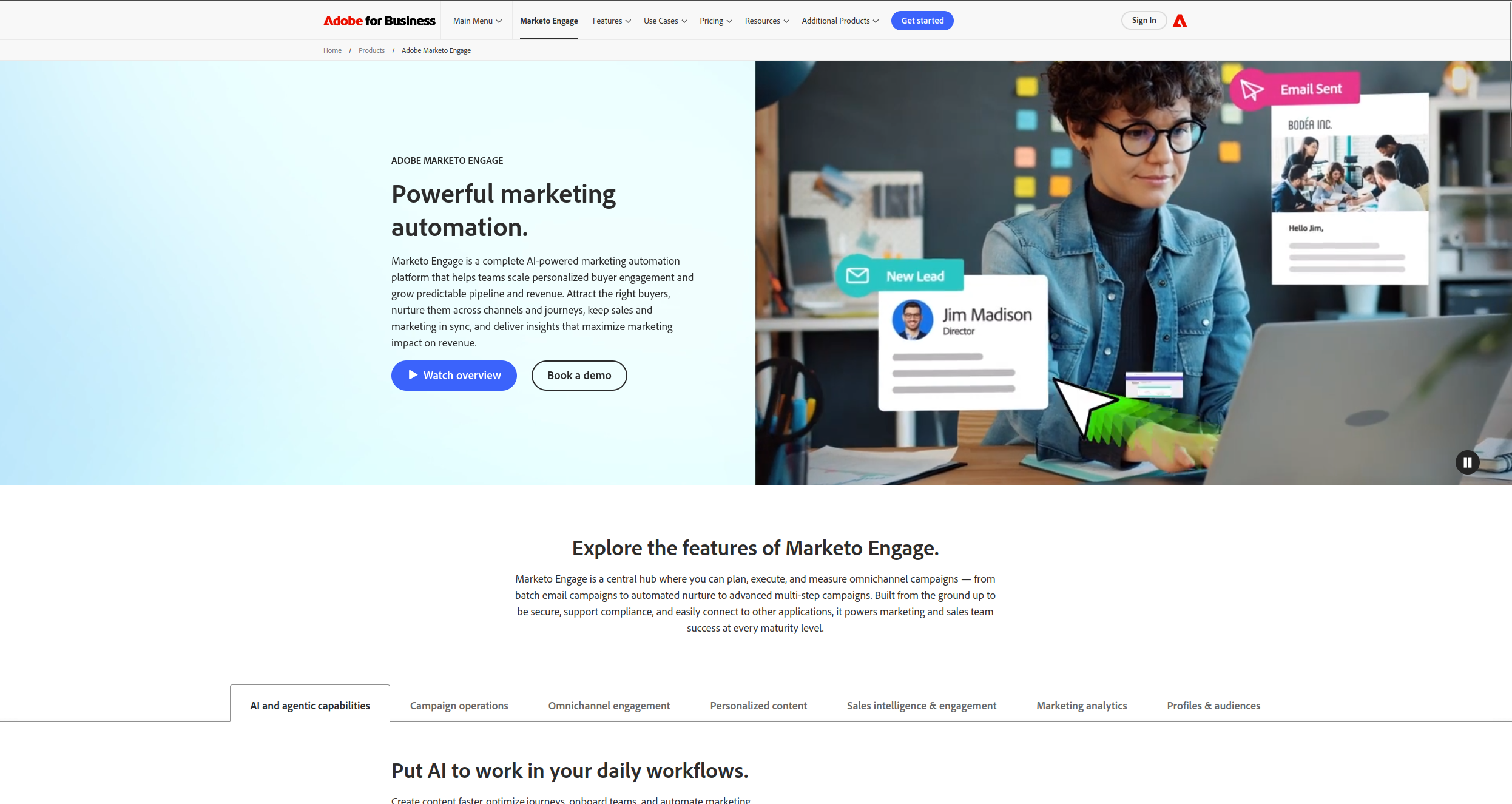
5. Adobe Marketo Engage — Best for Enterprise B2B
Marketo is the gold standard for enterprise B2B marketing automation. It was purpose-built for complex B2B buying journeys where multiple stakeholders are involved, sales cycles span months, and attribution requires tracking dozens of touchpoints across content, email, events, and sales activities. Since Adobe’s acquisition, Marketo Engage has been integrated with Adobe Experience Cloud, adding content management, personalisation, and analytics layers for enterprise marketing operations teams.
The platform’s ABM (Account-Based Marketing) module — Marketo Engage Account-Based Marketing — lets teams define target account lists, score accounts (not just contacts) based on buying committee engagement, and coordinate sales and marketing activities at the account level. Salesforce and Microsoft Dynamics integrations are deep: bi-directional sync of leads, contacts, opportunities, and campaign influence data. The Revenue Cycle Modeller tracks every lead’s journey from first touch to closed-won and attributes revenue to marketing programmes with multi-touch attribution.
Pricing:
Growth — Starts ~$895/month (estimated). Core email automation, lead management, basic reporting, up to 10,000 contacts
Note: Marketo pricing is custom-quoted and not publicly disclosed — contact Adobe sales for exact figures
Key features:
Smart Campaigns: trigger-based and batch automation programmes with complex qualification logic
Account-Based Marketing (ABM) module for account scoring and target account management
Revenue Cycle Modeller: visual tool for defining lead lifecycle stages and tracking model performance
Engagement programmes for long-running nurture tracks with adaptive content scheduling
Salesforce and Microsoft Dynamics deep bi-directional sync including opportunity influence
Predictive content: AI-powered content recommendations personalised per visitor
Forms and landing pages with progressive profiling to collect data incrementally across visits
Pros:
Best ABM (account-based marketing) capabilities in the enterprise market
Deep Salesforce and Microsoft Dynamics integration with opportunity-level attribution
Advanced lead lifecycle management and Revenue Cycle Modelling for enterprise reporting
Robust API for custom enterprise integrations and data warehouse connections
Part of Adobe Experience Cloud — integrates with Adobe Analytics, AEM, and Target
Cons:
Implementation is complex and typically requires certified Marketo consultant support
Enterprise pricing — typically $1,000–$5,000+/month depending on database size and modules
UI is dated compared to newer platforms — user experience shows its age
High ongoing admin overhead — requires dedicated Marketing Ops or MOPs resources
Best for: Enterprise B2B marketing ops teams running multi-touch ABM programmes at scale with Salesforce or Microsoft Dynamics as the CRM system of record.
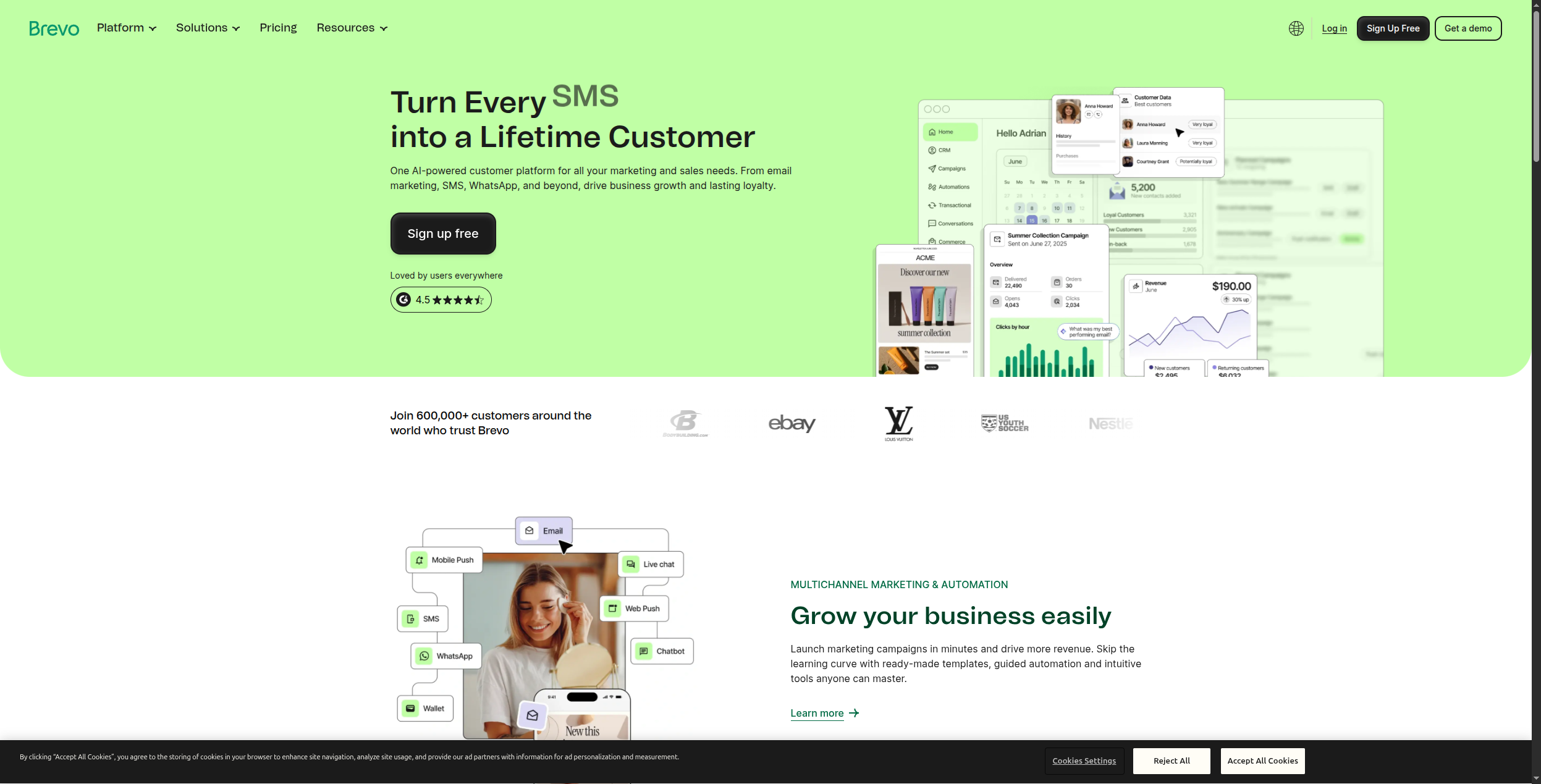
6. Brevo — Best Budget-Friendly Multi-Channel Option
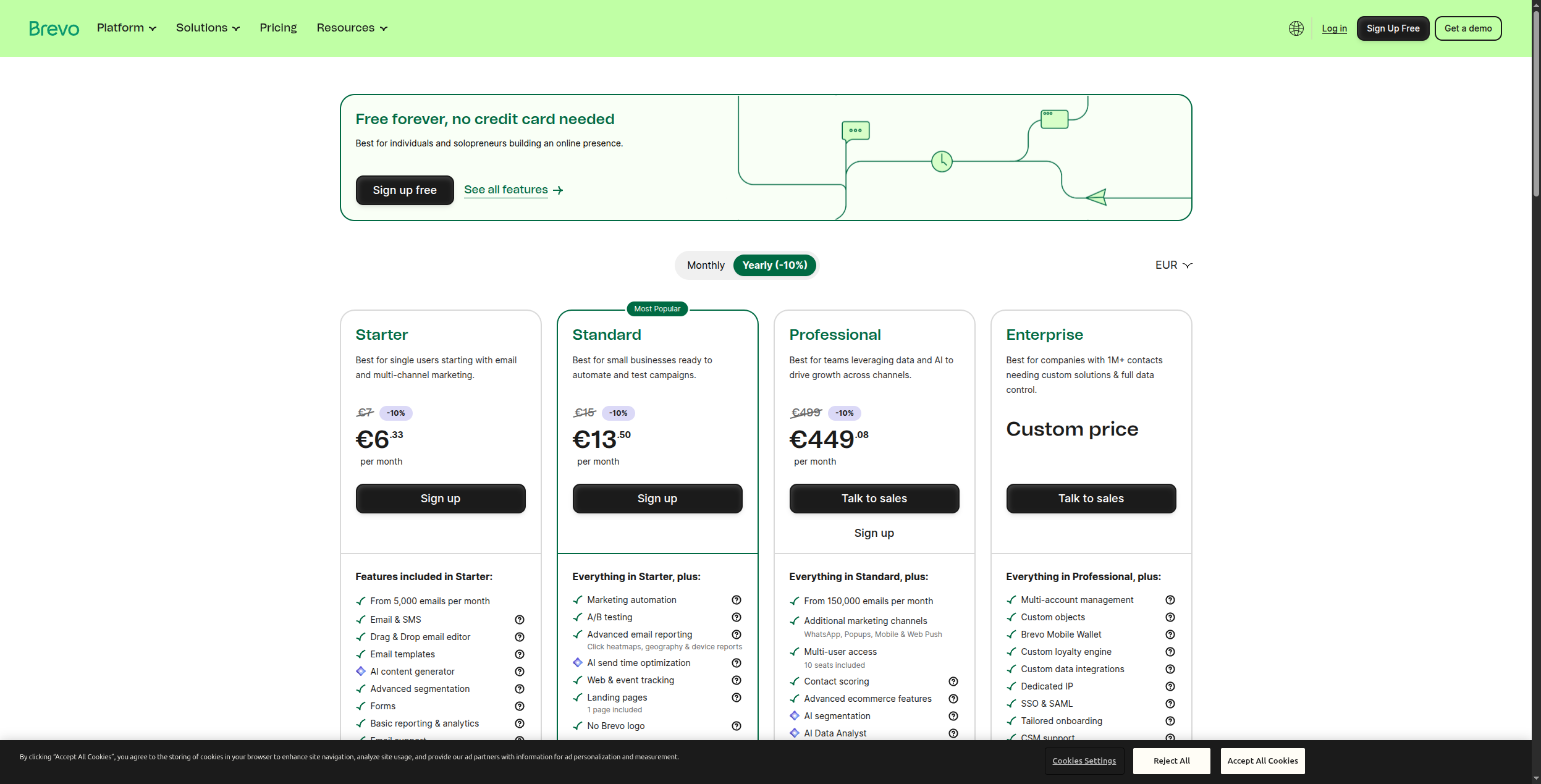
Brevo (formerly Sendinblue) packs email, SMS, WhatsApp, and live chat automation into plans starting at free. For small businesses and startups that need multi-channel marketing automation without the HubSpot price tag, Brevo is the strongest value proposition in 2026. Its pricing model — based on email sends rather than contact list size — means you can store unlimited contacts and only pay for the volume you actually send, which is a significant advantage for businesses with large dormant lists.
The platform covers a surprisingly broad surface area: a drag-and-drop email builder, a workflow automation editor with trigger-based branching, an SMS module for transactional and marketing messages, a WhatsApp Business API connector, and a live chat widget that feeds conversation history into the contact record. The CRM is basic but functional for tracking deal stages without a separate CRM subscription.
Drag-and-drop email editor with personalisation tokens and conditional content blocks
Marketing automation workflow builder with trigger-based branching and goal tracking
SMS marketing with transactional and bulk sending from a single platform
WhatsApp Business API connector for automated messaging sequences
Transactional email via SMTP or API for system-generated emails (order confirmations, password resets)
Live chat widget that logs conversations to contact records
Send time optimisation using AI to determine best send time per contact
Landing page and sign-up form builder included in all plans
Pros:
Generous free tier (300 emails/day) — one of the best free entry points in the market
Multi-channel coverage: email + SMS + WhatsApp + push + live chat in one platform
Pay-per-send pricing (not per-contact) — cost-effective for businesses with large dormant lists
Simple, clean interface accessible to non-marketers with minimal training
Transactional email included — no need for a separate SendGrid or Mailgun subscription
Cons:
Automation depth is limited compared to ActiveCampaign — complex branching logic hits limits quickly
Reporting and analytics are basic — no multi-touch attribution or revenue modelling
Less suitable for complex B2B funnel management with multiple lifecycle stages
Deliverability reputation slightly lower than dedicated email platforms like Mailchimp
Best for: Startups and small businesses that need multi-channel marketing automation at an accessible price — particularly those with large contact lists that would be expensive per-contact with HubSpot or ActiveCampaign.
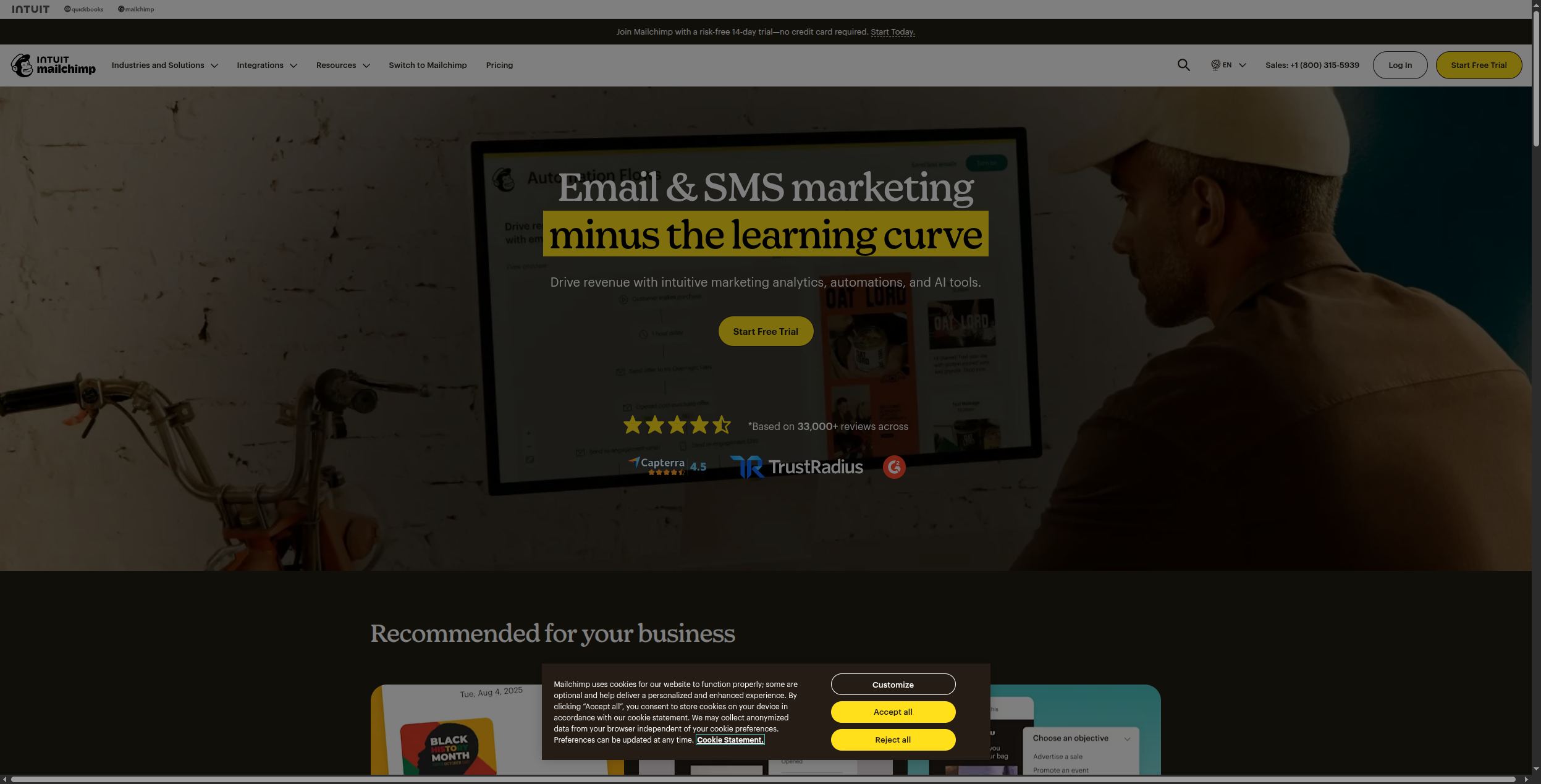
7. Mailchimp — Best for Getting Started
Mailchimp is where most teams begin their marketing automation journey — and for good reason. It’s the most recognised name in email marketing globally, and its interface is the most approachable of any platform on this list. The free tier supports up to 500 contacts and 1,000 emails/month, which is enough for a new business to run newsletters, welcome sequences, and basic automations without any cost.
Recent AI additions — including a generative content assistant for email copy, AI subject line suggestions, a predictive send-time tool, and a brand kit for consistent design — have made Mailchimp meaningfully more capable for beginners. Its Customer Journey builder provides a visual automation canvas with pre-built journey maps for welcome sequences, abandoned cart recovery (with Shopify/WooCommerce integration), and re-engagement campaigns that cover the basics without requiring advanced configuration knowledge.
Drag-and-drop email builder with 100+ customisable templates
Customer Journey builder for visual automated sequence creation
AI-powered content assistant for generating email copy and subject lines
Predictive analytics: expected purchase likelihood, CLV estimates, and demographics
Send time optimisation using machine learning per individual contact
Landing page and sign-up form builder included in all plans
Shopify, WooCommerce, and Magento integrations for e-commerce automations
Audience segmentation based on tags, engagement data, and demographic predictions
Pros:
Easiest onboarding of any platform on this list — minimal training needed
Strong free tier for early-stage businesses: 500 contacts, 1,000 sends/month at no cost
Built-in landing page and form builder reduces third-party tool dependency
AI subject line and send-time optimisation built into standard plans
Huge template library and extensive tutorial resources for beginners
Cons:
Automation depth plateaus quickly — not suitable for complex multi-branch nurture sequences
Pricing becomes uncompetitive at contact volumes above 2,000 — ActiveCampaign is better value
CRM functionality is very basic — not a replacement for a dedicated sales CRM
Free plan adds Mailchimp branding to emails — requires paid plan to remove
Best for: Very early-stage businesses and creators who need simple email automation to start — and plan to migrate to a more powerful platform once they outgrow the basics.
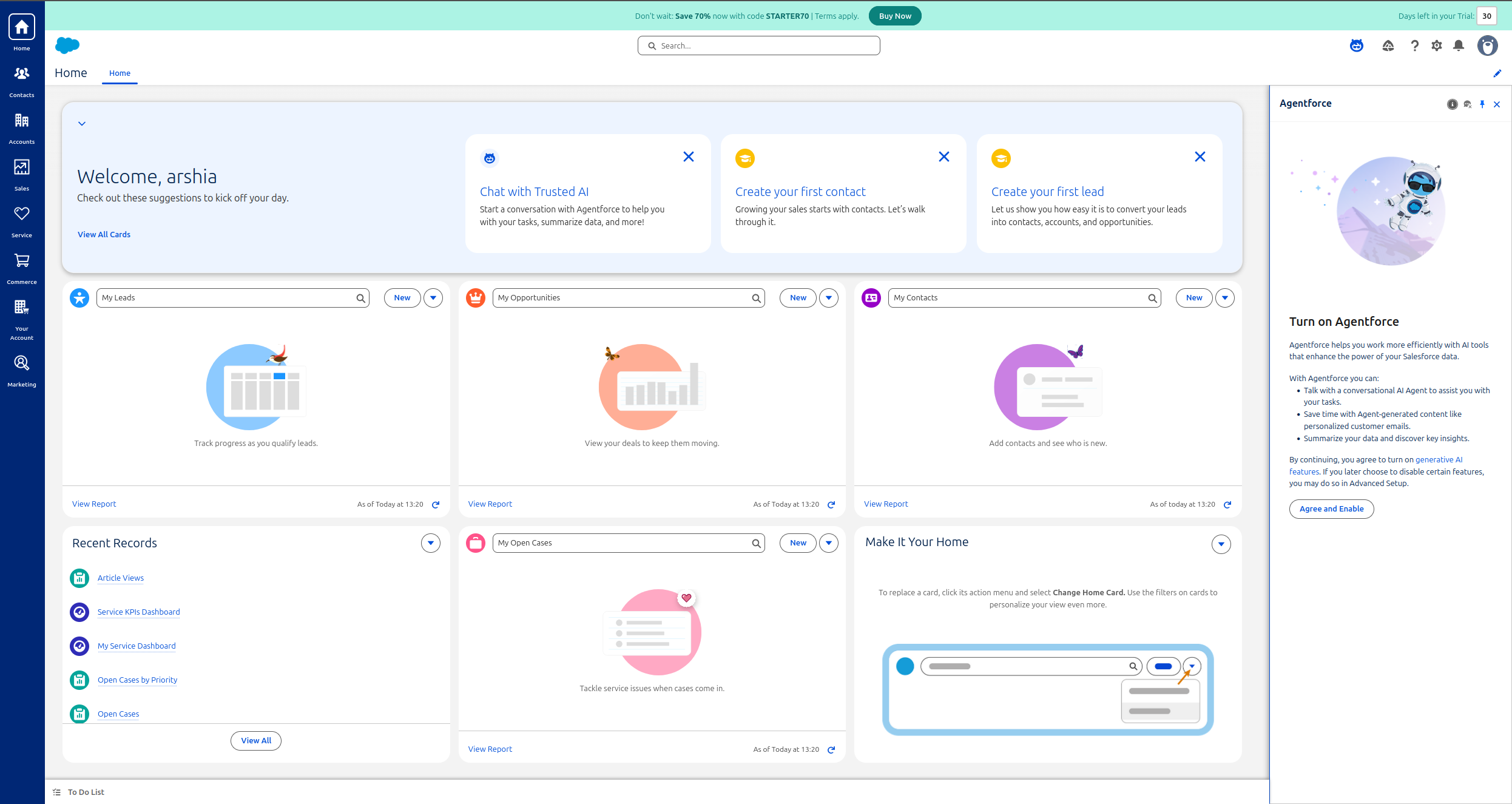
8. Salesforce Marketing Cloud — Best for Salesforce-Centric Enterprises
Salesforce Marketing Cloud (including the former Pardot, now Marketing Cloud Account Engagement for B2B) is the default choice for enterprises already running Salesforce CRM. The Einstein AI layer adds predictive scoring, content recommendations, and journey optimisation across both the B2C Marketing Cloud and the B2B Account Engagement products. The platform is vast, complex, and expensive — justified by the depth of CRM integration for organisations where Salesforce is the system of record for everything.
Marketing Cloud Engagement (B2C) handles high-volume transactional and marketing email, SMS, push notifications, and cross-channel journeys through Journey Builder. Marketing Cloud Account Engagement (B2B, formerly Pardot) handles lead nurturing, scoring, and attribution for longer B2B sales cycles. Einstein AI spans both products — providing predictive lead scoring, content recommendations optimised per prospect, and send-time personalisation that adapts to individual engagement patterns.
Pricing:
Marketing Cloud Growth — $1,500/month. Core email and automation for mid-size B2B, up to 10,000 contacts, basic Einstein features
Marketing Cloud Account Engagement Plus — $1,250/month. Advanced lead scoring, Engagement History Dashboards, B2B Marketing Analytics
Marketing Cloud Engagement (B2C) — Custom. Starts at approximately $4,000–$15,000+/month depending on contact volume, channels, and add-ons
Note: All Salesforce Marketing Cloud pricing is custom-quoted; figures above are approximate guidance
Key features:
Journey Builder: drag-and-drop canvas for designing multi-step B2C customer journeys across email, SMS, push, and ads
Einstein AI: predictive lead scoring, content recommendations, and send-time personalisation per contact
Marketing Cloud Account Engagement (Pardot): B2B lead nurturing, engagement studio workflows, and Salesforce Opportunity influence tracking
Data Studio: audience segmentation from first-party and third-party data across channels
Advertising Studio: social ad audience management synced to Marketing Cloud segments
Cross-cloud integration with Salesforce Sales Cloud, Service Cloud, and Data Cloud
Social Studio for social listening and publishing integrated with CRM contact records
Pros:
Unmatched integration with Salesforce Sales Cloud and Service Cloud — single source of truth for enterprise teams
Einstein AI for lead scoring, content recommendations, and send-time optimisation across both B2B and B2C products
Powerful Journey Builder for B2C multi-channel campaigns at enterprise scale
Advertising Studio connects marketing audiences directly to paid social campaigns
Only platform where marketing data and sales pipeline data live in the same data model
Cons:
Significant implementation effort and ongoing admin overhead — typically requires a Salesforce Marketing Cloud specialist
Cost is prohibitive for all but enterprise buyers — starts at $1,500/month, often $10,000+/month at scale
Marketing Cloud Engagement and Account Engagement are separate products with separate UIs — confusing for new teams
Einstein AI features require additional licence fees beyond the base platform cost
Best for: Enterprise organisations with Salesforce as the system of record for sales — where the depth of CRM-to-marketing integration justifies the significant cost and implementation investment.
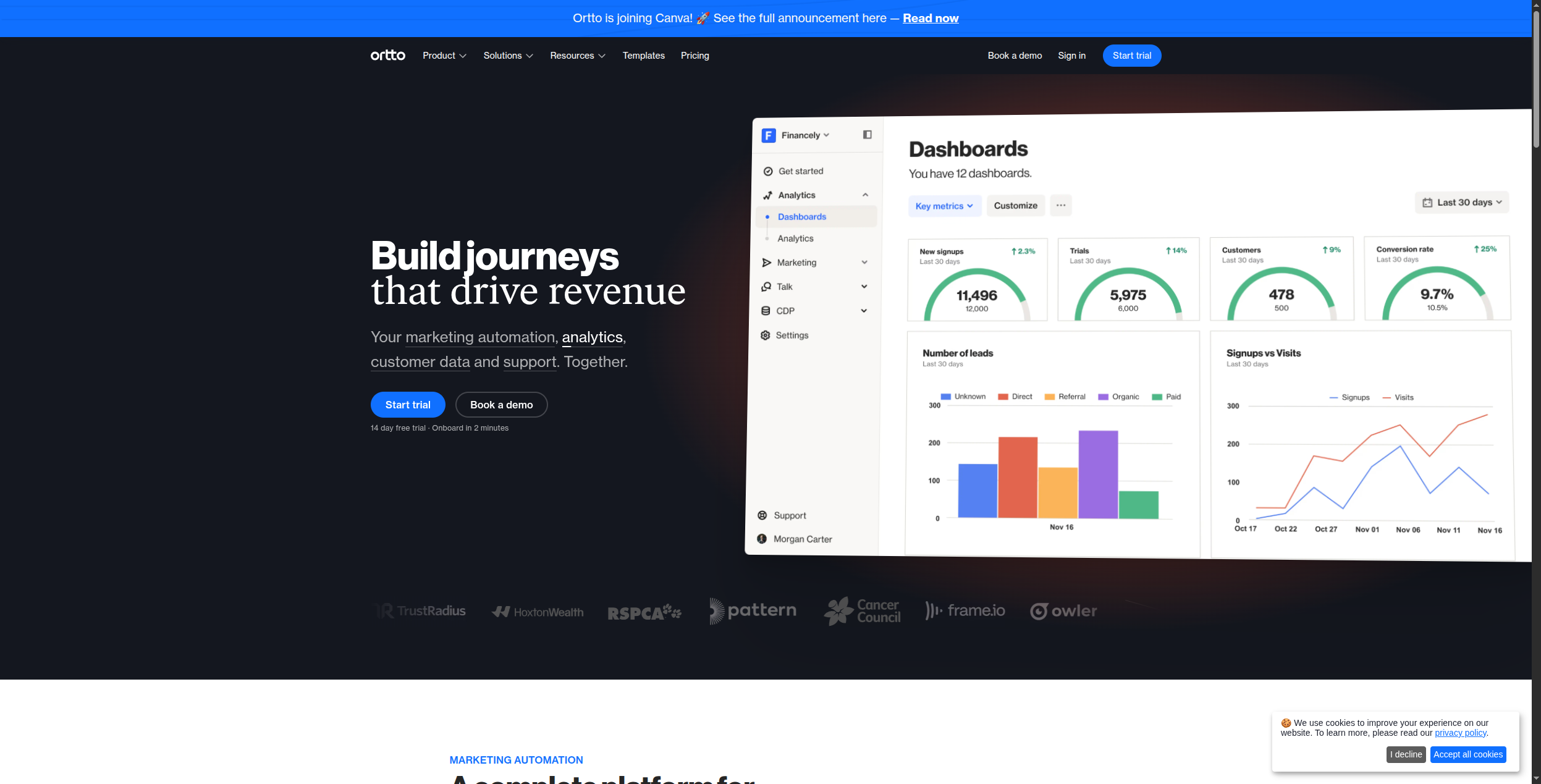
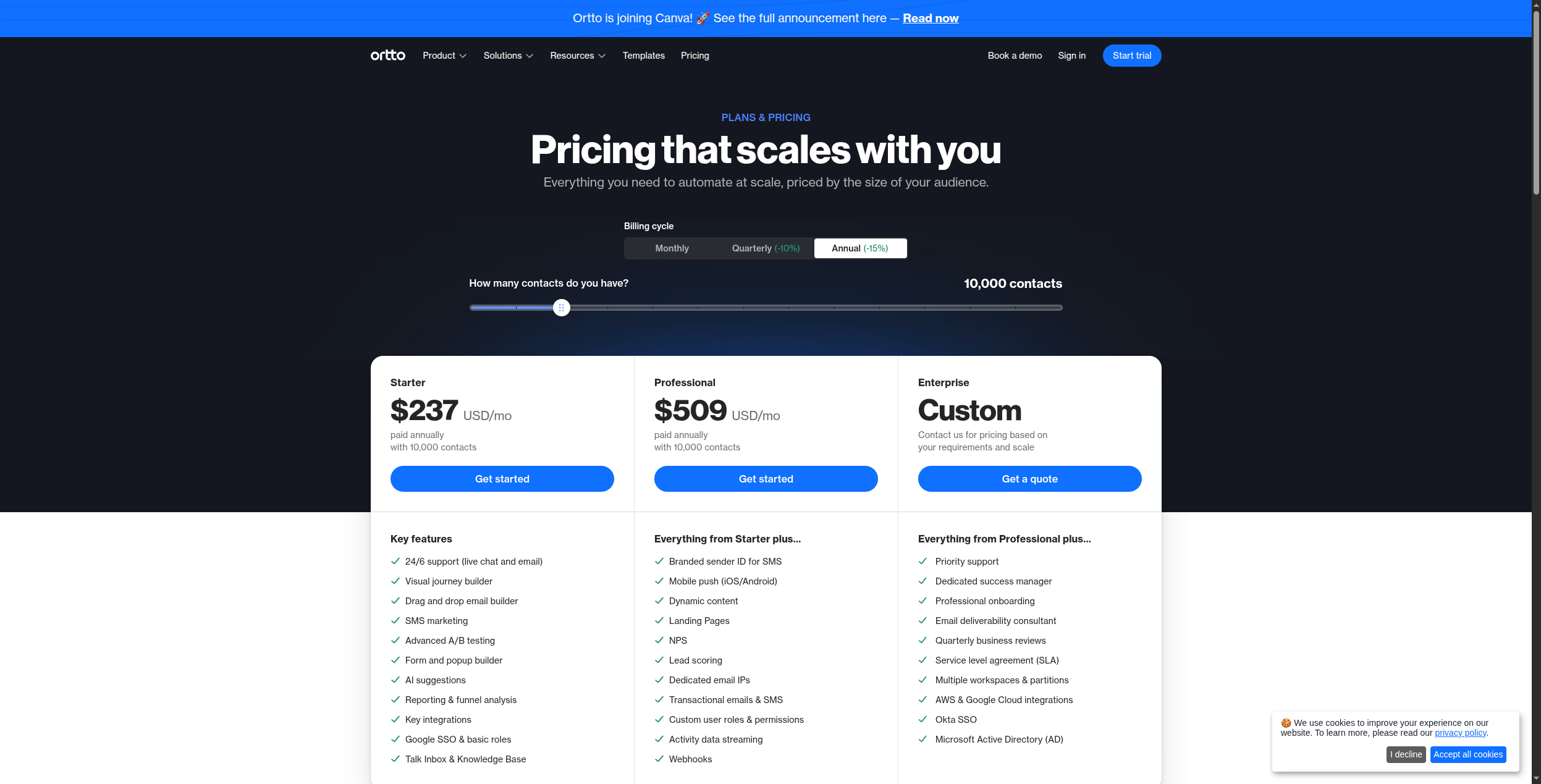
9. Ortto — Best for CDP-Integrated Automation
Ortto combines a customer data platform (CDP), journey automation, and analytics in a unified interface. The result is tighter data cohesion than platforms that bolt on a CDP as an afterthought — data doesn’t need to be synced between a separate data warehouse and your automation tool because it all lives in the same system. This is particularly valuable for SaaS companies tracking product events (feature adoption, trial usage, upgrade triggers) alongside marketing touchpoints.
Ortto’s Journeys builder is visually clear and its reporting is among the strongest in the mid-market. The funnel visualisation shows drop-off rates at each journey stage — something most platforms require custom analytics integrations to achieve. Its People page (customer profiles) combines all marketing and product behaviour data in a single 360-degree contact view, making it easy to segment by behavioural signals that traditional email platforms can’t access.
Pricing:
Professional — $509/month. Up to 10,000 contacts, full automation Journeys, email + SMS + push, funnel analytics, Ortto AI
Business — $849/month. Up to 20,000 contacts, advanced reporting, custom dashboards, priority support
Unified CDP with real-time customer profile stitching from web, product, and marketing events
Journeys: visual automation builder with behavioural triggers, delays, conditions, and A/B testing
Capture: forms, pop-ups, and landing pages with built-in progressive profiling
Analytics: funnel visualisation, cohort analysis, and custom report builder
Multi-channel: email, SMS, push notifications, and in-app messages from one platform
Ortto AI: email content generation, subject line optimisation, and segment suggestions
Native integrations: Shopify, Stripe, HubSpot, Salesforce, Intercom, and Segment
Pros:
Unified CDP + automation + analytics removes data sync headaches between disparate tools
Strong reporting and funnel visualisation — better analytics than HubSpot at equivalent tiers
Good Shopify, Stripe, and HubSpot integrations for SaaS and eCommerce use cases
Product event tracking built in — perfect for SaaS companies triggering on feature usage
Ortto AI for content generation and segment recommendations included in base plans
Cons:
Starting price ($509/mo) is high for the market it’s targeting — pricing limits accessibility for small teams
Smaller integration library than HubSpot or ActiveCampaign — 50+ vs 500+
Less well-known — fewer agency resources, community tutorials, and third-party experts
Complex for users who just need email newsletters — overkill for simple use cases
Best for: SaaS and eCommerce teams that want unified data and automation in one platform — specifically where product event data needs to drive marketing sequences alongside traditional behavioural triggers.
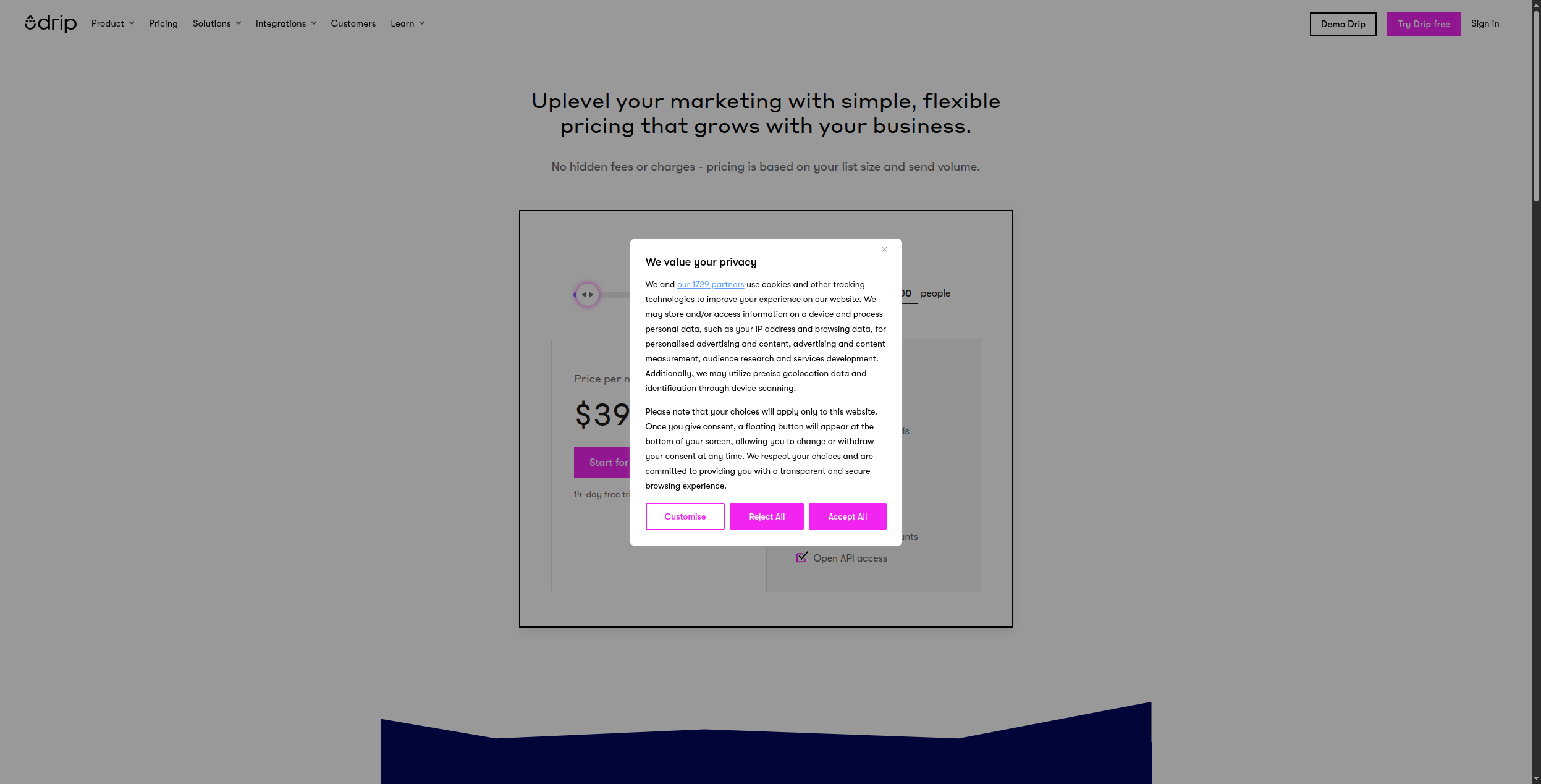
10. Drip — Best for eCommerce Revenue Attribution
Drip positions itself as the eCommerce CRM with built-in email and SMS automation — explicitly targeting Klaviyo users who want simpler pricing or a more intuitive interface. Its revenue attribution dashboard connects marketing actions directly to Shopify and WooCommerce revenue, making ROI reporting straightforward without a separate analytics tool. Every email, workflow, and campaign shows the exact revenue it generated, not just opens and clicks.
The workflow builder is clean and purpose-built for eCommerce journey logic. Pre-built automations cover abandoned cart, post-purchase follow-ups, win-back campaigns, and browse abandonment — each with Shopify/WooCommerce event triggers that fire in real time. Drip’s People view combines purchase history, browsing behaviour, email engagement, and predicted attributes (lifetime value tier, purchase likelihood) in a single contact profile used for audience segmentation.
Pricing:
Drip — $39/month (starting, scales with contacts). Up to 2,500 contacts, unlimited email sends, email automation, Shopify/WooCommerce integration, revenue attribution
Higher contact tiers: $89/month (5,000 contacts), $154/month (10,000), $284/month (20,000), up to enterprise volumes with custom pricing
SMS: available as an add-on in the US and Canada; pricing based on SMS volume
Key features:
Visual workflow builder with Shopify and WooCommerce real-time event triggers
Revenue attribution dashboard: per-email and per-automation revenue reporting
People profiles: unified view of purchase history, email engagement, and predictive scores
Predictive LTV tier segmentation: AI model groups contacts by predicted revenue contribution
SMS marketing automation (US and Canada only)
Dynamic coupon code insertion in email and SMS automations
A/B testing for email subject lines and content within workflows
Pros:
Clear revenue attribution tied to specific automations and emails — best-in-class for eCommerce ROI reporting
Clean, eCommerce-specific workflow templates reduce setup time significantly
Good Shopify and WooCommerce native integration with real-time event processing
Flat per-contact pricing model is predictable and cheaper than Klaviyo at equivalent list sizes
Predictive LTV segmentation helps focus resources on highest-value customer cohorts
Cons:
Limited beyond eCommerce use cases — not suitable for SaaS or B2B marketing teams
SMS automation only available in US and Canada — international brands need a separate SMS provider
Less automation depth than Klaviyo for complex multi-branch segmentation scenarios
Smaller integration ecosystem than HubSpot or ActiveCampaign
Best for: Shopify and WooCommerce brands that prioritise clear revenue attribution from marketing automation and want a cleaner, more predictably-priced alternative to Klaviyo.
How to Choose the Right Marketing Automation Software
Use this decision framework:
By company stage:
Early-stage → Mailchimp (free) or Brevo (free multi-channel)
Growing SMB → ActiveCampaign or HubSpot Starter
Scaling mid-market → HubSpot Professional or Ortto
Enterprise B2B → Marketo or Salesforce Marketing Cloud
No single platform wins every use case. HubSpot wins on breadth. ActiveCampaign wins on automation depth per dollar. Klaviyo wins for eCommerce. Marketo and Salesforce win at enterprise scale.
But if your team wants AI to drive marketing workflows — automatically researching, writing, personalising, and distributing — FlowHunt delivers capabilities that traditional marketing automation platforms aren’t designed for. Use it alongside your existing stack to unlock the AI layer your current tools are missing.
Frequently asked questions
Marketing automation software automates repetitive marketing tasks such as email sending, lead nurturing, social posting, ad management, and campaign reporting. Modern platforms add AI to personalise messages at scale, score leads, predict churn, and generate content automatically — going well beyond simple rule-based email sequences.
For small businesses, ActiveCampaign and Brevo offer the best combination of powerful automation and affordable pricing. FlowHunt is the best choice for teams that want AI-driven marketing workflows — research, content creation, and outreach automation — beyond traditional email sequences. Mailchimp is the easiest to start with but has the least automation depth.
Pricing varies widely: Brevo and Mailchimp offer free tiers for basic sending. ActiveCampaign starts at $15/month. HubSpot's Marketing Hub starts at $800/month (Professional). Marketo and Salesforce Marketing Cloud are enterprise-priced, typically $1,000–$5,000+/month. FlowHunt offers a free tier with usage-based scaling. The right choice depends on your contact list size, feature needs, and budget.
Email marketing is the act of sending emails to a list of contacts — newsletters, promotions, announcements. Marketing automation encompasses email plus a much broader set of automated actions: lead scoring, CRM updates, multi-channel sequences, behavioural triggers, ad retargeting, and AI-powered personalisation. All marketing automation platforms include email; not all email tools offer true automation.
For B2B marketing automation, HubSpot and Marketo are the most established enterprise options. ActiveCampaign is the best mid-market choice. FlowHunt excels for B2B teams that need AI-driven prospecting, content, and outreach workflows that go beyond what traditional MA platforms offer. For account-based marketing at enterprise scale, Salesforce Marketing Cloud (Pardot) is the market leader.
Arshia is an AI Workflow Engineer at FlowHunt. With a background in computer science and a passion for AI, he specializes in creating efficient workflows that integrate AI tools into everyday tasks, enhancing productivity and creativity.
FlowHunt goes beyond email sequences and lead scoring. Build AI-driven marketing workflows that research, write, personalise, and distribute content automatically.
10 Best Sales Automation Tools in 2026: Ranked and Reviewed
The 10 best sales automation tools in 2026, ranked by outreach capability, AI personalisation, CRM integration, and pricing. Close more deals with less manual e...
Best AI Marketing Agents in 2026: 12 Tools That Actually Run Your Marketing
Ranked and reviewed: the 12 best AI marketing agents in 2026. From content pipelines and SEO automation to ad optimization and email personalization — find the ...
Best Workflow Automation Tools in 2026: 12 Platforms Ranked and Reviewed
Ranked and reviewed: the 12 best workflow automation tools in 2026. Comparison table, pricing, free tiers, and a clear verdict on which platform fits your team.
12 min read
Automation
AI Tools
+3
Cookie Consent We use cookies to enhance your browsing experience and analyze our traffic. See our privacy policy.