


AI Grammar Checker
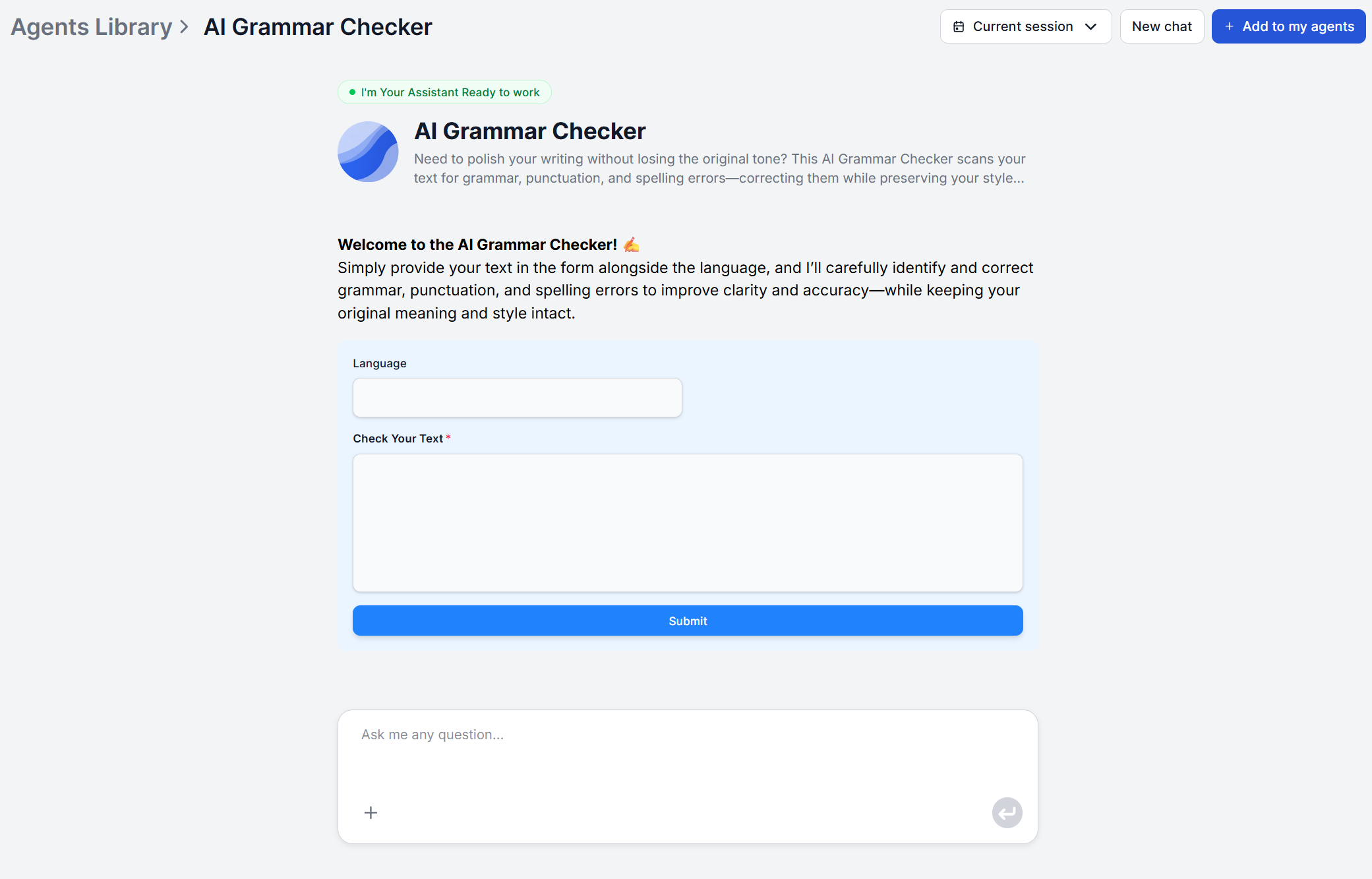
Experience real-time, professional-grade grammar correction with our AI-powered Grammar Checker. This advanced tool analyzes your text and corrects grammar, pun...
2 min read
AI
Writing
+4

For non-native English writers and international marketing teams, AI grammar tools are more than convenience — they’re essential for professional credibility. Here’s how to use them effectively.
For non-native English writers and international marketing teams, grammar errors carry different weight than they do for native speakers. Mistakes can signal a lack of fluency and undermine the credibility of otherwise strong work. A grammar checker for ESL writers that goes beyond basic spell-check can close that gap significantly. Here is how AI grammar tools work for second-language writers, where they genuinely help, and where the limits are. For a comparison of four leading AI grammar tools and which performs best for multilingual and ESL use, see our AI grammar checker comparison guide .
The errors that show up most consistently in second language writing grammar check are not random. They follow predictable patterns tied to how the writer’s first language handles the same concepts:
AI grammar checkers catch all of these categories reliably. The contextual reasoning behind modern LLM-based tools is particularly strong here because many of these errors look plausible at first glance, and only context reveals the problem.
A spell checker checks whether each word exists in a dictionary. It cannot tell whether their should be there, whether a comma is missing, or whether a sentence’s subject and verb agree. For a native speaker who rarely makes mistakes, a spell checker is enough for basic hygiene. For a second language user, a spell checker catches almost nothing that matters.
AI English grammar tools operate at the sentence and paragraph level. They parse grammatical structure, identify rule violations in context, and return corrections that account for the surrounding text. FlowHunt’s AI Grammar Checker uses LLM-based reasoning rather than a fixed rule library, which makes it more accurate on the non-standard constructions that ESL writing often contains.
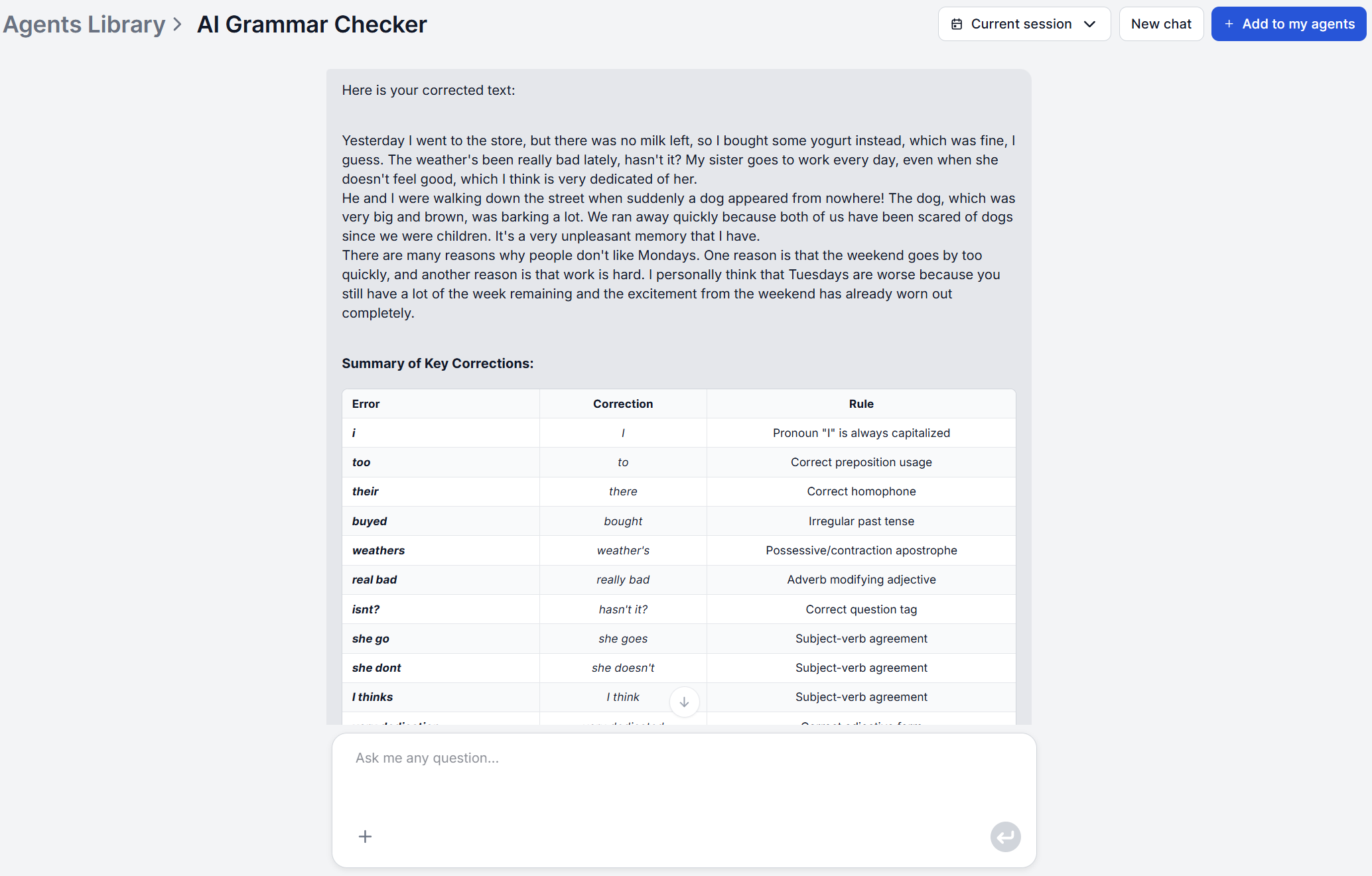
The practical difference is that a spell checker would pass “She don’t knows the answer” without comment. An AI grammar checker corrects it and, if asked, explains that don’t would require a plural subject instead of singular, and knows the third-person singular form instead of second person.

Start your free trial today and see results within days.
The fastest way to improve written English as a second-language writer is to actively try to understand the errors, not just have them fixed. The AI Grammar Checker supports this directly. Ask it to explain any correction, and it will identify the error type and the rule behind the change.
This matters because ESL errors are systematic. Article errors, for instance, are not random, but rather follow the same pattern in every document a writer produces. Once a writer understands the the-for-specificity and a/an-for-first-mention rule, the error frequency drops across all future writing. An ESL grammar AI tool that only silently fixes errors provides no leverage on that improvement curve.
Practical approach:
Non-native English writing AI tools deliver the most value when they are part of a structured workflow rather than a single last-minute pass. The most effective approach for ESL writers is pairing the grammar checker with a targeted rewriting step for passages that feel structurally awkward even after errors are corrected:
This three-tool workflow — grammar check, targeted rewrite, humanization — covers the full range from rule-based errors through structural awkwardness to tonal naturalness.
Get latest tips, trends, and deals for free.
For marketing teams where English is a common working language but not the first language of every contributor, consistency and professionalism in published content are ongoing operational problems. A single grammar error in a landing page headline or a case study undermines the credibility of an otherwise strong piece.
AI writing tools typically solves this at two levels:
Individual contributor level — each writer runs their own draft through the grammar checker before submission. This catches the systematic errors that individual contributors make predictably, without requiring a senior editor to perform the same correction on every document.
Review and approval level — team leads or editors run final drafts through the grammar checker before publishing, regardless of whether the contributor already checked. This catches anything introduced during collaborative editing, such as tense shifts, punctuation errors from sentence restructuring, or dropped articles.
Being accurate about limitations is as important as understanding capabilities:
For the gap that grammar checking does not cover, the AI Text Humanizer helps with naturalness and tone. It addresses the phrasing patterns that make text feel human and context-appropriate rather than just grammatically correct.
Maria is a copywriter at FlowHunt. A language nerd active in literary communities, she's fully aware that AI is transforming the way we write. Rather than resisting, she seeks to help define the perfect balance between AI workflows and the irreplaceable value of human creativity.

FlowHunt's AI Grammar Checker corrects grammar, punctuation, and spelling in any language, and can help you learn by explaining every correction. Try it for free.
Experience real-time, professional-grade grammar correction with our AI-powered Grammar Checker. This advanced tool analyzes your text and corrects grammar, pun...

A practical guide to using FlowHunt's AI Grammar Checker. Learn how to to use it for different content types, and discover a review process for publication-read...
Not all content carries the same risk when published with errors. Here's which five content types benefit most from AI grammar checking, and what specifically t...
Cookie Consent
We use cookies to enhance your browsing experience and analyze our traffic. See our privacy policy.