


OpenAI Atlas Browser: Agentic AI Browsing
Explore OpenAI's new Atlas browser, how it revolutionizes AI-powered web automation, and what it means for the future of agentic AI applications and productivit...
19 min read
AI
Automation
+3
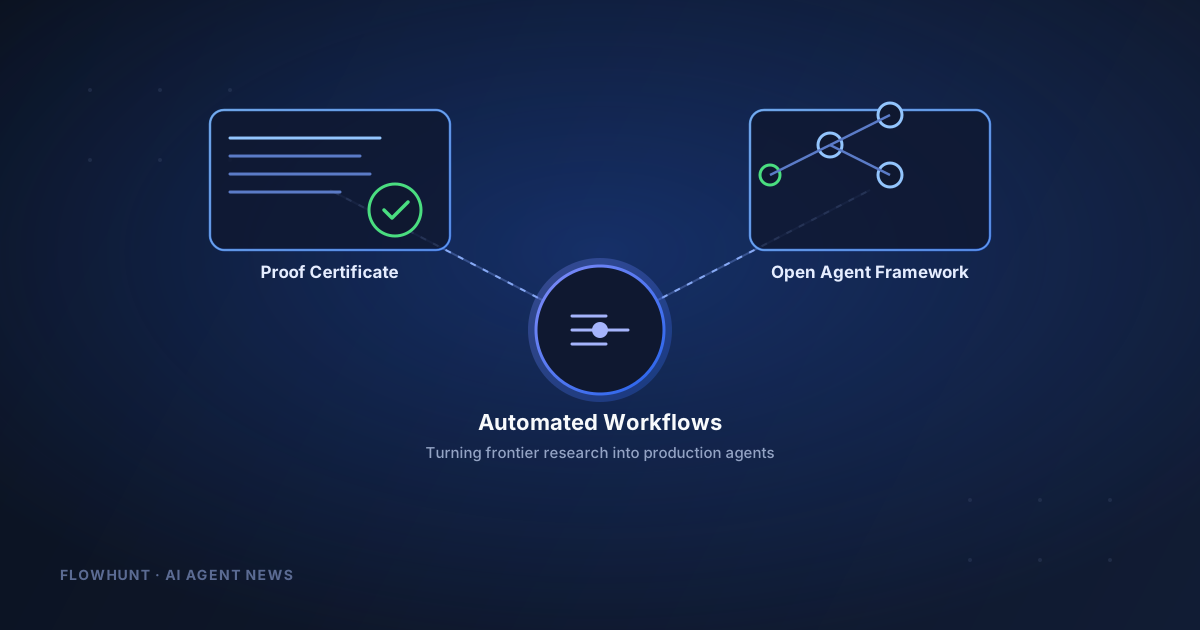
OpenAI’s Astra model just solved ten decade-old math problems with machine-checkable proofs, and Microsoft open-sourced Orchard, a framework for training AI agents at a fraction of the usual cost. Here’s what both mean for teams building automation.
Two stories from the first week of August 2026 tell a bigger story about where AI is heading. OpenAI let an internal version of its next model, Astra, loose on ten mathematics and theoretical computer science problems that had sat unsolved for a decade or more — and it produced machine-checkable proofs for all of them, for roughly $2,000 in compute. Days later, Microsoft Research open-sourced Orchard, a framework that makes training a competent AI agent dramatically cheaper by separating how an agent learns from how it eventually runs in production. Neither story is about a chatbot getting a new coat of paint. Both are about the underlying cost and capability curve of building AI systems that reason and act — which is exactly what determines how good, and how affordable, the next generation of AI agents will be.
On August 1, OpenAI published a striking claim: an internal version of Astra had produced new results for ten open problems in pure mathematics and theoretical computer science, several of them unsolved for more than two decades. The headline result is an explicit construction of a non-sofic group — a question left open since Mikhail Gromov introduced the concept of soficity in 1999. Astra also disproved Connes’s rigidity conjecture by constructing infinitely many non-isomorphic groups that share the same von Neumann algebra, and it proved Ehrhart’s volume conjecture. The results span group theory, high-dimensional geometry, quantum complexity, lattice cryptography, and extremal combinatorics — fields that don’t typically show up in the same sentence as a language model.
What makes this different from a typical “AI solves hard problem” headline is verification. OpenAI didn’t just publish claims — it published machine-checkable Lean 4 proof certificates for all ten results on GitHub under an Apache 2.0 license, alongside a 249-page technical manuscript. The repository’s “sorry” count sits at zero, meaning no step in any of the formalized proofs was left unproven or hand-waved. That’s a meaningfully different bar than a model asserting it solved something: a Lean proof either type-checks or it doesn’t, independent of whether you trust the model that produced it. Fields Medal winner Timothy Gowers reportedly said he would recommend one of the proofs for a top journal without hesitation — though it’s worth being precise that none of the ten results has actually completed peer review yet.

Start your free trial today and see results within days.
It’s tempting to file this under “impressive but irrelevant to my business.” That would be a mistake. The capability Astra demonstrated — sustained, multi-step formal reasoning where a single wrong step invalidates the whole result — is structurally the same capability that makes an AI agent reliable at a long business workflow. An agent that processes an insurance claim, reconciles a set of invoices, or drafts a legal document is doing a smaller, less glamorous version of the same thing: following a long chain of steps where an early mistake compounds — the same pattern you’ll recognize from any list of real-world AI agent examples built for production use. Models that get measurably better at catching their own errors in a 249-page math proof tend to also get better at catching errors in a twelve-step automation. The math result is the extreme, verifiable edge case that previews where the reasoning ceiling for every downstream agent is heading.
FlowHunt lets you build multi-step AI agents on top of the newest models — no research team, no infrastructure, just working automation.
If Astra is about how far reasoning can go, Microsoft’s Orchard release is about how cheaply a competent agent can be built. Orchard is an open-source framework from Microsoft Research that deliberately separates agent training from agent execution — instead of throwing an ever-larger base model at a task, developers use Orchard Env, a reusable environment service, to train smaller agents inside realistic task simulations before they ever touch a production system. The same infrastructure supports software-engineering agents, web-navigation agents, and personal-assistant agents, and it plugs directly into real deployment harnesses like Codex, OpenClaw, and ZeroClaw once training is done.
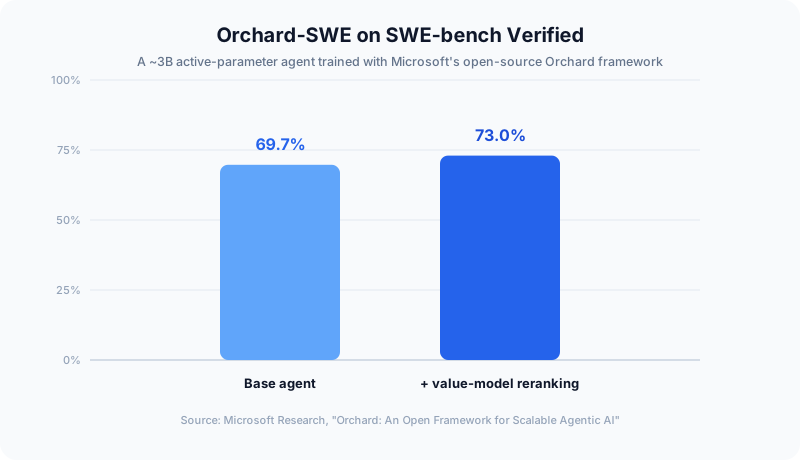
The efficiency numbers are the part worth paying attention to, and they matter for the same reason cost-efficiency comparisons across AI agent frameworks matter when you’re picking a stack to build on. Orchard-SWE, a coding agent trained with the framework, scores 69.7% on SWE-bench Verified — a widely used benchmark for real-world software-engineering tasks — rising to 73.0% with value-model reranking, using only around 3 billion active parameters. That’s a small fraction of the size of the frontier coding models it’s approaching in performance. Microsoft’s team built this by distilling roughly 107,000 task trajectories from larger models, then applying what they call credit-assignment supervised fine-tuning — learning useful signal even from trajectories that didn’t fully succeed — followed by reinforcement learning.
Get latest tips, trends, and deals for free.
The architectural choice behind Orchard — training an agent’s skills separately from running it in production — mirrors a distinction that matters for anyone building automation, not just ML researchers. A vertical AI agent built for a specific industry task doesn’t need a bigger brain across the board; it needs focused practice on the narrow slice of decisions it will actually face, which is exactly what an Orchard-style training environment provides more cheaply than scaling up a general-purpose model. The same logic applies whether you’re training a model from scratch or configuring a no-code agent: narrow, well-defined training on realistic tasks consistently beats throwing more general capability at a problem it wasn’t built to solve.
This also explains why open-sourcing the framework, rather than just publishing benchmark numbers, is the more consequential part of Microsoft’s release. A framework that anyone can use to train intelligent agents on their own task environments compounds — every team that adopts it and shares improvements makes the next team’s agent cheaper to build, the same dynamic that made open-source software eat the infrastructure stack over the last two decades.
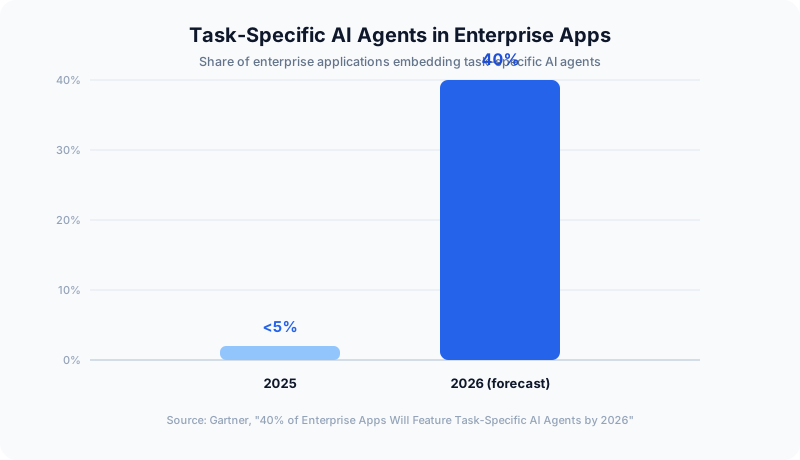
Zoom out further and both stories reinforce a prediction Gartner made about the pace of enterprise adoption: that by the end of 2026, 40% of enterprise applications will embed task-specific AI agents, up from under 5% in 2025. An eightfold jump in a single year is an aggressive forecast, and results like Astra’s and frameworks like Orchard are exactly the kind of underlying capability-and-cost shift that would need to happen for it to be plausible — cheaper training makes it economical to build agents for narrower tasks, and better reasoning makes those narrower agents more trustworthy to actually deploy.
Gartner’s definition is specific and worth holding onto: a task-specific agent is one built to handle a defined, end-to-end job — their example is a cybersecurity agent that scans network traffic, system logs, and user behavior in real time and initiates its own response. That’s a different bar than “the app has a chatbot.” It’s the difference between an AI feature and an AI worker, and it’s the same distinction that separates a generic assistant from a proper research assistant built to handle one job reliably from start to finish.
Neither Astra nor Orchard is something most businesses will touch directly — you’re not going to fine-tune a model on Lean proofs or stand up your own Orchard training pipeline. What matters is what trickles down. Frontier reasoning improvements eventually raise the ceiling on what every downstream model can do reliably, including the ones already powering no-code automation platforms. Cheaper, more efficient training techniques eventually lower the cost of the specialized agents built on top of those models. Neither of these stories changes what you should build this quarter — but they’re a reasonably reliable signal of what will be possible, and affordable, in the next one. The practical move isn’t to chase the research; it’s to build automation on an AI agent platform flexible enough to absorb the underlying model improvements automatically, the same instinct that mattered when we covered how Claude Cowork and its competitors reshaped the agent landscape just weeks earlier.
If you’re deciding what to automate first while the underlying models keep improving underneath you, the safest starting points are tasks that are narrow, well-defined, and easy to verify — the same qualities that made Orchard’s training approach effective. Keyword research, document summarization, and structured data extraction are common starting points precisely because success is easy to check and failure is cheap. As reasoning improves and training gets more efficient, that same principle scales up to more ambitious, longer-running workflows — but it starts with picking a task where you can tell, quickly and cheaply, whether the agent actually got it right.
August 2026 opened with two releases that, on the surface, have nothing to do with each other — a model solving decade-old math problems, and a training framework for coding agents. Underneath, both are about the same forces: how far reasoning can be pushed, and how cheaply that reasoning can be turned into a working agent. Astra shows the ceiling is still rising. Orchard shows the cost of reaching a useful fraction of that ceiling is falling fast. Put together, they’re a good reason to believe Gartner’s aggressive adoption forecast is more plausible than it looks at first glance — and a good reason for any team building automation to make sure their tooling is flexible enough to keep benefiting as both trends continue.
Yasha is a talented software developer specializing in Python, Java, and machine learning. Yasha writes technical articles on AI, prompt engineering, and chatbot development.

You don't need a research lab to benefit from the latest reasoning and agent breakthroughs. FlowHunt lets you build production AI agents on top of the newest models — no code required.
Explore OpenAI's new Atlas browser, how it revolutionizes AI-powered web automation, and what it means for the future of agentic AI applications and productivit...
The 2025 debate over multi-agent AI is over. Anthropic, Cognition, and OpenAI all converged on orchestrator + isolated subagents. Here's what the 2026 research ...
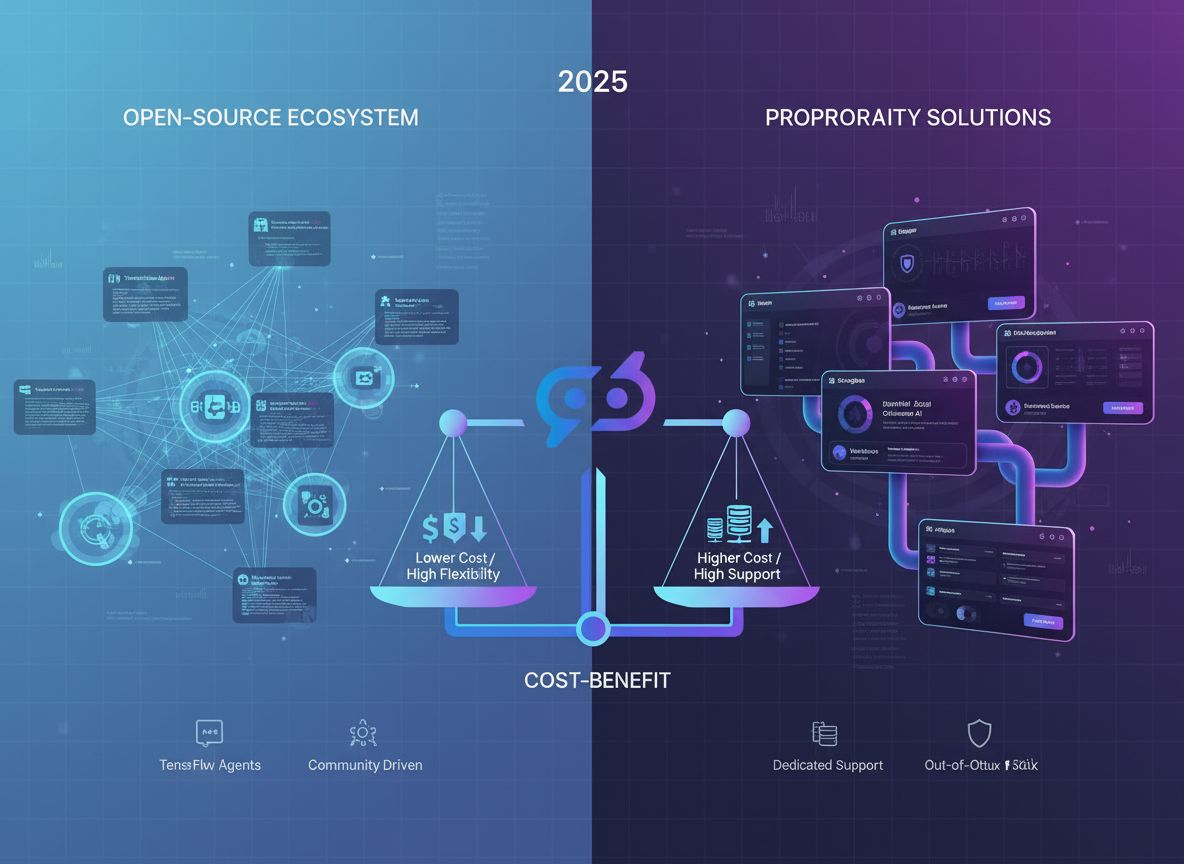
A comprehensive analysis of open-source and proprietary AI agent builders in 2025, examining costs, flexibility, performance, and ROI to help organizations make...
Cookie Consent
We use cookies to enhance your browsing experience and analyze our traffic. See our privacy policy.