AI Customer Service Chatbots Compared: FlowHunt vs Intercom Fin vs Zendesk AI vs Freshdesk
An AI customer service chatbot comparison of FlowHunt, Intercom Fin, Zendesk AI, and Freshdesk across five support scenarios, judging them on capability, setup complexity, and pricing.
We compared four AI customer service platforms, FlowHunt, Intercom Fin, Zendesk AI, and Freshdesk, on five support scenarios: FAQ answering, escalation handling, ticket routing, multilingual support, and setup time. This AI customer service chatbot comparisonbreaks down what each one actually does, how complex it is to stand up, and what it costs once you’re past the free-trial stage.
What We Tested and Testing Methodology
This comparison is built from each vendor’s current product documentation, official pricing pages, and recent independent reviews, rather than a live hands-on trial across all four platforms.
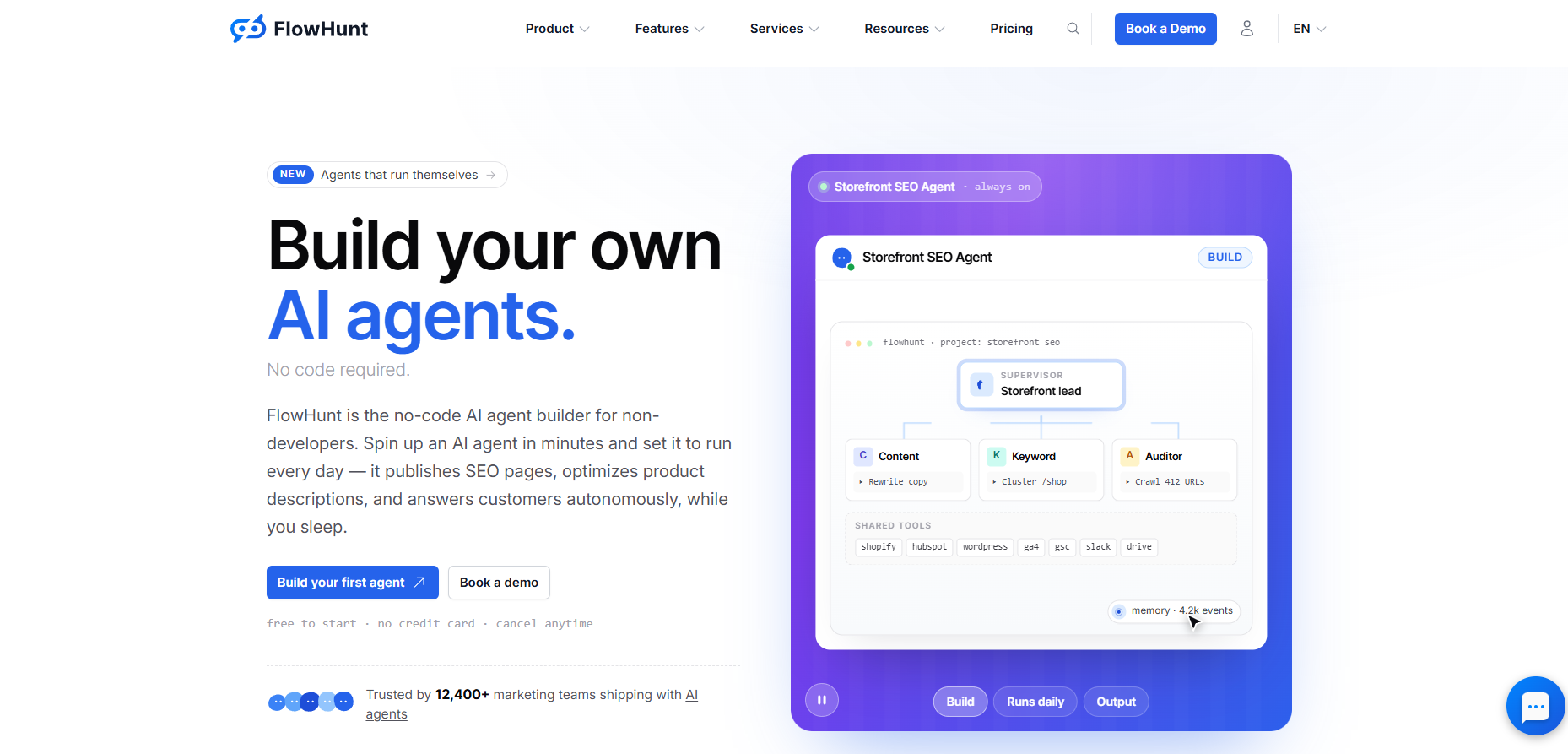
Where FlowHunt differs structurally from the other three is that it isn’t a dedicated helpdesk product; it’s a visual workflow-automation platform. Multi-step scenarios like ticket routing or pulling live order status require building that logic with flow components, rather than flipping on a pre-built feature. That’s more setup work upfront for advanced flows.
Ready to grow your business?
Start your free trial today and see results within days.
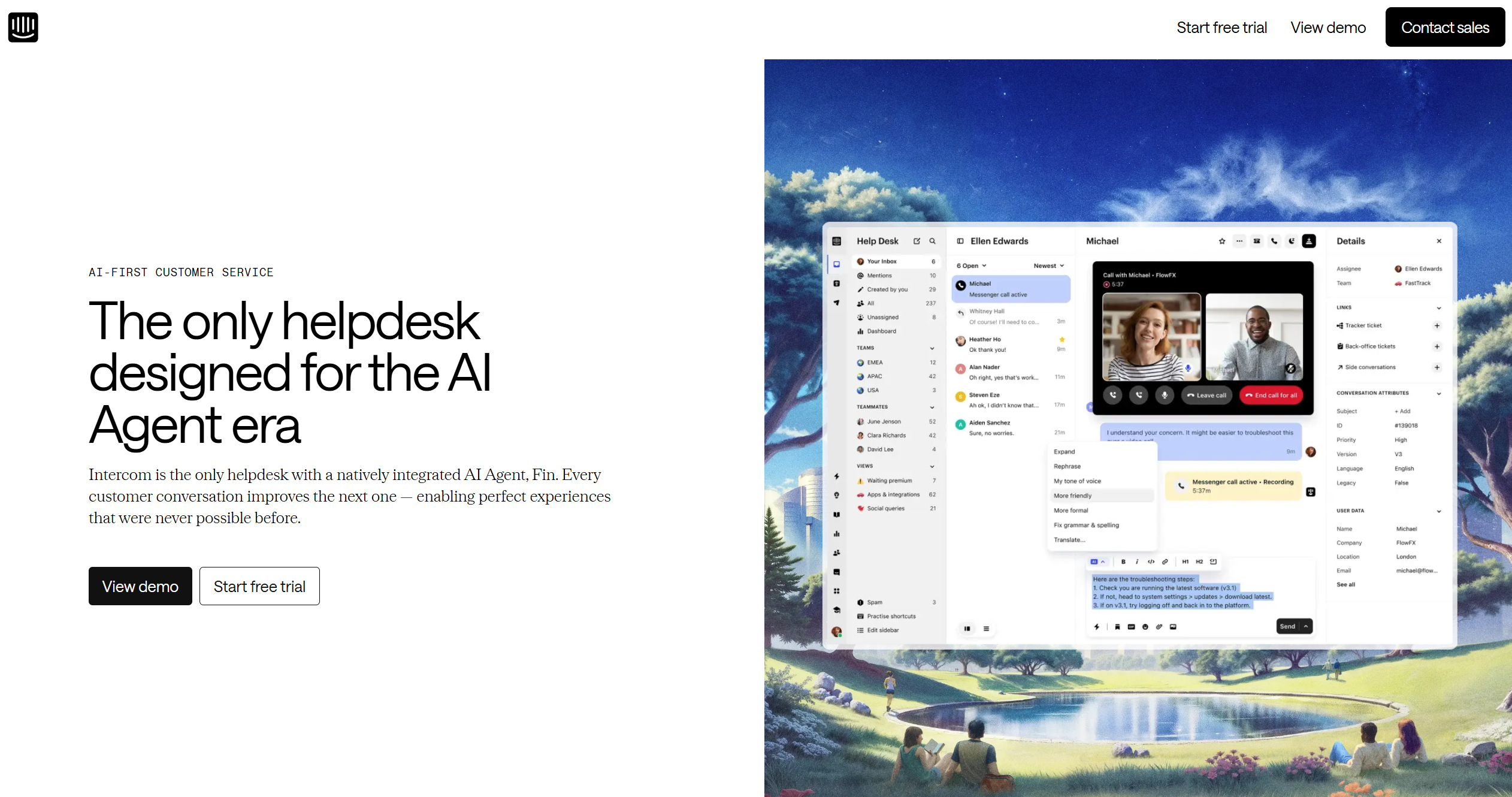
Fin’s core pitch is end-to-end resolution across every channel, powered by its own model, Apex. Per Anthropic’s case study on Intercom
, Fin achieves a 51% resolution rate out of the box with no tuning, and Intercom reports that rate climbing to 86% once responses are customized and optimized, meaning the ceiling depends heavily on setup effort, same as any knowledge-grounded chatbot.
Fin is sold both as Intercom’s native solution, and a standalone product integrating with competing helpdesk solutions. Standalone deployments inherit whatever escalation logic your existing helpdesk already has. Because resolutions are billed per outcome, spend scales directly with however many conversations the AI resolves, so a good month for support volume is also an expensive one for the bill. There’s also the ownership question hanging over it. With the Salesforce acquisition still pending, committing to Fin today means betting on a roadmap that’s mid-transition to a new owner.
Zendesk AI: Results
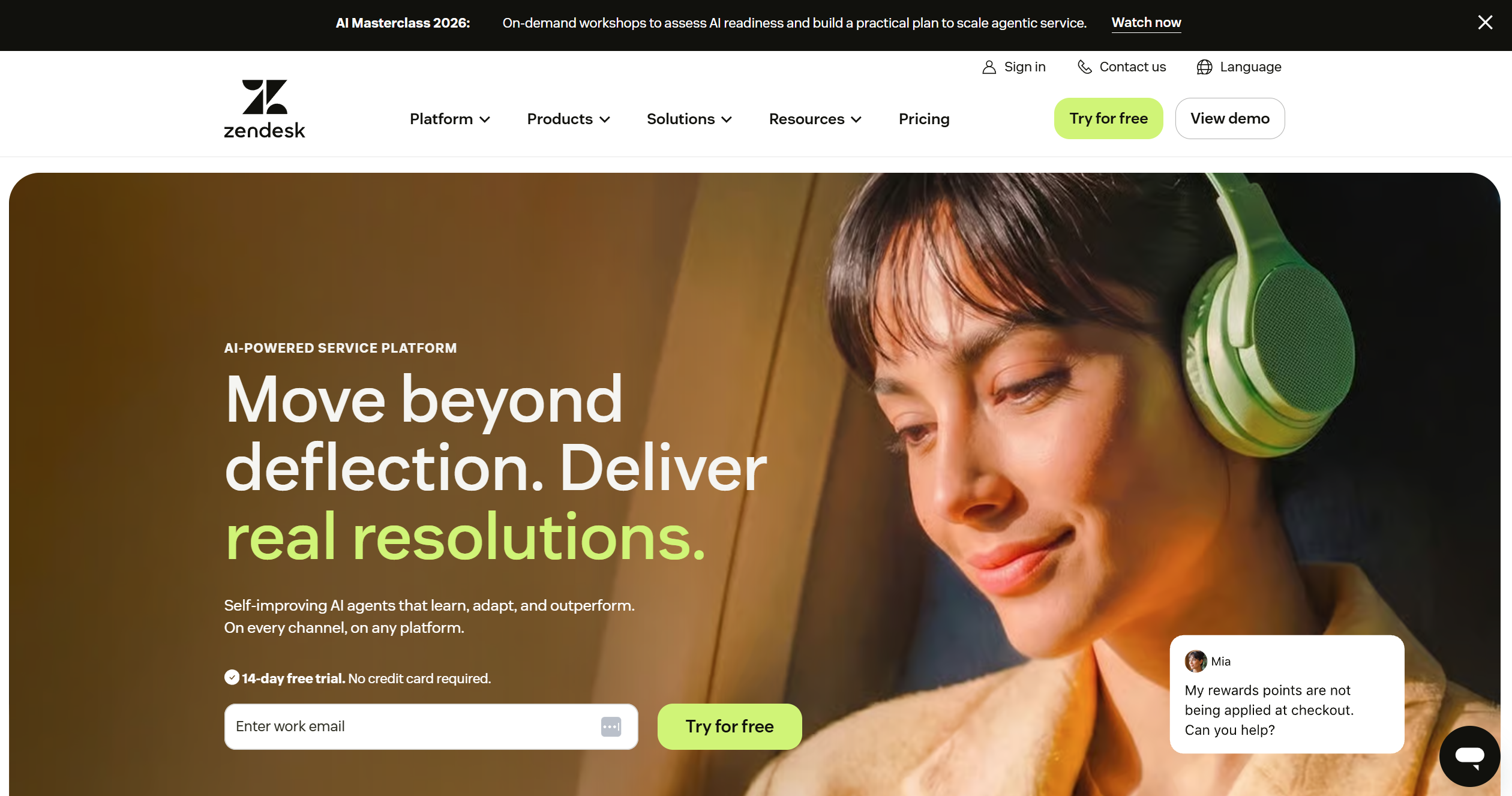
Zendesk’s AI Agent is the most action-capable of the four out of the box. It can process returns, modify orders, and update subscriptions without a human, not just answer questions from a help center. Zendesk itself states
its AI is pre-trained on more than 18 billion real service interactions, giving it a strong baseline understanding of common support patterns before you add your own content.
Setup is close to zero friction if you’re already running Zendesk Suite, since the AI agent reads your existing help center and ticket history directly. This AI agent isn’t a separate product you can take elsewhere, unlike Fin or FlowHunt. It only runs inside Zendesk Suite, so adopting it means being (or becoming) a full Zendesk customer, seats and all. It’s also the most expensive of the four once seats, Copilot, and per-resolution billing are added up, as the worked example below shows.
Join our newsletter
Get latest tips, trends, and deals for free.
Freshdesk (Freddy AI): Results
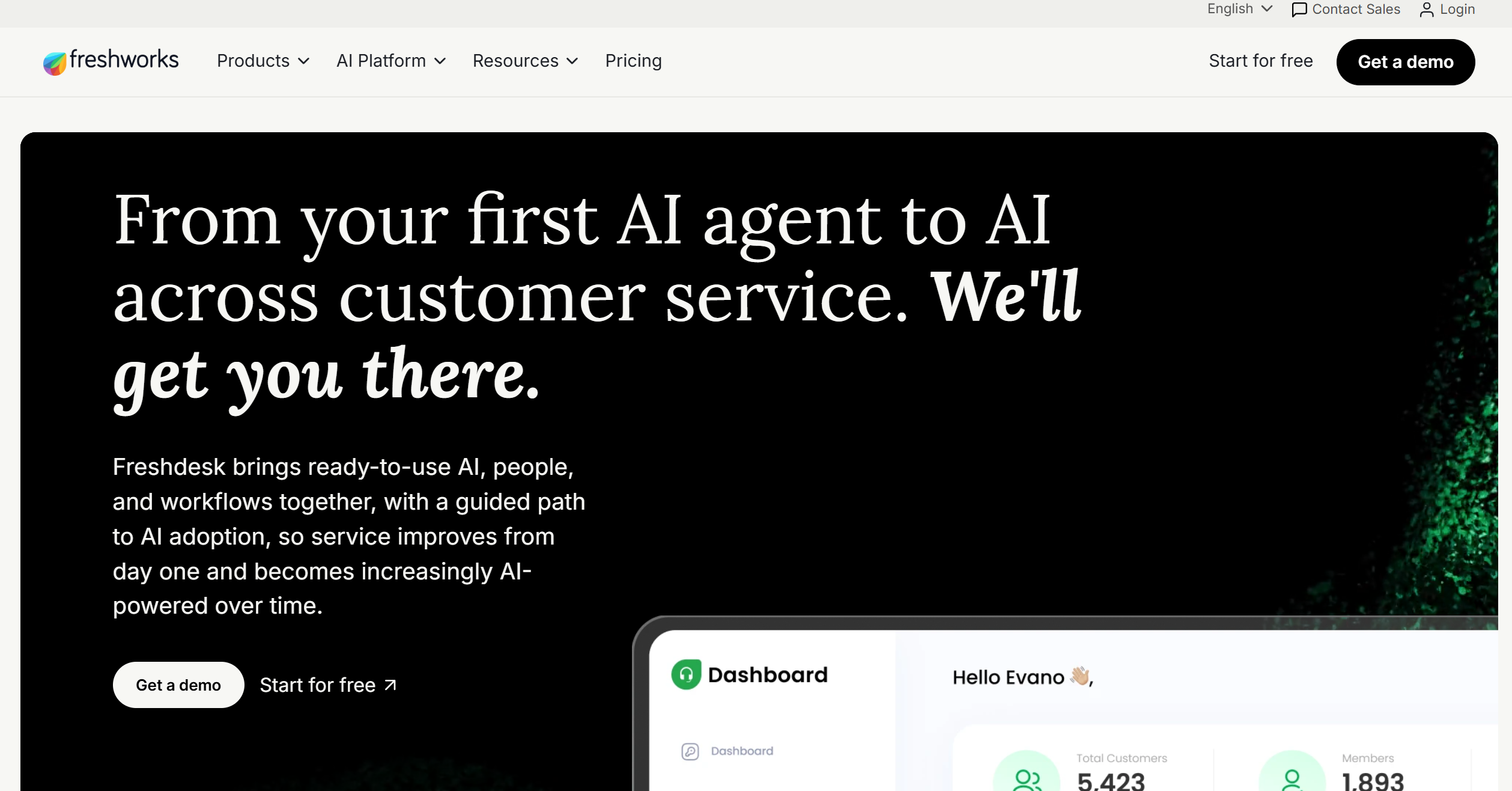
Freshdesk’s Freddy AI Agent is the most straightforwardly affordable of the four and is generally positioned as the value pick for growing teams rather than an enterprise rollout. It answers from your existing Freshdesk help center on a session-based pricing model rather than per-resolution, and includes a first block of sessions on its Pro and Enterprise plans before metered billing kicks in.
Freddy is the most limited of the four on complex flows. it’s built around FAQ answering and routing rather than executing transactional actions like Zendesk’s agent. Freshworks’ own support documentation
lists support for 27 languages for Freddy AI Agent, the smallest published number in this comparison, and Freshdesk’s multilingual handling reportedly leans on translation overlays rather than a natively multilingual model. Freddy AI Agent only runs inside Freshworks’ own suite, with no standalone version you can attach to a different helpdesk. It’s the cheaper of the two native options, but you’re still tied to the platform to get it.
Capability Comparison Across 5 Support Scenarios
Scenario
FlowHunt
Intercom Fin
Zendesk AI
Freshdesk
FAQ answering
Direct knowledge-base grounding
Core use case
Reads existing help center
Reads existing help center
Escalation handling
Needs to be configured
Native across all channels
Native to ticketing
Routes to agent, less nuanced
Ticket routing
Needs to be configured
Strong if bundled with Intercom suite
Strong core product function
Basic rule-based routing
Multilingual support
Depends on chosen LLM
45+ languages native
75 languages published
27 languages, translation-assisted
Setup time
Fast — no-code, same-day for FAQ use case
Slower — helpdesk integration or full suite
Fastest if already on Zendesk
Fast if already on Freshdesk
Vendor lock-in
None — deploys on any platform, connects via MCP
None — sold standalone, integrates with 8+ helpdesks
Locked to Zendesk Suite
Locked to Freshworks suite
Zendesk and Freshdesk win on out-of-the-box ticketing-native behavior if you’re already inside their ecosystem, but that convenience comes bundled with lock-in. Fin and FlowHunt sit at the other end, with Fin being explicitly sold standalone across numerous helpdesks, and FlowHunt deploying as a widget on essentially any CMS or platform. FlowHunt trades some out-of-the-box automation for that flexibility, since it’s a general workflow platform rather than a dedicated customer support solution.
Setup Time and Technical Complexity
If you’re already running Zendesk or Freshdesk for support, enabling their respective AI agent is closer to a configuration toggle than a real implementation project. That’s their biggest structural advantage.
If you’re starting without an existing helpdesk, FlowHunt’s no-code builder (connect documents, configure the prompt, deploy the widget
) is the fastest path to a live FAQ chatbot, typically the same day. Intercom Fin requires more upfront decision-making: standalone-with-existing-helpdesk, or full Intercom suite migration, and pricing itself requires a calculator or sales conversation to pin down exactly, per Intercom’s own pricing page.
Full Intercom suite or standalone Fin; 50-resolution monthly minimum
To make this concrete, assume a 5-person support team handling roughly 1,000 AI-resolved conversations a month:
FlowHunt: flat €120/month on the Pro plan, no per-resolution charge, covers up to 12,000 interactions.
Freshdesk: 5 × $79 (Omni Pro) + 5 × $29 (Copilot) = $540/month in seats, plus roughly $245/month for the ~500 sessions beyond the included block — around $785/month.
Zendesk: 5 × $115 (Professional) + 5 × $50 (Copilot) = $825/month in seats, plus 1,000 resolutions × $1.50 = $1,500 — around $2,325/month.
Intercom Fin: 1,000 resolutions × $0.99 = $990/month for the AI Agent alone, before any seat costs, which are reported to range $29–$139/agent/month depending on tier.
These are illustrative estimates from published list pricing, not vendor quotes, and actual costs will vary with your ticket mix and negotiated rates.
Which AI Customer Service Platform Should I Choose?
Choose FlowHunt If you need a flexible way to bring AI into your existing support pipeline, both for popular CMS solutions and legacy software. But be prepared to adjust or even build multi-step custom flows yourself. A flat, predictable monthly cost regardless of conversation volume is a big plus as well.
Choose Intercom Fin if channel breadth (chat, email, WhatsApp, SMS, phone, Slack) in one AI agent matters more than predictable pricing, and you’re comfortable with resolution-based billing — while keeping an eye on the pending Salesforce acquisition and what it might mean for the roadmap.
Choose Zendesk AI if you’re already on Zendesk and need an AI agent that can take real transactional actions (returns, order changes, subscription updates), not just answer questions.
Choose Freshdesk if you’re a growing team that wants AI support automation without enterprise-level pricing, and your support needs are mostly FAQ-driven rather than complex multi-step actions.
If you're already running Zendesk or Freshdesk for ticketing, turning on their native AI agent is the least setup since it reads your existing help center automatically. If you're starting from scratch, FlowHunt's no-code builder gets a knowledge-base chatbot live the same day; Intercom Fin needs either a full Intercom deployment or a separate integration into your current helpdesk, which takes longer to configure properly.
Zendesk AI Agent and Intercom Fin both ship built-in ability to take transactional actions. Zendesk's agent can process returns, modify orders, and update subscriptions directly. Fin's Apex model is built for end-to-end resolution across chat, email, WhatsApp, SMS, phone, and Slack. FlowHunt is a full workflow-automation platform, so multi-step logic (like knowledge base search plus a live API call) is something you build with visual flow components rather than getting out of the box. Freshdesk's Freddy AI Agent is the most limited of the four here, meant to answer from your help center rather than execute multi-step actions.
Comparing premium tiers only, FlowHunt's Pro plan is a flat €120/month for up to 10 teammates with no per-resolution billing. Zendesk and Freshdesk both charge per seat plus metered AI usage on top, which adds up fast at any real ticket volume. Intercom Fin's $0.99-per-resolution pricing means cost scales directly with how many conversations the AI resolves, on top of seat costs.
Intercom Fin is also sold as a standalone AI agent with bespoke integrations with various popular helpdesk solutions. Zendesk and Freshdesk are themselves the CRM/helpdesk, so their AI is native by definition. FlowHunt connects via MCP servers to a wide library of tools.
By published numbers: Zendesk's AI agents support 75 languages, Intercom Fin supports 45+ languages natively, and Freshdesk's Freddy AI Agent lists 27. FlowHunt doesn't publish a fixed language count, because it's powered by various LLMs, rather than a dedicated translation layer. In other words, the multilingual range depends on the underlying model you choose.
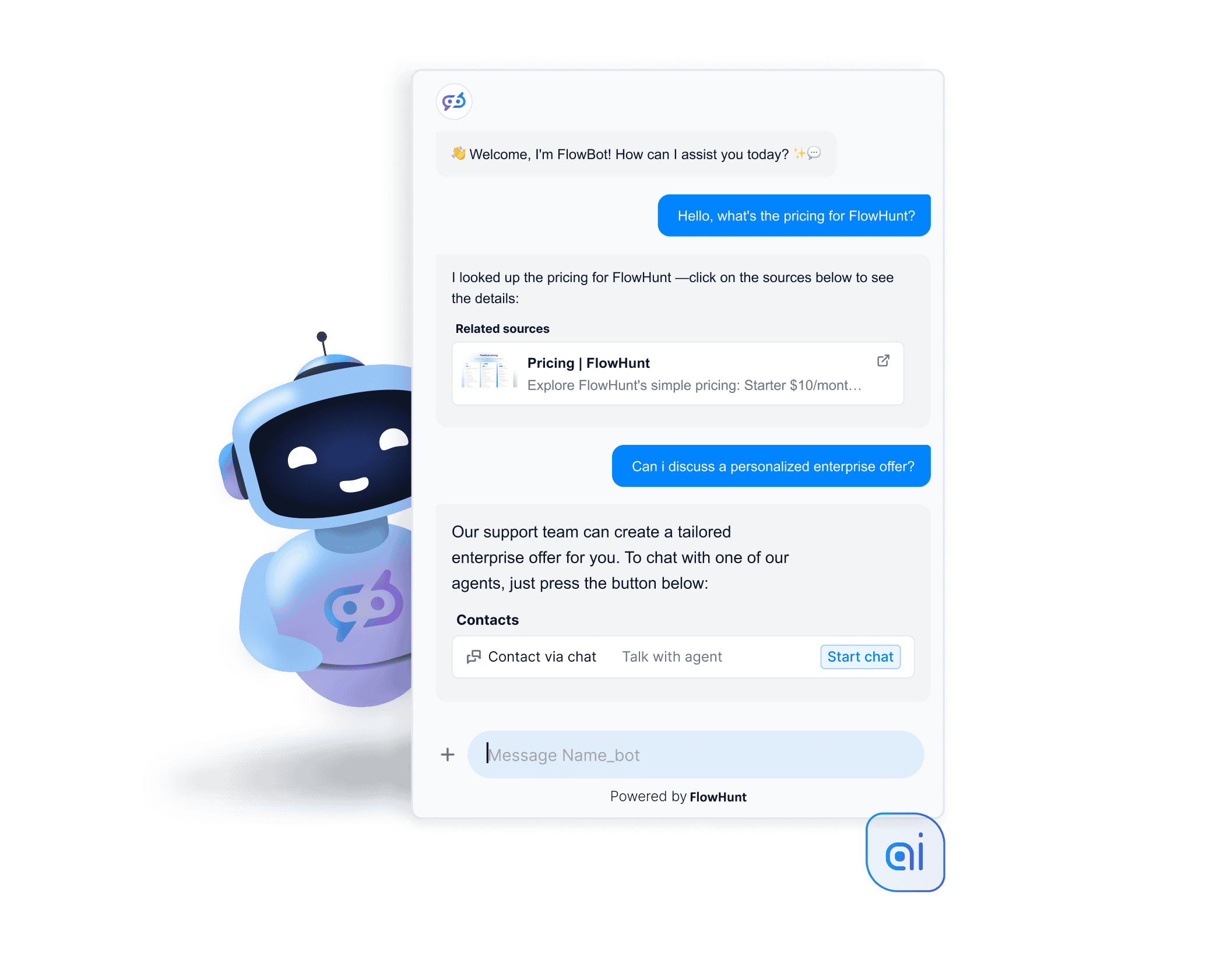
See FlowHunt's Customer Service Chatbot in Action
FlowHunt's Customer Service Chatbot connects to your own documentation, no per-resolution billing surprises, and a flat monthly price. Try it and compare it against your current setup directly.
Best AI Chatbot for Customer Service in 2026: 12 Tools Ranked
Ranked and reviewed: the 12 best AI chatbots for customer service in 2026. From AI-native agent platforms to enterprise CX suites — find the right tool for your...
Integrate FlowHunt with Intercom via the MCP Server to streamline messaging, automate customer engagement, and centralize support operations using AI-driven wor...
3 min read
AI
Intercom
+3
Cookie Consent We use cookies to enhance your browsing experience and analyze our traffic. See our privacy policy.