Product managers spend 20–30% of their time on competitive research. AI product analysis cuts that to minutes. Here are five specific ways PMs use it across discovery, roadmap planning, pricing, and launch preparation.
Competitive research is one of those product manager tasks where doing it well and doing it fast feel mutually exclusive. Thorough analysis takes days and that’s why many opt fro quick scans instead, which leave gaps that surface at the worst possible time, or even no analysis at all.
AI product research for product managers could be the key to removing that trade-off. AI product analysis
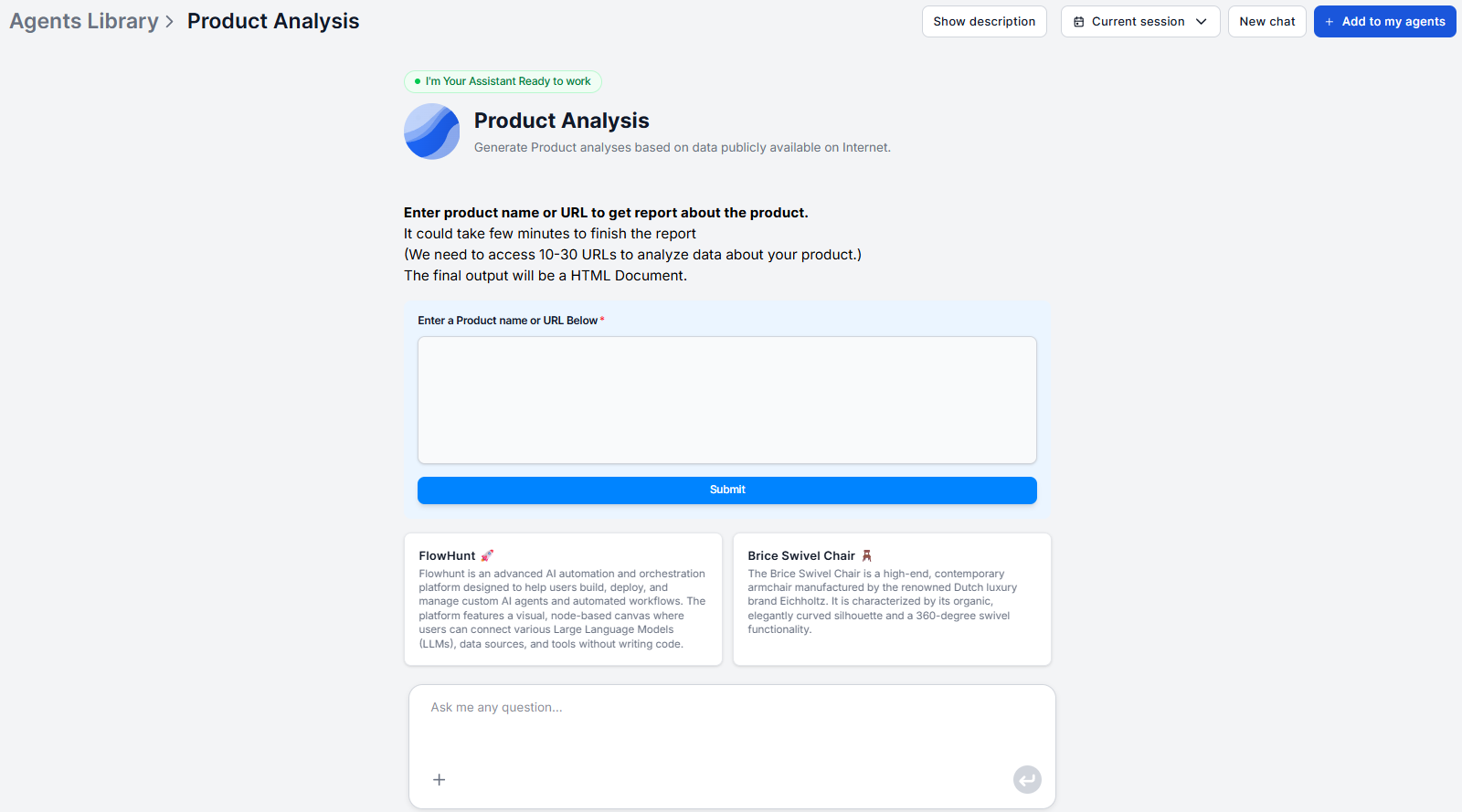
compresses the information-gathering layer to minutes, which means thorough and fast are no longer in conflict. Here are five specific ways product managers are applying it across discovery, roadmap planning, pricing intelligence, and launch preparation. For a technical overview of what the tool covers and how to run your first analysis, see how to do AI product analysis
.
Use Case 1: Feature Gap Analysis Before Roadmap Planning
AI product analysis tools surface feature gaps from the outside in. By analyzing competitors’ feature inventories, public documentation, and user sentiment simultaneously, a PM can quickly identify:
Features competitors receive consistent praise for that you have no comparable offering for.
Features competitors receive consistent complaints for, potentially signaling an underserved need.
Capabilities listed in competitor sales materials but absent from their product documentation, which a signal of incomplete execution.
With an AI product analysis tool, product manager preparing for quarterly roadmap planning can run five competitor analyses in under an hour. Instead of entering the planning cycle with gut instinct, the team enters with structured evidence.
How to use it: Run the AI product analysis tool
on your top three to five competitors. Export the feature inventories and look for patterns in what’s present or absent across the set. Flag any features that appear in multiple competitors’ weakness sections, as those are your strongest signals.
Use Case 2: Pricing Benchmarking Against Competitors
Pricing decisions are high-stakes and time-consuming to research manually. By the time a PM finishes documenting six competitors’ pricing pages, two of them have changed. AI product analysis tools address this by retrieving current pricing data real-time.
A complete pricing benchmark includes:
Tier structures and feature gating at each level
Free trial or freemium terms
Enterprise pricing signals where public data exists
Packaging differences such as per-seat versus usage-based pricing
This intelligence feeds directly into pricing committee discussions, freemium conversion strategies, and enterprise sales positioning. Running a pricing benchmark quarterly rather than annually means fewer surprises with deals stalling over prices.
How to use it: Run analyses on the competitors most relevant to your current pricing discussions. The structured output from the AI product analysis tool
provides a consistent format across all competitors, making side-by-side comparison straightforward.
Ready to grow your business?
Start your free trial today and see results within days.
Use Case 3: Competitive Positioning for Sales Enablement
A product manager’s responsibility rarely stops at the product itself. When the sales team starts losing late-stage deals to the same two competitors, that’s a product problem as much as a sales problem.
The challenge with traditional battle cards is maintenance. They go stale within weeks, ultimately causing more harm than good. Product strategy AI tools solve the maintenance problem by making it fast to re-run analyses on demand rather than on a quarterly-or-never basis.
A PM can set up a lightweight process:
Run an AI product comparison on each key competitor monthly
Extract the positioning claims, differentiators, and known weaknesses
Feed the structured output into the sales team’s battle card template
Flag any changes from the prior month’s analysis
How to use it: Combine AI product analysis
with company analysis
for a fuller picture. The product analysis covers feature and positioning data; the company analysis adds strategic context like funding stage, growth signals, and leadership changes that affect how aggressively a competitor is likely to price or sell.
Use Case 4: Pre-Launch Market Scan
The four weeks before a product launch are when competitive intelligence matters most — and when there’s least time to gather it properly. A pre-launch market scan needs to answer three questions:
How are current competitors positioned against the problem you’re solving?
What messaging are they using to reach your target audience?
Is there a recently launched competitor you might have missed?
Running this manually under launch pressure is where research quality tends to collapse. Important signals get missed, messaging decisions get made without competitive context, and the launch lands with positioning that could have been sharper. For real cases of what happens when this analysis is skipped, see 5 products that failed because they skipped competitive analysis
.
Product roadmap AI compresses the research layer. A PM can run five to ten competitor analyses in a single session, review the positioning patterns across the set, and adjust launch messaging accordingly before finalizing the press release, landing page copy, or sales deck.
How to use it: Run the AI product analysis tool
on every competitor you plan to name, or that might name you, in launch materials. For broader market context, add a market analysis
to the session to understand where the segment is heading and which adjacent players are growing.
Join our newsletter
Get latest tips, trends, and deals for free.
Use Case 5: Tracking Competitor Product Updates Over Time
Competitive product research is not a one-time project. A competitor that adds a significant feature, changes pricing, or launches a new integration can shift the competitive equation within a single quarter.
Most product teams run competitive reviews annually or quarterly at best. The problem is that by the time a scheduled review happens, the intelligence is already several months old.
Running AI product analyses on a defined cadence, monthly for tier-one competitors, quarterly for tier-two, creates a living intelligence feed without requiring dedicated analyst headcount. The structured output format makes changes visible: when a competitor’s feature list grows, when user sentiment shifts, or when their pricing structure changes from what appeared last quarter.
How to use it: Set a recurring calendar reminder to re-run analyses for your key competitors. Keep the previous output in a shared folder for comparison. Significant changes are visible at a glance when the format is consistent — which it is, because the AI analysis output is standardized across every run.
Building a Continuous Competitive Intelligence System
The five use cases above describe point-in-time applications. The higher-leverage play is combining them into a system.
A lightweight competitive intelligence setup for a product team might look like this:
Monthly: Re-run AI product analyses on tier-one competitors. Update battle cards with any changes. Flag significant updates to the product and sales teams.
Quarterly: Run a full market analysis
to check whether the segment-level picture has shifted. Update roadmap assumptions accordingly.
Pre-launch and pre-pricing decision: Run fresh analyses on all relevant competitors before any major strategic move.
On-demand: Run analyses whenever a prospect mentions a competitor you haven’t reviewed recently, or when a sales rep flags a new objection pattern.
This kind of system used to require a dedicated competitive intelligence analyst or a market research subscription. Product manager AI tools have made it accessible to any PM for a couple of dollars a month. Comparing AI competitive intelligence platforms? See our comparison of FlowHunt vs Crayon vs Klue vs Kompyte vs Battlecard
.
The consistent output format across analyses is what makes FlowHunt’s product analysis
work at scale and without any setup (besides optional adjustments or scheduling). When every competitor report follows the same structure, comparisons are fast and patterns become visible across the set.
For teams that want to extend beyond product-level intelligence, company analysis
adds the organizational layer, such as funding, leadership, growth signals, and market analysis
adds the segment-level view of where the market is heading.
Used together, these tools cover the full range of what a product manager needs to make well-grounded strategic decisions, without the research overhead that typically makes rigorous competitive intelligence impractical for smaller teams. For a step-by-step walkthrough of running your first analysis in FlowHunt, see the AI Product Analysis tutorial
.
Frequently asked questions
For tier-one competitors, the ones you lose deals to most often, a monthly analysis is a practical cadence. For tier-two competitors, quarterly is usually sufficient. The real trigger should be events: a competitor announces a major update, your sales team flags a new objection pattern, or you're preparing for a pricing or roadmap decision. AI product analysis is fast enough that there's no reason to wait for a scheduled review when something changes.
Yes, by running analyses on a consistent cadence and keeping prior outputs for comparison. Because the AI product analysis output is structured and consistently formatted, changes, for example a new feature tier, are visible at a glance. There's no automated diff view, but side-by-side comparison of monthly reports is straightforward when the format is uniform.
The output from FlowHunt's AI Product Analysis tool is clean and portable. You can paste it directly into a shared doc, attach it to a Confluence page, drop it into a Notion workspace, or use it as the research layer in a Slack post or email.
Pricing data is retrieved live at the time of each query, not from a cached database. This means each new analysis reflects the competitor's current public pricing page. However, it doesn't push automatic notifications when pricing changes. You need to re-run the analysis to see updated data. For time-sensitive pricing decisions, running a fresh analysis is the safest approach.
The AI Product Analysis tool runs on-demand. The practical workaround is setting the analysis as a recurring task, outputted to the desired folder or messaging channel.
Maria is a copywriter at FlowHunt. A language nerd active in literary communities, she's fully aware that AI is transforming the way we write. Rather than resisting, she seeks to help define the perfect balance between AI workflows and the irreplaceable value of human creativity.
Maria Stasová
Copywriter & Content Strategist
Try the AI Product Analysis Tool
FlowHunt's AI Product Analysis tool gives product managers structured competitor reports in minutes — feature breakdowns, pricing benchmarks, and positioning intelligence without the manual research overhead. Try it free.
AI Product Analysis: Complete Step-by-Step Walkthrough for First-Time Users
Step-by-step: from entering the product URL to interpreting the competitive report and sharing it with your team. Includes tips for getting the most detailed ou...
How to Do Market Analysis with AI in Under 30 Minutes
TAM/SAM/SOM calculations, competitor landscapes, market trends, and growth forecasts — AI market analysis tools can cover all of those automatically. Here's how...
8 min read
AI
Research
+3
Cookie Consent We use cookies to enhance your browsing experience and analyze our traffic. See our privacy policy.