


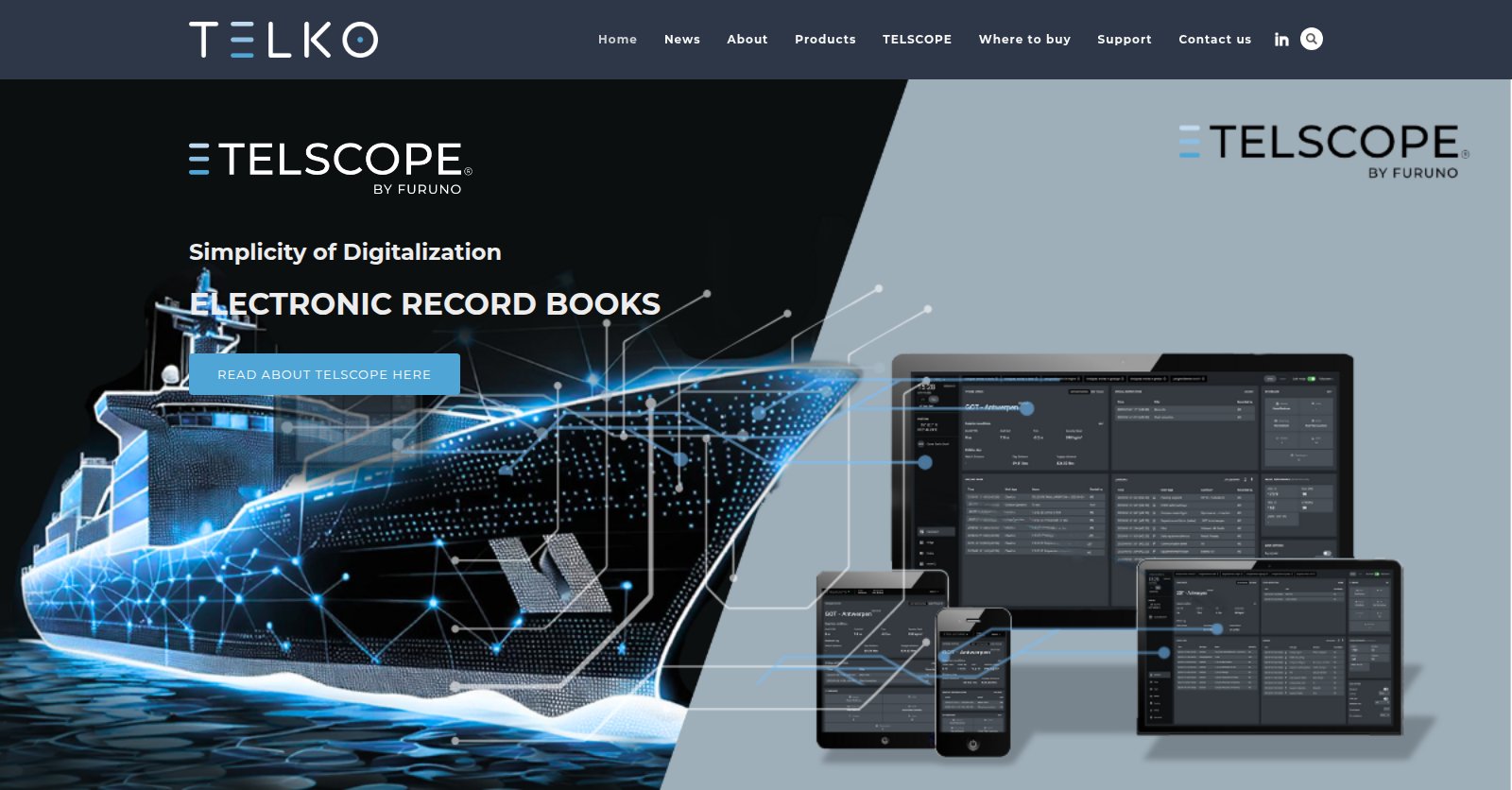
Telko is a Norwegian technology company with more than 50 years of experience building navigation and digital solutions for the maritime industry. Its products include TELSCOPE electronic record books, TECDIS and TELchart navigation systems, and Coastal-E for workboats. They run on vessels around the world, and Telko has been majority-owned by Furuno since 2023.
Supporting that kind of product is specialist work. Questions can come from ship operators and crews anywhere in the world, and the answers sit in installation manuals, service bulletins and support guides. Telko handles that support in LiveAgent. With FlowHunt, it now has an AI layer around LiveAgent that answers customers, helps agents write replies, and learns from every ticket a human solves.
The Challenge
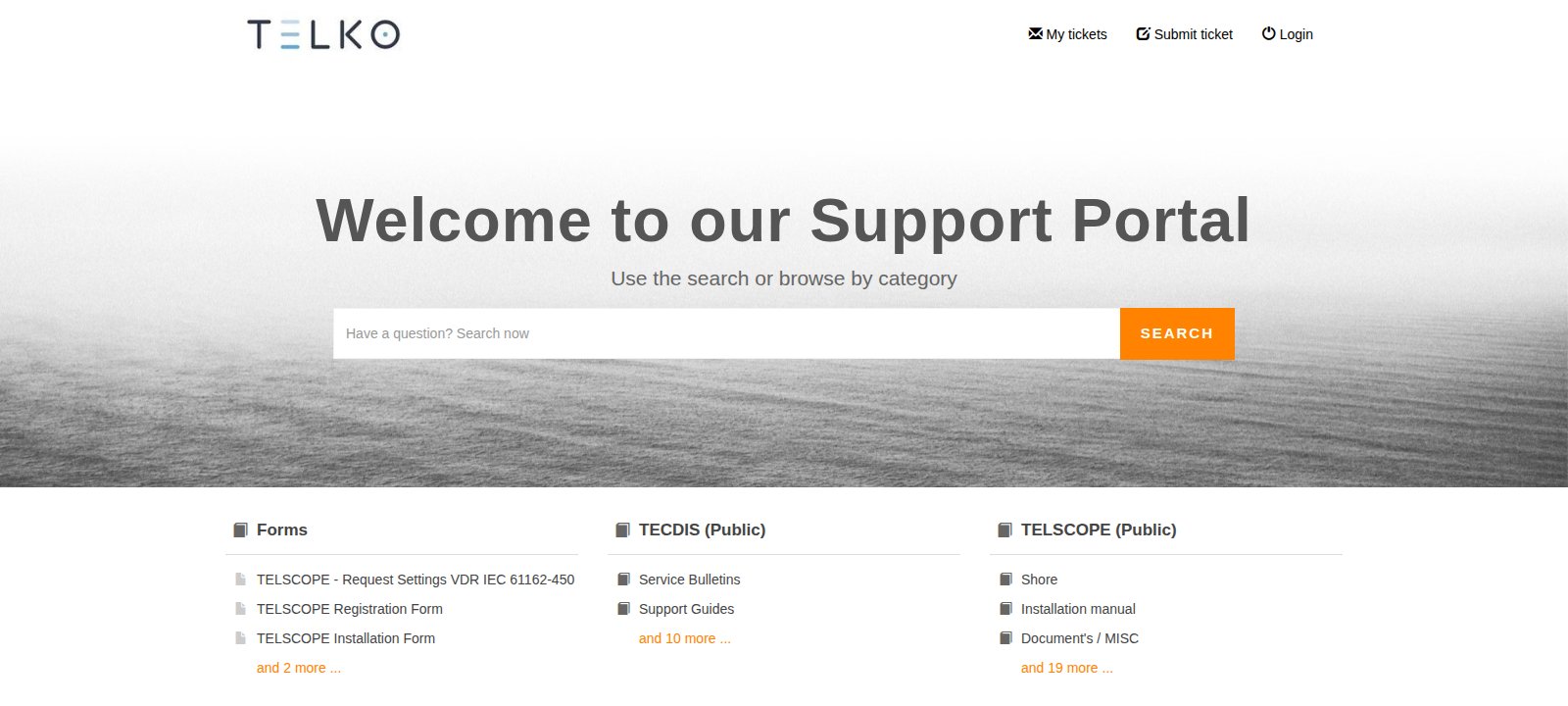
Telko’s support portal holds a lot of knowledge: forms, service bulletins, installation manuals and guides for each product line. But much of the most useful knowledge never reaches it. It lives in solved tickets: the screenshot that showed the real error, the internal note explaining the fix, the reply an engineer wrote for an unusual setup.
Telko wanted three things:
- Answer routine questions instantly, from its own documentation, without the AI making things up.
- Give human agents a faster way to write accurate, well-phrased replies.
- Make sure that when an agent solves a new problem, the next customer with the same problem gets the answer without waiting for a human.
Three Flows, One Loop
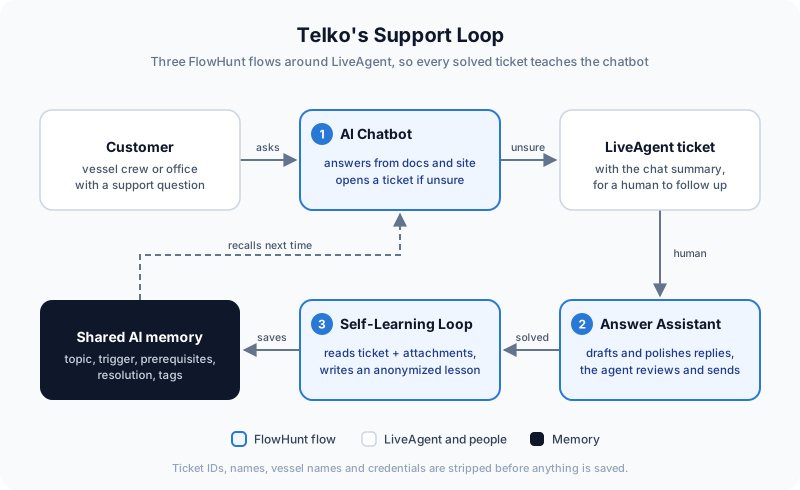
Telko’s setup uses three FlowHunt flows, all connected to LiveAgent through FlowHunt’s LiveAgent integration. Each covers one stage of a support case, and together they form a loop.
1. AI Chatbot
The AI chatbot is the first point of contact. It is set up to stay strictly on topic and strictly honest:
- Telko questions only. If a question has nothing to do with Telko, it says so and stops, which keeps the bot from being misused.
- Documents first, website second. It searches Telko’s documents, then Telko’s website, before answering, and it includes the source links the tools return. It never invents a URL.
- No guessing. If it can’t find the answer, it asks a clarifying question or offers a human. Anything it works out rather than finds, it labels as inferred.
- The customer’s language. It replies in the language of the customer’s latest message, which matters for a company whose customers are fleets all over the world.
When the chatbot can’t solve a case, it offers to open a ticket. It asks for the customer’s name and email, creates the LiveAgent ticket itself, and adds a detailed summary of the chat. The customer gets a ticket ID, and the agent who picks it up starts with the full story.
2. AI Answer Assistant
Inside LiveAgent, Telko’s agents have an Answer Assistant that works in two modes:
- Composer drafts a complete reply from the ticket thread. The agent can add an instruction such as “ask for the serial number” or “explain the update procedure”, and the assistant treats it as the top priority while grounding the reply in Telko’s documents.
- Improver takes the agent’s own draft and fixes the grammar, adjusts the tone, or translates it, without changing the facts or the decision in the reply.
The assistant writes plain text with no greeting or signature, because LiveAgent adds those. The agent reviews every message before it goes out, so this is a human-in-the-loop setup: the AI does the typing, the expert makes the call.
3. Self-Learning Loop
This is the part that makes Telko’s setup different from a standard chatbot. Once a ticket is resolved, the Self-Learning Loop reads all of it: the chatbot log, the customer’s messages, the agent’s replies, the internal notes, and the attached files. For maritime equipment, the attachments often hold the real answer: a screenshot of an error message, a log file, a page from a manual.
The loop then works out what the chatbot was missing and how the human solved the case, and saves it to shared AI memory as a structured entry:
- Topic and trigger: what the customer asked or reported
- Prerequisites: what to check before answering, such as the product or version
- Resolution logic: the general fix, with specific numbers turned into rules
- Tags for retrieval
Before saving, it searches memory for an existing entry on the same topic and updates it rather than creating a duplicate. The chatbot reads from the same memory, so the next customer with that problem gets the answer straight away.
Telko’s first version of the loop read tickets through LiveAgent’s MCP server. The current version uses FlowHunt’s native LiveAgent tools and reads every attachment before the ticket itself, so lessons that only exist in a screenshot or a log file aren’t lost.
Privacy by Design
Shared memory is only safe if it holds lessons, not customer data. Anonymization is a mandatory step in the Self-Learning Loop. Before anything is saved, it removes or replaces:
- names of people, email addresses, phone numbers and postal addresses
- customer company names, vessel names, IMO numbers, serial numbers and licence keys
- ticket, order, invoice and contract IDs
- customer-specific URLs, usernames, passwords and tokens
Specific prices and dates become general rules, for example “monthly rate × 12” instead of an actual amount. What’s left is the knowledge itself, ready for the next customer.
Why It Works
- Grounded answers. Both the chatbot and the Answer Assistant answer only from Telko’s own sources, and say so when they can’t.
- People stay in charge. The chatbot hands hard cases to humans with context, and agents approve every reply the assistant drafts.
- Knowledge compounds. Every solved ticket can become a memory entry, so the chatbot covers more each month without anyone writing new FAQ articles.
- Built from proven templates. All three flows started from templates in the FlowHunt Agents Library and run on the same LiveAgent integration as LiveAgent’s own support team.
For companies that want to reduce support ticket volume without losing the expertise in their team, Telko’s setup is a good model. The chatbot covers what’s documented, the agents cover what isn’t, and the loop moves knowledge from the second group to the first. It is a close cousin of the weekly knowledge gap reports we built for three Dutch e-commerce brands, applied to a technical, international product. If you run LiveAgent, our guide on how to automate ticket answering in LiveAgent is a good place to start.
Company: Telko AS Industry: Maritime technology Location: Tjøme, Norway FlowHunt Features Used: AI Chatbot, AI Agents, Agent Memory, LiveAgent Integration, Document and URL Retrievers, File Attachment Retriever Website: telko.no