Bedste Lindy AI-alternativer i 2026: 8 værktøjer, der giver dig mere kontrol
Leder du efter Lindy AI-alternativer? Vi rangerede 8 værktøjer, der slår Lindy inden for kraft, fleksibilitet og pris — fra AI-native agenter til no-code automationsplatforme.
AI Automation
Lindy AIAlternatives
Workflow Automation
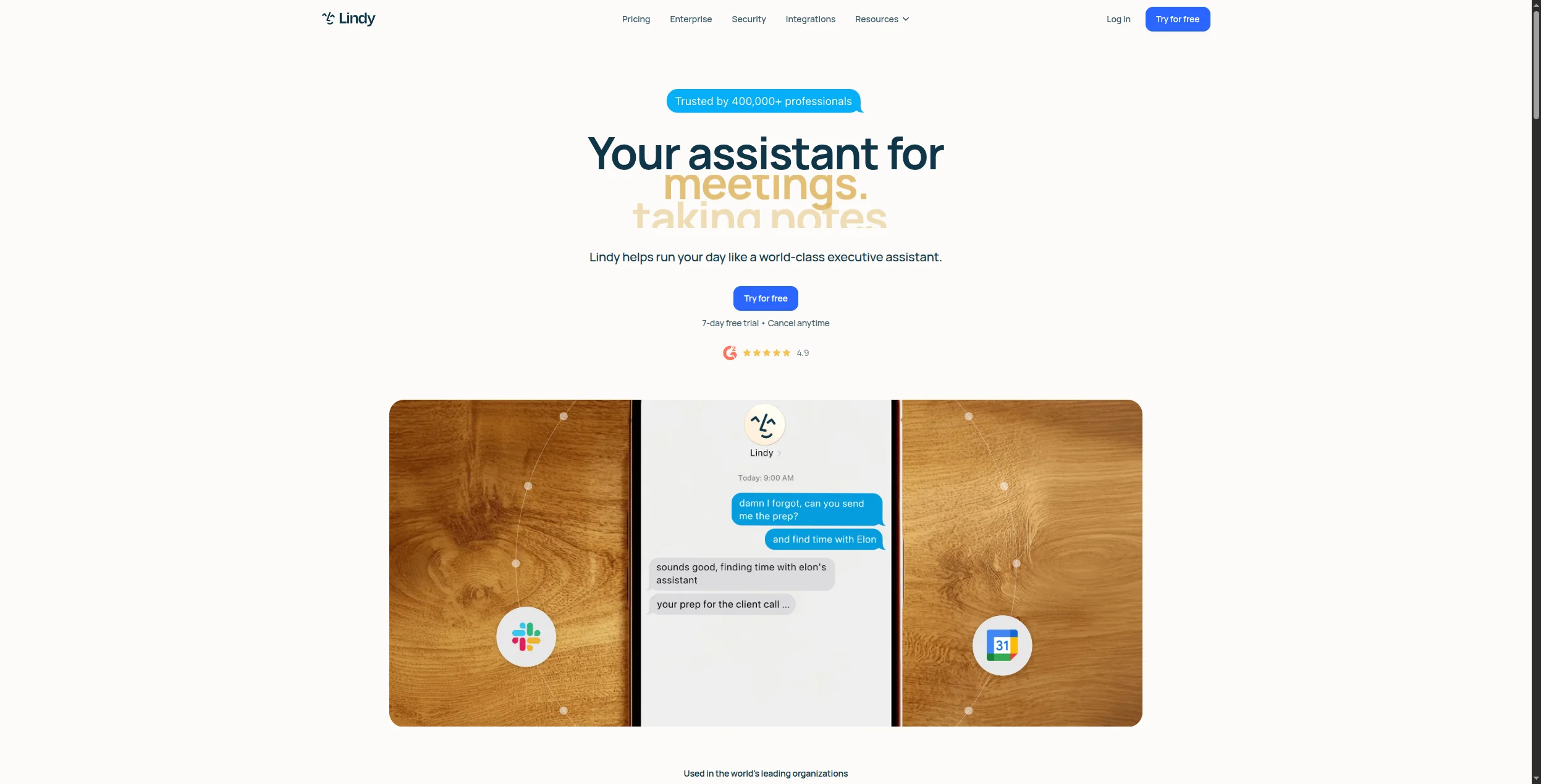
Lindy AI er en poleret AI-agent-platform, der gør det nemt at opstille personlige assistenter til e-mail-sortering, planlægning og CRM-opdateringer. Men den har virkelige begrænsninger: et lille integrationskataloger (~70 apps), et black-box-samtaleinterface, der gør fejlfinding vanskelig, og prisfastsættelse, der stiger hurtigt, når du rammer agent-grænser.
Hvis du evaluerer Lindy AI-alternativer — hvad enten det er, fordi du har ramt disse grænser, eller du sammenligner, før du forpligter dig — dækker denne guide otte værktøjer, der gør mere, koster mindre, eller giver dig meningsfulde fordele på specifikke områder.
Hurtig svar:FlowHunt
er det bedste Lindy AI-alternativ for teams, der har brug for AI-native automatisering med fuld synlighed. Zapier og Make er bedre for simple trigger-action-arbejdsgange. n8n og Activepieces vinder for teams, der ønsker open-source self-hosting.
Hurtig sammenligning: Lindy AI-alternativer
Værktøj
Bedst til
AI-agenter
Integrationer
Gratis plan
FlowHunt
AI-native automatisering, fuld kontrol
Ja (visuelt)
1.400+
Ja
Zapier
Simple trigger-action automationer
Begrænset
7.000+
Ja
Make
Komplekse visuelle arbejdsgange
Begrænset
1.800+
Ja
n8n
Open-source, self-hosted
Ja
400+
Ja (self-hosted)
Relevance AI
Sales/ops AI-agenter
Ja
100+
Ja
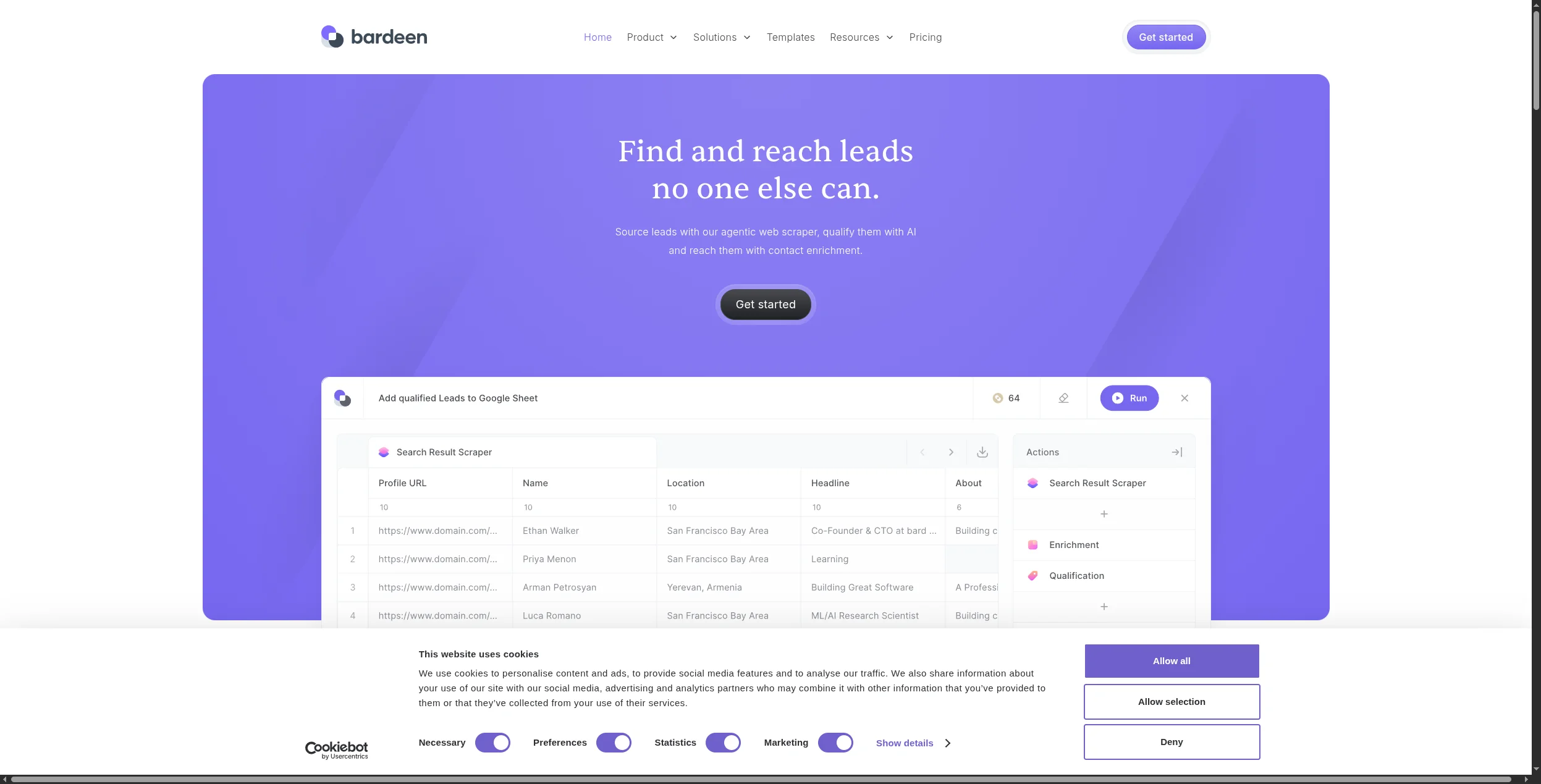
Bardeen
Browser-baseret scraping + automatisering
Ja
100+
Ja
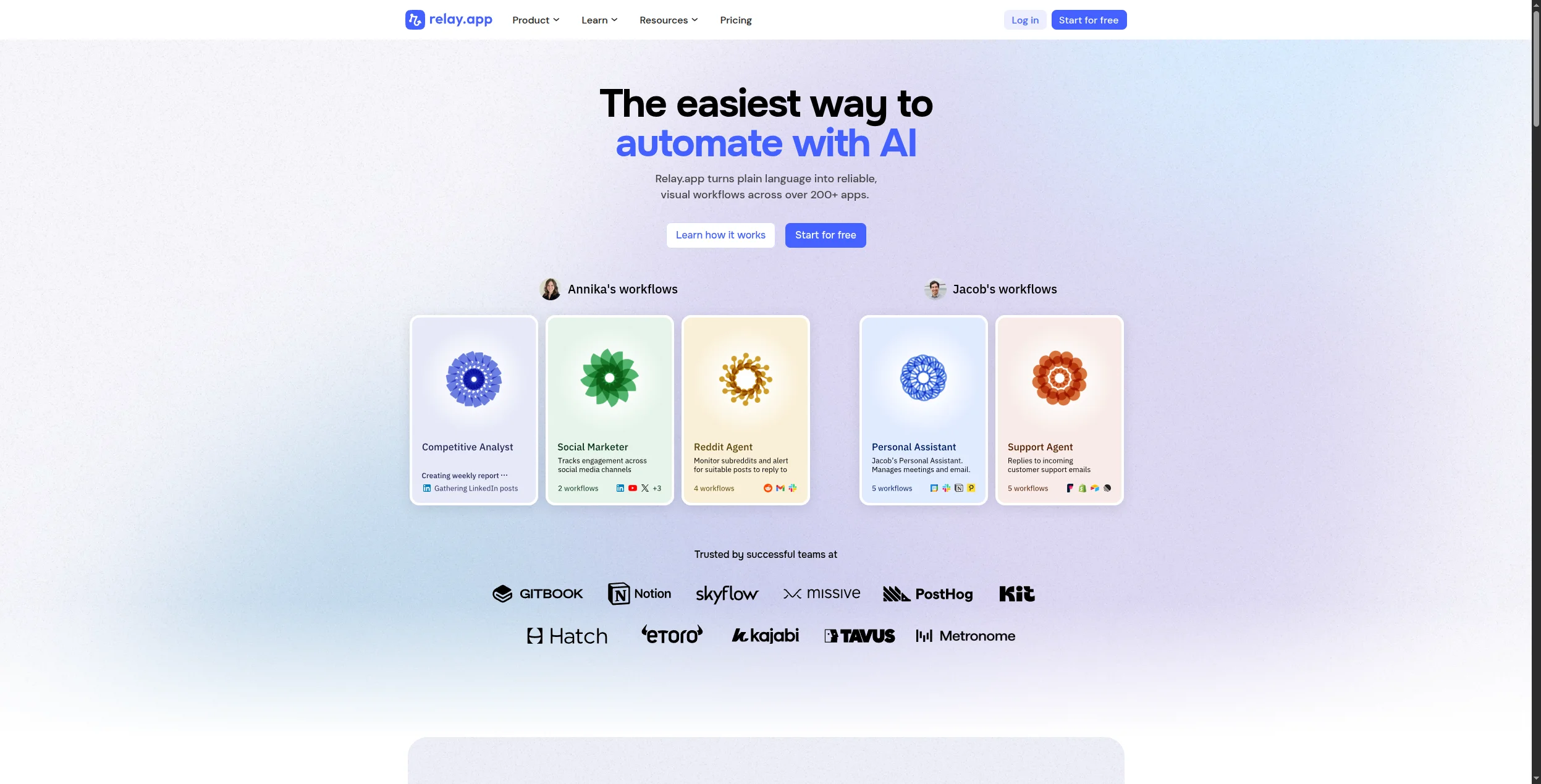
Relay.app
Human-in-the-loop arbejdsgange
Begrænset
300+
Ja
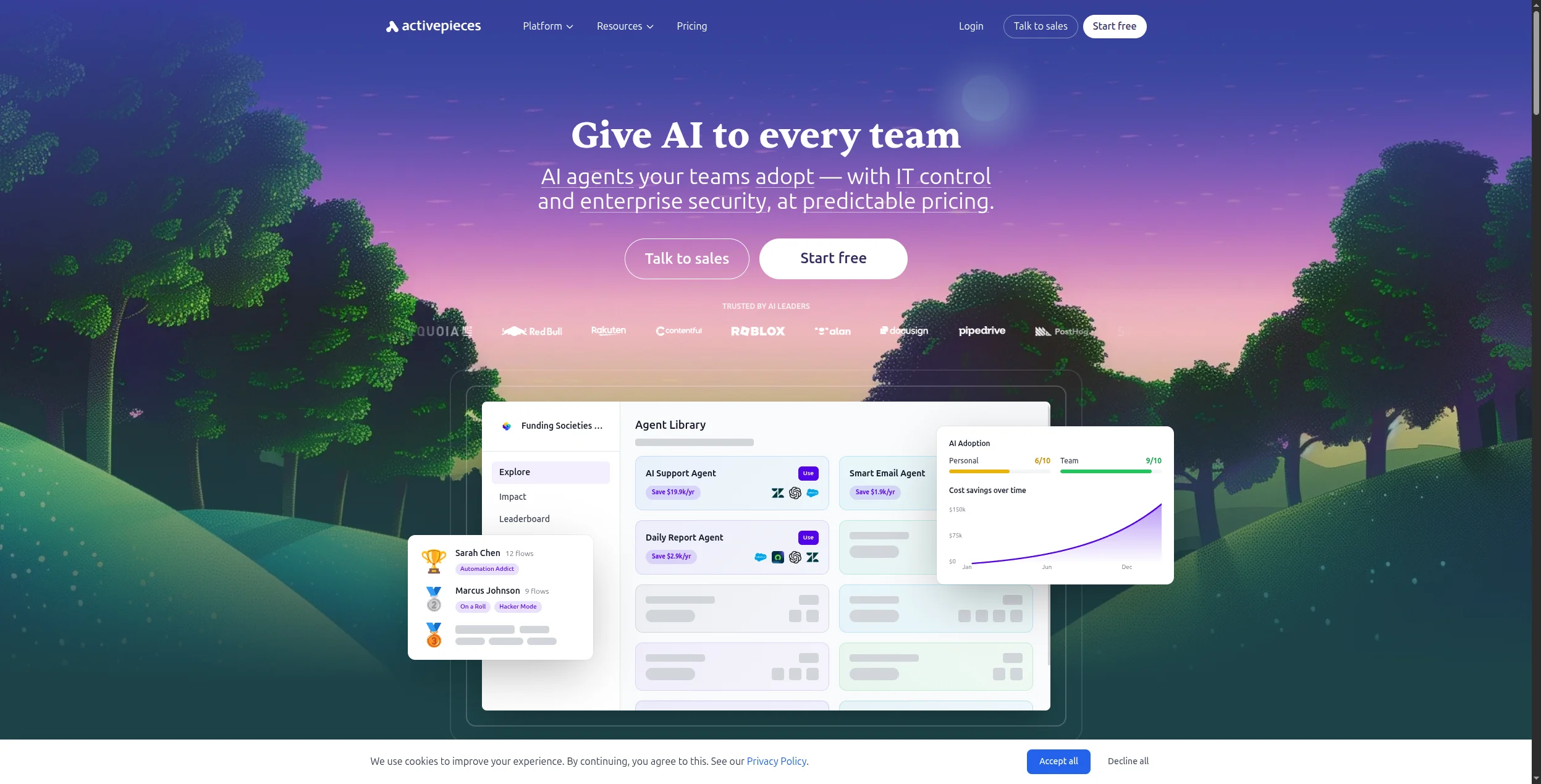
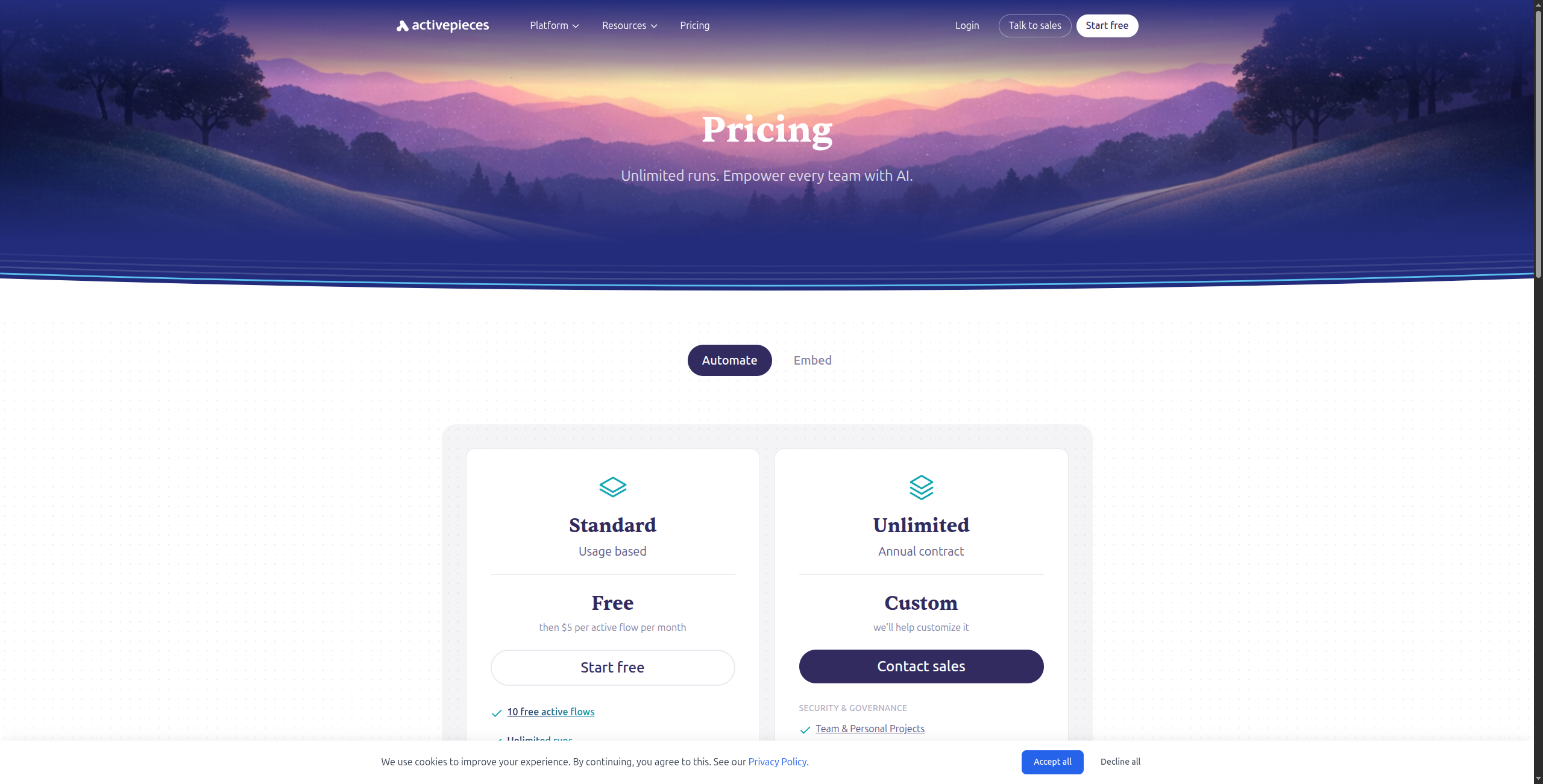
Activepieces
Open-source Zapier-alternativ
Begrænset
500+
Ja
Lindy AI
Samtale AI-assistenter
Ja
~70
Ja
Hvad er Lindy AI?
Lindy AI er en samtale AI-agent-platform grundlagt i 2023. Kerneidéen: i stedet for at konfigurere automationsarbejdsgange visuelt eller med kode, instruerer du AI-agenter — kaldet “Lindies” — på almindelig engelsk. Fortæl Lindy at “overvåge min indbakke, kategorisere e-mails efter prioritet og opdatere HubSpot, når en aftale-relateret e-mail ankommer,” og det vil gøre præcis det.
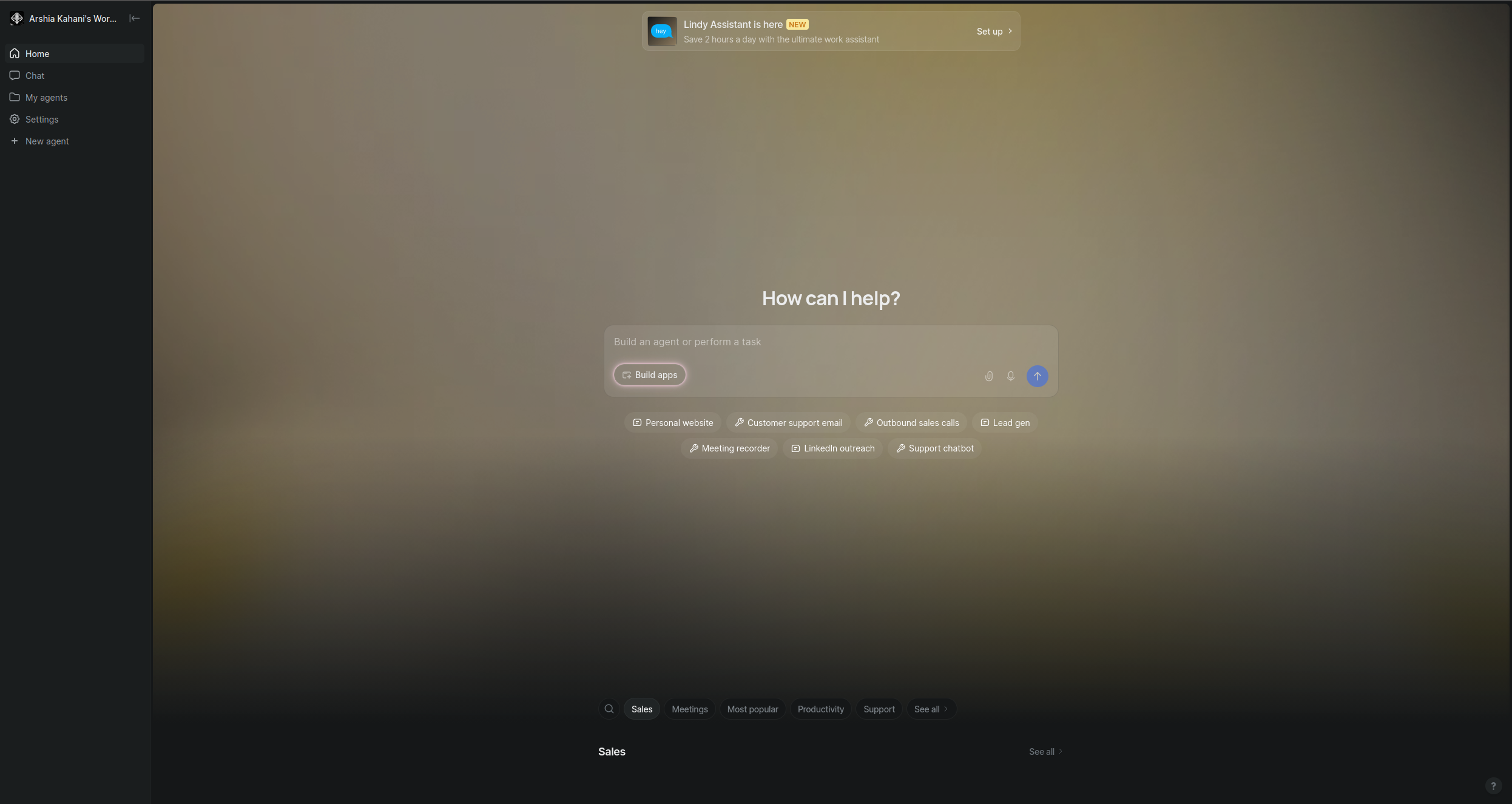
Lindy håndterer almindelige use cases godt: indbakke-håndtering, møde-planlægning, sales-prospektering, kundesupport-triage og HR-onboarding-arbejdsgange. Interfacet er virkelig tilgængeligt for ikke-tekniske brugere.
Hvor Lindy kommer til kort:
Begrænsede integrationer. Med ~70 native integrationer kan Lindy ikke nå mange værktøjer, som dit team sandsynligvis bruger.
Black-box ræsonnering. Du instruerer Lindy samtalebaseret, men du kan ikke se eller inspicere den logik, den kører — hvilket gør fejlfinding vanskelig.
Agent-grænser. Den gratis plan er begrænset, og betalte planer opkræver pr. agent eller pr. udførelse på måder, der øger hurtigt for høj-volumen use cases.
Ingen self-hosting. Data forbliver på Lindys infrastruktur — en blokeringsfaktor for compliance-sensitive teams.
1. FlowHunt — Bedste overordnede Lindy AI-alternativ
FlowHunt
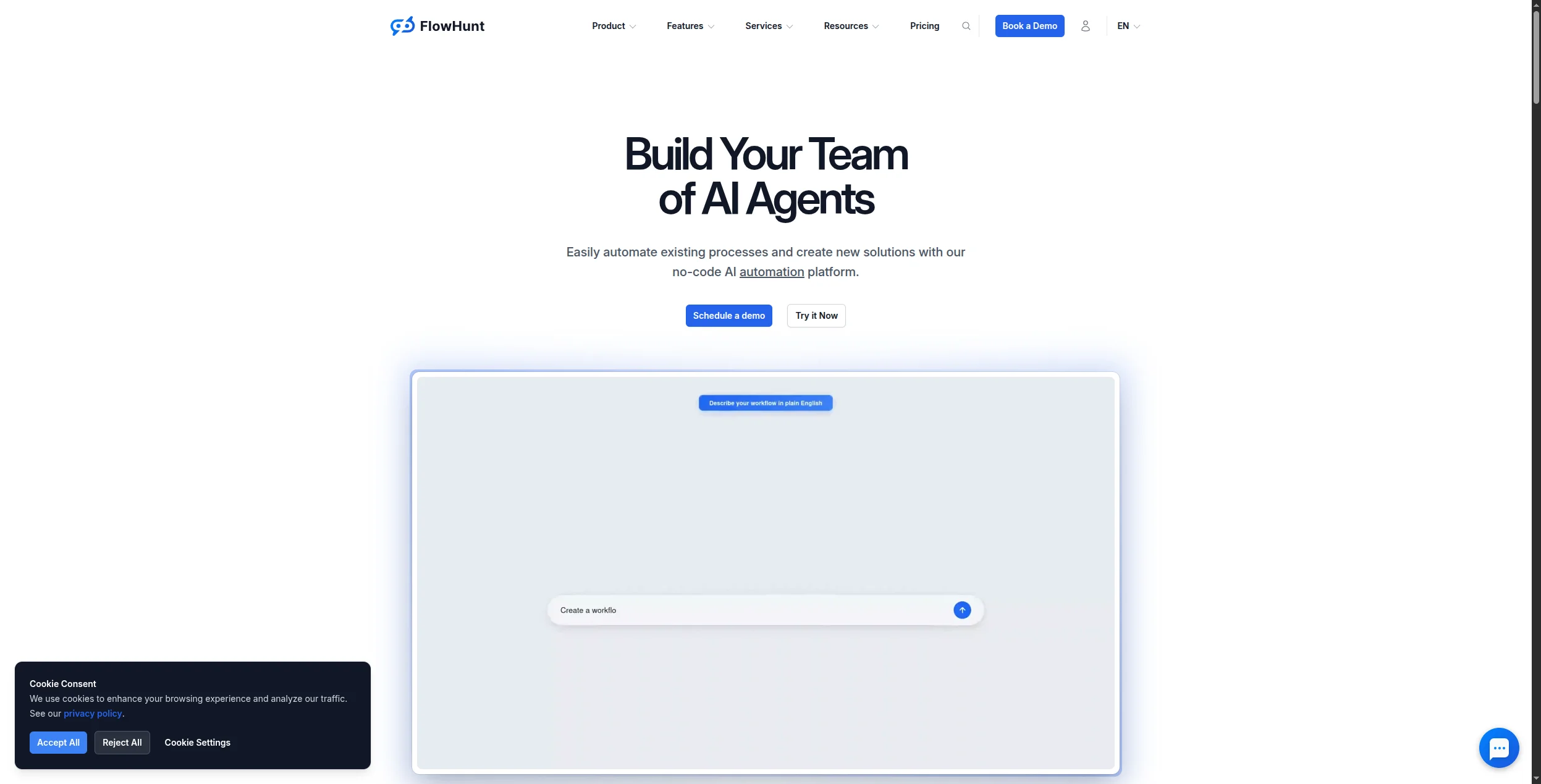
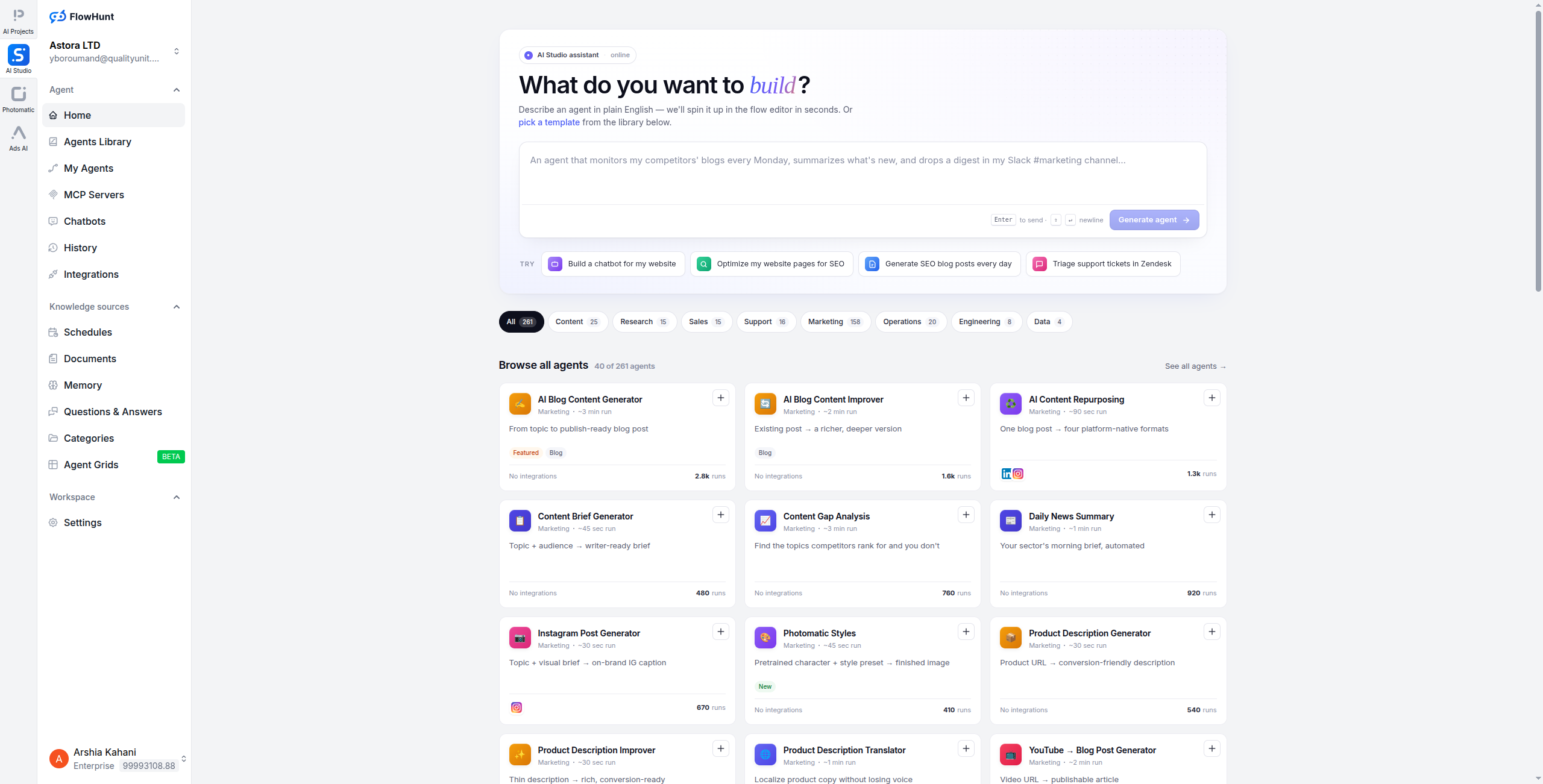
er det stærkeste Lindy-alternativ for teams, der har brug for AI-agenter med ægte transparens og kontrol. Mens Lindy får dig til at beskrive agent-opførsel i en chat-interface, giver FlowHunt dig et visuelt canvas, hvor hver node — hver AI-beslutning, hver API-opkald, hver betingelse — er synlig, redigerbar og testbar.
FlowHunt understøtter sand multi-agent-orkestrering: du kan have en agent, der undersøger en prospect, sende resultatet til en anden agent, der skriver en personlig e-mail, og trigger en tredje, der opdaterer din CRM — alt i en enkelt visuelt flow. Lindy understøtter ikke denne slags kædet, multi-agent-pipeline.
Hvad gør FlowHunt bedre end Lindy for de fleste teams:
1.400+ integrationer vs Lindys ~70 — forbind til praktisk talt ethvert værktøj, din stack bruger
Visuelt arbejdsgangcanvas — se præcis, hvad dine agenter gør ved hvert trin
Multi-agent-orkestrering — kæd flere AI-agenter i et enkelt flow
Self-hosting tilgængelig — for teams med dataholdskrav
Bedre fejlfinding — test individuelle noder, inspicere input og output, spore fejl
AI-native fra grunden — ikke en wrapper omkring LLM’er, men en formålsbygget agent-platform
For teams, der kører multi-agent AI-systemer
, er FlowHunts visuelle orkestrering en betydelig opgradering fra Lindys enkelt-agent-model.
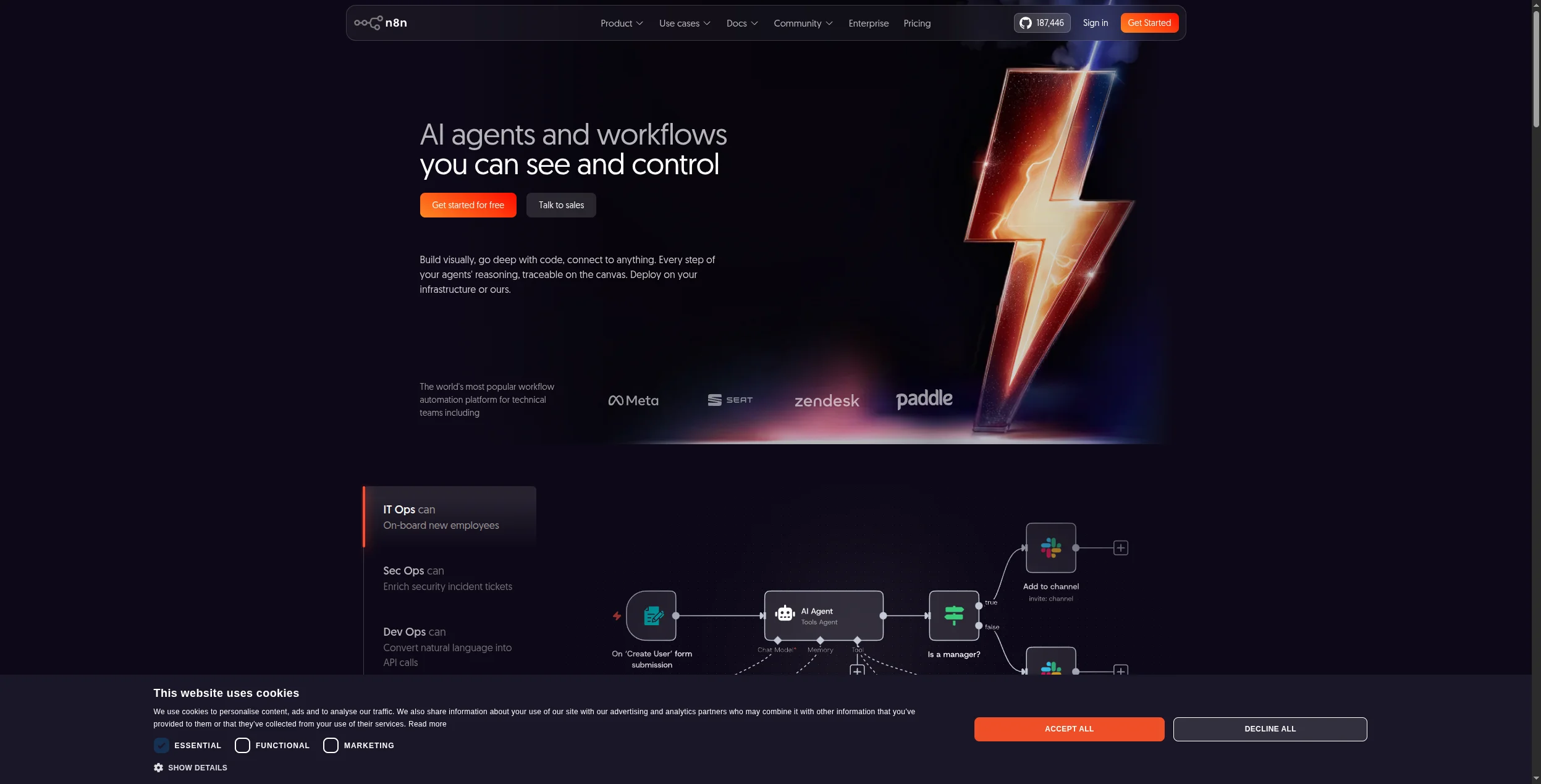
Prisfastsættelse:
Gratis — $0/måned. Generøs gratis tier til at bygge og teste agenter, ingen pr.-agent-gebyrer
Pro — Brugsbaseret. Skalerer med udførelser og API-opkald — ingen pr.-agent-gebyr
1.400+ native integrationer på tværs af CRM’er, helpdesks, databaser og API’er
Indbygget RAG til knowledge-base-agenter
Self-hosting tilgængelig til data-compliance-krav
Vedvarende agent-hukommelse og samtalehistorik
Fordele:
Fuld synlighed til agent-logik via visuelt canvas
1.400+ integrationer, der dækker hele den moderne stack
Multi-agent-orkestrering med forgrening og betinget logik
Self-hosting-mulighed til compliance-krav
Generøs gratis tier — ingen pr.-agent-gebyrer
Ulemper:
Stejlere indlæringskurve end Lindys samtaleinterface
Nogle forudbyggede skabeloner under udvikling stadig
Bedst til: Teams, der har brug for AI-native automatisering med fuld synlighed — især når man kører multi-agent-arbejdsgange, forbinder en bred vifte af værktøjer eller opererer i compliance-sensitive miljøer, der kræver self-hosting.
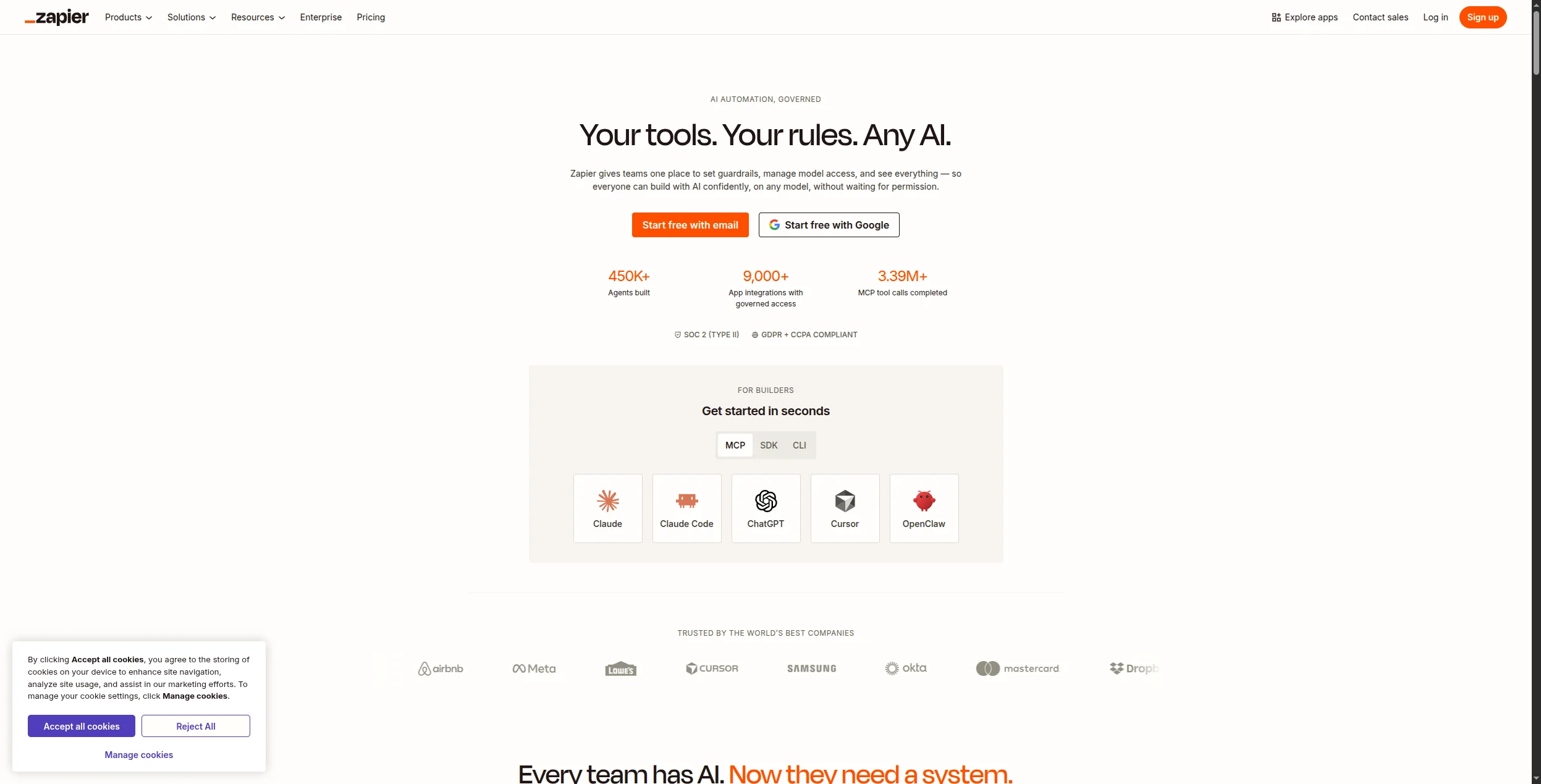
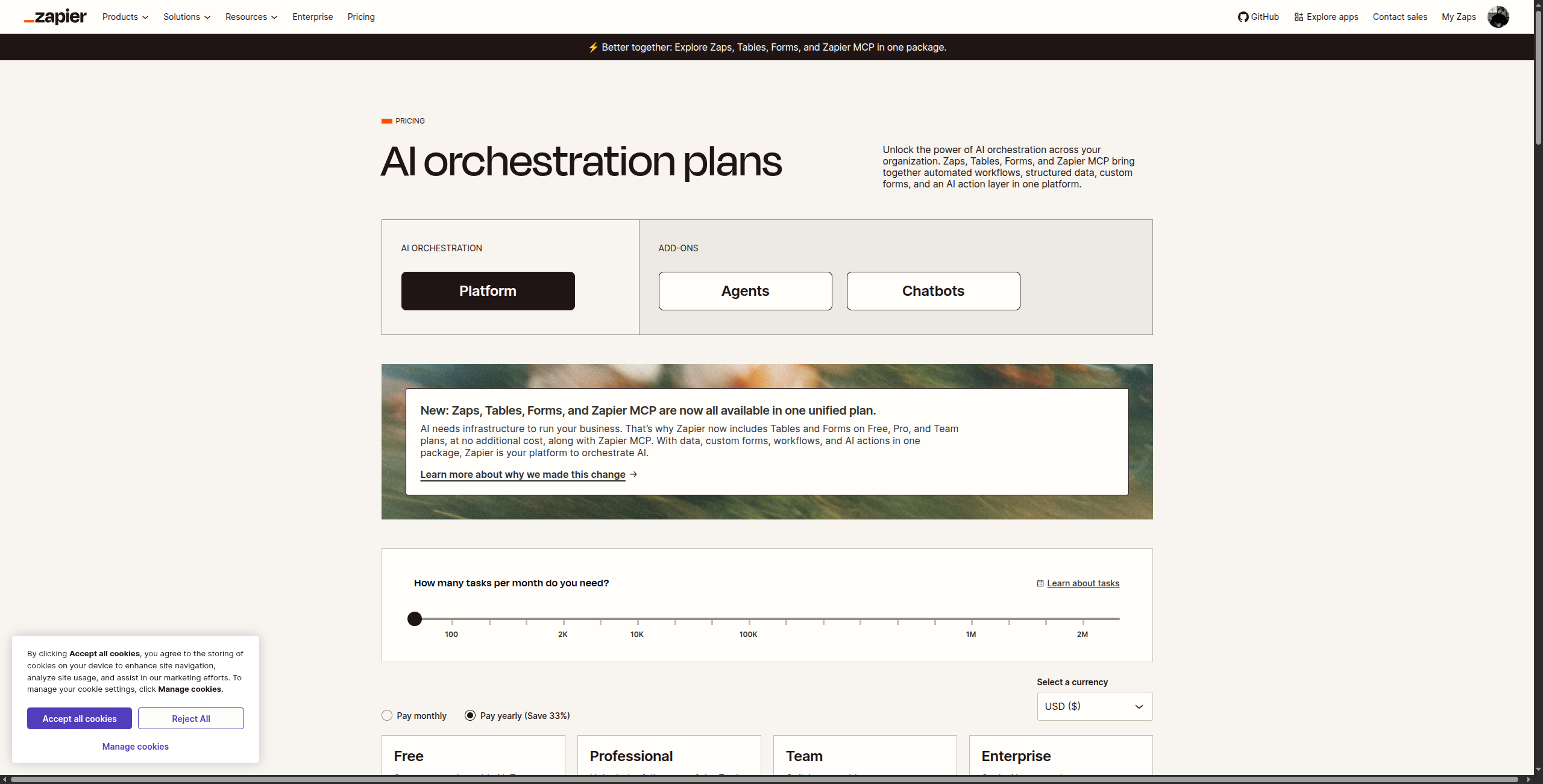
2. Zapier — Bedst til simple trigger-action-automatisering
Zapier er den mest bredt vedtagne automationsplatform i verden, med 7.000+ integrationer og et massivt bibliotek med forudbyggede skabeloner. Det er ikke en AI-agent-platform på samme måde som Lindy eller FlowHunt, men det håndterer ligetil trigger-action automationer pålideligt og i stor skala.
7.000+ app-integrationer — det største kataloger i automatisering
Zap-skabelon-bibliotek med tusinder af forudbyggede automations-opskrifter
Zapier AI til generering af Zap-arbejdsgange fra almindelig-sproget beskrivelser
Multi-trins Zaps med filtre, stier (betinget forgrening) og formattere
Zapier Tables og Interfaces til lettvægts datalagring og front-end-formularer
Zapier Agents (beta) til AI-drevne, mål-drevne opgave-udførelser
Fordele:
7.000+ app-integrationer — uovertruffen bredde
Enormt bibliotek med forudbyggede “Zaps” til almindelige arbejdsgange
Zapier AI kan generere grundlæggende arbejdsgange fra almindelig sprog
Pålidelig og slagprøvet til høj-volumen produktionsbrug
Ulemper:
Ikke bygget til AI-agenter — begrænset ræsonnerings-kapacitet
Prisfastsættelse stiger brat med opgave-volumen
Kompleks betinget logik kræver flere Zaps
Bedst til: Teams, hvis primære frustration med Lindy er manglende app-integrationer — Zapiers 7.000+ katalog løser det øjeblikkeligt.
Tilmeld dig vores nyhedsbrev
Få de seneste tips, trends og tilbud gratis.
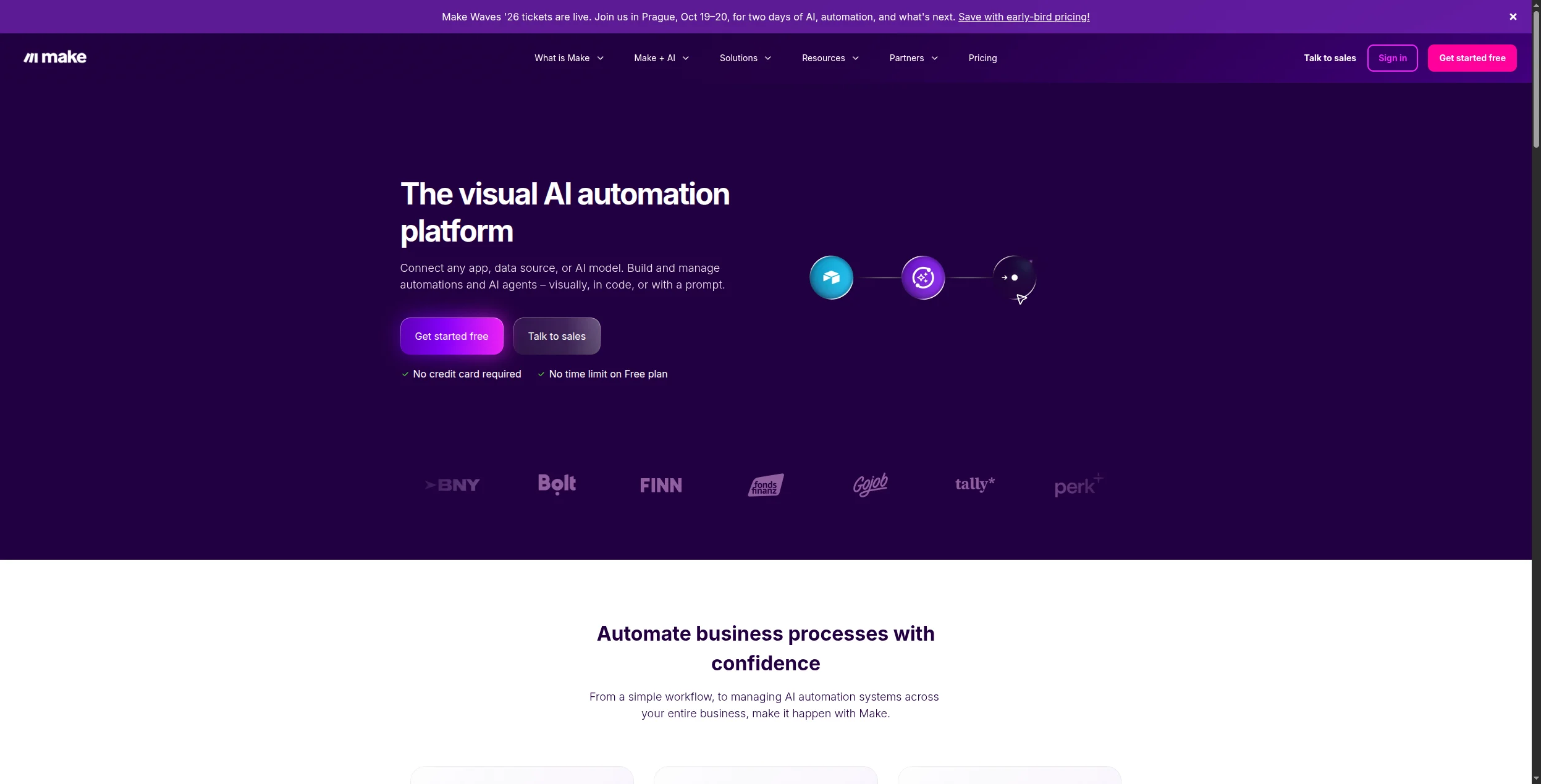
3. Make — Bedste visuelle arbejdsgangbygger
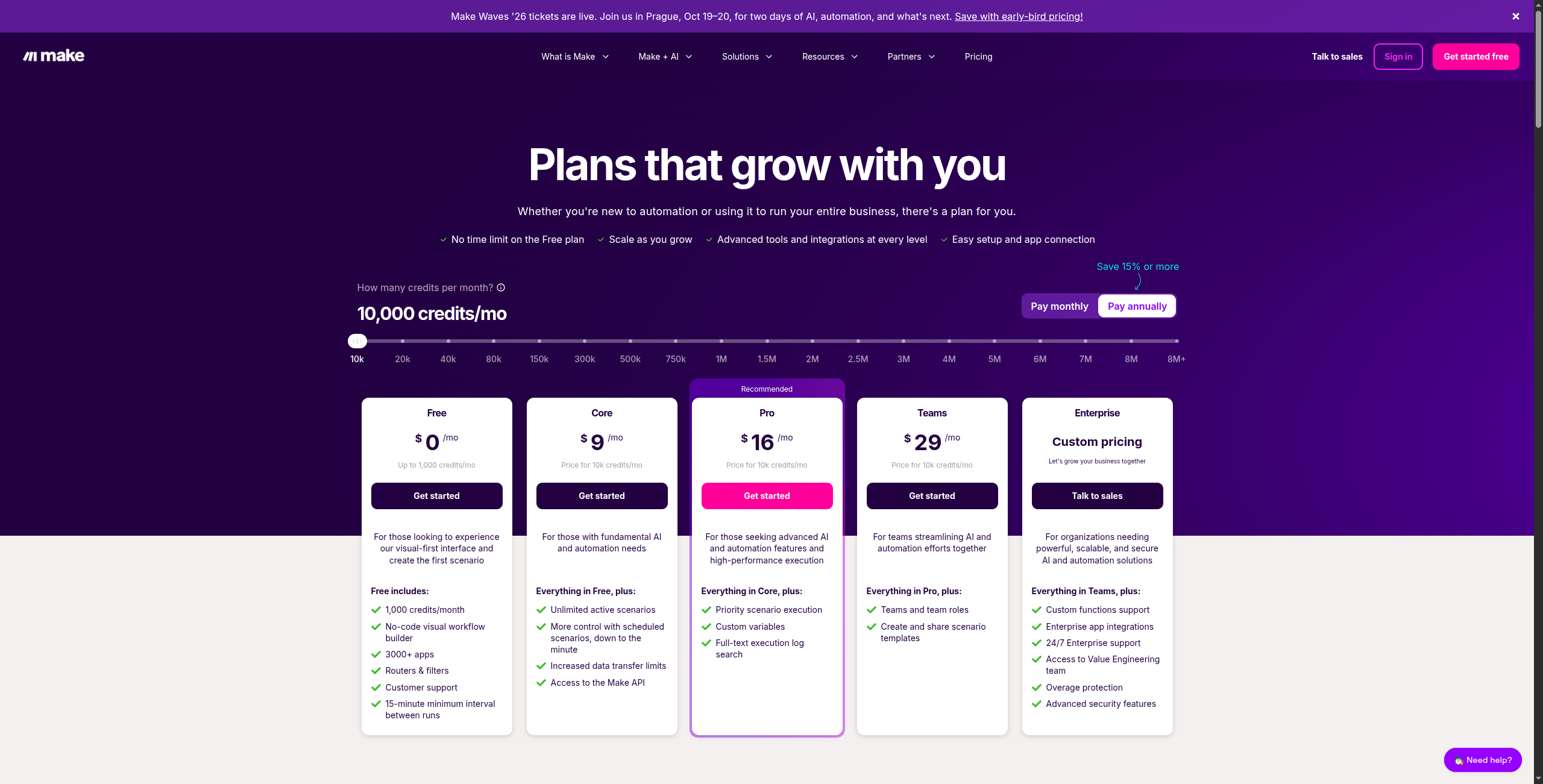
Make (tidligere Integromat) tilbyder den mest kraftfulde visuelle arbejdsgangreditor i no-code automationsrummet. Dets scenario-canvas håndterer kompleks forgrening, data-transformation og fejlhåndtering langt bedre end Zapier — og til en væsentligt lavere prispunkt for tilsvarende opgave-volumen.
Scenarie-baseret visuelt builder med routere, aggregatorer og iteratorer
1.800+ app-integrationer, herunder alle store forretningsværktøjer
Avanceret data-transformation med indbyggede funktioner og mapping
Fejlhåndtering med retry-logik, ignorere og break-muligheder
Scenarie-blueprints til deling og genbrug af automations-skabeloner
AI-moduler til OpenAI, Anthropic og andre LLM-udbydere
Fordele:
Overlegen visuelt builder med forgrening, routere og aggregatorer
1.800+ integrationer til konkurrencedygtig prisfastsættelse
Stærke data-transformations-værktøjer indbygget
Generøs gratis tier (1.000 ops/måned)
Ulemper:
Ikke AI-native — agenter kræver eksterne LLM-forbindelser
Interface er mere komplekst end Lindy eller Zapier for begyndere
AI ræsonnerings-kapaciteter er begrænsede sammenlignet med FlowHunt
Bedst til: Teams, der har brug for kompleks multi-branch automations-logik til lavere omkostning end Zapier — især til data-tunge arbejdsgange.
4. n8n — Bedste open-source alternativ
n8n er open-source arbejdsgangautomations-platformen med indbygget AI-node-support og et blomstrende self-hosted-fællesskab. For teams, der ønsker Lindy-lignende AI-automatisering, men med fuld data-kontrol og ingen vendor lock-in, er n8n det stærkeste open-source-alternativ.
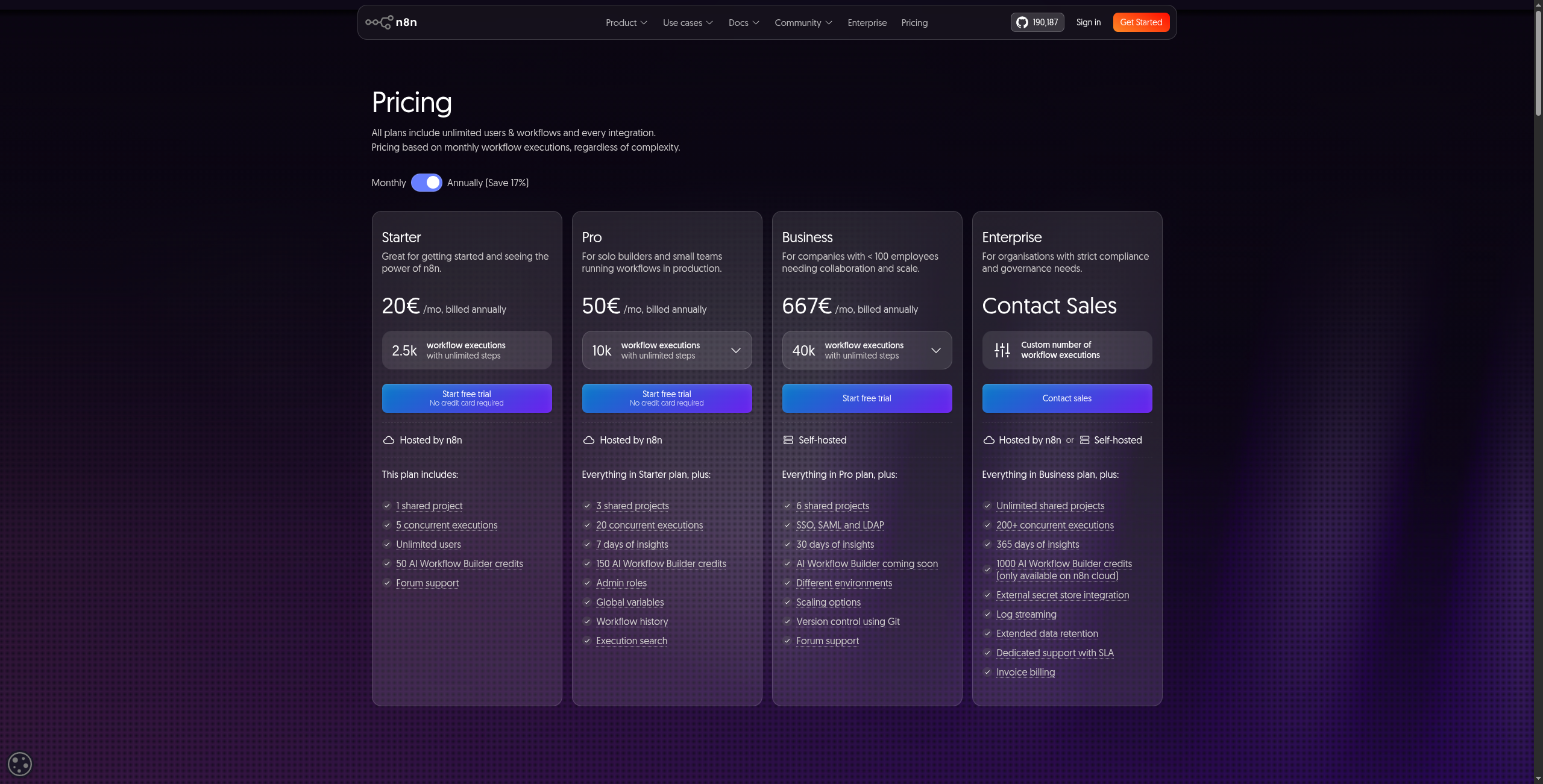
Prisfastsættelse:
Community (Self-hosted) — Gratis for altid. Fuld feature-adgang, ubegrænsede arbejdsgange og udførelser, fællesskabs-support
400+ fællesskabs-byggede integrationer, herunder alle store forretningsværktøjer
Kode-noder til brugerdefineret JavaScript eller Python-logik midt i arbejdsgang
AI-agent-builder med tool-calling og hukommelse i det visuelle interface
Webhook-triggere, planlagte kørsler og event-baseret udførelse
Fordele:
Fuldt open-source — self-host på din egen infrastruktur
Native AI-noder (OpenAI, Anthropic, Hugging Face og mere)
400+ fællesskabs-byggede integrationer
Ingen pr.-opgave-prisfastsættelse på self-hosted planer
Ulemper:
Self-hosted implementering kræver DevOps-indsats
Cloud plan-prisfastsættelse er konkurrencedygtig, men mindre generøs end Make
AI-agent-kapaciteter mindre udviklet end FlowHunt
Bedst til: Tekniske teams, der har brug for self-hosted AI-automatisering uden vendor lock-in og fleksibiliteten til at tilføje brugerdefineret kode ved ethvert arbejdsgang-trin.
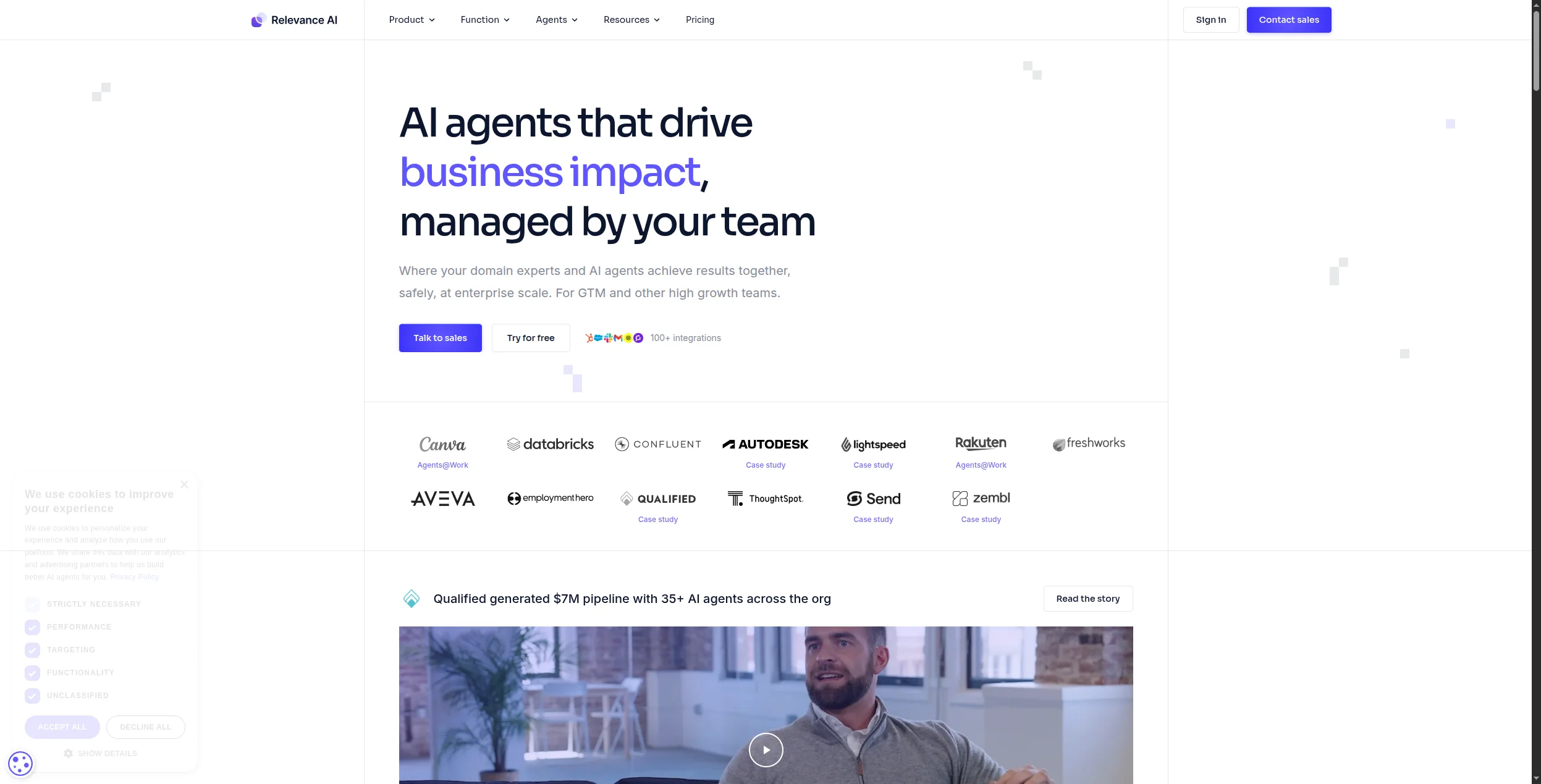
5. Relevance AI — Bedst til sales- og operations-teams
Relevance AI er det nærmeste alternativ til Lindy i form af målgruppe — det er designet specifikt til ikke-tekniske sales- og operations-teams, der ønsker at implementere AI-agenter uden at skrive kode. Ligesom Lindy bruger det et no-code-interface, men det eksponerer flere konfigurerings-muligheder og understøtter mere kompleks multi-trins agent-logik.
No-code AI-agent-builder med drag-and-drop værktøj-konfiguration
Forudbyggede agent-skabeloner til sales-prospektering, support-triage og data-berigelse
Værktøj-bibliotek med 50+ indbyggede connectors (LinkedIn, HubSpot, Salesforce, Gmail, web-scraping)
Multi-trins agent-logik med betinget forgrening og loops
Agent-arbejdsstyrke-visning til styring og overvågning af flere agenter
API og webhook-support til indlejring af agenter i eksisterende værktøjer
Fordele:
No-code AI-agent-builder med flere muligheder end Lindy
Formålsbygget til sales-, support- og operations-arbejdsgange
Godt skabelon-bibliotek til almindelige forretnings-automationer
Native multi-trins agent-support
Ulemper:
Mindre integrationskataloger end FlowHunt eller Zapier
Højere startpris end de fleste alternativer
Mindre egnet til tekniske teams, der ønsker fuld tilpasning
Bedst til: Sales- og operations-teams, der ønsker Lindys enkelhed med mere kraftfuld agent-konfiguration og et dybere værktøj-bibliotek.
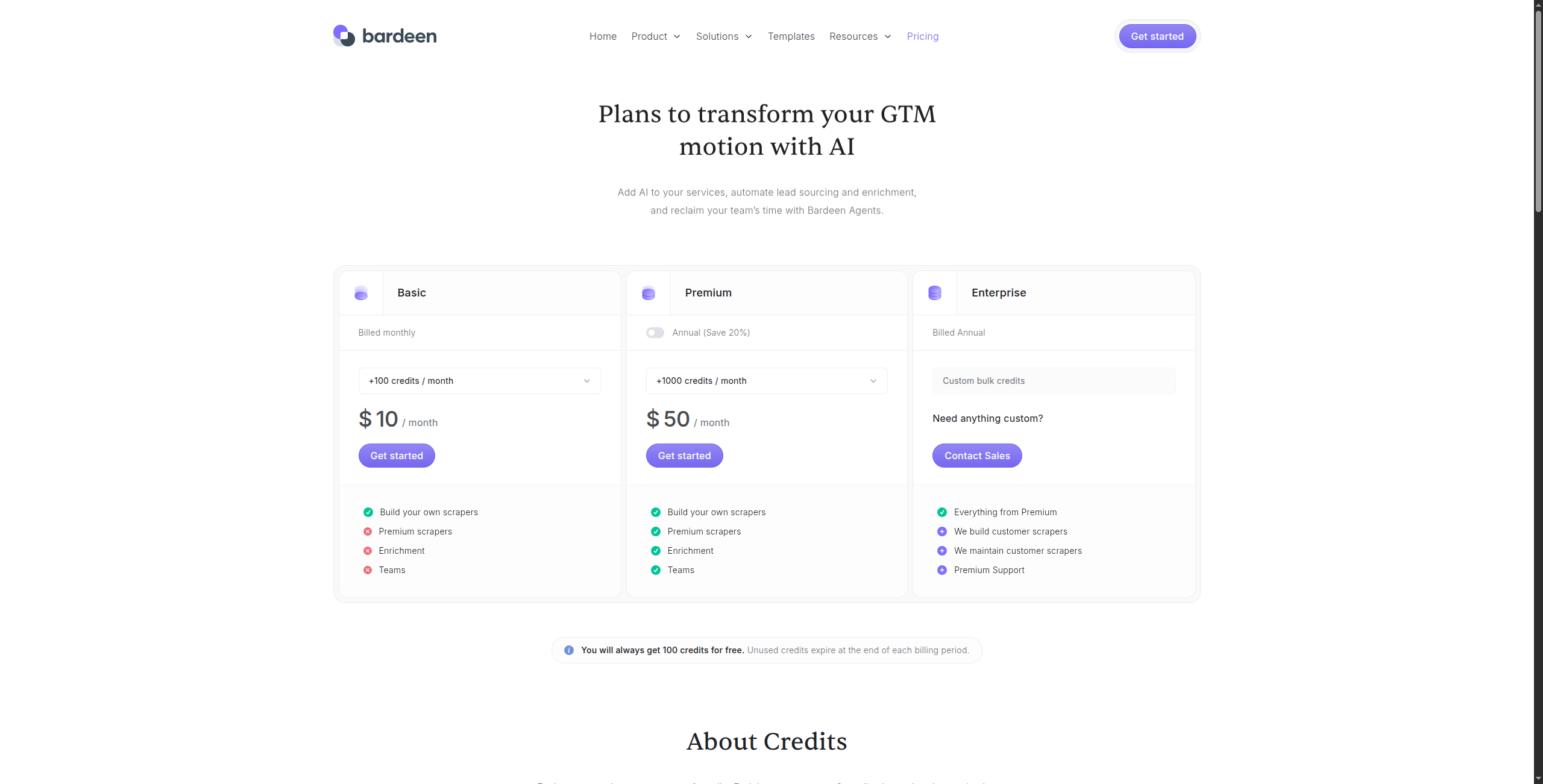
6. Bardeen — Bedst til browser-baseret automatisering
Bardeen opererer som en Chrome-udvidelse, der kombinerer web-scraping, AI-handlinger og app-integrationer i et browser-native interface. Det er det bedste valg, hvis dine Lindy use cases er browser-centrede — scraping af prospect-data, automatisering af gentagne web-opgaver eller opbygning af research-arbejdsgange, der trækker fra websteder.
Business — $15/måned pr. bruger (faktureret årligt). Team-styring, delte playbooks, brugs-rapportering, avancerede integrationer
Vigtige funktioner:
Chrome-udvidelse til browser-native automatisering uden en separat app
AI-drevet web-scraper, der tilpasser sig til side-struktur-ændringer automatisk
Playbooks: delbare automations-scripts til almindelige sales- og research-opgaver
100+ integrationer: HubSpot, Salesforce, LinkedIn, Notion, Airtable, Google Sheets
AI Magic Box til generering af automations-trin fra naturlig sproget beskrivelser
Planlagte automationer, der kører i cloud uden at holde browseren åben
Fordele:
Browser-native — ingen separat app at styre
AI-drevet scraping, der tilpasser sig til side-struktur-ændringer
God integration med CRM’er og produktivitetsværktøjer
Gratis plan dækker de fleste individuelle use cases
Ulemper:
Kræver Chrome — ingen cross-browser-support
Ikke egnet til server-side eller baggrund-automatisering
Mindre egnet til komplekse multi-trins agent-arbejdsgange
Bedst til: Sales-repræsentanter og forskere, der har brug for browser-baseret automatisering til prospect-research, data-indsamling og gentagne web-opgaver.
7. Relay.app — Bedst til godkendelse-baserede arbejdsgange
Relay.app specialiserer sig i arbejdsgange, der har brug for menneskelig gennemgang, før automatisering fortsætter. Hvis dine Lindy-agenter håndterer opgaver, hvor lejlighedsvis menneskelig dømmekraft er påkrævet — kontakt-godkendelser, indhold-gennemgang, sensitive kundeeskalationer — er Relays human-in-the-loop-design uovertruffen.
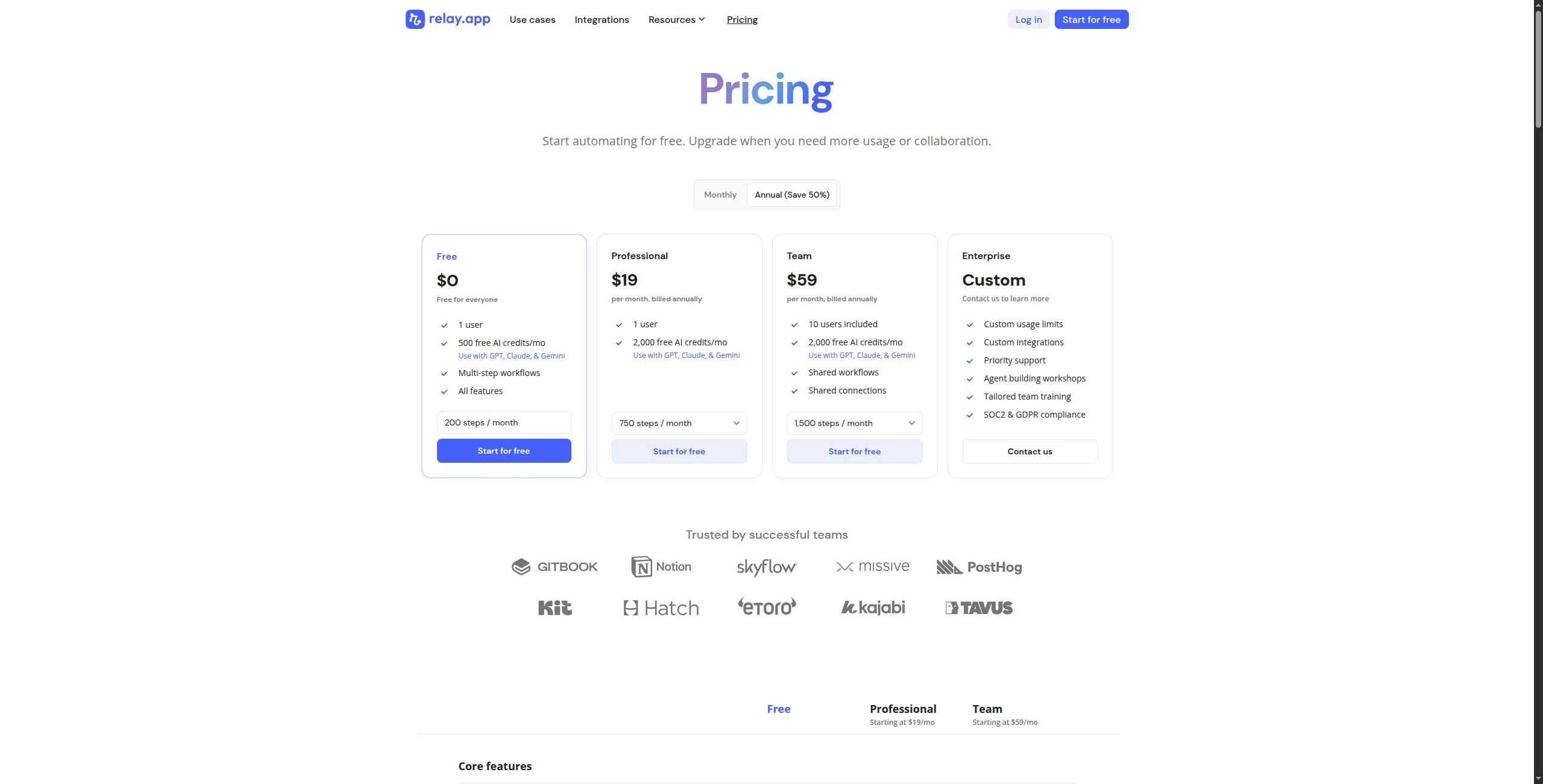
Pro — $9/måned pr. bruger (faktureret årligt). 5.000 kørsler/måned, alle integrationer, godkendelse-trin, Slack-notifikationer, e-mail-support
Business — $39/måned pr. bruger (faktureret årligt). 25.000 kørsler/måned, avancerede human-in-the-loop-trin, brugerdefinerede formularer, audit-logs, prioritets-support
Human-in-the-loop-trin-design med strukturerede godkendelse og gennemgans-handlinger
Slack-native godkendelser — reviewere godkender eller afviser direkte fra Slack-meddelelser
Trigger-typer: webhook, tidsplan, manuel, formular-indsendelses- og app-begivenheder
300+ app-integrationer, herunder CRM, projektledelse og kommunikationsværktøjer
Betinget logik til routing af arbejdsgange baseret på godkendelse-beslutninger
Kør-historik og audit-trail til compliance og proces-dokumentation
Fordele:
Bedste human-in-the-loop arbejdsgangdesign tilgængelig
Rent interface med Slack-integration til godkendelse-notifikationer
Billig prisfastsættelse for små teams
God CRM og produktivitetsværktøj-integrationer
Ulemper:
Ikke designet til fuldt automatiserede AI-agent-arbejdsgange
Integrationskataloger mindre end Zapier eller Make (300+)
Ingen AI ræsonnerings-kapaciteter ud over grundlæggende betingelser
Bedst til: Operations- og finance-teams, der kører godkendelse-tunge arbejdsgange, hvor menneskelig sign-off er påkrævet, før automatisering fortsætter.
8. Activepieces — Bedste open-source Zapier-alternativ
Activepieces er en open-source automationsplatform, der ser ud og føles som Zapier, men tilføjer self-hosting og et voksende integrationskataloger. Det er ikke en AI-agent-platform, men for teams, hvis Lindy use cases faktisk er simple trigger-action automationer (e-mail modtaget → opdater CRM → send Slack-besked), leverer det det pålideligt til lavere omkostning.
Bedst til: Teams, der ønsker en Zapier-lignende oplevelse til lavere omkostning, med mulighed for self-hosting til data-compliance — især mindre teams, der skifter fra Lindys trigger-action use cases.
Hvordan vælger man det rigtige Lindy AI-alternativ
Du har brug for AI-agenter med fuld synlighed → FlowHunt. Det visuelle canvas og multi-agent-orkestrering gør det til den stærkeste opgradering fra Lindy til teams, der kører komplekse arbejdsgange.
Du ønsker 7.000+ app-integrationer → Zapier. Ingen platform matcher Zapiers integrationsbredde. Hvis din primære frustration med Lindy er manglende integrationer, løser Zapier det.
Du har brug for komplekse visuelle arbejdsgange til lavere omkostning → Make. Scenario-canvasset håndterer forgreningslogik, som hverken Lindy eller Zapier håndterer godt.
Du har brug for self-hosted AI-automatisering → n8n. Det bedste open-source-alternativ med native AI-noder og fuld infrastruktur-kontrol.
Du er i sales/ops og ønsker Lindys enkelhed med mere kraft → Relevance AI. Det nærmeste like-for-like Lindy-erstatning.
Bundlinje
Lindy AI er et godt udgangspunkt for teams, der er nye inden for AI-agenter, men det viser sine grænser hurtigt: for få integrationer, ingen synlighed til agent-logik og prisfastsættelse, der ikke skaleres godt. Alternativerne ovenfor løser disse problemer på forskellige måder.
For de fleste teams er FlowHunt
den rigtige opgradering — det bevarer Lindys AI-first-tilgang, mens det tilføjer et transparent visuelt canvas, 20x mere integrationer og sand multi-agent-orkestrering. Start på den gratis tier og byg din første agent på under en time.
FlowHunt er det bedste Lindy AI-alternativ for teams, der har brug for fuld synlighed og kontrol over deres AI-agenter. I modsætning til Lindys samtaleinterface giver FlowHunt dig et visuelt arbejdsgangscanvas, hvor du kan se præcis, hvordan dine agenter ræsonnerer og handler. For enklere trigger-action-automatisering er Zapier eller Make solide alternativer.
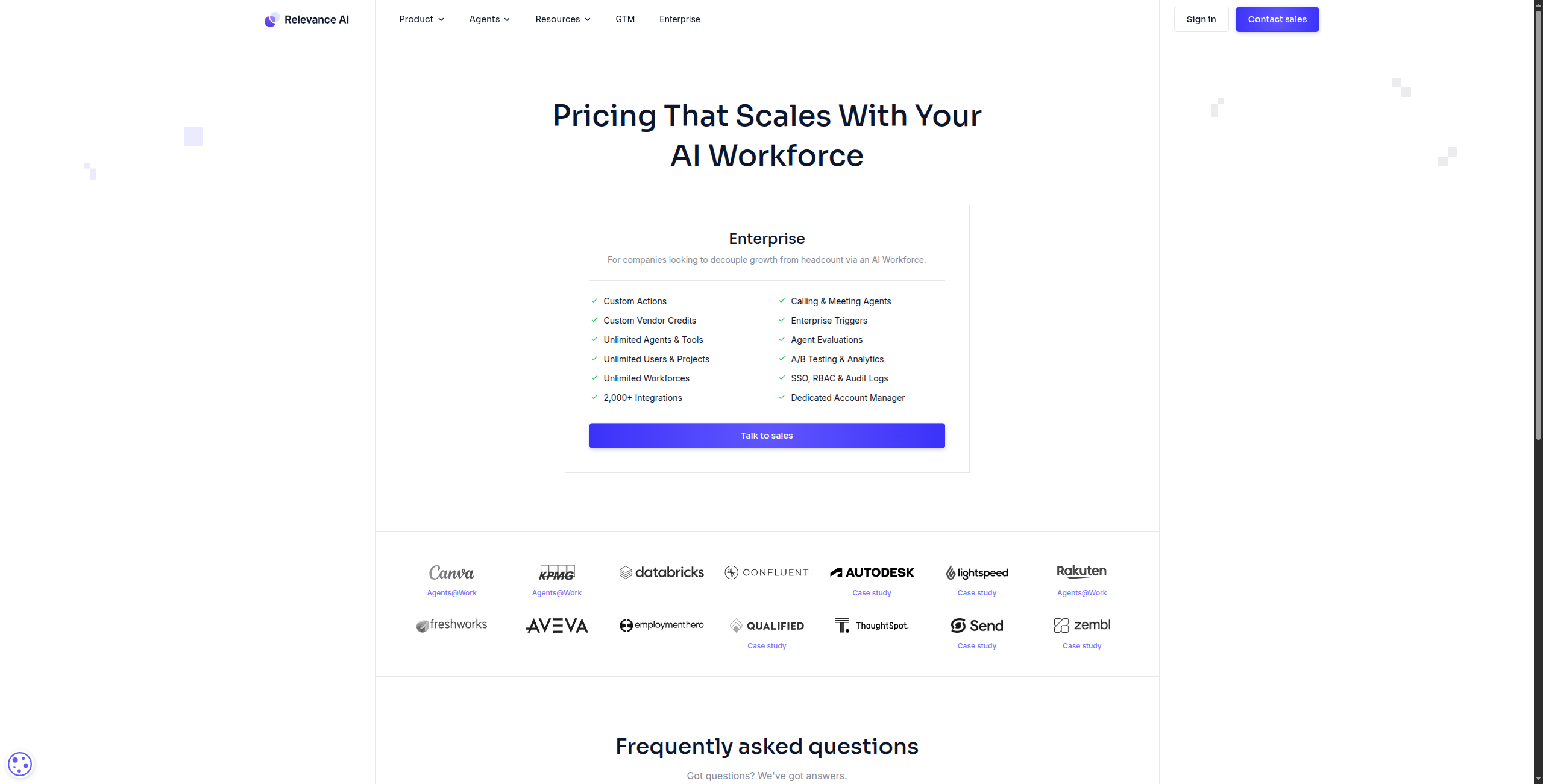
Lindy AI tilbyder en gratis plan med begrænsede udførelser pr. måned. Betalte planer starter omkring $49/måned. For sammenlignelig eller større funktionalitet til lavere omkostninger tilbyder FlowHunt og Activepieces begge generøse gratis niveauer.
Lindy AI lader dig bygge AI-agenter — kaldet 'Lindies' — der håndterer opgaver som e-mail-sortering, CRM-opdateringer, planlægning, kundesupport-triage og mødeoppfølgninger. Agenter konfigureres samtalebaseret snarere end gennem en visuelt builder.
Begge platforme lader dig bygge AI-agenter, men de tager modsatrettede tilgange. Lindy bruger et samtalebaseret konfigurationsinterface, hvor du instruerer agenter på almindelig engelsk. FlowHunt bruger et visuelt node-baseret canvas, hvor du kan se og kontrollere hvert trin af agentens ræsonnering. FlowHunt understøtter mere kompleks multi-agent-orkestrering, har et bredere integrationskataloger (1.400+ vs Lindys ~70 integrationer) og tilbyder self-hosted implementering.
Ja. De fleste Lindy-arbejdsgange kan genoprettes i FlowHunt, Make eller Zapier med noget konfigurationsarbejde. FlowHunt er det bedste migrationssted, hvis dine Lindy-agenter involverer kompleks ræsonnering, flere værktøjer eller brugerdefineret logik — det visuelle canvas gør det nemt at genskabe og udvide det, som Lindy gjorde.
Arshia er AI Workflow Engineer hos FlowHunt. Med en baggrund inden for datalogi og en passion for AI, specialiserer han sig i at skabe effektive workflows, der integrerer AI-værktøjer i daglige opgaver og øger produktivitet og kreativitet.
Arshia Kahani
AI Workflow Engineer
Lindy AI-alternativet, der giver dig mere kontrol — Prøv FlowHunt gratis
FlowHunt giver dig fuld visuel kontrol over dine AI-agenter — ingen black-box automationer. Byg, test og implementer agenter, der ræsonnerer på tværs af hele din stack.
Sådan bruger du Lindy AI: En begyndervejledning til at bygge din første automatiseringsagent
Lær at bygge din første AI-automatiseringsagent med Lindy AI på få minutter—helt uden kode. Denne begyndervenlige guide guider dig gennem oprettelsen af en inte...
Bedste AI Agent Værktøjer i 2026: 12 Platforme til at Bygge og Køre AI Agenter
Rangeret og vurderet: de 12 bedste AI agent værktøjer i 2026. Fra no-code agent builders til open-source frameworks — find den rigtige platform til dit teams AI...
Bedste AI Agent Builder i 2026: 12 værktøjer rangeret og anmeldt
Rangeret og anmeldt: de 12 bedste AI agent builders i 2026. Sammenligningstavle, priser, gratis niveauer og en klar vurdering af, hvilken platform der passer ti...
12 min læsning
AI Agents
Automation
+3
Cookie Samtykke Vi bruger cookies til at forbedre din browsingoplevelse og analysere vores trafik. See our privacy policy.