


OpenCTI MCP
Integrate FlowHunt with OpenCTI MCP to automate threat intelligence collection, enrichment, and response. Enable real-time data ingestion, centralized intellige...
3 min read
AI
OpenCTI
+3

Connect FlowHunt to OpenCTI with the OpenCTI MCP Server for powerful, automated threat intelligence and enhanced security workflows.
OpenCTI MCP Server is a Model Context Protocol (MCP) server that enables seamless integration with the OpenCTI (Open Cyber Threat Intelligence) platform. By acting as a bridge between AI assistants and the OpenCTI threat intelligence database, it allows AI clients to query, retrieve, and interact with cyber threat intelligence data using a standardized interface. This server facilitates tasks such as searching for malware information, querying indicators of compromise, managing users and groups, and performing file operations. Developers can use it to automate security workflows, enrich LLM outputs with real-time threat data, and streamline access to actionable intelligence within their development and operational environments.
No prompt templates are listed in the repository or documentation.

Start your free trial today and see results within days.
No explicit resources are described in the available documentation or repository files.
No specific tools are listed in the documentation or code. The documentation only describes high-level features and API capabilities, but does not enumerate MCP tools or their function signatures.
Get latest tips, trends, and deals for free.
.env.example to .env and update with your OpenCTI credentials.{
"mcpServers": {
"opencti": {
"command": "node",
"args": ["path/to/opencti-server/build/index.js"],
"env": {
"OPENCTI_URL": "${OPENCTI_URL}",
"OPENCTI_TOKEN": "${OPENCTI_TOKEN}"
}
}
}
}
.env.example to .env and fill in your OpenCTI details.{
"mcpServers": {
"opencti": {
"command": "node",
"args": ["path/to/opencti-server/build/index.js"],
"env": {
"OPENCTI_URL": "${OPENCTI_URL}",
"OPENCTI_TOKEN": "${OPENCTI_TOKEN}"
}
}
}
}
.env.example as .env and set your OpenCTI URL and token.{
"mcpServers": {
"opencti": {
"command": "node",
"args": ["path/to/opencti-server/build/index.js"],
"env": {
"OPENCTI_URL": "${OPENCTI_URL}",
"OPENCTI_TOKEN": "${OPENCTI_TOKEN}"
}
}
}
}
.env.example to .env and update with your values.{
"mcpServers": {
"opencti": {
"command": "node",
"args": ["path/to/opencti-server/build/index.js"],
"env": {
"OPENCTI_URL": "${OPENCTI_URL}",
"OPENCTI_TOKEN": "${OPENCTI_TOKEN}"
}
}
}
}
{
  "mcpServers": {
    "opencti": {
      "command": "node",
      "args": ["path/to/opencti-server/build/index.js"],
      "env": {
        "OPENCTI_URL": "${OPENCTI_URL}",
        "OPENCTI_TOKEN": "${OPENCTI_TOKEN}"
      }
    }
  }
}
Using MCP in FlowHunt
To integrate MCP servers into your FlowHunt workflow, start by adding the MCP component to your flow and connecting it to your AI agent:
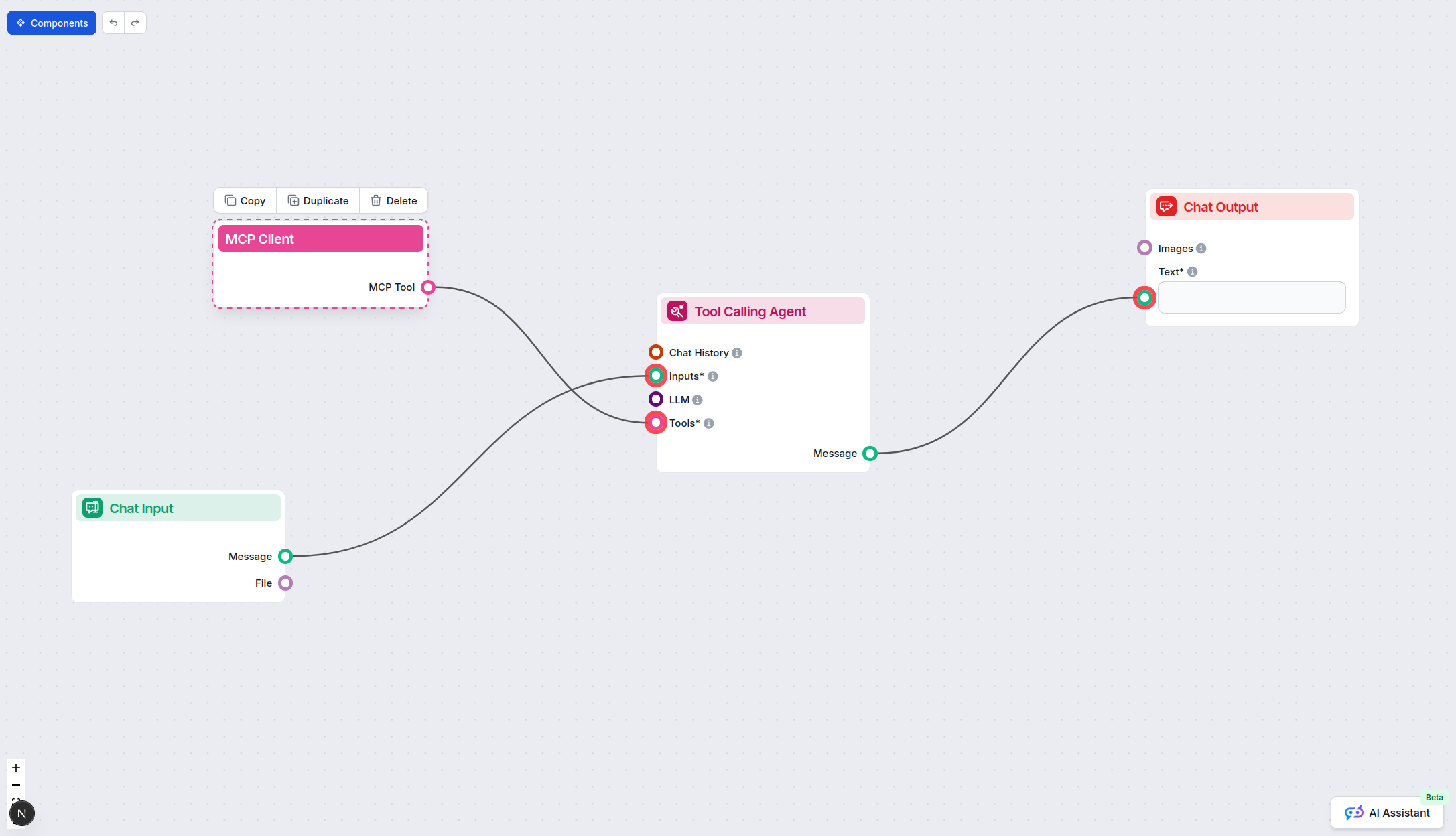
Click on the MCP component to open the configuration panel. In the system MCP configuration section, insert your MCP server details using this JSON format:
{
  "opencti": {
    "transport": "streamable_http",
    "url": "https://yourmcpserver.example/pathtothemcp/url"
  }
}
Once configured, the AI agent is now able to use this MCP as a tool with access to all its functions and capabilities. Remember to change “opencti” to whatever the actual name of your MCP server is and replace the URL with your own MCP server URL.
| Section | Availability | Details/Notes |
|---|---|---|
| Overview | ✅ | Basic description in README |
| List of Prompts | ⛔ | No prompt templates listed |
| List of Resources | ⛔ | No explicit MCP resources described |
| List of Tools | ⛔ | No specific tool list in documentation |
| Securing API Keys | ✅ | Environment variable usage documented |
| Sampling Support (less important in evaluation) | ⛔ | No mention of sampling support |
Between the available documentation and code, OpenCTI MCP Server provides a clear overview and robust setup instructions, but lacks explicit details on resources, prompts, tools, and advanced MCP features like sampling or roots configuration.
Based on the evidence, this MCP server provides a good foundation for OpenCTI integration and has solid setup and security practices, but it lacks transparency around MCP-specific features (like tools, resources, prompts, and sampling). As such, we would rate this MCP implementation a 5/10 for overall completeness and usability for LLM integration.
| Has a LICENSE | ✅ (MIT) |
|---|---|
| Has at least one tool | ⛔ |
| Number of Forks | 10 |
| Number of Stars | 18 |
Deploy the OpenCTI MCP Server with FlowHunt to automate cyber threat intelligence access, enrich LLM responses, and streamline SOC operations. Secure, scalable, and efficient.
Integrate FlowHunt with OpenCTI MCP to automate threat intelligence collection, enrichment, and response. Enable real-time data ingestion, centralized intellige...

The OpenSearch MCP Server enables seamless integration of OpenSearch with FlowHunt and other AI agents, allowing programmatic access to search, analytics, and c...
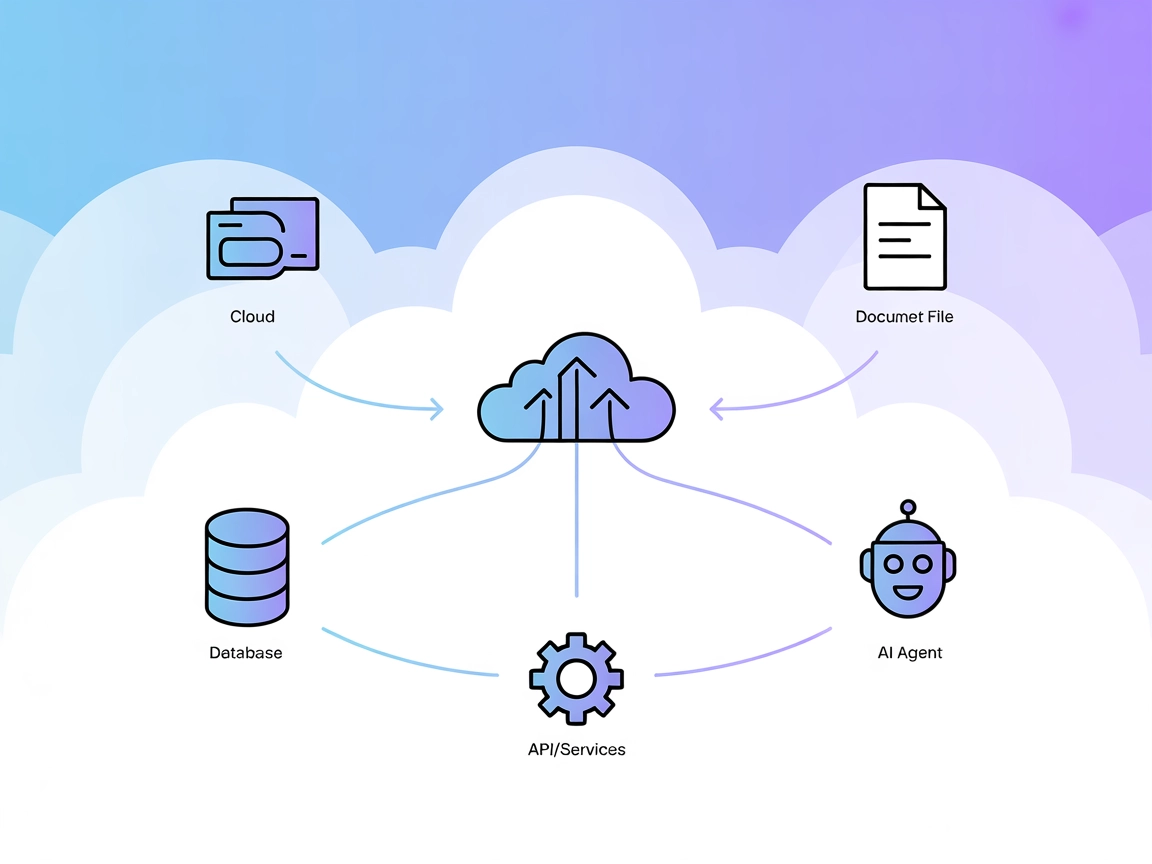
The Model Context Protocol (MCP) Server bridges AI assistants with external data sources, APIs, and services, enabling streamlined integration of complex workfl...
Cookie Consent
We use cookies to enhance your browsing experience and analyze our traffic. See our privacy policy.