


RabbitMQ
Integrate FlowHunt with RabbitMQ MCP Server to automate broker administration, streamline message management, and enable secure remote operations with AI-driven...
3 min read
AI
RabbitMQ
+3
Empower your AI agents with automated RabbitMQ queue management, monitoring, and broker administration using the RabbitMQ MCP Server for FlowHunt.
The RabbitMQ MCP Server is a Model Context Protocol (MCP) server implementation designed to enable AI assistants to manage and interact with RabbitMQ message brokers. By wrapping the admin APIs of a RabbitMQ broker as MCP tools and utilizing the Pika library for message-level interactions, this server allows AI agents to perform tasks such as managing queues, sending and receiving messages, and monitoring broker status. The RabbitMQ MCP Server supports seamless integration with MCP clients, provides streamable HTTP with FastMCP’s BearerAuthProvider, and allows users to connect to different RabbitMQ brokers during a conversation. It streamlines development workflows by empowering AI agents to automate message queue operations, making it easier for developers to build and manage robust distributed systems.
No documented prompt templates found in the repository.

Start your free trial today and see results within days.
No explicit resource definitions found in the repository.
Get latest tips, trends, and deals for free.
uvx are installed on your system.mcpServers configuration.JSON Example:
{
  "mcpServers": {
    "rabbitmq": {
      "command": "uvx",
      "args": [
        "mcp-server-rabbitmq@latest",
        "--rabbitmq-host", "<hostname>",
        "--port", "<port number>",
        "--username", "<rabbitmq username>",
        "--password", "<rabbitmq password>",
        "--use-tls", "<true|false>"
      ]
    }
  }
}
Securing API Keys (Environment Variables Example):
{
  "env": {
    "RABBITMQ_USERNAME": "<rabbitmq username>",
    "RABBITMQ_PASSWORD": "<rabbitmq password>"
  },
  "inputs": {
    "username": "${RABBITMQ_USERNAME}",
    "password": "${RABBITMQ_PASSWORD}"
  }
}
uvx and ensure Claude is up to date.mcpServers section.JSON Example:
{
  "mcpServers": {
    "rabbitmq": {
      "command": "uvx",
      "args": [
        "mcp-server-rabbitmq@latest",
        "--rabbitmq-host", "<hostname>",
        "--port", "<port number>",
        "--username", "<rabbitmq username>",
        "--password", "<rabbitmq password>",
        "--use-tls", "<true|false>"
      ]
    }
  }
}
Refer to the environment variable example above for securing credentials.
uvx is available.mcpServers.JSON Example:
{
  "mcpServers": {
    "rabbitmq": {
      "command": "uvx",
      "args": [
        "mcp-server-rabbitmq@latest",
        "--rabbitmq-host", "<hostname>",
        "--port", "<port number>",
        "--username", "<rabbitmq username>",
        "--password", "<rabbitmq password>",
        "--use-tls", "<true|false>"
      ]
    }
  }
}
Use environment variables as shown previously to secure sensitive info.
uvx are installed.mcpServers.JSON Example:
{
  "mcpServers": {
    "rabbitmq": {
      "command": "uvx",
      "args": [
        "mcp-server-rabbitmq@latest",
        "--rabbitmq-host", "<hostname>",
        "--port", "<port number>",
        "--username", "<rabbitmq username>",
        "--password", "<rabbitmq password>",
        "--use-tls", "<true|false>"
      ]
    }
  }
}
Include environment variable configuration as described above.
Using MCP in FlowHunt
To integrate MCP servers into your FlowHunt workflow, start by adding the MCP component to your flow and connecting it to your AI agent:
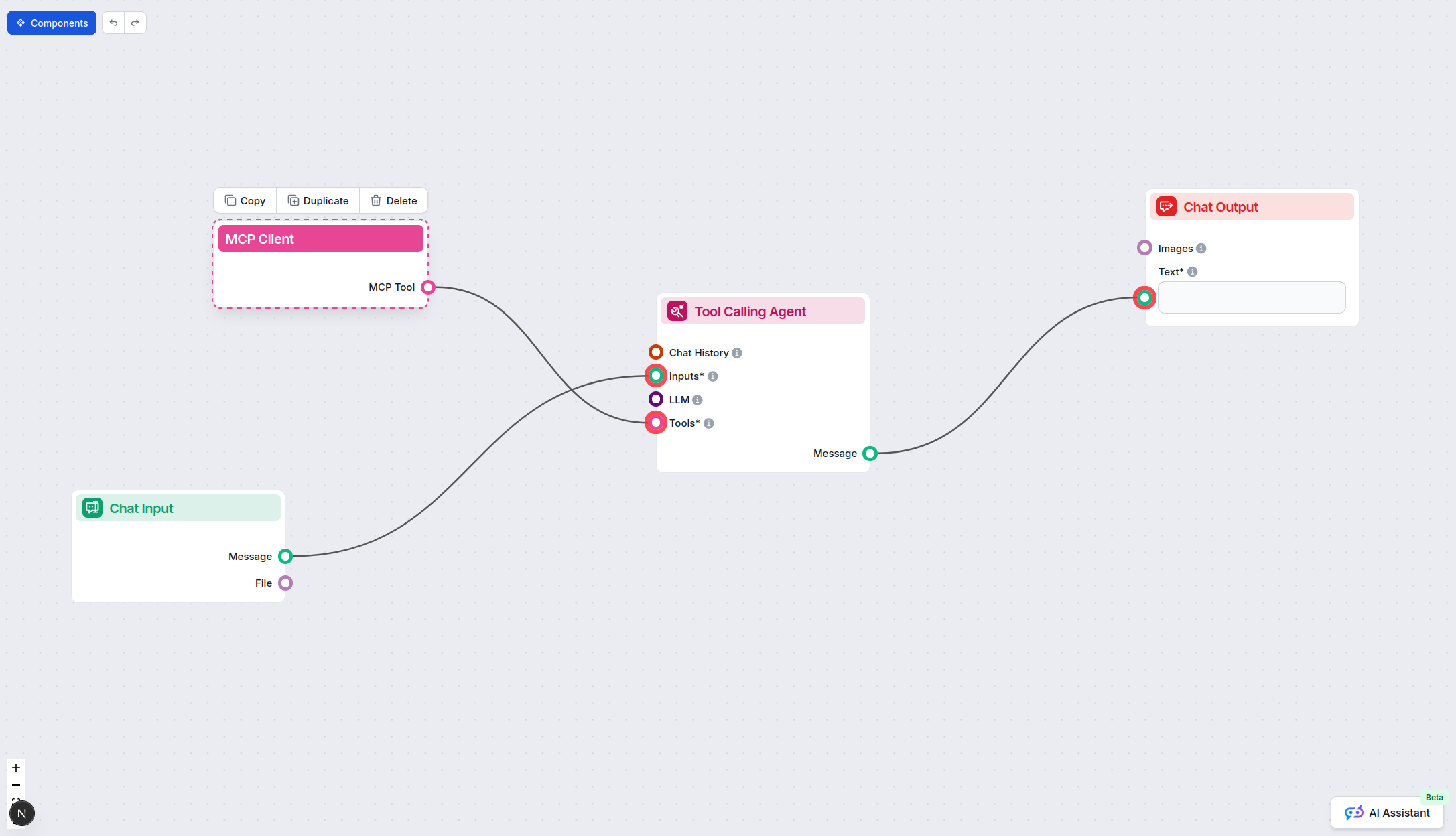
Click on the MCP component to open the configuration panel. In the system MCP configuration section, insert your MCP server details using this JSON format:
{
  "rabbitmq": {
    "transport": "streamable_http",
    "url": "https://yourmcpserver.example/pathtothemcp/url"
  }
}
Once configured, the AI agent is now able to use this MCP as a tool with access to all its functions and capabilities. Remember to change “rabbitmq” to whatever the actual name of your MCP server is and replace the URL with your own MCP server URL.
| Section | Availability | Details/Notes |
|---|---|---|
| Overview | ✅ | Description found in README |
| List of Prompts | ⛔ | No prompt templates found |
| List of Resources | ⛔ | No explicit resource definitions found |
| List of Tools | ✅ | Tool descriptions inferred from README |
| Securing API Keys | ✅ | Environment variable usage described in README/config example |
| Sampling Support (less important in evaluation) | ⛔ | No mention of sampling support |
Based on the above, RabbitMQ MCP Server offers solid integration and setup documentation, with emphasis on tool usage and security. However, it lacks explicit prompt templates and resource definitions in the public documentation. Roots and sampling support are not documented.
| Has a LICENSE | ✅ (Apache-2.0) |
|---|---|
| Has at least one tool | ✅ |
| Number of Forks | 8 |
| Number of Stars | 28 |
Rating:
I would rate this MCP server a 7/10. It is well-documented and functional for tool-based RabbitMQ integration, but could improve by providing explicit prompt templates, resource definitions, and documented support for Roots and Sampling.
Seamlessly integrate RabbitMQ automation into your AI workflows. Let your agents manage queues, monitor messages, and automate broker operations—no manual intervention needed.
Integrate FlowHunt with RabbitMQ MCP Server to automate broker administration, streamline message management, and enable secure remote operations with AI-driven...
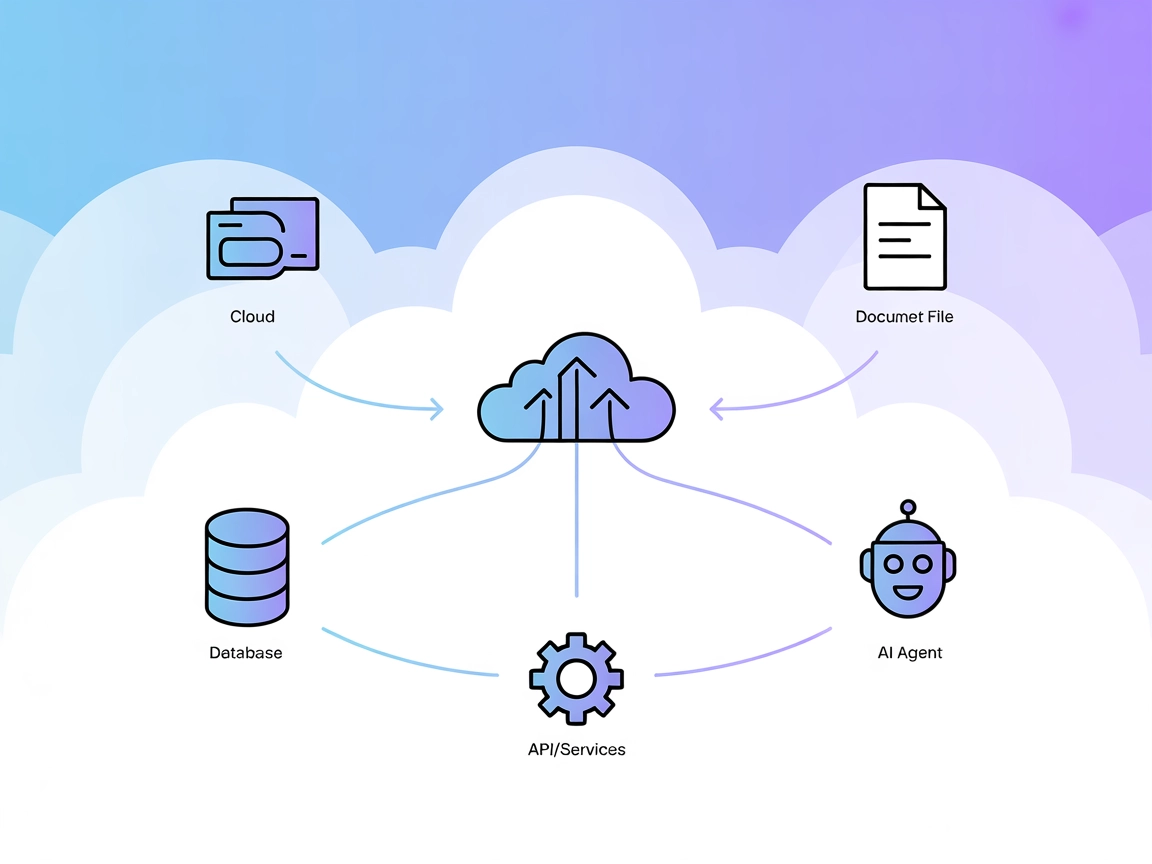
The Model Context Protocol (MCP) Server bridges AI assistants with external data sources, APIs, and services, enabling streamlined integration of complex workfl...
The mcp-teams-server brings Microsoft Teams functionality to FlowHunt via the Model Context Protocol (MCP), enabling AI assistants to read, create, and reply to...
Cookie Consent
We use cookies to enhance your browsing experience and analyze our traffic. See our privacy policy.