AI Content Brief Tools Compared: FlowHunt vs Surfer SEO vs Clearscope
An AI content brief tool comparison across FlowHunt, Surfer SEO, Clearscope, Frase, and NeuronWriter — brief quality, SEO depth, writer usability, and pricing.
Most comparisons of AI content brief tools test the wrong thing. They test for which one writes the prettiest sample brief. What actually matters for a content team
is what each tool outputs, how deep its SEO signal goes, how easy it is for a writer who isn’t an SEO specialist to follow, and what it costs once you’re past the entry tier.
We compared FlowHunt’s AI content brief toolagainst Surfer SEO, Clearscope, Frase, and NeuronWriter, the four of the most established names in content optimization, on exactly those four dimensions, using each vendor’s own documentation, published output samples, and independent G2 reviews.
The Comparison Criteria
We focused on these four criteria:
Brief output — what you actually get. Do you get a finished brief, a live-scored editor, or both?
SEO depth — whether the tool does keyword/NLP-level optimization, structural competitor analysis, or both.
Writer usability — how much SEO knowledge a writer needs before the tool is useful.
Price — each tool’s self-serve (non-custom-quote) plan, since that’s the realistic ceiling most content teams actually pay.
FlowHunt Content Brief Generator: Results
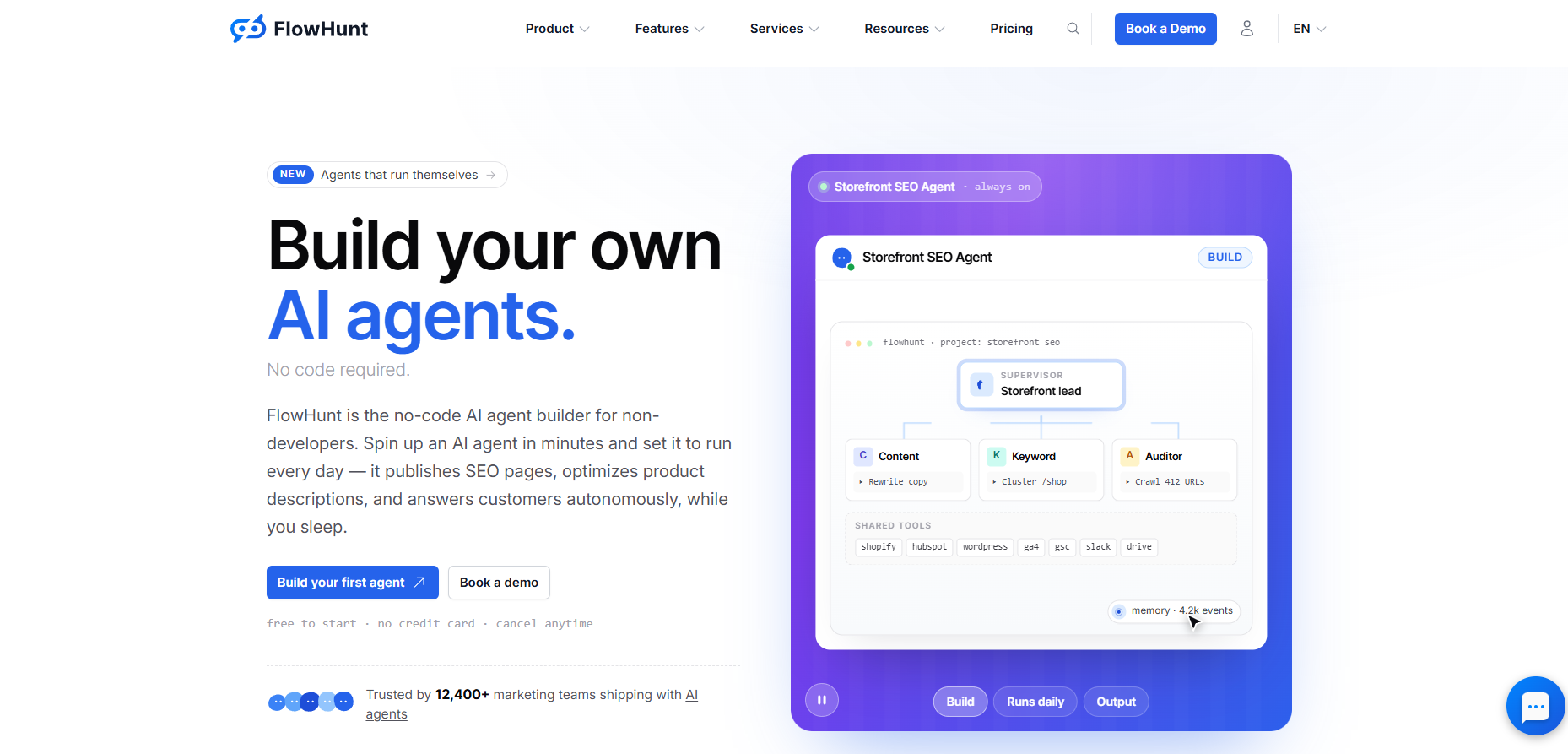
FlowHunt’s Content Brief Generator
takes a single keyword, runs a live Google search to find the top-ranking pages, retrieves their content, and has an AI agent analyze that structure before generating an SEO-friendly title, meta description, and a section-by-section outline with a description of what each paragraph should cover. Any custom sections, brand voice and other alterations can be easily made by editing the underlying agent flow.
It delivers a finished brief, without a live editor. There’s no dashboard to learn, no content score to interpret, and no separate content-optimization product to buy once the brief is done. While that simplifies things a lot, it’s also the main tradeoff: there’s no live score to check your own judgment against, so the user has less visibility into why the outline is shaped the way it is and has to trust the AI’s read of the SERP more than they would a tool that shows its scoring. It’s positioned to hand a writer a clear starting point, not to grade their draft afterward.
TIP: Solo, short-staffed, or just want a draft to react to instead of a blank page? FlowHunt’s AI Blog Writer
picks up the same brief and writes the draft for you.
Ready to grow your business?
Start your free trial today and see results within days.
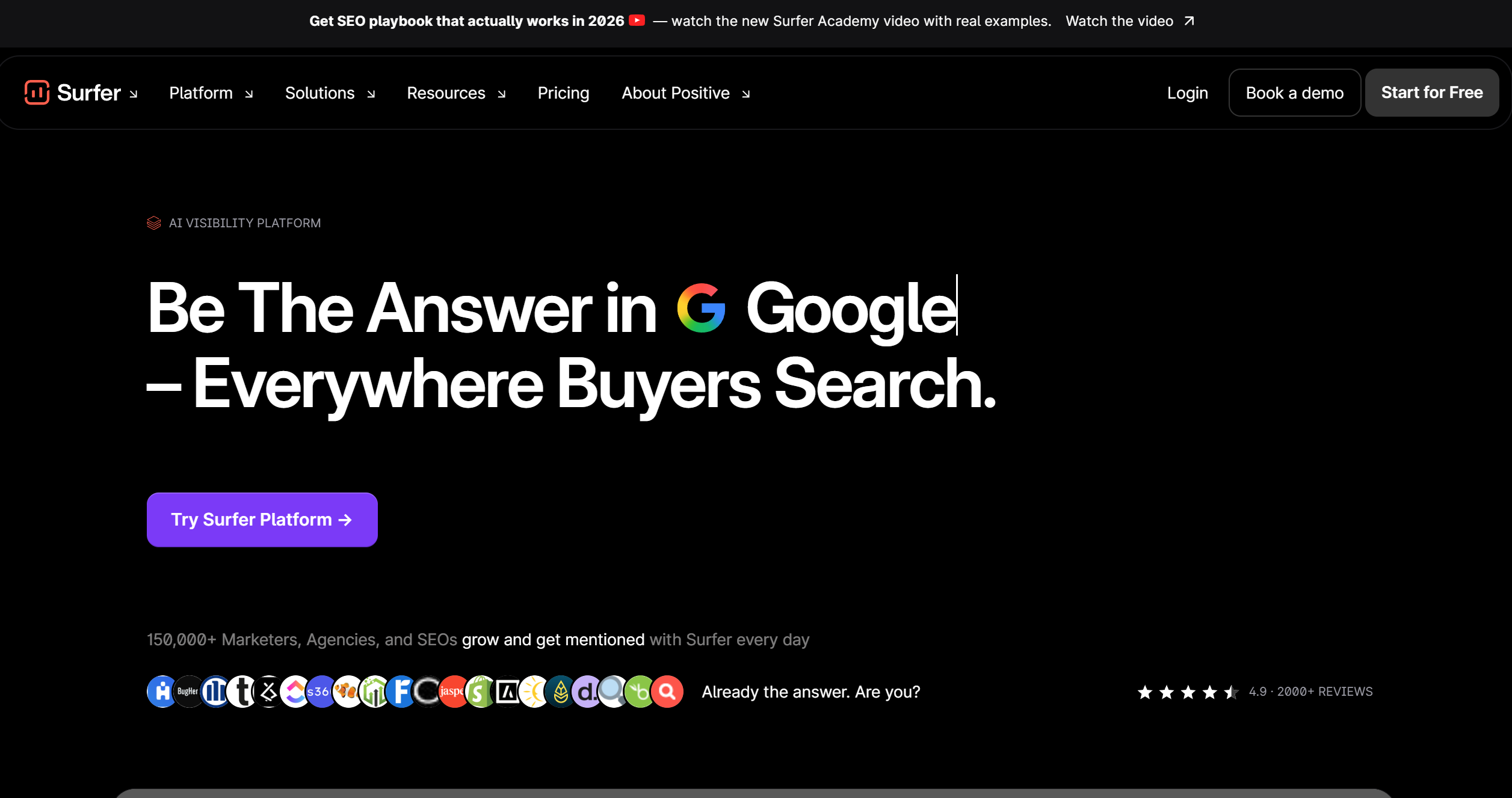
Surfer’s flagship is the Content Editor, a real-time writing workspace that scores your draft 0–100 as you write against NLP-derived term targets. It’s the deepest live-optimization signal in this comparison, but reviewers and analysts note it exposes a lot at once — Content Editor, Topical Map, SERP Analyzer, AI Tracker, and Sites all in one workflow, which one comparison piece describes as difficult for beginners
. Surfer’s Pro plan adds coverage-gap analysis and 1-click internal linking on top of the base Content Editor, and also tracks up to 50 AI prompts across ChatGPT, Perplexity, Google, and Gemini.
Both integrations embed the Clearscope panel directly into the writer’s existing tool, pulling in term recommendations, content grade, and word count in real time as the draft is written. It’s the highest-rated tool in this group for ease of use, holding a 4.9/5 average on G2
, and its 2026 product has expanded into AI Drafting and Prompt Tracking across ChatGPT, Perplexity, and Gemini. Clearscope doesn’t charge per seat, either, so a founder, an editor, and a freelancer can share one account without extra licensing cost.
That being said, Clearscope is the most expensive tool in this comparison, and its plans are quota-boxed rather than usage-based. Even the $399/month Business tier caps out at 20 AI Drafts and 50 Topic Explorations a month. Go over, and additional pages cost $15–25/month each and additional drafts cost $20–50 each, on top of the base subscription. Clearscope also isn’t built ground-up as a brief generator the way FlowHunt or Frase are — its brief-like output is a byproduct of a term-recommendation and content-grading tool, not the primary product.
Join our newsletter
Get latest tips, trends, and deals for free.
Frase: Results
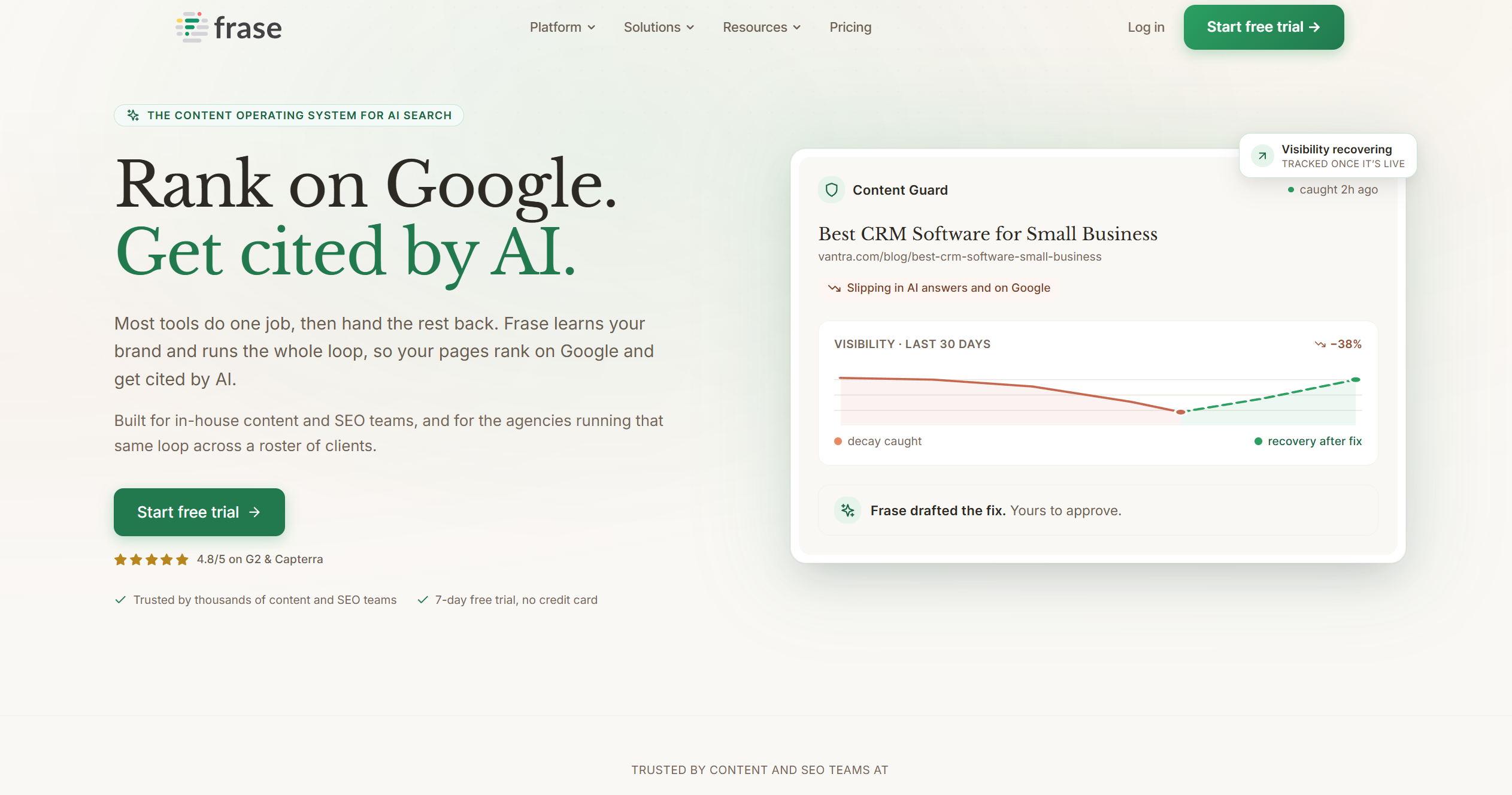
Frase’s pitch is a 90-second AI content brief, built from the same kind of top-ranking-page analysis the other tools use. The brief is then carried into an AI-assisted draft, an SEO score, and a separate GEO score tracking visibility in AI answer engines like ChatGPT and Perplexity. Of the five tools here, it’s the one most explicitly built around the brief-to-draft handoff rather than a scoring editor alone, and its entry-level Starter plan at $39–49/month is the cheapest way into that workflow.
Reviewers consistently note that Frase’s AI-generated outlines and drafts need a manual editing pass to match brand voice and editorial standards. The interface also packs a lot onto one screen, and new users report missing features in their first few weeks before the layout clicks.
NeuronWriter: Results
NeuronWriter runs the same basic playbook as the others. It pulls the top-ranking pages for a keyword, run NLP semantic analysis against them, and surface recommended terms, questions, and headings. It does so at the lowest price point in this comparison, with paid tiers starting at $23/month and its top self-serve tier, Diamond, at $117/month for 150 content analyses and API access. For a solo blogger or small team that wants Surfer-style NLP scoring without Surfer-level pricing, it’s the closest match here.
But that price gap shows up in polish and depth. Reviews consistently point to a steeper interface learning curve and more workflow friction than the more established names in this comparison. NeuronWriter is built primarily as an optimization and scoring tool, with content generation as a secondary feature rather than the core product. It’s also better suited to regular, higher-volume publishers who’ll use up its per-tier analysis quota than to occasional or low-volume use, where the cost-per-brief works out worse than it first appears.
Writer Usability: How Easy Is the Output to Follow?
For a writer with no SEO background, a finished brief is easier to act on than a scoring dashboard. FlowHunt’s outline arrives with a plain-language description under each heading. Frase makes a similar promise with what it calls a 90-second AI brief. Clearscope is the easiest of the live-editor tools to pick up, per its G2 ease-of-use standing, while Surfer’s broader feature surface means more of a learning curve before a writer is confident using it unsupervised. NeuronWriter sits in between with one dashboard, but still a live score to interpret.
SEO teams that want live term-density scoring while drafting: Surfer SEO or Clearscope — the deepest real-time optimization signal here, with Clearscope the easier of the two to onboard writers onto.
Budget-conscious solo bloggers or small teams: NeuronWriter — the cheapest premium tier among the dedicated content-optimization tools.
Teams already running other AI workflows — research, blog drafting, competitor gap analysis — on the same platform: FlowHunt, since the brief generator shares a plan with the rest of the toolkit instead of adding another single-purpose subscription.
Conclusion
There’s no single winner across all four criteria. Surfer and Clearscope go deeper on live keyword optimization, Clearscope and Frase are the easiest to hand to a writer with no SEO background, and NeuronWriter is the cheapest dedicated option. FlowHunt’s case is different from all four, as it’s the only tool here where the content brief is one feature inside a broader AI platform, priced accordingly, for teams that would rather not add a single-purpose SEO subscription just to get a structured outline.
Frequently asked questions
FlowHunt and Frase hand the writer a finished brief with title, meta description, and outline, with nothing else to interpret. Surfer SEO, Clearscope, and NeuronWriter instead put the writer inside a live scoring editor, which is powerful but requires understanding what the content score or term list actually means before it's useful.
Surfer SEO and NeuronWriter are both built around real-time NLP-based content scoring as you write, with Clearscope close behind on term recommendations and content grading. FlowHunt's Content Brief Generator doesn't score a draft's keyword density. Its research happens before writing starts, analyzing top-ranking pages to build the outline, not analyzing your text as you type it.
For a genuinely multi-person team, NeuronWriter's top self-serve tier (Diamond, $117/month) is the cheapest of the dedicated content-optimization tools compared here, with FlowHunt's Pro plan (€120/month, 10 teammates) priced similarly but covering FlowHunt's full AI tool suite beyond content briefs. FlowHunt's Starter plan (€50/month) is cheaper still, but it only includes a single teammate seat, so it isn't really built for a team of more than one.
Clearscope and Surfer SEO have the most direct integrations with native Google Docs add-ons and WordPress plugins that embed their editor into your existing writing tool. FlowHunt connects to Google Docs, Notion, WordPress and more through MCP servers, which is more flexible for routing output across tools but isn't a dedicated one-click plugin the way Clearscope's is.
It depends on how each tool caps usage. Clearscope's top tier caps out at 20 AI drafts a month even on its $399 Business plan, Surfer's Pro plan allows 360 documents, Frase's Scale plan allows 100 articles, and NeuronWriter's Diamond tier allows 150 analyses. FlowHunt uses a shared credit pool instead of a fixed briefs-per-month cap, so volume scales with credit usage rather than hitting a hard ceiling — worth watching since that same pool is shared with every other FlowHunt tool you run, but not bound by a fixed brief count the way the others here are.
Generate a Complete Content Brief in Minutes
FlowHunt's Content Brief Generator turns a keyword into an SEO-friendly title, meta description, and paragraph-by-paragraph outline — bundled with the rest of FlowHunt's AI toolkit on the same plan.
Content Brief Generator: Build a Writer-Ready Brief in 5 Minutes
FlowHunt content brief tutorial covering the full workflow, from entering your target keyword to reviewing the generated title, meta description, and outline.
AI Product Review Generator with SEO & Content Brief
Discover the AI Product Review Generator by FlowHunt.io, a powerful tool for creating SEO-optimized product reviews. Save time and enhance engagement with detai...
FlowHunt vs Jasper vs Writesonic vs Koala Writer vs Frase (2026)
We ran the same 5 briefs through FlowHunt, Jasper, Writesonic, Koala Writer, and Frase. Here's the output quality, SEO-readiness, editing time required, and pri...
8 min read
AI
Content Writing
+3
Cookie Consent We use cookies to enhance your browsing experience and analyze our traffic. See our privacy policy.