


How Content Teams Use AI Blog Agents to Publish 3x More
This is how both solo marketers and agency teams use AI workflows to produce real results without sacrificing content quality or brand voice.
7 min read
AI
Content Writing
+4
An AI content brief gives every writer the same SEO-informed starting point. Here’s how agencies, in-house teams, and SEO teams use it to cut revision rounds from three to one.
Content often gets stuck on briefs that leave too much up to interpretation. There’s no clear intent, no visibility into what competitors already cover, and a structure the writer had to invent themselves . One agency case study found that after replacing an informal, verbally-communicated briefing process with a structured, SERP-informed one, revision requests dropped by more than 60% within two production cycles .
An AI content brief for content teams gets every writer to that same structured starting point automatically, without an agency having to build the framework by hand first. Here’s how five kinds of content teams use it, and how it collapses three rounds of revisions down to one.
Growth Rocket’s breakdown of agency briefing failures points to the same four root causes across most teams:
The costs compound at scale. For an agency producing 40 pieces a month across 10 clients, one extra revision round per piece adds up to 80–120 unplanned hours a month. At a $75/hour blended rate, that’s $6,000–$9,000 a month in eroded margin , according to the same analysis. None of that is a writer-quality problem. It’s a briefing-system problem, and it’s exactly what an AI content brief workflow is built to fix.
The scenario: An agency manages a rotating pool of freelance writers across multiple clients, none of whom share institutional knowledge of the brand or the competitive landscape.
The problem: Freelancers are the group most exposed to a bad brief. One survey of freelance B2B SaaS writers found unclear or missing briefs among their most common complaints . Without a clear structure, they’re left guessing at depth, angle, and what’s already been said on the topic.
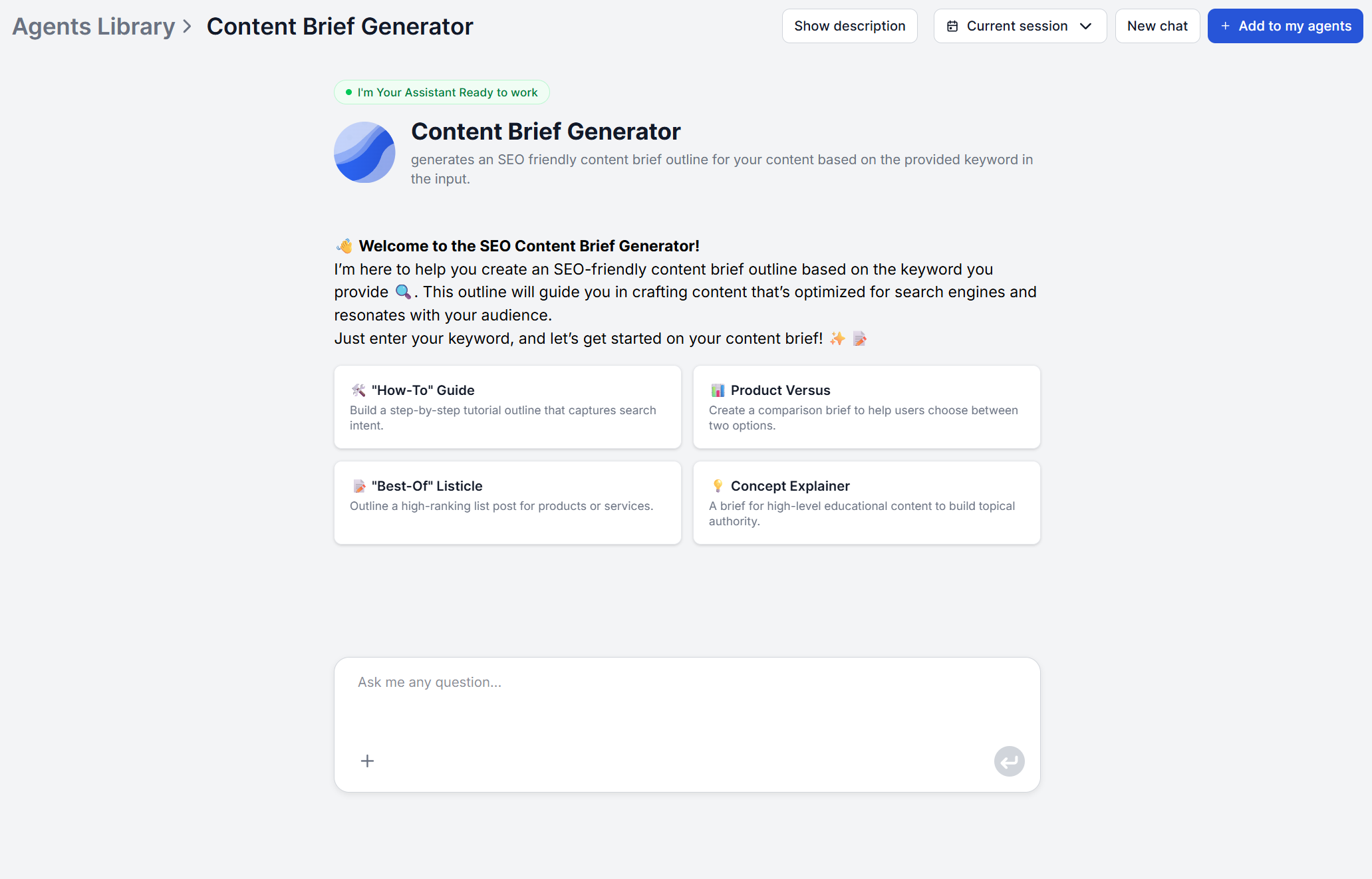
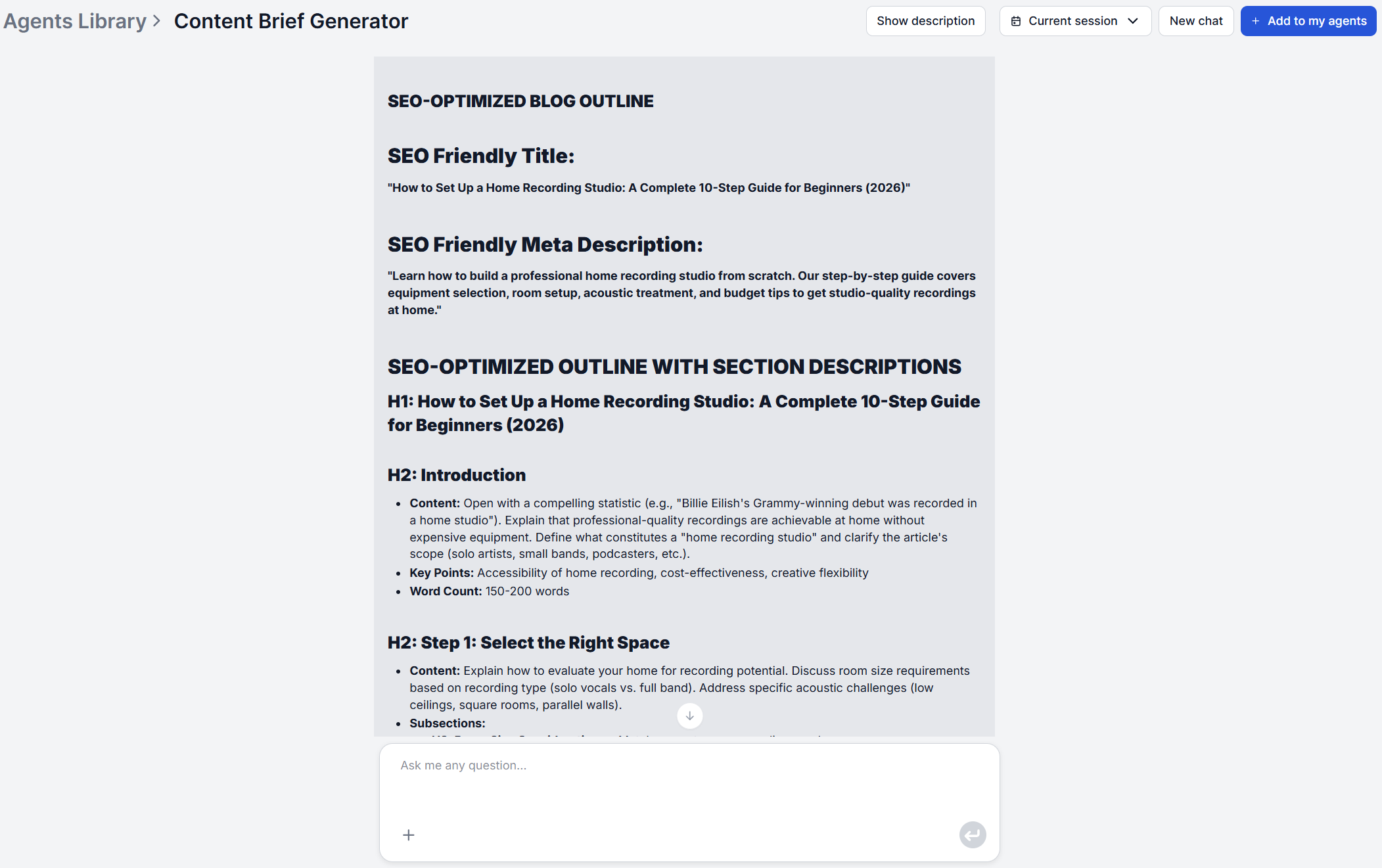
With an AI content brief: Every freelancer gets the same SEO-informed foundation. The brief includes an SEO title, meta description, and a paragraph-by-paragraph outline generated from what’s actually ranking for the keyword instead of a one-line assignment dashed off between calls. In a similar case, one B2B SaaS agency scaling from 8 to 30 pieces a month after adopting a structured, SERP-informed brief system saw the following shift within 90 days, according to Growth Rocket’s case write-up :
| Metric | Before | After |
|---|---|---|
| First-draft acceptance rate | 42% | 78% |
| Revision rounds per piece | 2.3 | 0.8 |
| Organic clicks (new brief-system content) | baseline | +61% |
That case study built its brief system by hand. They went through discovery sessions, template redesign, and mandatory SERP analysis before handoff. Generating that same structural foundation with the Content Brief Generator takes minutes instead of a framework redesign.

Start your free trial today and see results within days.
The scenario: A two-person content team needs to double the publishing volume this quarter with no headcount approved.
The problem: Manual research for every brief is the bottleneck long before writing capacity is. A content lead can only research and outline so many keywords a week.
With an AI content brief: The content lead generates the brief in minutes instead of hours , and gets to focus on review and prioritization. For topics where the team is comfortable letting AI handle both the brief and a first draft, pairing the brief with the AI Blog Writer lets a small team cover more topics without adding a writer for every new outline.
The scenario: An SEO team has a spreadsheet of 200 keywords from their keyword research pass, ranked by volume and difficulty, and needs briefs for the next 20 before the next sprint.
The problem: Keyword research tools return metrics, not a structure a writer can follow. Turning a ranked keyword list into 20 actual briefs is still a manual outlining job.
With an AI content brief: Once the SEO team has picked which keywords are worth writing for, the Content Brief Generator turns each one into a title, meta description, and outline without repeating the research step for every keyword. The keyword tool decides what’s worth writing and the AI brief generator decides how to write it.
Get latest tips, trends, and deals for free.
The scenario: A content manager oversees writers across a wide range of topics and needs consistent quality regardless of which writer is assigned.
The problem: Quality varies by writer skill and topic familiarity when the brief is the only shared reference point, and older published pieces slowly drift out of step with what competitors cover.
With an AI content brief: A consistent brief format, with the same sections and same level of paragraph guidance, removes one major source of quality variance between writers. For pieces that are underperforming rather than new, running the live page through Webpage Content GAP Analysis against a specific competitor URL surfaces exactly which headings and long-tail keywords are missing.
The scenario: An early-stage startup has no dedicated content or SEO hire, but the founder or a generalist marketer needs to start publishing consistently.
The problem: Building a briefing process from scratch with templates, competitor research, and keyword mapping, takes longer than most early teams can justify before they need the content live.
With an AI content brief: A single keyword produces a structured starting point without requiring anyone on the team to have built a briefing framework first. It’s a lean way to get the same structural discipline larger teams spend months building. Since the outline is generated from what’s ranking right now rather than generic SEO advice, the founder doesn’t need SEO expertise to know the brief is at least aimed at the right target.
TIP: No dedicated writer yet, tight on time, or just testing whether a topic is worth committing a person to? The AI Blog Writer can take the same keyword straight from brief to draft.
The teams that cut rewrites aren’t the ones with better writers. They’re the ones who stopped leaving structure, intent, and competitive awareness up to the writer to figure out mid-draft. Whether it’s an agency onboarding a new freelancer, an in-house team told to do more with the same headcount, or a startup with no content hire at all, the fix looks the same. Get every piece to the same SEO-informed starting point before anyone writes a word. An AI content brief gets there in minutes, which is the difference between a briefing system a team has to build and one they can just turn on.
Maria is a copywriter at FlowHunt. A language nerd active in literary communities, she's fully aware that AI is transforming the way we write. Rather than resisting, she seeks to help define the perfect balance between AI workflows and the irreplaceable value of human creativity.

FlowHunt's Content Brief Generator turns a keyword into an SEO-friendly title, meta description, and paragraph-by-paragraph outline — the same structured foundation every time, for every writer on your team.
This is how both solo marketers and agency teams use AI workflows to produce real results without sacrificing content quality or brand voice.

An AI content brief generator turns a single keyword into an SEO title, meta description, and paragraph-by-paragraph outline in minutes. Here's exactly how it w...
An AI content brief tool comparison across FlowHunt, Surfer SEO, Clearscope, Frase, and NeuronWriter — brief quality, SEO depth, writer usability, and pricing....
Cookie Consent
We use cookies to enhance your browsing experience and analyze our traffic. See our privacy policy.