


Why Your Blog Isn't Growing And How To Fix It
Most blogs don't fail because of bad writing, but because of inconsistent publishing, wrong keyword targeting, and no topical authority. Here's how AI content a...
8 min read
AI
Content Writing
+4
Why content doesn’t rank usually traces back to the brief, and less often to the actual writer. Wrong intent, shallow content, missing subtopics, or no competitor gap analysis are the usual culprits. Here’s how to diagnose and fix them.
Most content that fails to rank isn’t badly written. It’s badly briefed. A skilled writer given the wrong intent, no visibility into competitor coverage, and no sense of which subtopics the query actually requires will still produce a page that doesn’t rank. Because intent mismatch is the most common reason technically strong pages fail to rank , and that mismatch gets locked in before a single sentence is written.
Understanding why content doesn’t rank starts with diagnosing the brief, not editing the draft. Here are the five brief failures behind most ranking problems, and how to fix each one systematically.
Every one of these failures happens at the briefing stage, which is exactly why no amount of editing fixes them after the fact:
Once a piece is published with one of these baked in, a copyediting pass won’t fix it . The structure has to change, and often the entire angle.
Hundreds of technically optimized pages with strong backlinks fail to rank simply because they’re the wrong content type for the query. For example, a service page targeting “how to” searches, or a blog post targeting “buy” searches. There are four core intent types: informational, navigational, commercial investigation, and transactional. Each requires a fundamentally different kind of page, not just different keywords sprinkled into the same format.
The most reliable way to identify true intent is reading the current top five results for the keyword, since that’s what Google has already decided matches the query. A comparison post with a table and a buyer’s checklist ranks for commercial-investigation queries and a definitional explainer with clear structure ranks for informational ones. Mixing the two, or guessing which one a keyword calls for, is one of the fastest ways to write a page nobody was looking for.
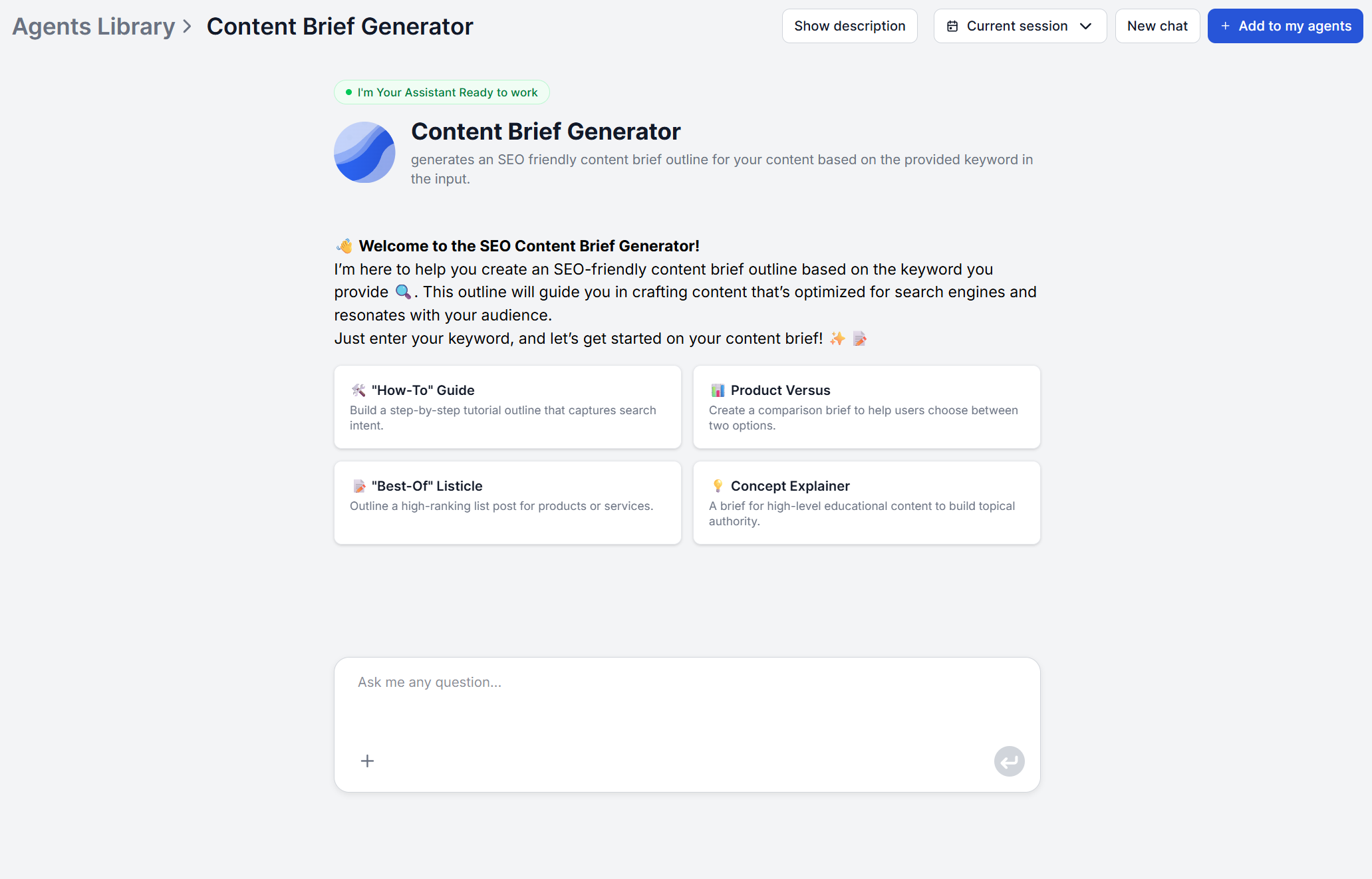
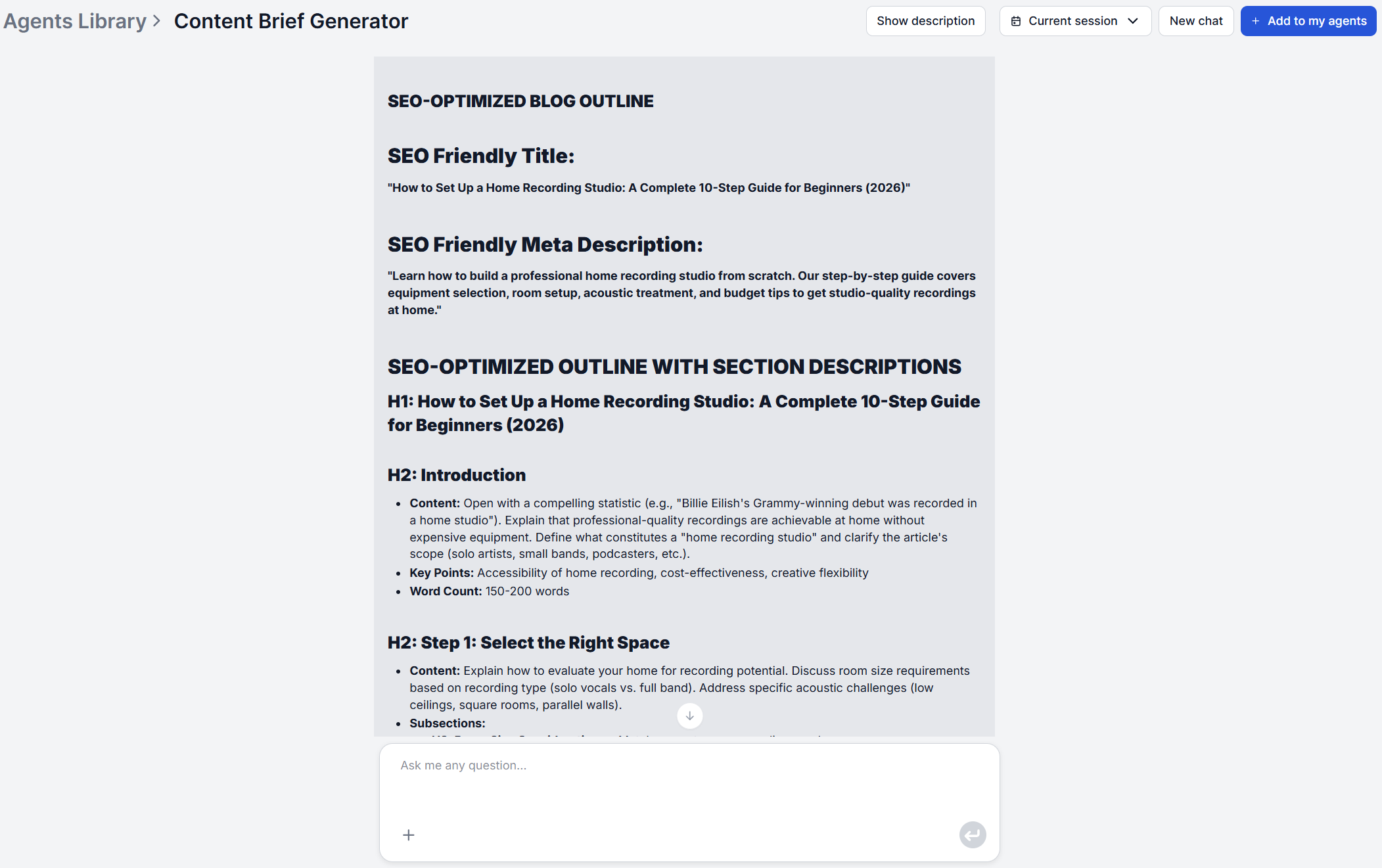
That’s precisely the first step FlowHunt’s Content Brief Generator automates. It runs a live Google search for the keyword and analyzes what’s actually ranking before generating anything, rather than guessing at intent from the keyword text alone.

Start your free trial today and see results within days.
A brief written from general SEO best practices instead of the actual SERP produces generic advice, not a page built to outrank anything specific. If you don’t know what the top three competitors already cover, you can’t tell whether your outline closes a gap or just repeats what’s already out there.
For a fast, whole-brief pass, the Content Brief Generator’s structure analysis of top-ranking pages covers this. For a specific, high-priority page where you need heading-level precision against one named competitor, Webpage Content GAP Analysis goes deeper, comparing your actual headings against a competitor URL and returning 5–10 long-tail keyword suggestions per paragraph.
Google’s evaluation of content increasingly rewards complete coverage of a topic, not just the presence of the primary keyword. Research on topical authority found that pages ranking #6–#10 with strong topical authority get cited 2.3 times more by AI systems than pages ranking #1 with weak topical authority , with topical authority (r=0.41) far outpacing domain authority as a predictor of AI citation. A separate analysis found that pages with high topical authority gain traffic 57% faster than pages with low authority , citing a Graphite study on the pattern.
A brief with a bare list of headings and no guidance on what each section should cover leaves subtopic completeness entirely up to the writer’s judgment on that day. FlowHunt’s brief avoids that by attaching a description of what each paragraph should contain, informed by the actual structure of what’s ranking rather than a heading list alone.
Get latest tips, trends, and deals for free.
A piece written for someone doing early research reads completely differently from one written for someone ready to buy, even if both target the same keyword. When the brief doesn’t specify who the reader is and where they are in the decision process, the writer defaults to a generic tone that serves neither audience well.
This is a failure mode no SERP analysis fully solves on its own, since search results show what content type wins, not who your specific business needs that content to speak to. Two competitors ranking for the same keyword might be writing for entirely different readers. Matching the winning content type (Failure 1) isn’t the same as matching the winning audience. Who the reader is, what they already know, and what happens after they read the page has to be a part of the brief, and rechecked by a human editor.
A brief built purely from “what the top three competitors cover” produces content that matches them, not content that beats them. If every brief in a content calendar just mirrors the current SERP, the result is competitive parity at best, but never a reason for Google, or a reader, to prefer this page over the ones it was modeled on.
The fix is a deliberate editorial step after the AI-generated structure exists. Add proprietary data points, a genuinely different framework, or a specific point of view the top-ranking pages don’t have. An AI brief gets you to parity fast, but the differentiating angle is still a human call.
Three of the five failures above are exactly what live, SERP-grounded AI briefing is built to catch. Intent (Failure 1) and competitor coverage (Failure 2) are addressed by analyzing what’s actually ranking before writing the brief. Subtopic completeness (Failure 3) comes from generating outline sections with paragraph-level guidance grounded in that same competitor analysis.
TIP: Do you have pages that are already published but underperforming? Try the Blog Improver Agent . It retrieves the existing URL, cross-references it against live search results, and rewrites the structure, data, and SEO formatting in one pass.
TIP: Writing something net-new instead, and no writer free to take it on? The AI Blog Writer can take the same keyword this brief was built from and produce a full draft on its own.
Failures 4 and 5 — the audience/funnel stage and differentiating angle — sit outside what any SERP-based tool can infer on its own. No amount of competitor analysis tells an AI who your specific reader is or what proprietary angle your business can bring that competitors can’t. You can, however, brief the AI on your product and make sure it searches for these differentiating factors. Either way, you should have a human editor fact-check and augment these.
In practice, that means a repeatable two-step process rather than a single tool call. Generate the SERP-grounded brief first to eliminate Failures 1 through 3, then run a short editorial review to confirm the audience and funnel stage match your actual buyer, and add the one thing your competitors’ top-ranking pages don’t have. Skipping the second step is how teams end up with technically correct content that still doesn’t outrank anyone.
If content isn’t ranking, the draft shouldn’t be the place to start looking. Check the brief first. Was it built from what’s actually ranking, does it cover the full topic, and does it know who it’s for. Three of the five most common failures are solved by grounding the brief in a live SERP analysis instead of a template. The rest can be solved by a quick human editorial pass of the brief before it reaches the writer.
Maria is a copywriter at FlowHunt. A language nerd active in literary communities, she's fully aware that AI is transforming the way we write. Rather than resisting, she seeks to help define the perfect balance between AI workflows and the irreplaceable value of human creativity.

FlowHunt's Content Brief Generator analyzes what's actually ranking for your keyword before generating a title, meta description, and outline — so intent, structure, and subtopic coverage are handled before a writer starts.
Most blogs don't fail because of bad writing, but because of inconsistent publishing, wrong keyword targeting, and no topical authority. Here's how AI content a...

An AI content brief generator turns a single keyword into an SEO title, meta description, and paragraph-by-paragraph outline in minutes. Here's exactly how it w...
Not every blog post needs the same fix. See the six specific post types where blog content optimization AI delivers the fastest results, with before/after examp...
Cookie Consent
We use cookies to enhance your browsing experience and analyze our traffic. See our privacy policy.