AI Lead Generation Tools Compared: FlowHunt vs Apollo.io vs Lusha
We compared FlowHunt, Apollo.io, Lusha, ZoomInfo, and Cognism on list quality, data freshness, ICP filtering, integrations, and price on their paid plans. Here’s which AI lead generation tool comparison fits which team size, use case, and budget.
Picking the wrong lead generation tool costs your reps hours working a list that was never going to convert
. For this AI lead generation tool comparison, we looked at Apollo.io, Lusha, ZoomInfo, FlowHunt’s Outbound Lead Generation assistant, and Cognism. We compared the tools on list quality, data freshness, ICP filtering depth, integrations, and price. Here’s which one actually fits your team size, use case, and budget.
What We Compared and Testing Criteria
This sales prospecting tool comparison is built from each vendor’s own product documentation and pricing pages, plus independent 2026 reviews, user-reported testing, and community discussion. Where a claim comes from a vendor’s own marketing, we’ve flagged it as such, where it comes from independent testing, we’ve noted that too, because the two frequently disagree.
FlowHunt Outbound Lead Generation: Results
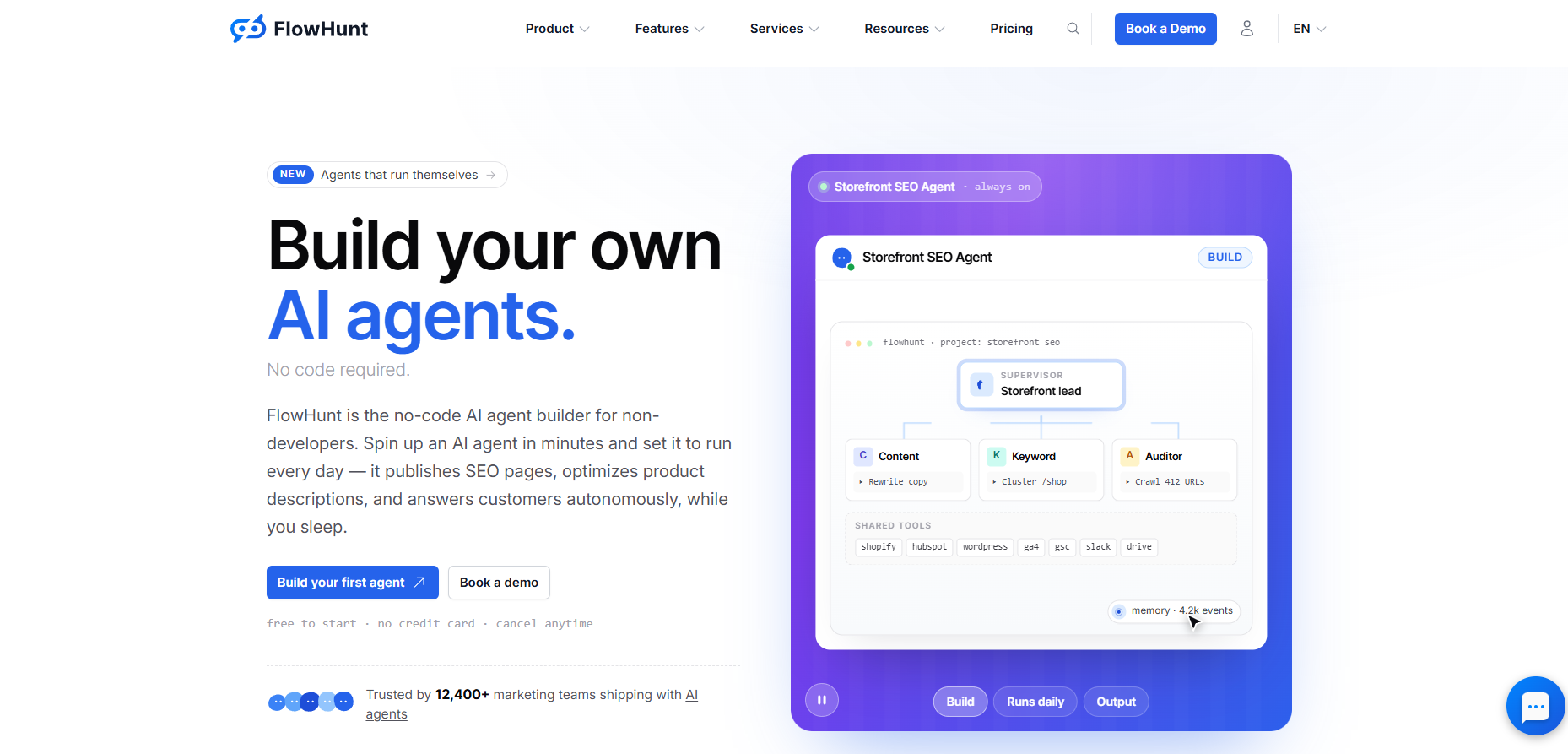
FlowHunt’s Outbound Lead Generation
assistant takes a niche and a location as input and returns structured company profiles, identified decision-makers, and their publicly available contact channels. It only surfaces verifiable public information, and because it runs a live research pass each time rather than querying a static database, results always reflect the company’s current online presence.
The trade-off is the scope, as there’s no self-serve filter UI for job title or company size the way a database product offers. The targeting happens through the niche and location you specify, and through customizing the underlying flow if you need different roles or output fields.
Ready to grow your business?
Start your free trial today and see results within days.
Apollo is built around a pre-existing contact database, reportedly sourced through a mix of proprietary web scanning, third-party data providers, and a contributor network built from customer usage of features like Email Finder. Its native integrations cover Outreach, Salesloft, and a bidirectional HubSpot sync that pushes sequence activity to the CRM timeline.
Independent 2026 testing tells a more mixed story than Apollo’s own marketing. Real-world bounce rates on “verified” contacts have been reported at 15-38% by cold-email communities and reviewers, and deliverability closer to 65-73% rather than the 96% figure that measures Apollo’s internal verification step rather than actual inbox delivery.
Lusha: Results
Lusha positions itself as a light-weight contact reveal and enrichment tool, sourcing business contact data from public sources rather than purchasing from third-party data brokers. It integrates natively with Outreach, Salesloft, and HubSpot with field mapping, though it has no native sequencing of its own.
Lusha’s self-reported accuracy (98% email deliverability, 85% phone accuracy across 280M+ contacts) is higher than independent tests have found. One March 2026 test of 300 B2B contacts returned emails for only 31% of lookups, with roughly 89% of the emails found being deliverable, and users commonly report 80-90% email accuracy and 70-80% phone accuracy in practice.
Join our newsletter
Get latest tips, trends, and deals for free.
ZoomInfo: Results
ZoomInfo is the largest and most enterprise-oriented of the group, with native integrations across Salesforce, HubSpot, Outreach, and Salesloft, plus its own built-in sequencer called Engage. ZoomInfo markets 93% email deliverability for C-suite and VP-level contacts specifically, though independent reviews report meaningfully higher bounce rates once you move beyond that top-of-org segment.
On freshness, ZoomInfo claims continuous updates, but independent sources describe actual refresh cycles ranging from monthly to 6-12 months depending on record type. Enterprise and high-profile contacts get refreshed far more often than mid-market and SMB records.
Cognism: Results
Cognism’s differentiator is Diamond Data, a phone-verified subset of its database (roughly 10M of its 440M records) marketed around EU-compliant, consent-aware sourcing and a claimed 98% accuracy rate on that verified subset specifically. It integrates natively with Salesforce, HubSpot, Outreach, Salesloft, Microsoft Dynamics, and Bullhorn.
Independent testing found that outside the Diamond-verified subset, a larger share of mobile, direct-dial, and landline numbers in Cognism’s broader database were incomplete, which is the same pattern seen across this category. The verified, premium-priced subset performs far better than the bulk database it sits inside.
Data Quality and Freshness Comparison
Tool
Refresh model
Vendor accuracy claim
Independent finding
FlowHunt
Live research per query, no static database
Public info only, no fabrication
N/A — no persistent database to test
Apollo.io
Continuously updated web index + contributors
~96% verification accuracy
15-38% real-world bounce rates reported
Lusha
Continuously updated public-source database
98% email / 85% phone accuracy
~31% lookup hit rate, 80-90% accuracy on found contacts
Diamond Data (verified subset) vs. broader database
98% on Diamond-verified subset
62.5% of non-Diamond mobile/direct numbers reportedly incomplete
The pattern across every database-model competitor is the same. The vendor’s headline accuracy number describes their best-verified subset, not the average record you’ll actually pull. Any lead database comparison that stops at the marketing page rather than independent testing will overstate real-world accuracy across the board. FlowHunt’s live-research model sidesteps that gap structurally, since there’s no aging database record to go stale between your query and the result. The trade-off is that it doesn’t give you a pre-built database to browse before you commit to a search.
ICP Filtering and Targeting Depth
Apollo, ZoomInfo, and Cognism all center their product on a searchable database with granular filters. Lusha offers a similar but lighter filter set, tuned more for individual contact lookup and browser-extension enrichment than bulk list building. FlowHunt filters primarily on niche and location as inputs, then produces company size and specialization as part of each output profile rather than as a pre-search filter.
For teams whose targeting logic is genuinely just “job title X at companies of size Y,” a filterable database is the faster path. For teams targeting a specific, narrower niche where the research and profiling work is the bottleneck, letting an agent do the discovery and profiling in one pass
removes a step the database tools still leave to you.
Price Comparison by Team Size
All figures below are for each vendor’s standard paid plans — no free tiers included, since FlowHunt doesn’t offer one to compare against.
Tool
Entry paid plan
Cost for a team of 5
FlowHunt
€50/mo (Starter, 1 teammate)
€120/mo total (Pro plan, up to 10 teammates, shared credit pool)
Apollo.io
$49/user/mo annual (Basic)
~$245-395/mo annual, depending on tier (Basic to Professional)
Lusha
$37.45/user/mo annual (Starter)
~$187-262/mo annual, depending on tier (Starter to Pro)
ZoomInfo
~$14,995/yr (Professional, 3-seat minimum)
$15,000-25,000+/yr minimum, before add-ons
Cognism
Custom quote (platform fee + per-user)
~$22,500-37,500+/yr (platform fee + 5 users)
Which Lead Generation Tool Should You Use?
There’s no single best B2B lead generation tool across every team size and use case. The right pick comes down to which one matches the specific problem you’re solving:
Choose Apollo.io if you want a self-serve, filterable contact database with native sequencing built in, at the most accessible price point of the database-model tools.
Choose Lusha if you need lightweight, affordable contact reveals for targeted one-off lookups rather than bulk list generation.
Choose ZoomInfo if you’re an enterprise team that needs the largest database in the category and a single platform that handles prospecting and outreach together.
Choose Cognism if your motion is phone-first and EU-focused, where Diamond Data’s verified mobile numbers and compliance-first sourcing justify the premium.
Beyond List Building
Whichever tool generates your list, the list itself is only the first step. For accounts that clear your bar and warrant a deeper look before outreach, Company Analysis
extends the research into funding, leadership, and competitive position — useful for ABM or any account large enough to justify the extra few minutes. And for prioritizing which accounts on a list to work first, an AI Social Listening
pass can surface which target companies are actively discussing a relevant pain point or a competitor right now, rather than working the list in the order it was generated.
The Bottom Line
The compared tools are all a good pick, but each is built for a different starting point. Apollo, Lusha, ZoomInfo, and Cognism all put a searchable, pre-built database in front of you and charge per seat or per contract for the privilege of filtering it. FlowHunt skips the database entirely and runs a fresh, targeted research pass against the niche and location you give it.
If your team already thinks in filters, the database-first tools will feel more familiar. If the bottleneck is that your niche is specific enough that a generic database returns more noise than signal, a live research pass is the faster path to a list you can actually work.
Want to see what a live, niche-and-location-based research pass turns up for your own market? Try FlowHunt Outbound Lead Generation
and compare the result against your current list.
Frequently asked questions
Apollo.io, ZoomInfo, and Cognism are the strongest here. All three are built around a searchable, filterable database where job title, seniority, department, company size, and technographic filters are the core interface. Lusha offers similar filters at a lighter weight. FlowHunt's Outbound Lead Generation returns a list containg all of these information, but the list has to be processed further with no self-serve filter UI in the same way. If granular filter-then-export is your primary workflow, the database-first tools have the edge.
By list price, FlowHunt's Pro plan (€120/month, supporting up to 10 teammates in one workspace) is the cheapest way to get 5 people access to lead generation, since the cost doesn't scale per seat. Among the seat-based tools, Lusha's Pro plan (~$52/user/month annual) is meaningfully cheaper than Apollo's Professional plan (~$79/user/month annual) for the same 5 seats. ZoomInfo and Cognism are priced for enterprise budgets, both costing $15,000 or more a year.
Lusha has the most independently verified compliance posture of the group, including ISO 27701 certification (a distinction it markets as unique among sales intelligence platforms), GDPR/CCPA compliance validated by two third-party auditors, and more. Cognism markets itself heavily around EU-compliant, consent-aware data sourcing for its Diamond Data product. Apollo and ZoomInfo both run enterprise compliance programs (Apollo holds ISO 27001 and SOC 2 certification), though their sourcing methods draw scrutiny in user and privacy discussions. FlowHunt doesn't maintain a persistent, resold contact database at all. It instead researches and surfaces publicly available information fresh for each query.
Apollo.io, Lusha, ZoomInfo, and Cognism all ship native, pre-built integrations for all three. ZoomInfo also goes a step further with its own built-in sequencer, Engage. FlowHunt has a native HubSpot integration, and connects to the other tools via MCP servers.
See What FlowHunt's Outbound Lead Generation Finds
Specify a niche and location and get structured company profiles, identified decision-makers, and publicly available contact details — generated fresh, not pulled from a static database.
10 Best AI Lead Generation Tools in 2026 (Ranked and Reviewed)
The best AI lead generation tools in 2026, ranked by capability, ROI, and ease of use. From AI-powered prospecting to automated outreach — find the right tool f...
We compared five of the best AI competitive intelligence platforms, FlowHunt, Crayon, Klue, Kompyte, and Battlecard, on product analysis depth, data freshness, ...
Best AI Agent Builder in 2026: 12 Tools Ranked and Reviewed
Ranked and reviewed: the 12 best AI agent builders in 2026. Comparison table, pricing, free tiers, and a clear verdict on which platform fits your use case.