

A2A MCP Server Integration
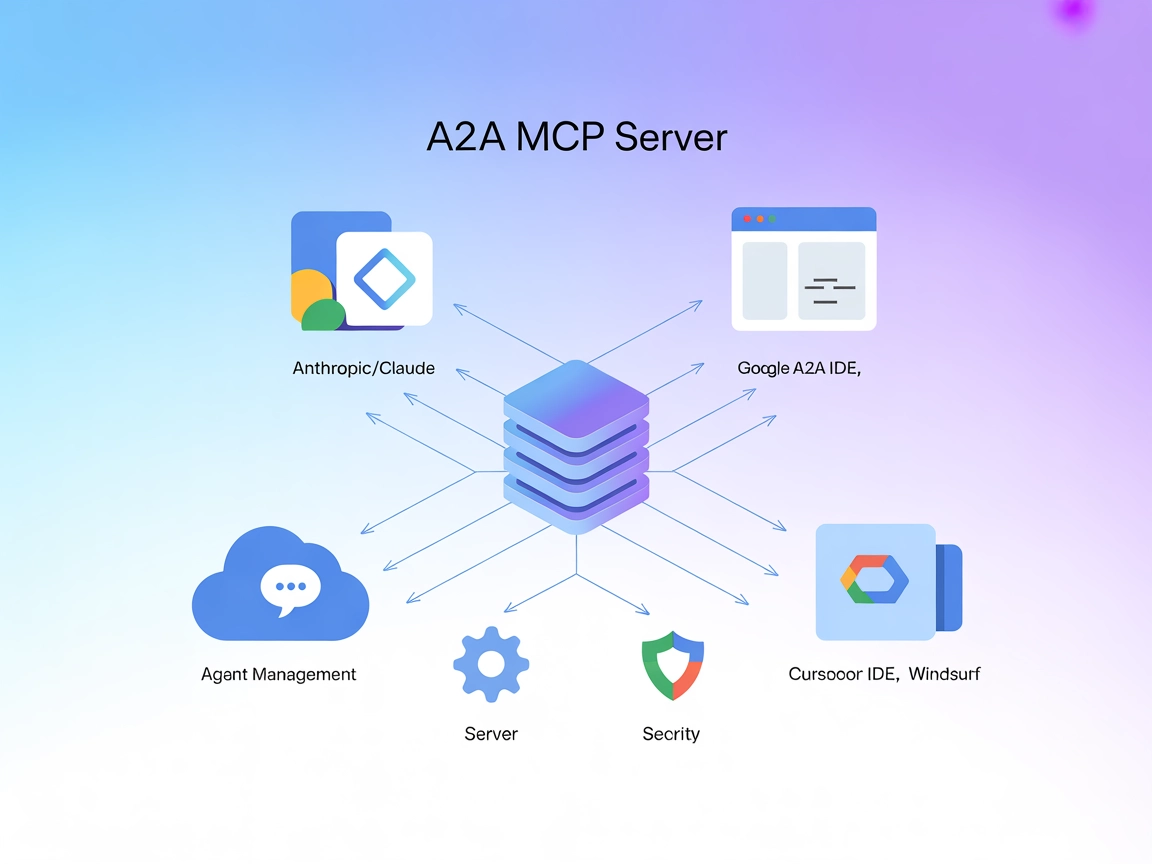
Integrate FlowHunt with the A2A MCP Server to unlock seamless interoperability between Anthropic's Model Context Protocol (MCP) and Google's Agent-to-Agent (A2A...
4 min read
AI
A2A MCP
+4
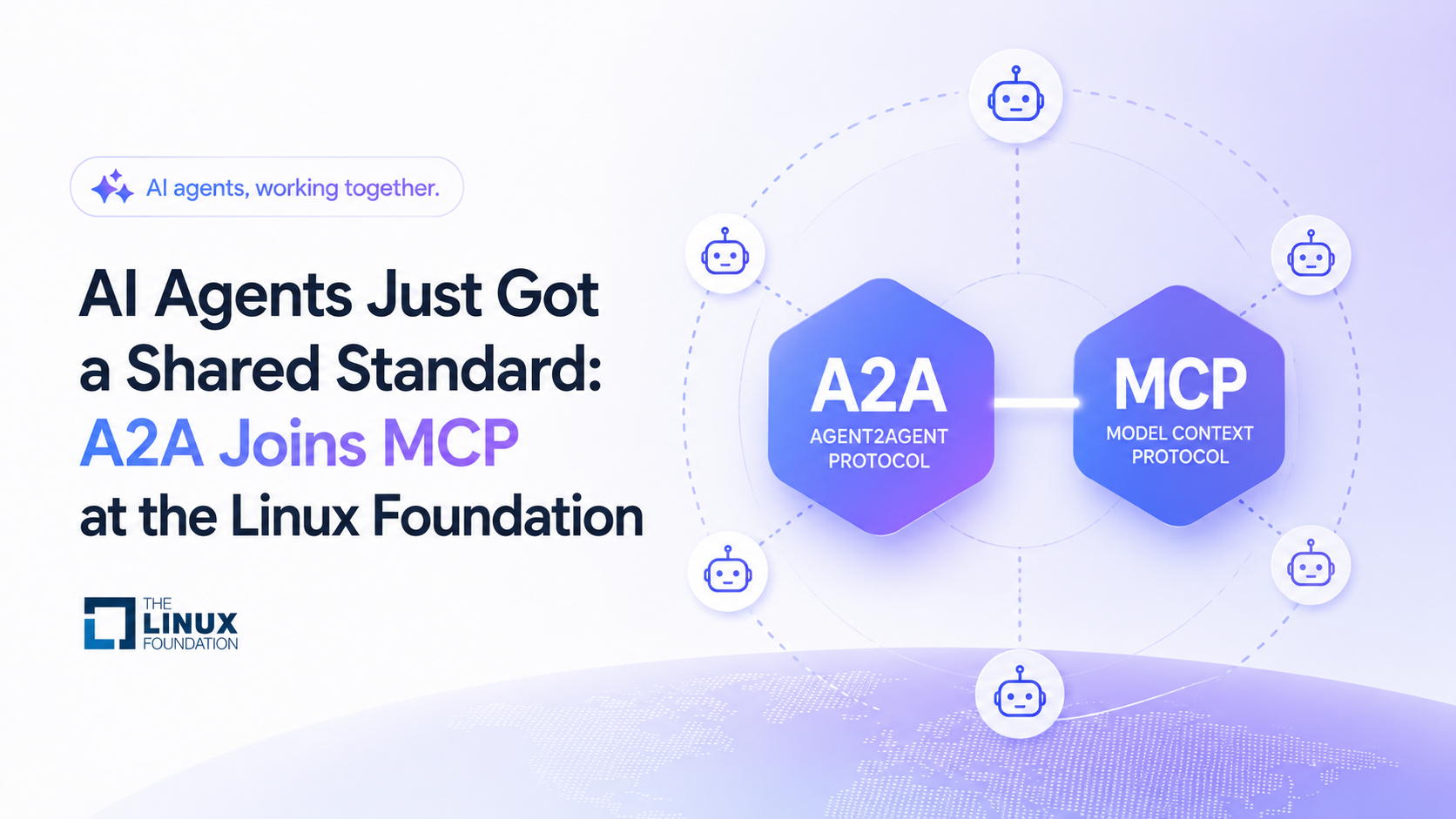
On August 20, 2026, Google donated its Agent2Agent protocol to the Linux Foundation’s Agentic AI Foundation, placing it alongside Anthropic’s MCP. Here’s what changed, who’s backing it, and what it means for anyone building AI agents.
For most of 2025, building AI agents meant picking a framework and largely staying inside it. Connecting an agent to a new tool, or getting two agents built by different teams to cooperate, usually meant custom glue code with no guarantee it would still work after the next model update. On August 20, 2026, that fragmentation lost a little more ground: Google Cloud formally donated its Agent2Agent (A2A) protocol to the Linux Foundation’s Agentic AI Foundation (AAIF), placing it under the same neutral roof as Anthropic’s Model Context Protocol (MCP). Two competing labs, two protocols, one governance structure — and a growing signal that the plumbing underneath AI agents is becoming shared infrastructure rather than a battleground.
The Agentic AI Foundation isn’t new — the Linux Foundation launched it on December 9, 2025, anchored by three founding contributions: Anthropic’s Model Context Protocol, Block’s Goose agent framework, and OpenAI’s AGENTS.md convention. That launch continued a pattern this blog covered in why Anthropic donated MCP to the Linux Foundation the same month: a lab giving up direct control of its own protocol so the rest of the industry would actually trust and build on it. What changed on August 20 is that A2A, the protocol Google built for letting independent agents discover and message each other, joined that same neutral home. It’s now governed alongside MCP instead of sitting off to the side as a Google-controlled spec that everyone else had to simply trust.

Start your free trial today and see results within days.
The two protocols aren’t rivals doing the same job — they cover different directions of the same problem. MCP standardizes the vertical connection: how one agent reaches the tools, APIs, and private data it needs to do anything useful. A2A standardizes the horizontal connection: how one agent finds and talks to another agent, even when the two were built on completely different stacks.
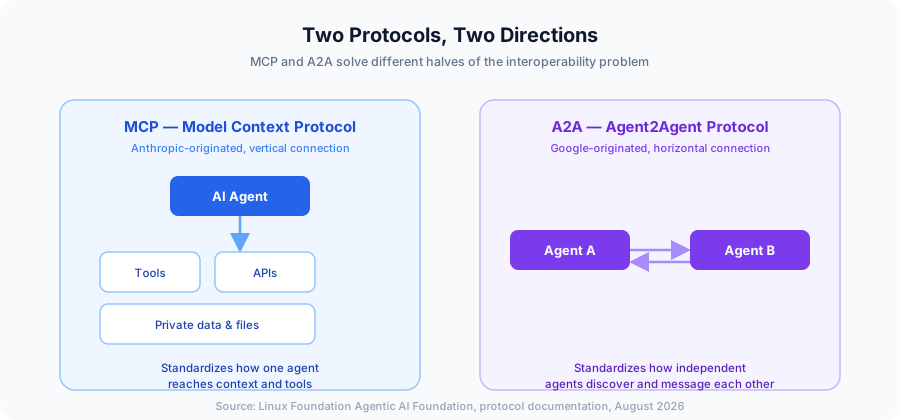
That distinction is why the two ended up in the same foundation instead of competing for the same slot. A production agent stack increasingly needs both: MCP to reach its own tools and data, A2A to hand off work to, or receive work from, an agent it doesn’t own.
The growth curve is the more telling number. AAIF launched with fewer than 40 organizations in December 2025. By August 2026, membership had passed 250, with platinum-tier backing from Amazon Web Services, Anthropic, Block, Bloomberg, Cloudflare, Google, Microsoft, and OpenAI — companies that compete directly on models, cloud infrastructure, and agent products, all funding the same neutral governance body for the protocols underneath.
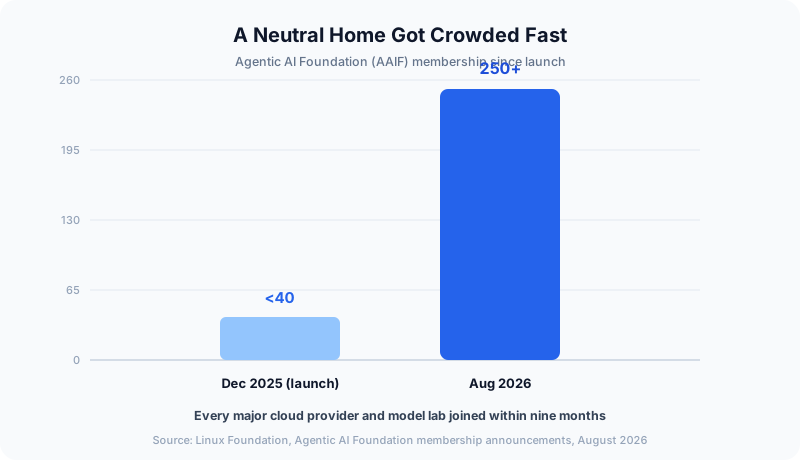
Beneath the platinum tier, gold and silver members span the rest of the stack that AI agents actually run on: developer tools, identity providers, observability platforms, and vertical software vendors, all with a stake in agents being able to reach their systems without a bespoke integration for every AI vendor.
FlowHunt's MCP support lets your AI agents reach the tools and data you already run, without locking your integrations to one vendor's roadmap.
Get latest tips, trends, and deals for free.
It’s worth asking why Google, Anthropic, OpenAI, and the major cloud providers agreed to govern shared protocols together at all, given how hard each is competing on models and agent products elsewhere. The answer is that a fractured integration layer is expensive for everyone building on top of it, including the labs. Every incompatible protocol is another format that tool builders, enterprises, and platform vendors have to support separately, which slows adoption for the entire category. Sharing MCP, A2A, Goose, and AGENTS.md under one foundation lets the labs keep competing on what actually differentiates them — model quality, reasoning, and agent capability — while treating the wiring between agents and their environment as common infrastructure, the same way the industry eventually did with Kubernetes or HTTP.
A shared governance structure is not the same thing as solved interoperability. Neutral ownership reduces the risk of a protocol war and gives enterprises more confidence that MCP or A2A will still be around in three years, but every platform still has to implement the specs correctly, and every deployment still needs the same operational discipline this blog has covered for MCP security checklist compliance — identity, isolation, tool validation, and safe deployment don’t come free just because the protocol is standardized. Interoperability at the specification level still depends on interoperability at the implementation level, and that part is on every team shipping agents, not on the foundation.
For anyone running agentic AI systems today, the practical takeaway is to build on the open standards rather than a single vendor’s proprietary integration format. Use MCP to connect agents to internal tools and data — whether through hosted MCP servers or infrastructure you run yourself — and watch A2A as agent-to-agent discovery matures — both protocols now report into the same neutral body, so betting on either is a bet on an ecosystem rather than one company’s roadmap. That matters even more as multi-agent AI systems move from research demos into production, since orchestrating specialized agents across teams and vendors is exactly the scenario A2A was built to standardize, and exactly the scenario that used to require custom integration work for every new pairing.
Two protocols built by direct competitors now sit under the same governance roof, backed by every major cloud provider and model lab, and membership nearly quintupled in nine months. That’s a meaningfully different trajectory than the fragmented, framework-locked agent tooling landscape of a year ago — and it comes on the heels of a summer where this blog has also tracked how quickly agent capability outpaces the guardrails around it, from AI agents breaking out of their test sandboxes to the security gaps in background agent deployments. Standardized plumbing doesn’t make agents safer or smarter on its own, but it does mean a no-code AI agent platform built on MCP today isn’t betting on a protocol that a single vendor could deprecate tomorrow. The interoperability layer is still young, but for the first time it has one home instead of several competing ones.
Arshia is an AI Workflow Engineer at FlowHunt. With a background in computer science and a passion for AI, he specializes in creating efficient workflows that integrate AI tools into everyday tasks, enhancing productivity and creativity.

FlowHunt connects your AI agents to tools and data through MCP today, so you're not locked into a single vendor's protocol as the agent interoperability layer settles.
Integrate FlowHunt with the A2A MCP Server to unlock seamless interoperability between Anthropic's Model Context Protocol (MCP) and Google's Agent-to-Agent (A2A...
Discover why Anthropic created the Model Context Protocol (MCP), an open-source standard that connects AI models to real-world applications and tools, and why t...
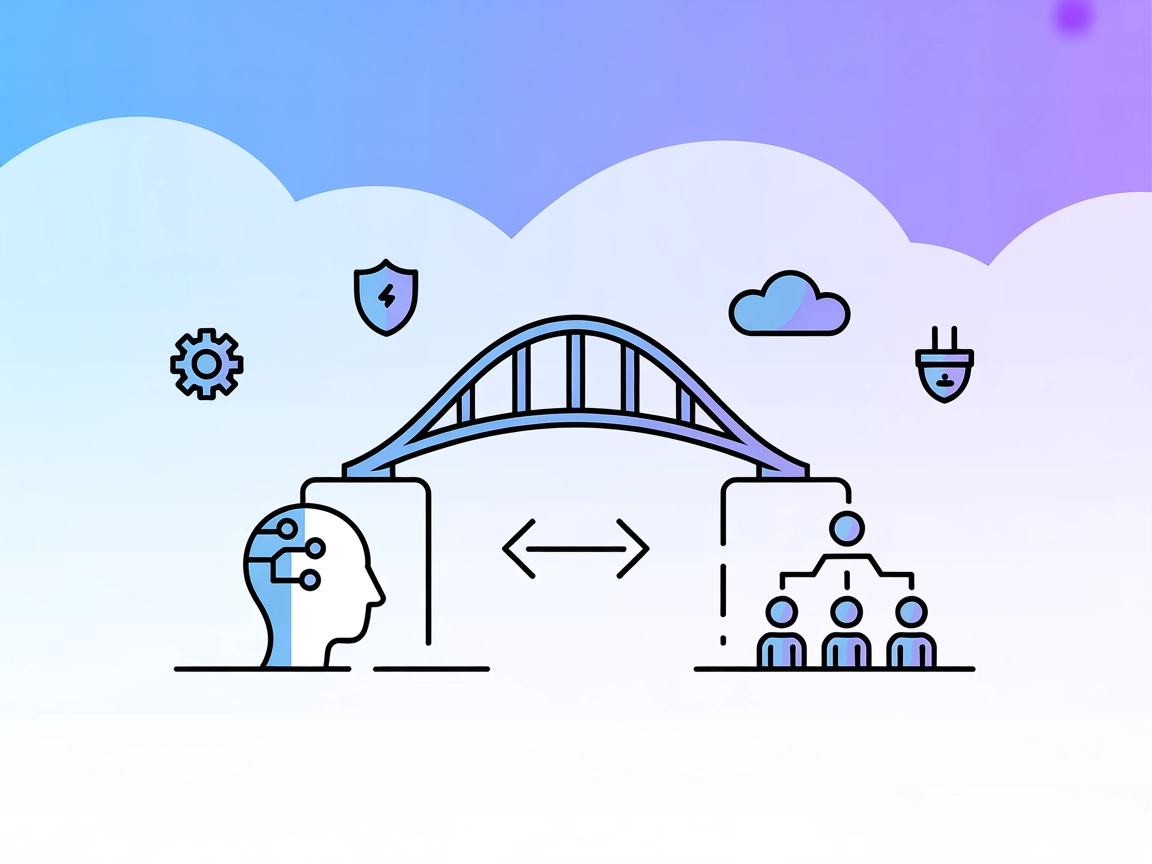
The A2A MCP Server bridges Model Context Protocol (MCP) with the Agent-to-Agent (A2A) protocol, enabling MCP-compatible AI assistants like Claude to interact se...
Cookie Consent
We use cookies to enhance your browsing experience and analyze our traffic. See our privacy policy.